Transnistria. Whose is it? Moldovan? Or perhaps it is Ukrainian Podillia?

· 4 min read
Once, in the Moldovan village of Brănești (Old Orhei), in the cool restaurant-winery “Stone Age” (Epoca de Piatra), we were talking with its head manager. The conversation turned to Transnistria.
– Do you regret losing this region?
– Not at all, why should we regret it?
– Well, the Russians occupied it. It is really yours.
– No, we do not regret it. It is you who should regret it, because it is YOURS.
We were stunned. What do you mean, ours?
Whose is it, this Transnistria? Ours or Moldova’s?
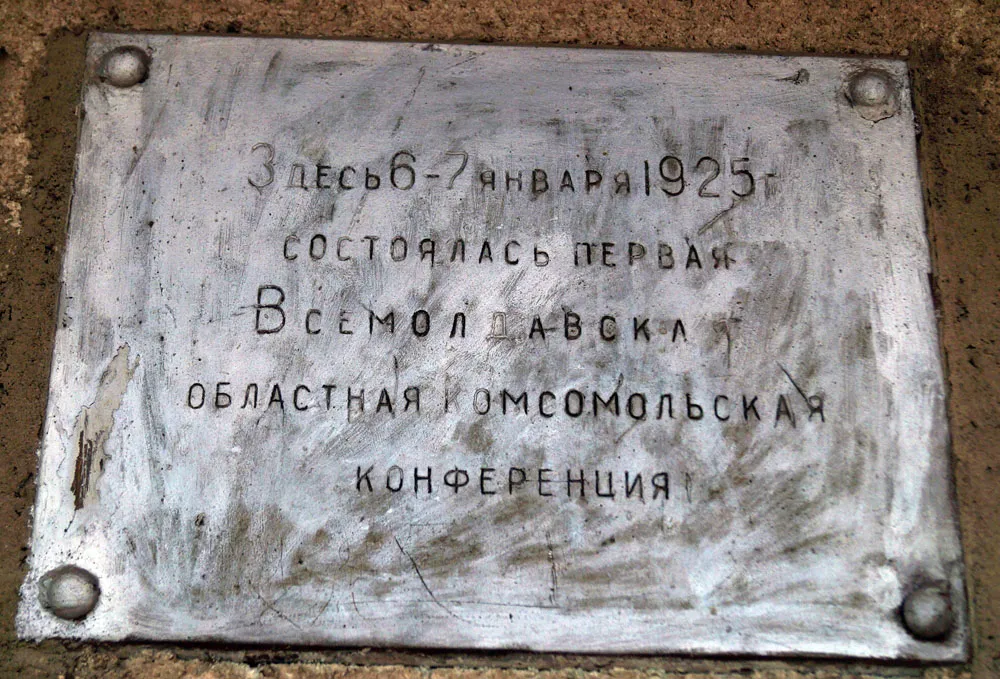
A plaque on the club building in Balta (Odesa Oblast)
I decided to figure it out. Almost at once I remembered a conversation with the director of the fortress in Bender. We were arranging a pass for our bus of 40–50 people into Transnistria. We were offered to sign a contract, saying then there would be no problems. I said we would not write a contract in Russian, but that we had a standard one in Ukrainian. We were assured that this was no problem, since Ukrainian is one of their three official languages… Later we took groups to Transnistria several times. Normally, officially, from Moldovan territory. Tourists were impressed that in the Bender Fortress stand monuments to Ivan Kotliarevskyi, who served here, to the constitution of Pylyp Orlyk, which was written right here, and to Ivan Mazepa, who lived out his last months in Bender, then called Tiahynia. Kotliarevskyi, Orlyk, Mazepa: can you imagine these monuments somewhere in russia? I cannot.
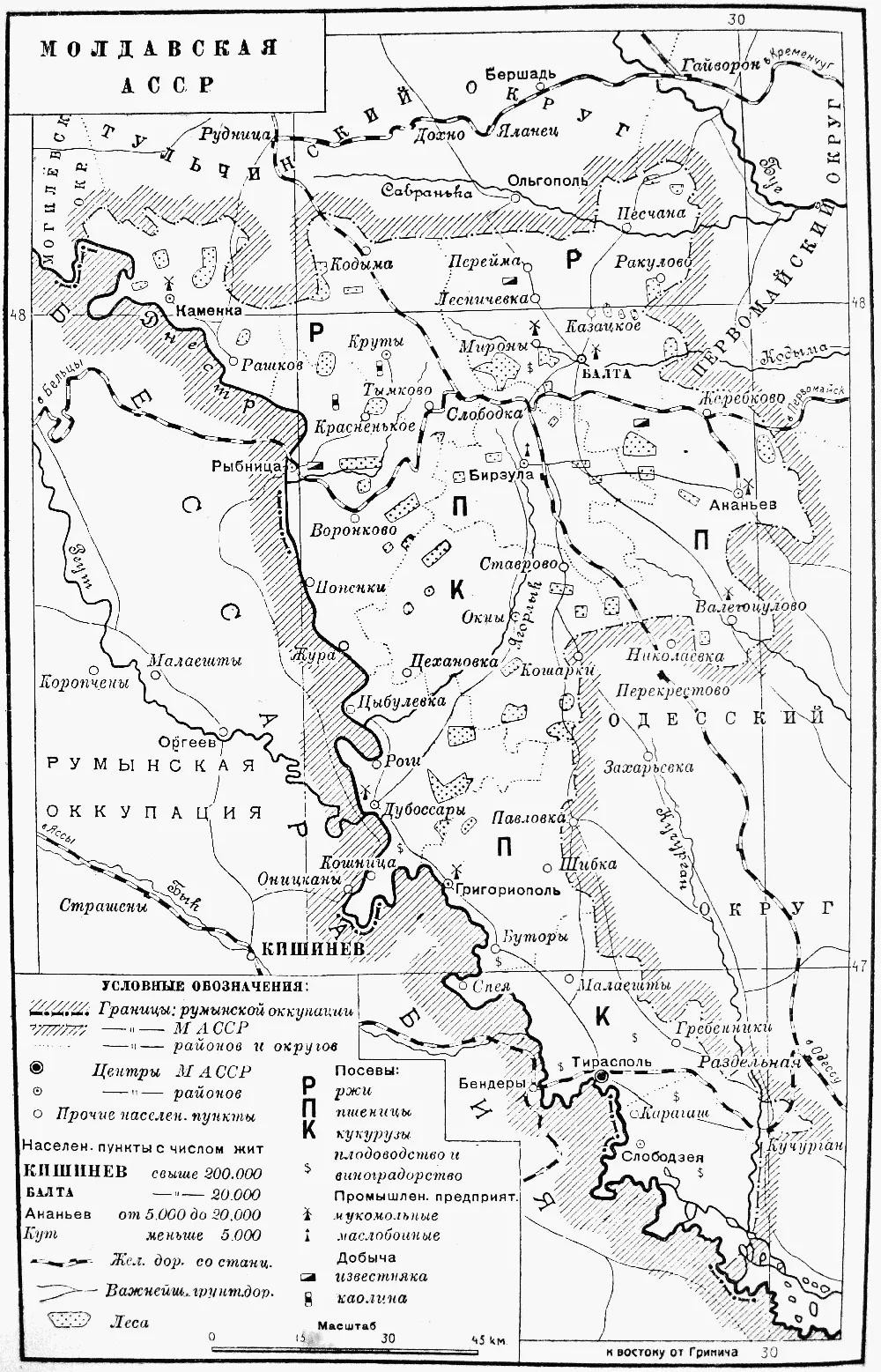
Later we came to our own Balta, where we learned that this town had been the capital of the Moldavian Autonomous Soviet Socialist Republic. That was long ago. I was weak in the history of this region at that time, so this fact struck me…
Until 1924 Transnistria was ENTIRELY Ukrainian territory. These were districts of Podillia and Odesa governorates (oblasts). In those times Moldova beyond the Dniester was Romanian territory, so Stalin decided to create his own “Moldova”. He instructed the Moldovan Frunze to do this, who delegated the matter to Kotovskyi. As a result a piece of 8,288 sq. km (slightly more than Chernivtsi Oblast) was torn from the Ukrainian SSR, from which a new Moldavia was made, as a counterweight to the one that remained with the Romanians. And Kotovskyi decided to make Balta the capital… In 1929 the capital was moved to Tiraspol.
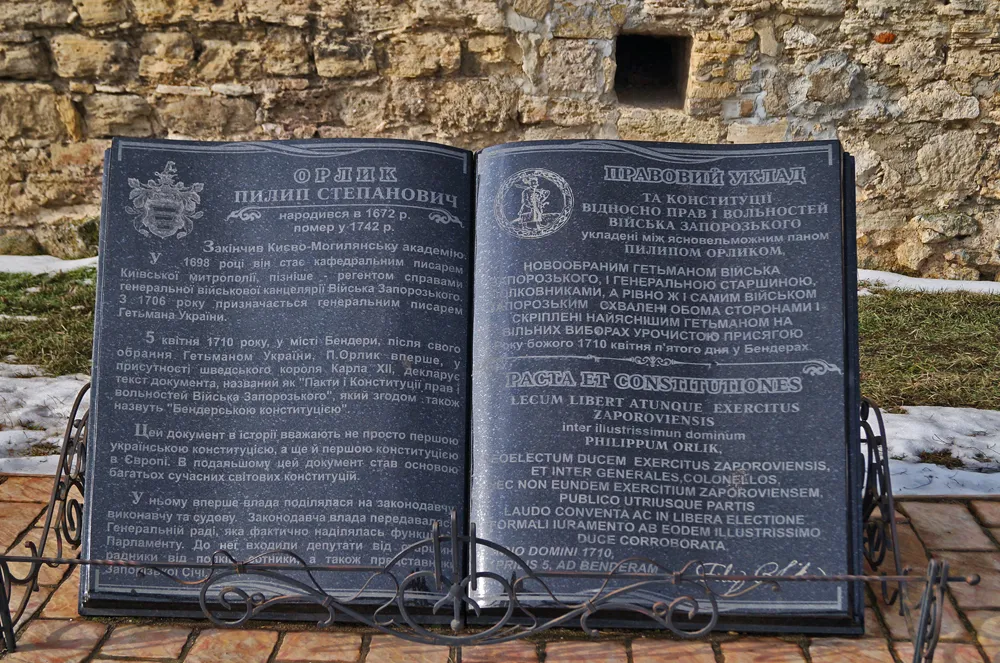
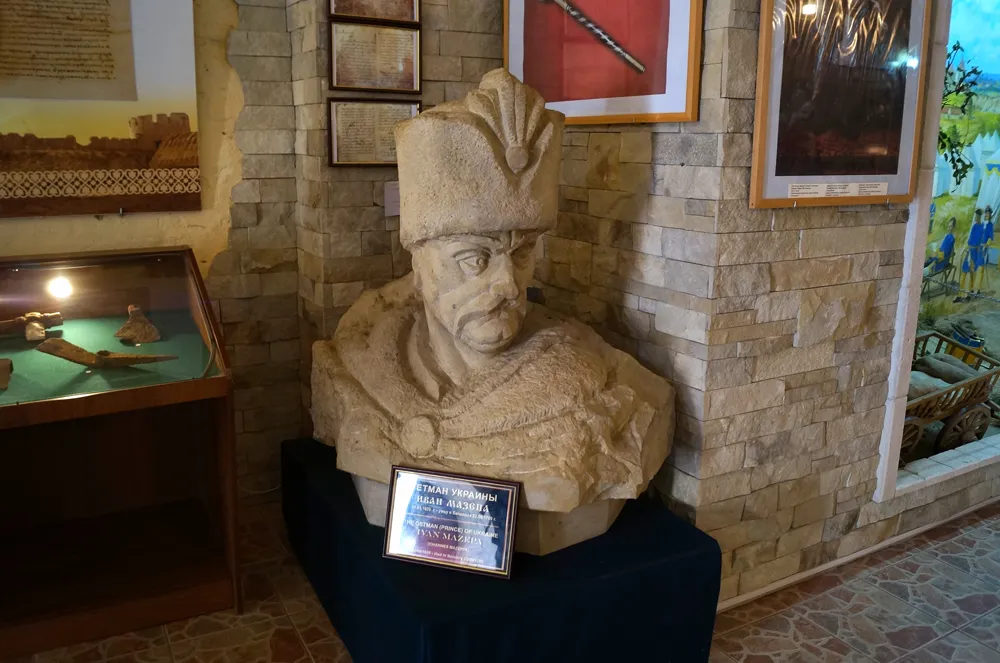
Monuments to the constitution of Pylyp Orlyk and to Ivan Mazepa in Bender
In effect the whole territory of Transnistria was carved out of our Podillia at the whim of stalin. These lands began to be massively settled by residents of the republics of the ussr, mostly Russians, whose share here eventually grew to about 30%. Before the creation of the MASSR (Moldavian Autonomous Soviet Socialist Republic) most of the population of this area were Ukrainians, somewhat fewer were Moldovans, who traditionally lived on the banks of the Dniester, and there were no Russians at all.
The main language of the MASSR was made Moldovan (Romanian) written in Cyrillic. There was a period when it was written in the Latin alphabet, but that ended in 1938. It is important to understand that this territory had never been part of the Principality of Moldavia (in its time a large and strong European state) before 1924. It was simply a piece of Ukrainian Podillia that stalin decided to turn into Moldavia in order to have more republics. In 1929 the Kodyma and Balta districts, fortunately, were handed to the Ukrainian SSR, and the rest of the MASSR was joined in 1940 to the Moldavian SSR, created from occupied territories of Romania.
In 1990, with the assistance of the RSFSR, in view of pro-Romanian sentiment in Moldova, the Transnistrian Moldavian Republic was proclaimed, oriented towards the ussr. And in August 1991 its leader Igor Smirnov came to Ukraine, to Kravchuk, with a request to join Transnistria to Ukraine. But our first president handed Smirnov over to the Moldovan security services, who sent him to prison… Later Smirnov was released and became the formal head of the Transnistrian Moldavian Republic (PMR). A war began, in which the victor was the 14th Army of the ussr, commanded by General Alexander Lebed, a representative of russia, which made Transnistria its satellite.
In 30 years of existence the PMR has turned into an enclave of crime and smuggling, run, and still run, from moscow. Incidentally, the most interesting town of this unrecognised “country”, Bender, with its huge fortress built by Stephen the Great, lies on the right bank of the Dniester and is ethnic Moldova, not Podillia…
Text and photos by Roman Malenkov