

Repiakhivka

· 4 min read
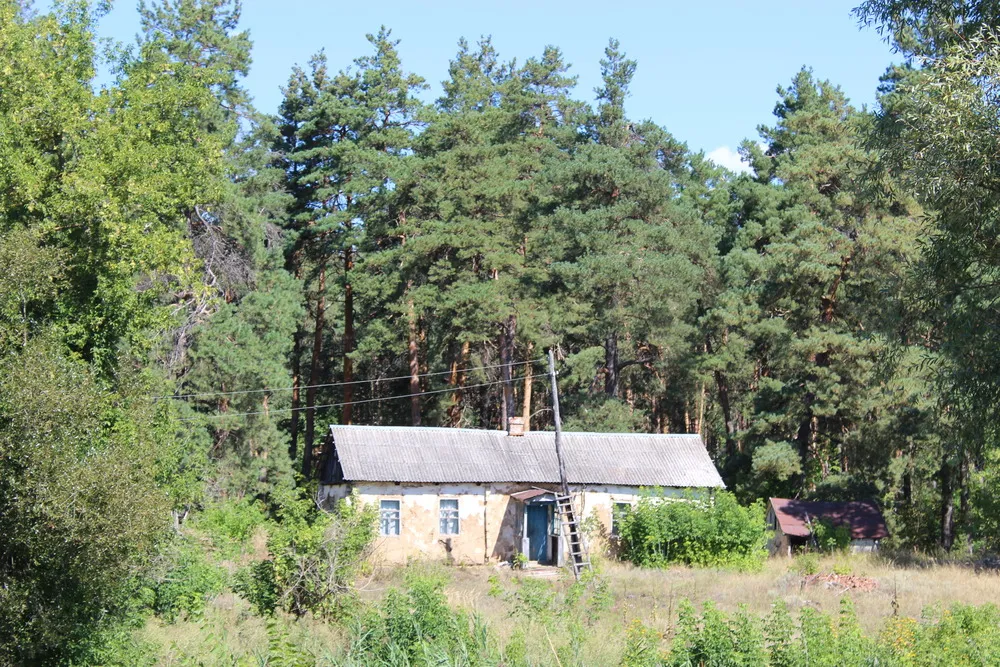
It is very hard to gather information and write about a village and its history, even if some monument has survived in it, albeit in poor condition, but only 8 (!!!) people live there.
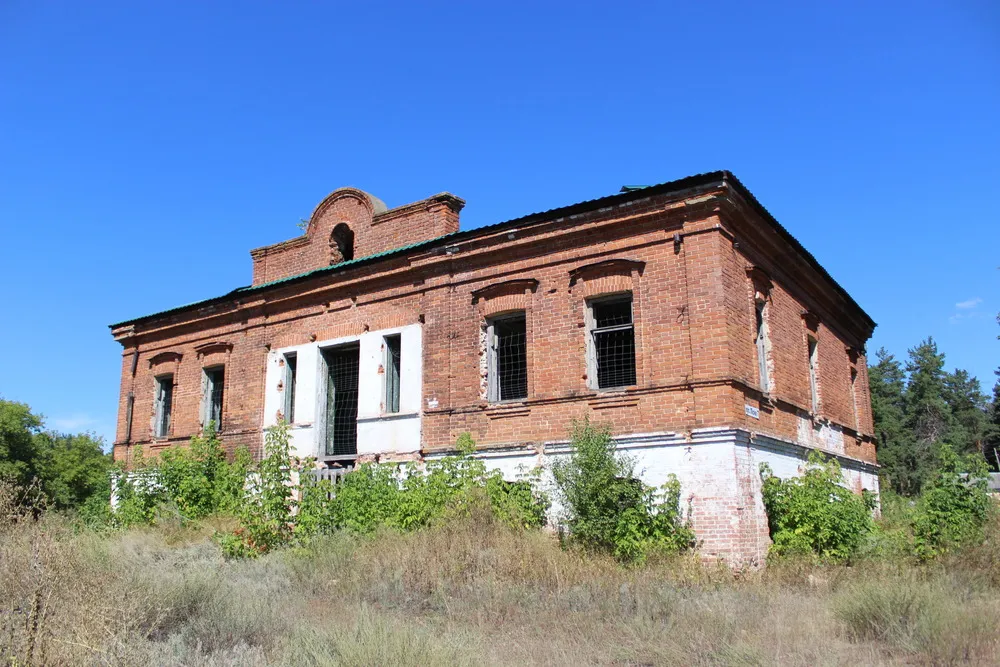
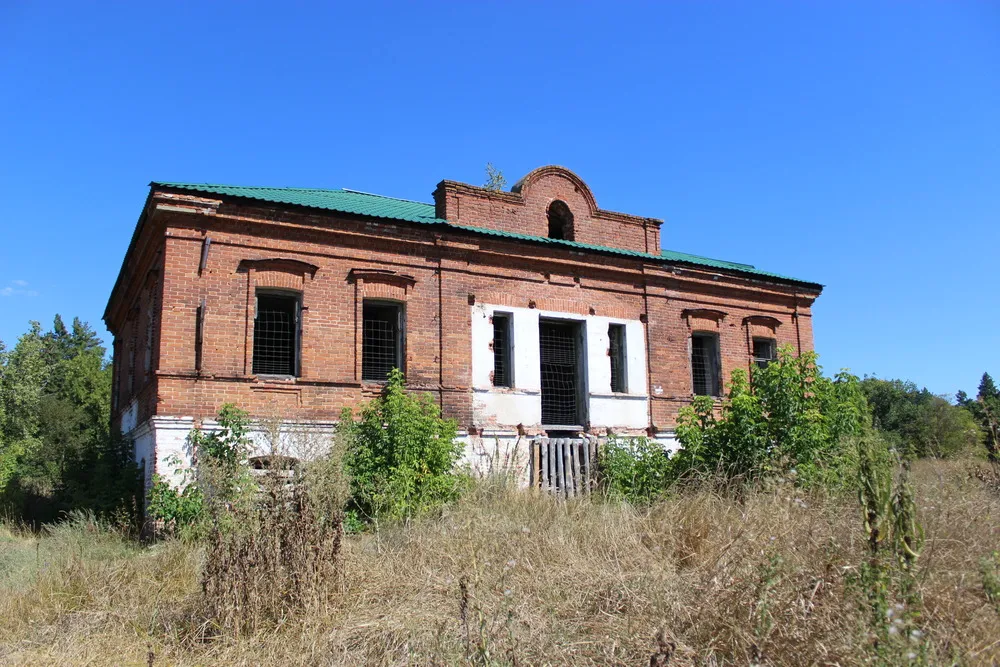
Well, take the village of Repiakhivka in the former Zmiiv district. There is a brick manor house there, a house built in 1905–1996 in the brick Art Nouveau style.
Wikipedia and other sources are very sparing with information. In short, the village was founded in 1685, and in 1689–1871, together with the village of Kostiantynivka (now called Kostiantivka, I do not know why, since it was founded by Kostiantyn Donets-Zakharzhevskyi himself and it would be logical to keep the original name), which is much larger than Repiakhivka and lies about 5 km to the north, it belonged to the Donets-Zakharzhevskyi family. By the time the manor house was built, the estate belonged to the Balashovs. The manor was built by Vasyl Balashov, a landowner and actual state councillor; later it was sold to the Honcharov family, who ran Repiakhivka right up to Soviet times. That is all.
Probably the Donets-Zakharzhevskyis sold their holdings to new owners sometime in the last third of the 19th century, I thought. I find the answer in G. K. Lukomsky, who wrote about the manor-palace built in 1797 by court councillor Andrii Mykhailovych Donets-Zakharzhevskyi in Kostiantynivka, that by 1917 it belonged to Count Golovkin-Khvoshchinsky. It happened because the last of the Donets-Zakharzhevskyi line, Dmytro Andriiovych, was strangled by his nephew Pokhvistnev. But the new owner did not bother with the estate or the three-storey manor house with its wings and so on. At the time the manor was described, that is, in 1917, it was not looked after and was in a very pitiful state, with windows and colonnade bricked up (and the bricks were taken from the columns of the portico), with holes in the walls and a looted interior. The ground floor served as a stable and pigsty, and on the upper floors there were storerooms. One can long wonder why Golovkin-Khvoshchinsky decided not to care about the estate at all and not even to pay attention to it.
It did not take long to find out who he was; there is only one person with such a combination in a double surname. Yurii Mykolaiovych Khvoshchinsky was born in 1877 or 1878; his mother was a Golitsyn; he was a military man all his life. When in 1887 his uncle, Prince Yevhen Yuriiovych Golitsyn-Golovkin, who had no direct descendants, died, the princely estates passed to his nephew by will.
“…in 1846 the line of the Counts Golovkin came to an end, and the entailed estate established by them, having passed through the families of the Princes Saltykov and Golitsyn, went in 1895 to the Khvoshchinsky family”.
And in 1895, taking into account the military services of his father, a captain of the Guards cavalry, the State Council permitted the surname Golovkin to be added to the surname Khvoshchinsky, and also granted the title of count with a coat of arms. By 1917 he had risen to major general. Then came the October coup. And the most interesting part began. In February 1918 he voluntarily joined the Red Army, was a chief of staff and commanded a division, and was included in the lists of the General Staff. He was discharged from service in 1924. There are two versions of how Khvoshchinsky (by this period he had already given up the double surname) ended his life. According to the first, in 1928 he shot himself. According to the second, in 1930 he was arrested for participation in a counter-revolutionary organization and shot in Leningrad. Even a date is given: 2–3 May 1931.
Forgive me for straying from the main topic, but it really is interesting. And what about the manor in Repiakhivka and Vasyl Balashov?
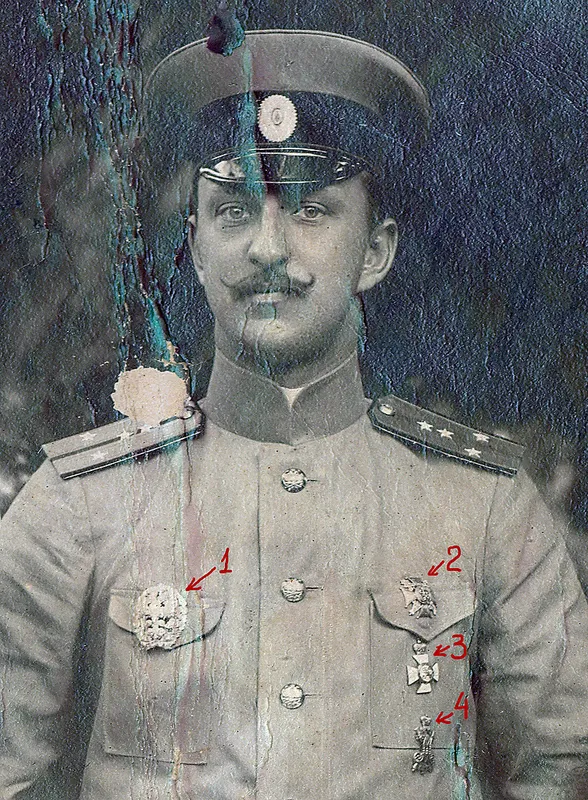
Heorhii Mykolaiovych Khvoshchinsky
In the list of landowners of 1870–1918 only one person with that name and surname is given – Balashov Vasyl Stepanovych. There is also Balyshev Vasyl Stepanovych; perhaps they are the same person.
As for who the Honcharovs are in this case, I do not know. Searching is futile; there were not even dozens of them.
Let us return to the first sentence of the post…
So, Repiakhivka: a manor house of 1905–06 of the landowner V. S. Balashov, then of the Honcharovs.
Text by Ihor Dorozhko, photos by Maksym Nazarenko.


