The Sataniv stronghold. From the Koriatovychi and Sieniawski to the present day

· 10 min read
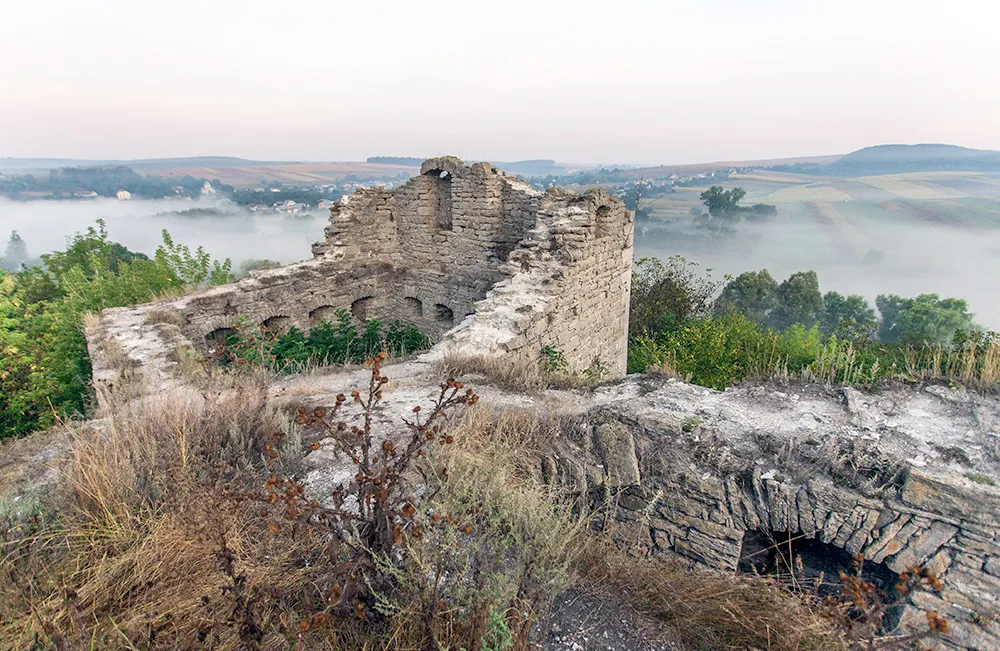
In the northern part of the settlement of Sataniv, on a high cliff above the Zbruch, rise the majestic ruins of the local castle. It was once one of the largest fortifications in Podillia.
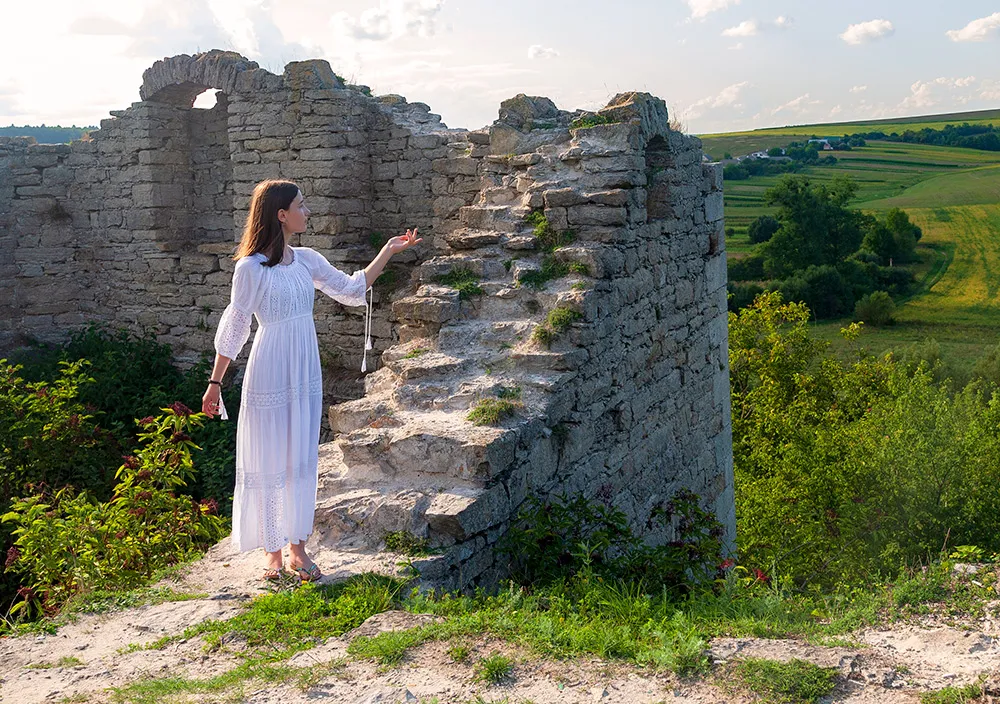
Every respectable castle must have its own White Lady
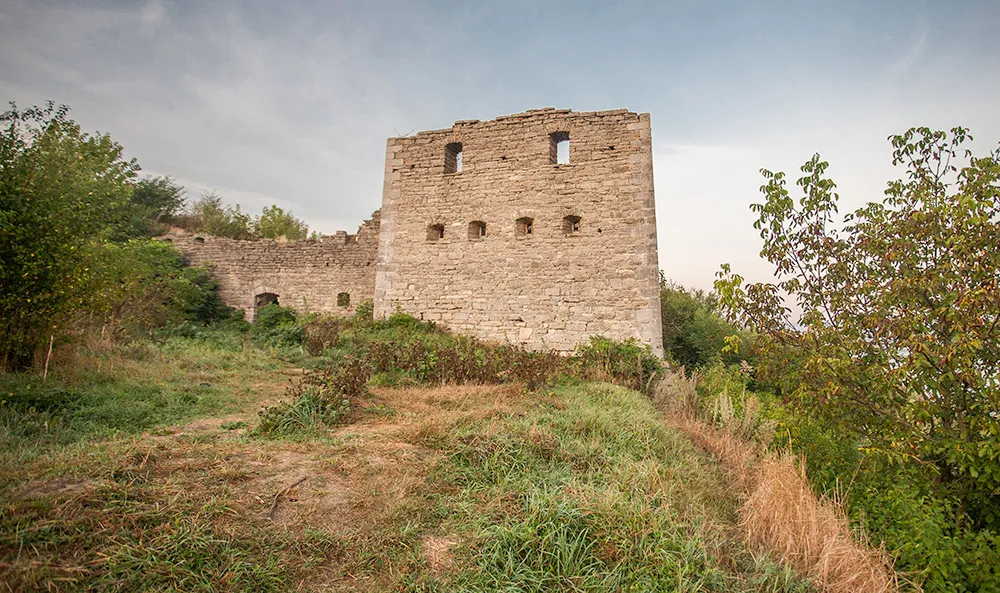
In plan it was an irregular pentagon: three sides were about 105 m long, the fourth 85 m, and the fifth (southern) 65 m. At each corner of the pentagon stood a five-sided (although, seen from outside, four-sided) three-storey masonry tower. Thus each of them covered with fire (flanked) not only the stretch of wall adjoining it but also the two neighbouring towers.
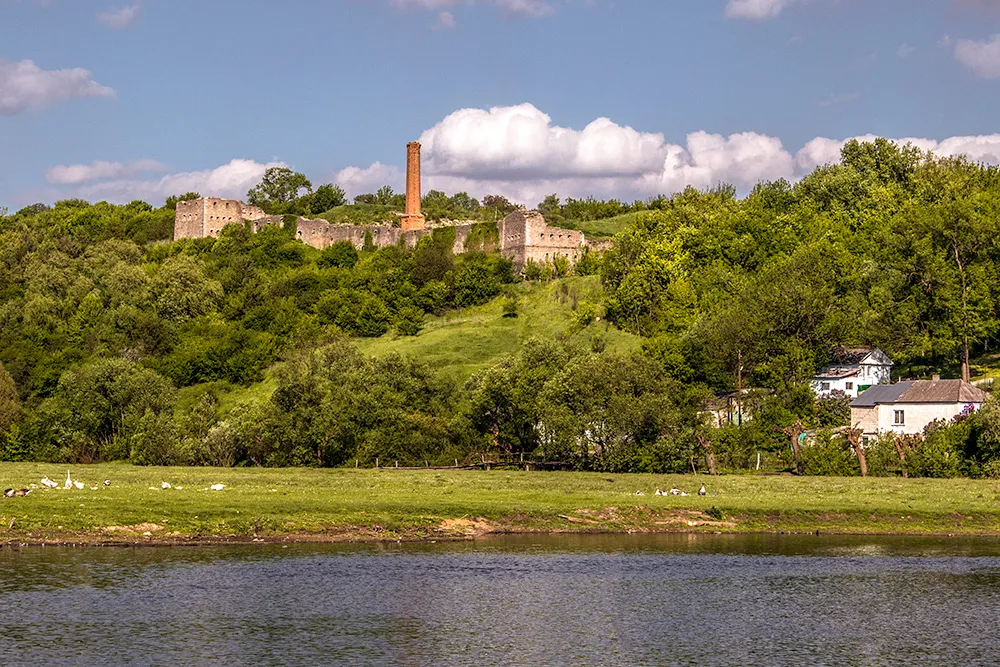
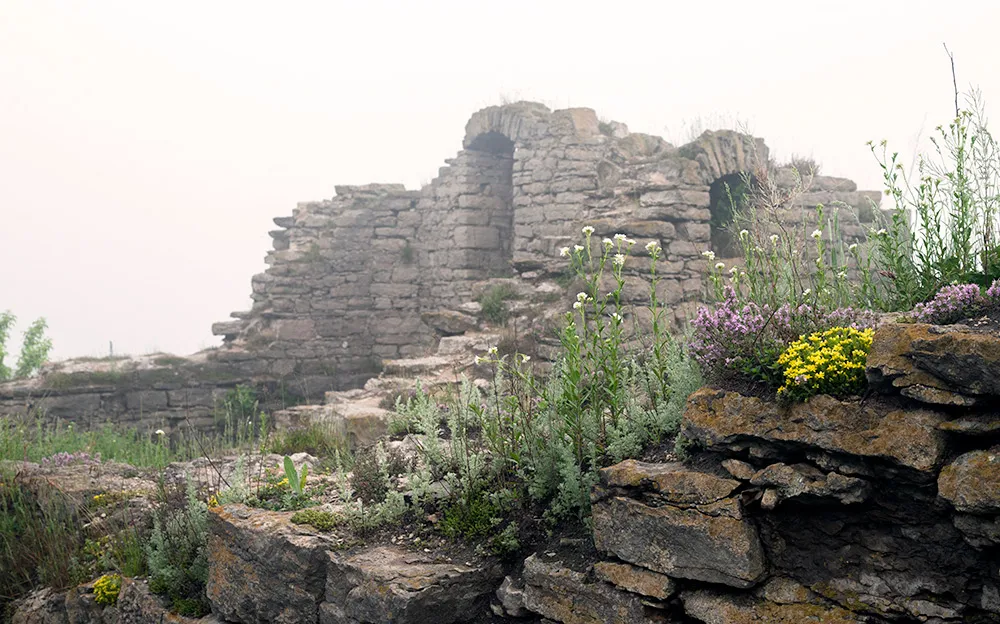
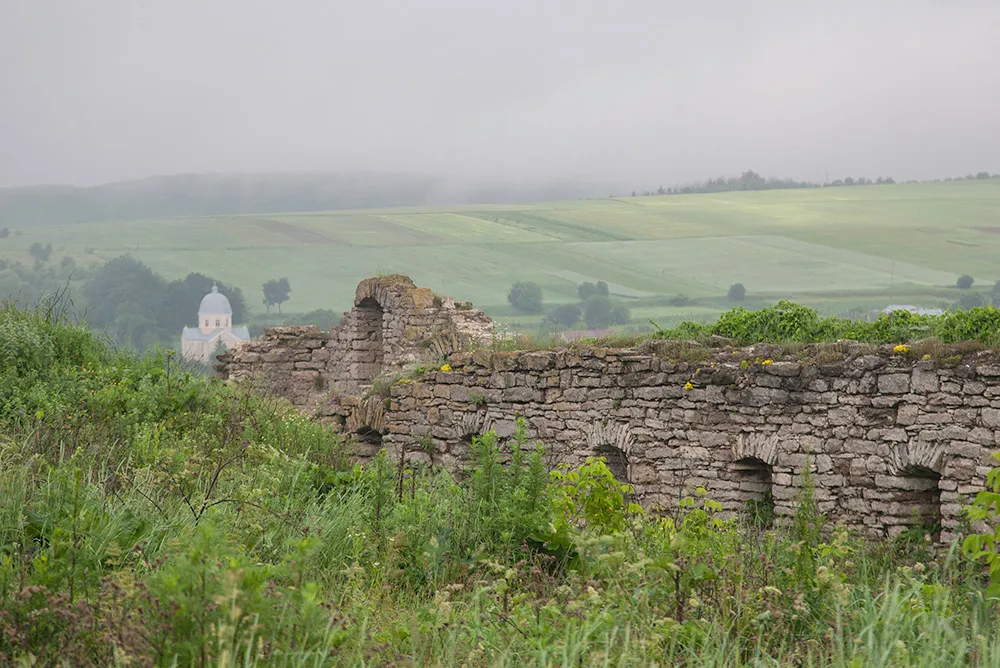
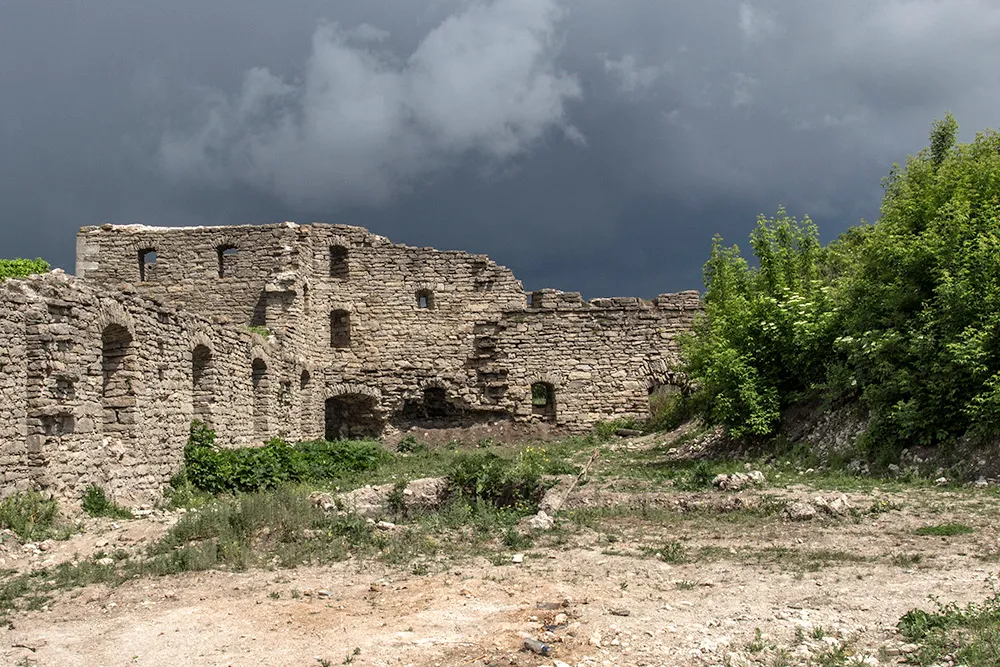
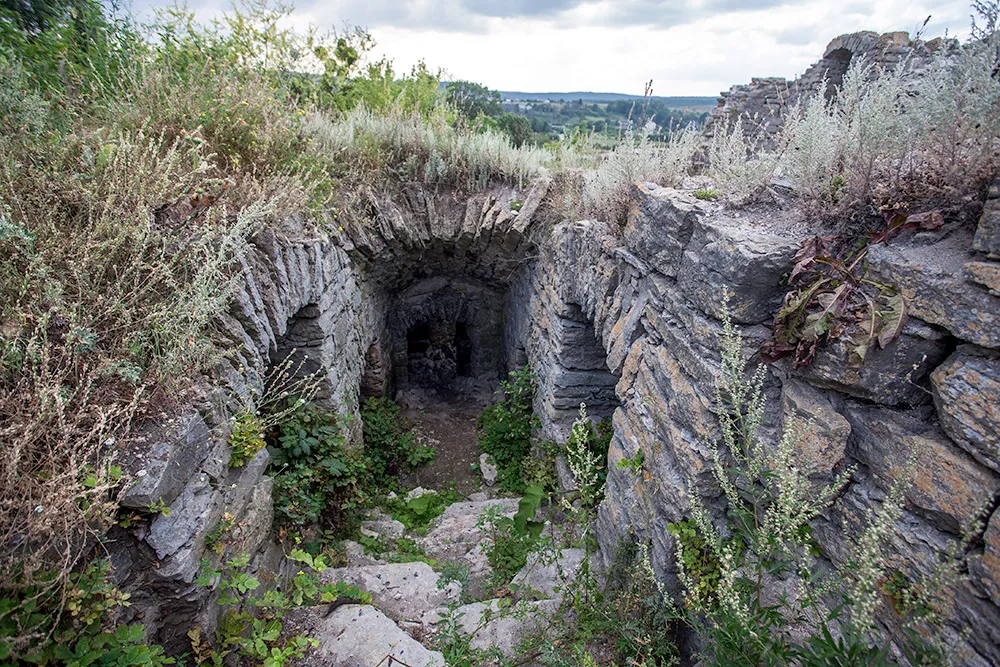
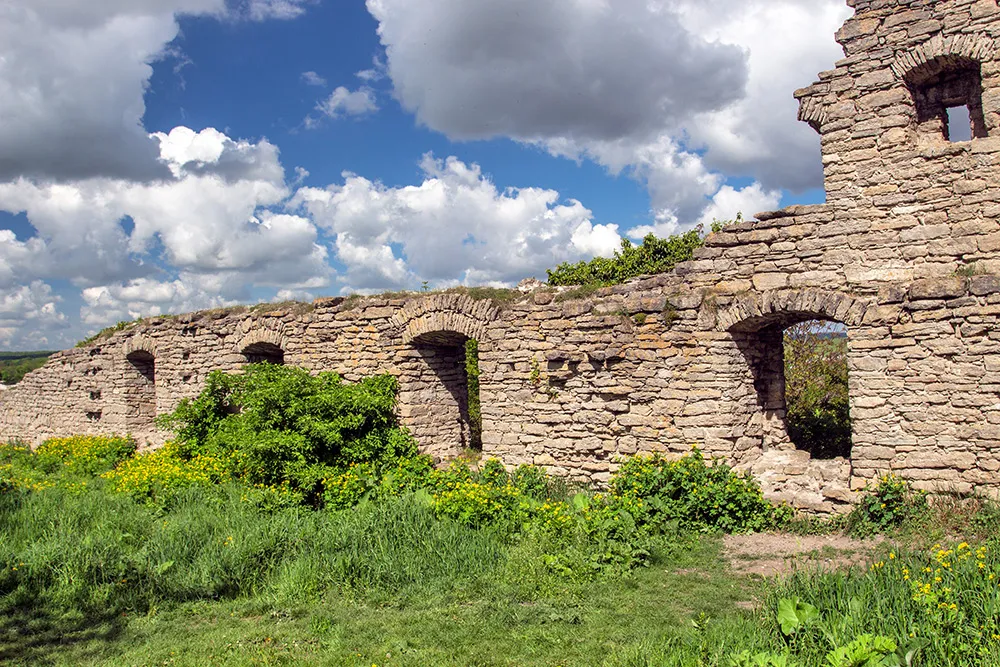
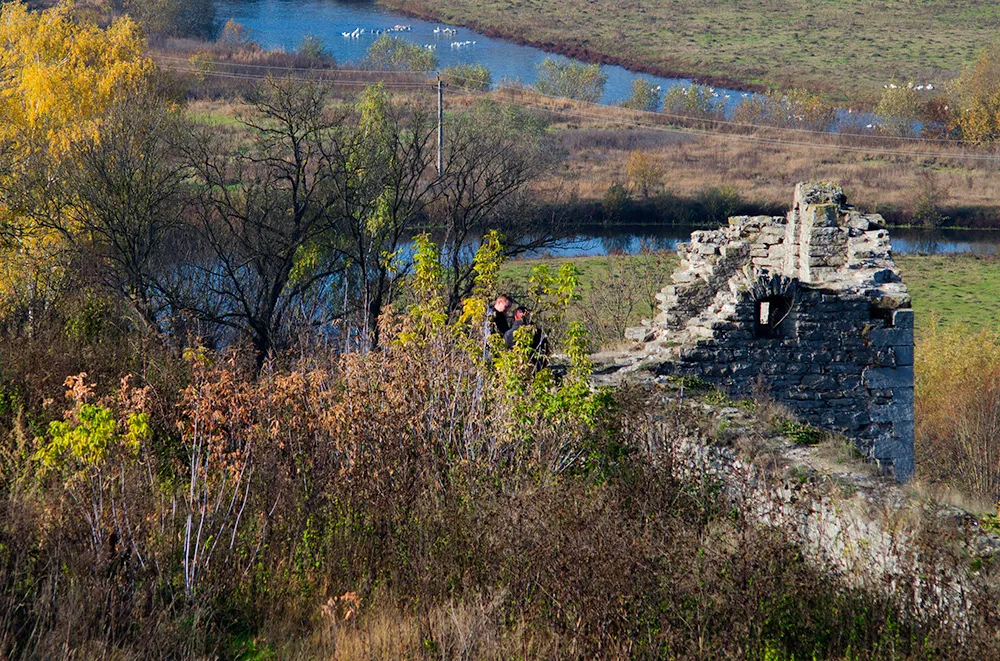
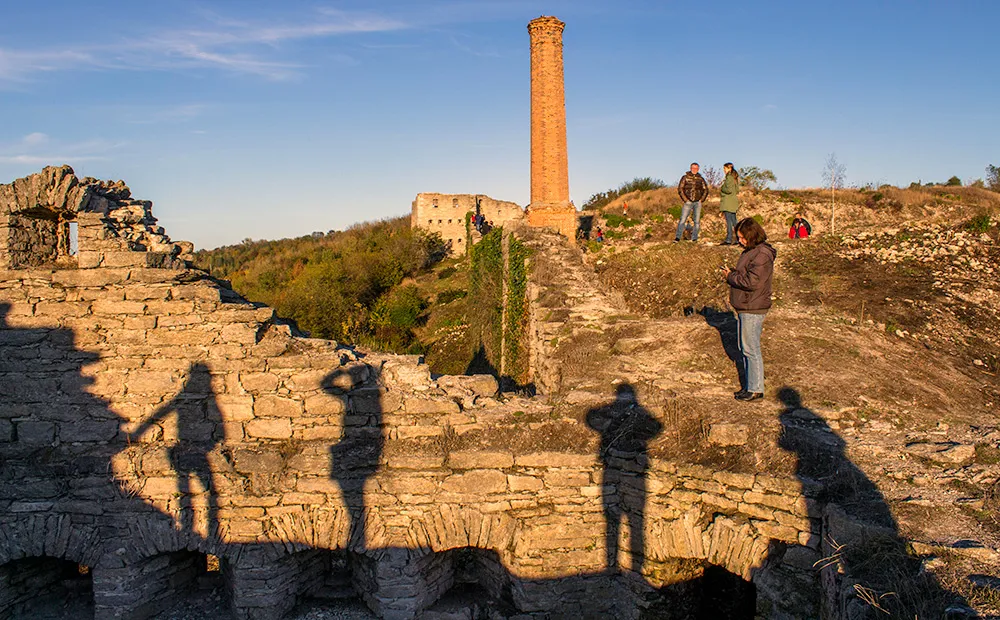
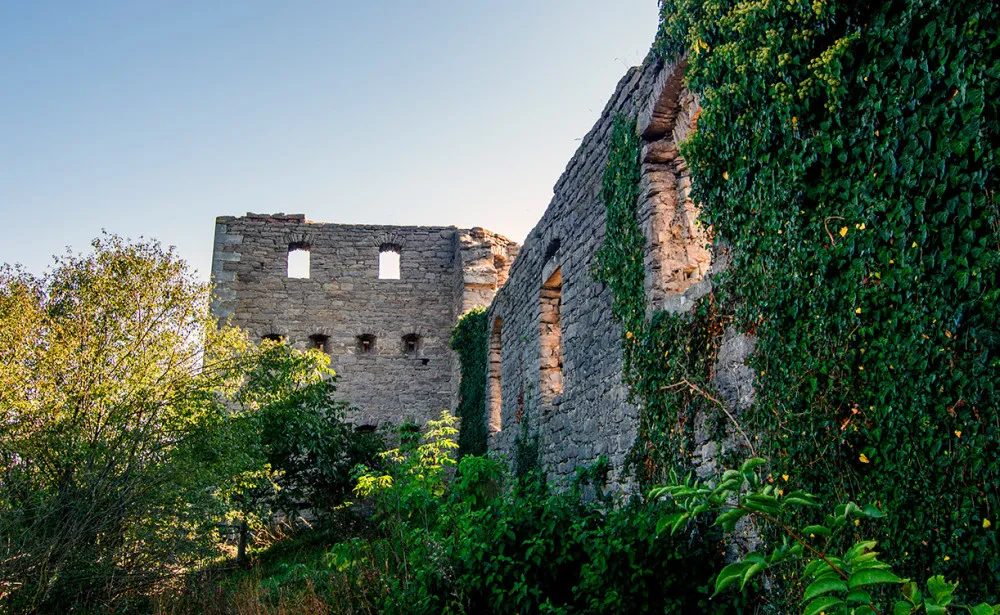
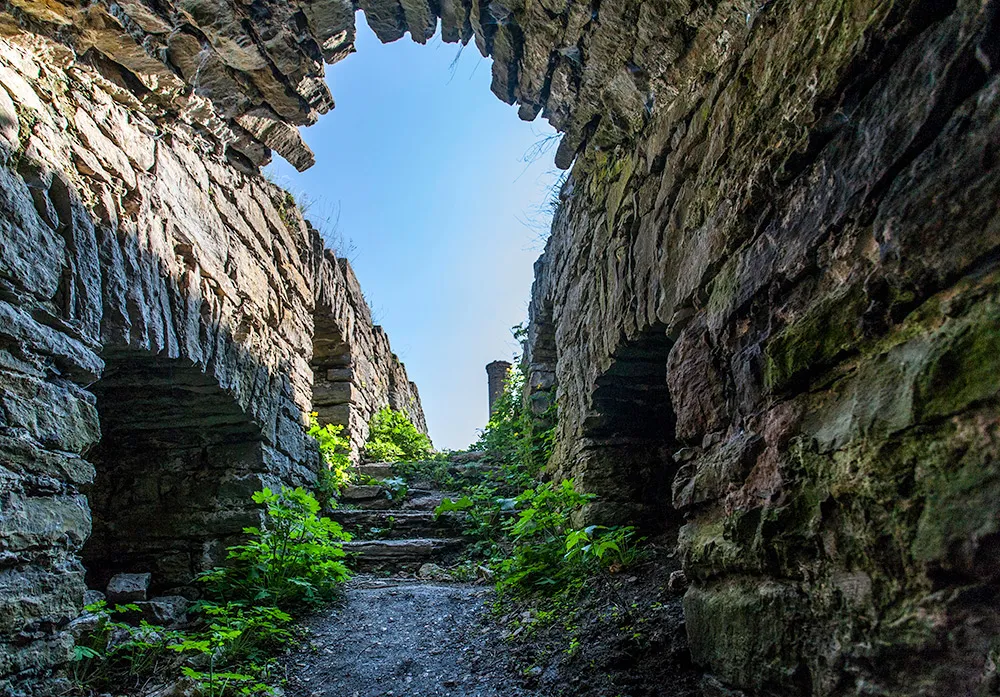
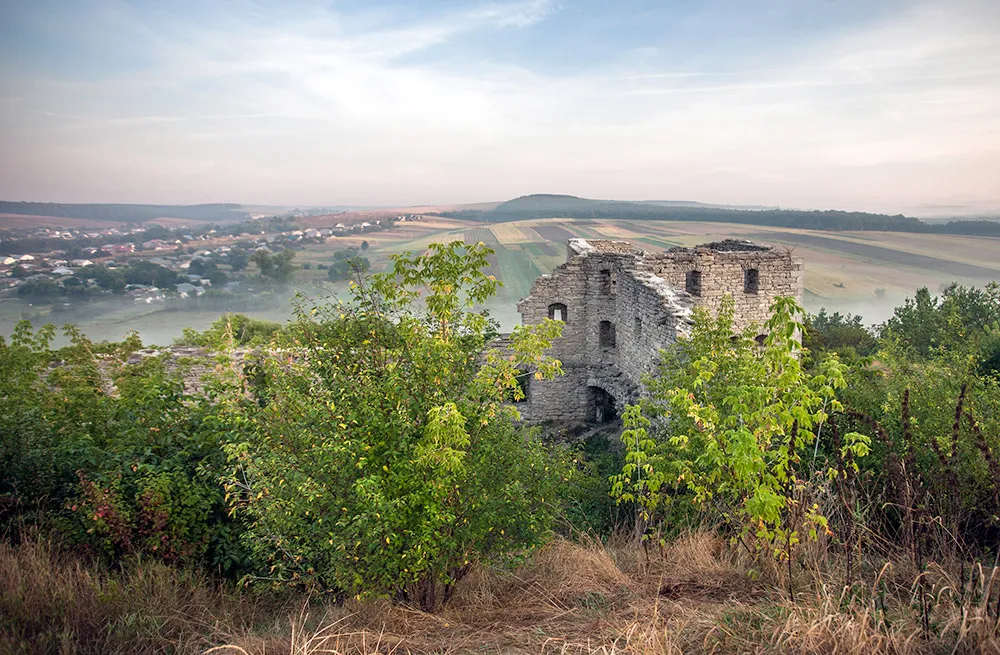
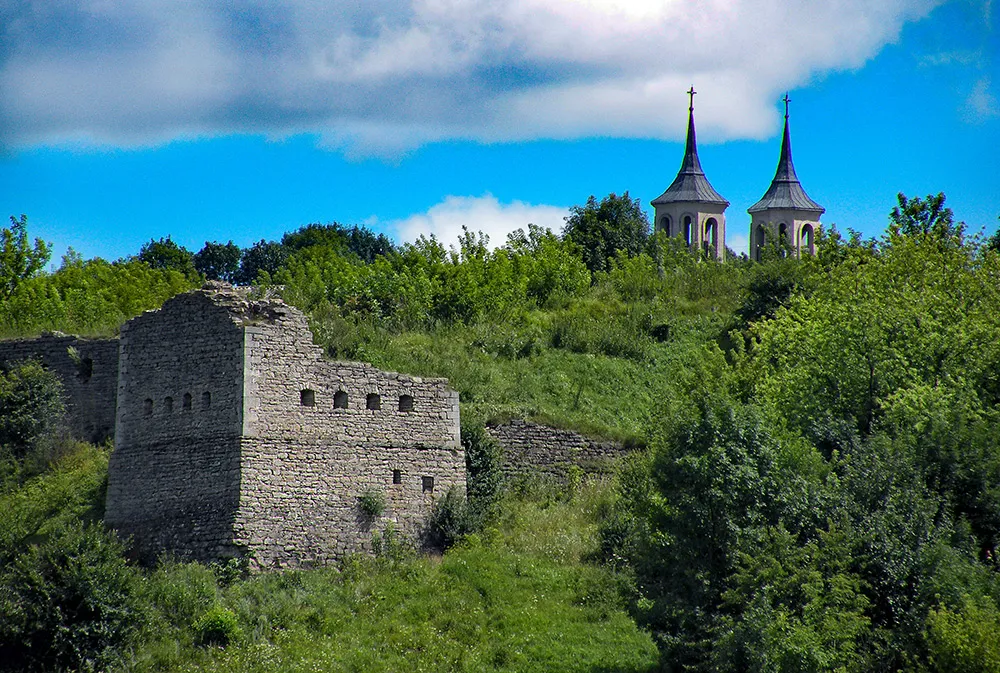
The north-western wall and four towers – three pentagonal and one round – have survived almost in full to our time. However, guidebooks and popular articles usually speak of only three: the “Round” (“Powder”) tower, the western and the northern. In fact, the ruins of the eastern tower have also survived, but not everyone will find them, because they are hidden among bushes and the buildings of the old sugar factory.
The author found it, and shows it to you:
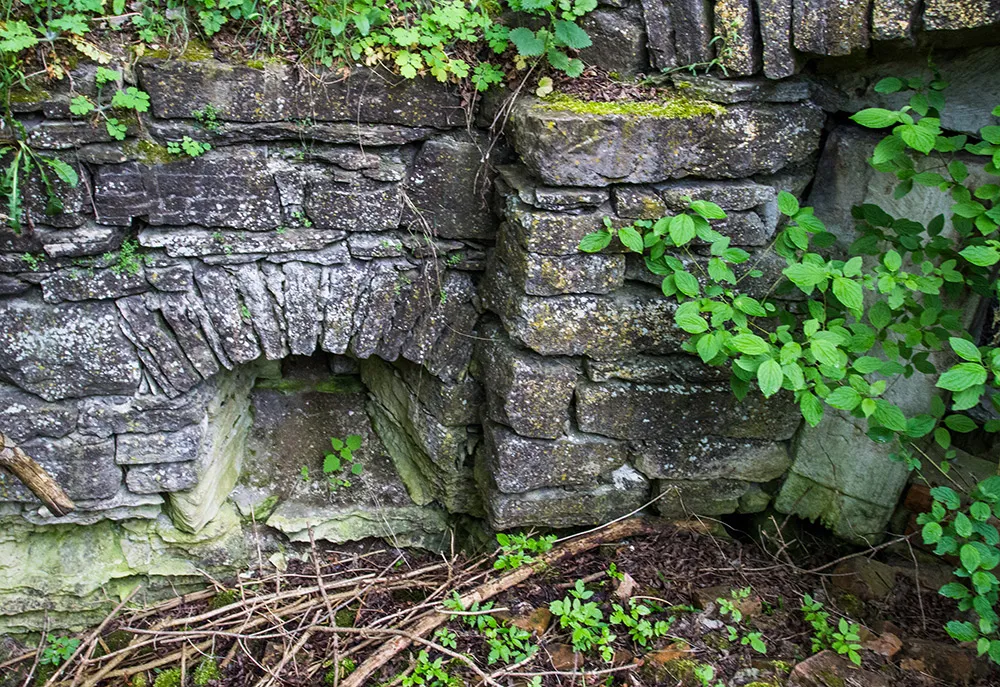
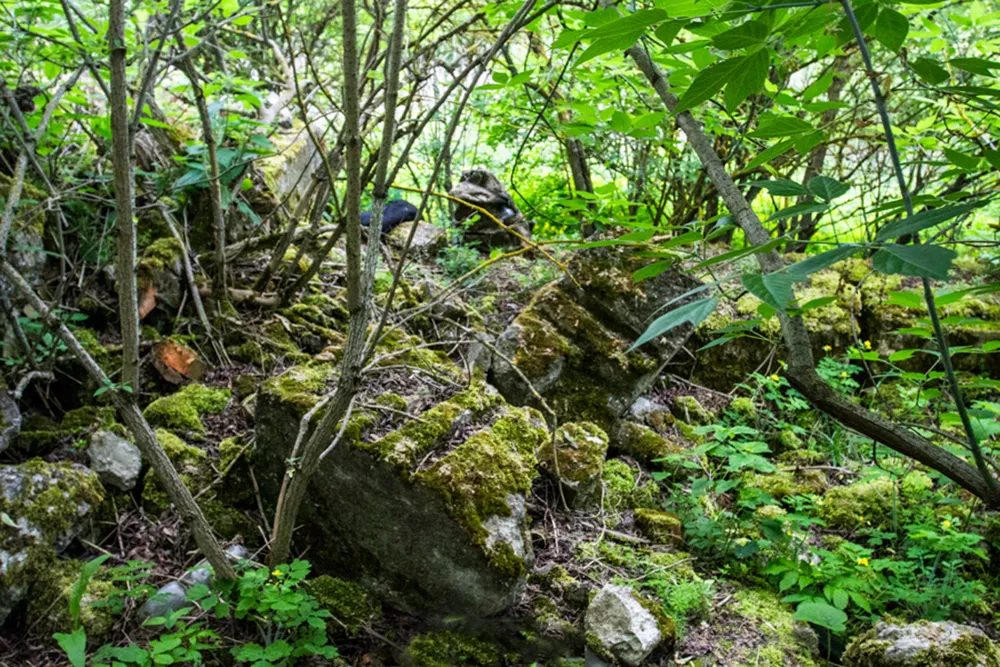
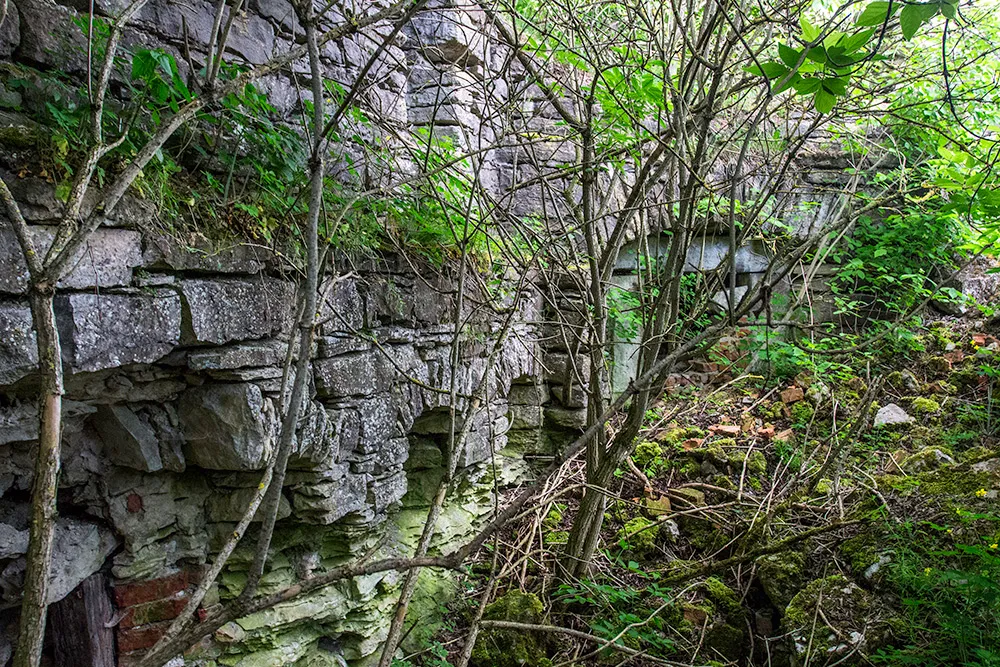
We leave the “secret” tower behind us, climb out of the thicket and continue the story of the castle.
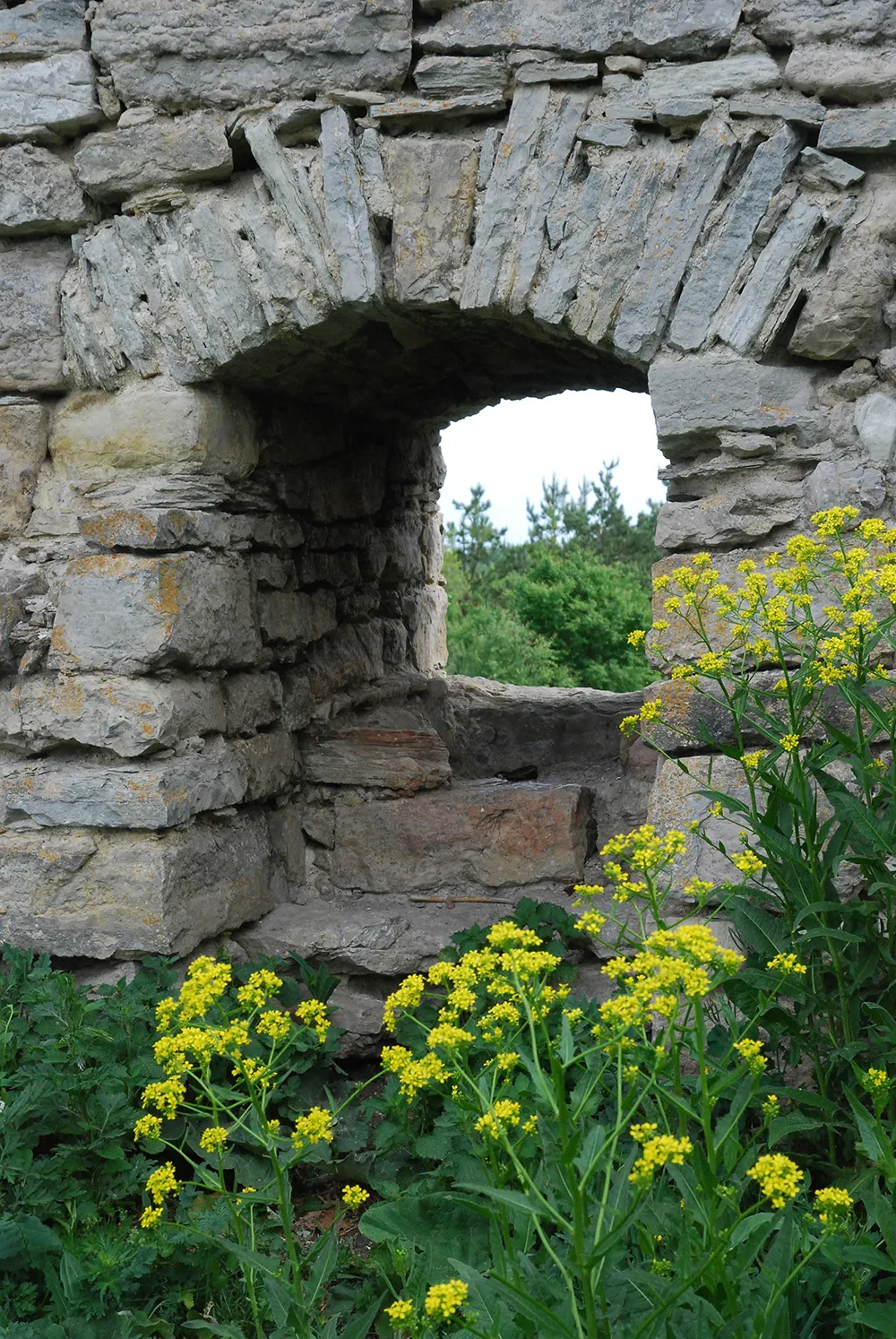
Right at the entrance to the castle grounds stands the “Round Tower” – its diameter is about 6 metres. It is one of the most mysterious structures in Sataniv. Nobody knows for certain who built it or when. The venerable age of the tower is clearly attested by its loopholes, adapted for shooting bows and crossbows rather than firearms.
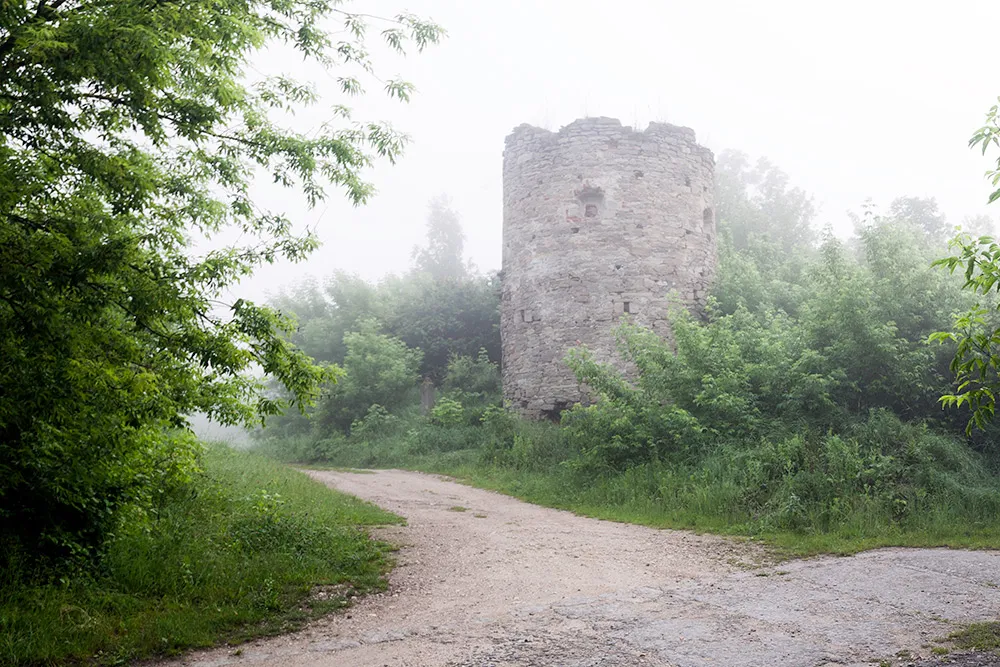
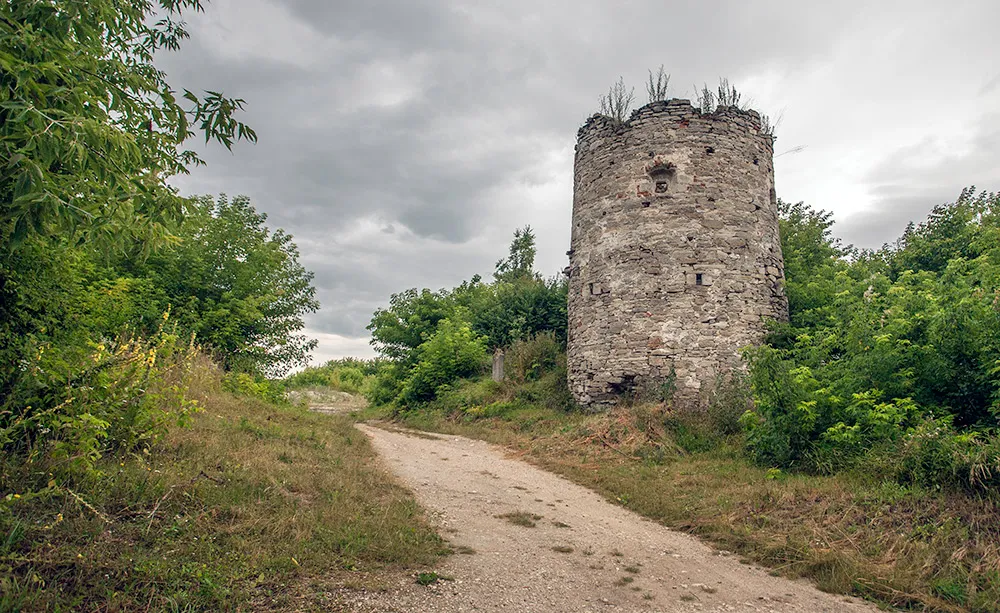
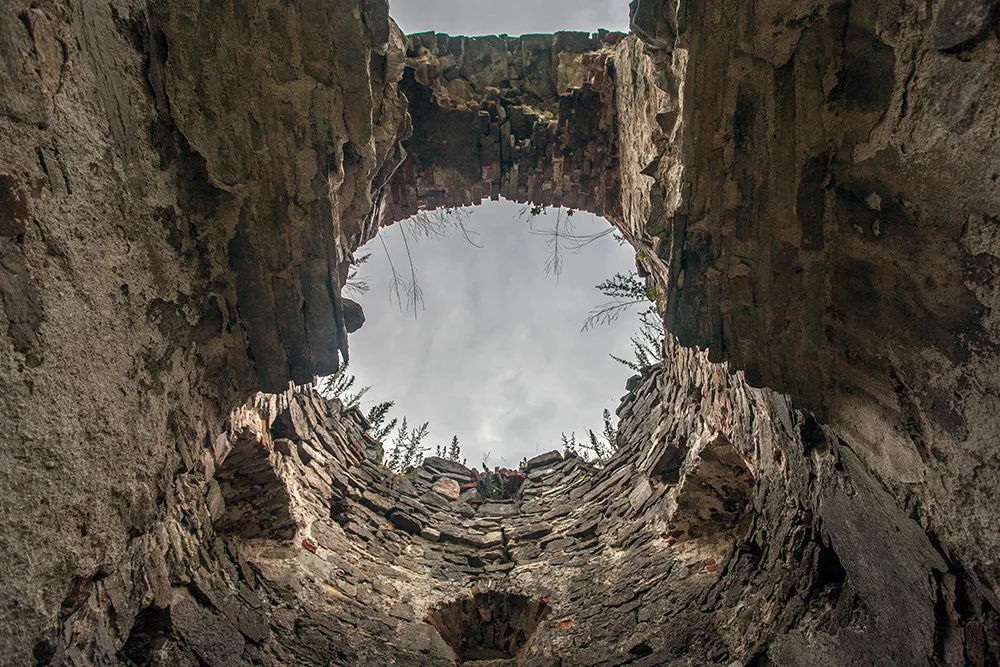
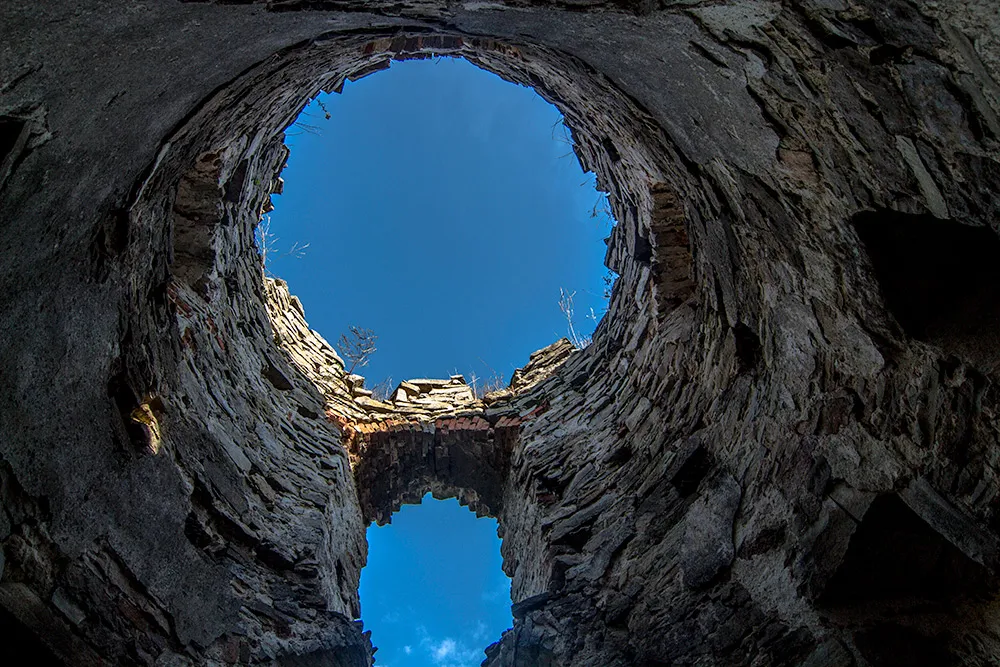
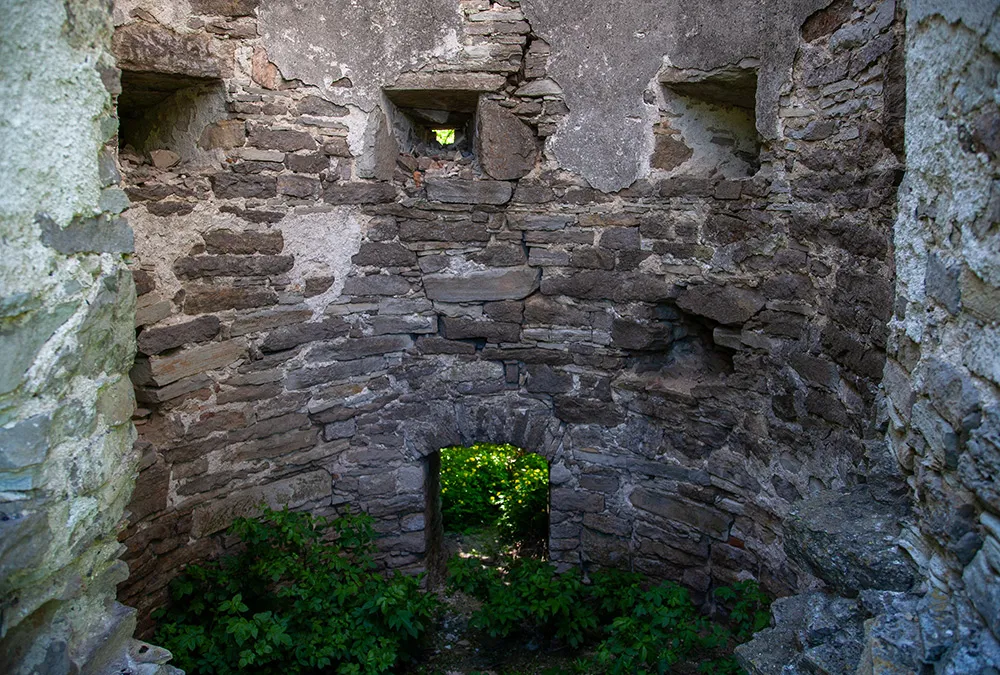
Note the specific loopholes. They are widened to let the “horns” of the crossbows pass.
Most likely the “Round” tower is all that remains of one of the 14th-century fortifications erected against Tatar raids by one of the Koriatovych princes, who then held Podillia.
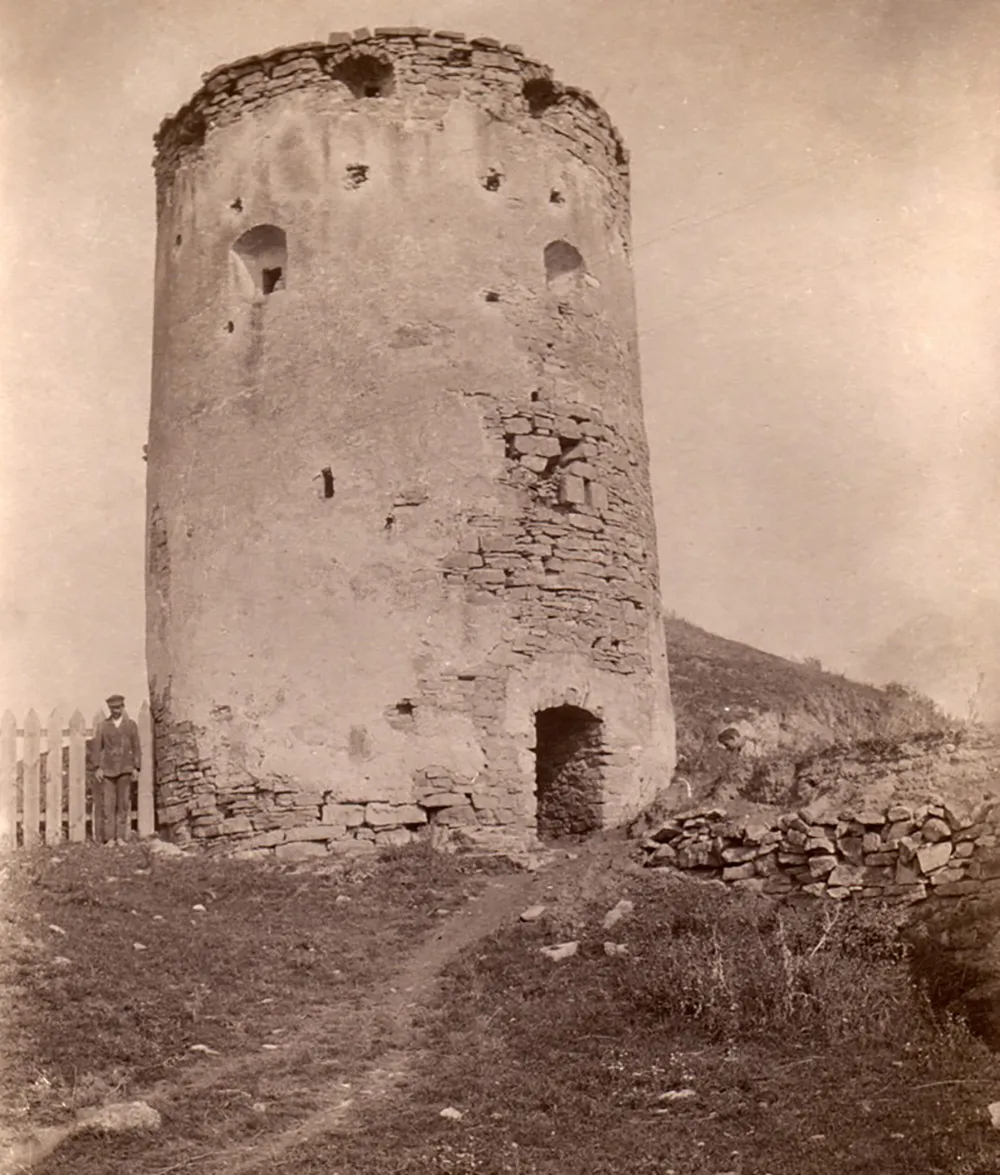
The Round Tower at the beginning of the 20th century. I suspect this is a photo from Taranushchenko’s expedition.
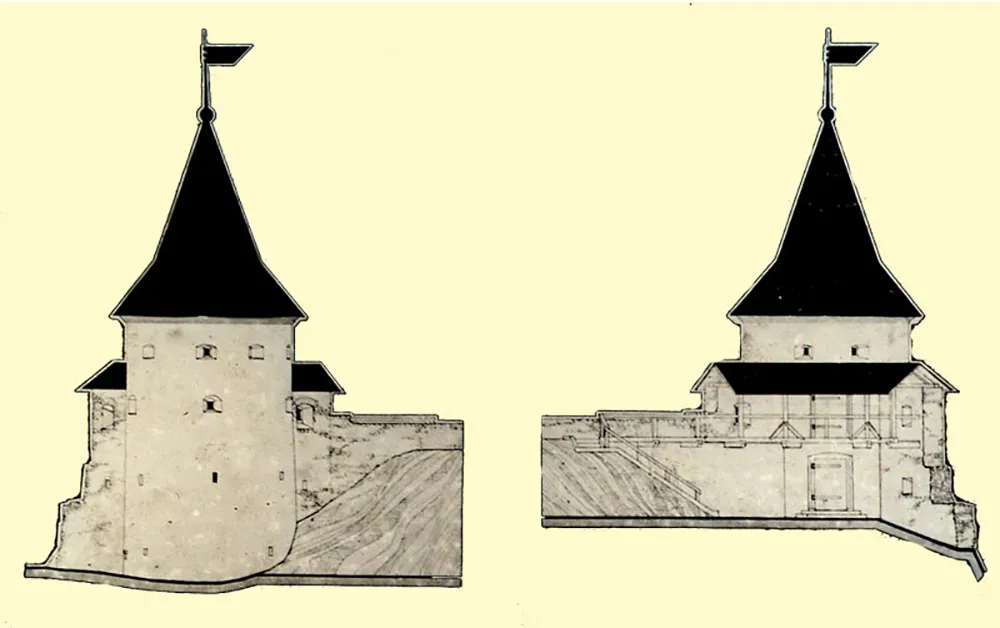
A reconstruction of the probable original appearance of the tower
Sometime in the middle of the 15th century, on the basis of this fortification, the Sataniv landlord Piotr Odrowąż built a castle that became the main hub of the town’s defence (the castle was connected to the town by walls). It is hard to say what the “first castle” looked like. Perhaps even then it was in the form of a pentagon, only much smaller than its successor. Perhaps a quadrangle (there is such information too).
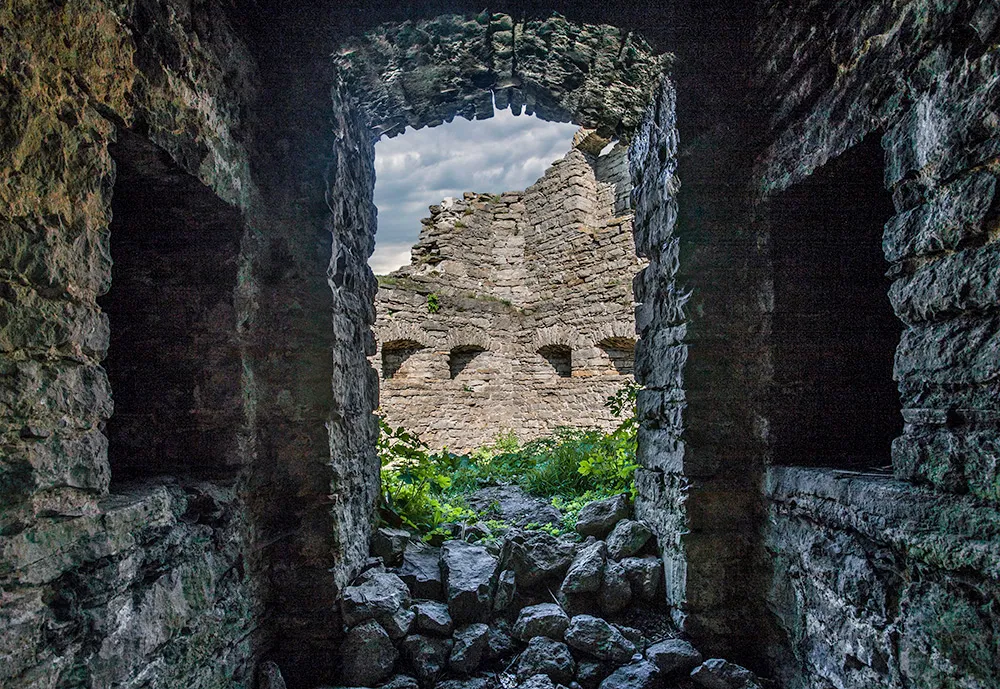
It is also hard to say when the castle acquired its present form – the main body of documents relating to Sataniv has been lost. Most likely this happened in the 1530s. Before that, twice in a row – in 1528 and 1530 – Sataniv was seized and plundered by Tatar detachments. The invaders knew their dark trade perfectly and, besides the traditional taking of captives, thriftily cleaned out everything of even slight value. To let the townspeople somehow get out of their predicament, King Sigismund I the Old on 17 March 1532 exempted Sataniv from all taxes for 8 years. Most likely the new castle was built precisely in this “preferential” period. This is also indicated by the rather archaic architecture of the structure. Even by the 17th century such a fortification layout was already outdated.
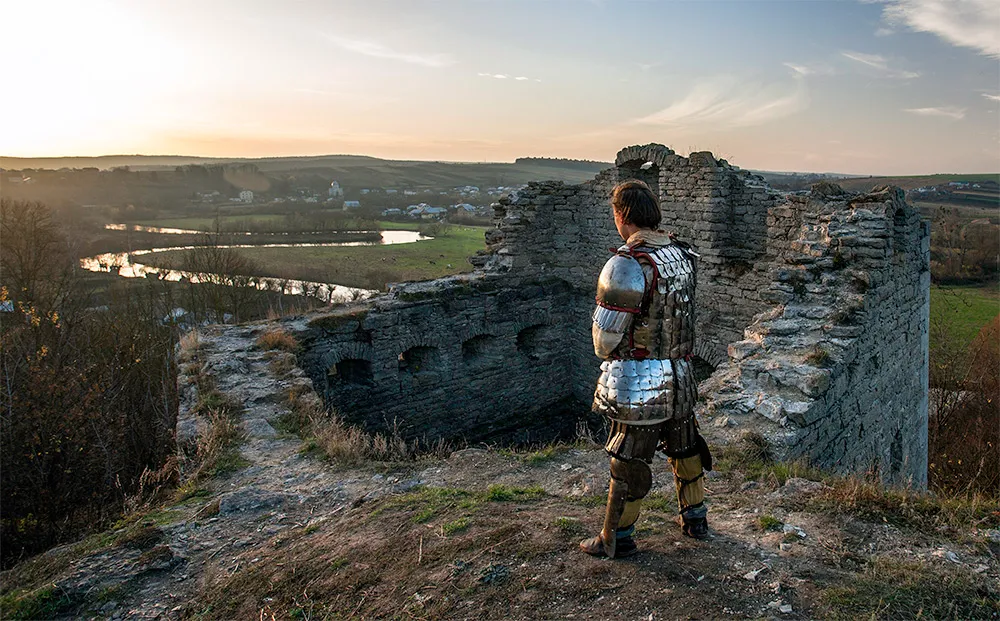
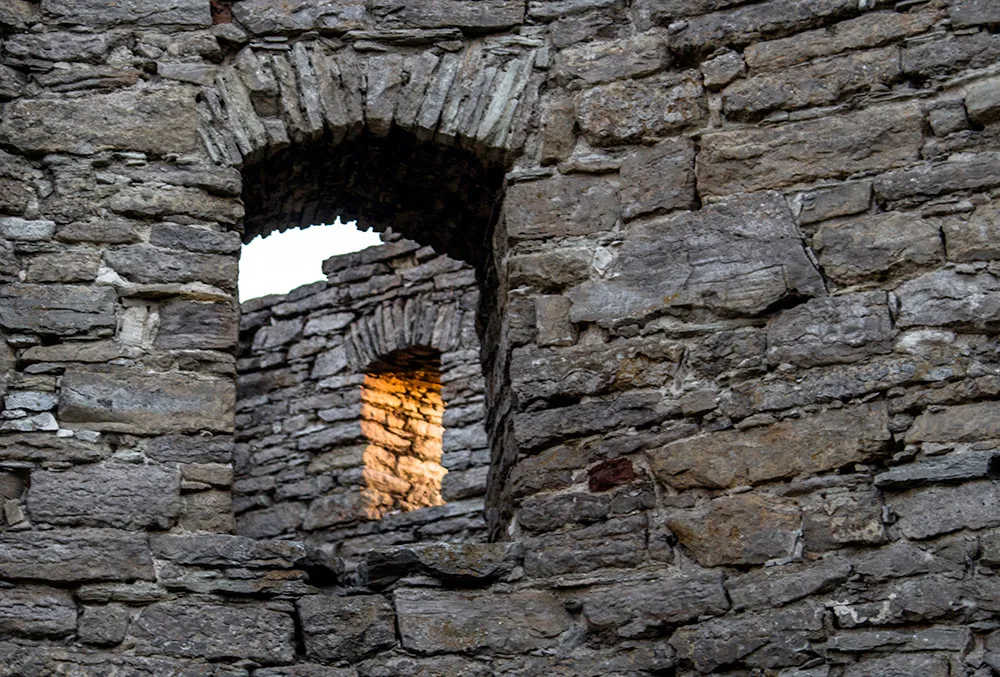
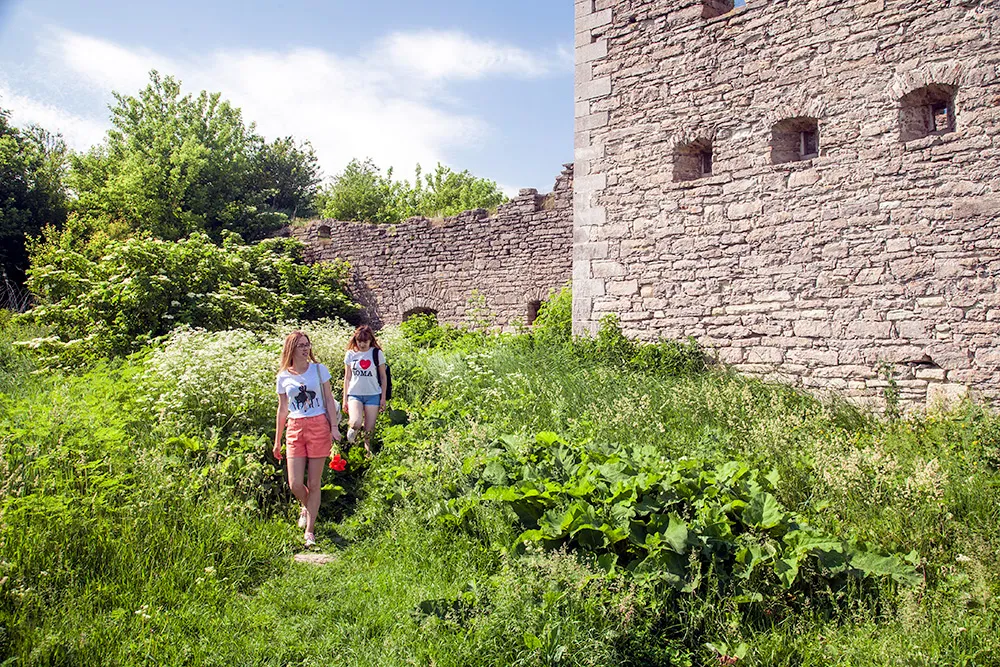
The most tragic events took place in the castle during the Liberation War led by Bohdan Khmelnytskyi. Unfortunately, the author does not undertake to say exactly in which year – the later sources contain a lot of confusion and outright logical inconsistencies.
The siege of Zbarazh in 1649 and the Battle of Zboriv, triumphant for the Ukrainians, unfortunately did not lead to a final victory. The treacherous ally, the Crimean Khan Islam III Giray, unexpectedly concluded a separate peace with King John II Casimir Vasa.
The king, buying the loyalty of the Crimeans, among other things allowed the Tatars to take captives (yasyr) on Ukrainian lands during their return to Crimea. The Tatars then seized and plundered dozens of towns and small towns, Sataniv among them.
And then comes complete confusion. It is mentioned that in 1651 Sataniv was again seized and devastated by the same Danylo Nechai. In the mid-19th century this was written about, in particular, by the priest and local historian Mykhailo Orlovskyi, and Sitsynskyi repeated it after him. On the one hand everything seems right – Khmelnytskyi’s army was passing by at that time – but after the “visit” of the Tatars of Islam III Giray, what was left there to devastate?
In the summer of 1653 Khmelnytskyi’s army appeared near Sataniv again. They say that this time the inhabitants themselves opened the town gate, so the Cossacks had to deal only with the castle, in which the king’s loyal troops, Catholic Poles, Uniate Ukrainians and Jews hoped to find salvation. The Cossacks supposedly took the castle by storm and slaughtered everyone who was hiding there.
The question immediately arises: where did all these people who had holed up in the castle come from? After all, the survivors of the 1649 massacre should have been successfully “finished off” back in 1651?
Let us note that the extermination of the castle garrison by the Cossacks most likely did take place, but the author does not undertake to say in exactly which year it happened.
The castle suffered most during the war with the Turks.
In 1672 the Ottomans, who came to Podillia headed by Sultan Mehmed IV himself (the very one to whom the Zaporozhians wrote their letter), occupied Sataniv without any resistance – the town’s self-defence could not, even hypothetically, withstand the most powerful army of the Old World. The occupiers committed no outrages at that time, because they were vitally interested in the development of the newly annexed province, but the very next year royal soldiers drove the small Turkish garrison out of the town. For some time the Ottomans left Sataniv in peace, until in 1676 the Janissaries seized it again.
This time the affair went as it should – with the bombardment of the town’s fortifications by heavy guns, large-scale destruction, an assault, plunder, violence, massacre and all the other points of the mandatory programme inherent in such performances.
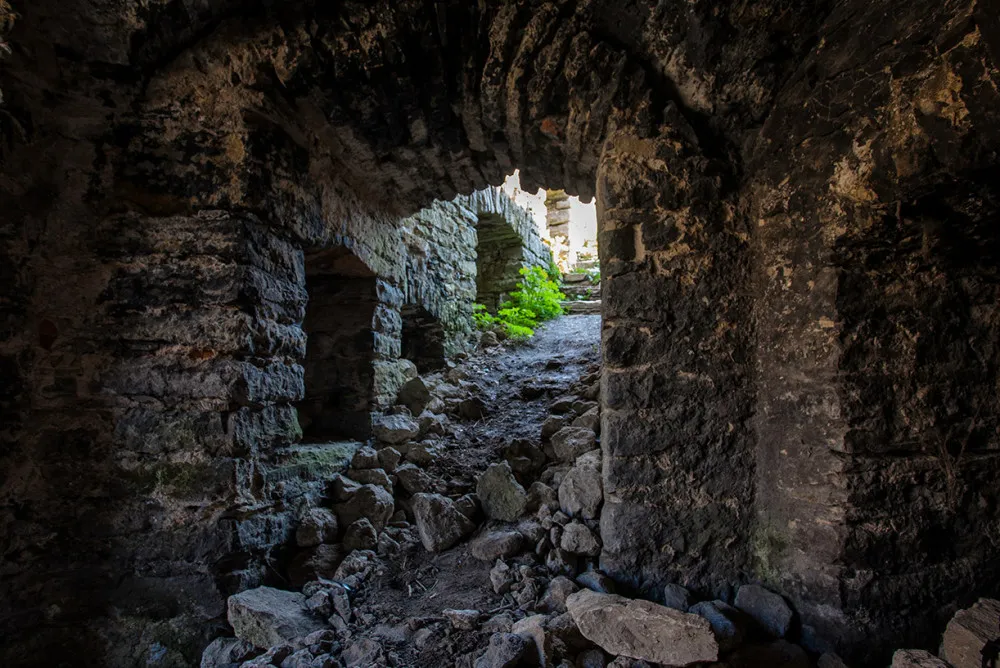
The castle was somewhat damaged then, but not all that badly. It is not impossible that the Ottomans even patched it up a little afterwards.
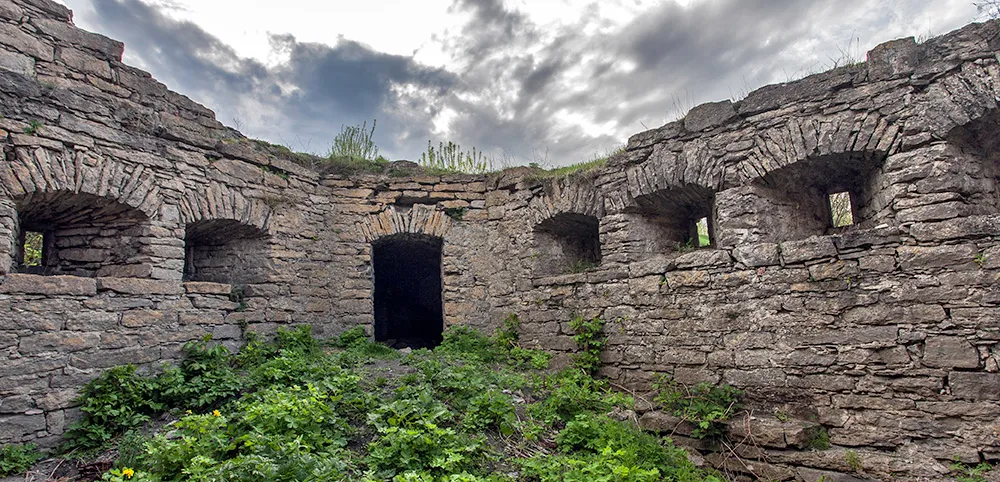
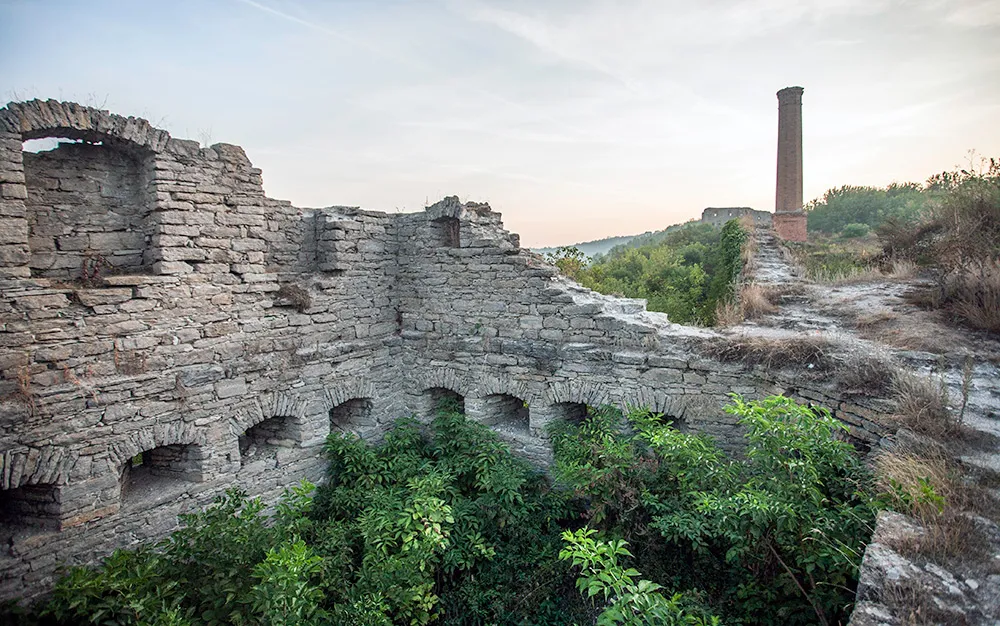
During the post-Turkish rebuilding of the fortifications, Adam Mikołaj Sieniawski confined himself to routine repairs of the castle without making any radical changes. At most, part of the old stronghold was adapted into a luxurious palace-residence – for this several narrow gun loops in the outer wall had to be cut out into wide windows. Considering that the danger of Tatar raids had by then faded away, and that the old castle could not withstand a regular Turkish army in principle anyway, this step was not so senseless.
Throughout the 18th and until the beginning of the 19th century the Sataniv castle, which by then had completely lost any defensive significance, was used only as a residence of the town’s owners. And they appeared here rarely. In particular, Adam Mikołaj Sieniawski preferred Zinkiv – the capital of his Podillian estates.
Only members of the castle administration, headed by the landlord’s deputy, who supervised order in the town on behalf of the owner, lived in the castle permanently.
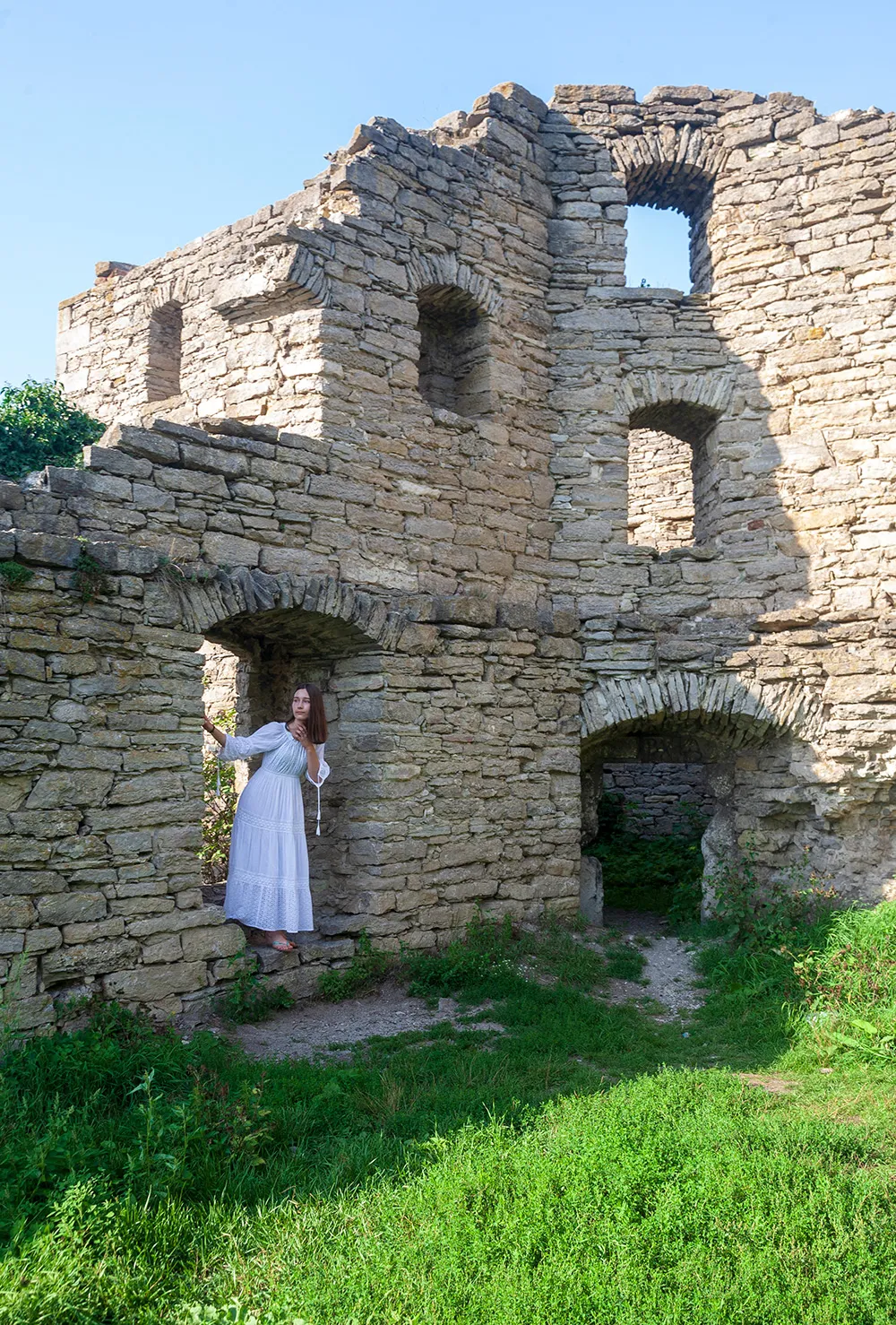
Of the palace complex only the windows cut through the walls remain
Until the end of the 18th century the castle kept such important attributes of magistrate authority as the executioner’s swords. As a warning to potential criminals they hung ostentatiously above the castle gate.
The Sataniv magistrate at that time favoured three kinds of punishment. For minor offences – a fine. For greater ones – they could administer lashes or birch rods (and a fine). For grave crimes – beheading. Despite the outright cruelty, the Sataniv judges were scrupulous about the spiritual needs of those condemned to death. So the multi-ethnic town had two swords. One for Christians. The other, the so-called “kosher” one, exclusively for Jews. In particular, it is known that in 1735 the magistrate paid 5 zlotys for four scythes used to make one of the executioner’s swords, and a further 7 zlotys to the smith for the work.
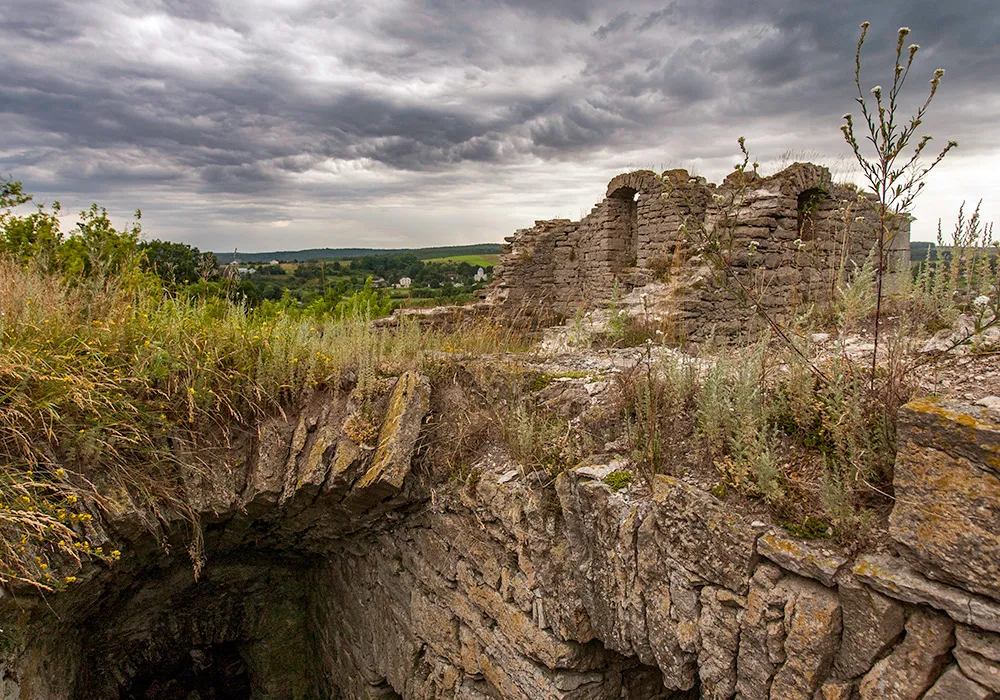
Later the swords moved to the town hall building that once stood in the middle of the Market Square. They were kept there until 1830, when by order of the provincial authorities they were taken away to Kamianets.
It should be noted that criminals were also executed “separately”. Jews (exclusively with the “kosher sword”) – on the southern hill, near the kirkut (Jewish cemetery), and Christians – on the hill on the northern side of the castle.
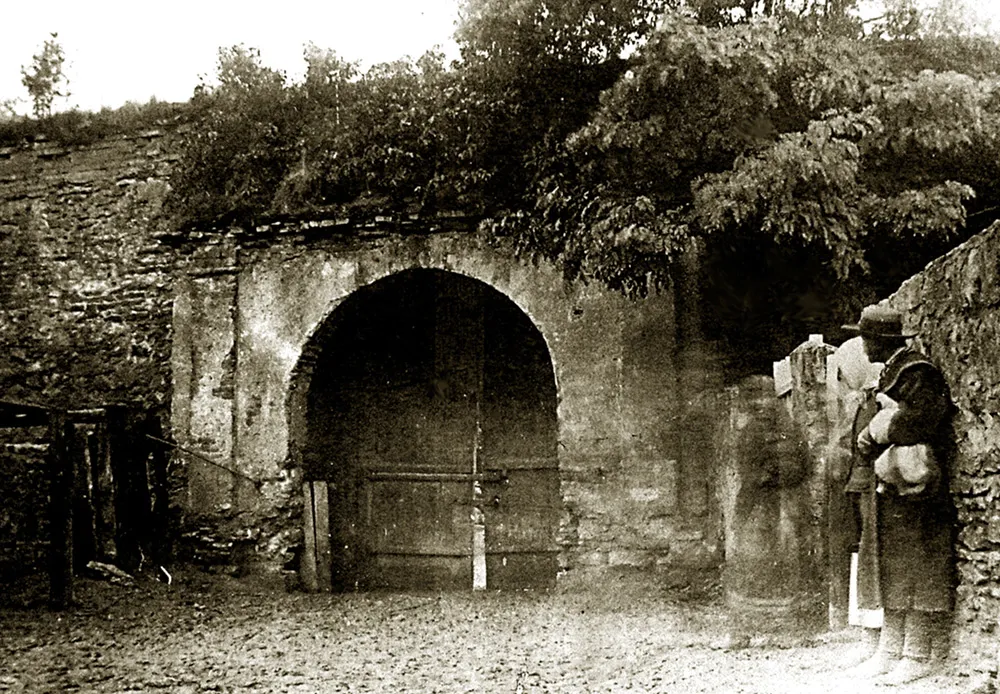
The castle gate at the beginning of the 20th century
After 1831 the castle in effect stood empty. Some of its buildings were used haphazardly as warehouses, some as a prison.
The complete end of the fortress came at the end of the 19th century, when a sugar factory began to be built nearby. Its first stage produced already in the autumn of 1899. The main shareholder of the plant and initiator of its construction was the owner of the town, Countess Klementyna Tyszkiewicz-Potocka (1856–1921). She was one of the most beautiful aristocrats of her time. This young lady once managed to seduce the heir to the Austro-Hungarian throne, Crown Prince Rudolf. He even intended to marry her. To avoid a morganatic marriage the beauty was hastily sent away from Vienna and a husband was quickly found for her – Count Jan Tyszkiewicz.
Considering that the castle was by then needed by nobody, its walls and towers began to be dismantled for building material for the construction of the factory.
The “father of Podillian local history” Yukhym Sitsynskyi, who visited Sataniv in the summer of 1901, noted down:
“Until recently the surroundings of the castle were a vacant place, but two years ago a huge sugar factory was set up here, and now huge buildings with tall chimneys rise beside the castle ruins; everywhere there is din, banging, bustle. For the factory’s needs ditches are filled in here and there, stone masonry is torn down, and so on.”
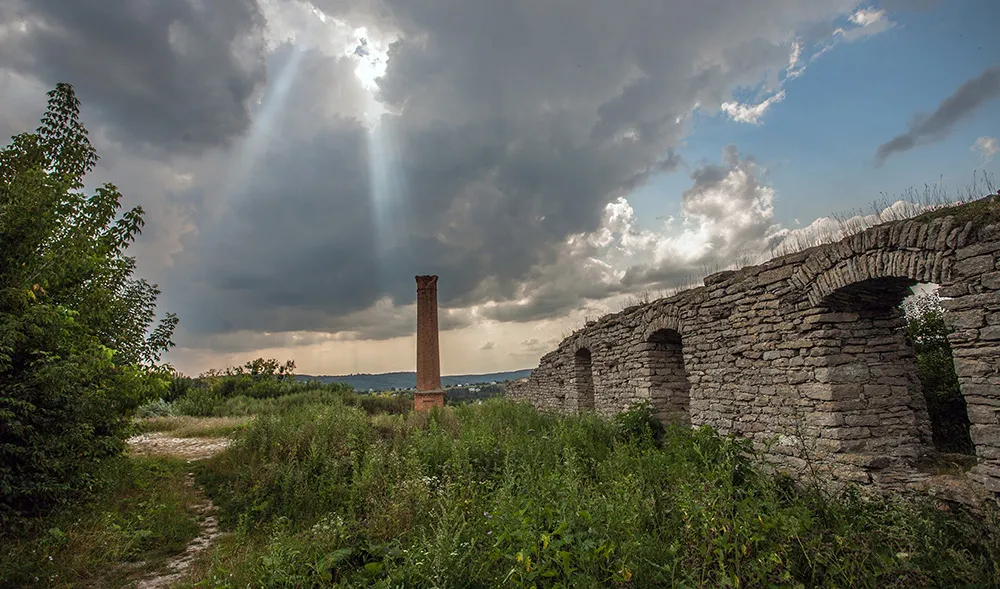
As it developed, the factory advanced further on the castle, until all that was left of the latter were a pitiful three towers (with a piece of a fourth) and only one and a half walls of the former five.
In 1924 the local authorities were going to demolish the remains of the ancient fortification altogether, in a revolutionary way, “to the foundations”. The ruins, they said, threatened people’s lives and health – thrifty local Podillians were taking the remains of the walls apart for stone and a few accidents had occurred. But historians stood up for the monument. The Provincial Committee for the Protection of Antiquities, with the active participation of Yukhym Sitsynskyi, protested this decision in Kharkiv (then the capital of Soviet Ukraine). The All-Ukrainian Central Executive Committee (the government of the Ukrainian SSR) cancelled the resolution. In addition, the capital ordered the castle to be restored and allocated 5,000 roubles for it. A year earlier a monetary reform had been carried out in the USSR, and at that time this was a considerable sum. But nobody began the restoration, and where the money evaporated to is unknown. It is not impossible that it was with these funds that the partial rebuilding of the town gate, which had collapsed earlier, was carried out. (UPDATED – yes, the version that the money went to the restoration of the gate is correct. Moreover, in 1924 it was in fact not the demolition of the castle but of the Town Gate that was at issue. Read the refutation of the established belief that in 1924 they wanted to demolish the castle in our investigation)
The fortification was unlucky a second time at the end of the 1980s. Then, too, they were going to restore the castle. “Ukrzakhidproektrestavratsiia” (Lviv) even developed a full project. Work on the documentation was completed in 1991. There is no need to go on… In the crisis of the 1990s the revival of castles was somehow not a priority.
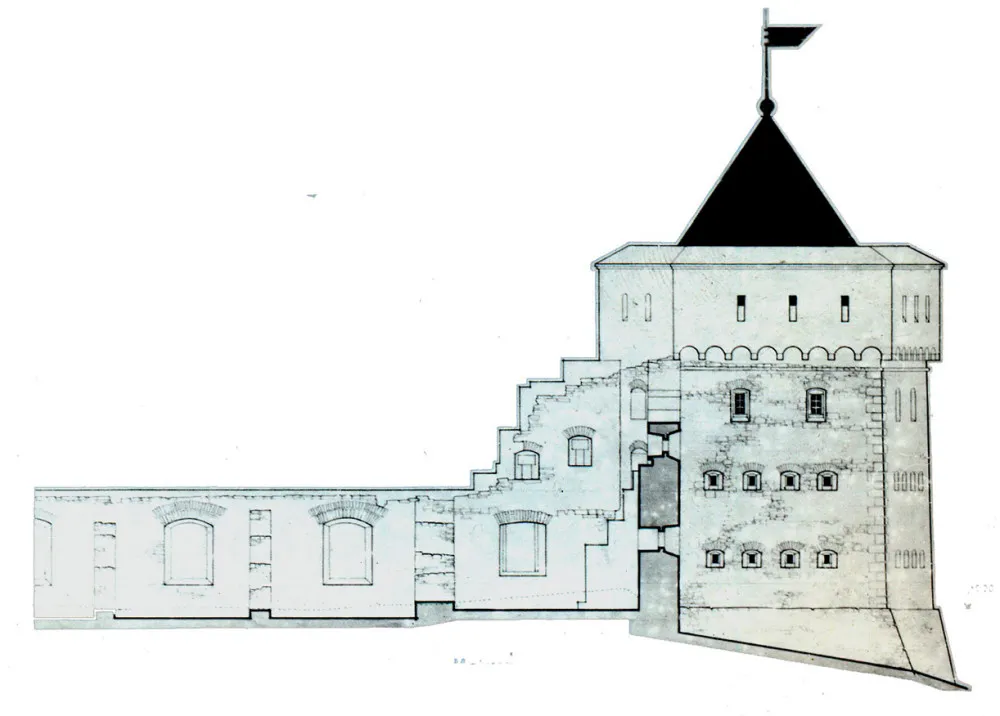
Part of the castle restoration project
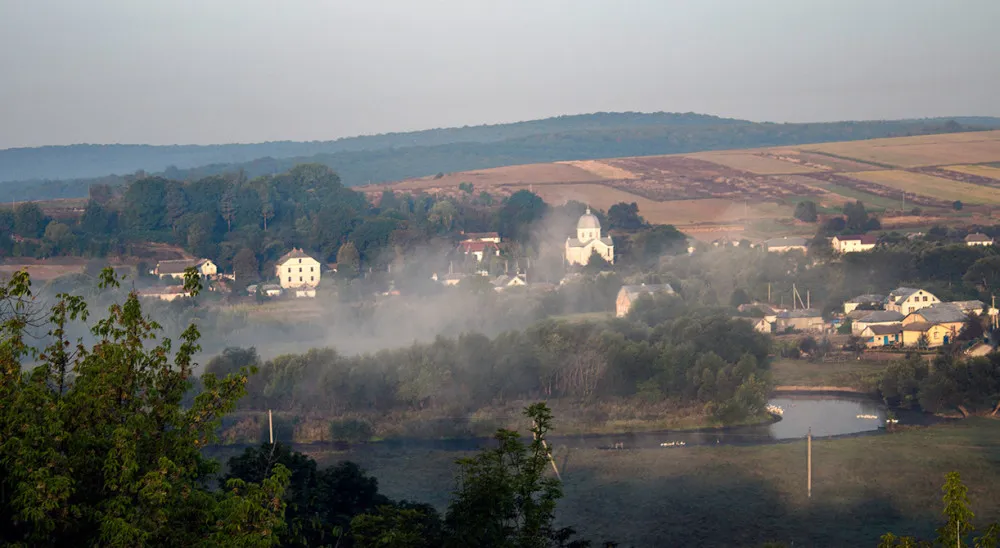
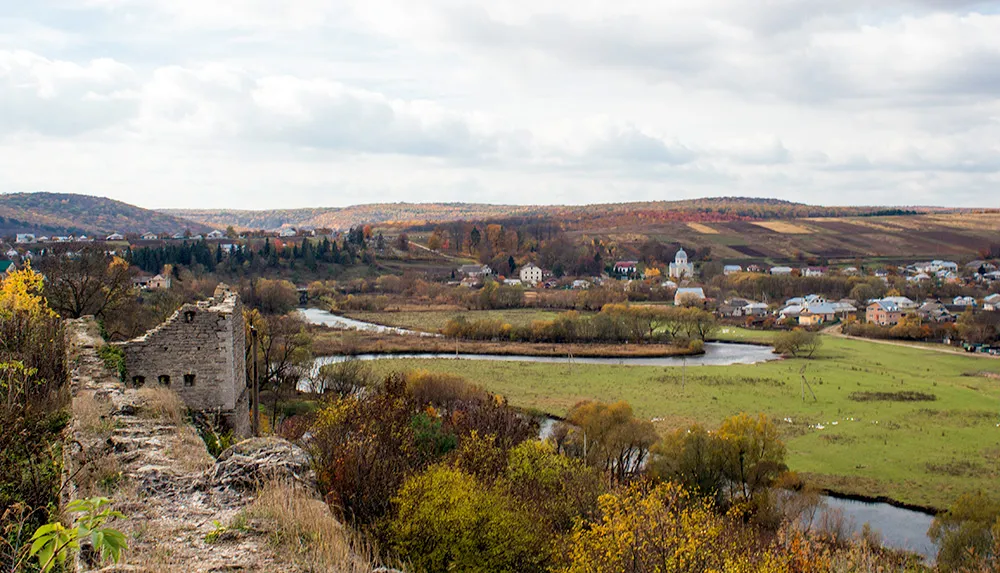
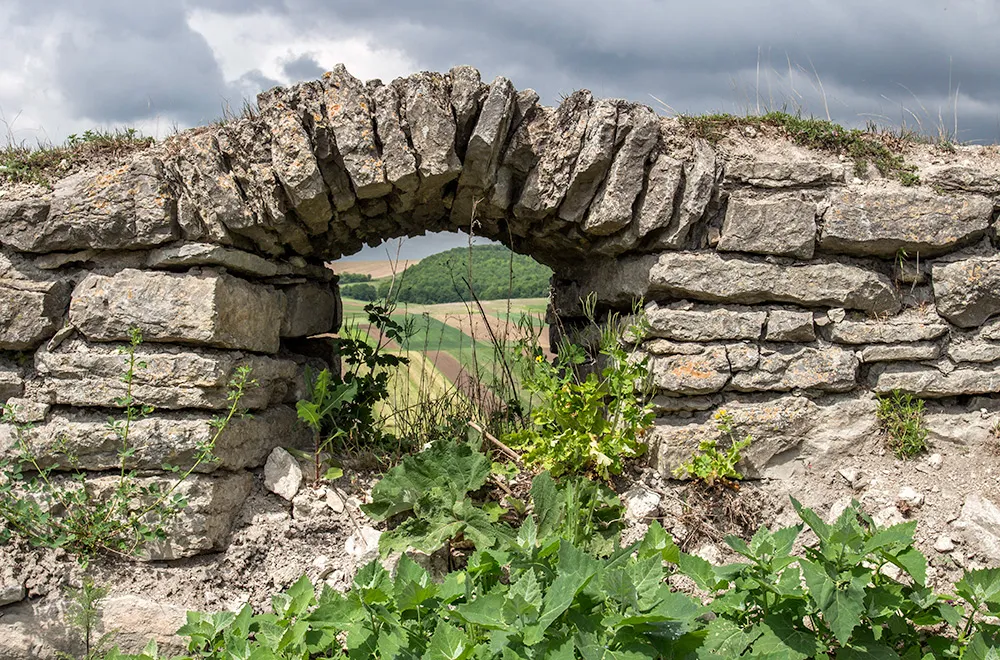
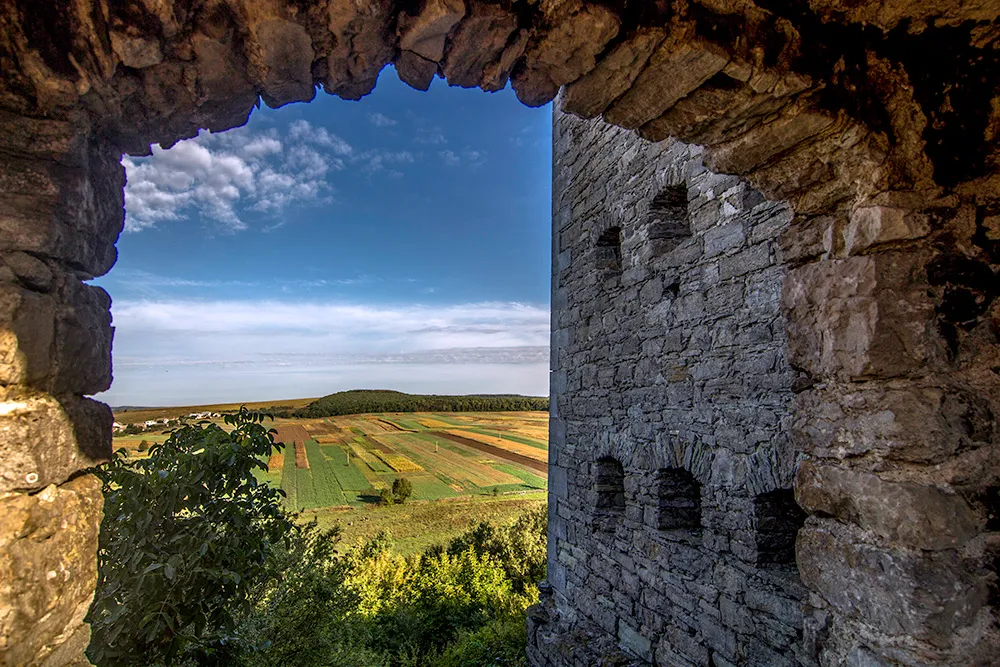
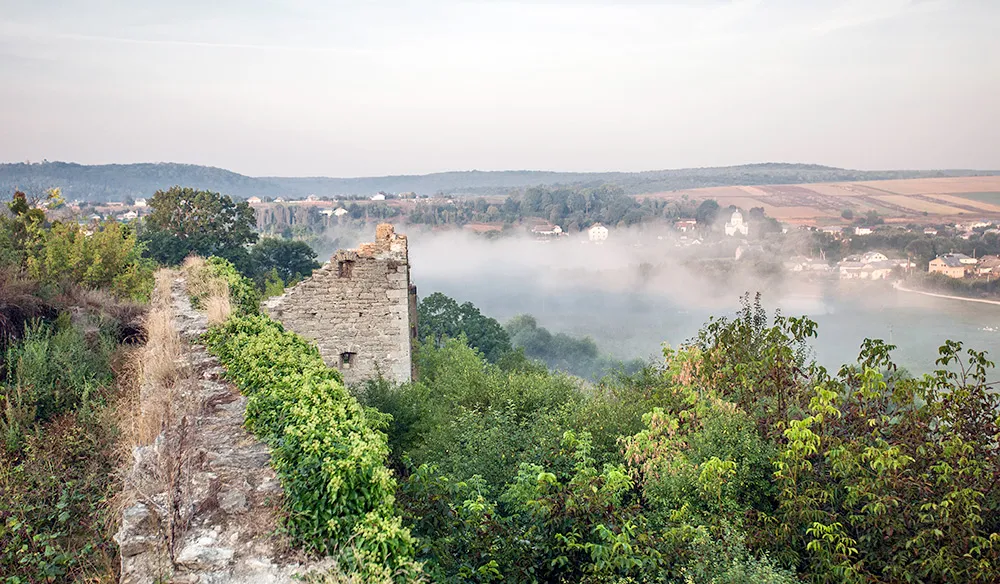
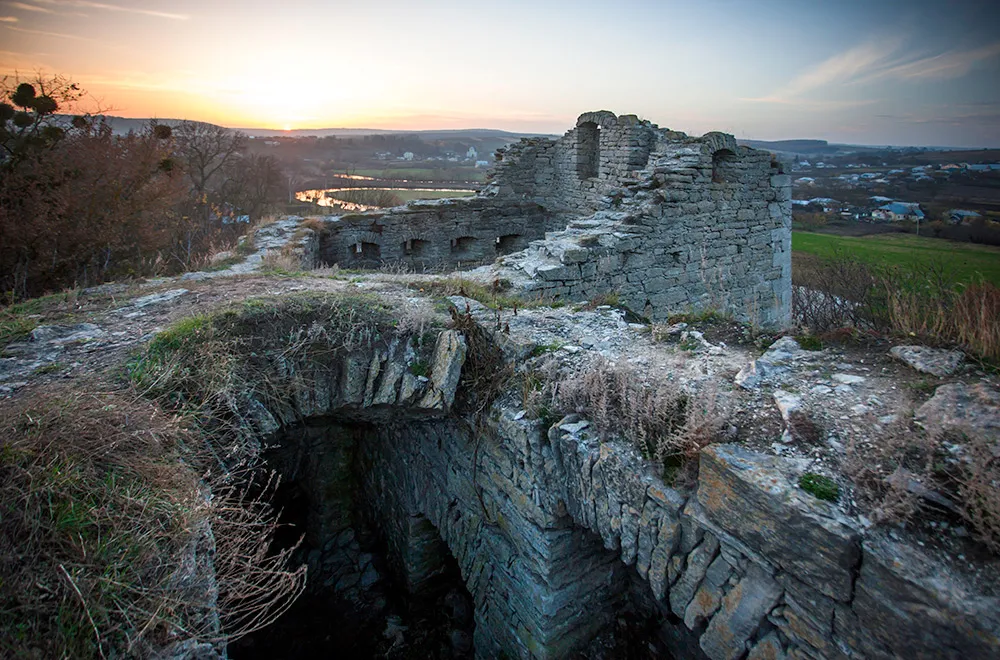
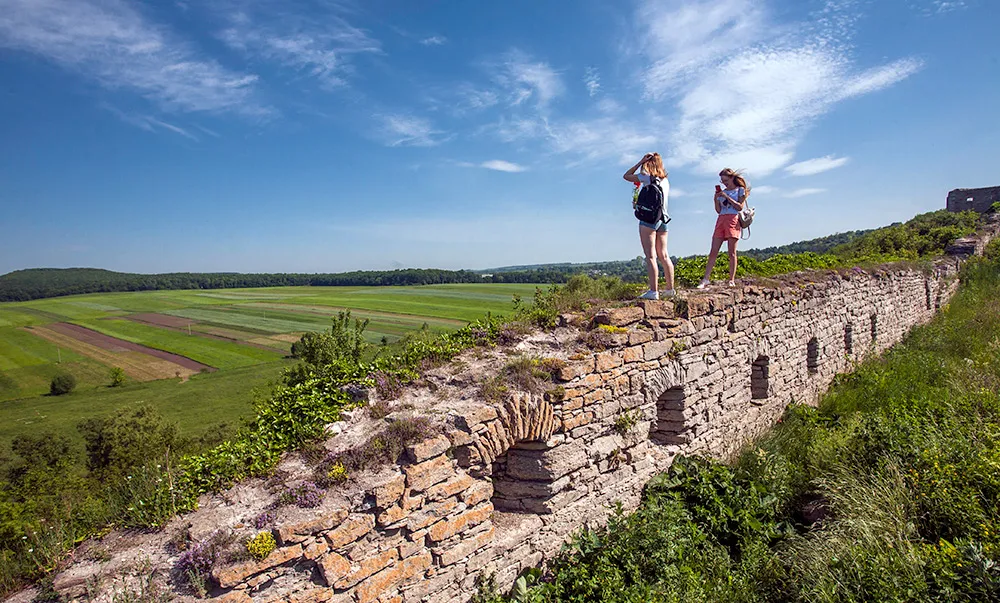
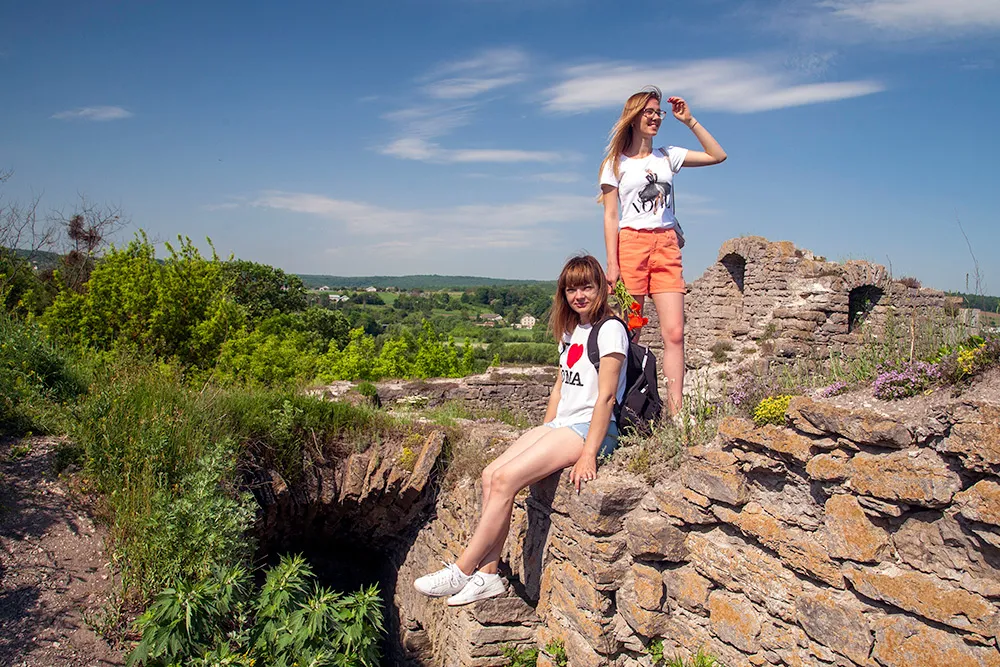
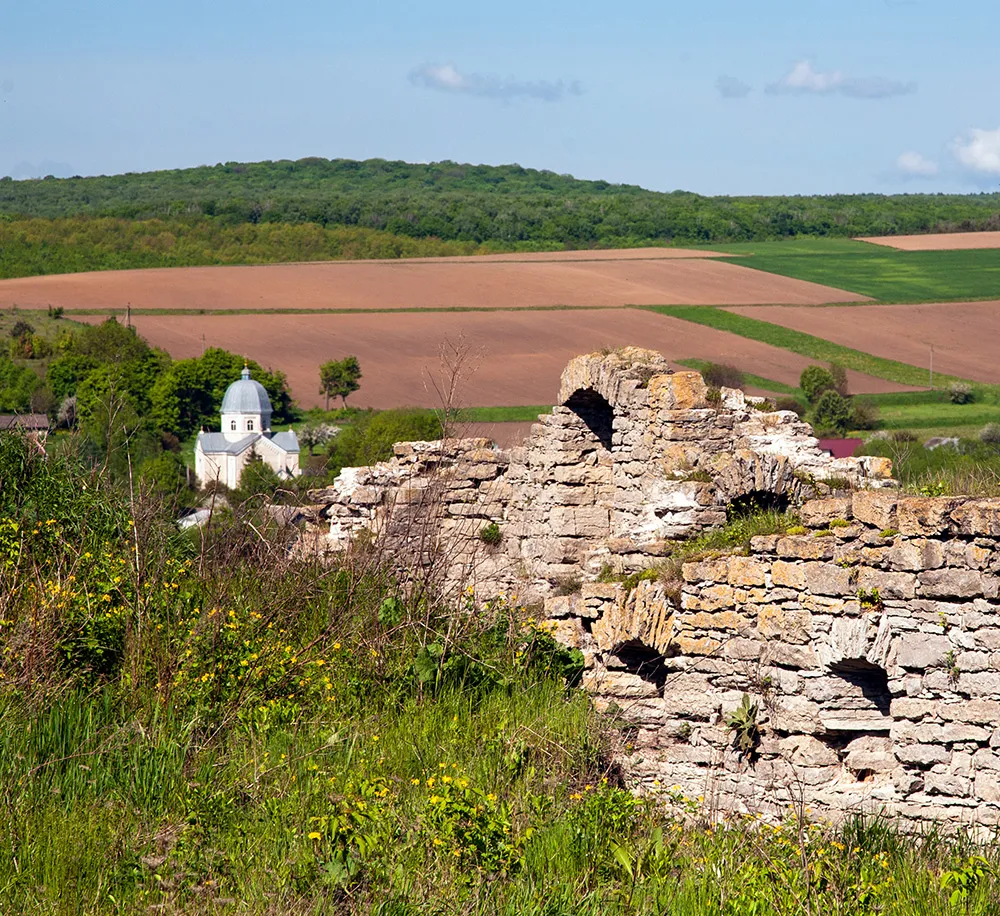
This is the view that opens from the castle walls
You can thank the author for his work and inspire him to new achievements by transferring a few hryvnias to 5168 7554 6511 0969. (Dmytro Poliukhovych)