

The village of Kupyn: an astonishing memorial by the “Podillia Pirosmani” and a mysterious tragedy

· 5 min read
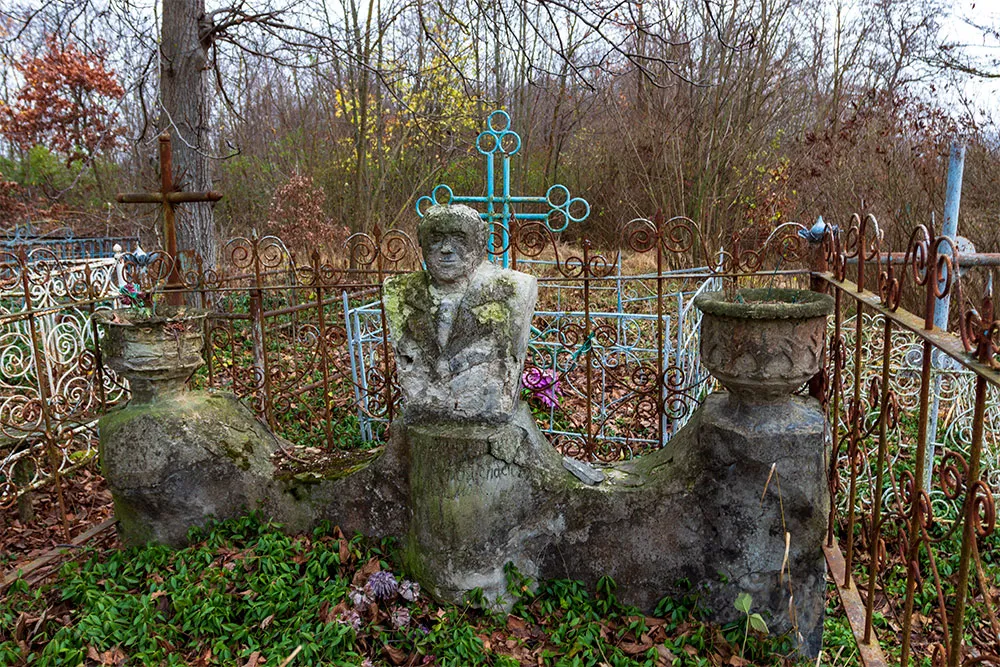
A creation of the “Podillia Pirosmani”
It is extremely pleasing when the Ukraine Incognita initiative to study Ukraine’s old cemeteries finds on the ground not only understanding on the part of local authorities but also spurs them to action. In July this year, in particular, an expedition of the UI team visited the very welcoming and interesting town of Horodok in Khmelnytskyi region and explored several old village necropolises in the Horodok community. In the village of Lisovody, by the way, a unique stone cross gravestone was found then, which remains an unsolved mystery for historians.
The cross itself is quite ordinary for gravestones of the mid-19th century in this part of Podillia. What is mysterious are the pilgrims’ marks scratched on its surface in the form of various small crosses (17 in all). Pilgrims usually left such marks in holy places, as a sign of their visit and to strengthen their prayer. There are no other graffiti like these on gravestone crosses anywhere.
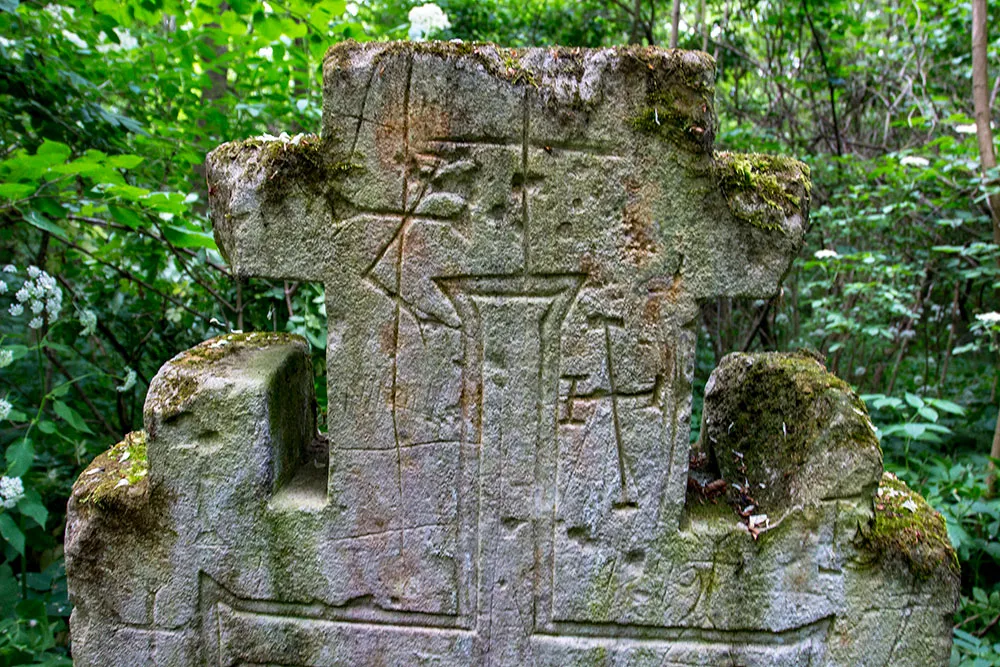
Lisovody. A cross with graffiti left by pilgrims
The crosses in the cemetery of the village of Radkovytsia, in the same Horodok community, also proved quite interesting.
“We have been nurturing the idea of studying the old necropolises of the Horodok area for a long time,” says Oleh Fedorov, head of the department of culture, nationalities, religions and tourism of the Horodok City Council. “But it was always put off until later. To some extent it is thanks to the Ukraine Incognita team that we began implementing a long-standing idea. A significant role in launching this project belongs to Mayor Neonila Andriichuk, who personally supports it.”
The project does not yet have a settled name. The working title is “Graves of the Ancestors”. The plan is to survey all the old necropolises of the Horodok area: Ukrainian, Polish and Jewish. The aim is to study and show the vivid multinational and multi-confessional history and culture of the region, which should promote harmony in Ukrainian society.
“When it is finished, we plan to organize a series of photo exhibitions,” says Oleh Fedorov. “We will also try to publish a photo album. Of course, we will cover everything online and in the media. In addition, the results will make it possible to lay out tourist routes.”
The “training” expedition was the trip to the village of Ostapkivtsi, the results of which Ukraine Incognita covered in long, detailed reports.
The first full-fledged expedition began on 23 November. There was no dragging of feet about the start. The best time to survey old necropolises is when the leaves have fallen completely (anyone who can imagine cemetery thickets will understand why) and the first frosts have come (mud is not good either).
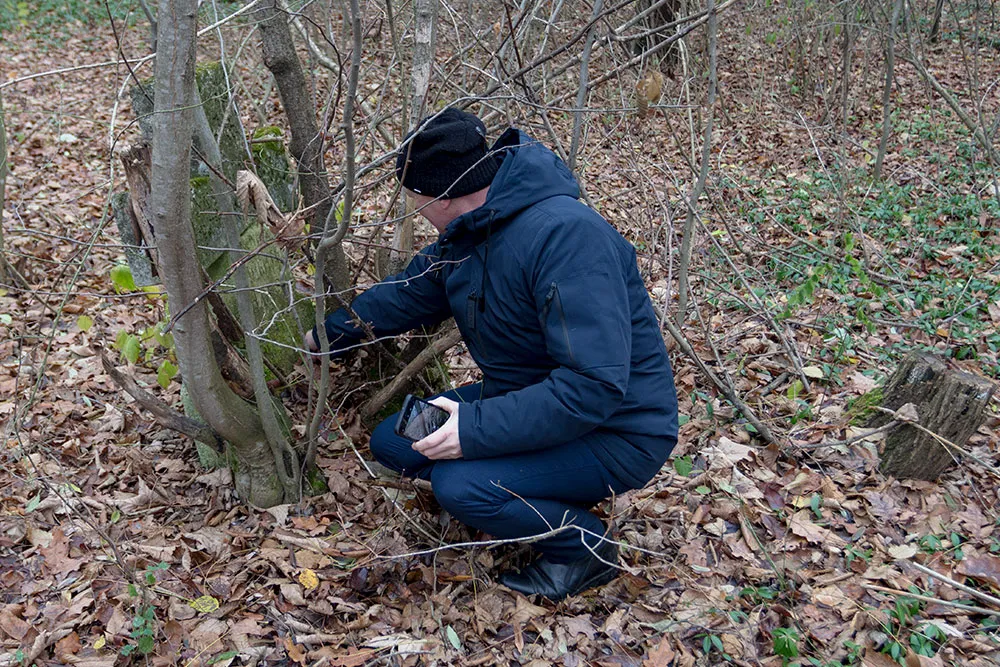
Oleh Fedorov clearing a cross in Kupyn
During the first trip, in which Oleh Fedorov and the author of these lines took part, the cemeteries in the villages of Hryskiv and Kupyn were surveyed. Unfortunately, nothing interesting was found in Hryskiv. The oldest local burials date only from the early 20th century, and the monuments themselves are mass-produced items of that time, devoid of any individuality.
But the necropolis of the village, once a small town, of Kupyn exceeded all expectations.
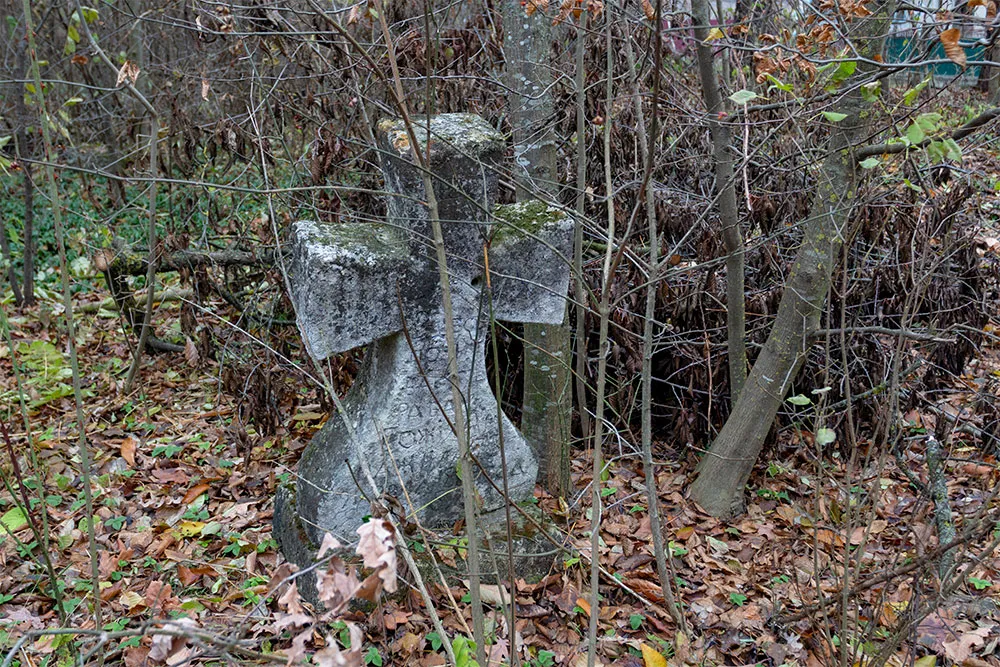
At first the Kupyn cemetery did not impress…
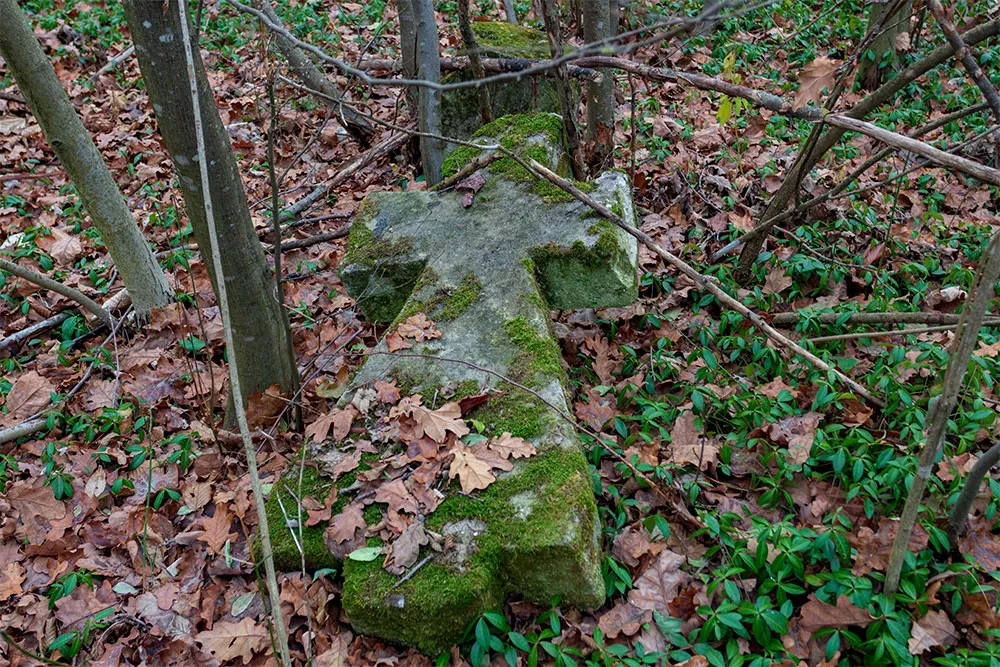
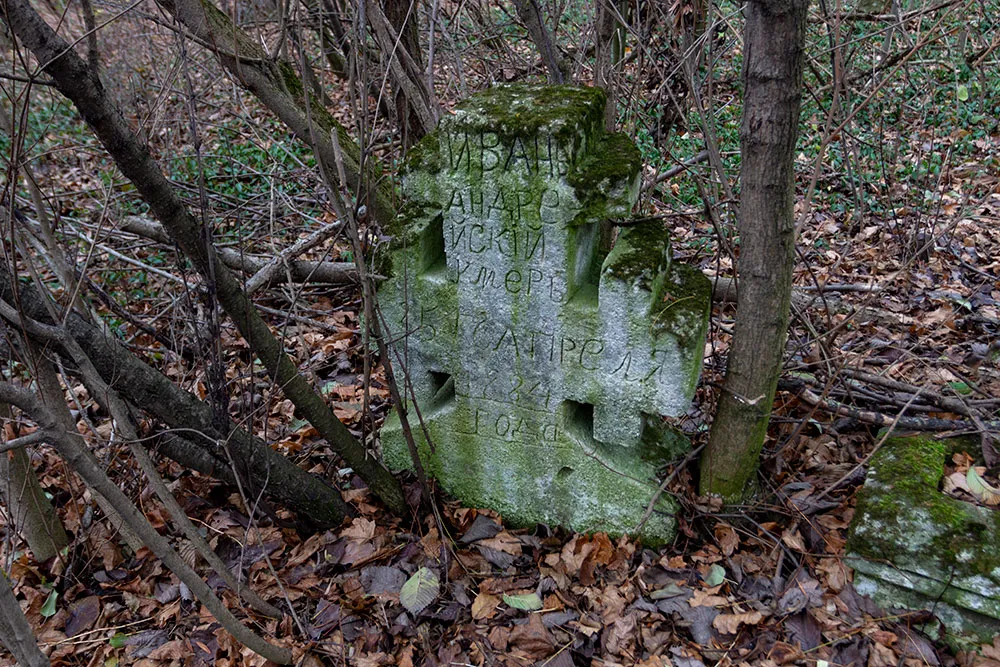
We will tell about the discoveries in its Roman Catholic (Polish) part later. For now let us dwell on its Ukrainian (Orthodox) section.
At first the cemetery did not impress. It was the usual set of archaic flat stone crosses of the “Cossack” and “cross-ended” types. Nor was any particular decoration (as, for example, in Radkovytsia) observed on them. Dating: from the 1880s to the early 20th century. It is far from Ivankivtsi (near Sataniv) with its 18th-century crosses.
But in the “new” part of the necropolis, where it seemed nothing of the kind could possibly be, the expedition made a real discovery. A whole memorial complex has been set up here.
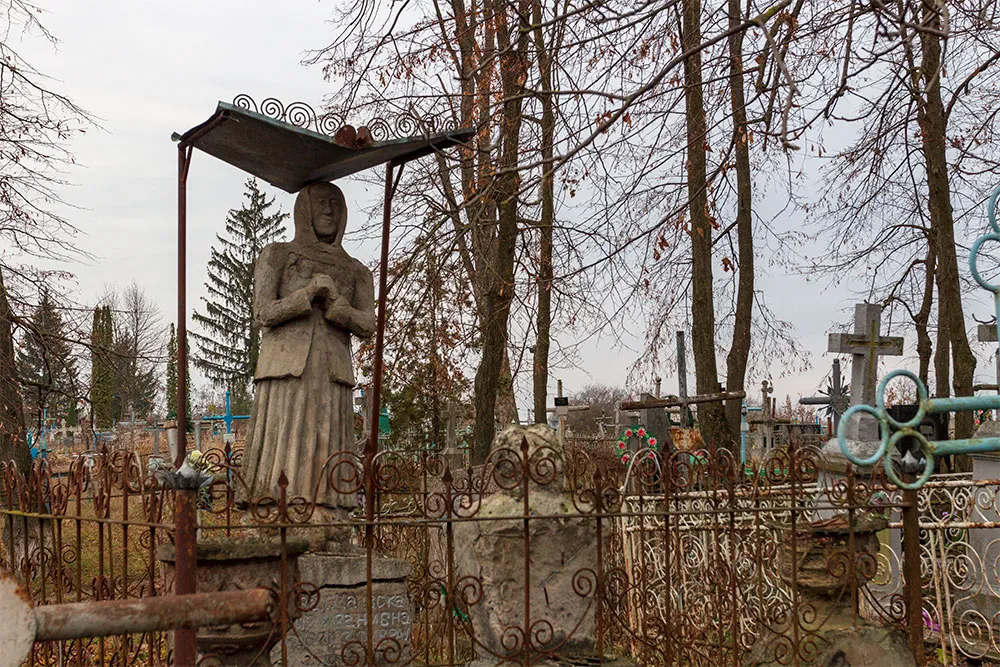
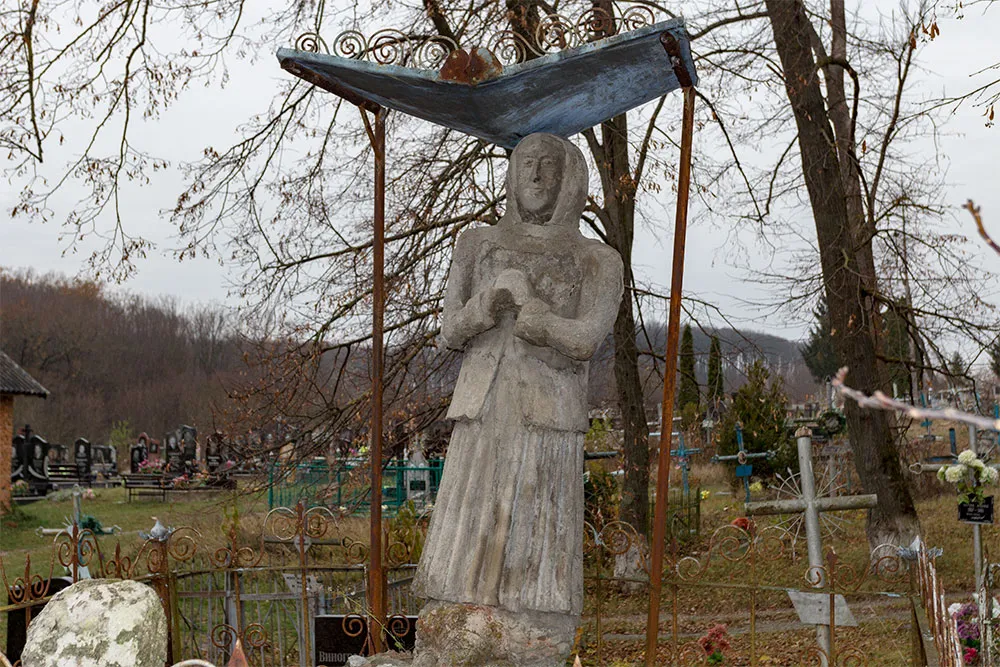
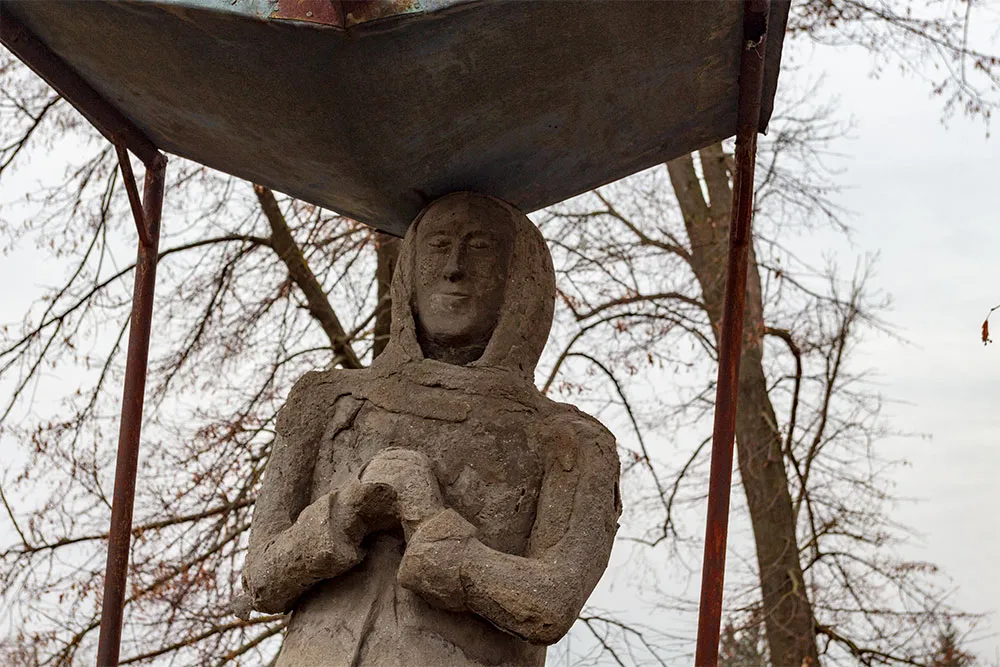
Judging by the inimitable style, the author is the same self-taught man from Ostapkivtsi whom we described earlier. Incidentally, since then Ukraine Incognita has managed to learn more about him. “Todor” is his street name. In reality he was called Fedir Kohut.
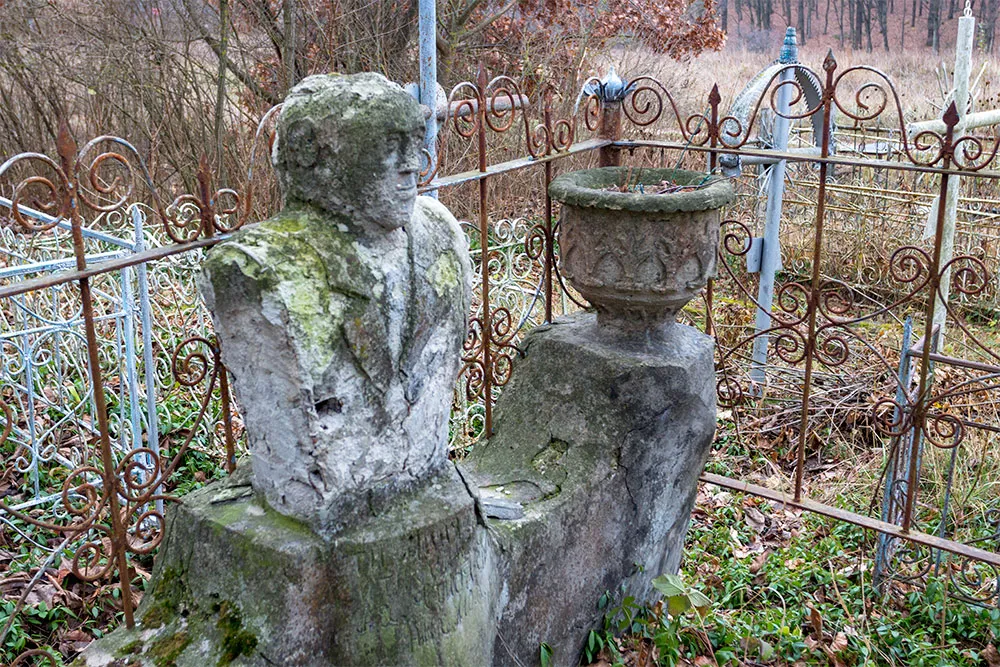
If at the Ostapkivtsi cemetery stone was used as the material, in Kupyn it is concrete. Here we stress once more: portrait sculptural monuments in Ukrainian village necropolises are an enormous rarity!!!
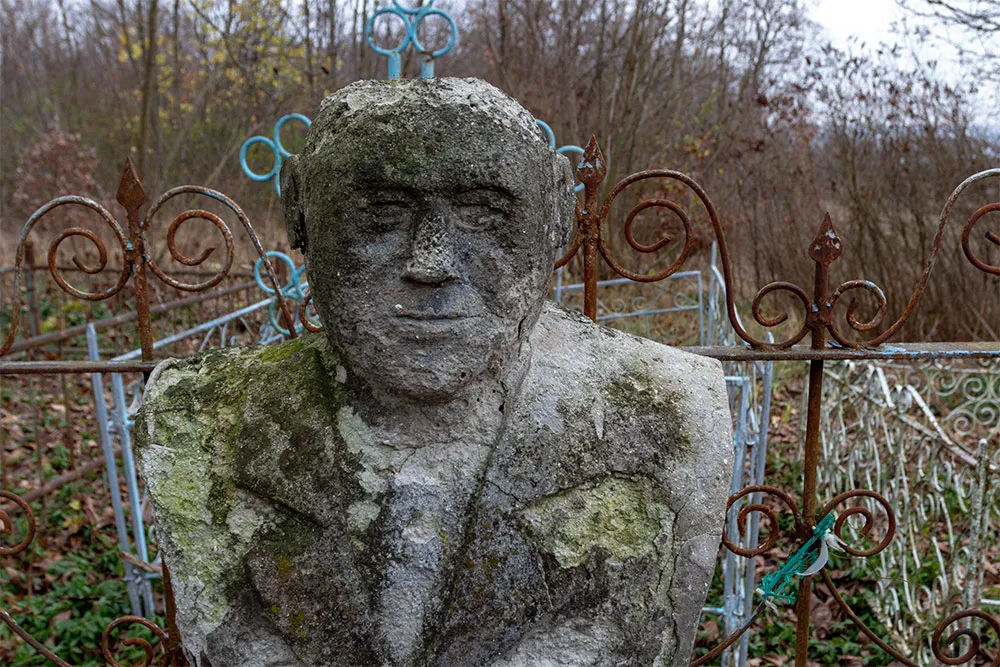
The main figure is a woman in a headscarf with her hands folded in prayer on her chest. Opposite her is a bust of a man and two vases, also of concrete. At first we thought it was a double burial. But when we managed to read the inscriptions, it turned out that behind this memorial lies some tragic and mysterious story that has yet to be figured out. Considering that it all happened in 1967, there must still be people in Kupyn who remember.
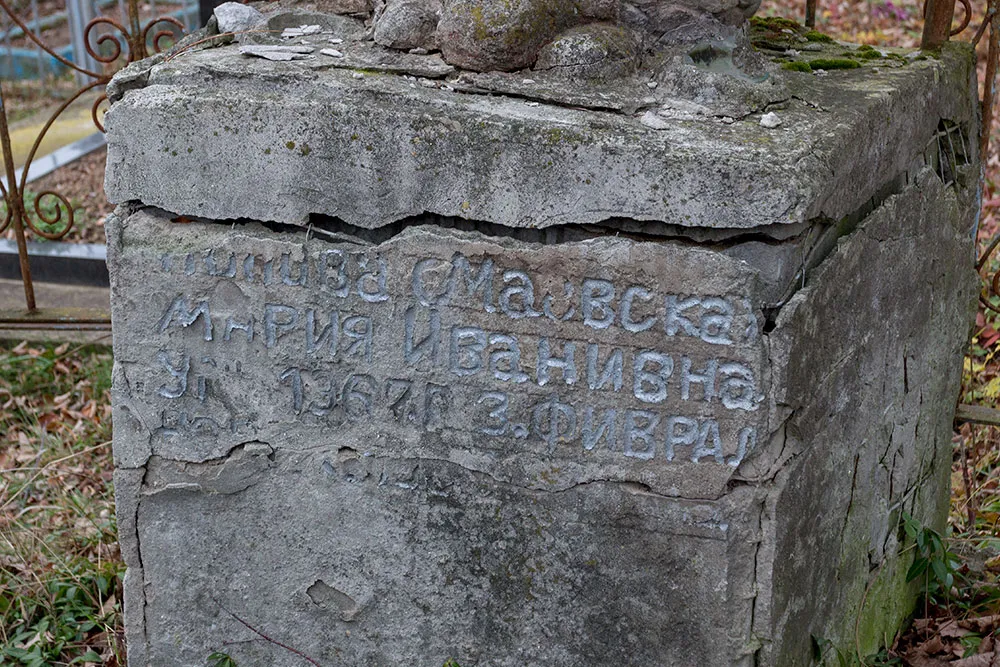
The epitaph is simply scratched in wet concrete
So, beneath the image of the woman it says (spelling and style preserved; in translation: “… Mariia Ivanivna Maievska. Died 3 February 1967”):
“… Маевська Мария Иванивна. Ум. 1967 г. 3. фиврал”
Beneath the man’s bust we read (“Forgive me. I could not save you.”):
“Ти миня прости. Я тибя спасти нисмох.”
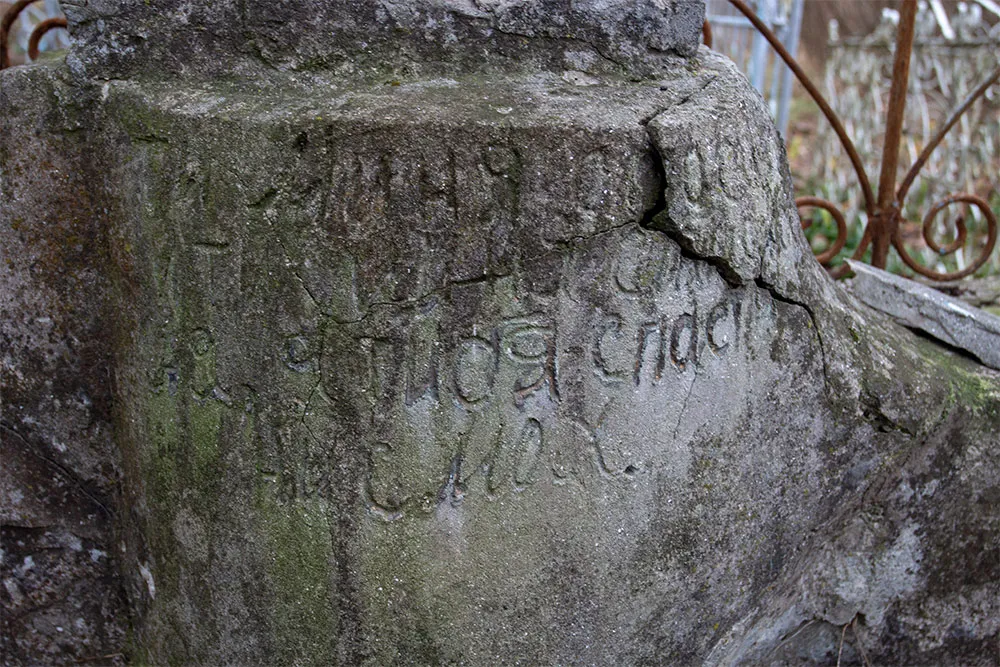
An apology…
What the man is asking forgiveness for, why he could not save his wife (mother?), and from what, is unclear. As is what tragedy happened. We suspect the woman died in a fire. It very much looks as though in the unclear structure on which the figure stands the artist tried to depict flames.
We hope that old-timers remember this incident, and soon we will tell what we learn.
As for Fedir Kohut (“Todor”), there is a strong suspicion that the legacy of this “Podillia Pirosmani” is not limited to the three figures in Ostapkivtsi and the sizeable memorial in Kupyn. Other works of his have probably survived. For, according to his fellow villagers, he created from the early 1930s until his death sometime in the 1980s. And judging by what the author saw, he was an outstanding master of naive folk art.
Studying the work and legacy of “Todor” should become a separate direction of research.
Dmytro Poliukhovych. All photos by the author


