

The village of Ostapkivtsi: where they searched for the philosopher’s stone and resurrected peasants from the dead

· 12 min read
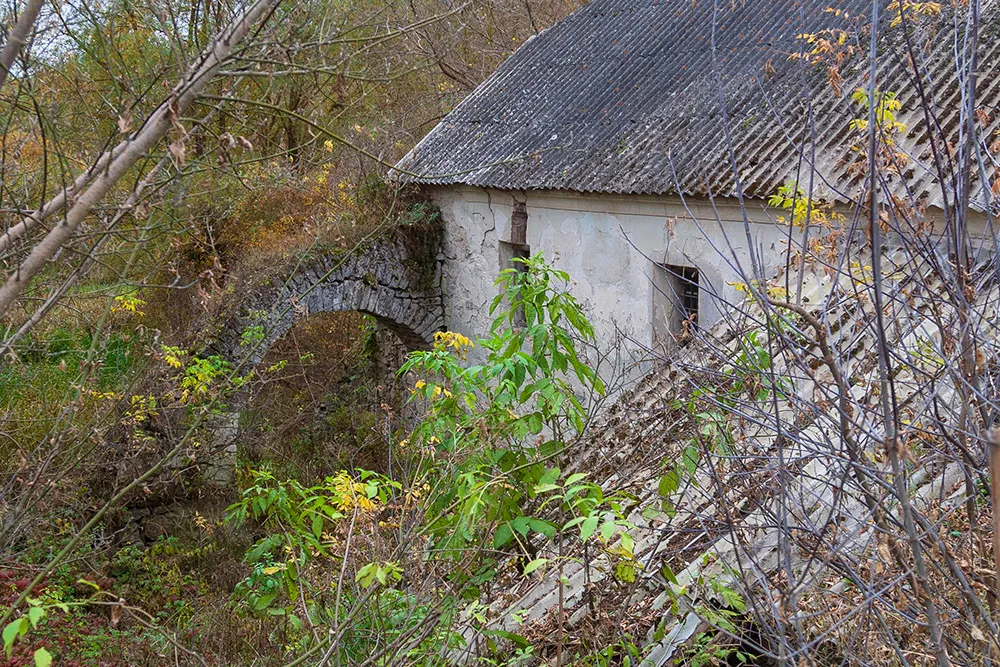
The old mill in Ostapkivtsi. Mid-19th century.
We have already written about the unique “portrait” gravestones found by members of the Ukraine Incognita team in the Podillia village of Ostapkivtsi. Here is a long feature devoted to this remarkably interesting settlement. The article has just been published in the magazine “Kurier Galicyjski” (No. 21, 2023) in Polish. We offer its Ukrainian version.
***
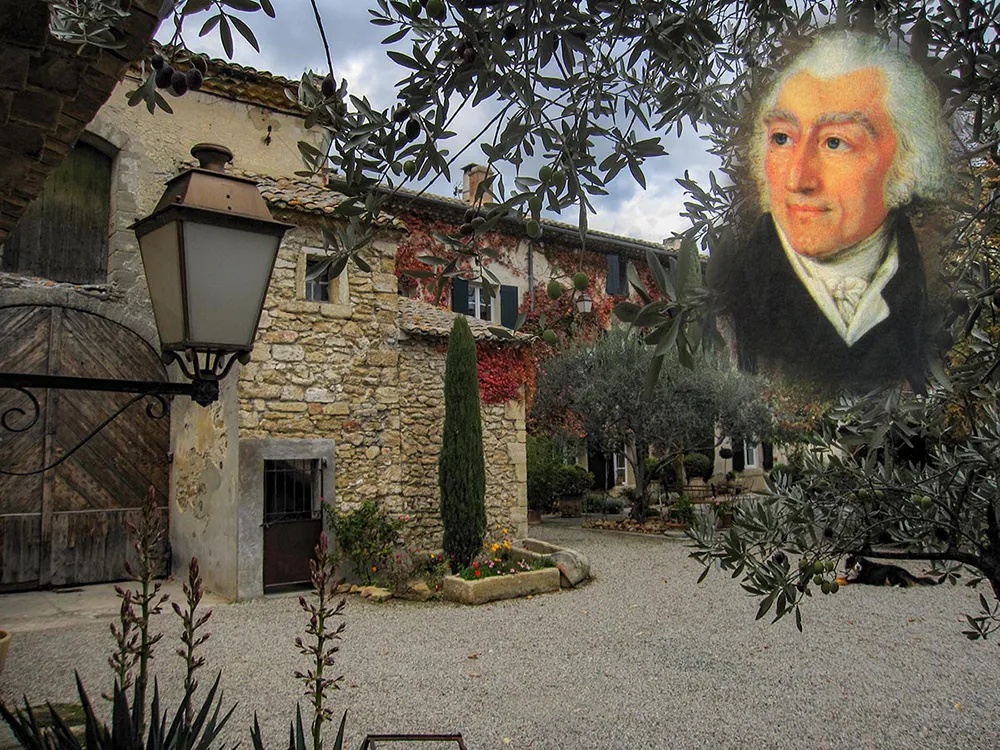
Château Mont Thabor, the residence of the Avignon Illuminati, and a portrait of Tadeusz Grabianka. Photo kindly provided to the author by the château’s owner, Mr Daniel Stehelin
This publication is a logical continuation of the large historical excursus devoted to the famous Podillia mystic, Freemason and Illuminatus Tadeusz Grabianka. This figure left a considerable mark on world history, and it was he whom Adam Mickiewicz once called the founder of Polish messianism.
In his secretive activities Grabianka often hid behind various pseudonyms. For a long time it was even wrongly believed that “Count Cagliostro” was one of Mr Tadeusz’s “nicknames”. In fact, “Cagliostro” was an entirely different man. Grabianka most often introduced himself as Count Ostap, after his main residence in the village of Ostapkivtsi, in what is now the Horodok community of Khmelnytskyi Oblast.
***
An insert from Ukraine Incognita
The greater part of Tadeusz Grabianka’s turbulent life is connected with Avignon (France).
The headquarters of the Illuminati was in the small town of Bédarrides (14 km from Avignon itself), in the castle of an adept of the brotherhood, the wealthy landowner Marquis de Vaucroze, who gave it to the Illuminati in 1786. The members of the society called their residence the “Mount Tabor”, and the castle the “Temple du Mont Thabor” (“Temple on Mount Tabor”). This is a direct reference to Mount Tabor, where the Transfiguration of Jesus took place before the apostles (Gospel of Matthew 17:1–9). The castle became the main headquarters and base of the Avignon Illuminati.
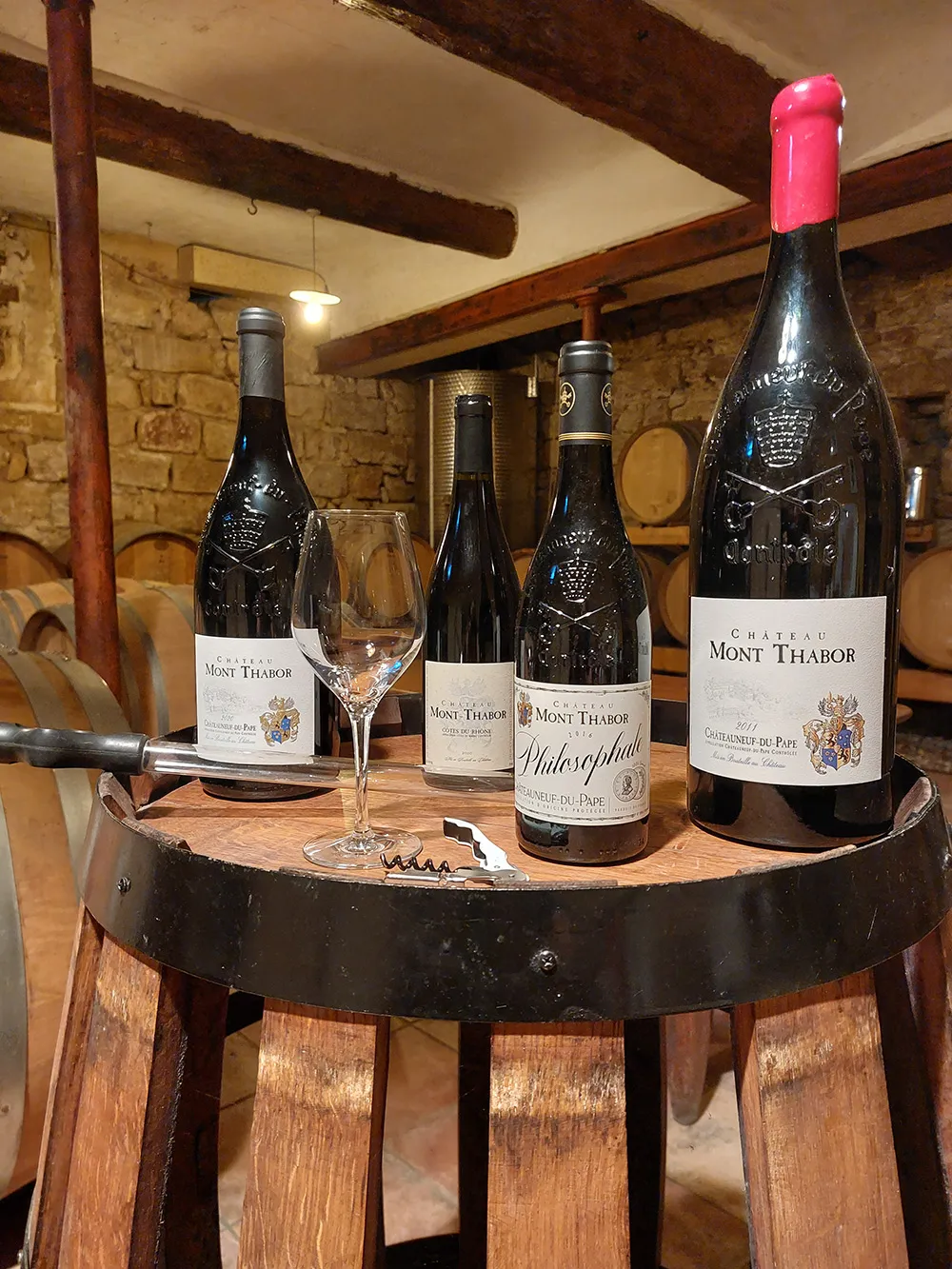
In the cellars of the Mont Thabor castle, where the Illuminati’s alchemical laboratory once stood, wine of the same name is now maturing. Photo kindly provided to the author by the château’s owner, Mr Daniel Stehelin
The castle still stands today. It has even kept the name “Mont Thabor”. During the 19th century it was a station for mail coaches and freight wagons, where horses were changed. In 1881 the estate was bought by Fritz Stehelin, who came from Switzerland and set up a winery here. The castle belongs to the Stehelin family to this day, and the wine under the “Château Mont Thabor” label enjoys a well-deserved reputation around the world. Such is the strange legacy of the Avignon Illuminati and Grabianka that has reached our time, though now in bottles.
***
When Oleh Fedorov, head of the department of culture, nationalities, religions and tourism of the Horodok City Council, proposed organizing a trip to Ostapkivtsi, the author of these lines certainly did not refuse. I really longed to see the village where the alchemical laboratory of the celebrated Illuminatus once operated and where, if we believe the words of his closest associate, Abbé Dom Pernety, he even managed to resurrect peasants from the dead. I hoped (and not in vain, as it turned out) to find at least some traces of the palace of the Grabianka family and their descendants. The palace itself did not survive the turbulent post-revolutionary years.
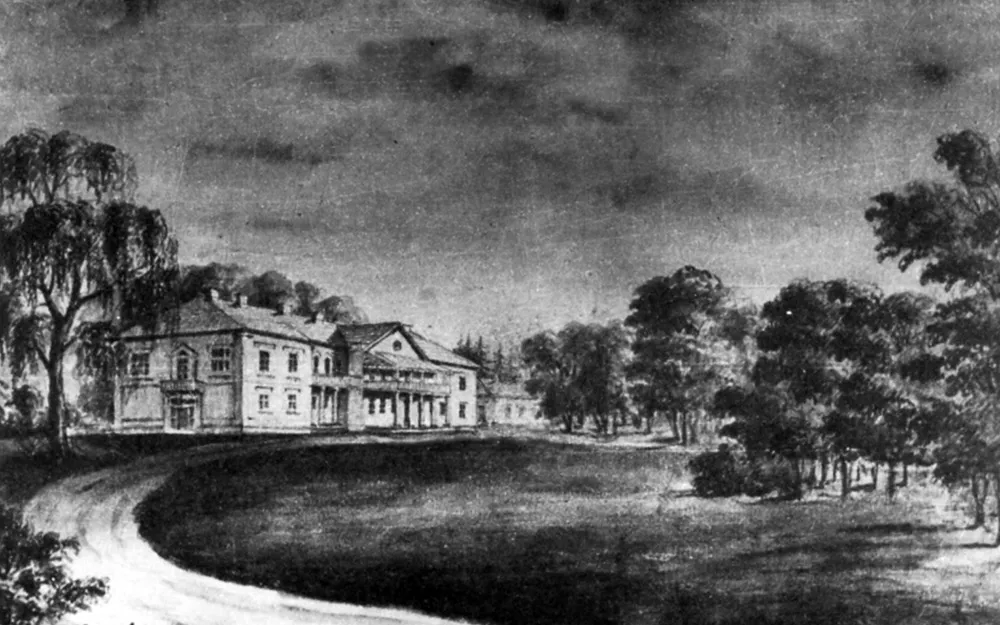
The palace in Ostapkivtsi around 1880. Drawing by Napoleon Orda
Situated in the picturesque valley of the Smotrych, the village of Ostapkivtsi is known since at least the 15th century, and possibly even the 14th. Once one of the castles of the Herburt magnates rose in its midst. Later, through the marriage of Zuzanna Herburt, Ostapkivtsi passed to the Stadnicki family as a dowry. And through the marriage of Teresa Stadnicka to Tadeusz Grabianka, it passed to the Grabiankas. It was then that the couple rebuilt the castle, which by that time had no defensive significance, into a more comfortable palace. The fortifications were not dismantled entirely: part of the castle was incorporated into the new building. This was probably done both to save money and to keep a historical link with their ancestors. In particular, the palace’s main hall, which was called the “Stone Hall”, survived from the time of the Herburt castle.
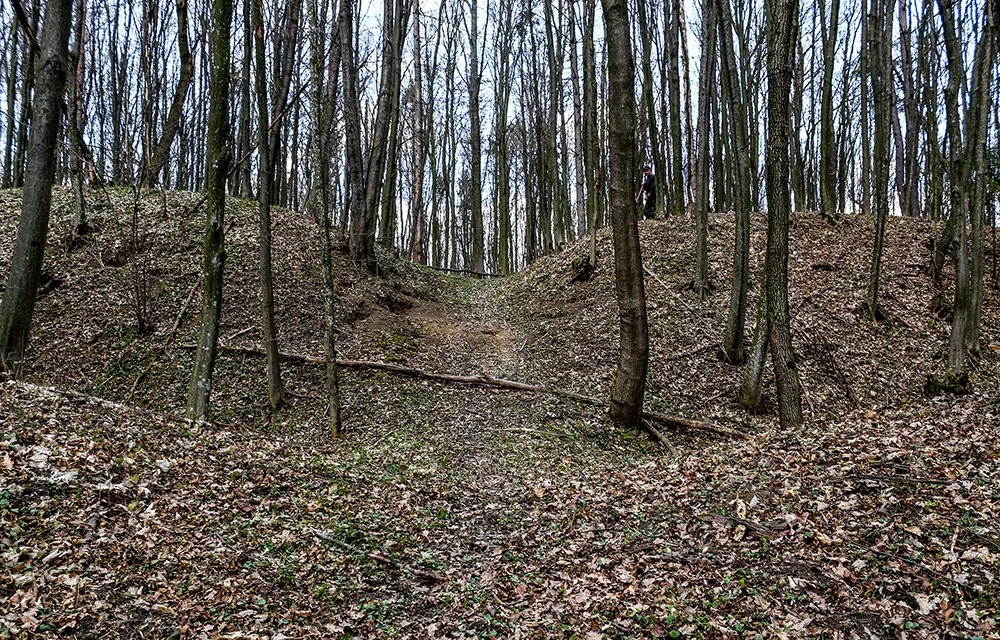
The ramparts of the ancient hillfort near Ostapkivtsi
About half a century ago a wonderful legend about the origin of the name “Ostapkivtsi” was written down. It probably appeared sometime after the Second World War. Who invented it is unknown, but one should respectfully take off one’s hat to the literary and dramatic talent of the author of this masterpiece. It contains heroic epic, passionate love and no small amount of drama.
Not far from Ostapkivtsi, in the middle of a forest, one can see a huge ancient hillfort. As many as three rings of mighty ramparts are no joke. It lies on the border of the tracts called “Kamlai” and “Khandiuk”. Once this fortification controlled the strategic “salt road” that linked the salt works of Kolomyia with the Kyiv region.
The legend about the origin of the toponym Ostapkivtsi is connected with the remains of the ancient fortification and the names of the tracts.
The main characters are the Turkish (sic!) khans Khan-Lai (Kamlai) and Khan-Diuk. We give only the plot, without details:
After the Ottomans seized Podillia, two Turkish khans, Khan-Diuk and Khan-Lai, built themselves a castle on a cliff above the Smotrych. The lustful Turks not only plundered and slaughtered the hapless Podillians, but also took all the pretty girls for their amusement, and then cruelly killed them.
At last the khans abducted the bride of a local blacksmith, Ostap. The young man could not endure the outrage; he reforged scythes, sickles and ploughs into sabres and spears, gathered a band of local peasants, killed the insolent invaders and destroyed the castle. Ostap, as is only right, rescued his bride, and they lived long and happily…
The neighbouring village was named Ostapkivtsi in honour of the heroic blacksmith.
In reality no khan, let alone a “Turkish” one (the Turks never had khans at all), ever passed this way. The origin of the toponyms is absolutely banal and carefully documented in historical sources. In particular, in the 1811 inventory of the estate of Tadeusz Grabianka’s widow, Teresa Stadnicka, we read: “The estate has two water mills, one of which is leased to the peasant Kamlai.”
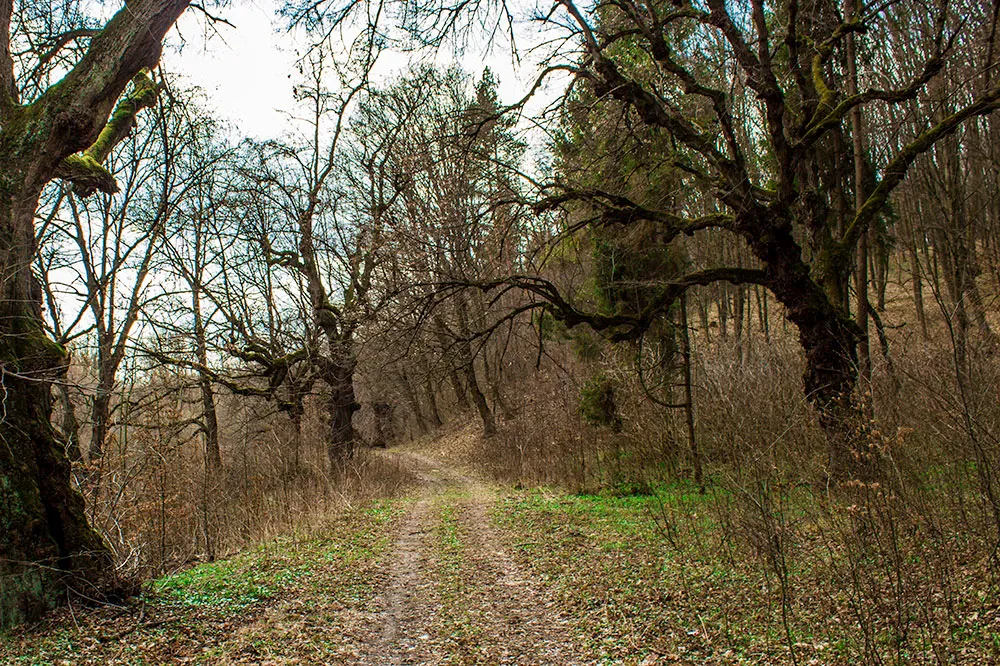
The road leading to the “Kamlai” tract
The story of “Khan-Diuk” is similar. In fact the toponym originally sounded like Kandiuk, that is, the son of Candidus (a half-forgotten Church Slavonic name). He, too, was a mill tenant.
There once lived peasants, and their descendants were turned into khans… The things that happen in this world!
The hillfort itself has nothing to do with either the Tatars or the Turks. It existed in the 10th–13th centuries and was most probably destroyed by the army of Danylo of Halych during his campaign against the Bolokhiv lands. The name Ostapkivtsi, note, was known long before the Turkish occupation of Podillia.
Not a trace of the Grabianka-Zaleski palace has survived to our day. I wanted to find at least the remains of the foundations. In such cases they can sometimes be traced in the ground. But no: the revolutionary peasants once did a good job of destroying the evidence of the “dark past”. According to local accounts, in the last years of the USSR some “manorial” cellars were supposedly found during earthworks. But they were immediately filled in, and nobody remembers exactly where this happened.
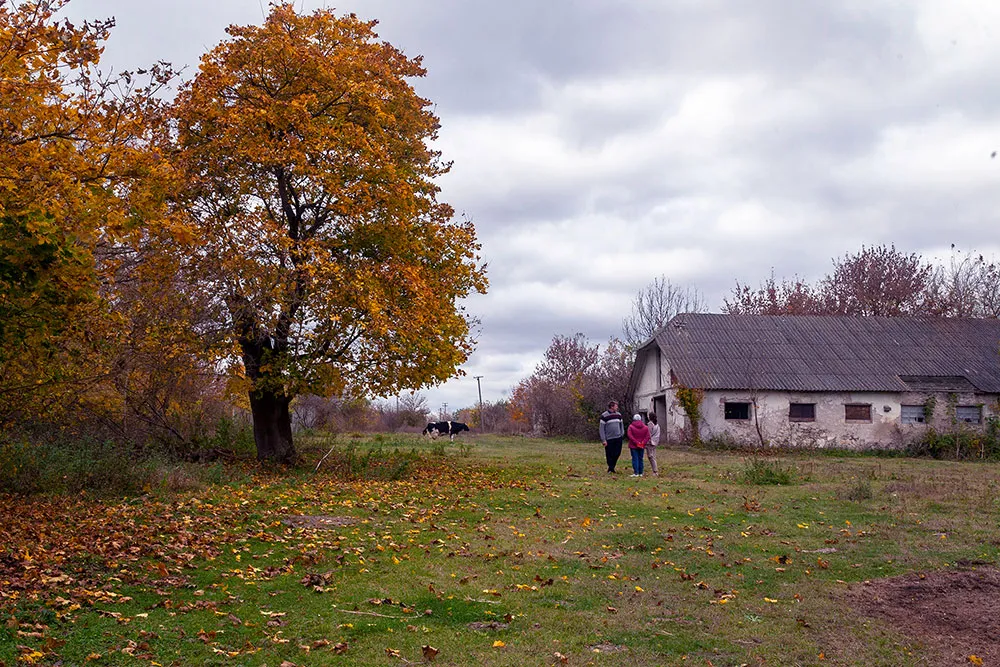
Cowsheds instead of a palace. But the ancient maple still remembers the past…
In place of the majestic palace there rose a sizeable livestock complex. The stones of the destroyed palace probably went into building the cowsheds. These, however, have stood empty for some twenty years. We met only a few cows peacefully grazing in the midst of this sad monument of the collective-farm past.
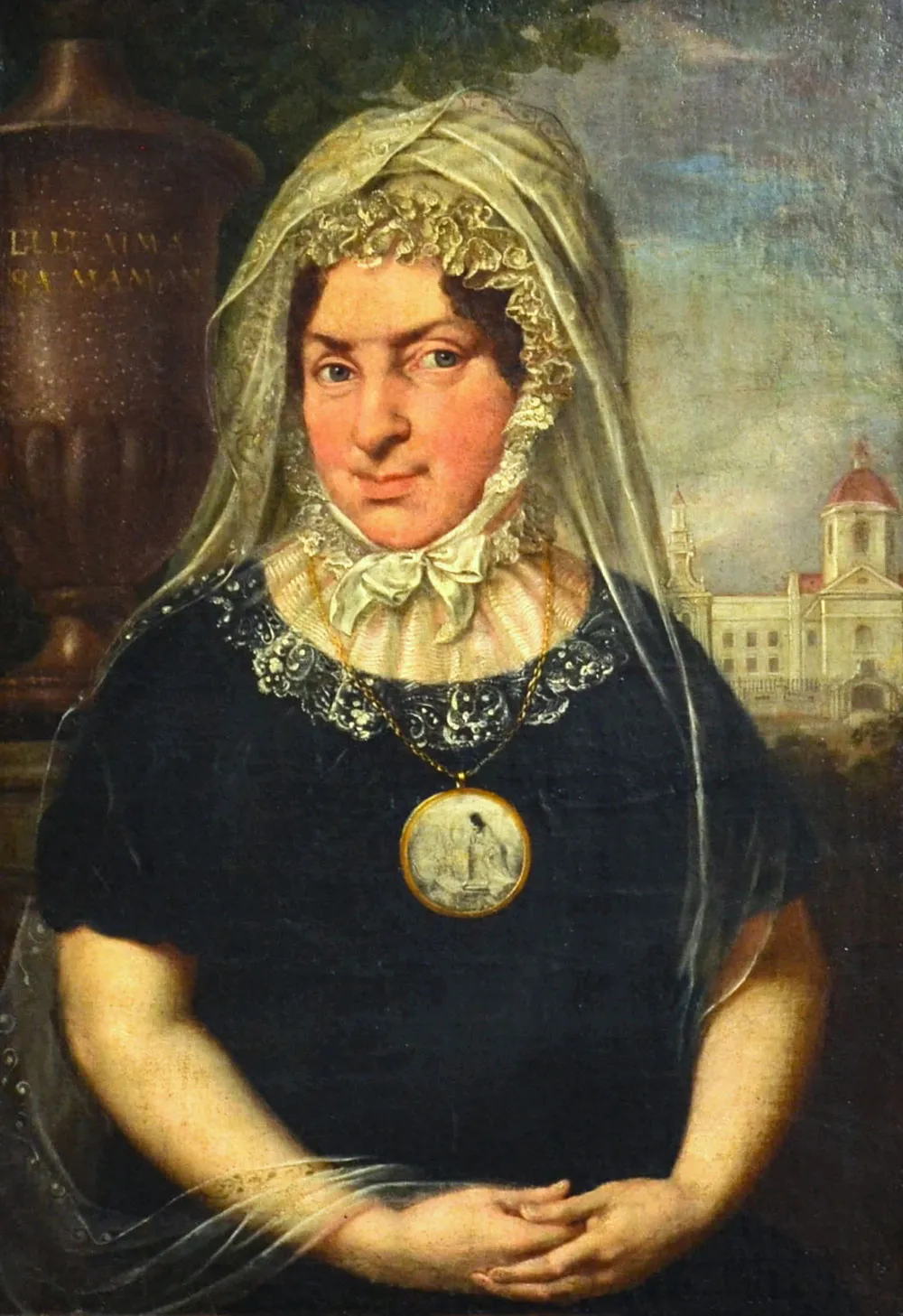
Portrait of Teresa Stadnicka by Józef Pitschmann. Behind Madame Teresa is the palace in Ostapkivtsi.
What the palace looked like in Grabianka’s time can be seen in the portrait of his wife, Teresa Stadnicka, painted at her commission in 1819 by the well-known Polish artist Józef Pitschmann as a gift for her son Erazm. Madame Teresa is shown against the background of her palace, clearly visible behind her. The artist did not paint the picture from life but made a somewhat expanded copy of an earlier mourning portrait of Madame Teresa (only a poor photocopy of it has survived), made after the premature death of her daughter Anna (1772–1796). The original probably perished when the peasants smashed and looted the palace during the revolution.
Today the portrait is kept in the Polish town of Liw, in the Museum of Historical Weapons. The building that houses the museum was once erected at the expense of Tadeusz Grabianka, who was then the starost of Liw.
Anna Grabianka, note, was quite an interesting person. At the age of 7 she was initiated as an adept of the brotherhood of the Illuminati (the rite was performed by her father) and given to be brought up by a certain “Abbé” Dom Pernety and his companion, Madame Mila Bruccia. According to a prophecy and instruction of “Heaven”, which directed all the actions of the Illuminati, her upbringing was to last 7 years, after which the girl would become: “Mother of a new people, daughter of its strength and creator of its glory.”
Three years later Teresa Grabianka, née Stadnicka, took the child back. It was the story of this forced separation from her child that became the reason for the effective breakup of her marriage to Tadeusz Grabianka (legally it was never formalized).
Anna died at the age of only 24, and the mystic’s descendants considered this premature death the result of a curse that fell upon the family for their ancestor’s esoteric games.
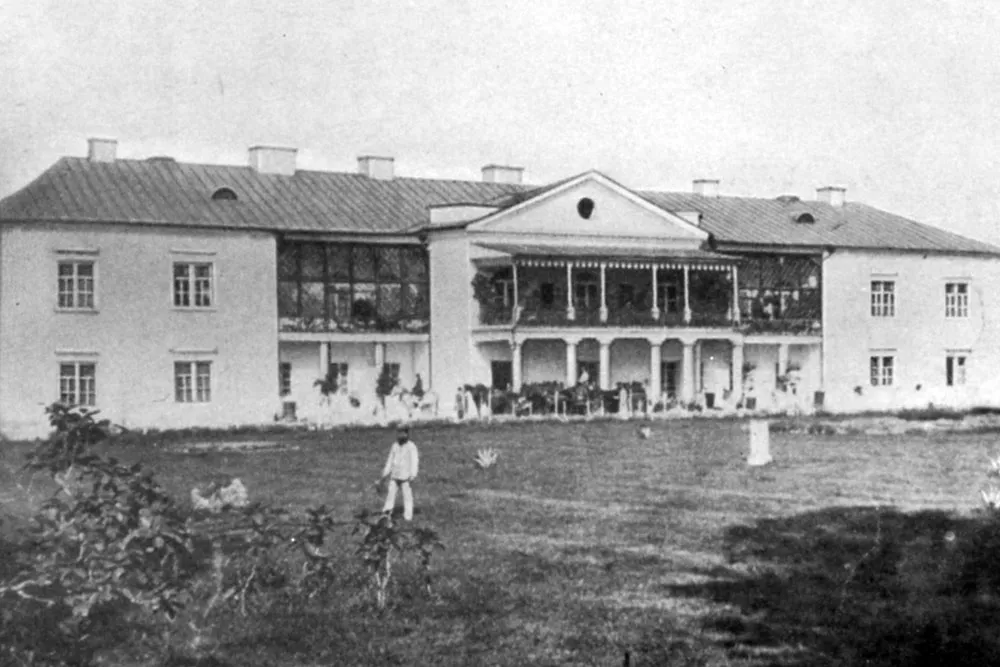
The palace in Ostapkivtsi in the early 20th century.
Later, in the second half of the 19th century, the palace was heavily rebuilt. It lost its towers and Baroque features. A copy of the photograph showing the “new” palace was given to the author by Svitlana Voloshyna, director of the Ostapkivtsi House of Culture, who kindly agreed to act as guide around the village.
Something remains of the “manorial” park by the palace. But it is just “something”: about a dozen old trees. The rest are relatively young.
Only the very long masonry fence that once enclosed the whole perimeter of the vast manor has survived completely. Judging by the huge blocks used in its construction, one may safely assume that stones from the Herburt castle were once used as building material.
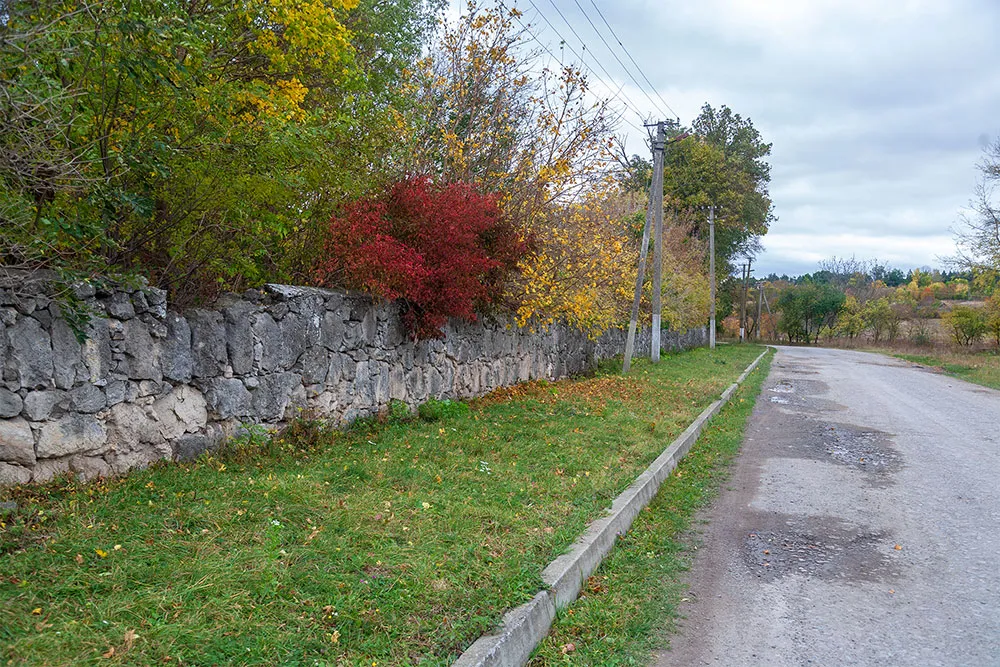
The palace wall…
The only reminder of the beauty of Count Ostap’s destroyed family nest was found near the old house of the local priest, later used as a primary school. After the palace was destroyed, someone not devoid of a sense of beauty dragged small columns here and adapted them for hanging a gate. A sad sort of relic… Judging by the specific damage, they once served as bollards protecting against carriage and cart wheels at the once-splendid gateway of the palace complex.
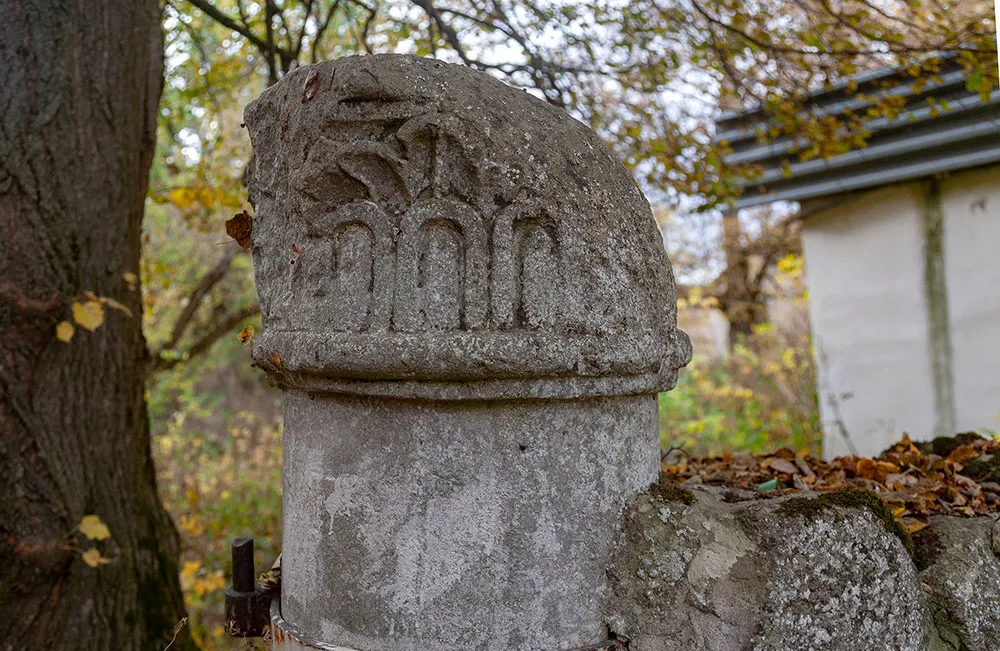
All that is left of the palace
The most interesting architectural monument of the village turned out to be the Church of St. Nicholas (1857). It differs from most village churches in this corner of Podillia in its rather interesting Classicist architecture, which is completely untypical for rural Orthodox churches, but quite the opposite for Catholic churches. The house of God was built at the expense of Martyna Grabianka-Zaleska, a granddaughter of the hero Tadeusz Grabianka. She probably also approved the design, which is closer to a Roman Catholic church. Unfortunately, under the Communists, when the church was used for farm purposes, it lost its main dome and the bell tower with its spire, and later the villagers also covered its walls with a cement “fur coat”.
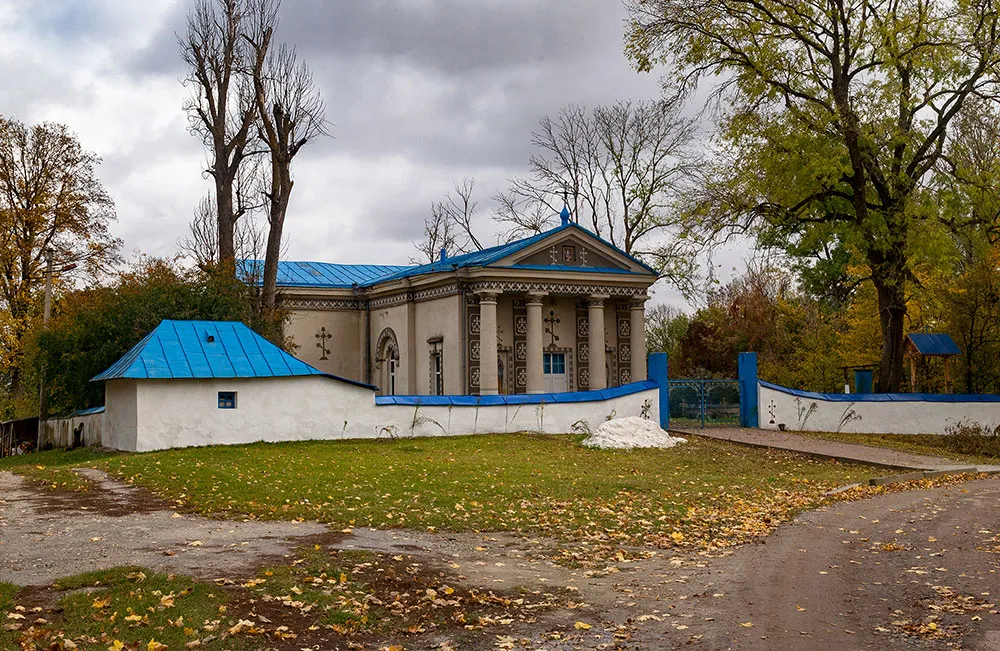
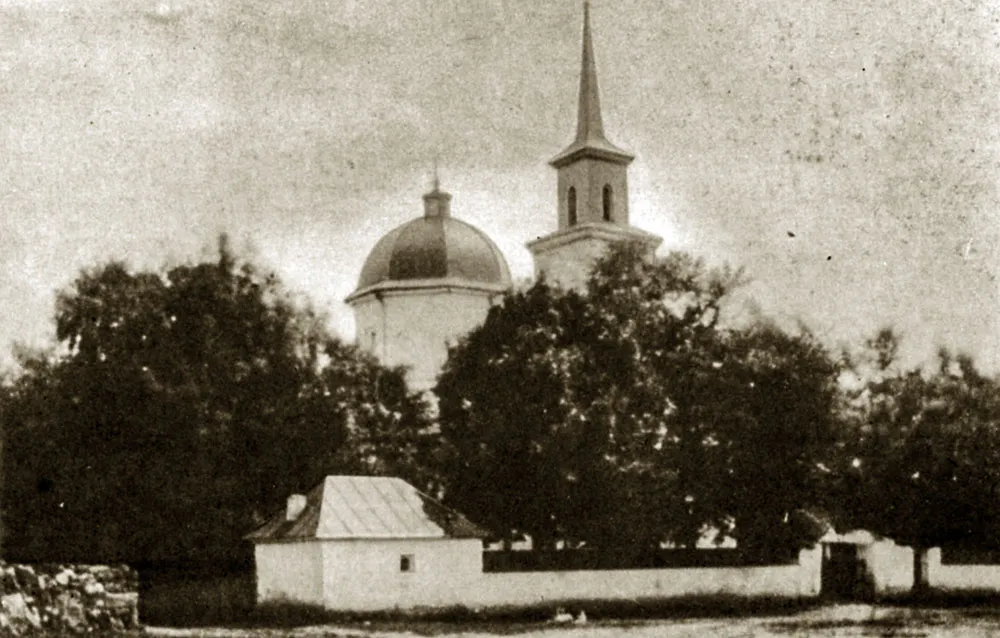
The woman built the church as an act of atonement for her grandfather’s sins mentioned above.
An old water mill has also survived from the legacy of Grabianka’s descendants. The exact date of its construction is unknown, but judging by a number of architectural details it dates from the mid-19th century. That is, the mill appeared during the time Martyna Grabianka-Zaleska managed the estate. Locals also say that it appeared almost at the same time as the aforementioned Church of St. Nicholas.
When electricity cost next to nothing, the mill was switched to electric drive. When in the 1990s the price of kilowatts rose by orders of magnitude, it was closed. Today it is a picturesque ruin amid thickets.
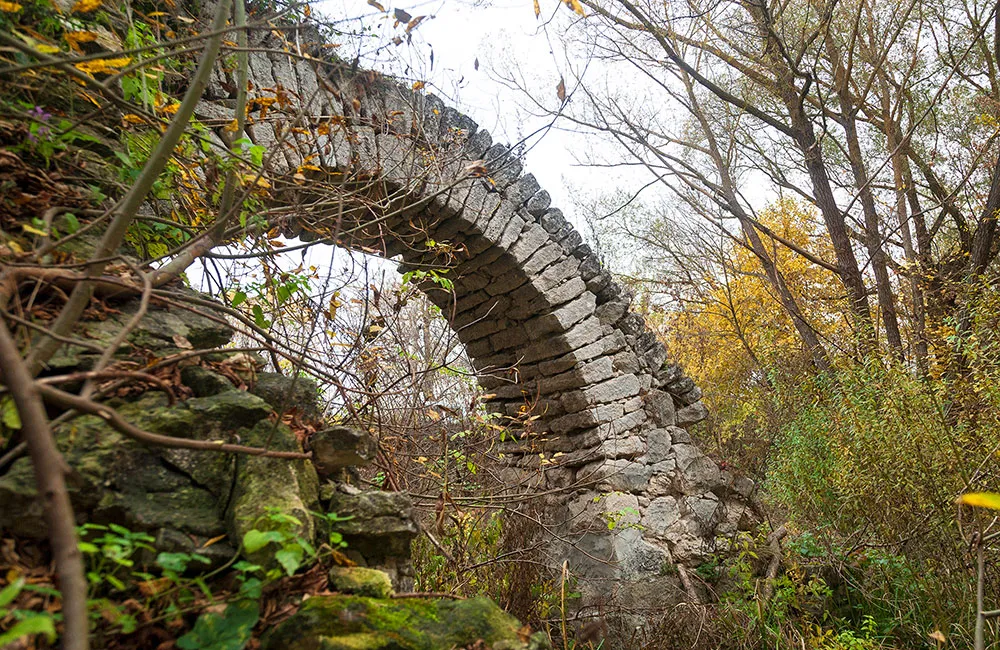
The mill. A buttress
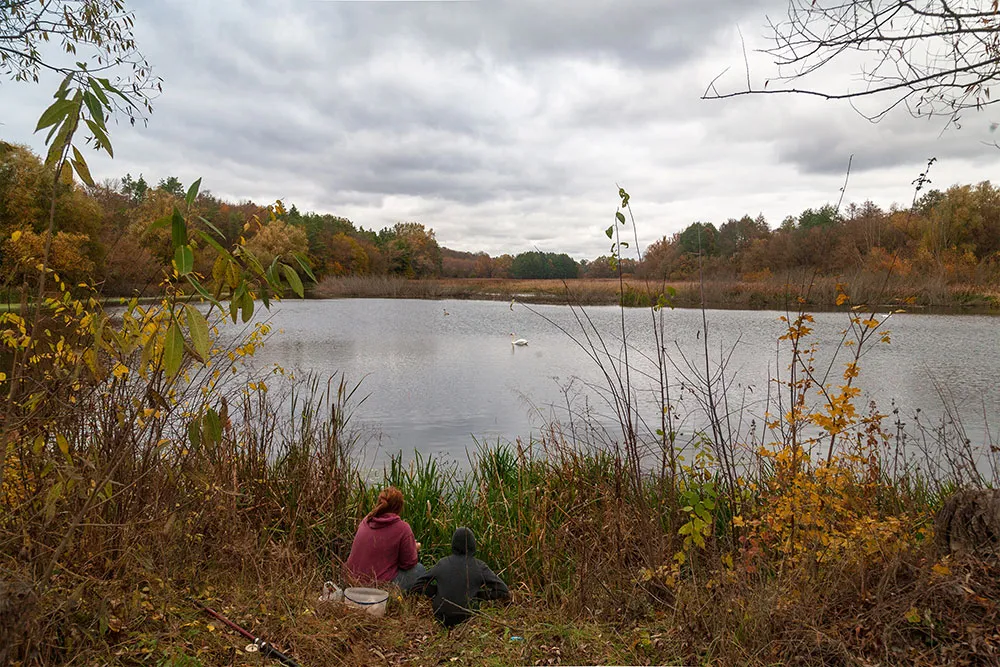
Next to the mill is a very beautiful pond, even with swans. The villagers say that when Madame Zaleska fled the village after the revolution, she drowned here, in huge leather sacks, the riches she could not take with her: table silver and even golden trays. They say that somewhere around Brezhnev’s time a French firm offered to clear all the ponds in the district free of charge, on condition that whatever was found in the silt would go to them. The foreigners, of course, were refused. Then the collective farm cleared the pond itself, but found nothing there except empty bottles and rusty tin cans thrown into the water. The legend is, in fact, a classic and model one: the author has heard about “manorial treasures” drowned in a pond or swamp and cunning foreign treasure hunters some five times in different corners of Ukraine…
There were some hopes of finding something in the cemetery. The graves of Grabianka’s descendants are not mentioned in the historical literature. It was not ruled out that someone might have been buried in Ostapkivtsi. Unfortunately, the local cemetery proved relatively “young”: the oldest burial found dated only from 1882. Besides, as Oleh Fedorov explained, Roman Catholics were once buried in the neighbouring town of Kuzmyn.
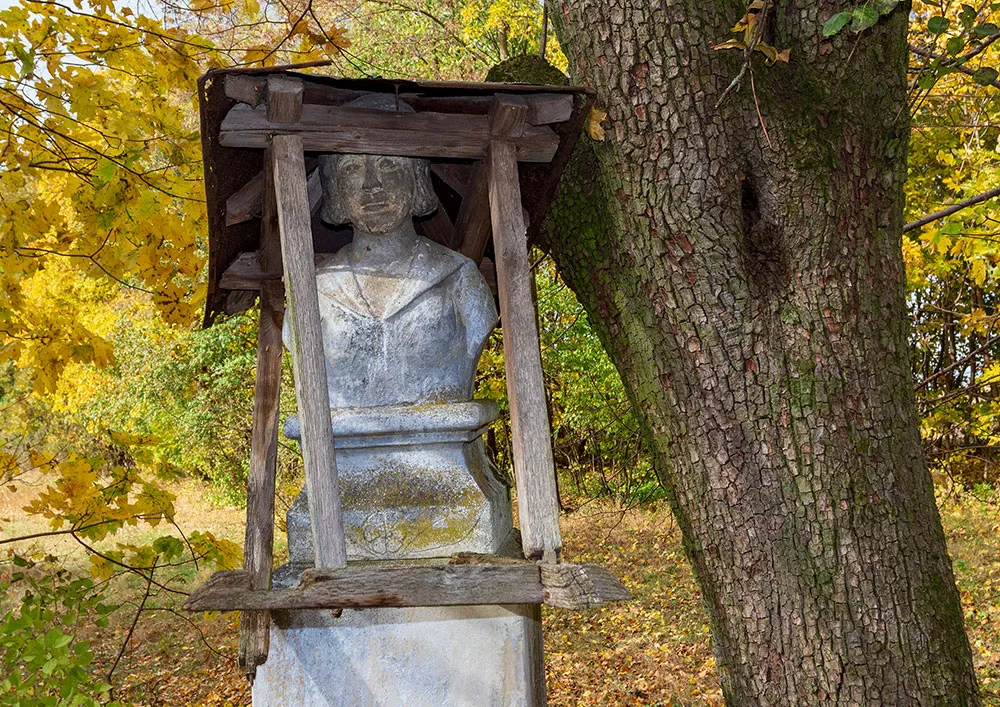
A portrait gravestone. 1933. Could this be a victim of the Holodomor?
On the other hand, the cemetery yielded gravestones unique among Ukrainian village necropolises, in the form of sculpted images of the deceased. All of them date from between 1933 and 1938. As it turned out, they are the work of a self-taught local sculptor named Todor. The man lived until about the 1980s and, they say, his whole yard was crowded with his works. No other details about this village genius have yet been established.
What was surprising is that none of the locals knows anything about Grabianka. At all! Most of them heard even the surname itself from the author of these lines. They remember the landowner Zaleska. But the man thanks to whom Ostapkivtsi is known all over the world, they do not…
Dmytro Poliukhovych


