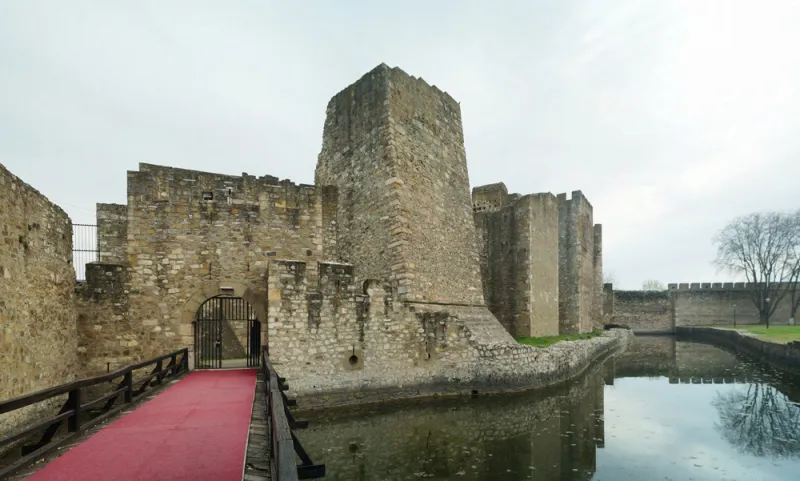
Serbia. The incredible Golubac fortress

· 5 min read
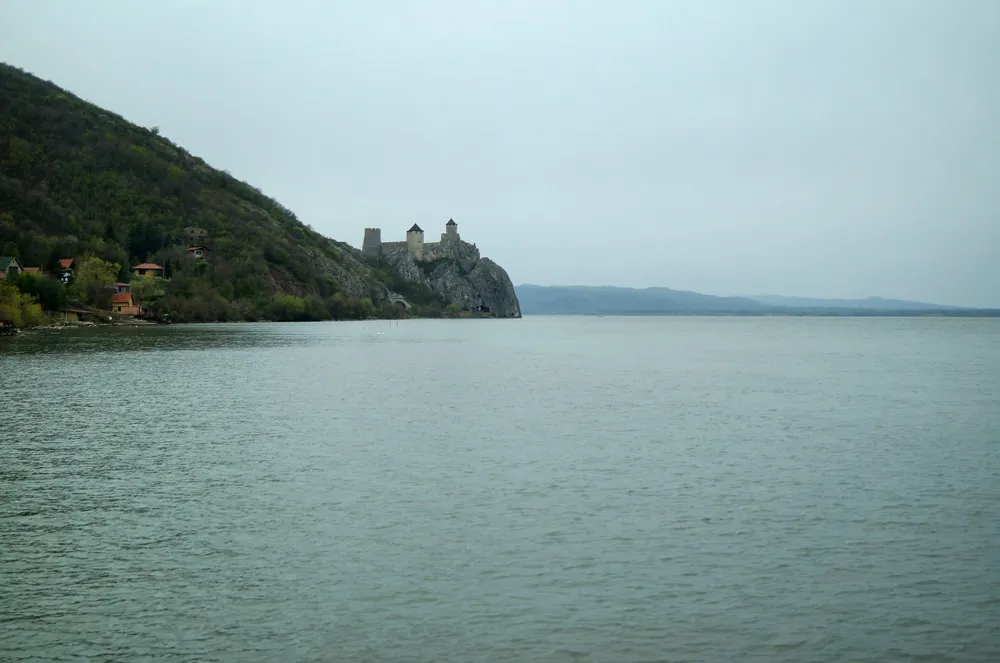
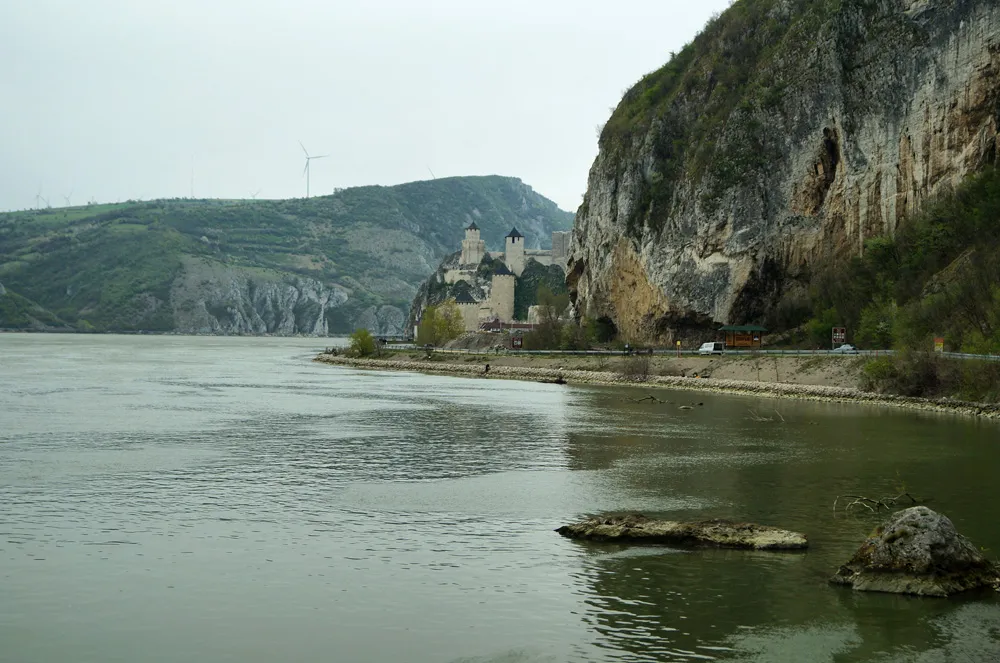
Golubac can safely be called one of the most beautiful fortresses in the world. Its ten powerful towers, rising on a rock above the Danube, are one of Serbia’s calling cards and undoubtedly its most famous monument. A candidate for inclusion on the UNESCO List, a super-photogenic site in an incredible place – at the entrance to the Djerdap gorge, by the reservoir where the Danube is more than 5 kilometres wide – yet Golubac fortress is not very well known among mass (non-Serbian) tourists. In Ukraine, for example, few people know it. It is hard for me to answer exactly why. The only thing that comes to mind is the negative image of Serbia as an oppressor of the peoples of Yugoslavia, an antagonist and invader of lands, and so on, shaped by Slobodan Milošević, and Serbia’s close ties with Russia. But for that, Golubac would be no less famous than Neuschwanstein; puzzles would be made of it and it would be pasted on advertising brochures… It really is fairy-tale.
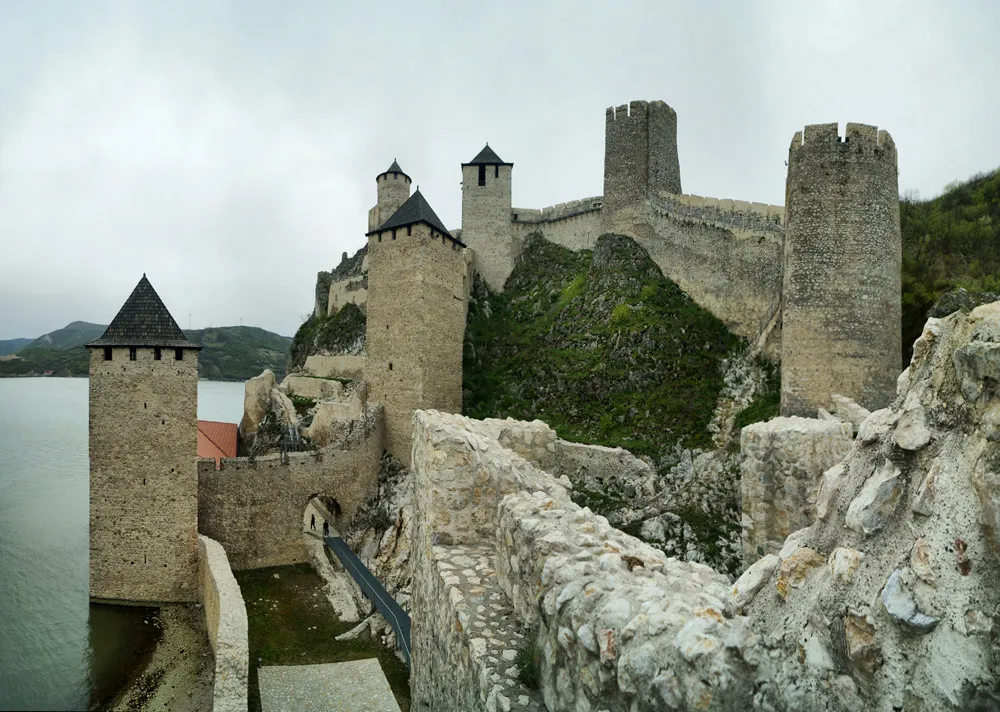
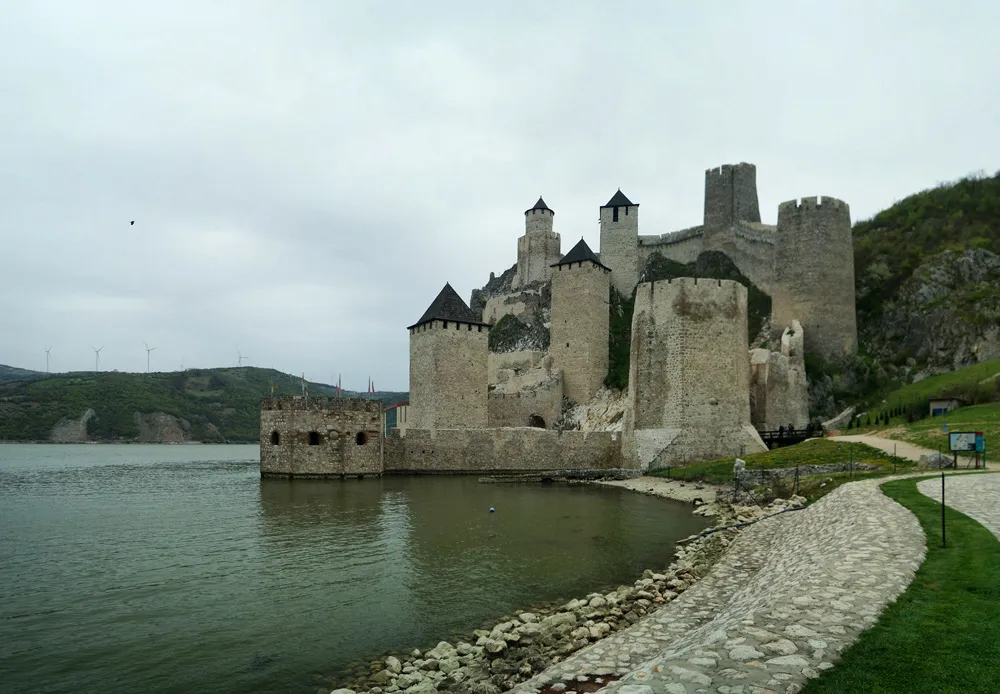
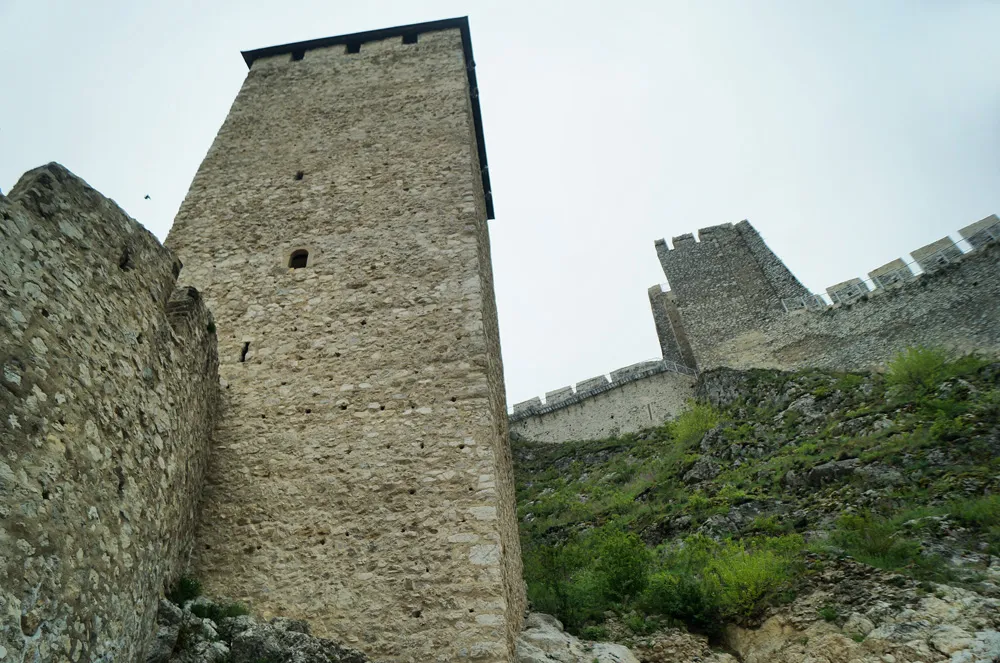
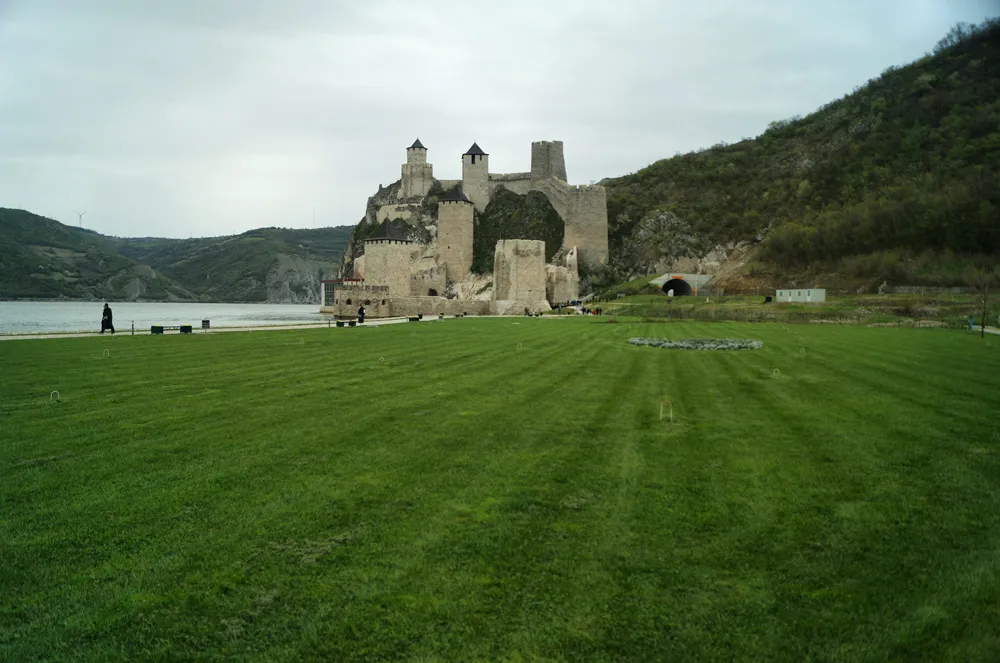
On the territory where the castle town once stood, in front of the fortress, there is now something like a large cultural and entertainment area, with a paid entrance and a ticket that is not cheap for Serbia – 600 dinars (about 200 UAH). True, the entrance to the area is also the entrance to the fortress – it is a single ticket. The best photographs are taken from here, and that alone is worth the money charged for entry. There used to be wooden houses here – now there is a nice lawn and an art zone, while the town of Golubac itself moved away from the fortress long ago – about five kilometres to the west. It looks like a Danube resort, probably it is one, but we did not manage to see the town – a downpour began and we drove on to the Manasija monastery.
Scholars do not know who built the first fortification by the rocky gorge into which the Danube’s channel enters. It was probably the Romans, who built fortified camps in neighbouring Ram and Smederevo. These fortifications made it possible to control movement along the Danube, and the Iron Gates – as the entrance to the Djerdap gorge was called – was in general the best place for controlling shipping.
From 803 to 1018 the Roman fort belonged to the Bulgarian Empire, then, until 1193, to Byzantium, then again to the Bulgarians, until 1257. But the fortress we see today was not built by them – it has none of the features of Byzantine-Bulgarian fortification. It was built by the Serbs or the Hungarians – both say that it was they. Almost certainly Golubac was in fact built by Serbs, Hungarians, Austrians and Ottomans alike, but considering that the church (or chapel) built in the fortress is Orthodox, one can assume that construction was begun by the Serbs at the end of the 13th century.
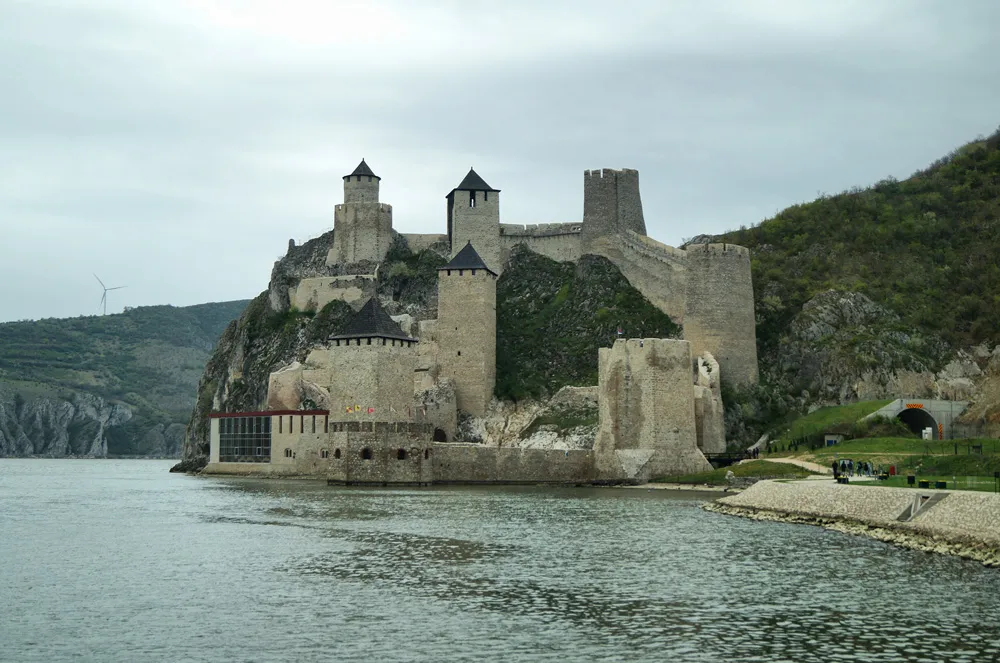
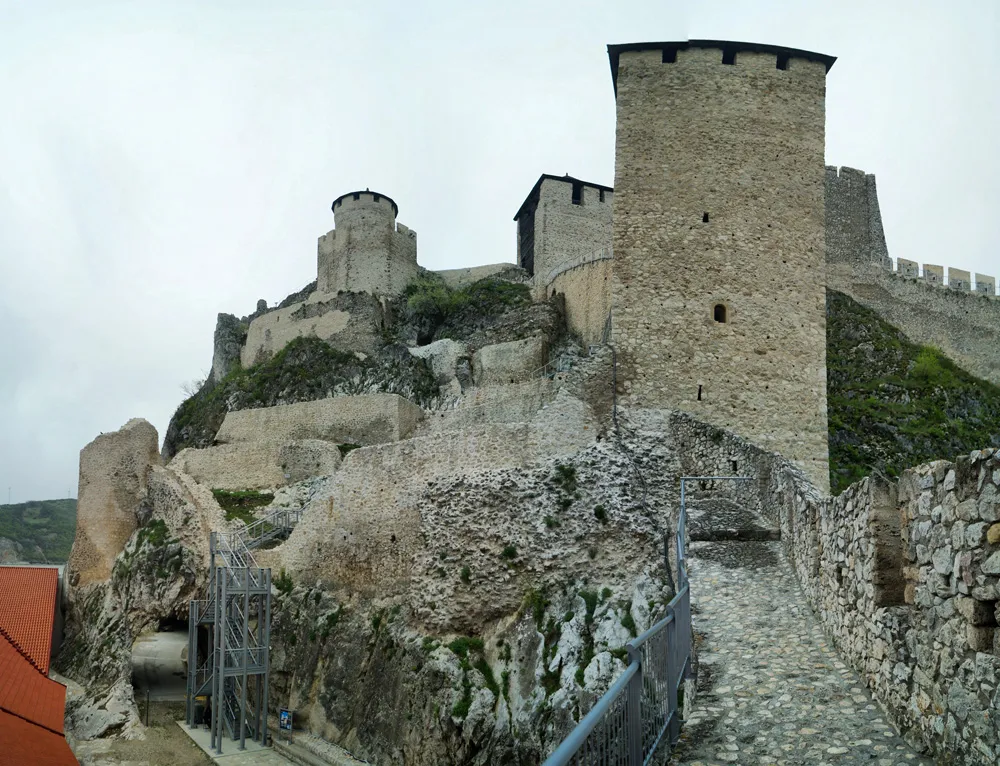
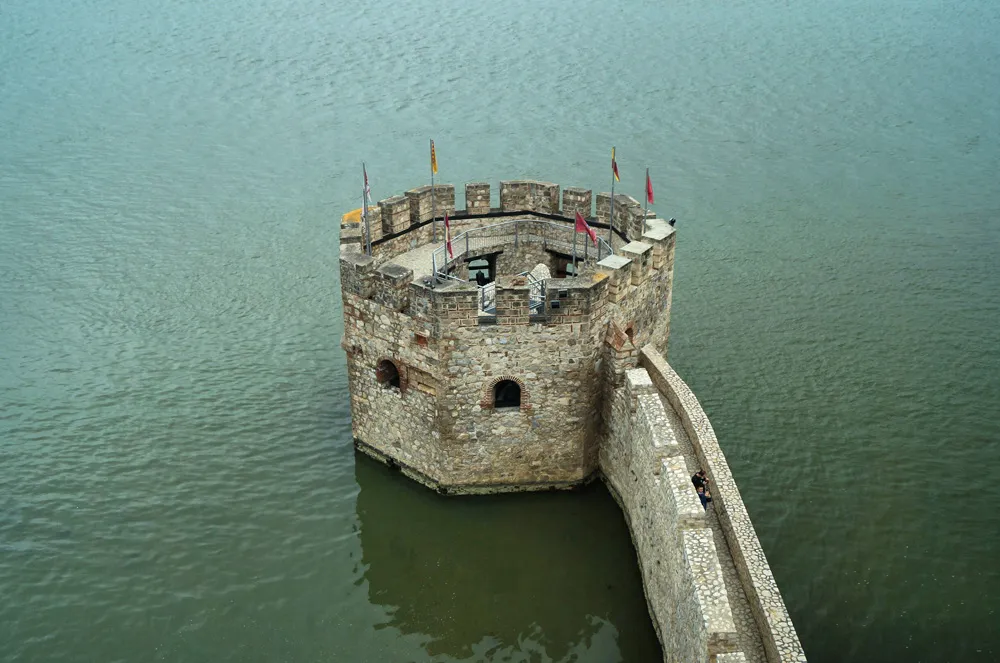
The towers of the fortress rise fan-like upward, toward the upper town – the main citadel, Gornji Grad. All the towers are connected by walls 2.8 m thick. On the walls there are galleries along which the defenders could move quickly. The fortress consists of three castles and three courtyards lying one above another in terraces. Nine towers are very tall (20–25 metres high), while the tenth tower stands apart and is joined to the main fortress by a wall. It is low, because it was built already in the period of powerful artillery. It was probably built by the Ottomans, who installed cannons on it.
Today the towers house museum exhibitions. In addition, a museum has been set up in a special new building.
From the beginning of the 14th century Golubac was on the territory of the Hungarian crown, but the king of Hungary, Germany and Bohemia, the future emperor Sigismund I of Luxembourg, handed the management of the fortress to the Serbian despots, the Lazarevićs, and then the Brankovićs, and it was Đurađ Branković who surrendered the fortress to the Ottomans, concluding an agreement with them – the Turks would take Golubac but would not touch Belgrade and other Serbian lands. Sigismund did not accept the loss of Golubac and therefore sent a huge army, made up of Hungarians, Austrians, Germans, Czechs, Poles and Lithuanians, to recapture the fortress. A large Turkish army was stationed in Golubac, headed by Sultan Murad II… The bloody battle under the walls of Golubac took place in May 1427 and ended in a complete victory for the Turks and heavy losses for the allies. In that battle the famous Polish knight Zawisza the Black was killed, as a memorial sign on the territory of the fortress records.
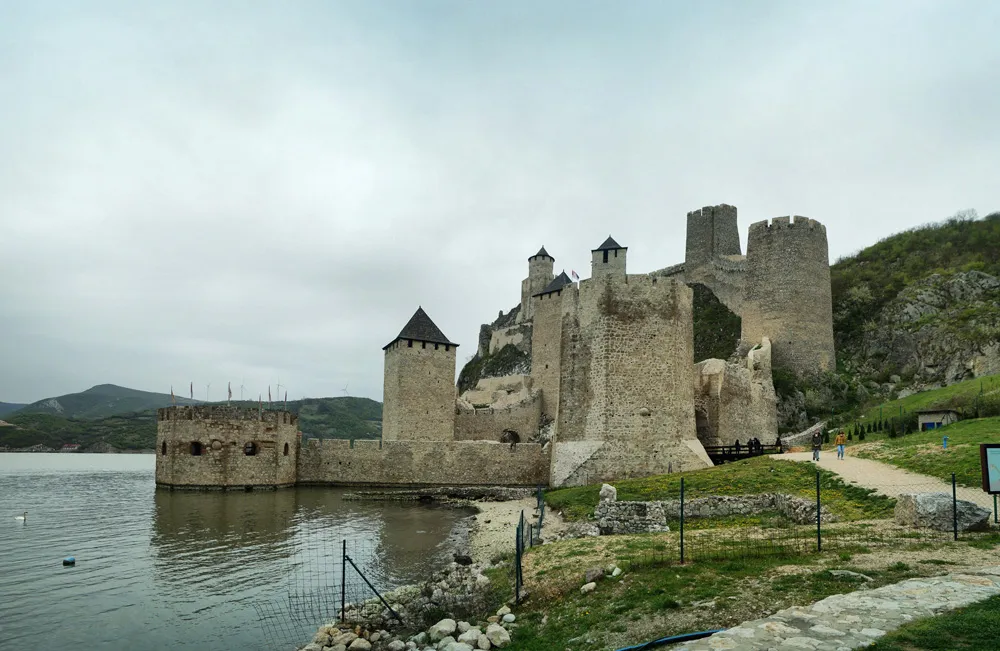
After the defeat of the Hungarians, Murad II turned his army against Branković and seized Serbia. Until the 20th century Golubac remained in Ottoman hands.
In the 20th century many vicissitudes befell Golubac fortress: a road tunnel was cut here, the reservoir of a hydroelectric power station was raised so that the water came right up to the walls, and the fortress was conserved. In the 1970s and 1980s some research and restoration work was carried out, but the splendid present condition of Golubac is the work of restorers in the 21st century, which is still not finished. Interestingly, a joint-stock company was created to raise funds, and it manages the fortress to this day.
Text and photos by Roman Malenkov.