

Four kilometres through forest and night: a report from the Ivankivtsi adits
We have already told you more than once about the achievements of the “Graves of the Ancestors” project, carried out in partnership between the “Ukraine Incognita” NGO and the Horodok urban territorial community (Khmelnytskyi Oblast), represented by its Department of Culture, Nationalities, Religions and Tourism. It was also reported that, besides studying the ancient necropolises of the former Horodok district (Ukrainian, Polish and Jewish), the researchers decided to extend their work to man-made underground spaces as well. The result is to be a large photo exhibition, provisionally titled “Underground Podillia”, which is planned to be shown not only in Khmelnytskyi Oblast but also in other regions of Ukraine and in the capital.
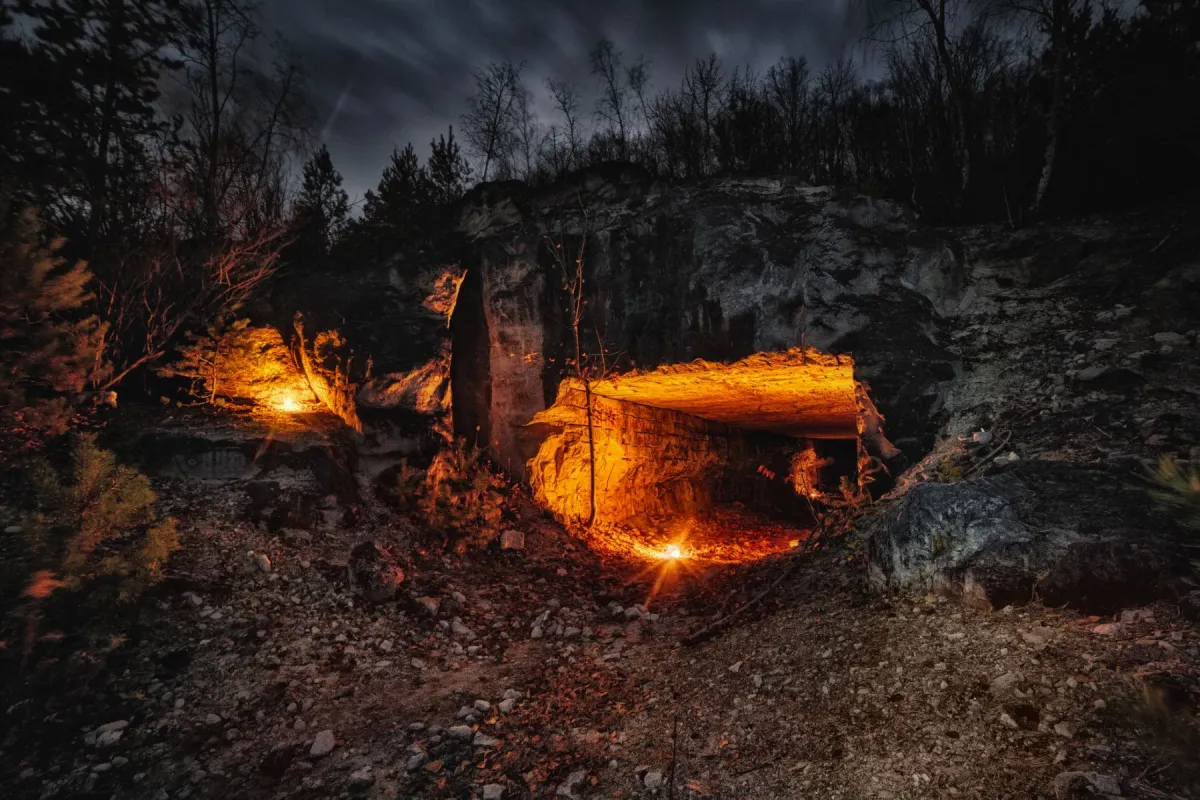
One of the sites planned for the photo exhibition was the abandoned limestone adits near the village of Ivankivtsi. Note that today this area belongs to the Satanivska united territorial community, but given that until recently it was the Horodok district, the project volunteers decided that the present-day administrative division does not, after all, deny the ancient historical ties.
Adits appeared here at least as early as the 19th century, but those were artisanal workings. It is known that a unit of the UPA once hid in those catacombs, lost in the midst of a large forest.
Around the 1950s industrial extraction began, but in the early 1970s the mine was closed because of a high accident rate and mass collapses.
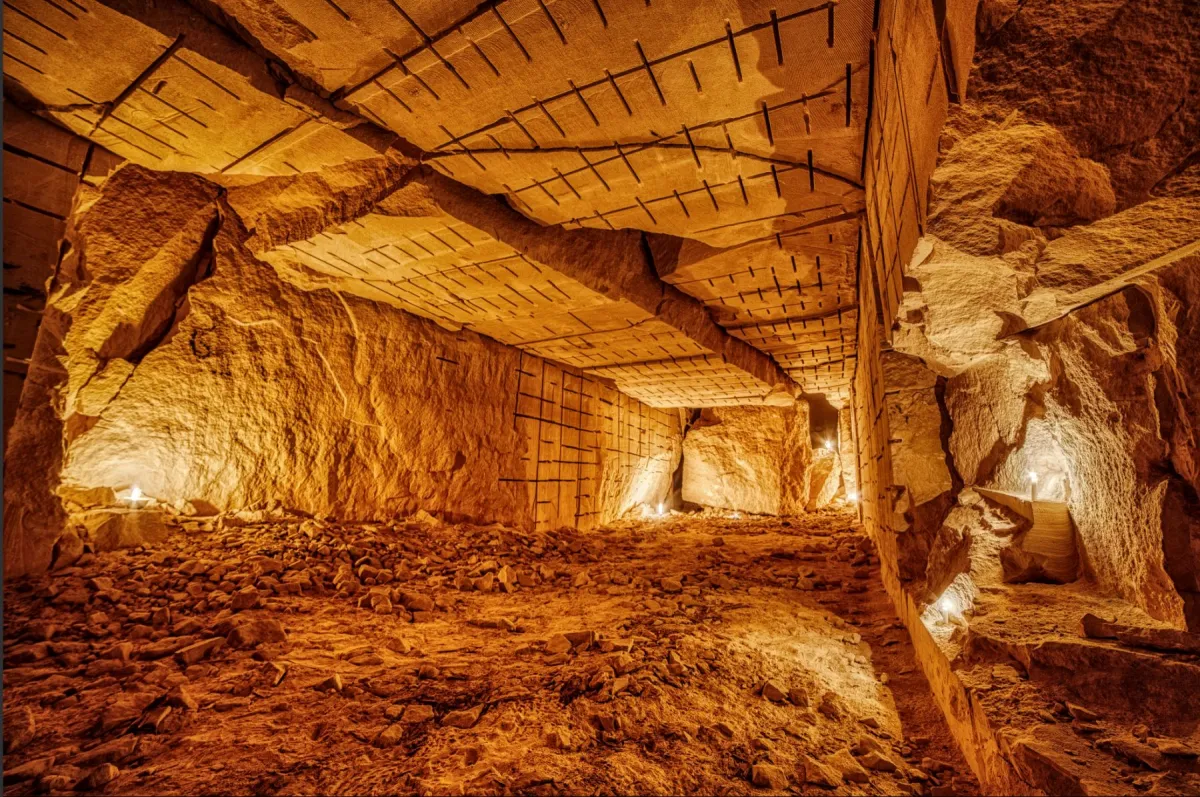
In this photo we see a collapse at the end of the tunnel and terrifying cracks in the vault
Although this is a very interesting tourist site, it is practically not visited by tourists. To get there you have to walk more than 4 km through the forest along an abandoned road churned up by logging trucks (not every off-road vehicle can cope with this route). Perhaps that is for the best, because, firstly, it is dangerous. Secondly, the adits are a pan-European reserve for bats: it is a place where large colonies of various bat species live. All of them, let us remind you, are in the Red Data Book. For this reason only those sections of the catacombs were photographed where bats are merely flying through.
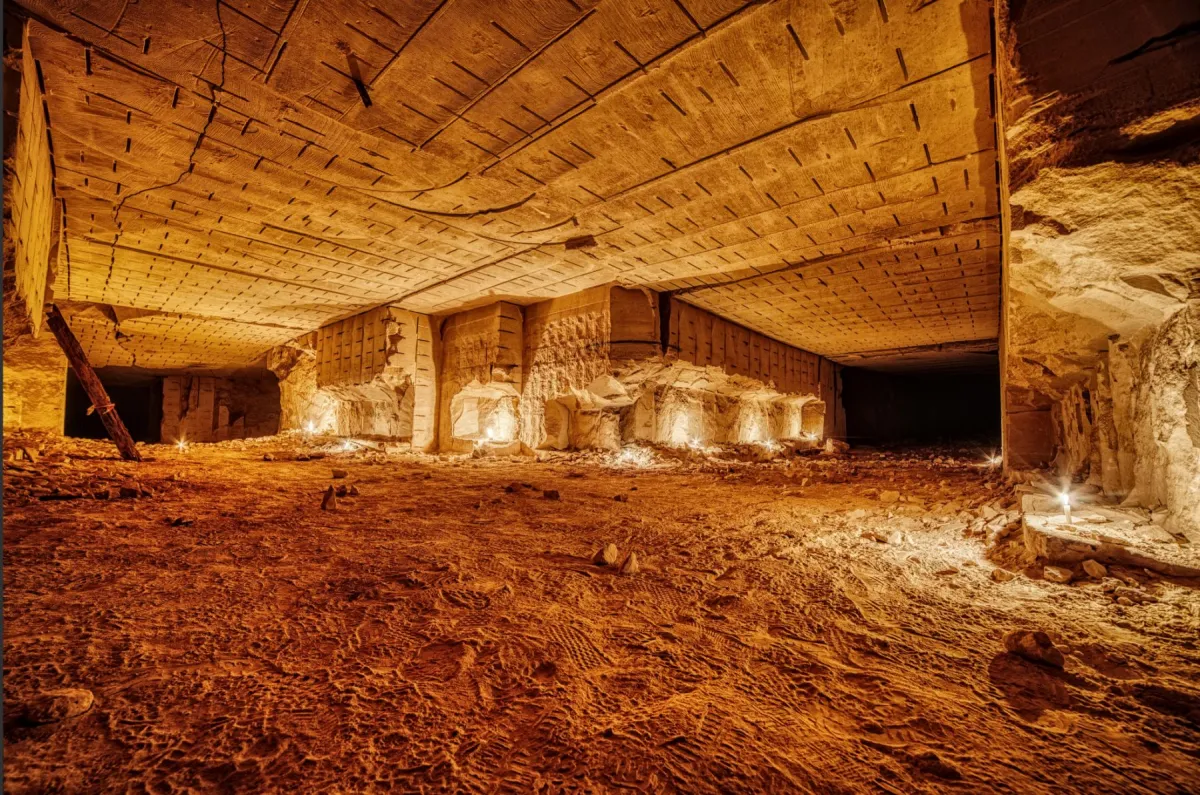
The photo shoot was not without adventures. It so happened that the trip to Ivankivtsi was put off until the last moment. Then, because the weather was getting worse, further delay became impossible. The plan was to set off in the daytime on 3 October so as to return while it was still light. But the old minibus of the Department of Culture, traditionally used on the project’s expeditions, went in for repairs. Transport was found, but…
“That is more than 4 kilometres through the forest on foot!” the author of these lines tried to wriggle out of the escapade…
“Don’t we have flashlights?” project participant and chief photographer Ihor Motsnyi put forward a reinforced-concrete argument, optimistically.
“We do!” the head of the Horodok City Council’s Department of Culture and project co-chair Oleh Fedorov backed his colleague.
In a word, by the time we drove up to the start of the forest road leading to the adits, it was already night! Four-plus kilometres (and that is only one way!) through the forest by flashlight is quite an adventure. As is fashionable to write in weather forecasts: “it felt like all six”. On the way back, as he covered the last kilometre, the author of these lines for some reason recalled the well-known saying: “They shoot horses, don’t they?”
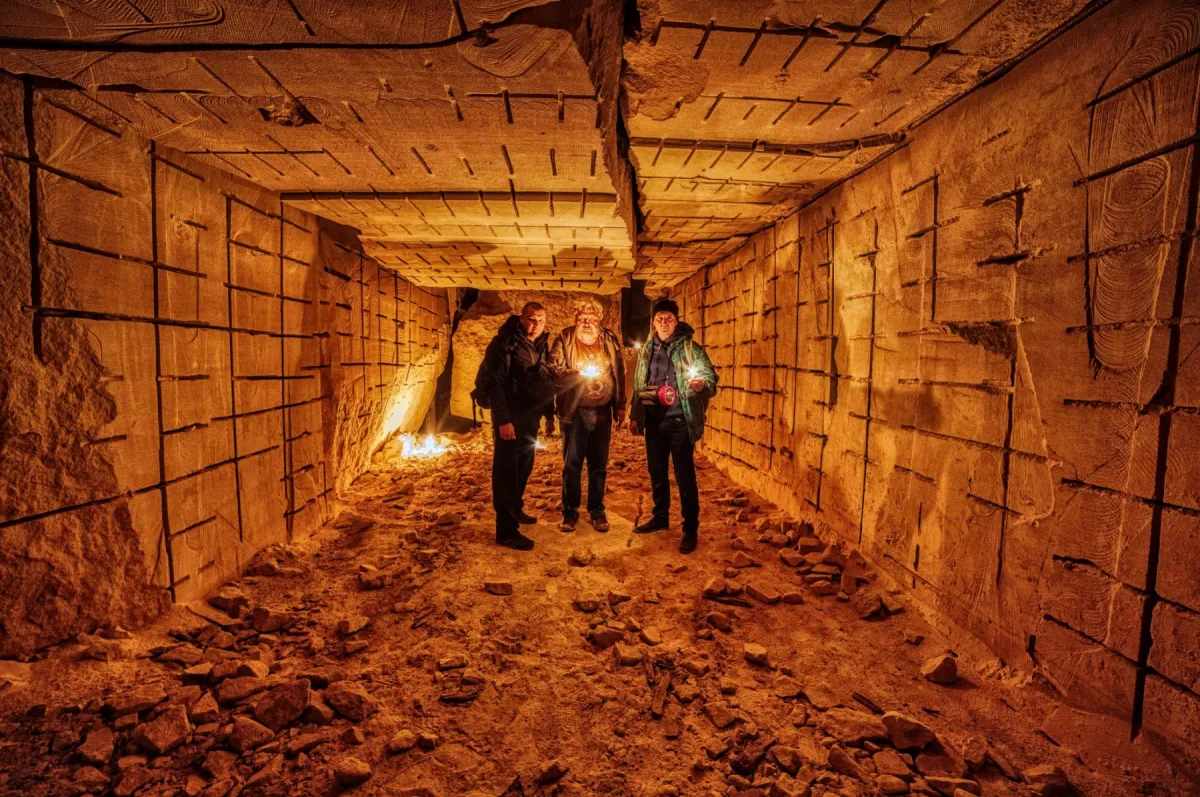
Participants in the escapade: Ihor Motsnyi, Dmytro Poliukhovych and Oleh Fedorov
But the adventure was worth it! Anyone who sees the photographs will be convinced of this.
Text: Dmytro Poliukhovych
Photos: Ihor Motsnyi with the participation of Oleh Fedorov and Dmytro Poliukhovych


