

The old Neo-Gothic of Nove Porichchia
The village of Nove Porichchia in the Horodok community of the Khmelnytskyi region impresses with a huge number of monuments and landscapes of amazing beauty. Suffice it to say that the famous artist Napoleon Orda, whose name is known to everyone interested in historical heritage, having visited here created two works of the village, although in such cases he usually painted only one watercolour.
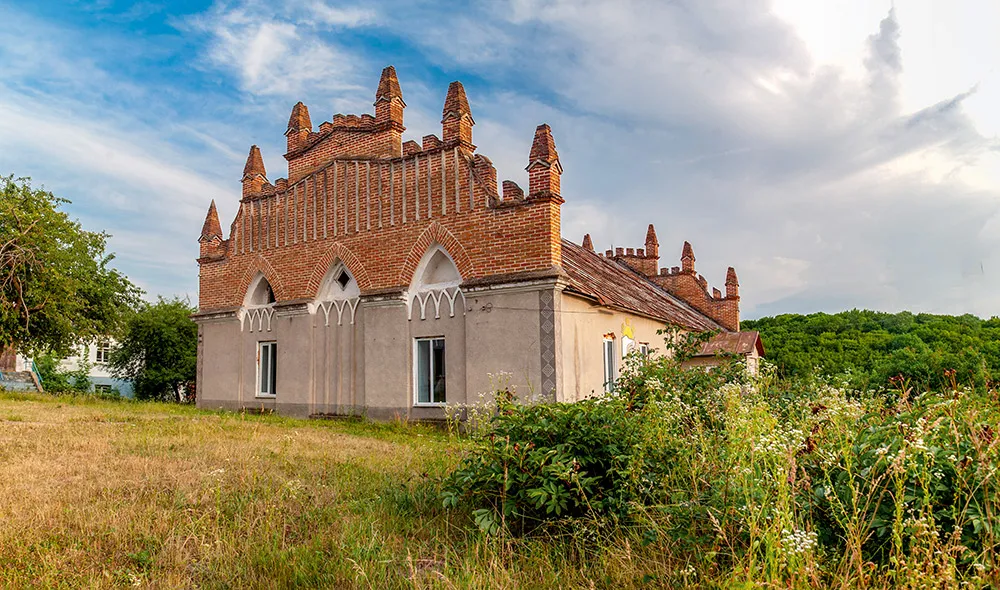
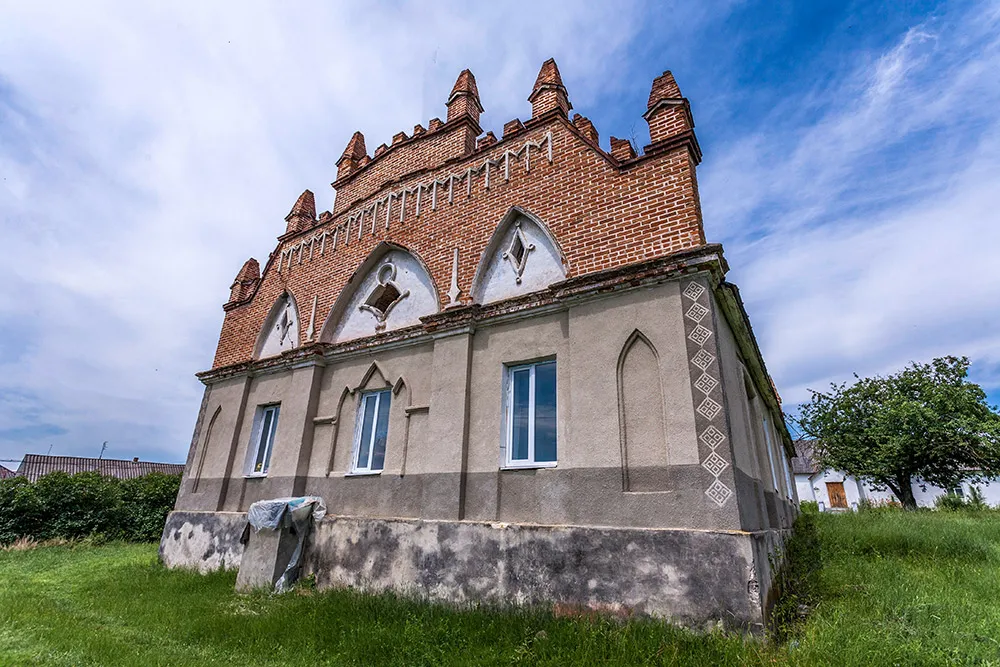
The “Horned School”. If you look closely you can see the contrail of a Russian cruise missile. Photos here and below, unless stated otherwise, are by Dmytro Poliukhovych
The village was founded in 1762 by the magnate Jan Jakub Zamoyski. Later, when he gave his daughter Urszula in marriage to the Grand Crown Marshal Michał Mniszech, Nove Porichchia passed to the Mniszechs as a dowry. New owners rarely appeared in the village. After all, why languish in a remote Podolian village (however extraordinarily picturesque) when you can spend your time rather well in Warsaw, Kraków or Paris? Nevertheless, the palace complex in Nove Porichchia was probably begun precisely by the Mniszechs. This is vividly attested, among other things, by the huge size of the palace brick, characteristic of the late 18th century. It is not excluded that the “old” (Neo-Gothic) palace, a relatively small house with a tall tower beside it, was put up by the Zamoyskis. At least architecturally it corresponds to the palaces of that time.
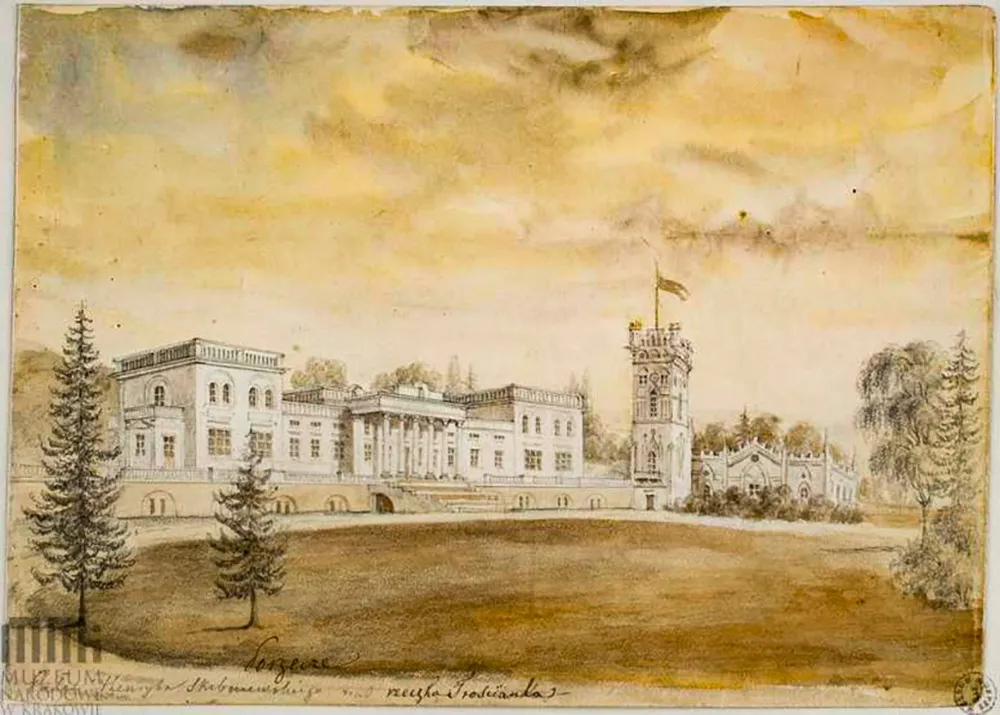
The palace in Nove Porichchia. On the left is the part built in the 19th century by the Skibniewskis, on the right by the Mniszechs (Zamoyskis?). Drawing by Napoleon Orda
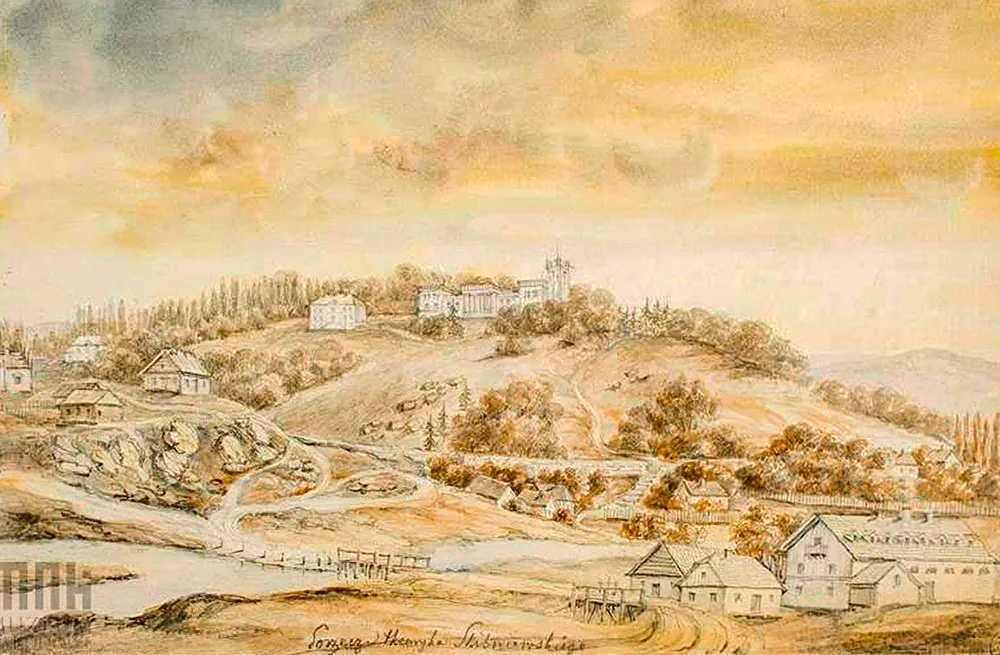
Panorama of Nove Porichchia. On the left you can see the “Horned School”. In the foreground is the brewery. Drawing by Napoleon Orda
One can form an idea of what the palace looked like in the Mniszechs’ time from the so-called “Horned School” (why it got this name is clear from the photos). It appears, incidentally, both in one of Orda’s watercolours and in a copperplate engraving by Michał Kluczewski.
This building became a school in the post-revolutionary period, but originally it was used as an inn (hotel). While the distinguished gentry who came to visit stayed in the palace, their commoner attendants stayed at the inn. According to another version, the estate manager lived here, using the building at the same time as an “office”. Today there is a village museum here.
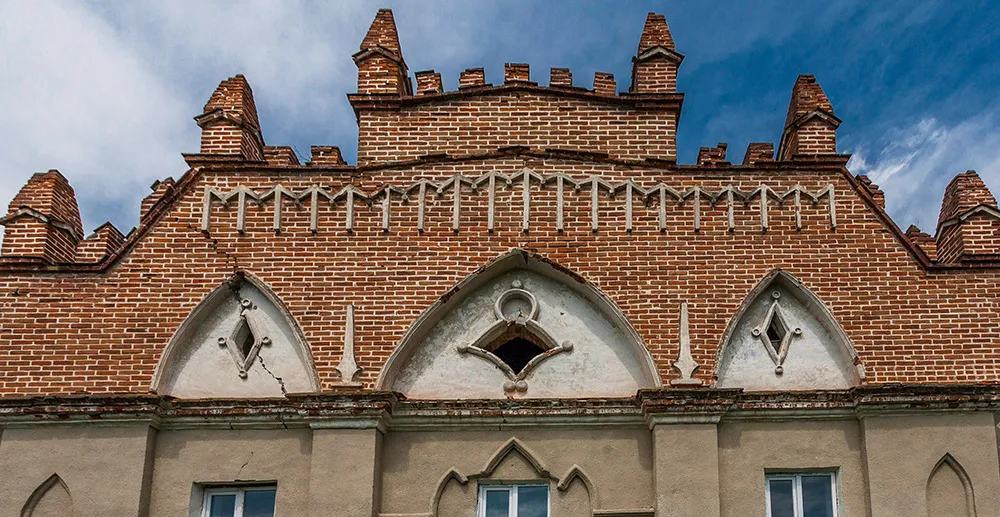
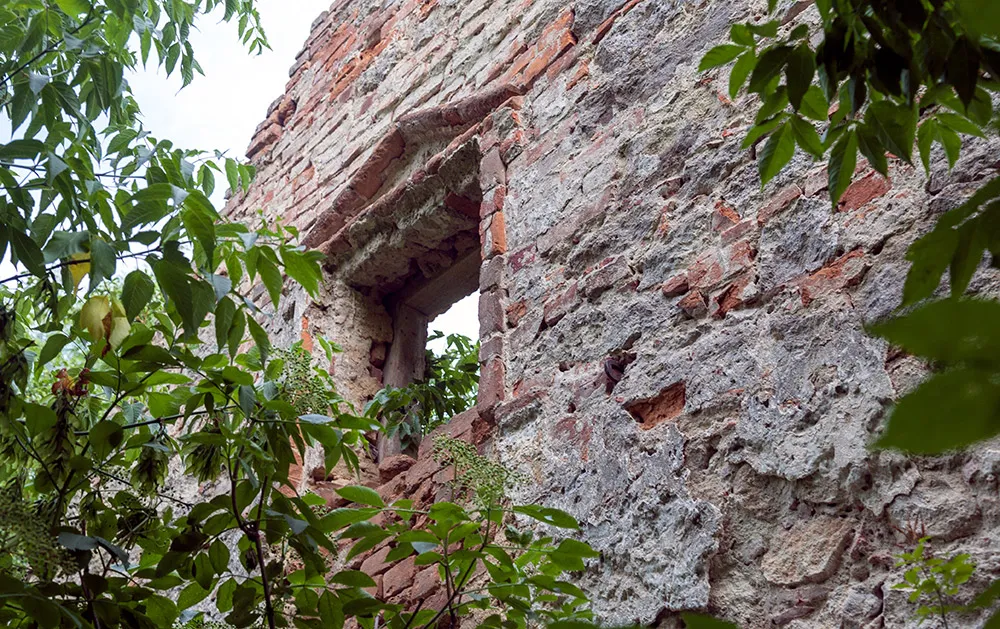
Next to the “Horned School” you can see the ruins of a coach house. The coach house was also built in the Neo-Gothic style. The ruins are beautiful and very romantic, but it is impossible to photograph them because of the dense thickets.
Farther on stood the lord’s stable (according to another version, a grain barn), said to be Neo-Gothic as well, but it has not survived to our time. In contrast, the little house of the “court” beekeeper with a cellar, where the beehives were stored for the winter, has survived almost completely. At present peasants’ piglets grunt here.
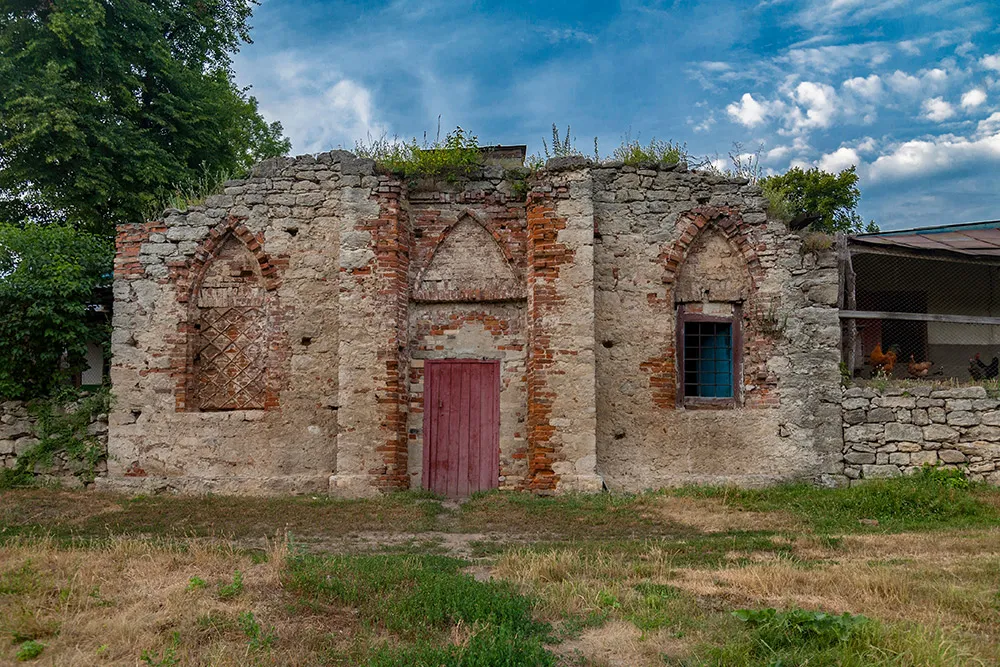
However, things are not so simple with this building. The beekeeper kept house here when the village was owned by Countess Ignatieva, whose grandfather, Marshal Kutuzov, once so nicely burned Moscow (well done!).
Judging by the architecture, with a high degree of probability there could once have been a palace Roman Catholic chapel of the Mniszechs here, and afterwards of the Skibniewskis.
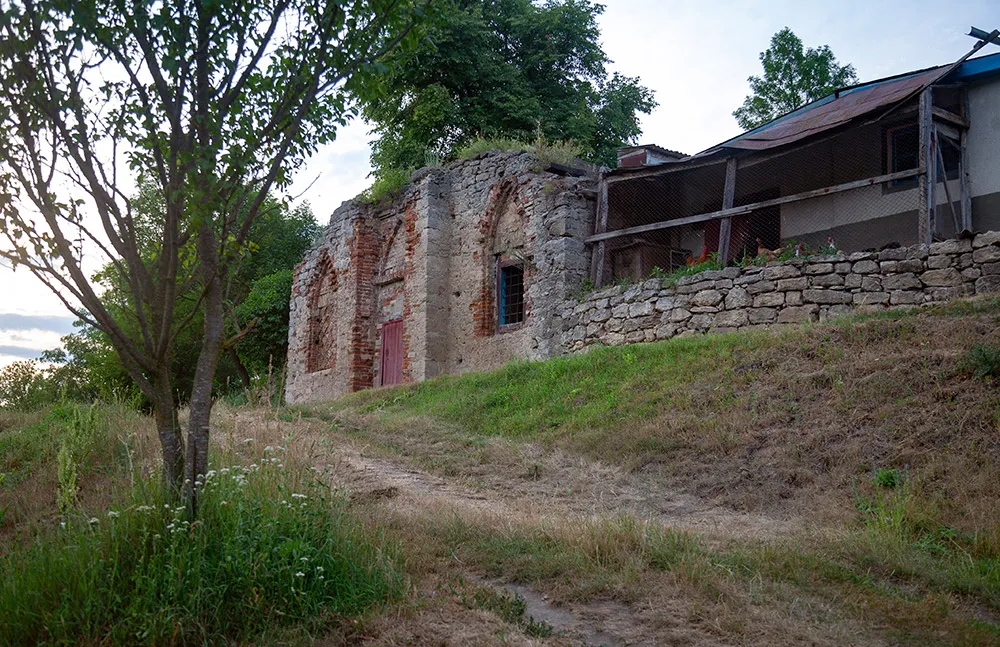
Unfortunately, the upper superstructure of the “cellars” has been destroyed. Especially impressive is the pointed Gothic pseudo-window, where the brickwork imitates a real one glazed with small panes (judging by everything, this masonry appeared after the construction of the building itself). Both ordinary brick and extremely thin flat bricks were used here. How the ancient masons managed to lay it all out is a mystery to the author.
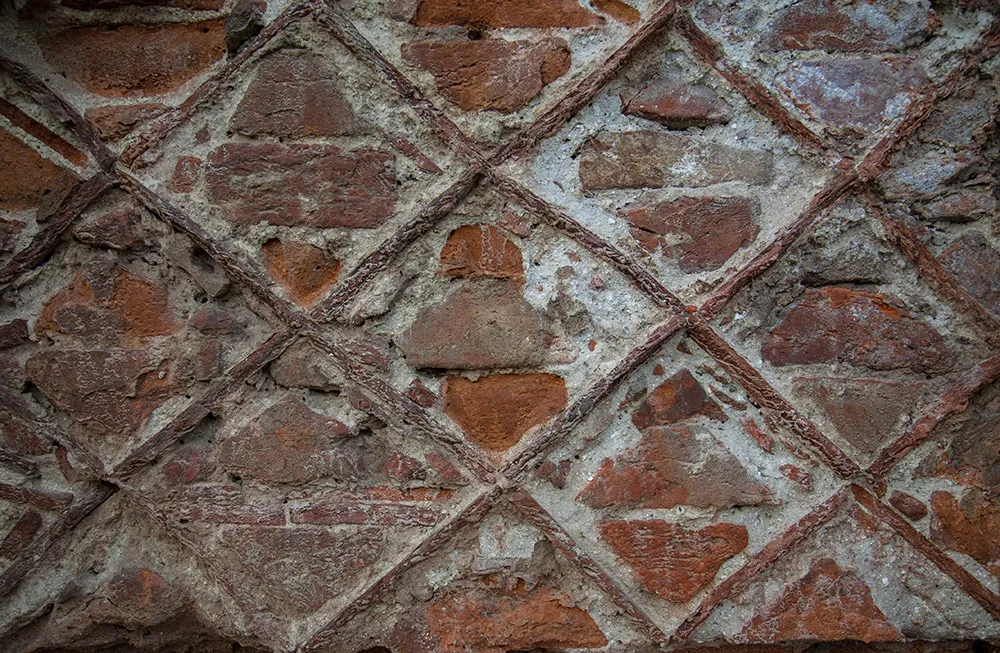
The Neo-Gothic service buildings (inn, coach house, stable (barn?), the beekeeper’s cellar, and possibly something else) formed a whole little street stretching along the edge of the hill.
The landowners of Poriccha (probably still the Mniszechs) did not go to such architectural trouble for nothing. On top of the neighbouring hill stood the palace complex, and the Neo-Gothic street was an adornment of the view: you sit on a balcony or terrace, sipping coffee or wine and admiring the view, imagining you have been transported to France or Germany.
In 1830 Nove Porichchia was bought by Wiktor Mikołaj Skibniewski, a nobleman of the Ślepowron coat of arms.
Which of the Skibniewskis built the “new” palace in the Classical style is not known for certain. According to one version it was still Wiktor. According to another, his son Henryk, who in 1859 inherited Poriccha upon his father’s death (Wiktor had six sons and two daughters in all).
The creation of the palace landscape park is attributed to the famous Irish gardener Dionizy Mikler, also known as Denis McClair (1762–1853), who laid out many parks in Podolia and Volhynia. This is quite a probable version: the park has many trees 150–200 years old, and the master’s hand can be traced. Although the park has run somewhat wild, it has survived well to the present day.
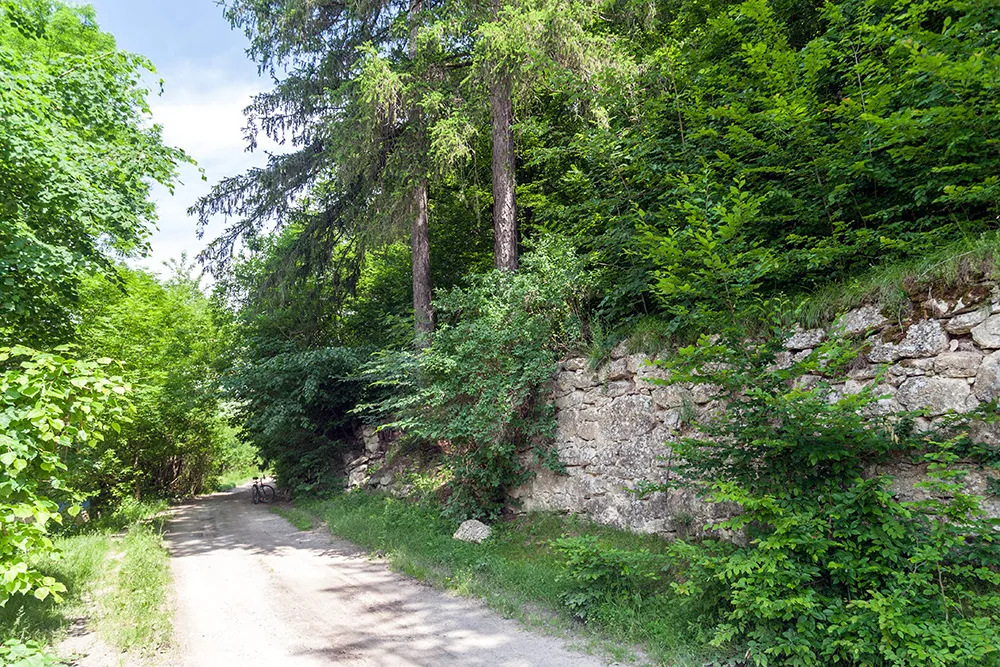
The gigantic wall encircling the “palace” hill and the overgrown park
As the “Internationale” demanded, the palace complex was destroyed “to its foundations” after the revolution. But “and then”, the building of the “new world” did not work out. On the site of the “Podolian Versailles” they managed to organize only a pitch for playing football.
Besides its majestic palace, Nove Porichchia was also famous for its beer. The local brewery was one of the most powerful in Podolia (only Vinnytsia’s was larger) and supplied its products to the largest cities of the Empire and even beyond its borders. The local beer owed its popularity to the extraordinarily tasty local water.
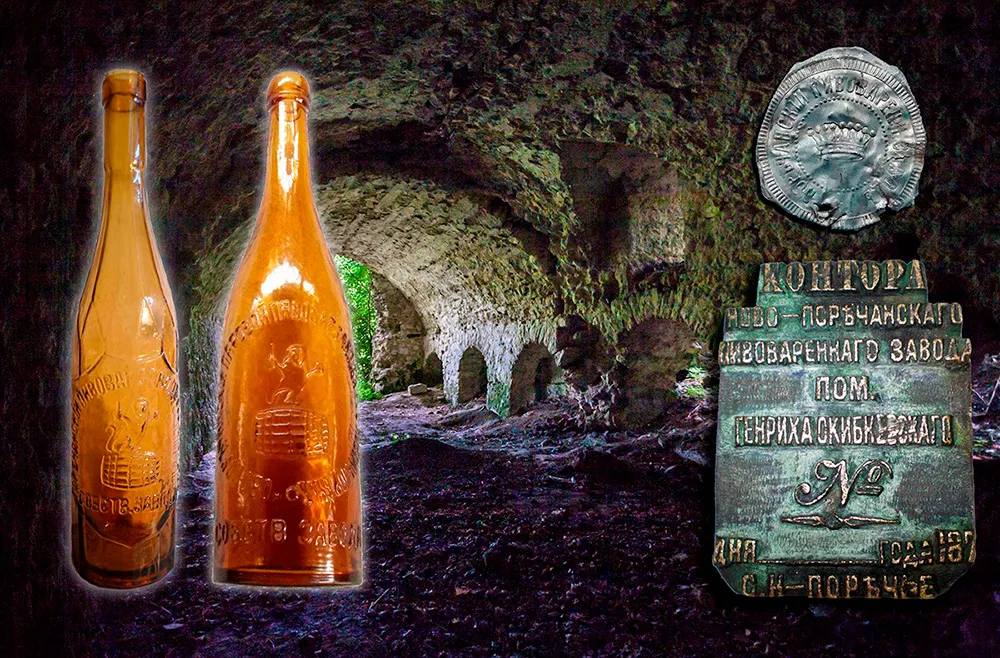
Beer bottles from the time of V. Lemberg, a beer cap with a count’s crown from the time of Countess Ignatieva, and the stamp of H. Skibniewski’s brewery (mirrored for convenience) against the background of the brewery cellar
The brewery was built in 1876 by Henryk Skibniewski. True, the very next year he sold his Nove Porichchia estates to the already mentioned Countess Katerina Ignatieva.
The countess did not concern herself with the business and at once leased the brewery to Leon Klawe. Leon Henrykovych was a brewer known throughout Podolia. Later, having earned his starting capital in Nove Porichchia, he built a brewery in Proskuriv (now Khmelnytskyi). Today it is the fairly well-known enterprise Khmelpyvo.
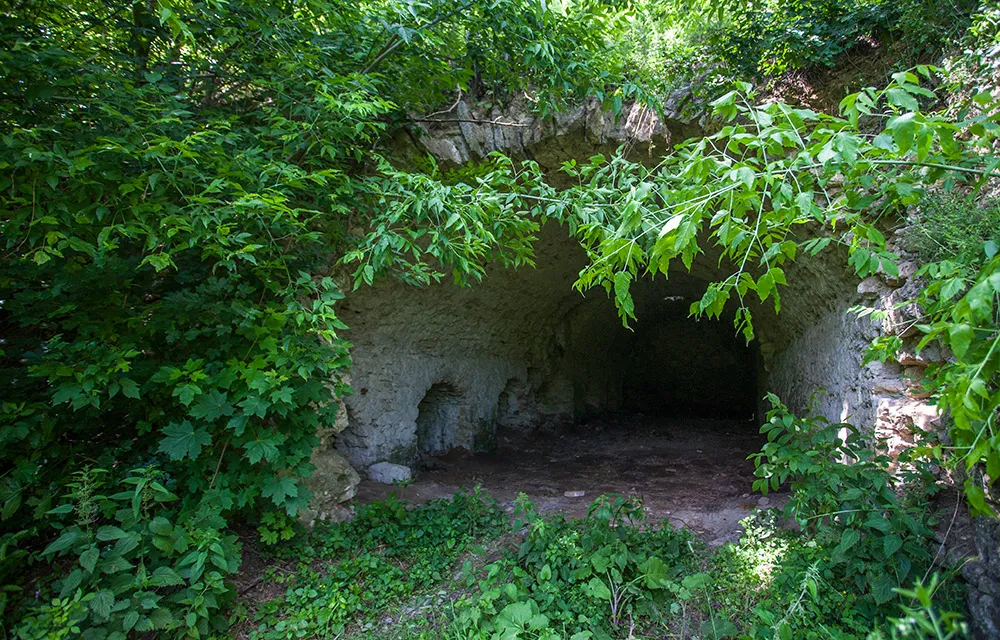
Entrance to the cellars
From 1909 the brewery was owned by the Kherson lawyer Tymchynskyi, and its tenant was V. Lemberg, who in honour of his surname decorated the bottles with an image of a lion astride a beer barrel. True, the animal came out looking more like a monkey. At that time, with 46 workers, the brewery produced beer worth 85,000 roubles a year. For those times, a gigantic sum!
The brewery operated until August 1914: with the start of the war a “dry law” was introduced throughout the territory of the Russian Empire and beer fell under the ban. After that, in the post-revolutionary years, it was plundered, and the empty buildings were carried off for building materials by thrifty Podolians.
Of the powerful production only the huge cellars survived, the size of a metro tunnel, resembling the ruins of some ancient castle. Tourists are delighted with them.
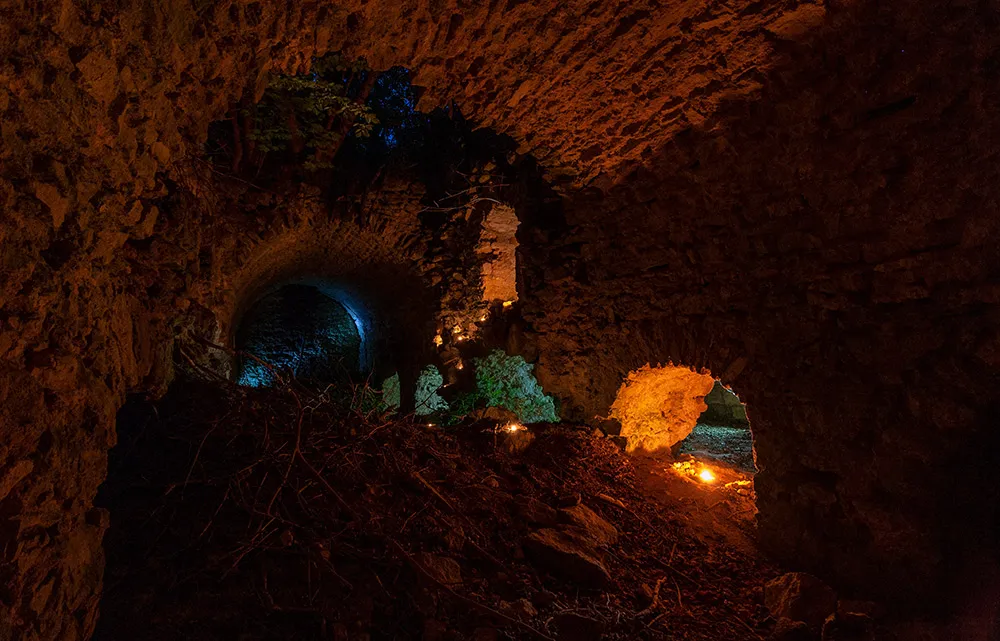
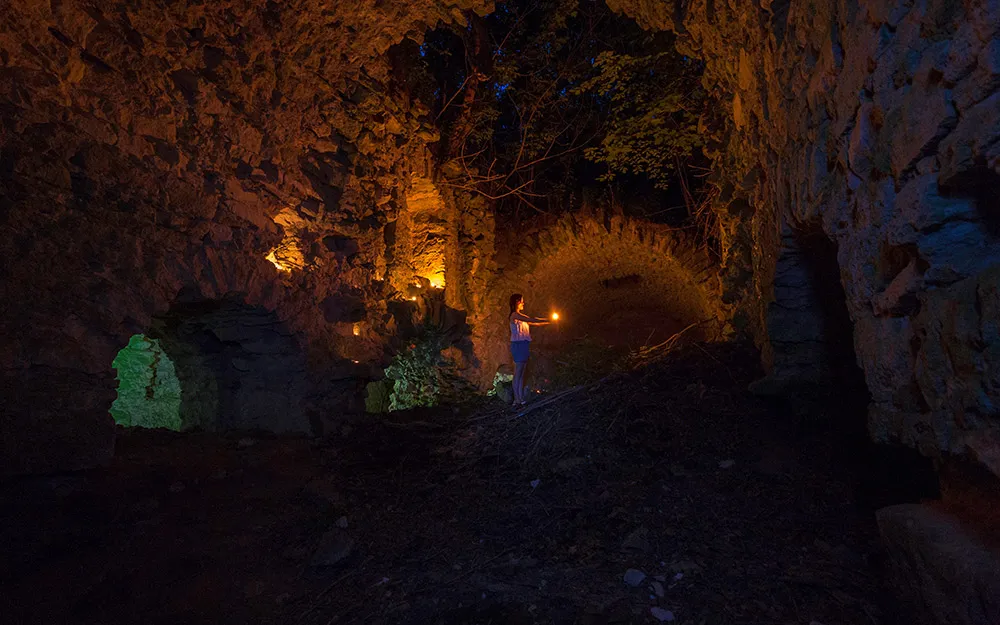
Among local curiosities are an old three-arched bridge dated to the 18th century and the gigantic wall that encircles the “palace” hill.
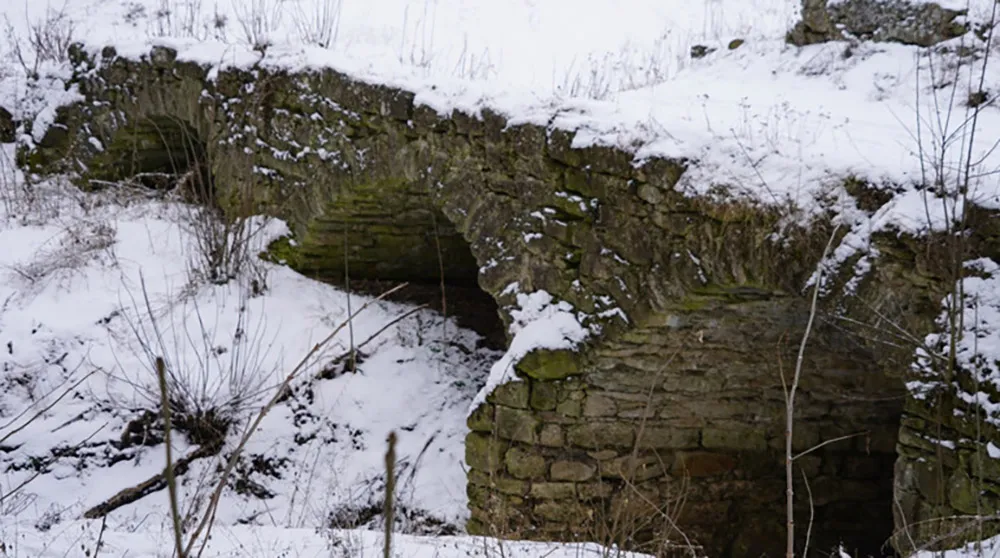
The bridge. Photo: horodok.city
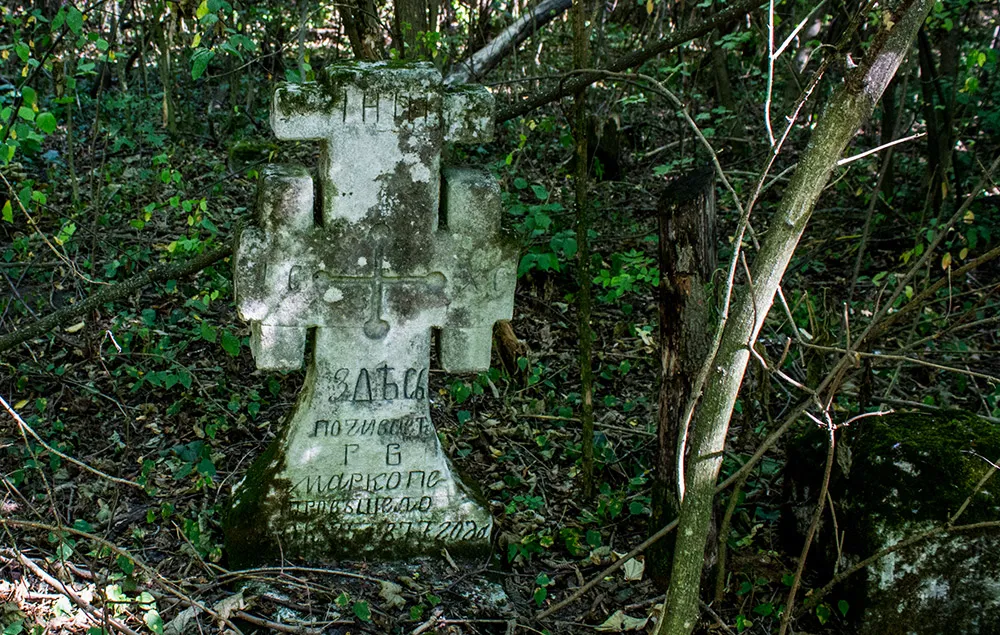
Also interesting is the old cemetery with archaic crosses of the “cross-ended” type and the ruins of a brick cemetery chapel.
In the dense willow thickets lie also the ruins of a 19th-century water mill. But this monument will be interesting only to fans of old mills.
Nove Porichchia is about 5 kilometres from the former district centre of Horodok. That is if you drive straight across the fields on a dirt track. By road it will be about 10 kilometres… It seems not much, but in some sections this road resembles the notorious “direction”.
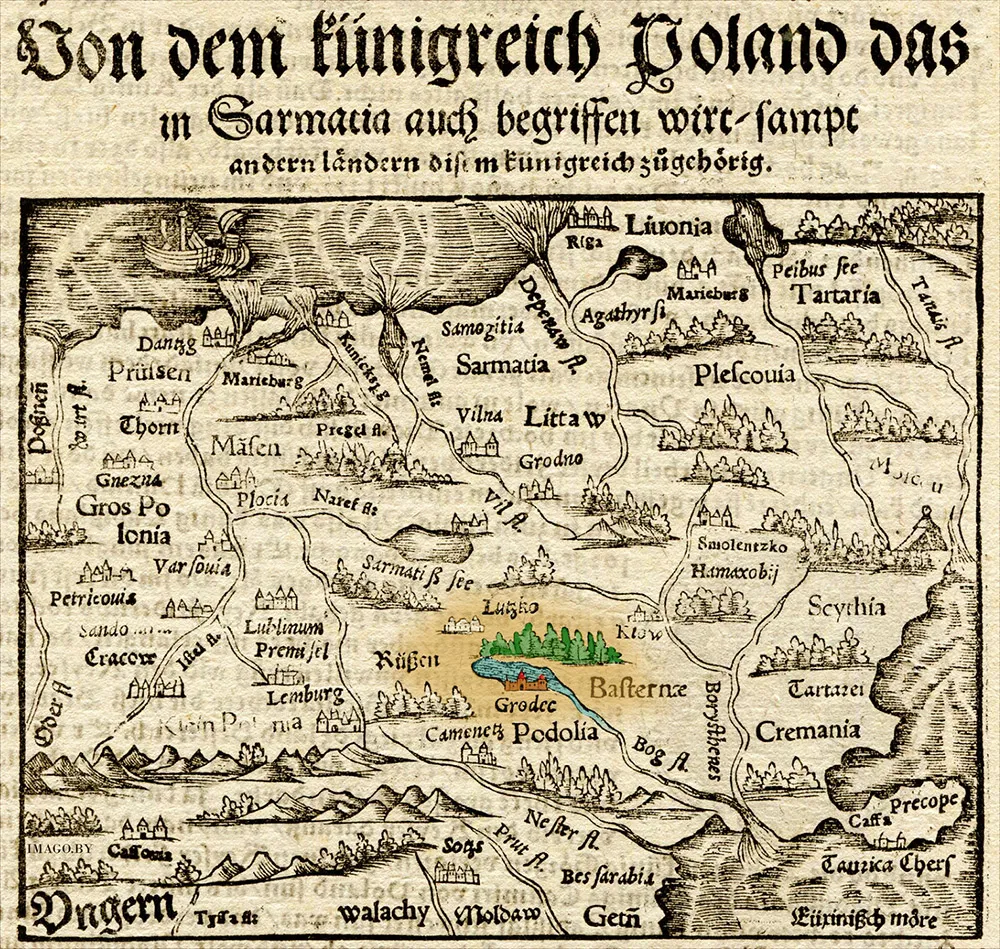
Sebastian Münster’s 1544 map of “Sarmatia”. Six towns are marked on the territory of Ukraine, including Horodok
Horodok, we note, is a rather interesting and not simple little town. Even a mysterious one. In particular, it is still unclear why cartographers of the 16th–17th centuries stubbornly marked it on maps of Europe, putting this insignificant-in-every-respect little town on a par with such well-known cities as Kyiv and Lviv. On some 16th-century maps fewer than ten of the most important towns are marked on the territory of Ukraine, and among them we always see Horodok. There are maps that do not even show Lviv or Kamianets… yet Horodok is there! A study of this phenomenon can be read in the article “Why did cartographers of the 16th–17th centuries put Horodok on a par with Kyiv and Lviv?”.
Dmytro Poliukhovych


