

The Strusiv necropolis and the unique grave of a drowned woman

· 6 min read
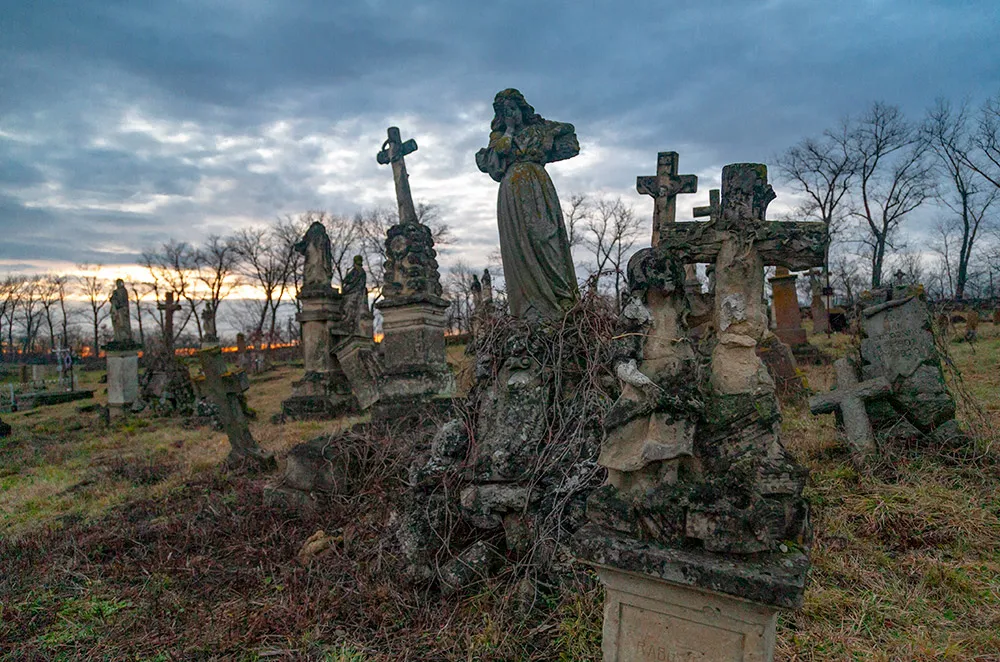
Strusiv. Cemeteries are best photographed at dusk.
The old cemetery of the former small town of Strusiv is one of the most interesting village necropolises of Ternopil region. The reason is obvious. It was once one of the centres of the stone-carving trade and supplied sculptures and monuments for cemeteries and churches in several counties at once.
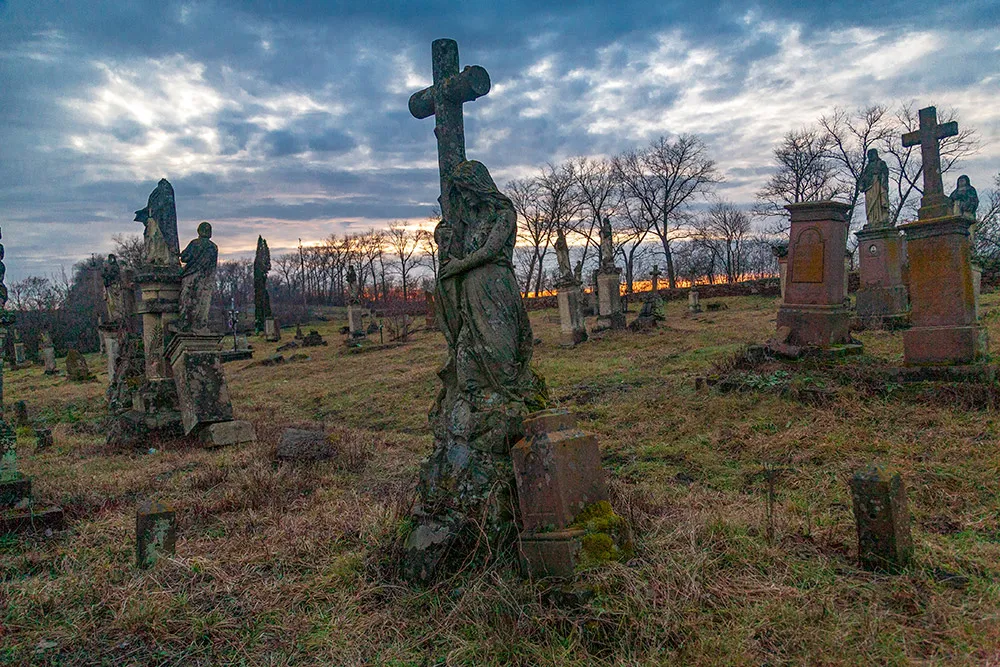
In fact, there are two old necropolises here. One (the older) is on the north-eastern outskirts of the town, right behind the Church of St. Nicholas. The other cemetery spreads across the eastern outskirts, on both sides of the highway. It is also the more interesting, and it offers the most beautiful panorama of the village and the Seret valley.
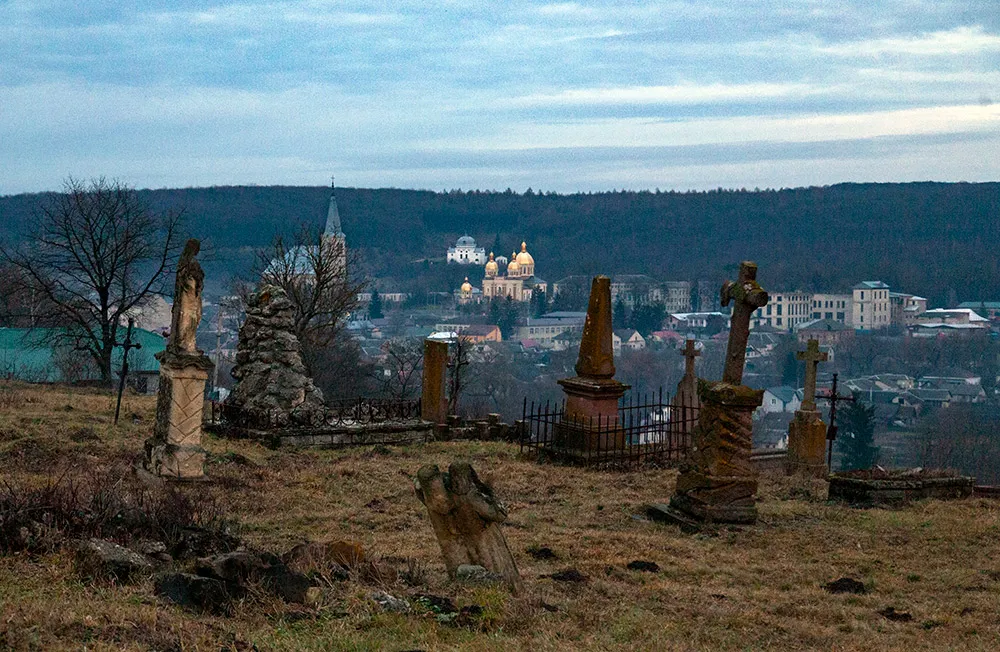
A marvellous view opens from the cemetery hill
A considerable scholarly work could be written about this necropolis, but we will dwell only on the legacy of the sculptor Ludwik Ziemski, once well known in this region, who had a large workshop in Strusiv in the interwar years.
Ludwik Ziemski came from an artistic family fairly well known in Ternopil region. His father Teofil Ziemski was a well-known artist in Galicia – a painter and sculptor. In his time he graduated from the ceramics school in Kolomyia. Although his tableware was in great demand, Mr. Teofil soon grew tired of turning out merely banal pots and bowls. He also proved himself a talented ceramic sculptor. His output includes, in particular, figures of the twelve apostles and 52 sculptures of Polish kings and princes.
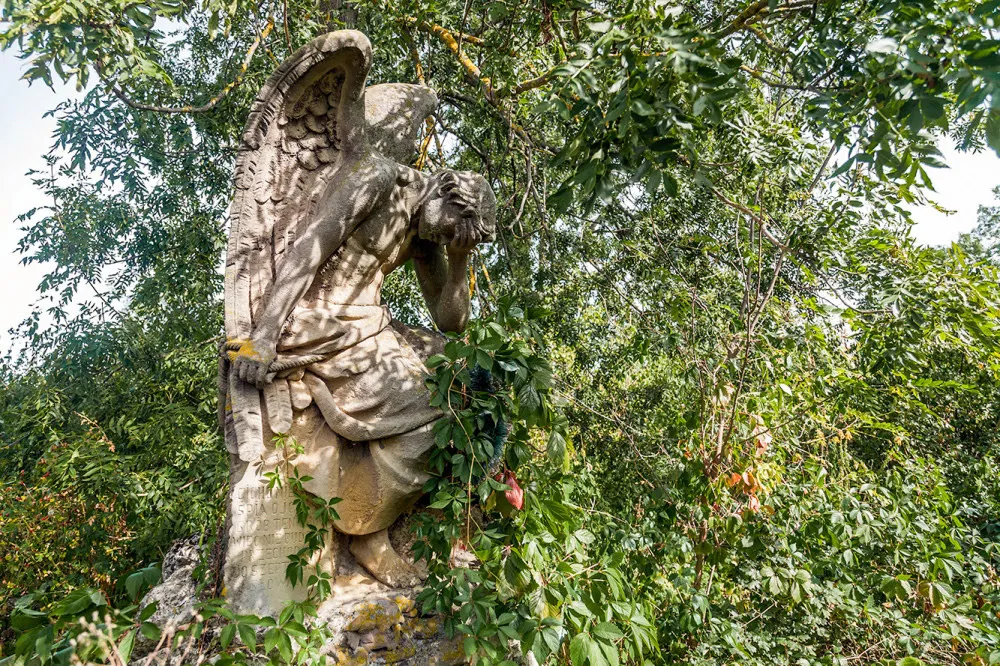
A monument by L. Ziemski on his father’s grave (cemetery of the village of Budaniv)
Ziemski senior also tried his hand at stone sculpture. In particular, in this same cemetery in Strusiv one can see a touching tombstone on the grave of 3-year-old Izabella, who died in 1907. This small composition is made in the form of a little smiling girl with a bouquet of flowers, embracing a cross shaped like a tree. At the foot of the cross we see the author’s signature, T. Ziemski.
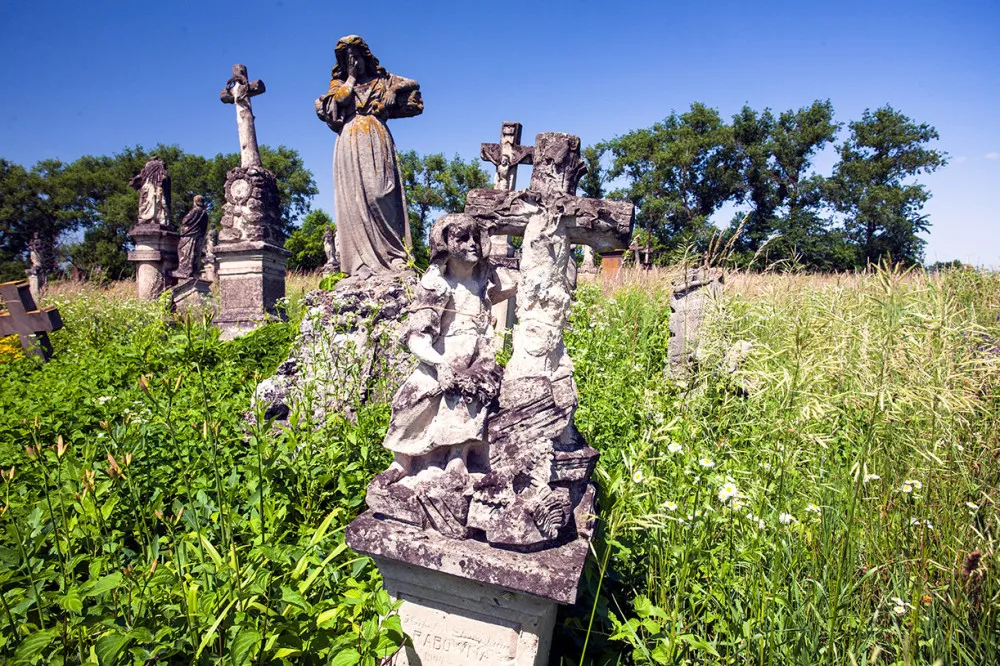
A tombstone by T. Ziemski. Strusiv.
Ludwik at first continued the family tradition and even graduated from the same Kolomyia ceramics school, but afterwards preferred hard stone. He perfected his skill under the guidance of the well-known carver Damian Karol of Strusiv. Soon after he finished his training, his teacher died, and Ziemski did not waste time – in 1913 he hastily married the freshly made widow, who was a good 15 years older than he was and also had four children by Karol.
Everyone benefited from this marriage. The young but not wealthy master received a ready-made and already “well-known” workshop, and Mrs. Julia a husband who continued the family business and provided for her and the children. It is possible that not only pragmatic calculation but love was involved here.
In 1918–1920 Ludwik fought against the West Ukrainian People’s Republic, and then against the Russian Bolsheviks, in the battles against Tukhachevsky’s Red Army soldiers he was severely wounded. After the hospital he returned to artistic work. In particular, he created a monument to Józef Piłsudski, which was set up in the yard of the garrison church in Terebovlia. In 1933 he carved a figure of John III Sobieski, which was placed in front of the Terebovlia town hall. Both monuments were soon destroyed by the “Soviets”.
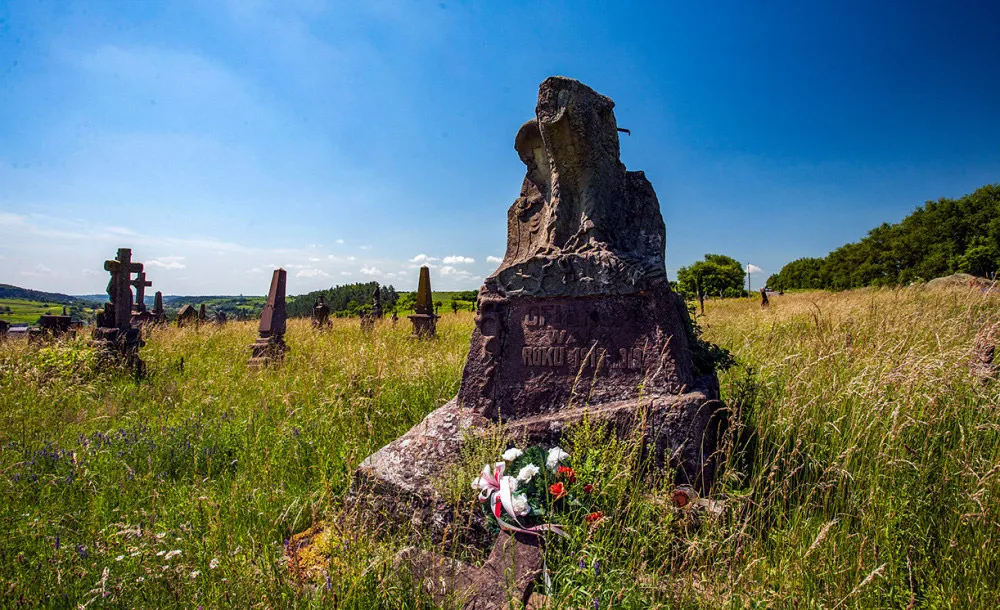
Monument to Polish soldiers
Right at the entrance to the Strusiv necropolis, a huge monument in the form of an eagle breaking chains catches the eye. However, today only the head and torso of the bird remain, and the wings were broken off long ago. This monument by Ludwik Ziemski is dedicated to the Polish soldiers who died in the war against the West Ukrainian People’s Republic. It is suspected that it has certain parallels with the monument to Piłsudski (by the same author) once set up in Terebovlia. No photographs of it could be found, but according to descriptions it depicted the dictator himself, at whose feet an eagle was carved that was also breaking chains. The Polish inscription reads “Ofiarom walk. Roku 1918-1919” (To the victims of the fighting of 1918–1919).
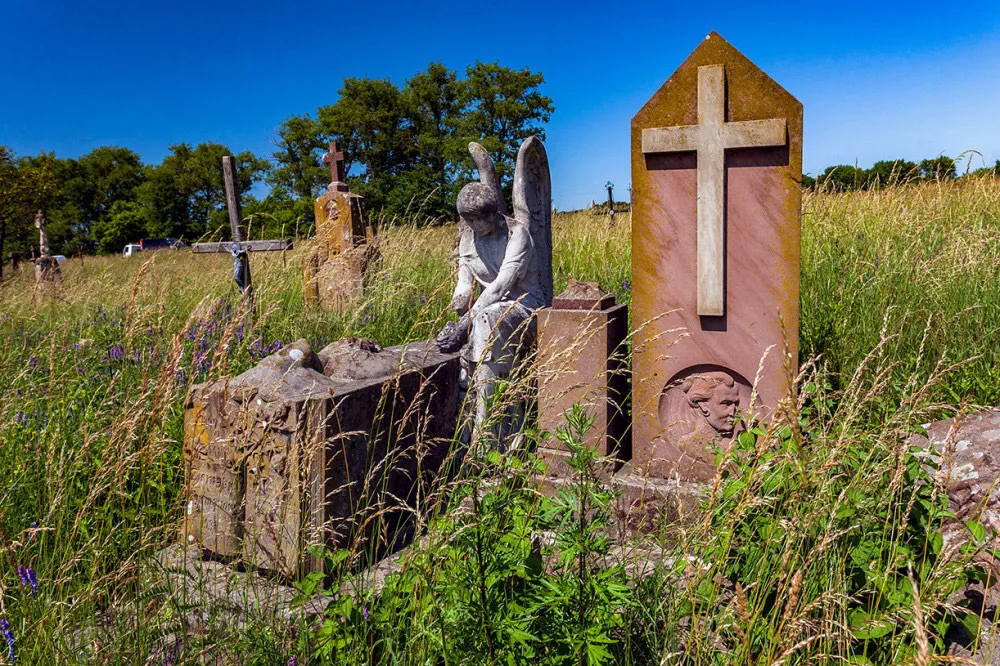
The graves of the sculptor’s sister (left) and wife (right).
The most unique Strusiv tombstone “by Ziemski” (possibly the only one of its kind in Ukraine at all) is located some thirty metres from the eagle with clipped wings. Its central figure is a grieving angel, typical of this sculptor, sitting beside what at first glance is an open coffin in which lies the body of a woman…
The epitaph says that buried here is “Zuzanna z Ziemskich Dziurmanowa (1894–1933)”.
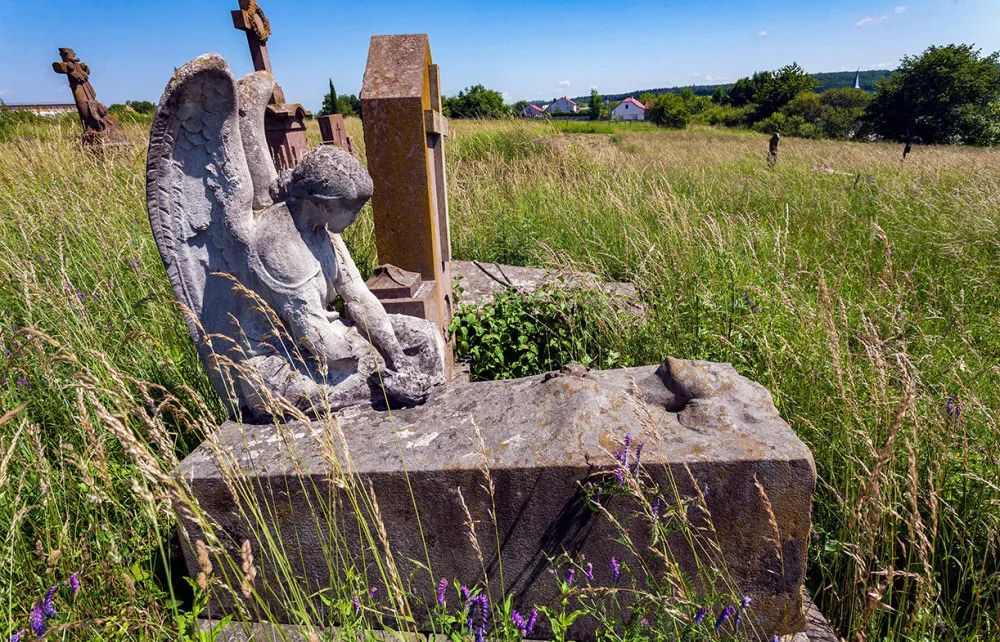
The grave of the drowned woman
From the start the author was struck by how exactly the female figure is portrayed. Somehow it is not quite right… It could all be put down to the author’s clumsiness, but both the angel and the medallion with a portrait of the sculptor’s other wife on the neighbouring stele are skilfully executed. Whereas here the image looks as if the original, before being embodied in stone, had been wrapped in transparent film.
From the very first acquaintance this monument evoked vague associations with the famous painting “Ophelia” by the English artist John Millais, painted in 1851–1852.
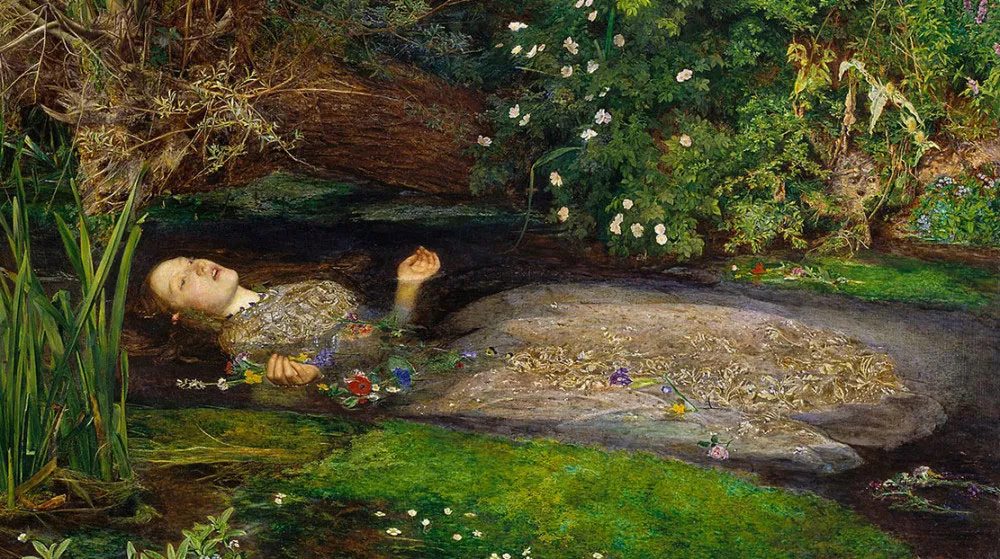
John Millais, “Ophelia”
As it turned out, these associations were not unfounded. Ludwik Ziemski really did embody in stone the famous painting depicting Shakespeare’s drowned heroine… This was preceded by a rather sad and tragic story of the sculptor’s younger sister Zuzanna Ziemska (1894–1933). Zuzanna worked as a teacher and was married to a teacher at the same Strusiv school – a certain Petro Dziurman, by whom she even managed to bear two children. All was well with them until Mr. Petro was struck by a “midlife madness” and started a passionate affair with a young secretary who worked at the same school. Poor Zuzanna could not come to terms with the betrayal and threw herself from a bridge into the waters of the Seret…
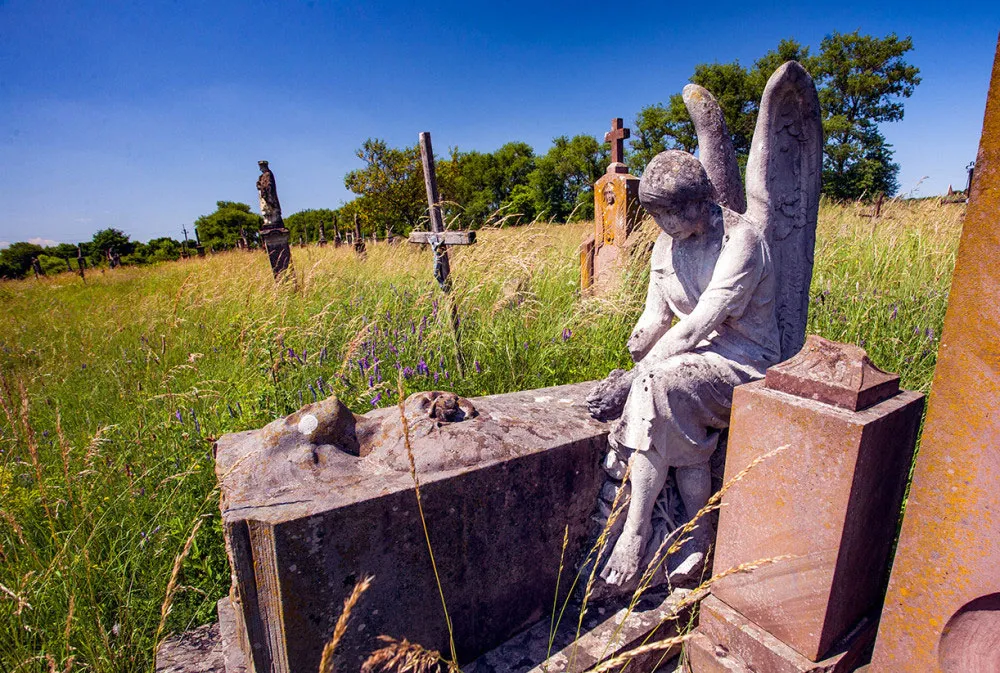
The grave of the drowned woman
Ludwik Ziemski, who of course knew the famous painting by Millais and had seen a reproduction of it, took his “Ophelia” as the basis for the tombstone of his beloved sister. The parallel is complete – here are the long hair spread out on the water and the rose on the breast. The image is completed by a poignant epitaph in Polish: “Holy God! Your love is boundless. Like a tender and weak flower, overcoming sinful temptations, I come to You”…
This is perhaps the most original monument to a drowned woman who took her own life because of betrayed love.
Next to the monument to the sculptor’s unfortunate sister we see an obelisk on the grave of his wife Julia (1872–1941). Considering how much work the master put into creating this tombstone, one can assume that their marriage was based not only on calculation but also on love.
Dmytro Poliukhovych (“Virtual Vytrishky”)
If you liked it, you can thank the author for his work and help the “Virtual Vytrishky” project by transferring a few hryvnias to the PrivatBank card 5168 7554 6511 0969. (Dmytro Poliukhovych)


