

The Sataniv synagogue: for God and for defence
Tomorrow Passover begins for Jews. “Ukraine Incognita” sincerely congratulates all Ukrainian Jews on the holiday.
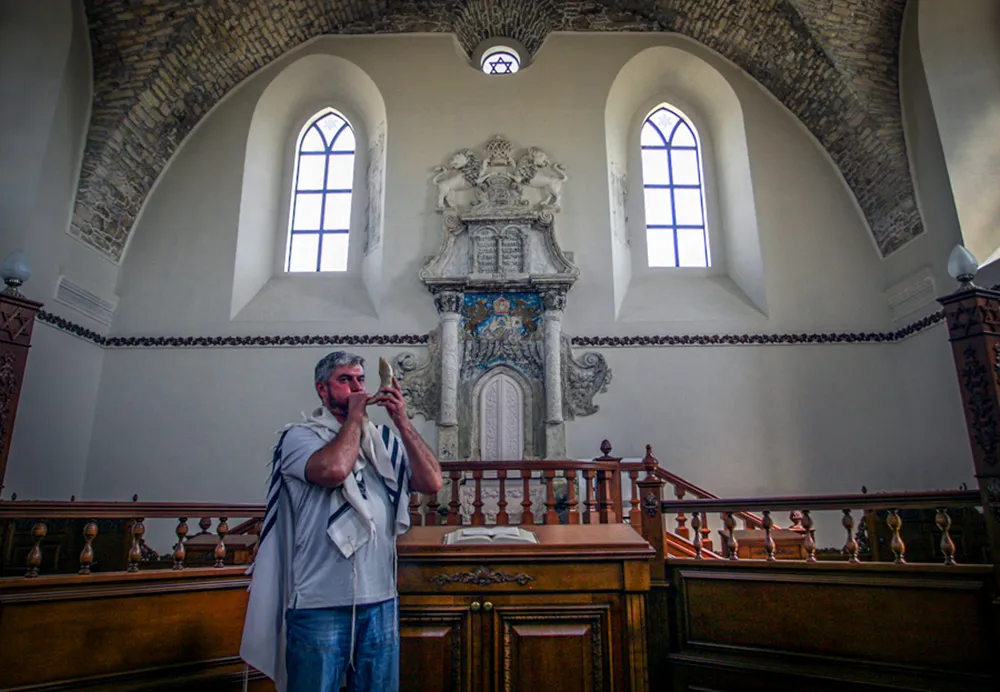
Pesach literally means passing over, or the Exodus from slavery to the uninterrupted Festival of Freedom with Faith in the Creator! It is the Festival of Freedom in Faith.
We wish all Ukrainians and Jews freedom from the slave mentality and enslavement. Victory to all of us over the enslavers!
In honour of this holiday we are publishing a story about the grandest and oldest synagogue in Ukraine.
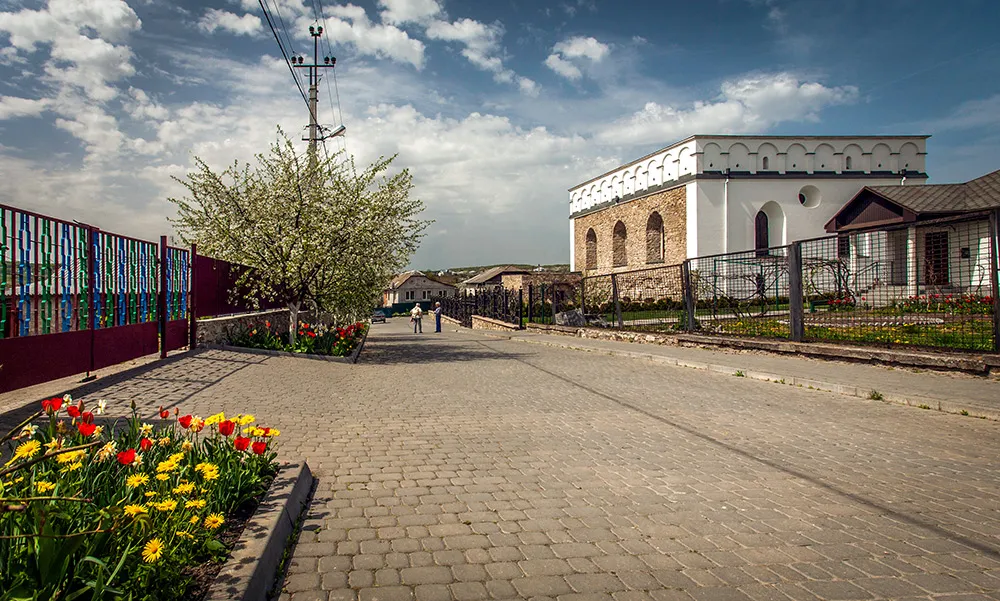
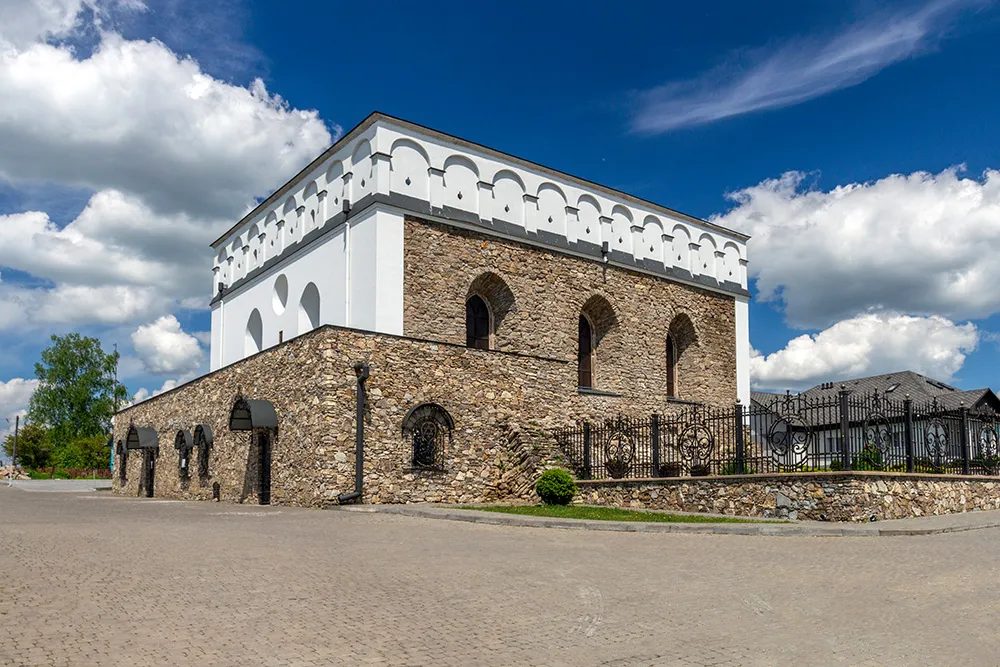
The Great Synagogue of Sataniv (in Yiddish “a groyse kloyz”) is perhaps the most striking representative of the defensive synagogues of the “heroic period” that have survived in Ukraine. It stands near the market square, the traditional heart of any old town or townlet.
There is nothing surprising in the fact that the house of prayer was built as a fortress too. At that time Podillia was a borderland, and war was a normal state of affairs. So everything and everyone was fortified, sacred buildings included. Almost all of Sataniv’s old Christian churches were also of the defensive type. Unfortunately, not one of them survived the communist authorities.
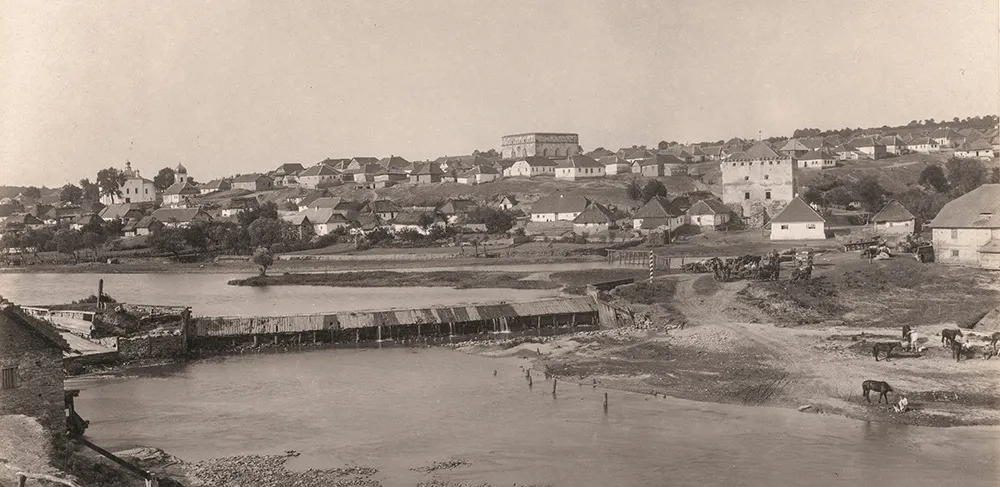
Panorama of Sataniv. 1890
Together with the nearby “Kamianets” Gate (15th–18th centuries), the synagogue formed the main fortified defensive node of the entire southern part of the town.
Let us recall that Jews appeared in Sataniv sometime at the beginning of the 16th century. In 1528 and 1530 they, like other townspeople, suffered from Tatar raids and were exempted for eight years from all taxes and customs duties. Some researchers believe that it was in this “privileged” period (when the local castle was also built up) that the Sataniv kahal erected the famous Great Synagogue. But most likely the house of prayer appeared sometime around the turn of the 16th–17th centuries.
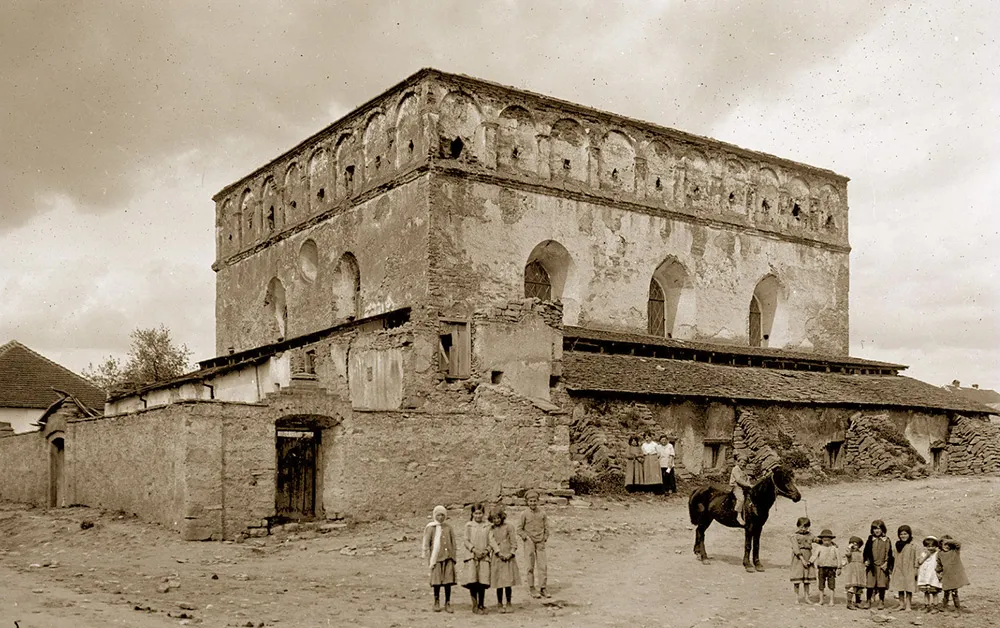
The synagogue. Photo from 1918 (?)
The Renaissance synagogue, standing on top of a hill, is the main architectural dominant not only of the southern part of Sataniv but of the whole Old Town. In plan it consists of a rectangular (almost square) prayer hall and side annexes adjoining it. The unique semicircular barrel vault, which covers the prayer hall without any columns, is one of the largest in Eastern Europe.
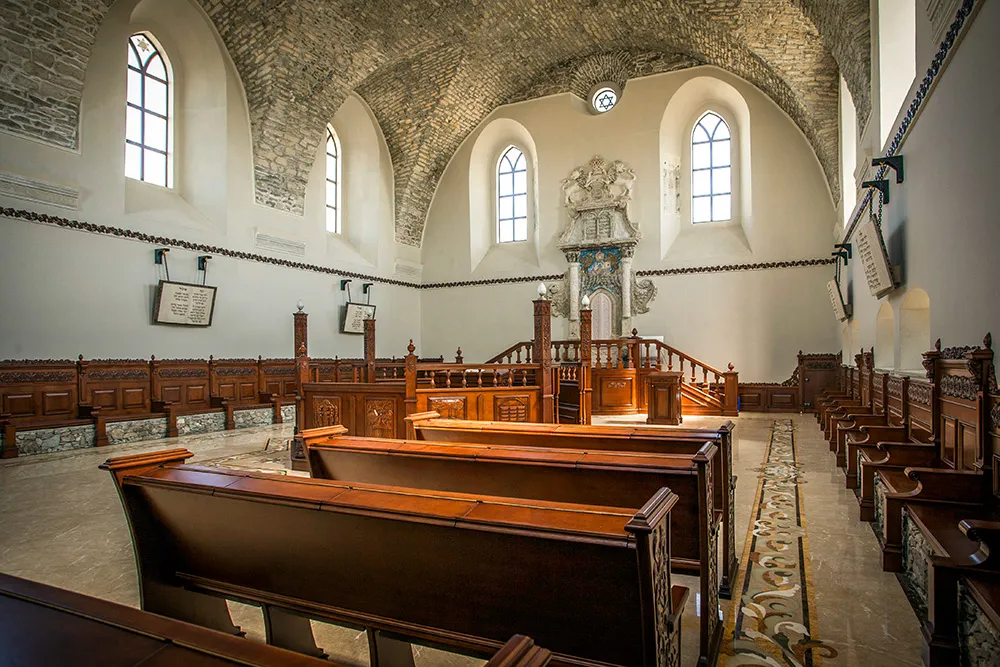
The building is crowned, like a crown, by a blind arcade of the attic, which once served as a combat tier. Musket loopholes in the form of a keyhole slit are still preserved in it. Originally the red brick attic, which crowned the grey limestone walls, looked like a kind of golden crown. But after the reconstruction of the mid-18th century, when everything was covered with limestone plaster, this effect disappeared.
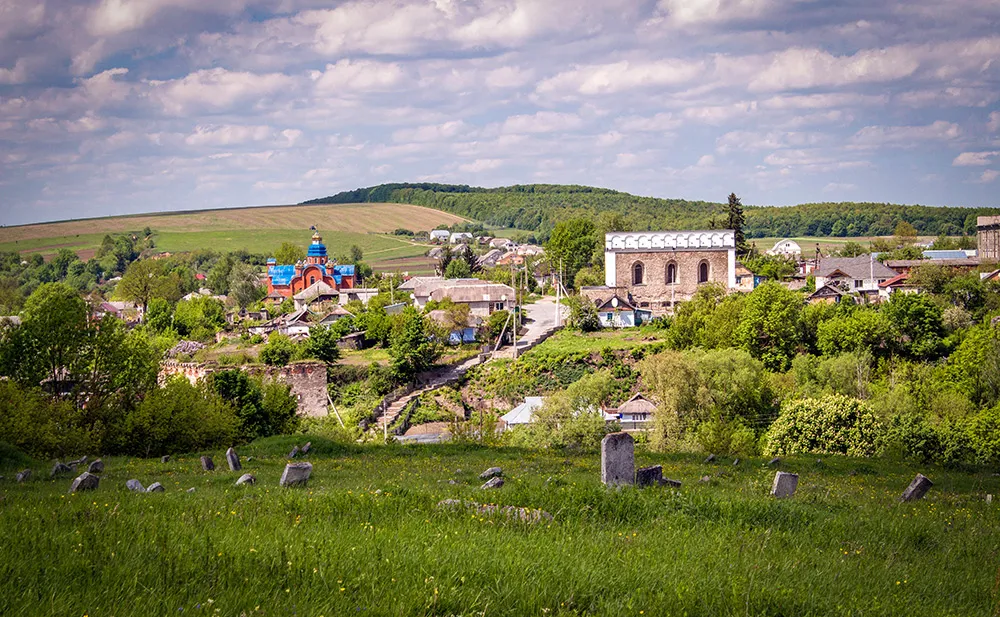
The synagogue (on the hill) and the town gate (on the left in the valley)
The synagogue was one of the most important defensive nodes of Sataniv. It dominates the surroundings, and the approaches to the town were fired upon from its loopholes. Many local-history publications speak of cannons that supposedly stood on its roof. It is possible that there were some, but only of very small calibre. Most likely the cannons stood in a tower attached to the south wall, which has not survived to our time, or in an annex to its south wall (it was dismantled sometime in the late 1980s).
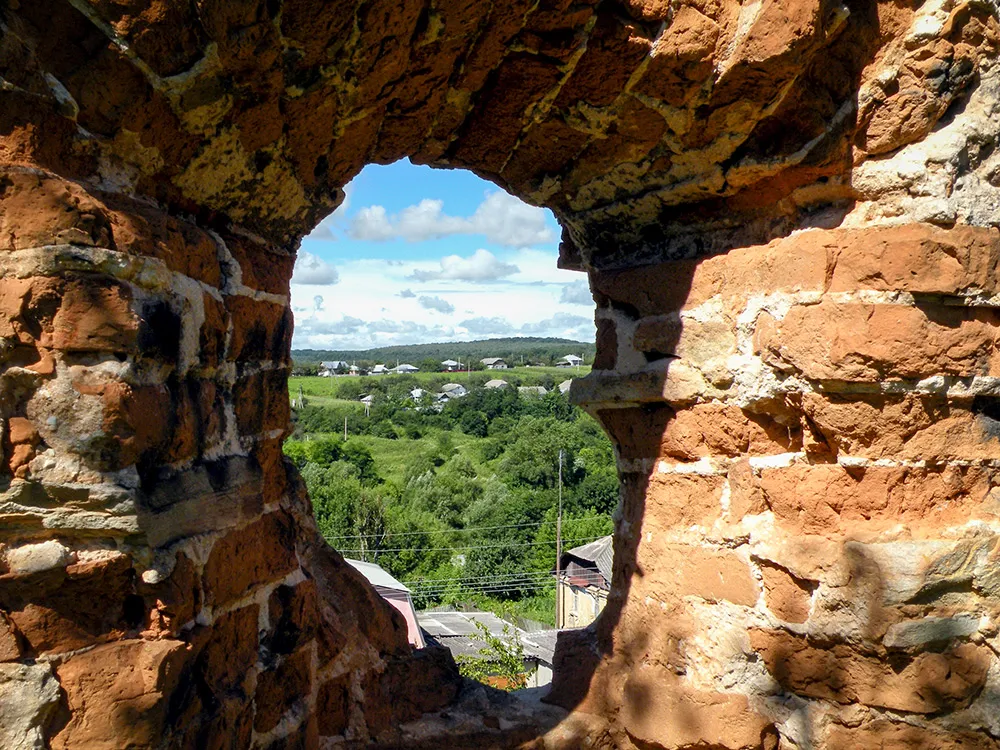
View through a loophole. Photo before the reconstruction
In 1754 the synagogue was rebuilt, as announced by a medallion decorated with griffins above the door leading to the prayer hall. The medallion contains a quotation from Tehillim (Psalms) 55:15: “We walked to the house of God in the throng,” and below it an abbreviation of the letters “lifrat katan” (according to the small count), which indicates that a date is encoded in the quotation. On close examination it can be seen that some letters stand out slightly. If they are converted into numbers (Jews use letters instead of numerals), we get the date 5514 (1754).
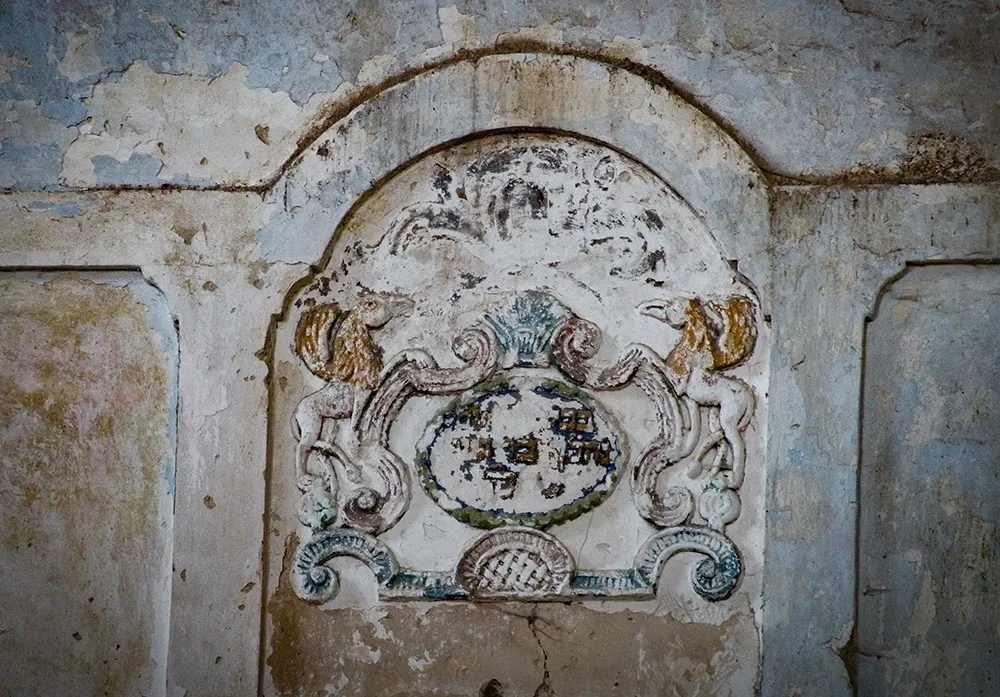
Plaque with griffins, photo before the recent reconstruction
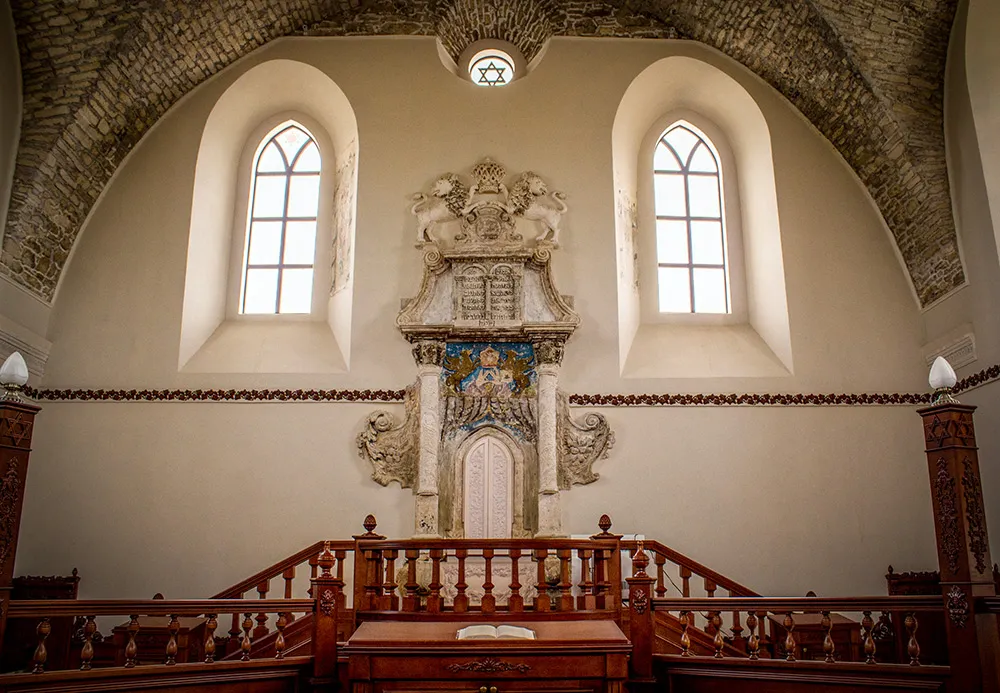
Aron hakodesh
At that time a new aron hakodesh, a special niche-cabinet for storing Torah scrolls, richly decorated with white-stone Baroque carving, was also installed. Its symbolism is interesting: the crown that tops it is a symbol of kingship and, more broadly, of the Lord; the lions on either side embody the Jewish people and strength; the columns recall the destroyed Temple in Jerusalem. We see similar decoration on many old matzevot of Sataniv.
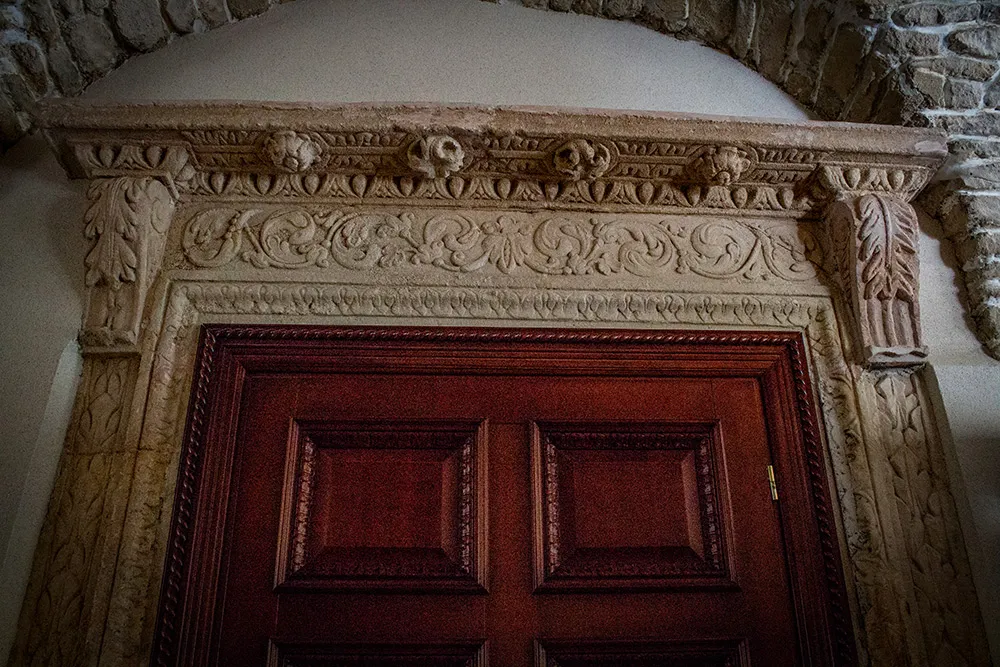
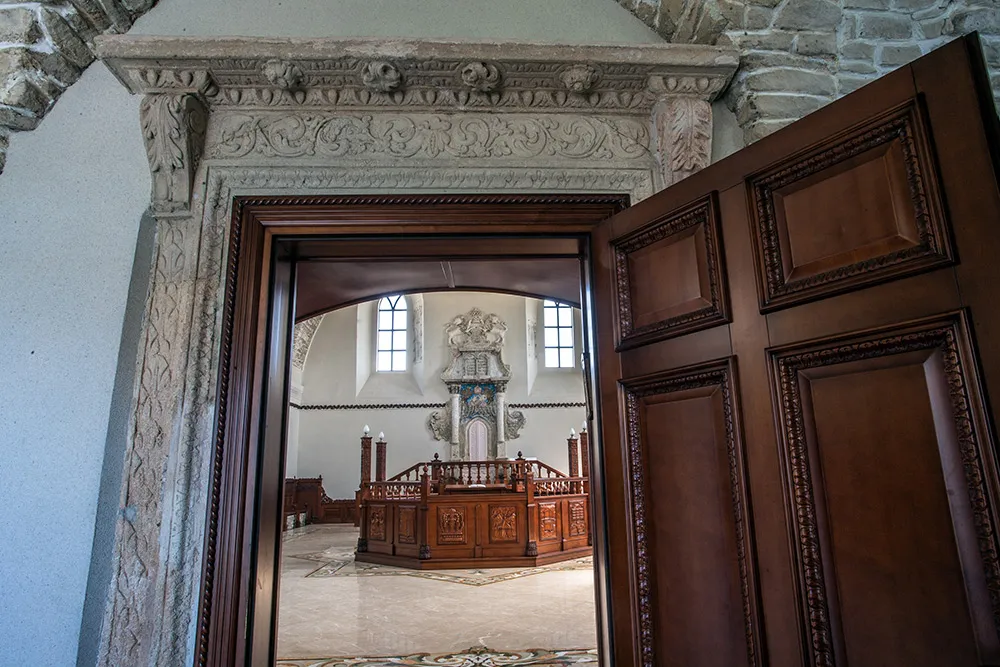
Of the synagogue’s interior decoration, extremely beautiful carved white-stone portals have survived to our time. One still decorates the passage to the prayer hall. Another, no less beautiful and refined, until recently decorated the passage to the rabbi’s room. It was dismantled during the recent rebuilding.
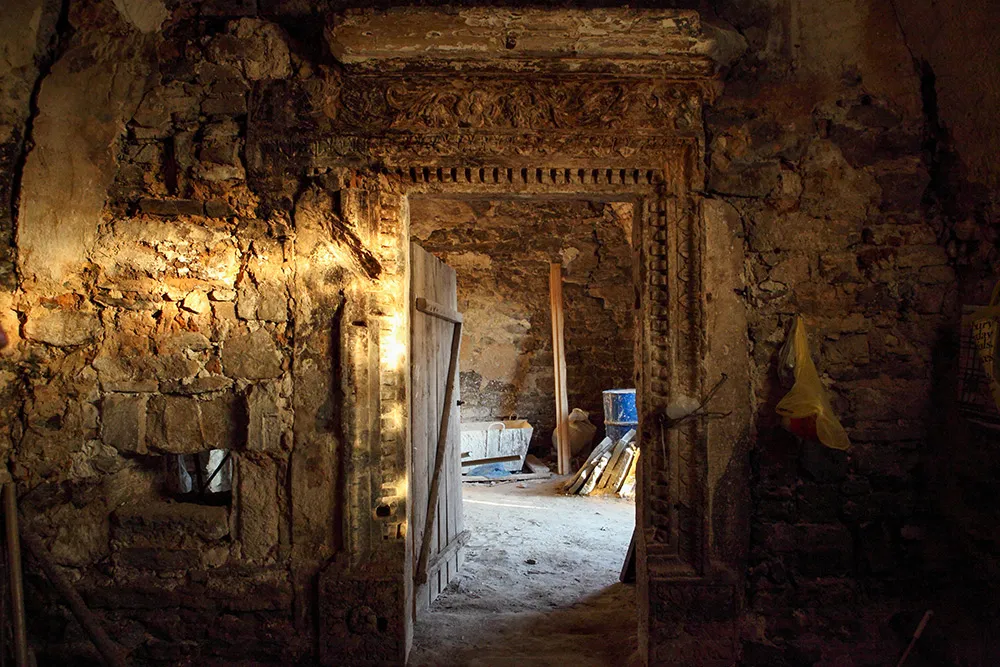
The portal dismantled during the latest reconstruction of the monument of national significance. Photo by Yana Shraier
In the 1930s the communists closed the synagogue and set up an ammunition depot there. After the war, until about 1980, it was a grain store, and then a warehouse of the consumer cooperative. From the early 1990s the house of prayer stood empty.
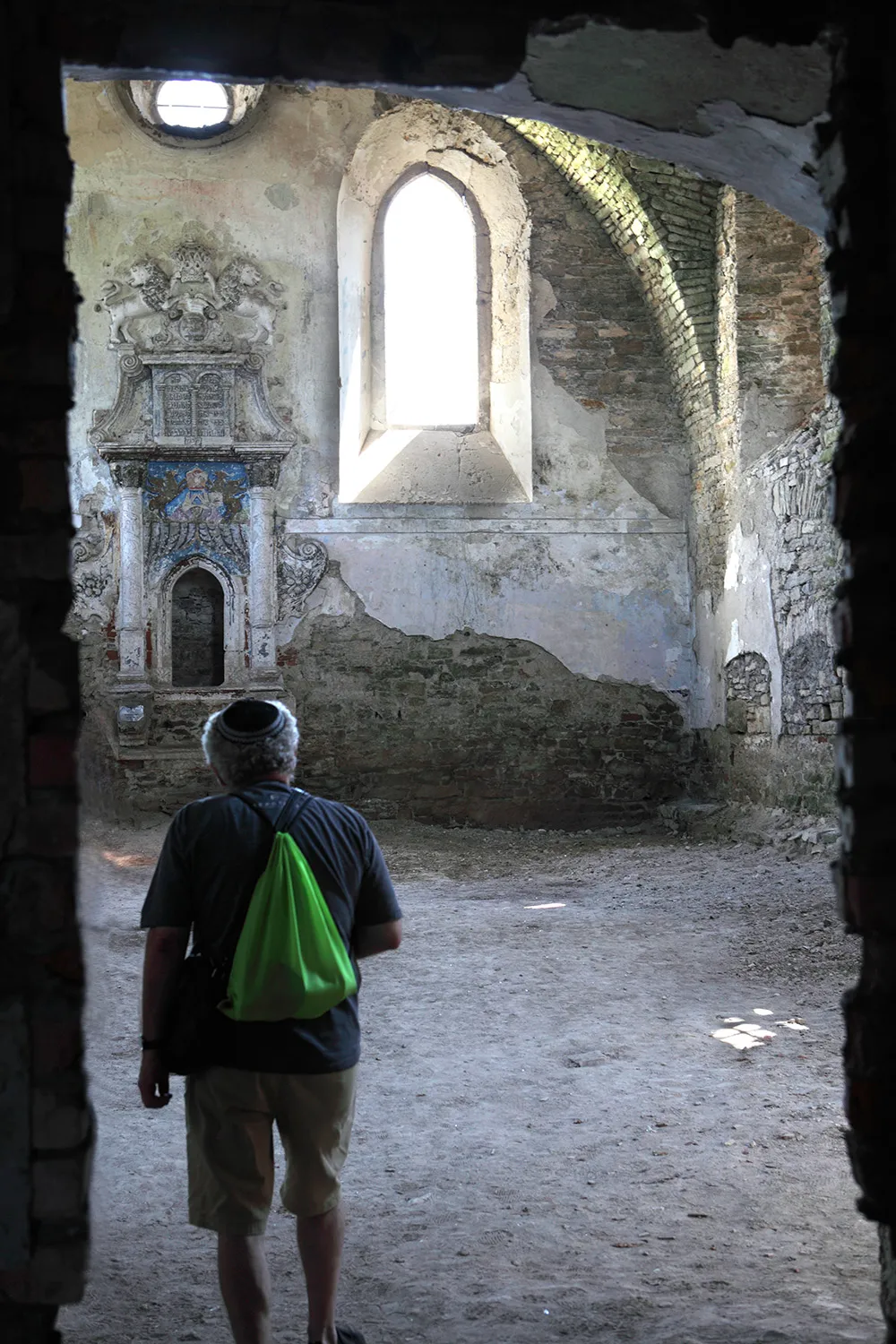
Photo: Yana Shraier
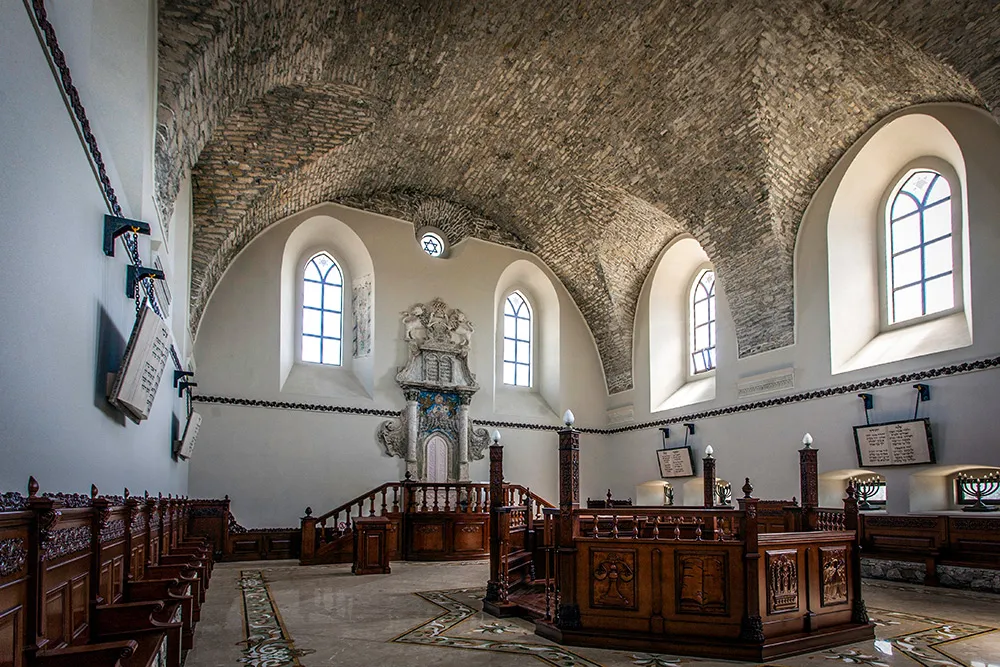
In 2013 work began on its repair, during which the monument of national significance underwent quite significant rebuilding. By 2015 the main reconstruction work on the house of prayer was completed.
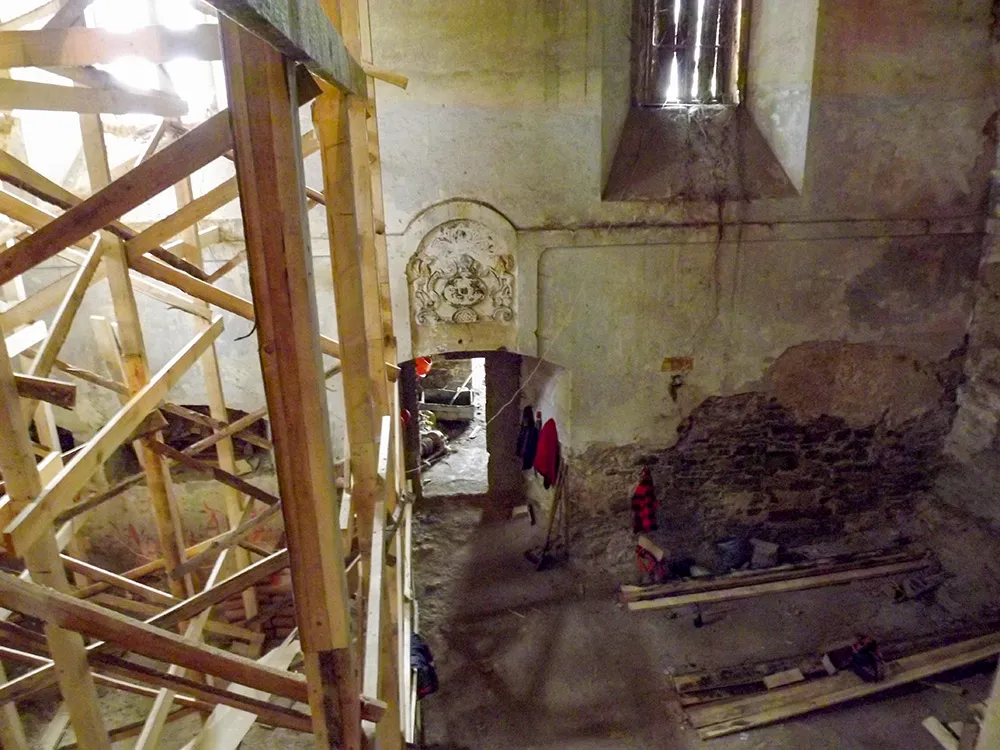
Repair work in the synagogue
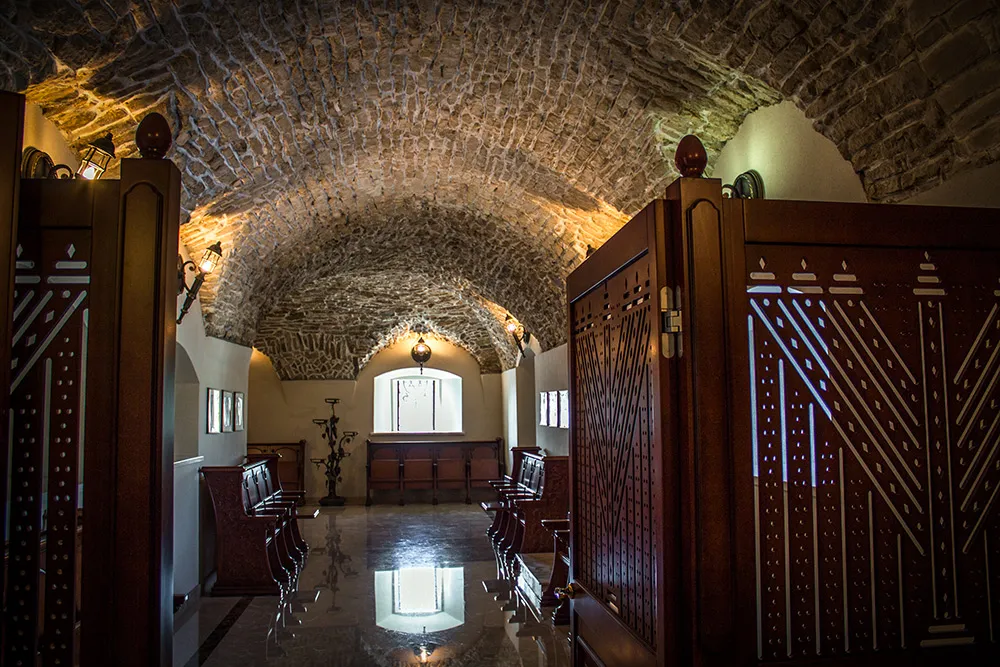
Returning to the Passover holiday. While clearing the synagogue’s cellars, workers found a fragment of a ke’ara dating from the turn of the 19th–20th centuries. This is a special plate used during the festive Passover meal. A rather symbolic and interesting find!
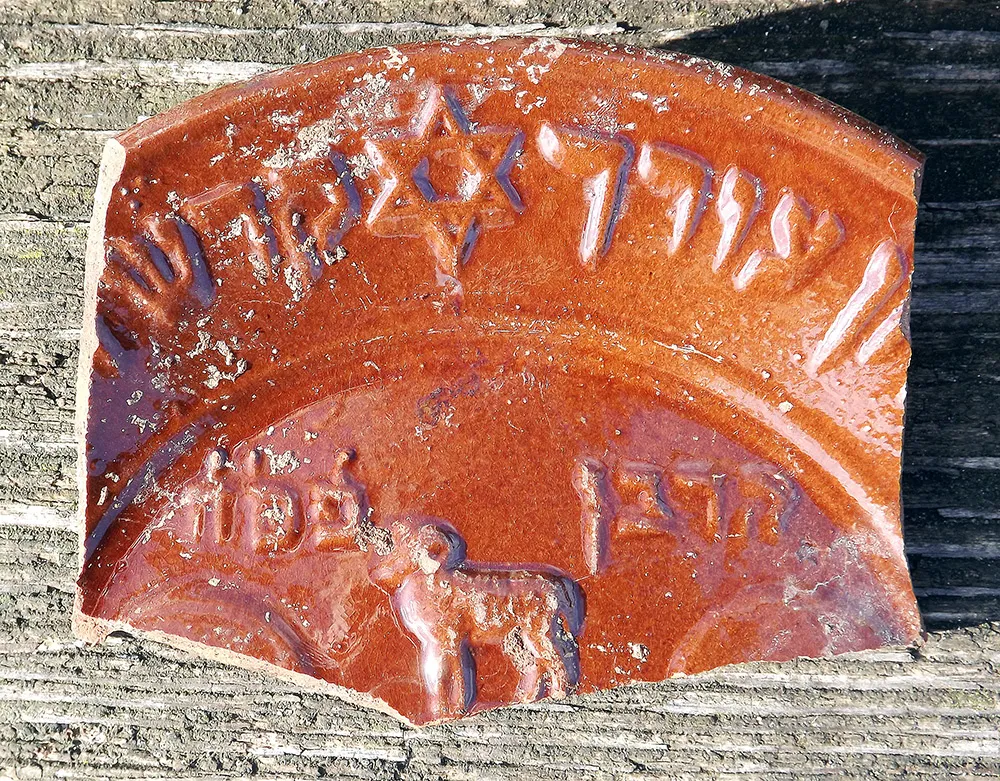
Fragment of a ke’ara
Text and photos by Dmytro Poliukhovych


