Tuchyn. Unexpected monuments

· 4 min read
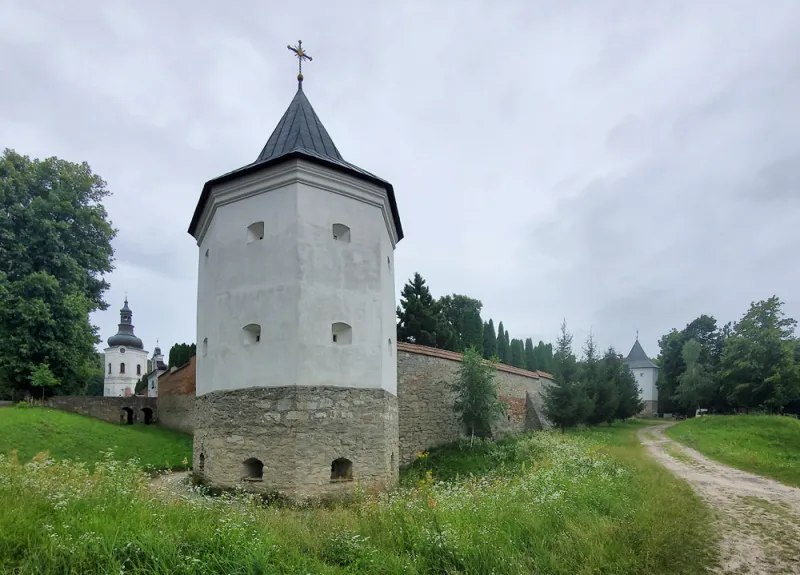
Tuchyn is located 26 kilometres from Rivne and 12 kilometres from the E-40 highway. Thousands of cars rush daily along Ukraine’s biggest highway past the turn to Tuchyn, but few suspect what a remarkable village it is – formerly a small town, where a heap of monuments has survived: two wooden churches, a Roman Catholic church with a presbytery, and even a German Lutheran church. We dropped in at Tuchyn in the summer of 2020 and were struck, both pleasantly and unpleasantly. On the one hand we were pleased by the condition of the wooden churches and the presence in the village of several working enterprises, in particular a sausage workshop (there is a factory shop; the sausages are tasty and inexpensive), but the rebuilt Lutheran church and the disgraceful state of the fine brick Catholic church prompted sad thoughts.
The first mentions of Tuchyn date from 1545, and from 1590 a Roman Catholic parish was already active here. For almost all of its history, which, by the way, is described in great detail on Wikipedia, Tuchyn was a small town. In the interwar period of the last century, when the Rivne region was part of Poland, there were sizeable Polish, German and Jewish communities here. After the Second World War almost no Jews or Germans remained in Tuchyn, later most of Tuchyn’s Poles left or assimilated, and gradually the town of Tuchyn turned into a village.
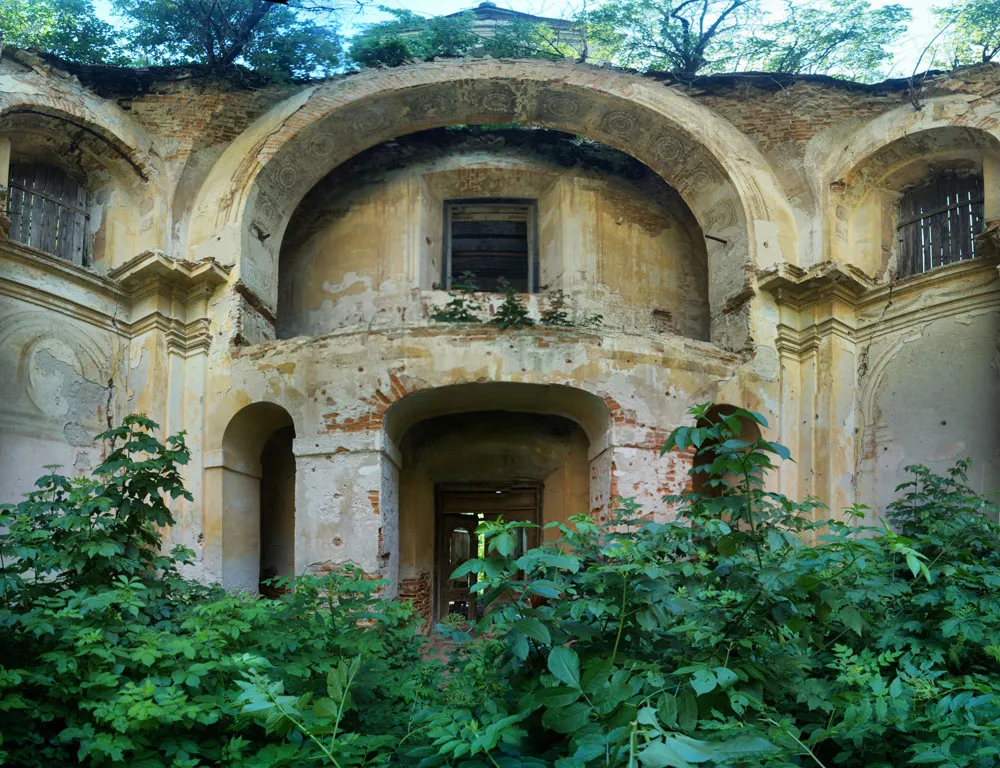
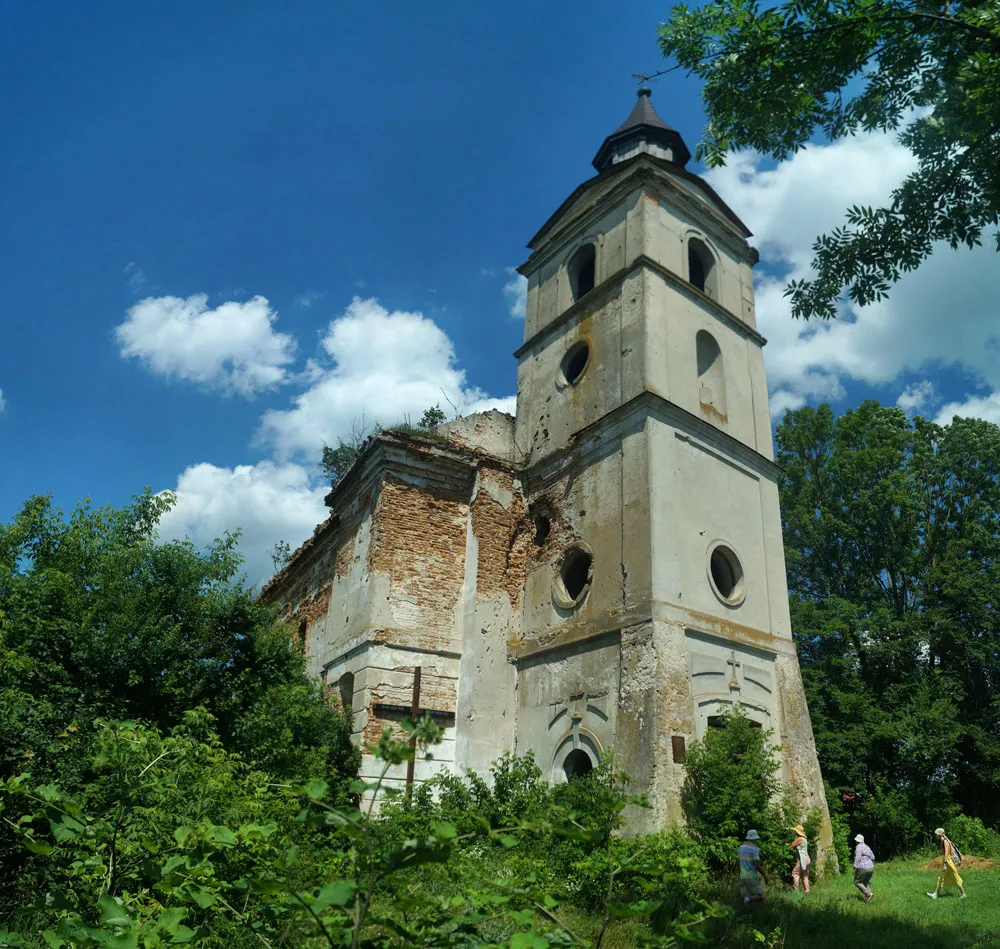
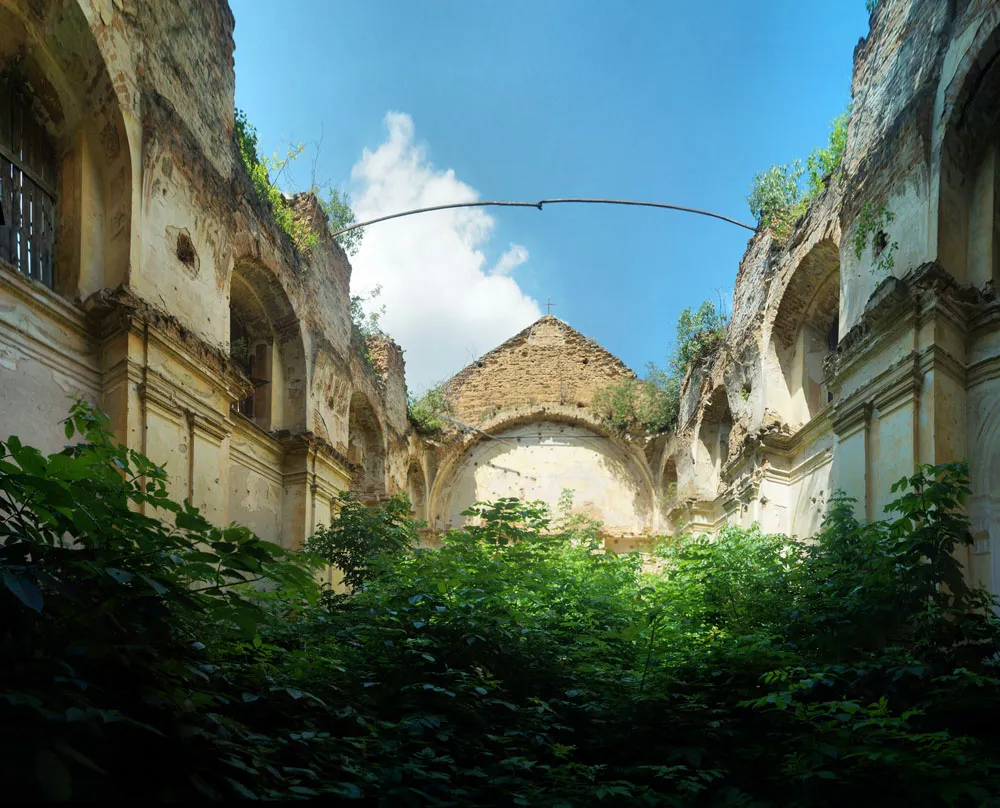
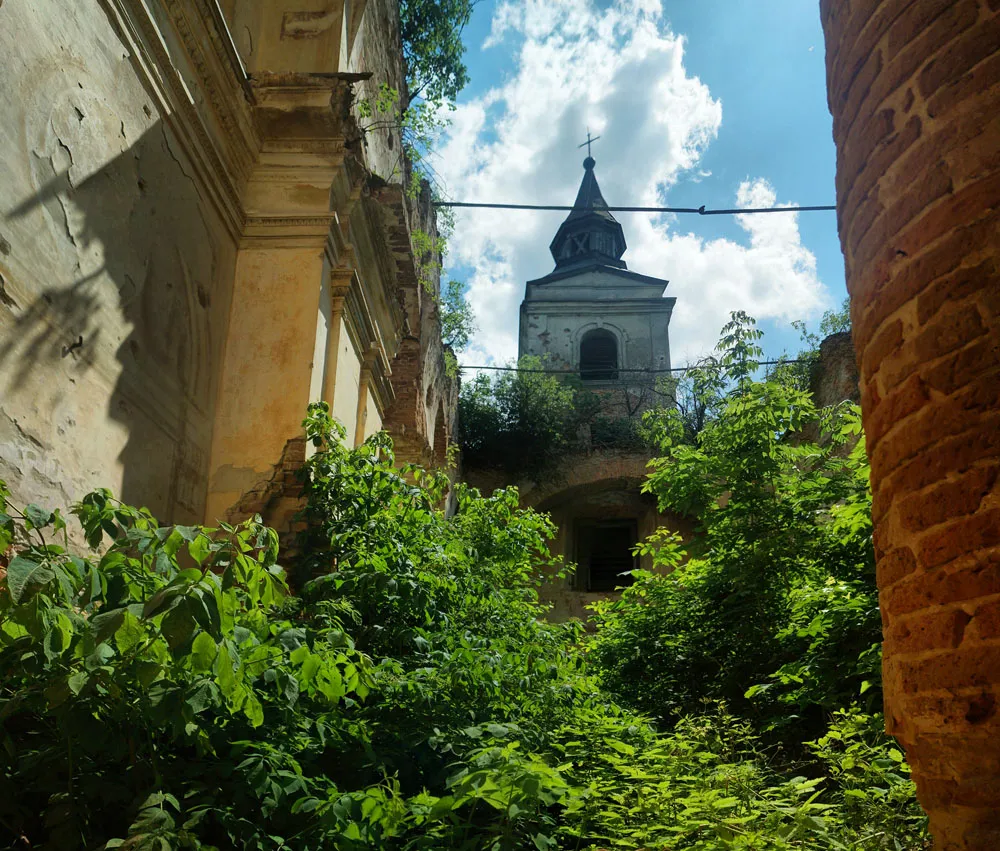
The Church of the Holy Trinity and the Archangel Michael
German colonists appeared in Tuchyn in the 1880s. In 1888 a Lutheran parish was founded, which later united a considerable number of Lutherans of the Rivne region – up to 25,000. The Germans built a school and a significant number of residential buildings, and ran things in their own corner. A considerable number of German buildings have survived to our time, including the Lutheran church with its school (now a tuberculosis dispensary), but the church has been so heavily rebuilt (the bell tower was demolished) and insulated that it is almost impossible to recognise a sacred building in it.
We did not find any monuments of the Jewish community in Tuchyn. Perhaps a cemetery still exists somewhere, but we had no time to look for it.
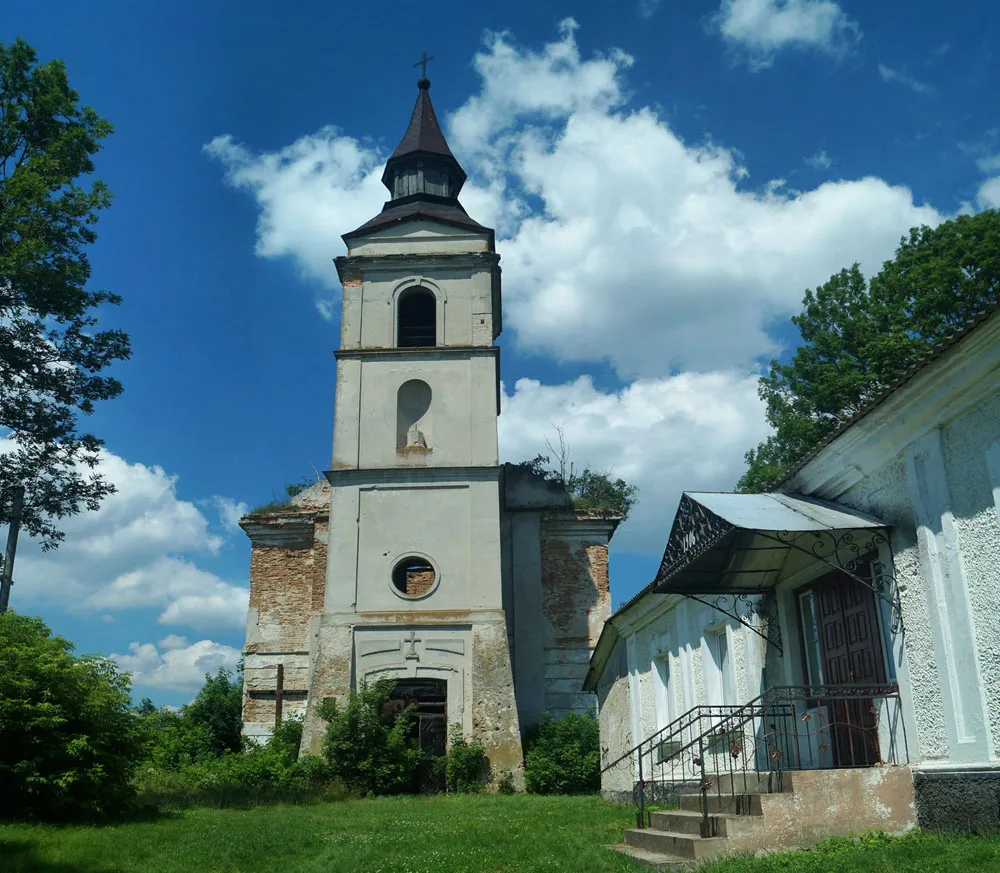
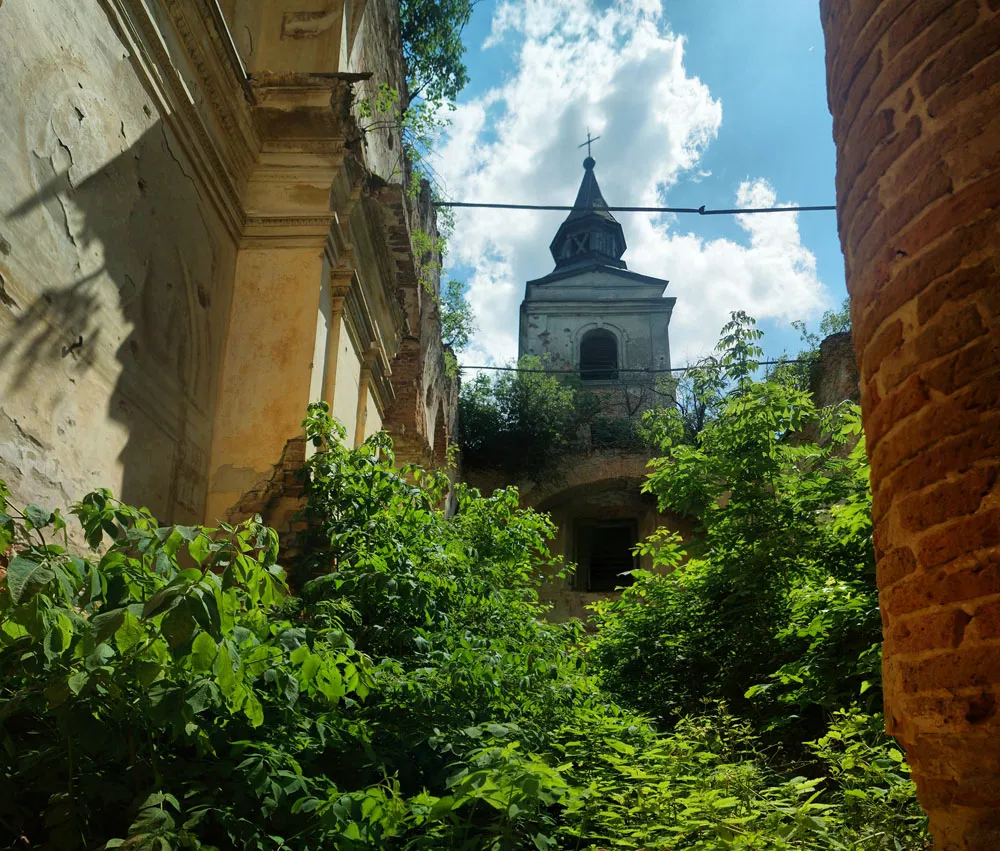
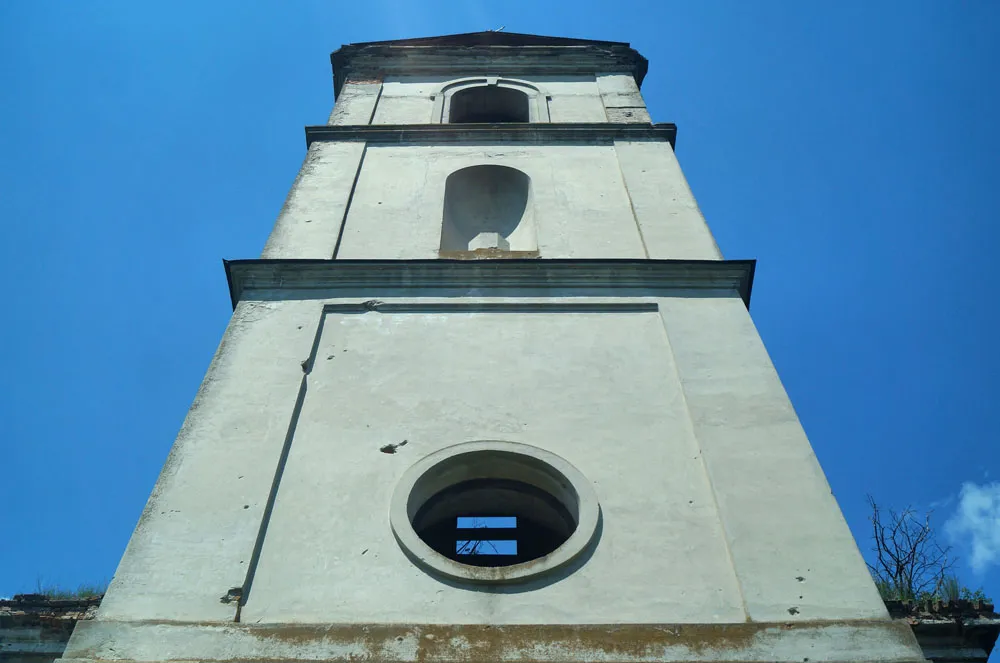
A very interesting Tuchyn monument is the Baroque church built in 1786–1796 in the Baroque style and consecrated in honour of the Holy Trinity and the Archangel Michael. The construction of the church was financed by the then owner of the town, Michał Walewski. Originally the church had no bell tower; it was added in 1929.
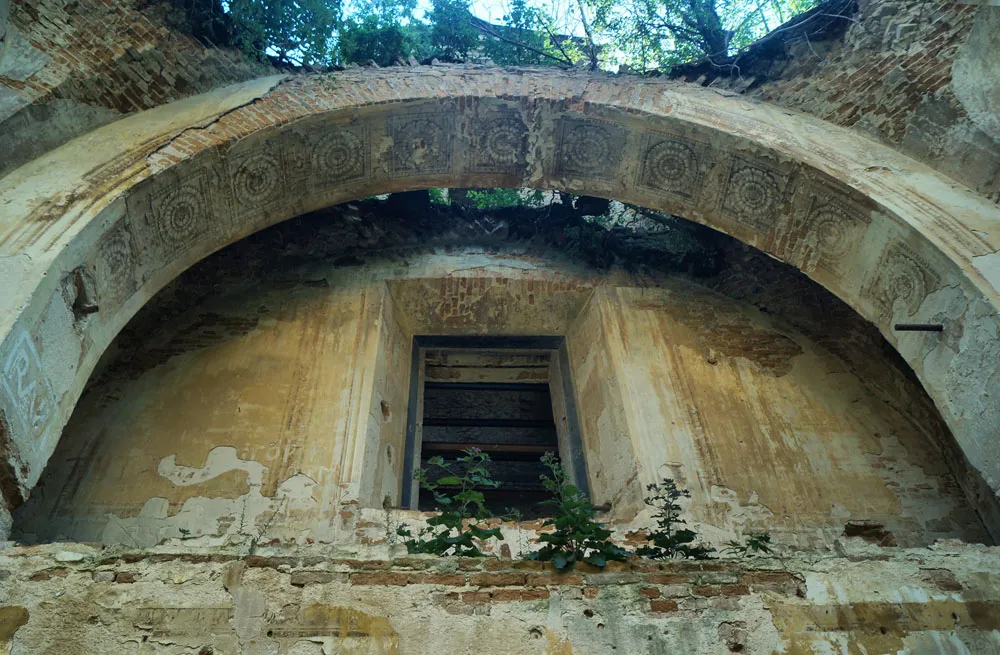
In its time the Tuchyn Roman Catholic parish covered about three dozen settlements and two thousand parishioners. They write that the church was badly damaged during the Second World War, since it served as shelter for Red Army soldiers and then for the Nazis. In the post-war period it was not restored, and so it has stood for over seven decades in a state of ruin. And it could have been a wonderful building – a splendid tourist attraction.
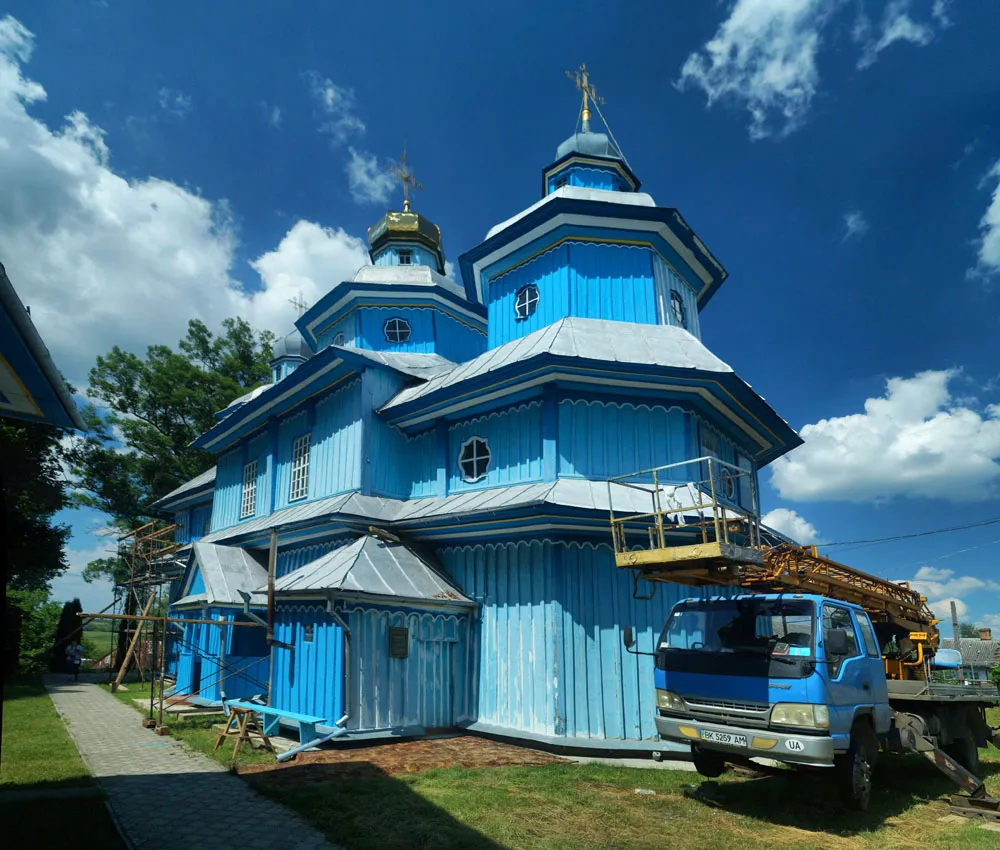
The Transfiguration Church
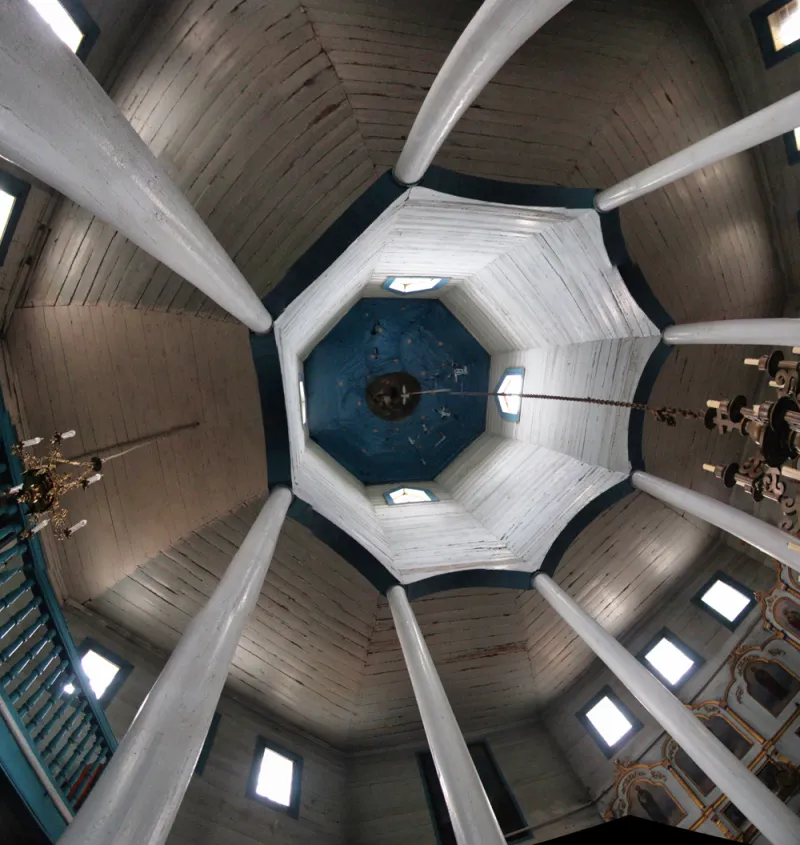
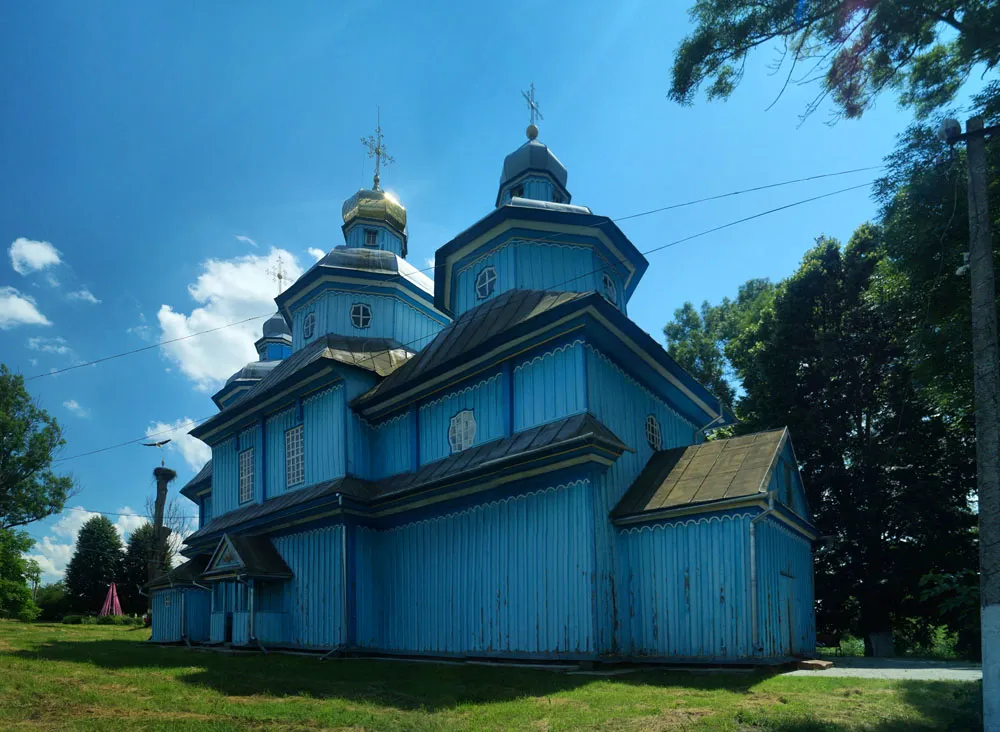
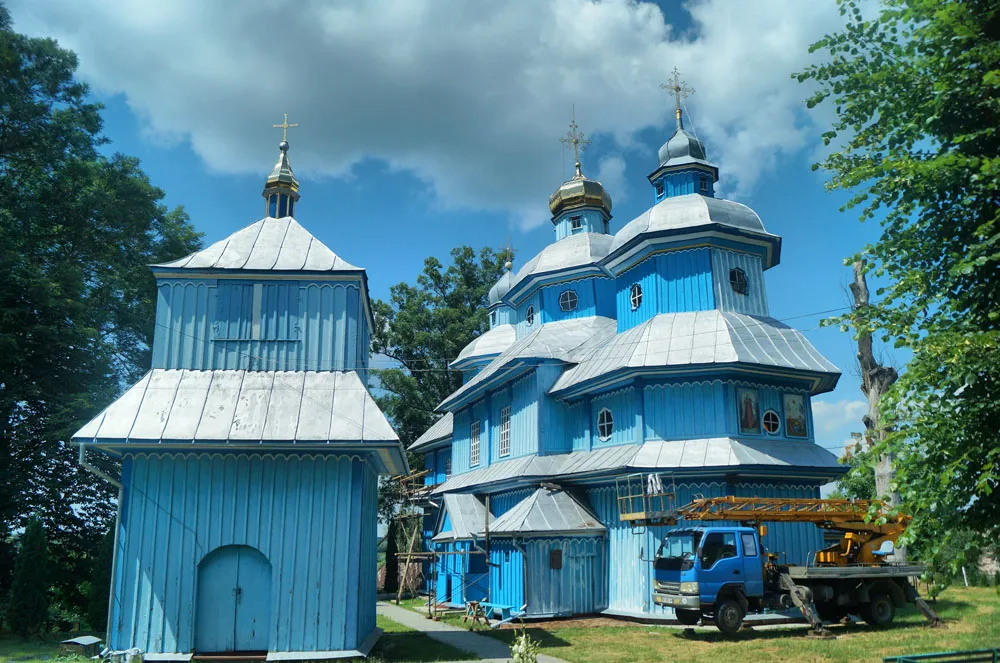
Tuchyn has two surviving wooden churches. The Transfiguration Church is an architectural monument of national significance. It is a splendid example of the folk wooden architecture of Volhynia, although its forms strongly show the influence of the Cossack wooden churches of the Dnipro region. Local residents say the church functioned throughout its history and was open even in Soviet times. This beautiful three-log church with three tops and a separate bell tower now belongs to the Moscow Patriarchate. It stands not far from Tuchyn’s house of culture.
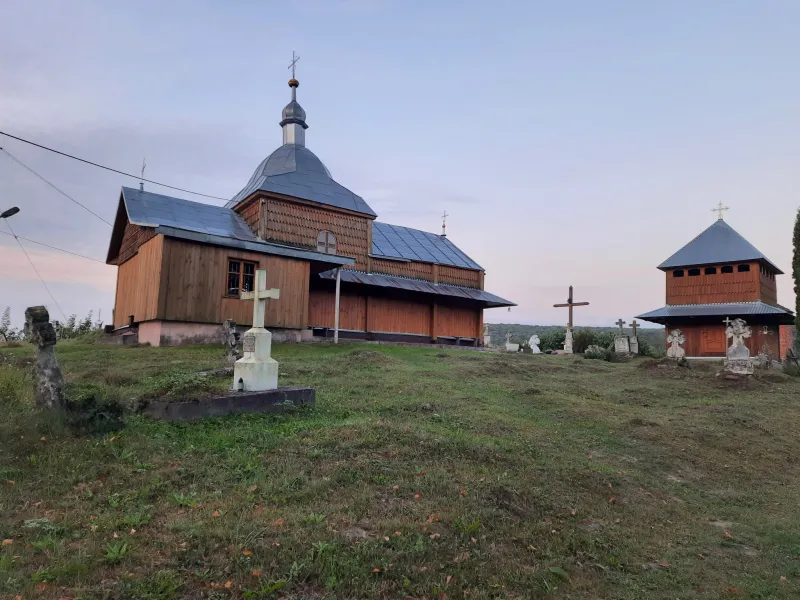
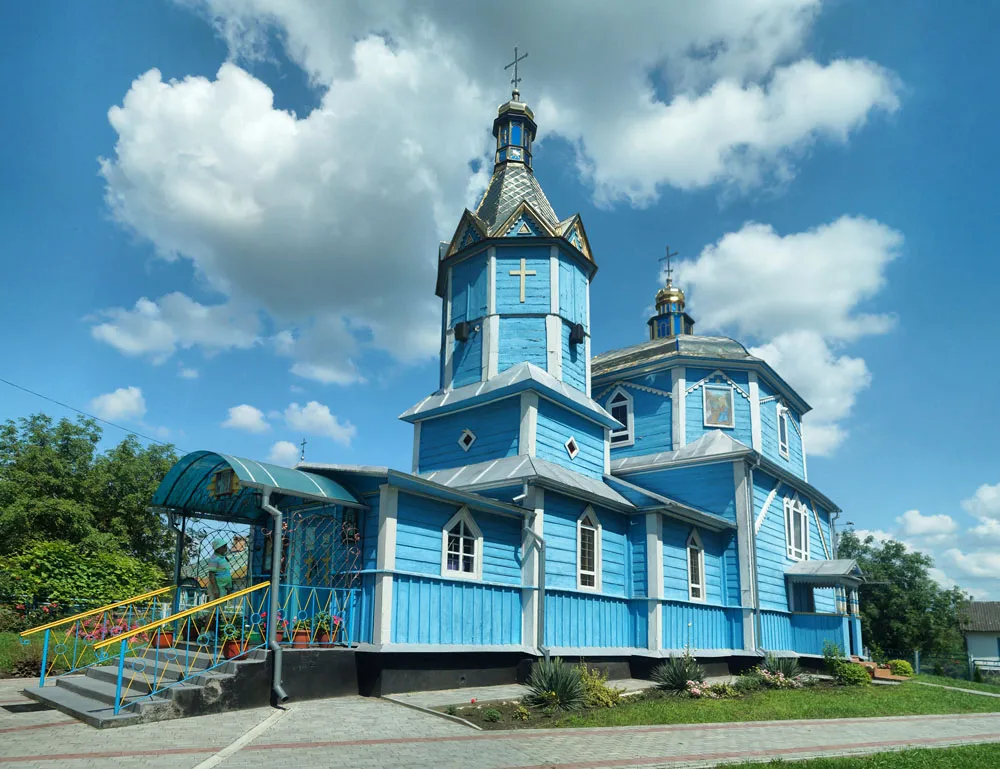
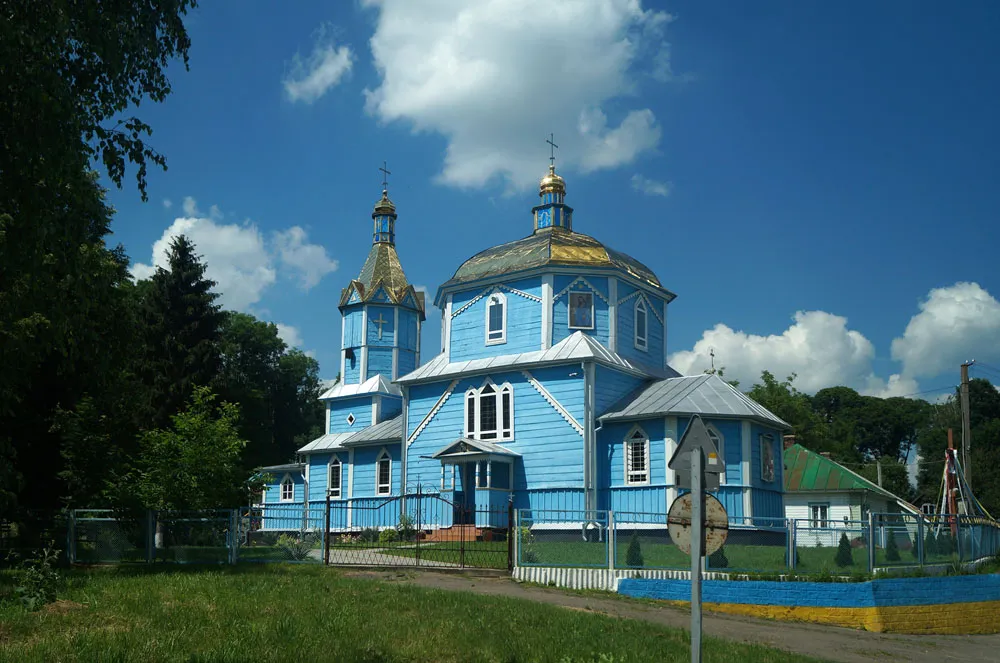
Another fine and well-preserved church in Tuchyn is the Church of St. Paraskeva, built in 1900 on the site of an older one. Paradoxically, it is not listed as an architectural monument. True, it is not as ancient and valuable as the Transfiguration Church, but it ought to have local protected status.
The Church of St. Paraskeva
The Church of St. Paraskeva stands in the centre of Tuchyn, not far from the boarding school. During the Soviet period of the village, from 1959 to 1991, the church did not function. What was in it then we did not ask. Now it is in excellent condition.
Besides those mentioned above, various old farm and residential buildings turn up in different places in Tuchyn, but we could not find out what these buildings were, and we had no time either. On the whole we liked Tuchyn, especially its sudden, unexpected abundance of monuments.
Text and photos by Roman Malenkov.
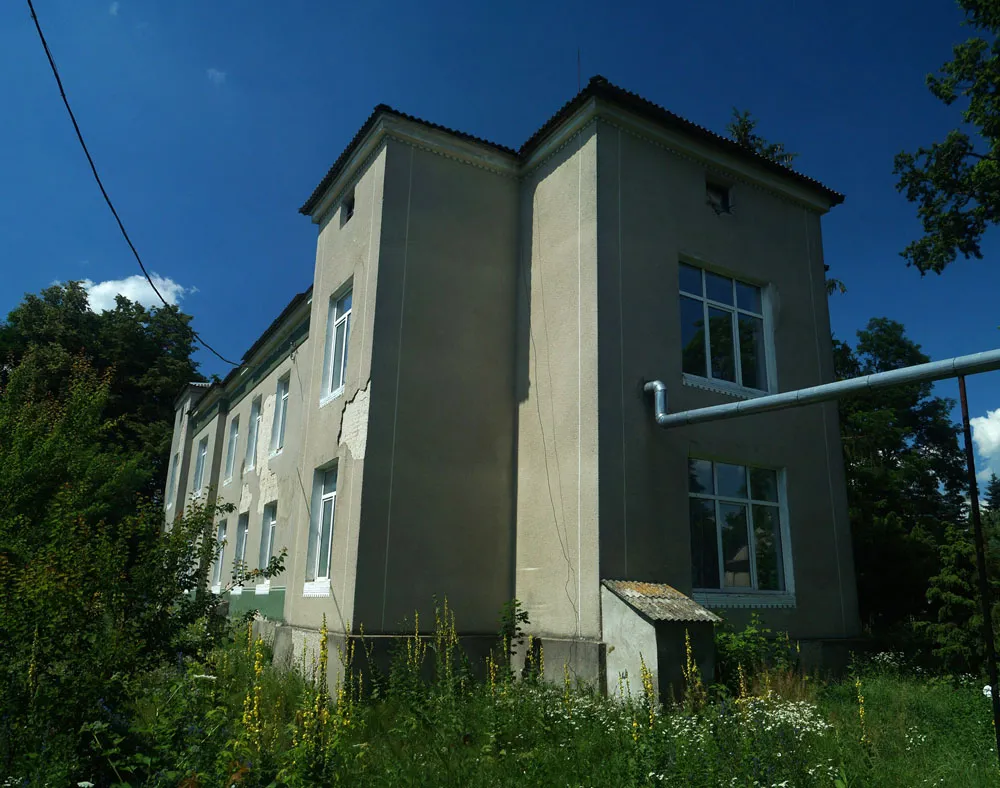
The former Lutheran church
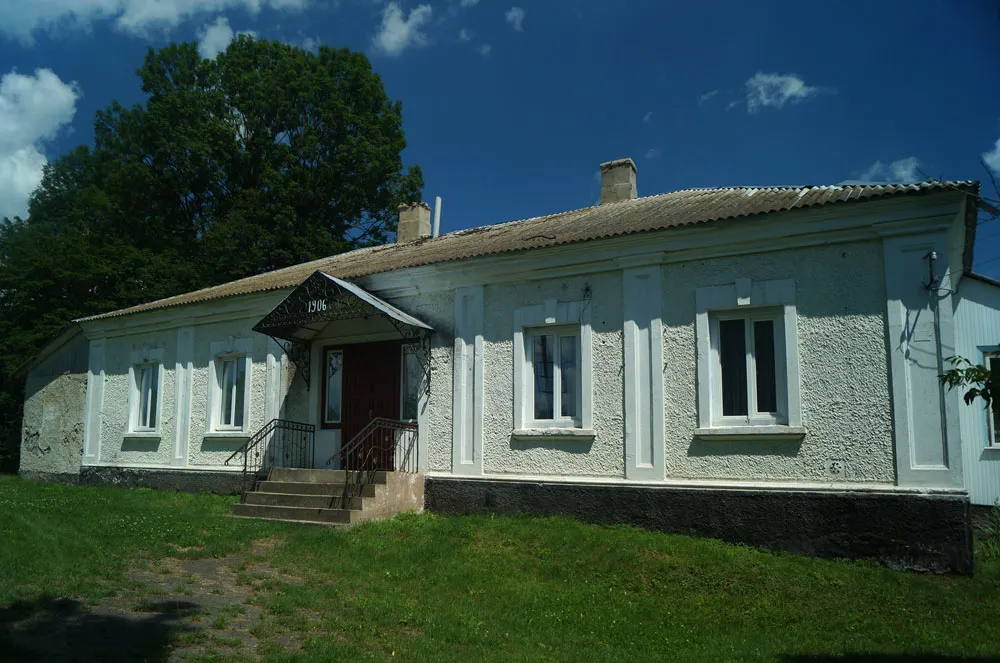
The presbytery
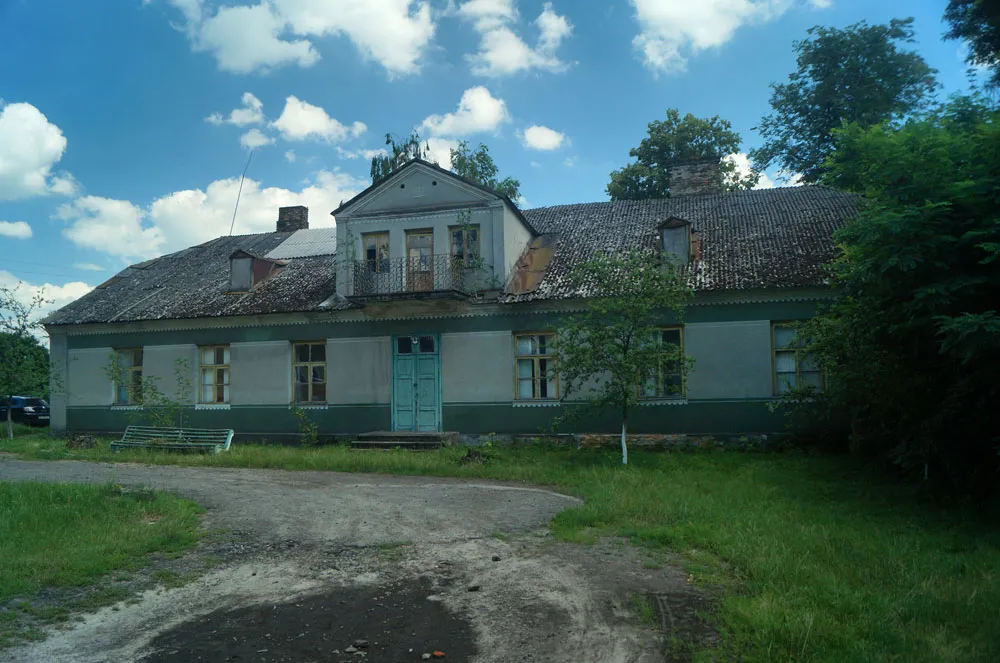
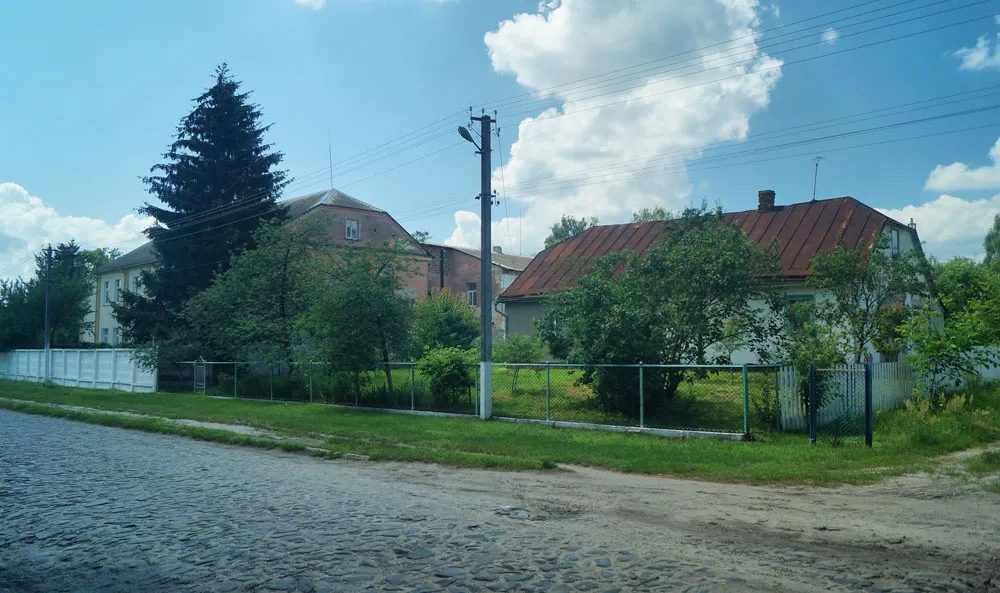
Remains of German buildings