Turkey. Şanlıurfa. Homeland of the father of three religions

· 7 min read
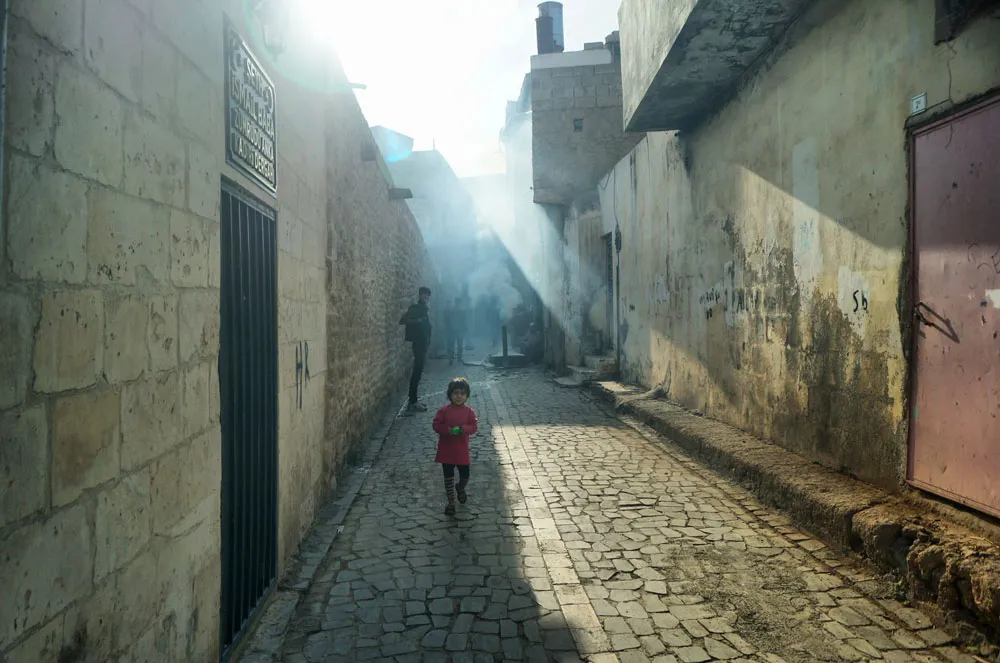
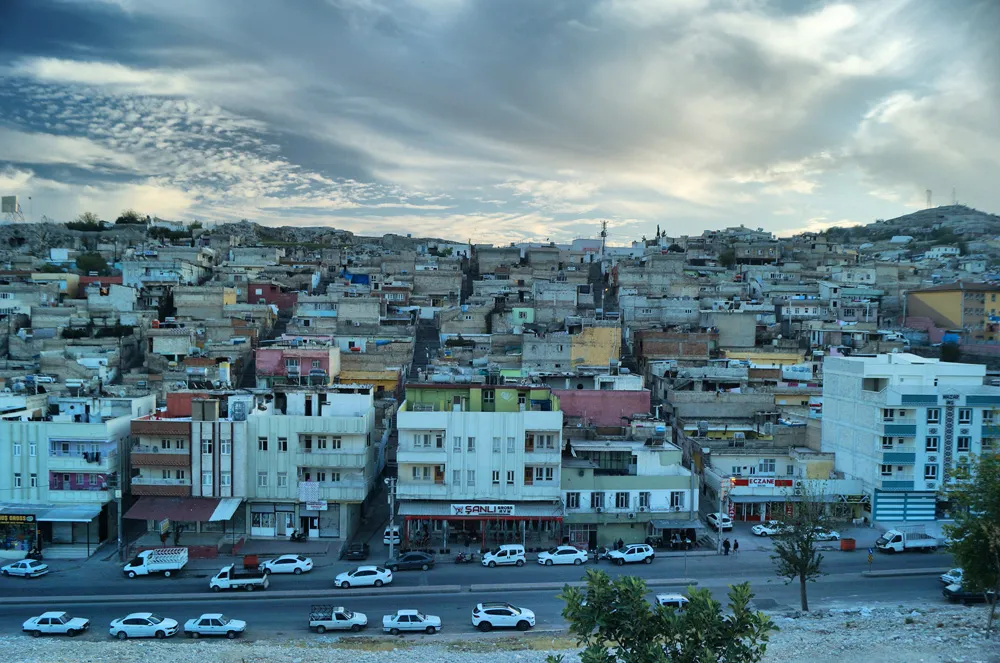
Let me say right away: Şanlıurfa is a fairy-tale city, despite its chaotic and dangerous road traffic, where hardly anyone follows the rules, pedestrians know nothing about crossings and run across six lanes arguing with drivers, while the drivers, as if in the computer game Carmageddon, try to run them down. It is a fairy-tale city despite the hundreds of small children who surround you in the narrow streets, once Armenian and Assyrian, tugging at your trouser leg and whining “mister one lira”, and despite genuine Arab poverty: Arabs make up a considerable share of the city’s population, and entire neighbourhoods built for them look nothing like the rest of Turkey.
On arriving in Şanlıurfa we found that the parking by the hotel was full and nobody knew where else to park. We lost about forty minutes searching for a car park, but nothing could spoil our mood: we were looking forward to meeting the city’s main complex, dedicated to the “father of three religions” (Christianity, Judaism and Islam), the prophet Abraham (Abram, Ibrahim). He was born in a cave in Şanlıurfa, and that cave has survived; a mighty fortress was built above it, and a temple complex with wonderful ponds around it. And carp… According to Arab tradition, the prophet Abraham was saved from the fire in which King Nimrod wanted to burn him, when the fire turned into water and the burning logs into carp. Today thousands of fat carp swim in the ponds, entertaining tens, perhaps hundreds of thousands of tourists and pilgrims.
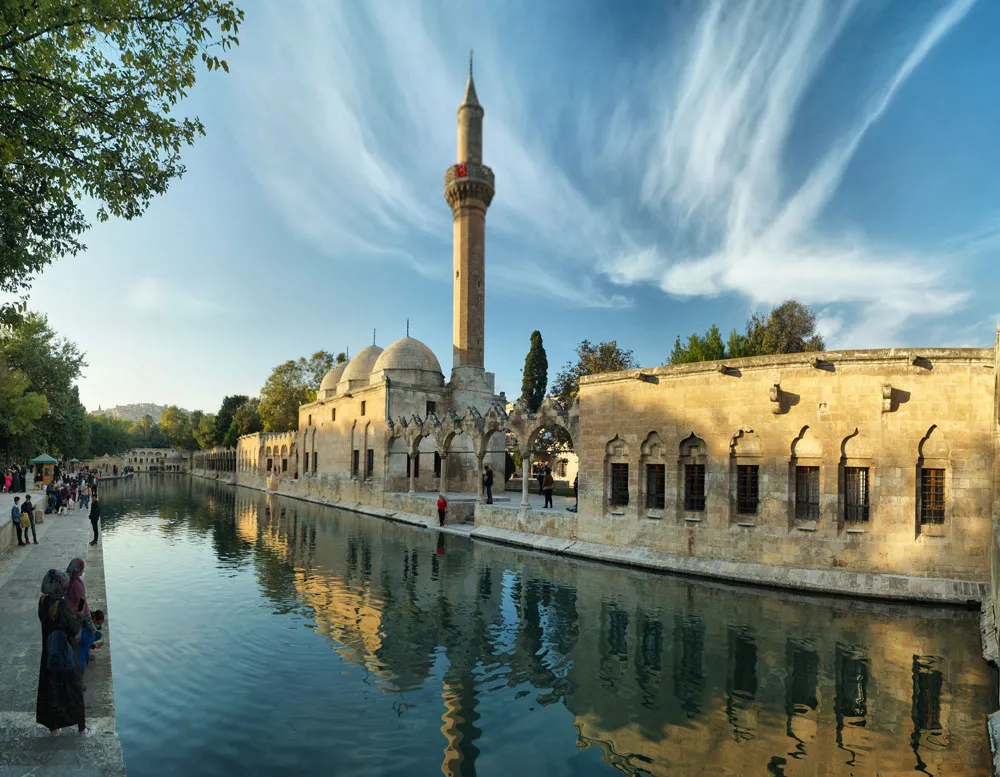
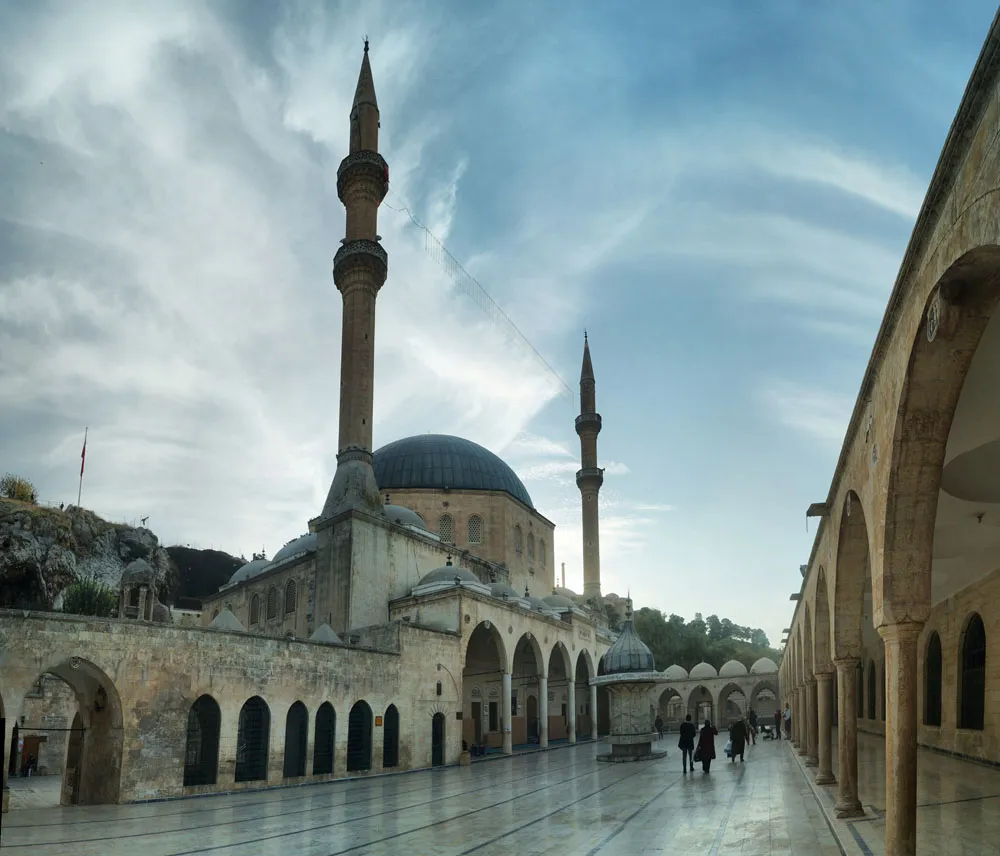
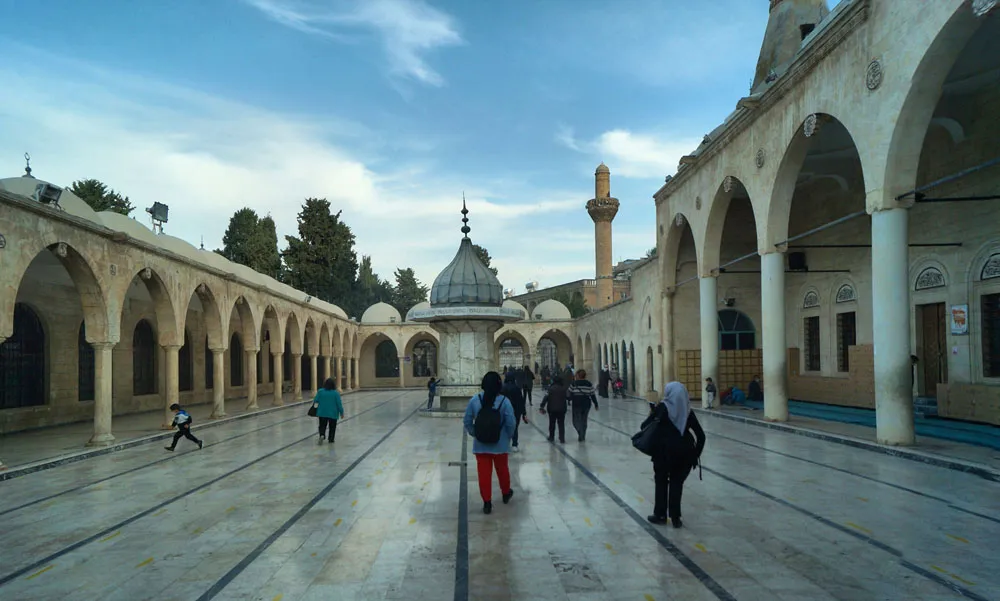
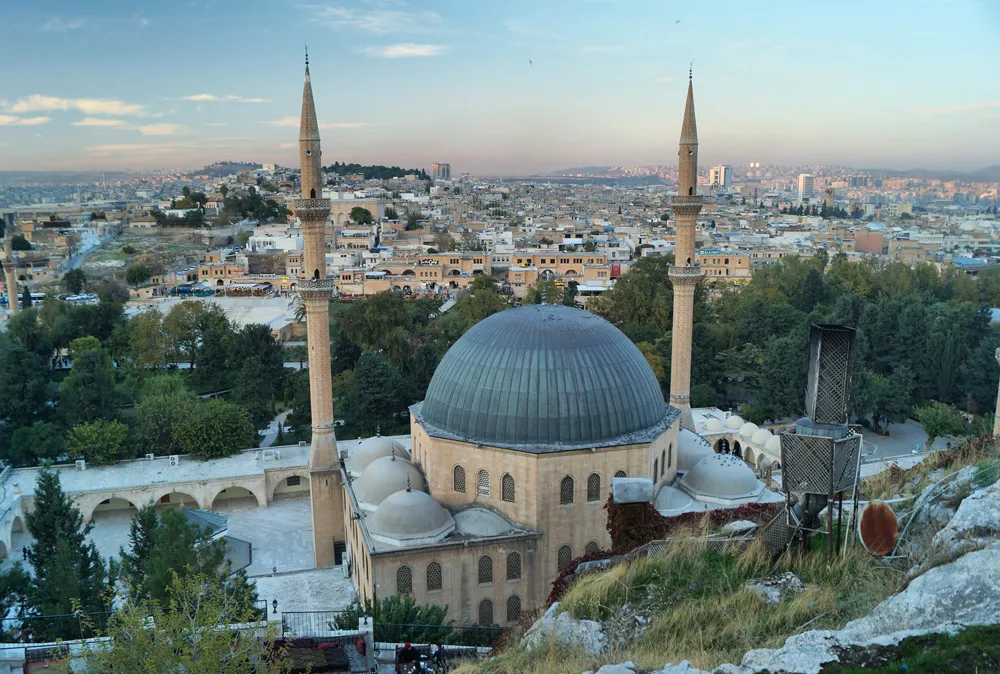
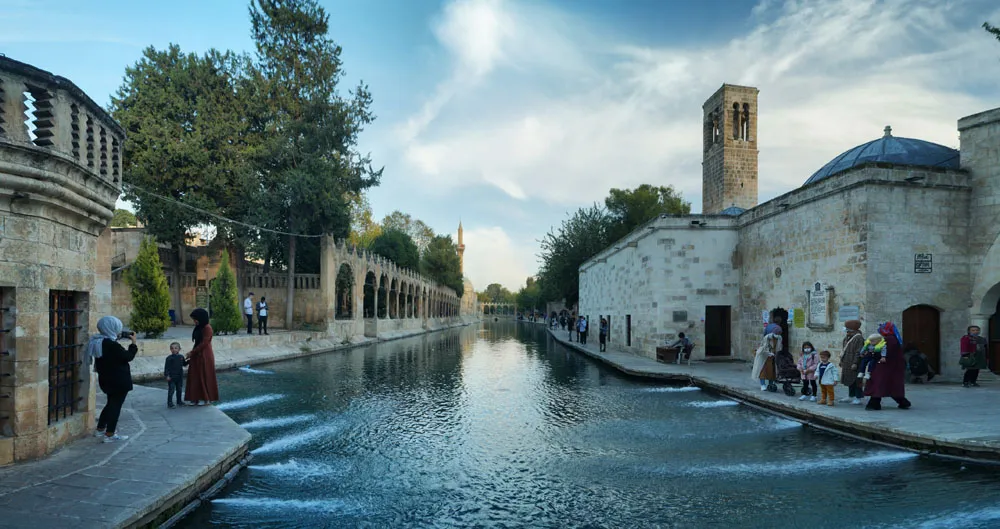
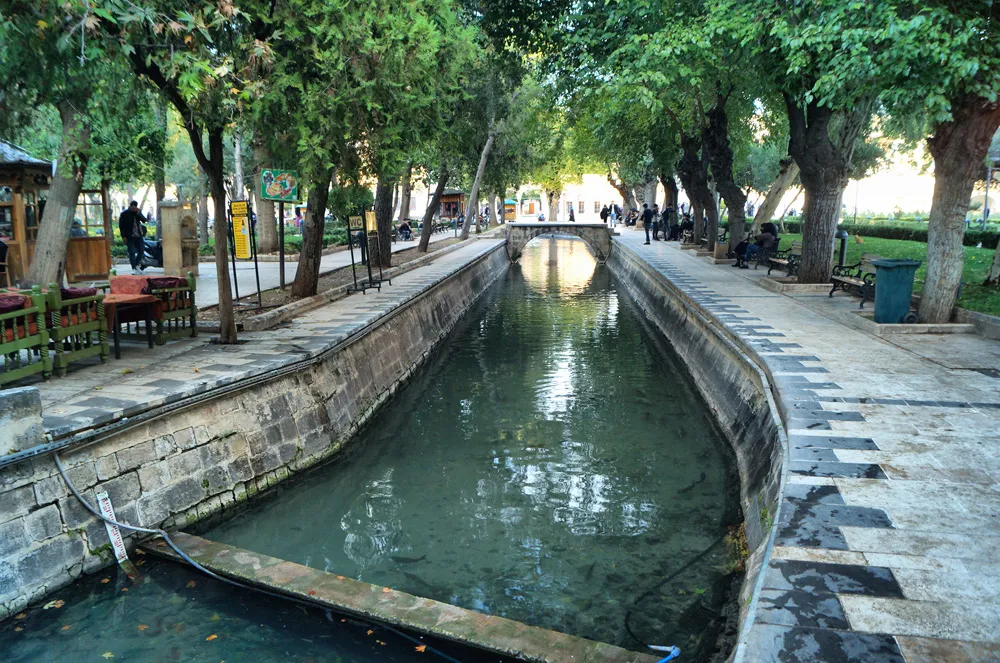
The complex around the cave of Abraham (Ibrahim): the great Mevlid-i Halil mosque and the lakes with sacred carp, Balıklıgöl (the Fish Lake), on whose shores stand three more mosques
For Muslims, Şanlıurfa is a special city also because five prophets of Islam lived here. Two of them are also Christian: besides Abraham, Urfa was home to the righteous Job and the Apostle Thomas, who was apparently buried somewhere here… A crowd of people heads all day long to the cave where Abraham was born. It is small and low, and behind glass, but you must visit it: it is a tribute to tradition. Then go on to the mosque and the ponds, and climb up to the fortress: everything here is simply superb.
I should note that all internet resources mention the oldest city in the world, the zero point of civilization, Göbekli Tepe, which lies near Şanlıurfa. There will be a separate post about it.
The city now called Şanlıurfa is believed to have been founded by the Assyrian king Nimrod, although this has never been proven by documents. In Sumerian, Akkadian and Hittite cuneiform texts the city is mentioned under the name Uršu. It already existed around 2000 BC. Around 1370 BC it was conquered by the Hittite king Suppiluliuma I, and after the fall of the Hittite kingdom the city was ruled by a state called Carchemish (honestly, I had never heard of it either).
The documented history of Şanlıurfa begins with the city’s conquest by Alexander the Great. His successor, his former bodyguard Seleucus, renamed the city Edessa, and under this Greek name it was known until its conquest by the Seljuks in the 12th century. There was even a Crusader County of Edessa here, founded during the First Crusade by Baldwin of Boulogne.
Edessa changed hands and rulers so often that listing them would be a thankless task. Greeks, Romans, Armenians, Assyrians, Seljuks, Ottomans, Arabs, Crusaders, Mongols, Mamluks: everyone has been here. Incidentally, the Seljuk conquest of Edessa in 1144 became the reason for organizing the Second Crusade.
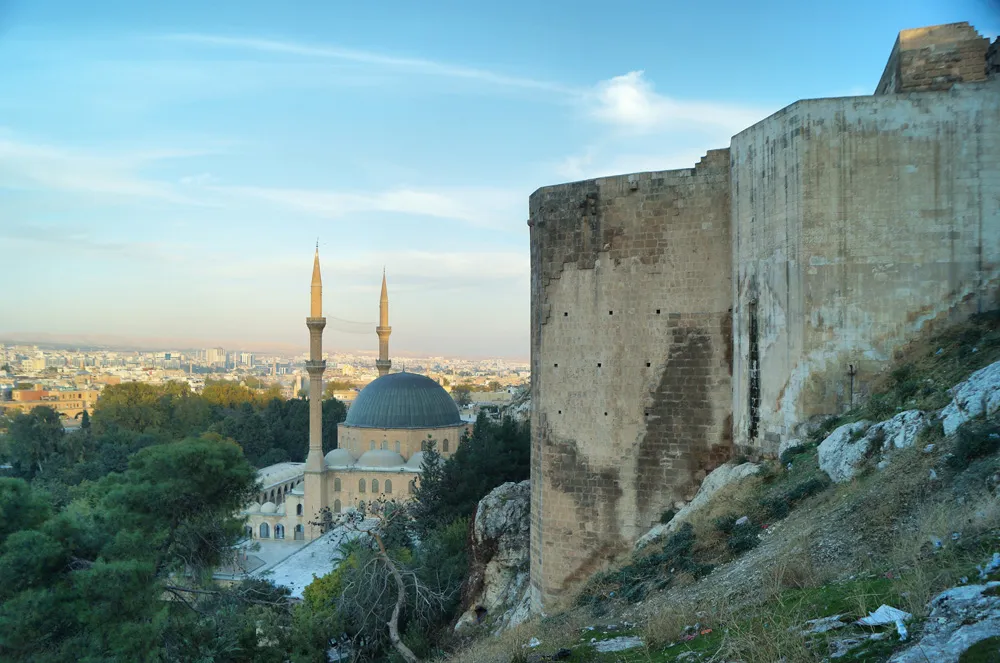
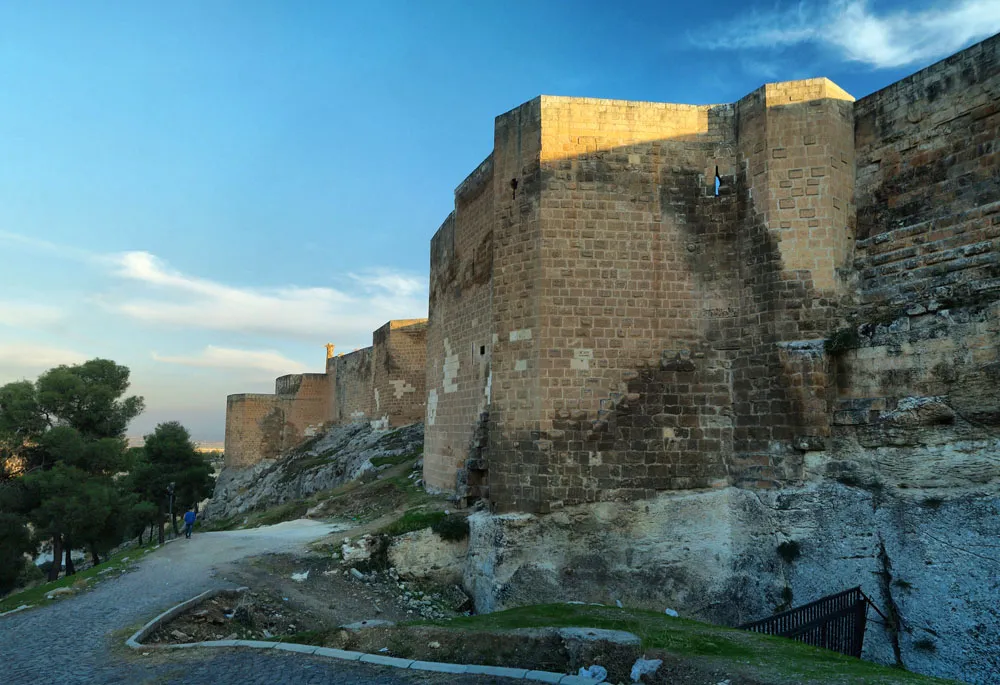
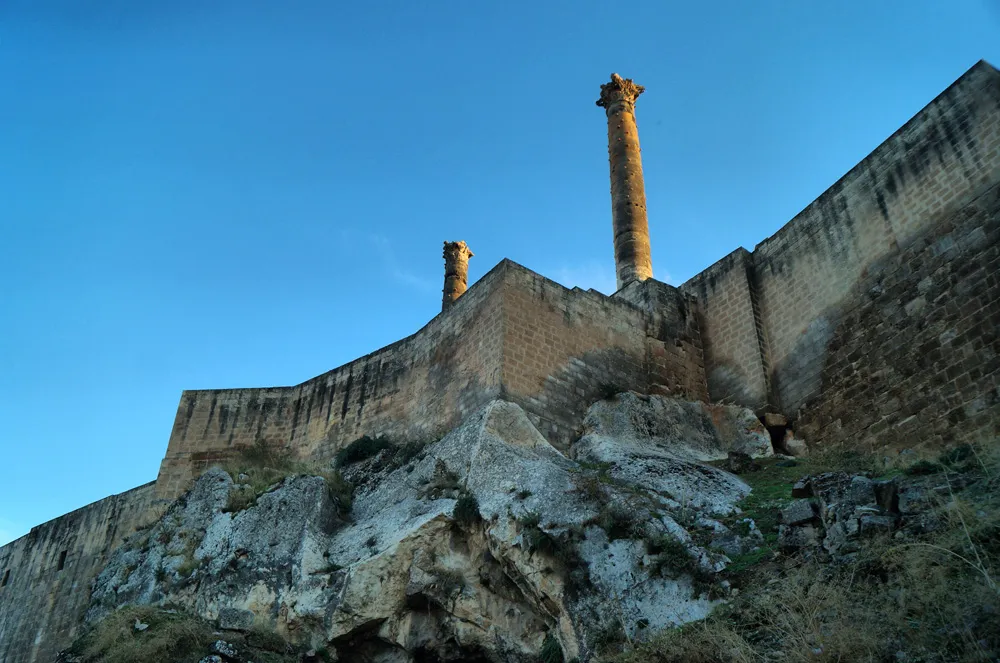
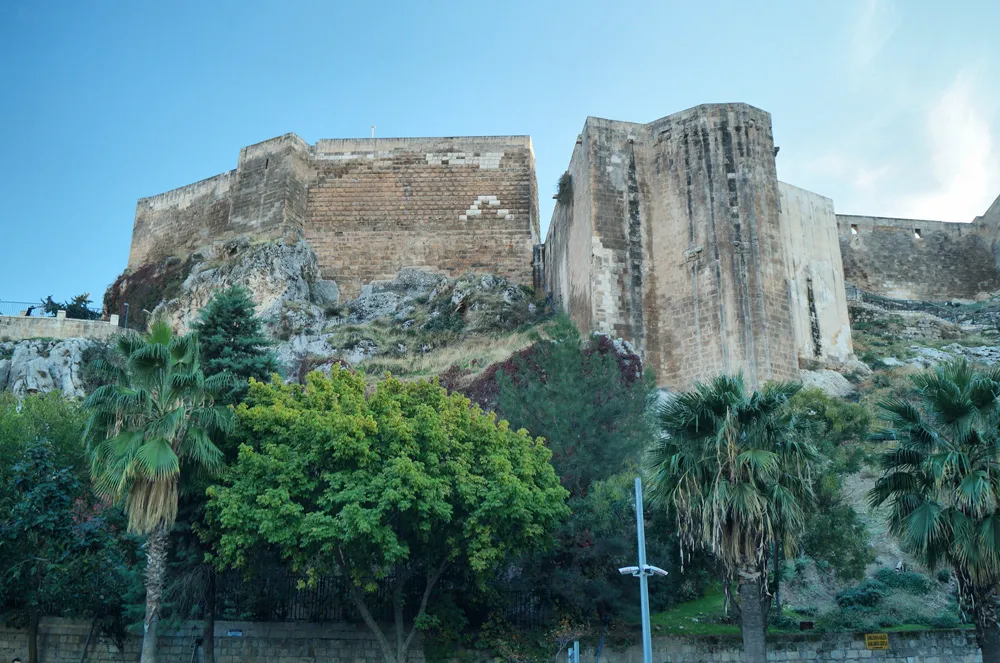
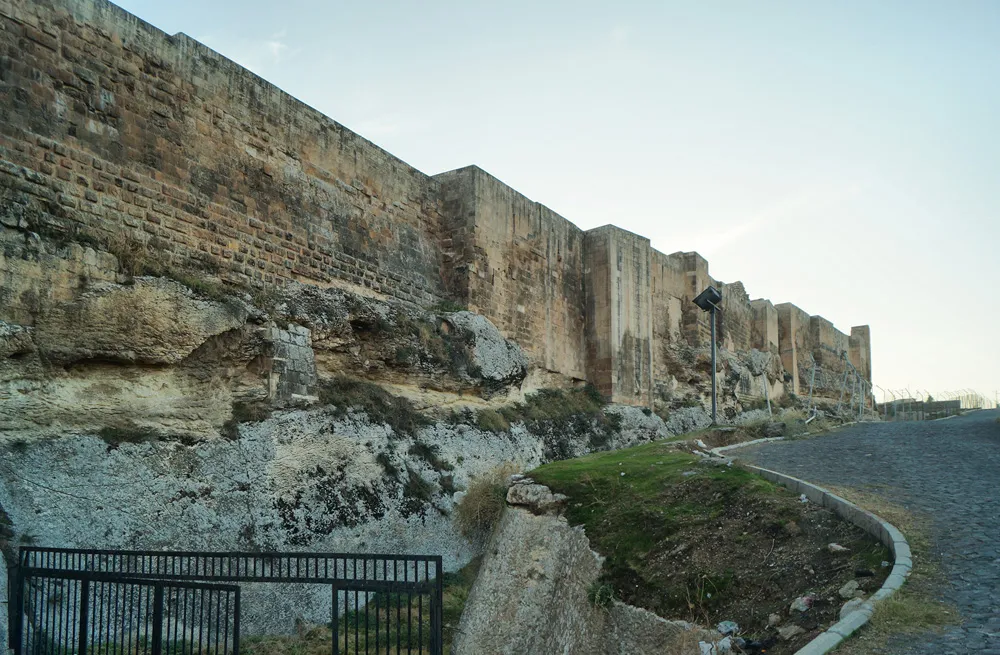
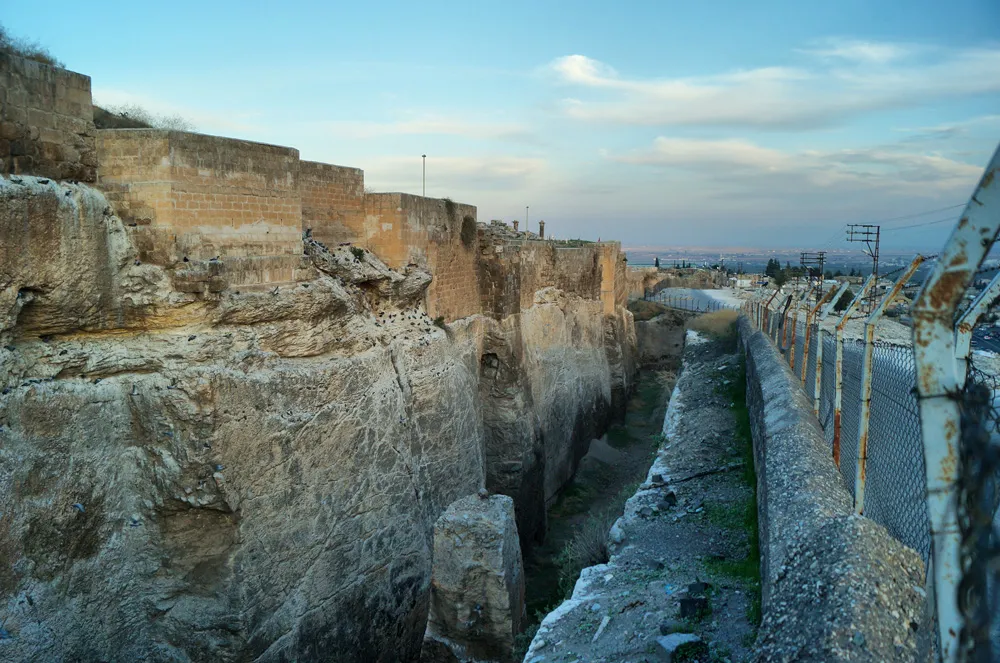
Urfa fortress
The Ottomans conquered Edessa only in 1637. The city was renamed Urfa, and it kept this name until 1985, when, in memory of the victory of the Turkish militia over the French in February–April 1920, the prefix Şanlı, meaning “Glorious”, was added to Urfa. Locals still call the city Urfa; I even heard a man at Istanbul airport buy a ticket to Urfa, and they sold him one.
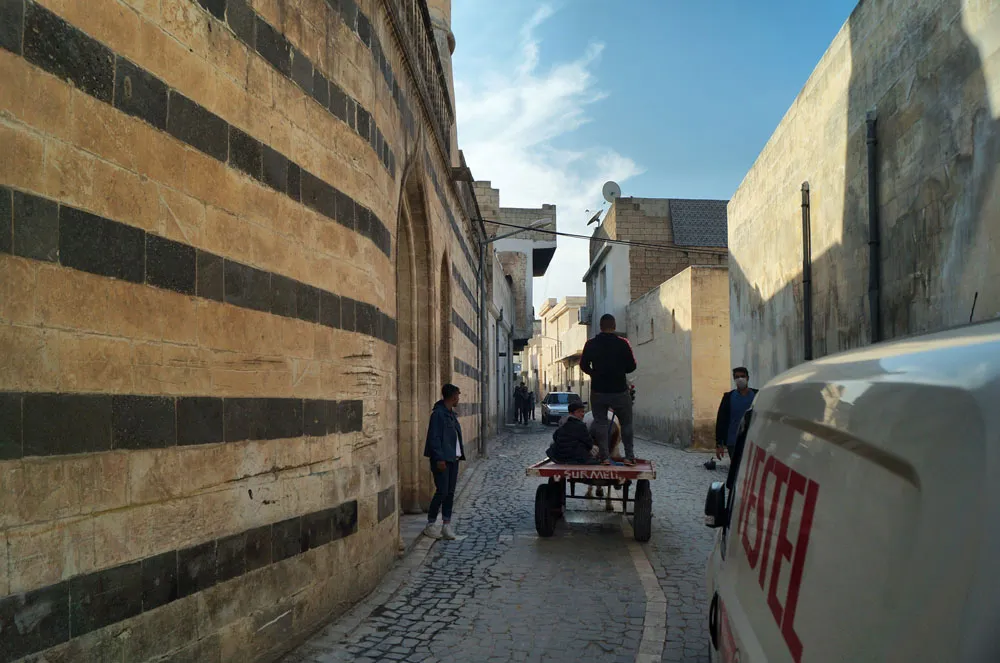
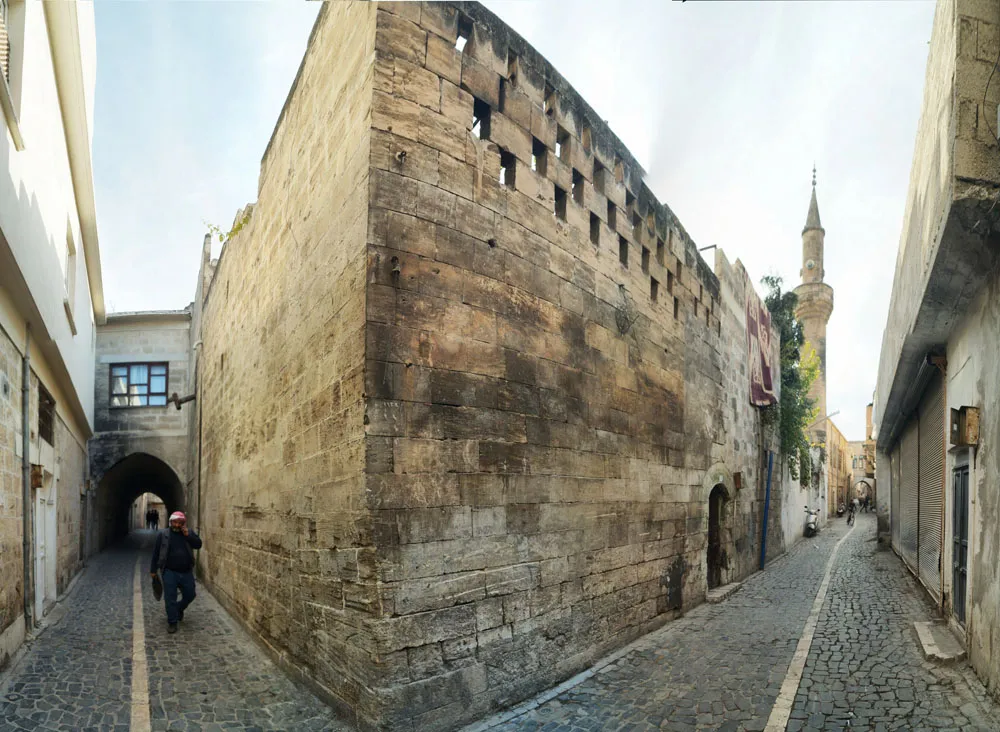
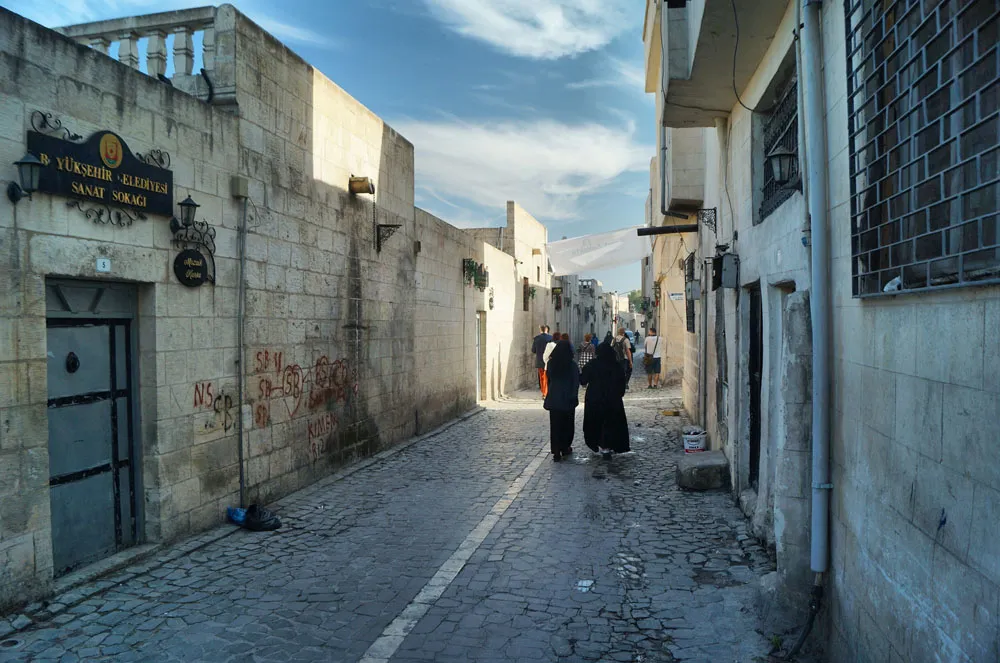
In 1915, 35,000 Armenians and a considerable number of Assyrians lived in Urfa. That same year terrible ethnic cleansing began, and the Christian population was exterminated by the Muslims. According to research, 30,000 Armenians and most of the Assyrians were killed, which is why Arabs and Kurds now live in the old Christian districts. And those districts are incredible; I advise starting your tour of the city with them. Narrow (often too narrow for cars), cosy, crooked streets with many arches and balconies: wandering here is a great pleasure.
So, the labyrinth of crooked streets is the historic centre of Şanlıurfa. Once it was entirely surrounded by walls. Gates with gatehouse forts and fortifications led into the city. The best preserved of them looks like a separate castle, but do not mix it up: the real castle of Urfa stands on a hill above the cave of Abraham. It is an impressive structure, built by the Arab Orhoene dynasty in the 2nd century AD and rebuilt by Arabs and Crusaders. The castle occupies a narrow ridge of the hill and is about 400 metres long and only 50 metres wide. Honestly, I cannot recall similar large castles that are so mighty, long and narrow. Two ancient columns rise above the castle, which locals have for centuries called the Throne of Nimrod.
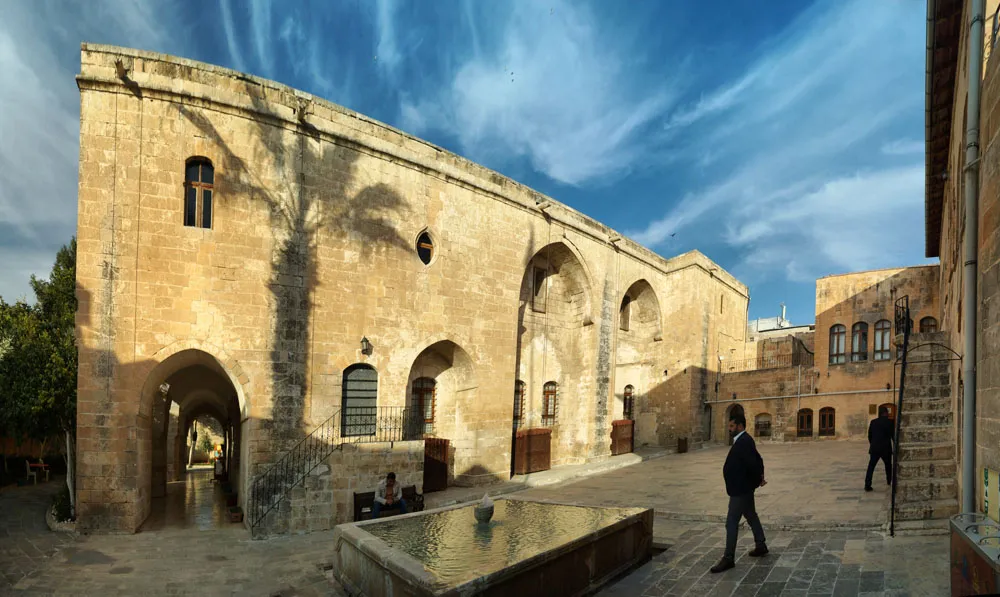
It would be unfair to say that only Christians lived in the historic centre of Urfa; Muslim Arabs lived here too, and some historic dwellings with separate women’s and men’s quarters have even survived from them, though there are few such buildings. There are also traditional baths, of course, and mosques, but in the middle of the district, by the small Kazancı Bedih square, stands the working Assyrian Church of Saints Peter and Paul, built at the end of the 19th century on the site of a 6th-century church. Be sure to visit; you will not regret it. In general, Kazancı Bedih square in Urfa is called the Tolerance Square, since a church, the Nimetullah mosque and a religious school all stand here.
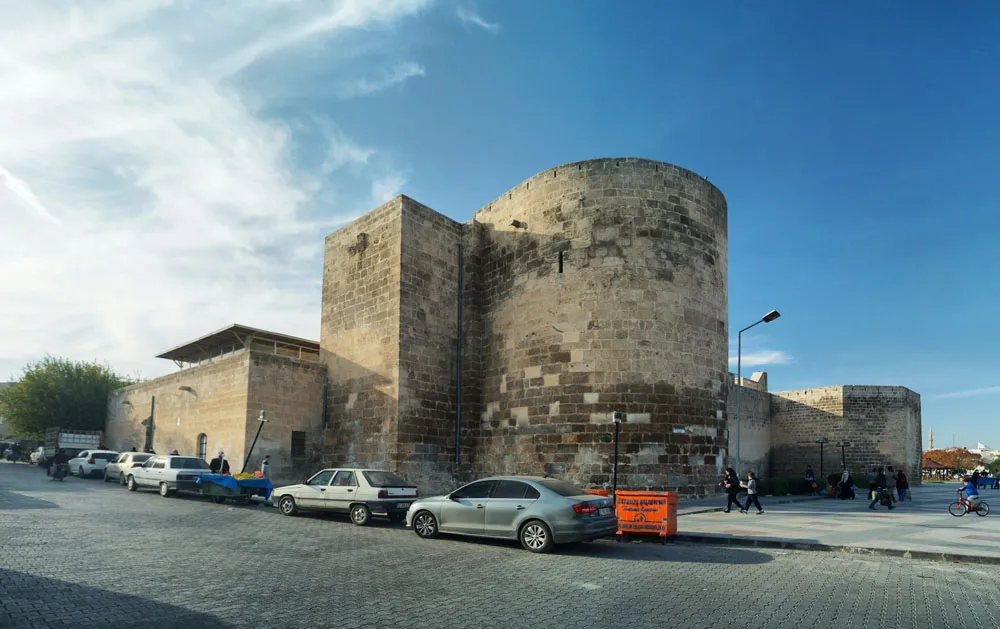
City fort
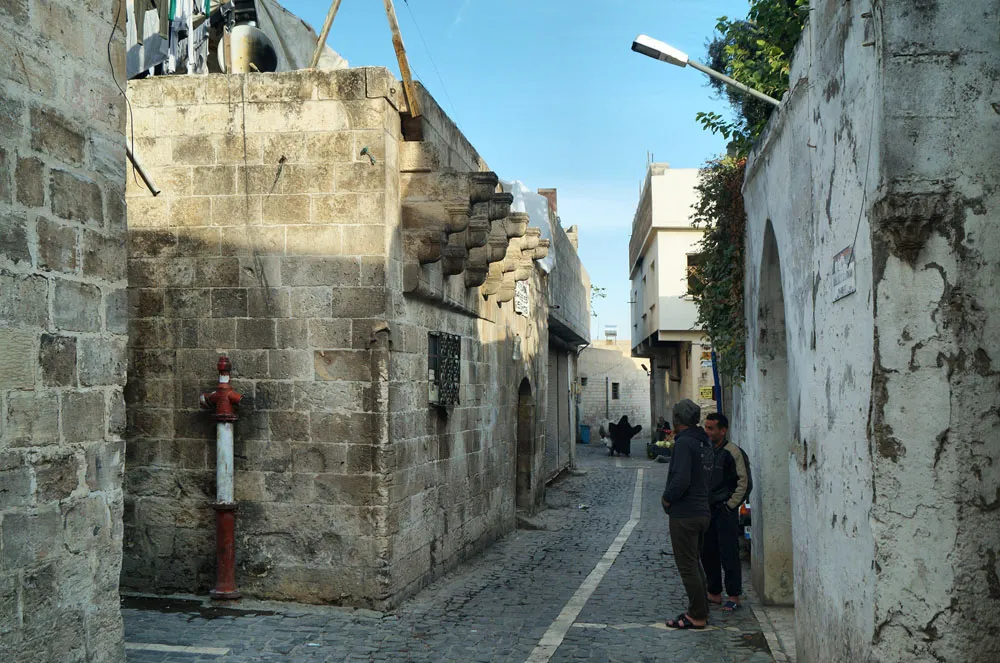
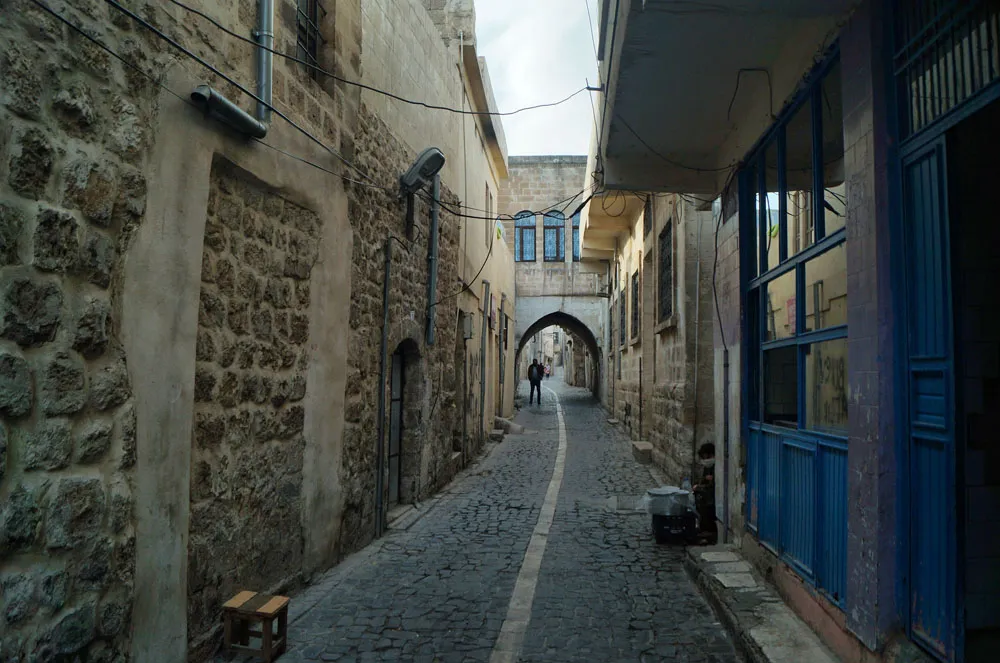
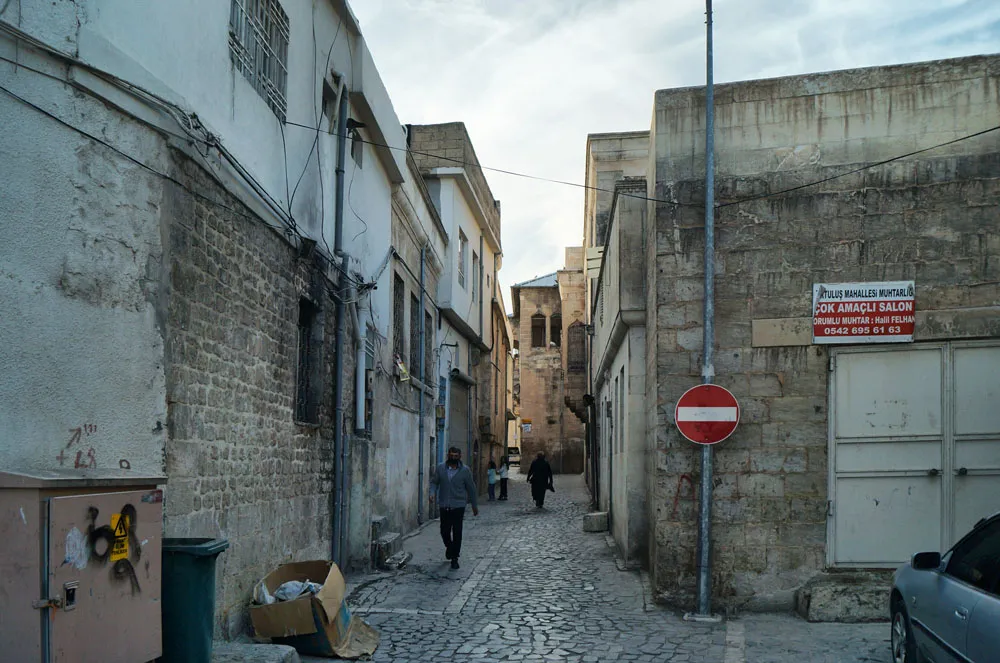
From the streets of the old town you come out to a huge market. If you are short of time, better not go in, because it is a vast anthill where it is hard not to get lost. You can buy a lot here, but pay particular attention to copper goods, which are beautiful and inexpensive: kettles, cups, trays, pepper and salt shakers. The tradition of copper production came here from Syria, where copper has been mined since ancient times. Everything here clinks and clatters, craftsmen work in front of you, and it is mesmerizing. There are also plenty of nuts, spices, vegetables and clothes, and everything typical of a Turkish market, but if you get lost you may not reach the cave of Abraham before it closes for the evening prayers.
The main sight of Urfa is the fairy-tale complex around the cave of Abraham (Ibrahim): the great Mevlid-i Halil mosque with its slender, tall minarets, and the complex of lakes with sacred carp, Balıklıgöl (the Fish Lake), on whose shores stand three more mosques and various other buildings, colonnades and bridges. You can wander here for a long time; it is a very cool place, one of the most colourful and spectacular in Turkey. I would compare this complex with Sultanahmet Square in Istanbul.
I was not lucky enough to visit all the sights of Urfa; there are a huge number of them. We did not get into the archaeological museum, which everyone praises for its incredible collection of mosaics, because it was closed due to the quarantine. There are plenty of reasons to return to Şanlıurfa.
I almost forgot: Şanlıurfa is a candidate for inclusion in the UNESCO World Heritage List.
Text and photos by Roman Malenkov.