

Turkey. Zilkale Castle, the Fırtına Valley and fairy-tale bridges

· 6 min read
Zilkale Castle lies 90 kilometres from Rize, the capital of Turkish tea. As the crow flies the distance is half that, but mountains stand in the way, an insurmountable obstacle, so you first have to drive east along the sea and then, after the village of Hamidiye, turn right into the valley of the Fırtına River, which flows into the sea through a wide mouth, and then keep going along it for 40 km, and there will be Zilkale Castle.
When we first entered the Fırtına Valley we were not just impressed but shocked, because it seemed that we had been transported to the Carpathians, somewhere in the south of Poland, or to Slovakia, to a resort region, or to the north of Czechia. First, the mountains here are already spurs of the Caucasus, green, green, like our beloved Carpathians, but with much steeper valley slopes that in places resemble a canyon. Officially these mountains are called the Pontic Mountains, or Pontic Alps, and they stretch along the entire Black Sea coast of Asia Minor. Near Amasra these mountains are not at all like the ones here, and there is no particular boundary between them and the Caucasus, as one flows smoothly into the other, so it would be no great mistake to call the mountains in the Fırtına Valley spurs of the Caucasus.
The Fırtına River is quite full-flowing, not as dry as most Turkish rivers in summer, and the buildings on its banks are not Turkish at all; everything looks like an Eastern European mountain resort.
Along the way you can see a large number of attractions arranged for tourists: zip lines on which people fly across the valley, rafting (advertisements for it stand every hundred metres), quad bikes, mountain hikes, tasty cafés and restaurants, playgrounds for children, attractions with giant swings. Personally I liked the waterfalls that run down the slopes, sometimes right beside the road, and the old bridges: huge narrow stone arches thrown across between the banks of the Fırtına for pedestrians to cross. There are many of them here and all of them look somehow unreal.
The first bridge we could not help stopping at was Timisvat Ottoman Bridge. As early as the 18th century it connected the villages of Hoşdere and Köprüköy. The bridge is 35 metres long, 2.7 wide and 13 metres above the water. It has two arches, a large one and a small one. The large arch is incredible: what building skill one needed to erect something like this. The Ottomans were considered masters of bridge building and built quite a lot of them across the empire, but the bridges in Rize Province are something special. There are about a hundred of them here, and two dozen of them span the Fırtına, and Timisvat is one of the most beautiful. Although, frankly speaking, they all look alike and are all fairy-tale-like.
Timisvat Ottoman Bridge is built of rubble stone, its surface is paved with cobblestones, and its parapets are large flat stones set on edge. Beside the bridge there are several hotels, restaurants, swings and zip lines. Life is bustling and it is full of tourists, although we had hardly heard anything about this region.
Further along the valley there are many bridges. Our attention was caught by the colourful Şenyuva Bridge, also built in the 18th century. A young man was performing on this bridge with a tulum (gude), the Laz version of the bagpipe. We did not expect to see anything like it at all. I did not even know that Turkey had such an instrument too. I gathered that the man is often on this bridge; it is his workplace.
Şenyuva Bridge is 40 metres long and 20 metres high.
In the town of Çamlıhemşin we stopped beside the road near a waterfall. Glass balcony-terraces overhang the river here, and the town itself, full of cars and built up with hotels, is in architecture and structure a typical European mountain resort. It was once Georgian and was called Vicealtı. The main part of the population here are Laz. This is a sub-ethnic group that was once the core of the formation of the Georgian ethnos, but in the 16th century, under Ottoman influence, the Laz adopted Islam and their paths diverged from the Georgians. In total, up to 1.5 million Laz live in Turkey. I suspect that the bridges in Rize Province are precisely their designs, as I have not seen such ones anywhere else in Turkey.
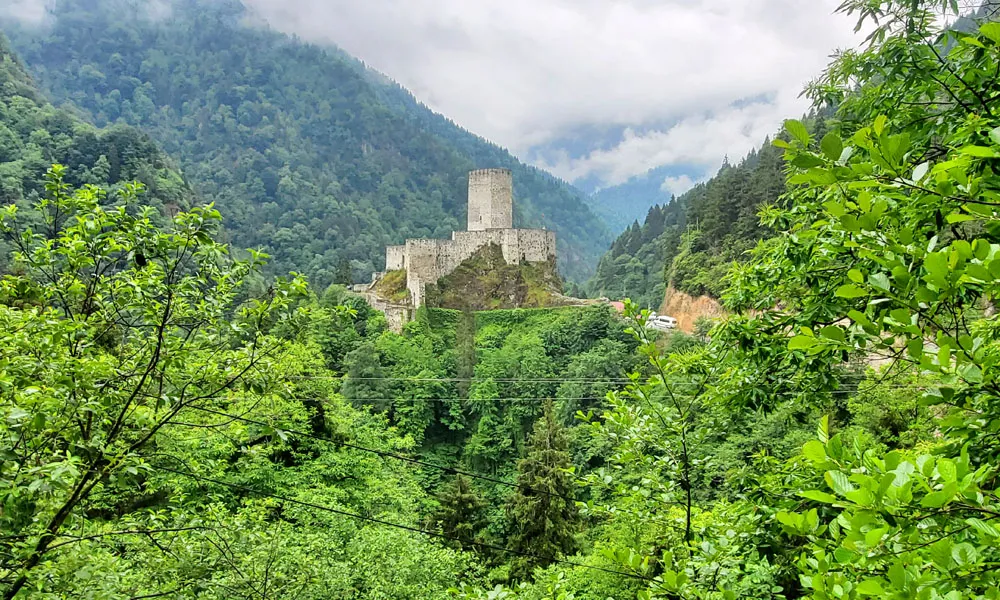
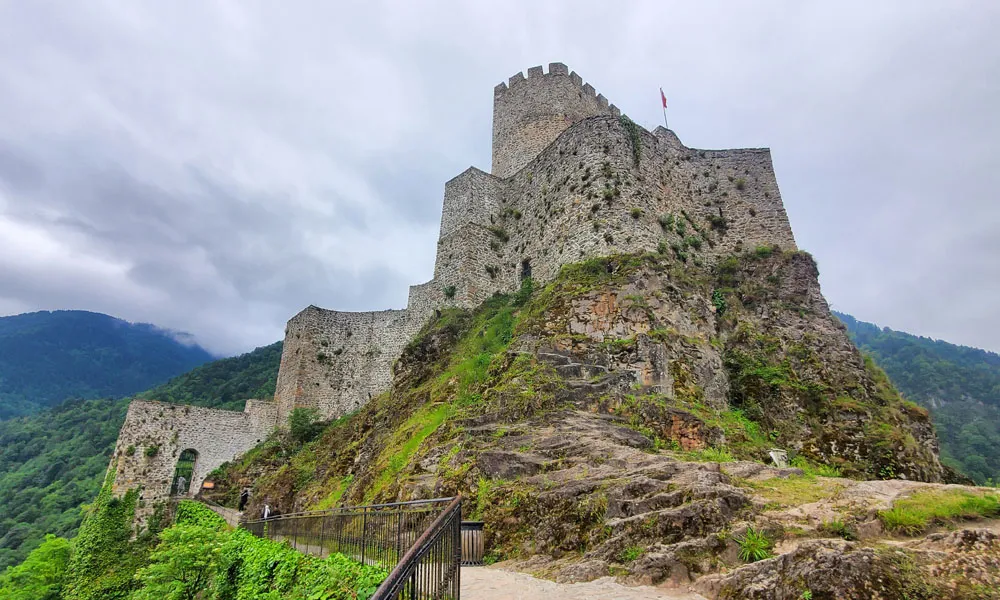
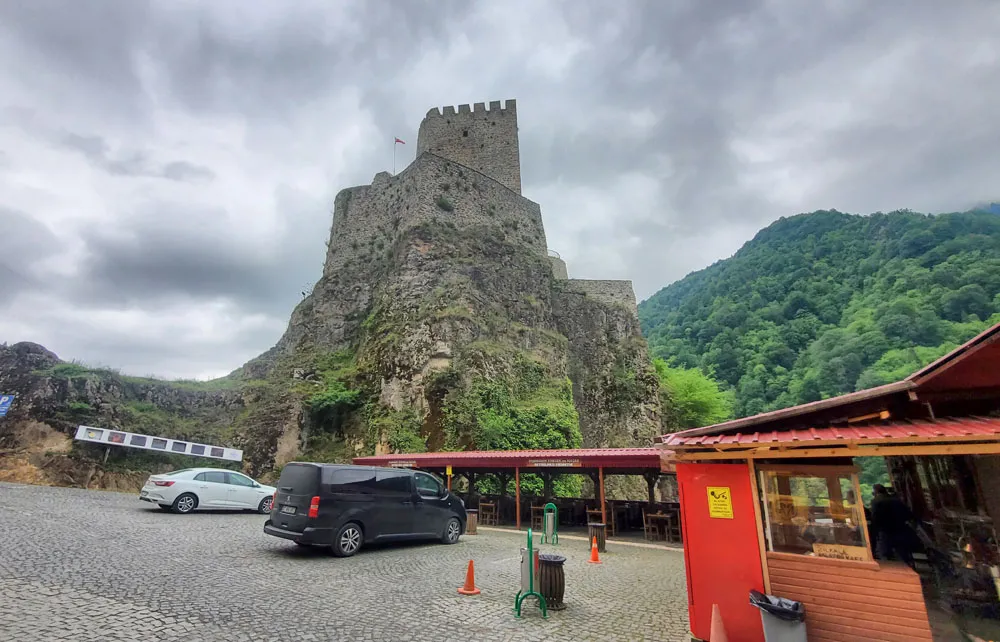
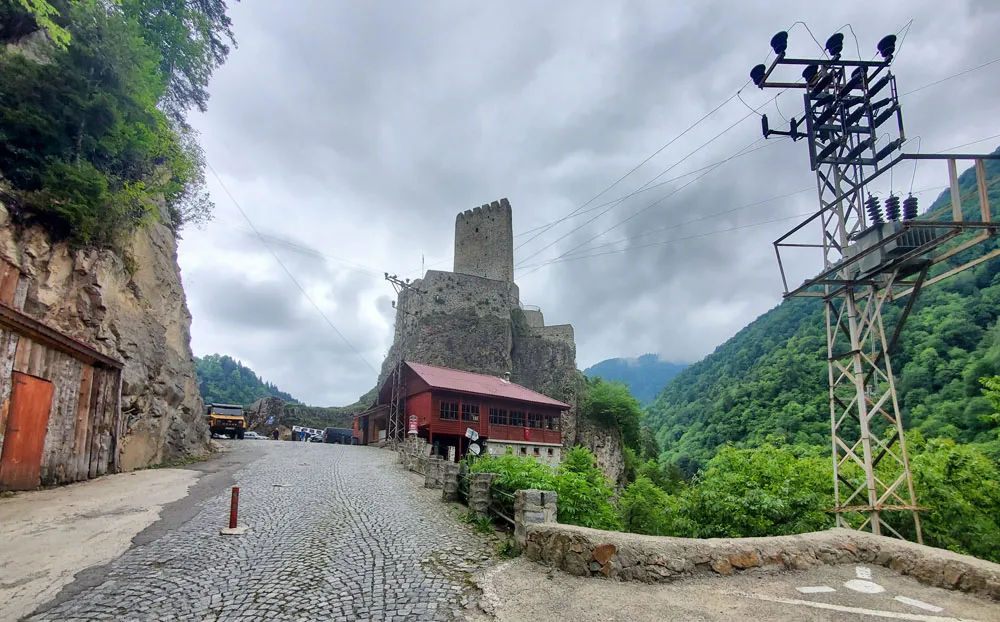
Zilkale Castle appears suddenly, around a bend. Its tall keep tower, rising amid the bright green of the mountain valley, strongly resembles the medieval castles built by Germans in many European regions. Just like mountainous Czechia. You even forget that you are in Turkey.
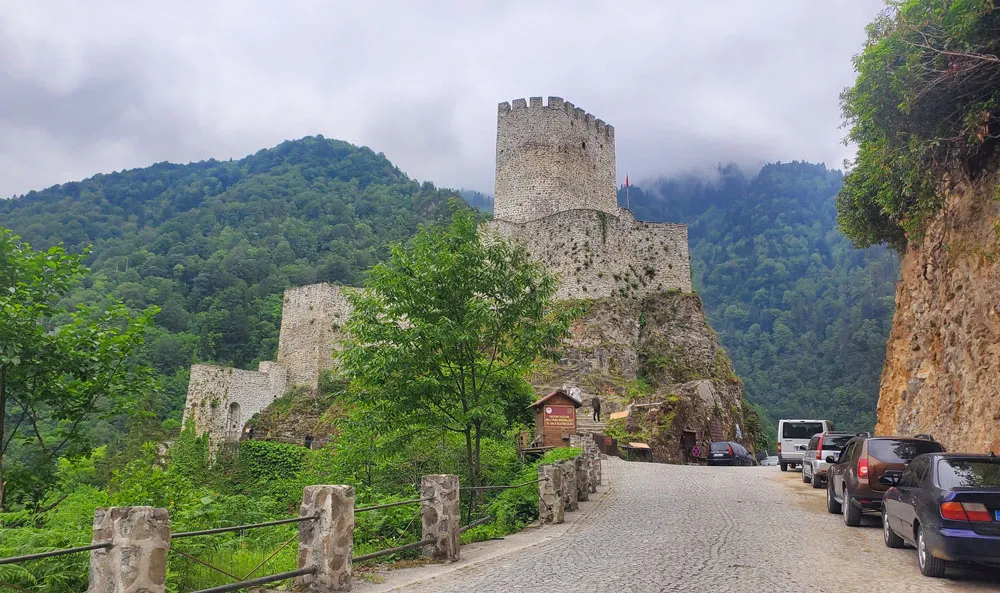
The castle stands on a separate rock above the deep valley of the Fırtına. It is a lively tourist spot, with a restaurant and some other buildings nearby. There are several car parks, but considering that we saw parking lots some 400 metres from the castle, one may assume that quite a lot of people come here.
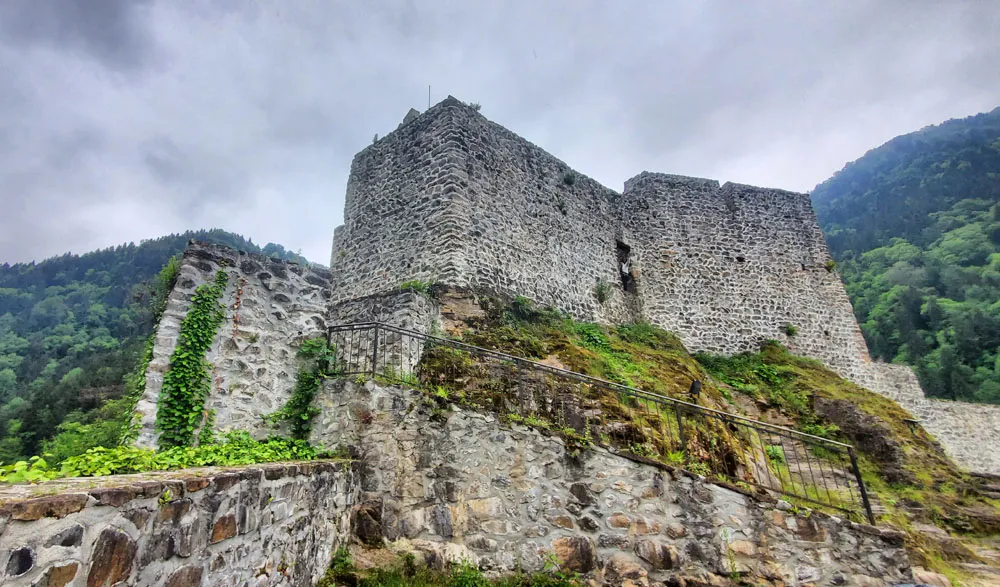
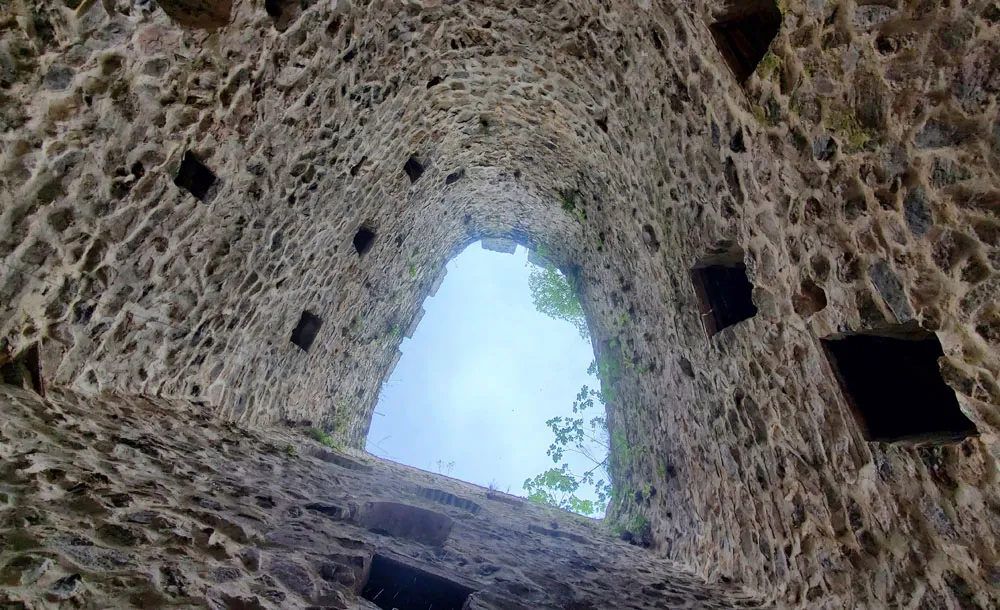
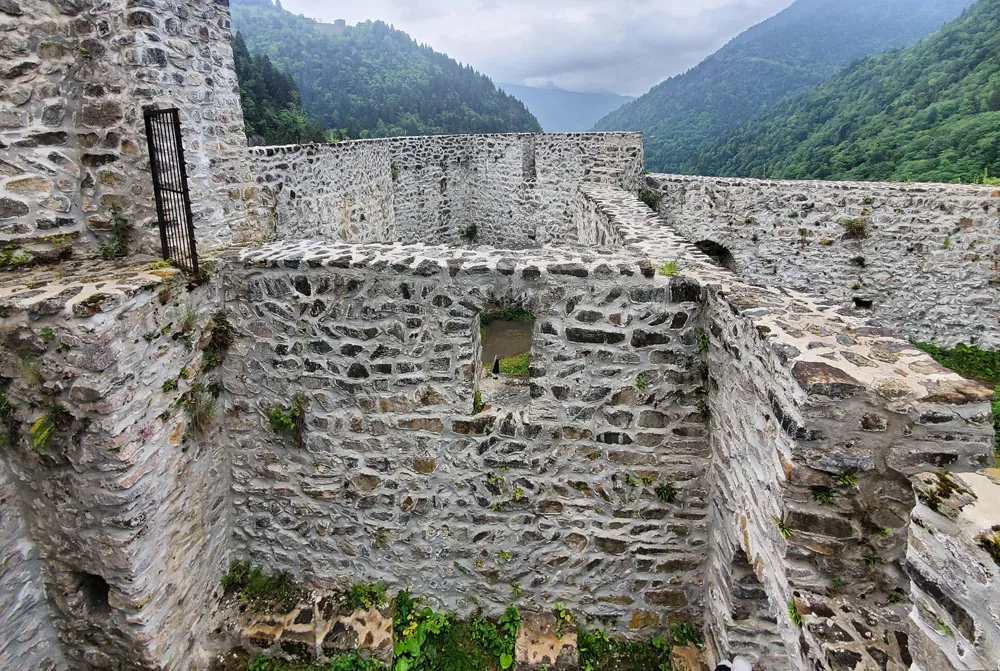
Entry to the castle is paid. Only walls have survived inside, though there are quite a few of them, as there were residential buildings and a chapel here. It is written that there used to be many wooden structures here, which rotted away long ago. You cannot climb the tower, but the terraces too offer wonderful views of the narrow gorge of the Fırtına, which winds somewhere very far below; the height here is very considerable: the castle stands at 1,350 m above sea level, and the riverbed lies 380 m lower.
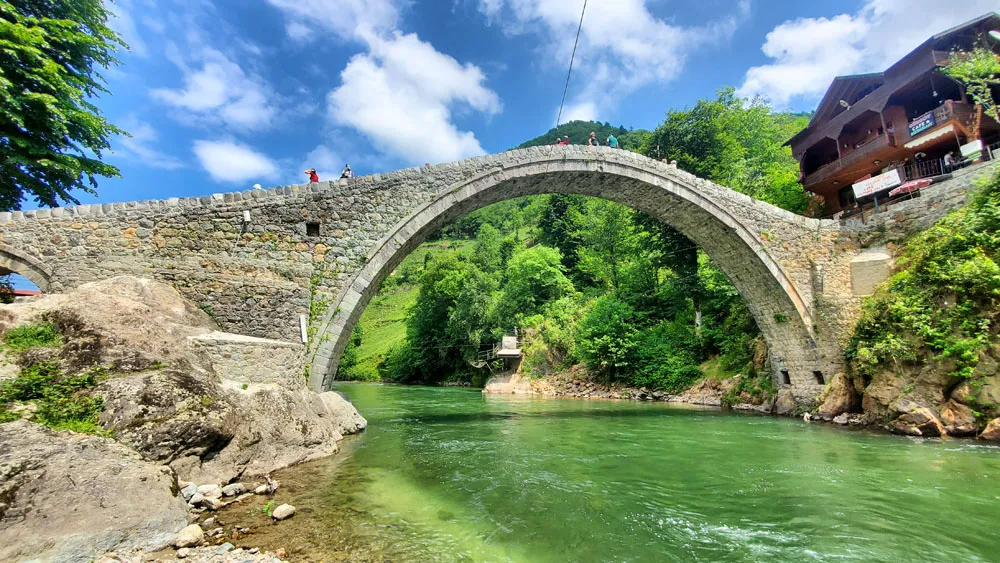
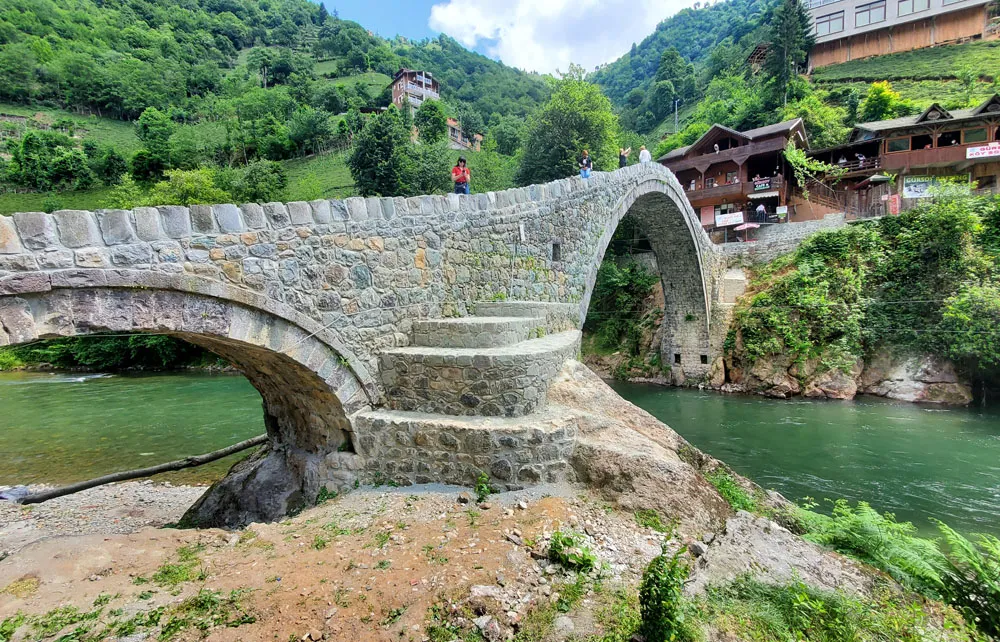
Timisvat Ottoman Bridge
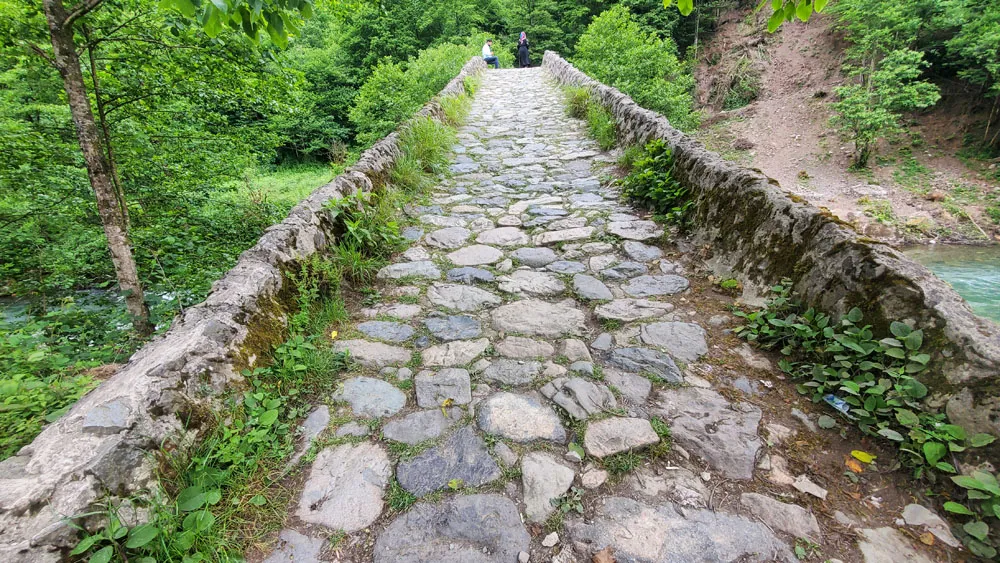
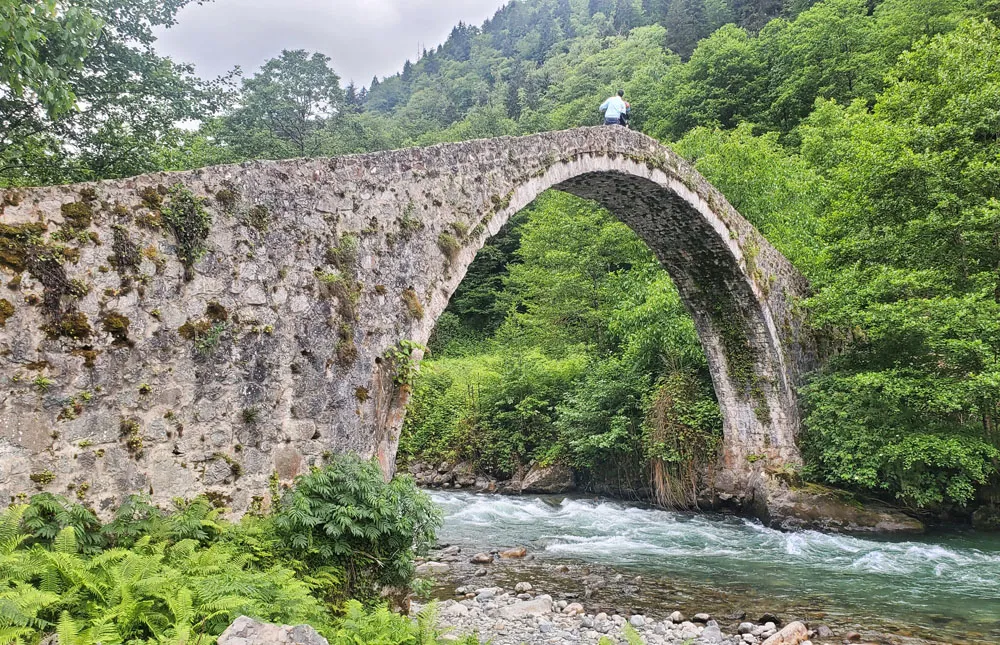
Şenyuva Bridge
Zil Castle stands above a stream of the same name, which flows into the Fırtına here. Zil means “bell”. The castle received this name thanks to the stream, whereas earlier it was called Kale-i-Zir, which in Persian means “Lower Castle”. It is “lower” in relation to Bala Castle, which stands much higher, 15 kilometres to the south.
Zilkale was built between the 14th and 15th centuries by the rulers of the Empire of Trebizond. The time of construction determines the castle’s architecture: even in the east of Asia Minor, castles were then built around keep towers surrounded by lower rows of walls that formed an inner courtyard for housing residential buildings. And the keep tower was the feudal lord’s dwelling.
Zil Castle is one of the calling cards of Rize Province. Its image can be seen on souvenir magnet displays, in advertising brochures and in the few guidebooks, but in person it is much better.
Text and photos by Roman Malenkov.
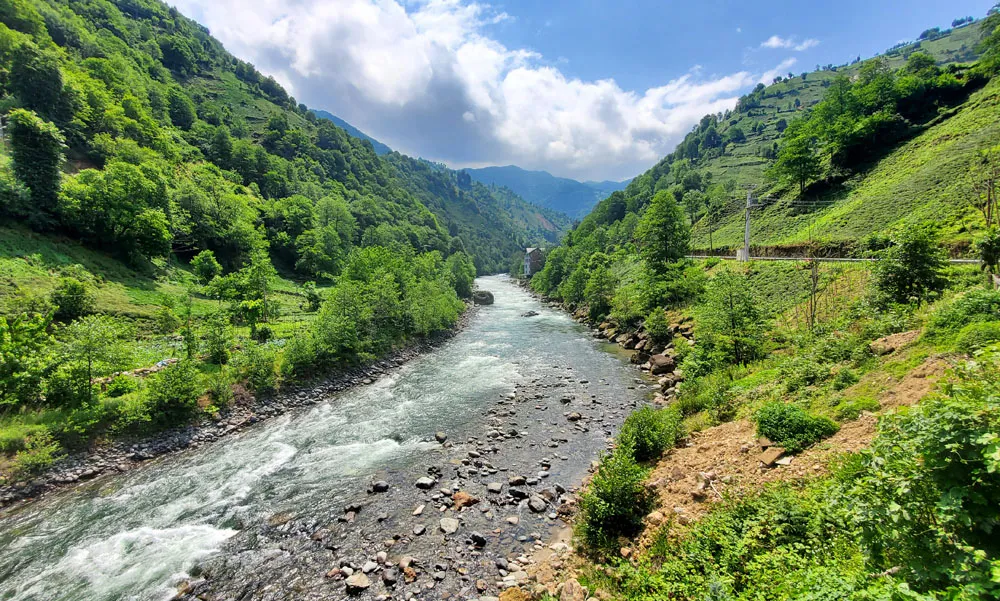
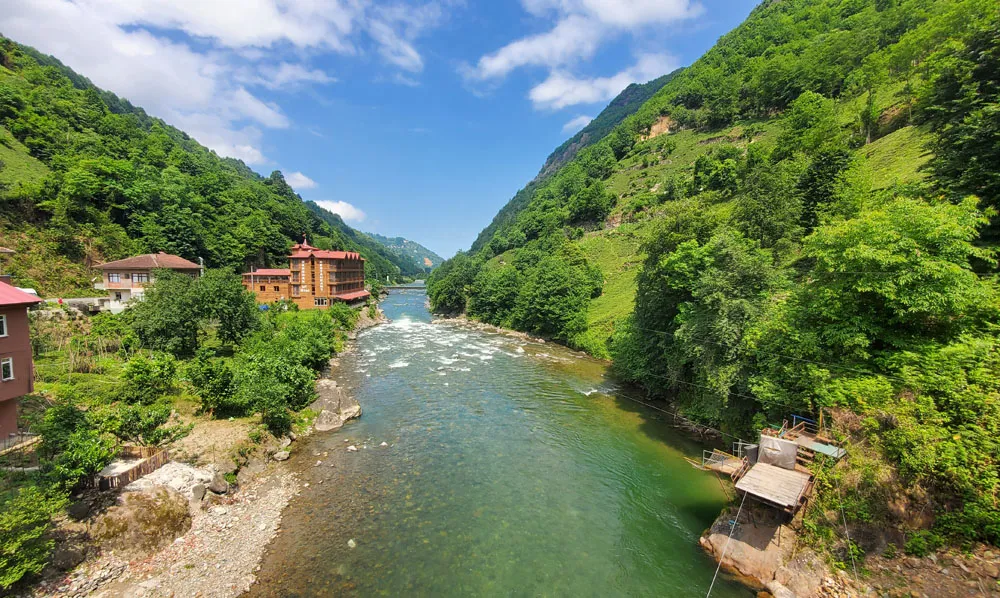
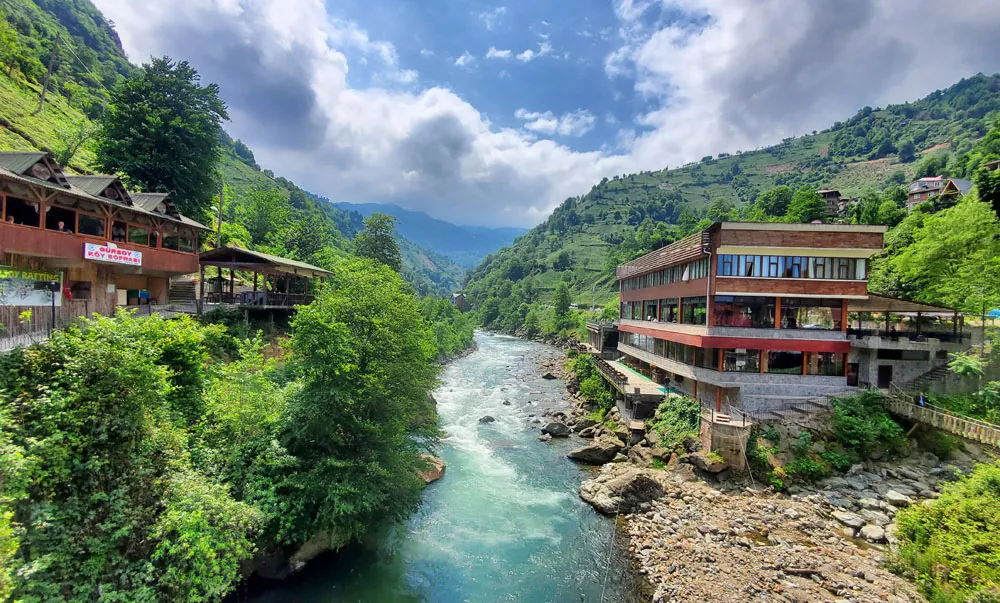
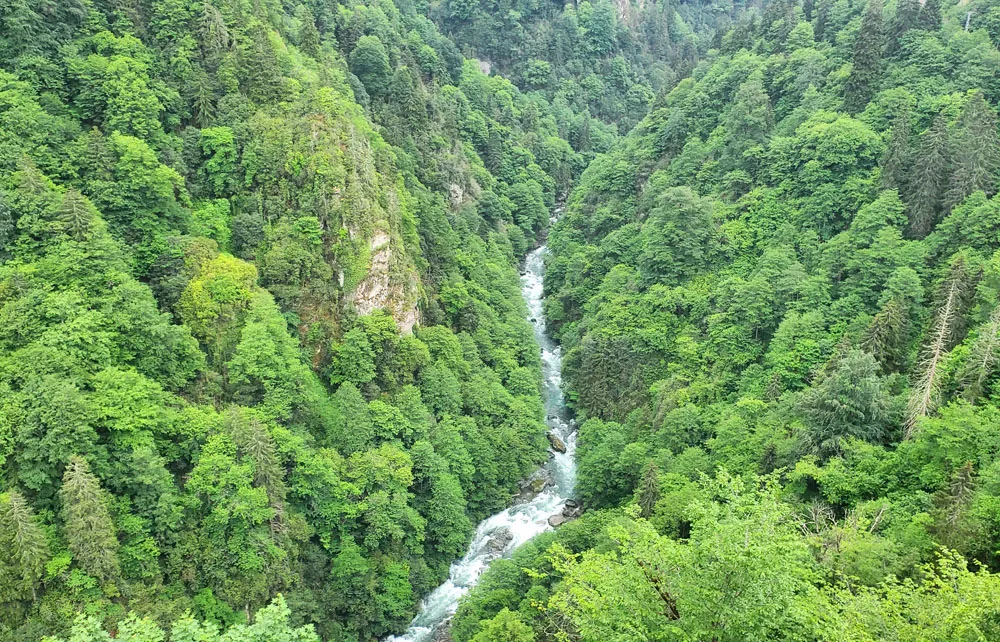
The Fırtına Valley


