

Unique “portrait” gravestones from Ostapkivtsi (photos)

· 2 min read
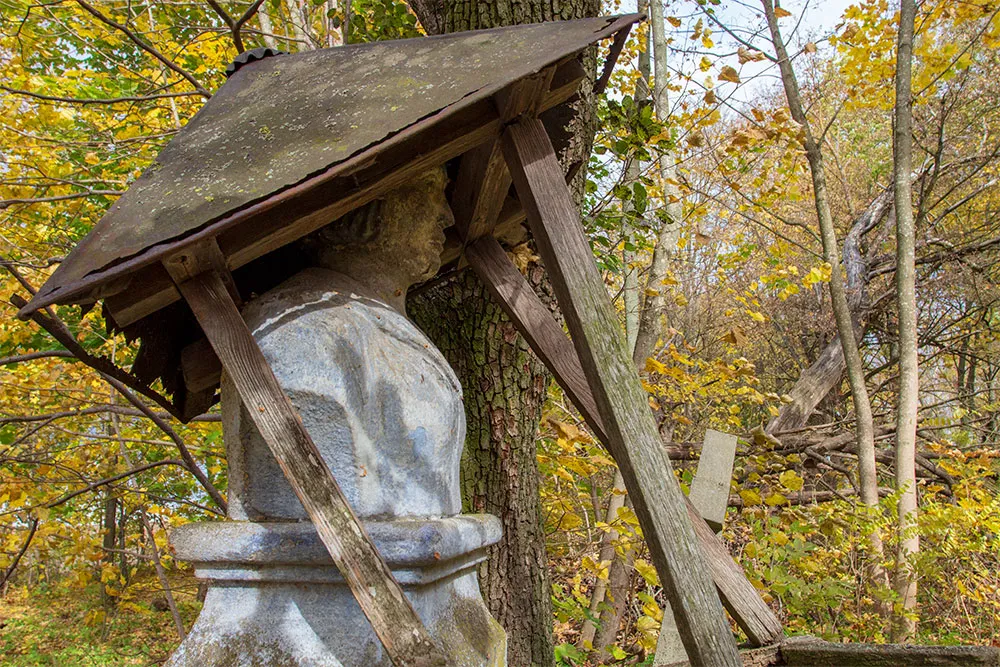
While surveying the old cemetery in the village of Ostapkivtsi in Khmelnytskyi Oblast, members of the Ukraine Incognita team made a sensational discovery.
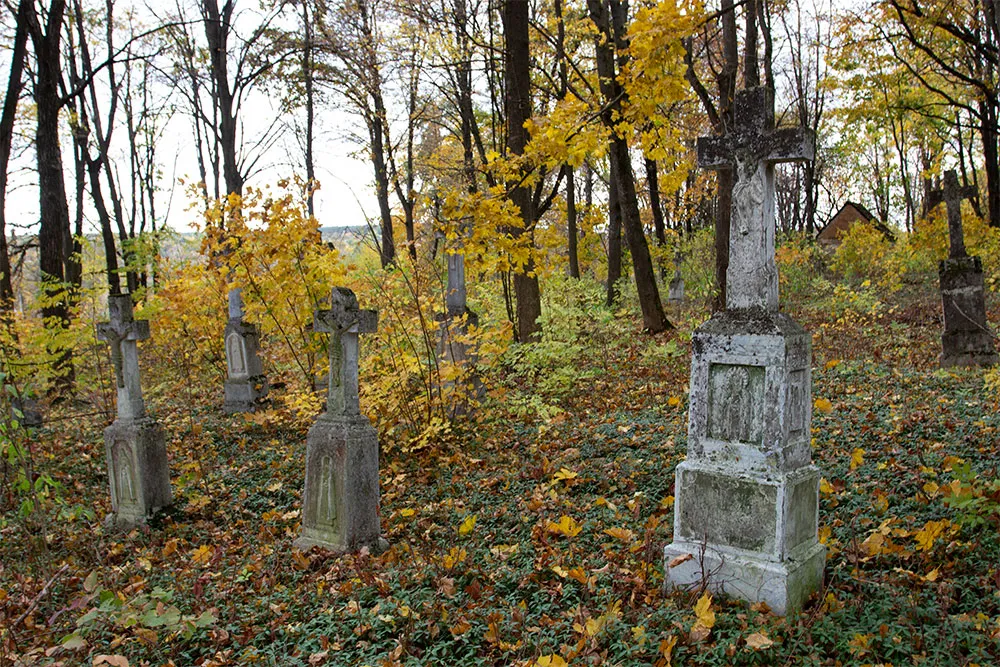
The cemetery in Ostapkivtsi
The village of Ostapkivtsi has been known since the 14th century. By the 16th century it was already a sizeable town with a castle, a market and other necessary attributes. At the end of the 18th century the castle was rebuilt into a palace, which became the main residence of the famous mystic and Illuminatus Tadeusz Grabianka, who took the pseudonym “Count Ostap” in honour of this village. For a long time it was even believed that Grabianka and the famous magician and sorcerer Count Cagliostro were one and the same person!
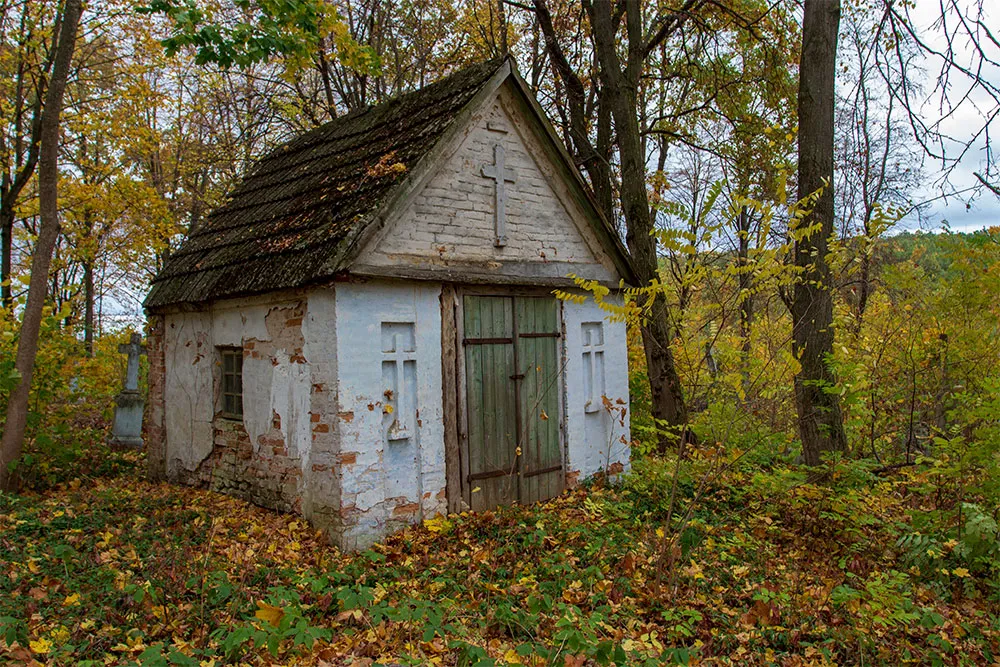
Ostapkivtsi. Cemetery chapel
On that basis the Ukraine Incognita team hoped to find many interesting gravestones of the 19th and, why not, the 18th century at the village’s old cemetery. Unfortunately, the oldest cross found here dated only to the late 1880s. Somewhere in this village there must probably be an older necropolis as well. That remains to be clarified.
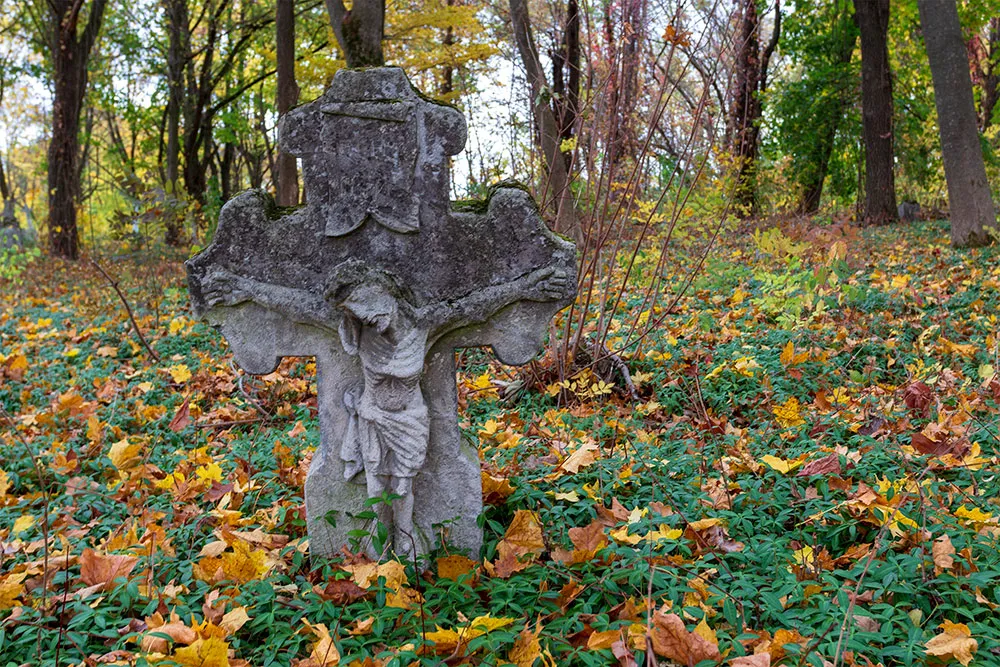
Cross of the late 19th century
Despite this, the Ostapkivtsi cemetery nevertheless gave the team a generous gift. And what a gift! And in a place where it was least expected.
In a section dating to the 1930s, a rather interesting discovery was made.
For village necropolises on the eastern bank of the Zbruch, “portrait” sculptural gravestones are a great rarity. Even on the “western” bank of the border river, sculpted images of the deceased in village cemeteries are not a frequent phenomenon either. But there we at least have an explanation: here we see a borrowing from urban or aristocratic monuments of the time of the august emperor or of interwar Poland. For eastern Ukraine, however, such a phenomenon is unique.
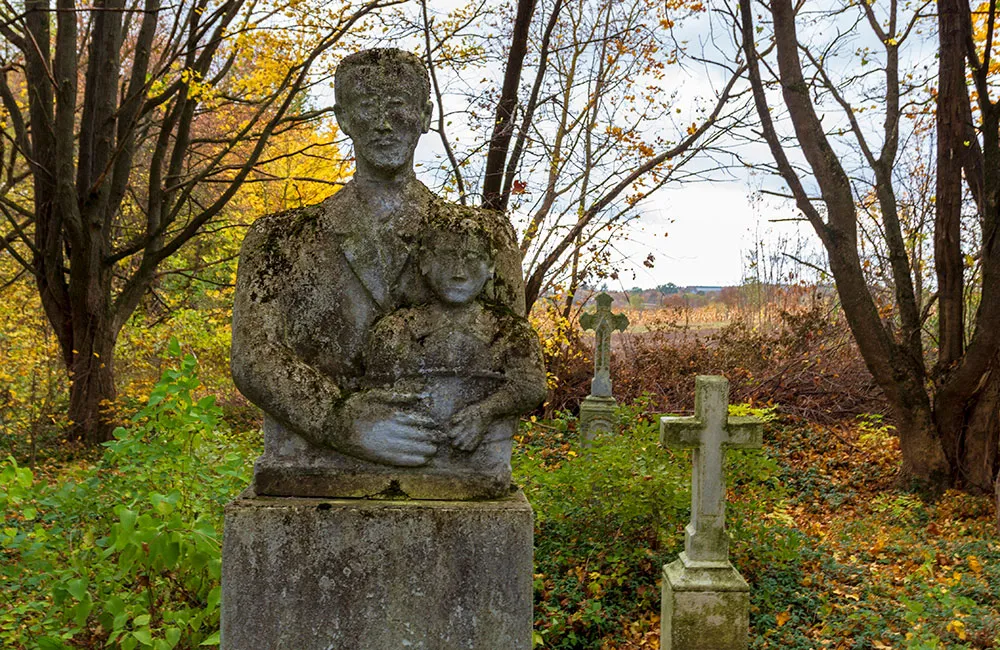
The grave of a father and son may be evidence of the Holodomor.
In Ostapkivtsi we were lucky to find three portrait gravestones at once. All of them date to the 1930s. The most interesting is the sculpture of a father and son. Unfortunately the epitaph has been destroyed by time, and it is impossible to understand why we see a double image here (and, accordingly, a double burial). It is possible that these are victims of the Holodomor. At least the neighbouring “portrait” gravestone on the grave of Yavdokha Afanasiivna, who died in September 1933, may well be connected with this tragedy, especially considering that she died quite young, at the age of 35.
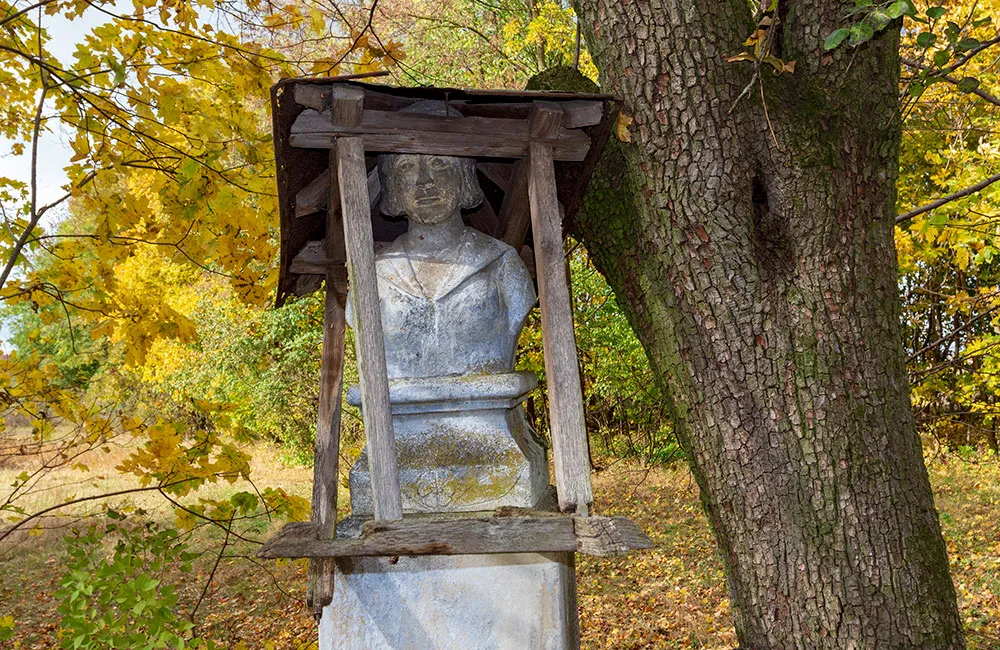
Burial of a young woman. 1933
However, another gravestone, also a woman’s, is dated 1939.
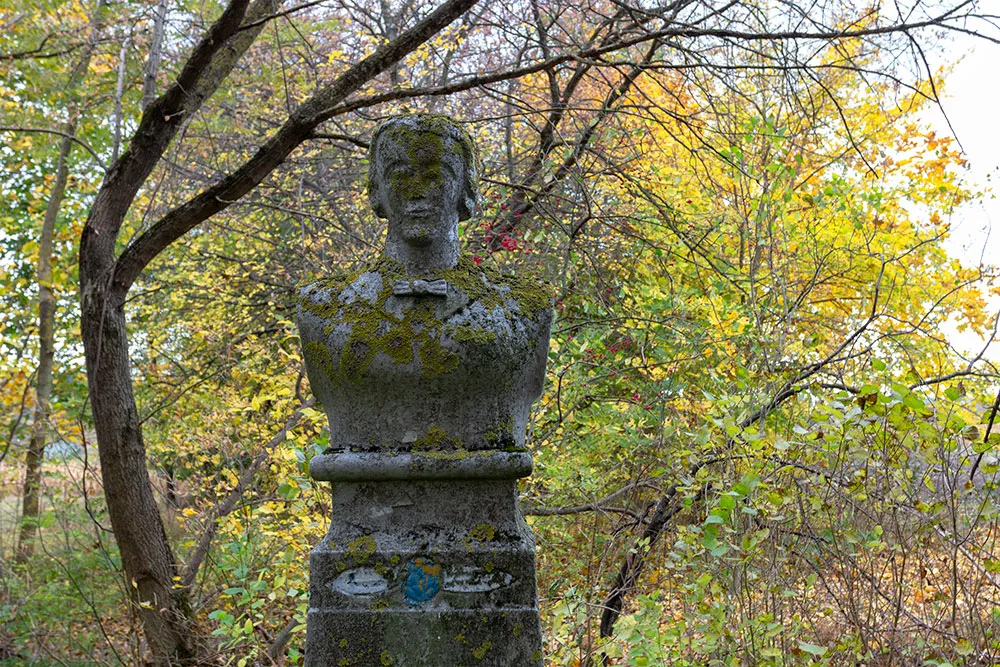
Burial of 1939
Each of the sculptures is an interesting and unique example of naive folk art.
From the style it is clear that it was made by some local self-taught master. The Ukraine Incognita team intends to find out who he was. Perhaps old-timers still remember.


