

Vasylivka. The “Wolf’s Lair” palace and Freud

· 2 min read
The village of Vasylivka is known in documents from 1770. It was then Tatar and was called Kanaia Murza. After the Russian occupation at the beginning of the 19th century the village was renamed Shostka, then it was called Shestakovo, and when exactly it began to be called Vasylivka is not easy to establish, but at the beginning of the 20th century the name was Vasylivka.
In the 1830s–1850s in Vasylivka the local landowner Vasyl Dubetskyi, a major general, by the way, built a large palace. The author of the design was probably Francesco Boffo, the author of the Potemkin Stairs in Odesa.
In 1862, after the abolition of serfdom, Dubetskyi’s descendants could not maintain the large palace and sold it to the Jews Fishel Bergmadskyi and Yankel Sverlik. And in 1885 it was bought by the Kakhovka merchant Kostiantyn Pankeiev. His son, Serhii Pankeiev, suffered from mental disorders: every night he dreamed of nightmares with wolves in trees. Known to the whole world as the “Wolf Man”, he was treated by Sigmund Freud himself, and they say he was cured. For this reason the manor received the name “Wolf’s Lair”.
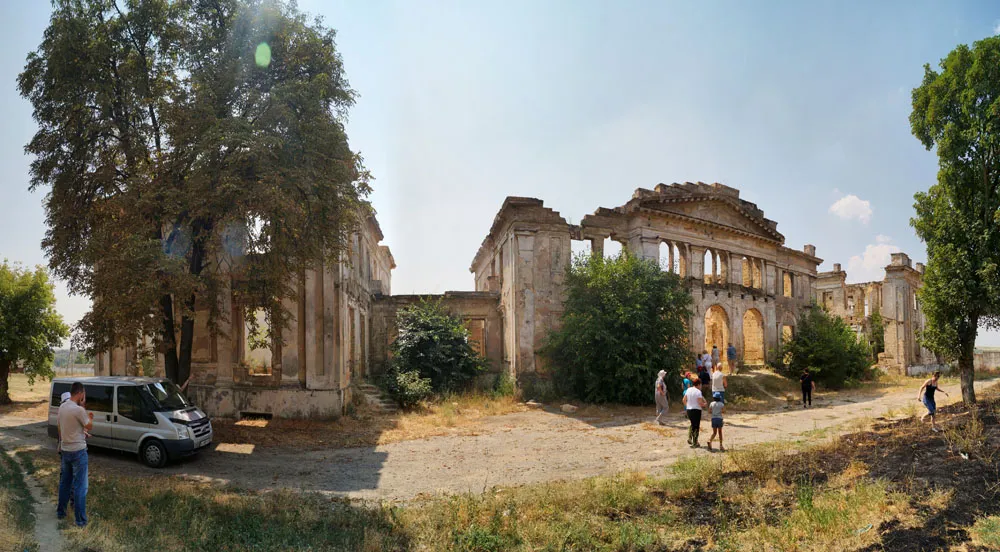
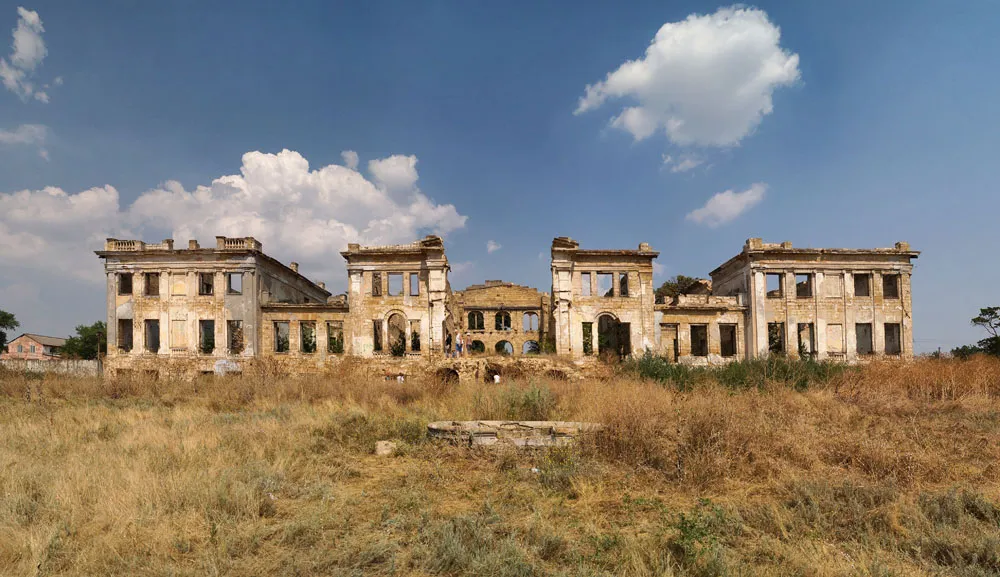
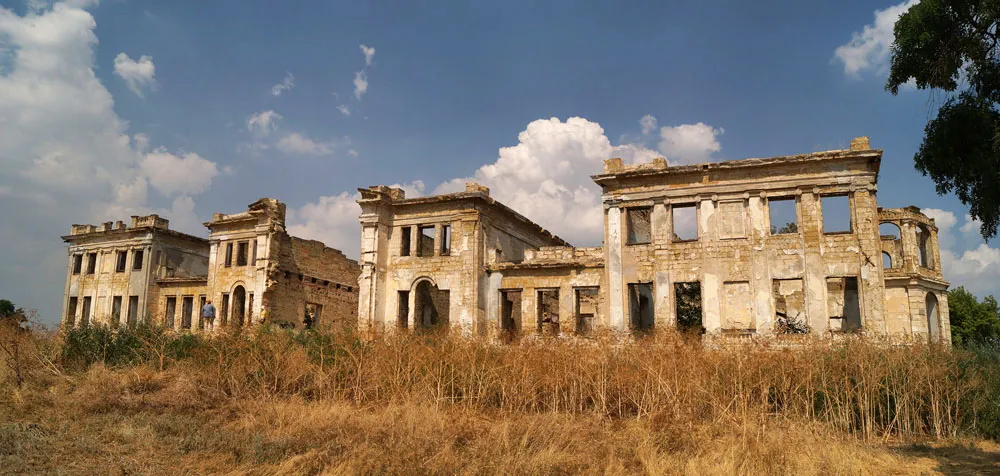
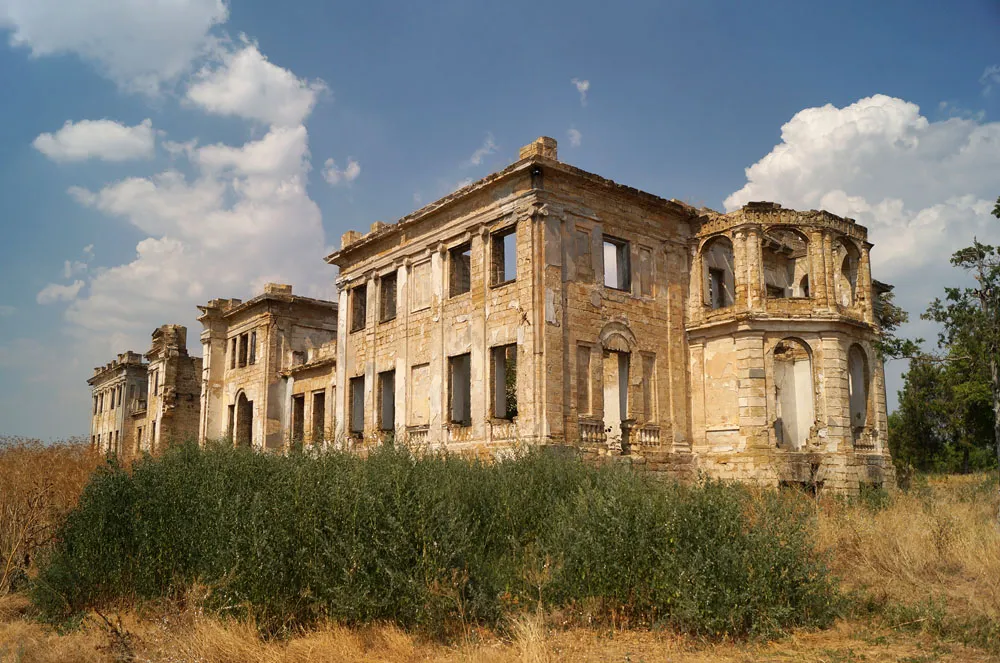
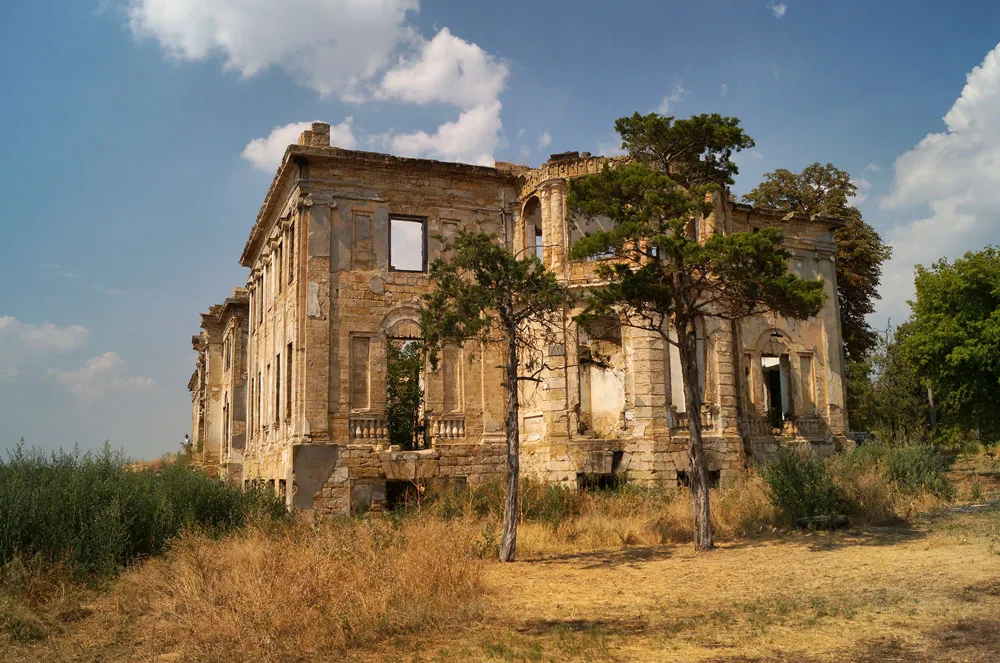
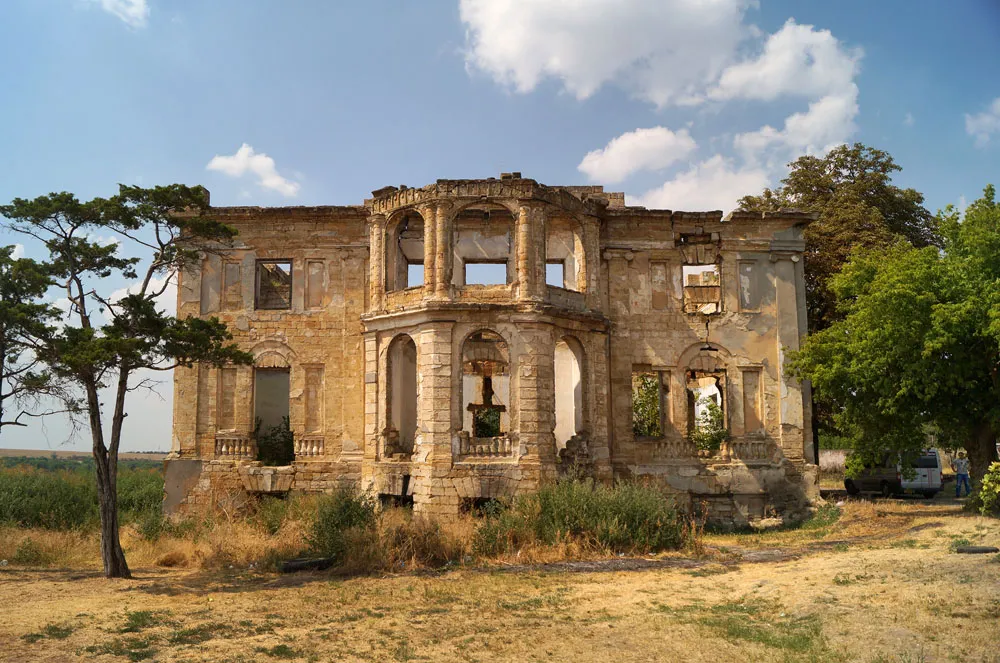
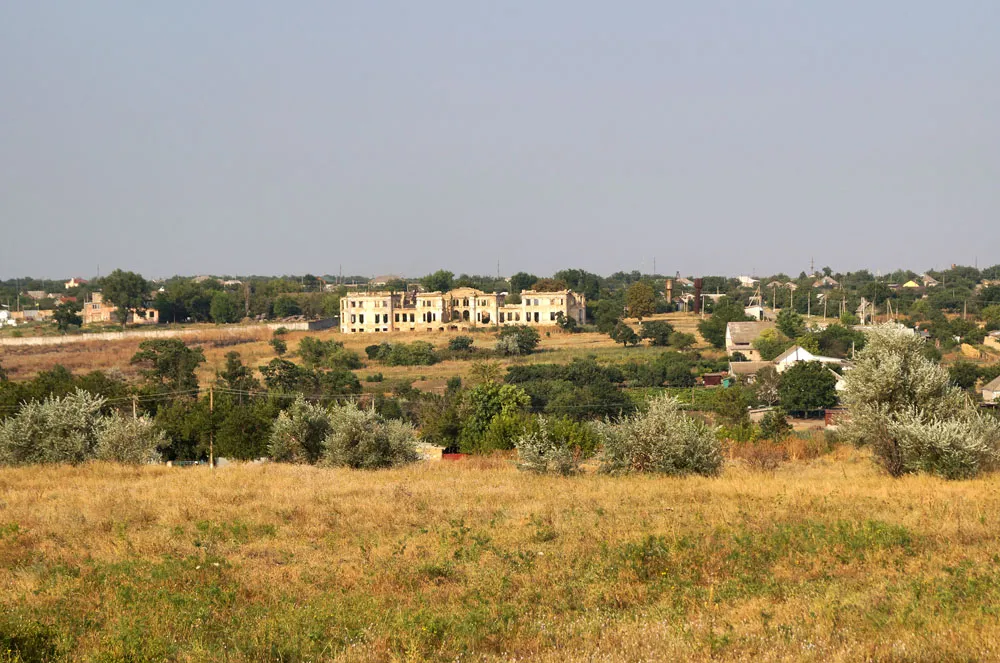
The following text is from Wikipedia. From 1917 to 1920 the manor housed a police (NKVD) station. After 1920 local residents lived here. Administrative offices, a club and a cinema were placed here.
The manor consisted of three two-storey wings connected by single-storey passages. Various outbuildings adjoined the manor house, and a large garden grew, in which stood 73 walnut trees, a forest of 44 desiatinas, a lake, a small pond and a fountain.
The forest was cut down during the Civil War. The garden gradually fell into decline and vanished. The remains of the fountains could still be seen in the 1990s. Now of all this splendour only the lake, a few trees and the remains of one fountain are left.
After 1991 the building began to fall into ruin. Local residents removed window frames and doors and broke up the walls for bricks for their own buildings. As a result the roof and the floors between the storeys collapsed; in the early 2000s the main west wall of the central wing also fell. Now the building may collapse entirely at any moment.
In 2007 the manor was sold for UAH 1 million to the Ukrainian Cable Company LLC (Odesa) on the condition of historical reconstruction by 2017. However, restoration work was never begun.
Text and photos by Roman Malenkov. Materials from Wikipedia were used.


