

Majestic ruins along the Kyiv–Lviv highway. The E-40 from Korets to Brody

· 8 min read
We would like to tell about a beautiful and colourful, rich and happy Ukraine. We do so when we see it that way, but, unfortunately, most often it shows itself as a black-and-white ruin. The scale of the destruction of the country’s cultural heritage is catastrophic, and to understand this you do not need to go to “remote villages”. Let us look at one of the busiest and most popular roads in Ukraine, the E-40 highway, Kyiv–Lviv. Let us take a 15-km strip along the road and look at the tourist attractions, or, as it is fashionable to say now, magnets, of this strip. Here are majestic and truly very large sites that should be visited by millions of tourists, if not for one “but”: these sites are half-ruined, and these are not picturesque ruins, they are ancient, long-suffering walls amid heaps of rubbish, in thickets of shrubs and weeds… We will not try to cover the whole road. Let us look at the stretch that fortunately escaped the period of the greatest Bolshevik-Russian destruction of Ukrainian heritage, because until 1939 it was under Polish rule. These are Rivne and Lviv oblasts.
On the road from Kyiv to Lviv, the first to meet us is Korets with its majestic ruin, the castle of the Koretsky princes.
Castle of the Koretsky princes
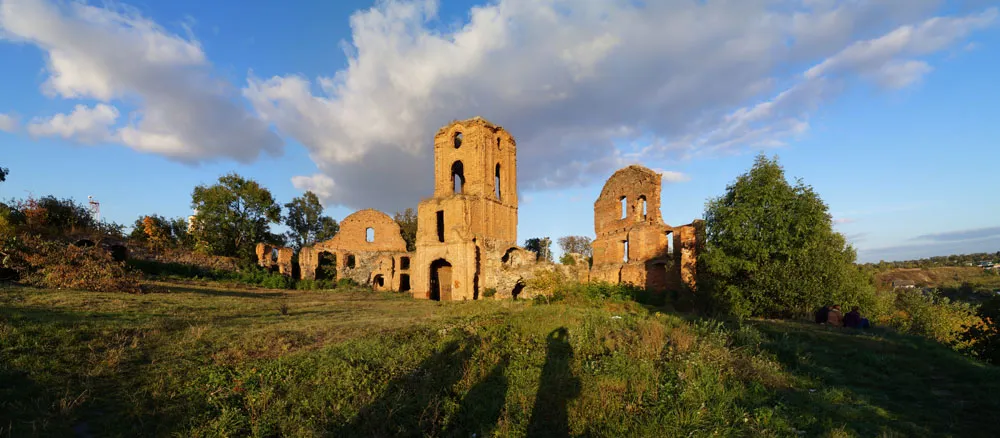
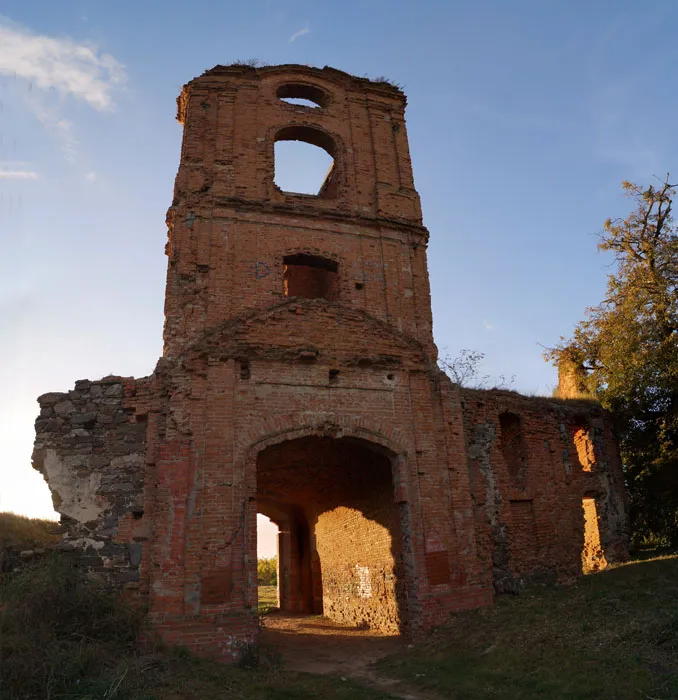
The Korets castle was built by Prince Fedir Ostrozkyi in 1386. He was one of the founders of the Ostrozkyi “empire”, the future saint Feodosii Ostrozkyi. Having spent his life in wars and accumulating estates, in old age he became a monk of the Kyiv Cave Monastery, where he ended his life. In the time of Fedir Ostrozkyi the castle was probably of timber and earth. Later it was rebuilt by the subsequent owners of Korets, the Koretsky princes. In the 1780s another family of owners of the town, the Czartoryski, turned the castle into a palace, and in 1832 a great fire broke out here and only walls were left of the castle-palace. Since then no one has restored it, so now it is even hard to imagine what the castle was like; only the gate tower looks more or less intact. True, the viaduct bridge across the moat has been restored; this is the only intact part of the Korets castle, and otherwise it is a ruin. It has towered on its hill above the Korchyk for many centuries, attracting boys with its dungeons, drunkards with its solitude and lovers with the picturesque landscape.
Read about Korets on our website.
Next we head to Velyki Mezhyrichi and Nevirkiv.
Velyki Mezhyrichi. St. Anthony’s Church.
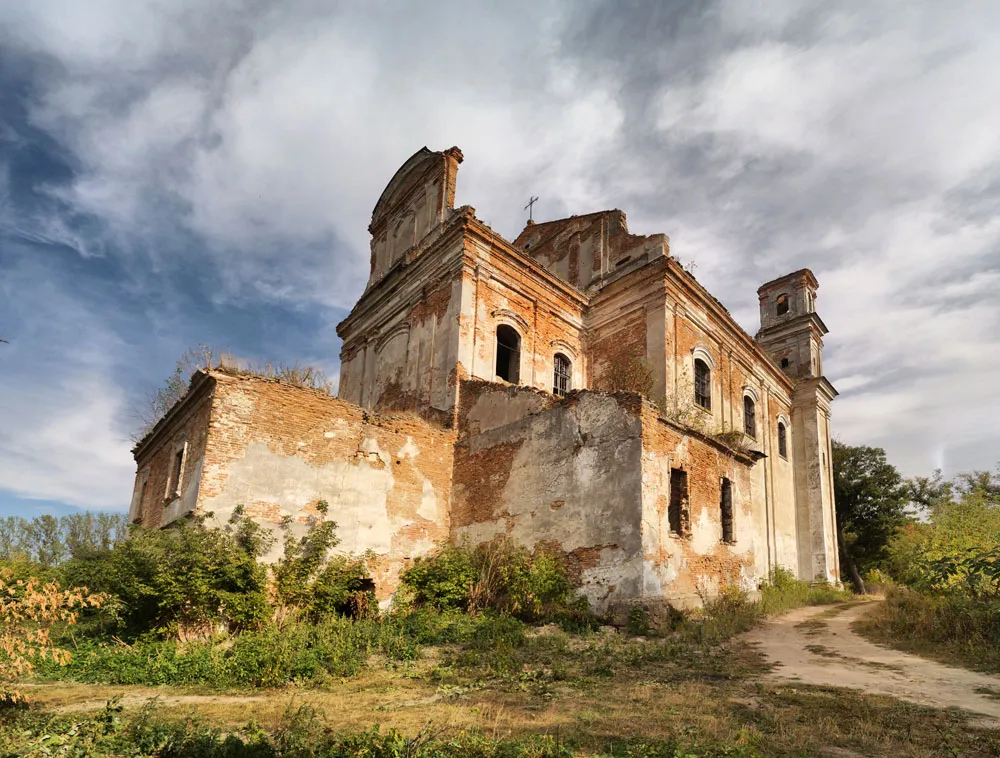
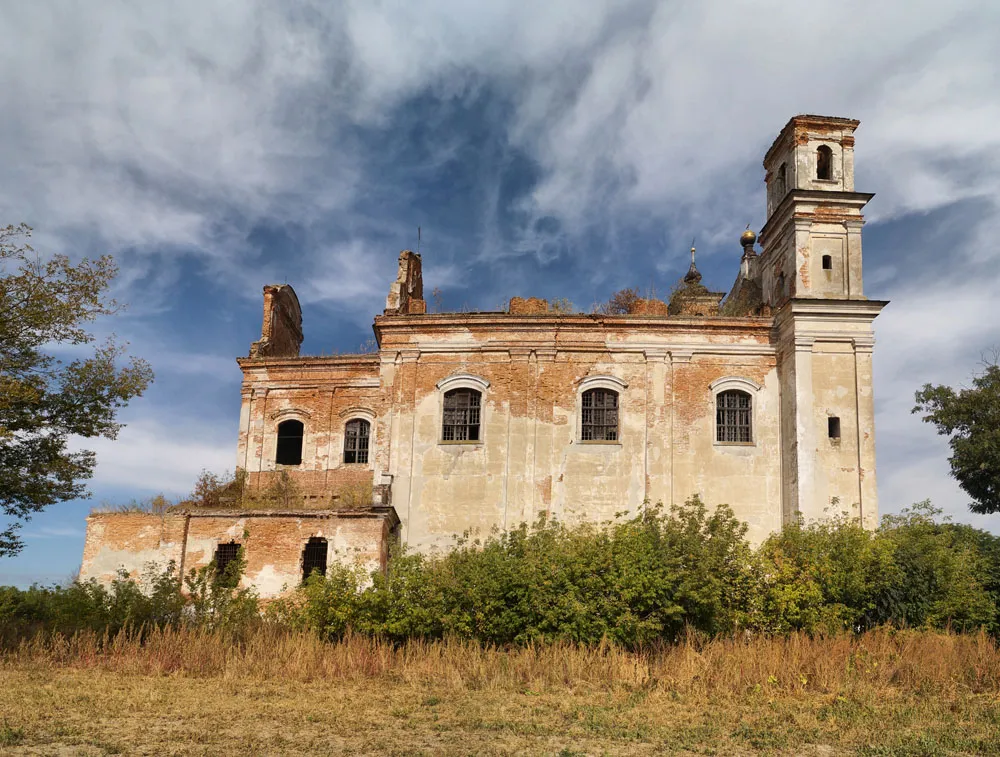
St. Anthony’s Church is a huge church that took 23 years to build, from 1702 to 1725. It was built with funds from the Lubomirski princes to a design by the architect Wojciech Lenartowicz.
Nevirkiv. The Dominican Holy Trinity Church.
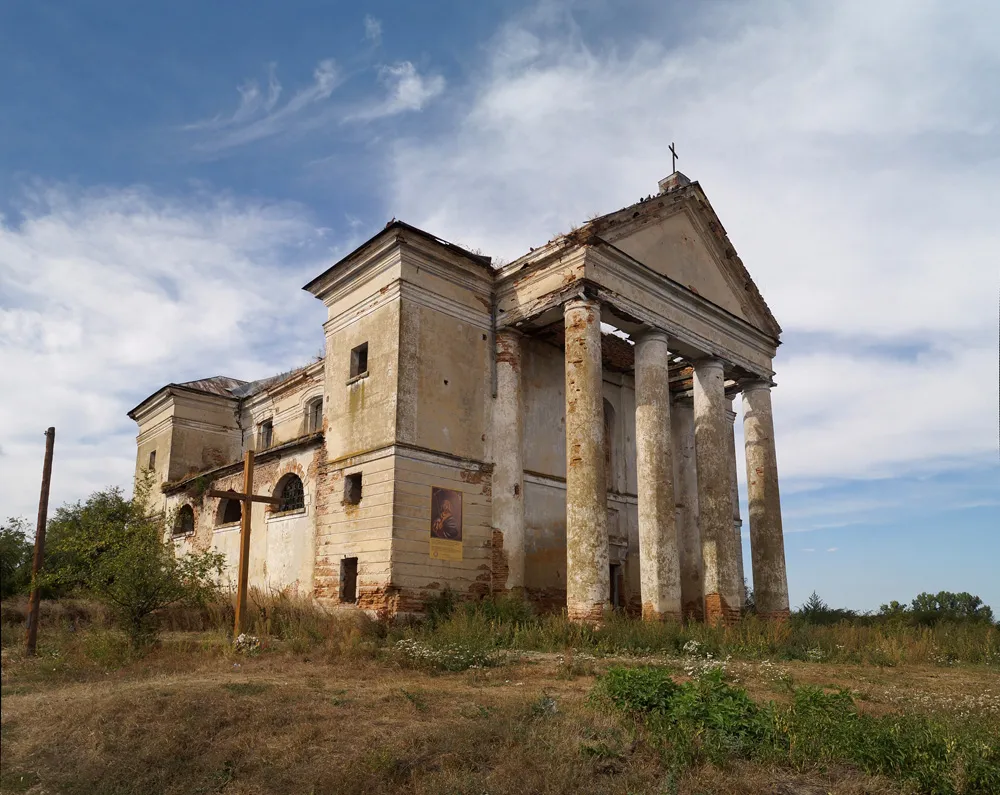
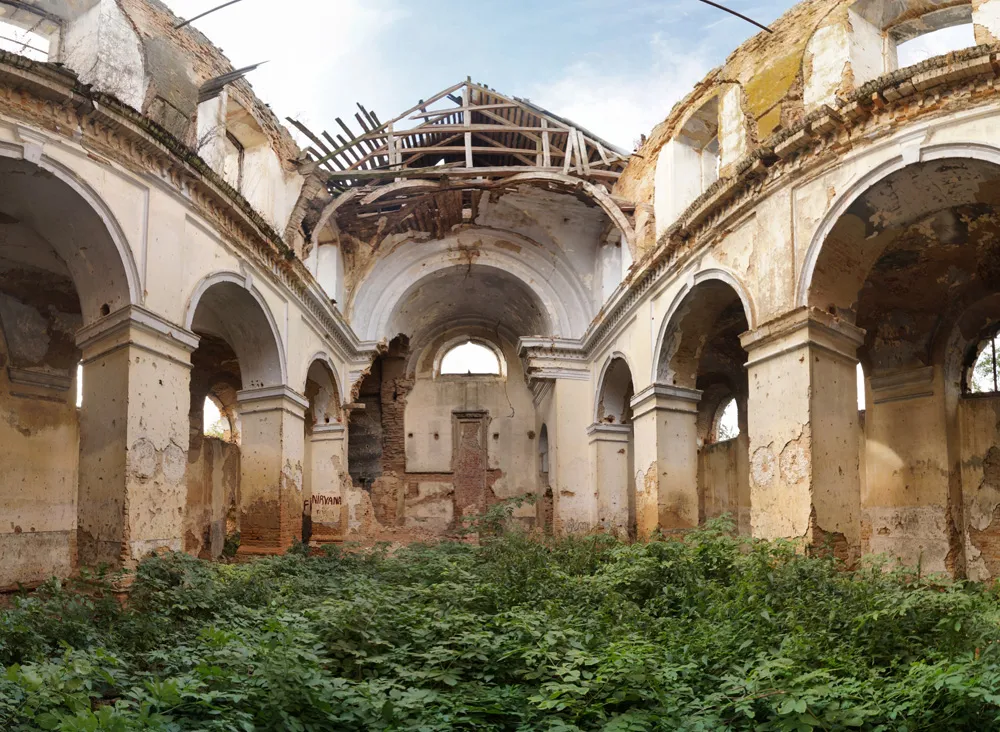
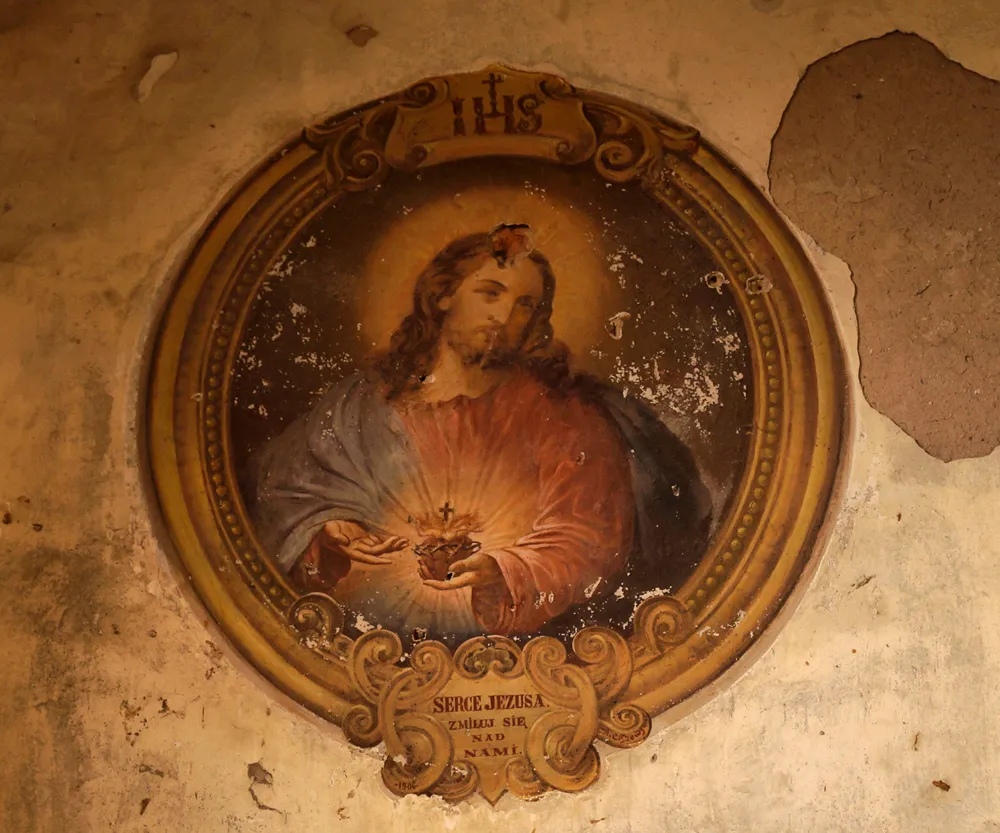
The Dominican monastery in Nevirkiv was built in 1698. It was wooden. The owner of these lands, Jan Stecki, decided to rebuild the main monastery church, the Cathedral of the Holy Trinity, in brick. Although this happened already during the period of Russian rule in Volhynia, until 1832 it still served as a monastery church. Then the monastery was closed and the church became a parish church. After that everything went by the book: there were fewer and fewer Poles, it became harder and harder to maintain the church, then the Soviets came and closed the church, the Germans opened it, the commies closed it again… And so this building stands needed by no one, although it is possible that some Catholics still live in Nevirkiv. On the walls we see several plaques, including one about its founding by Jan Stecki, which means that someone remembers the church, or pretends to remember it.
Our next site is the Holy Trinity Church in Tuchyn.
Tuchyn. Holy Trinity Church.
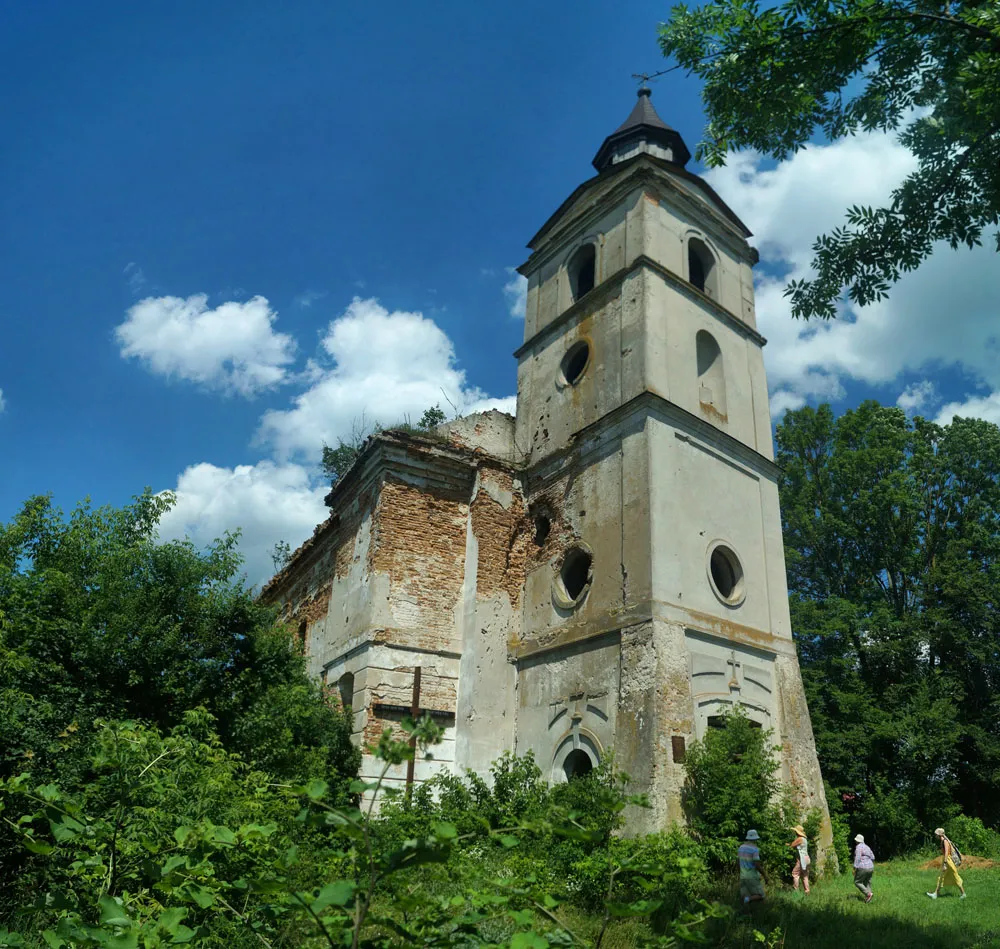
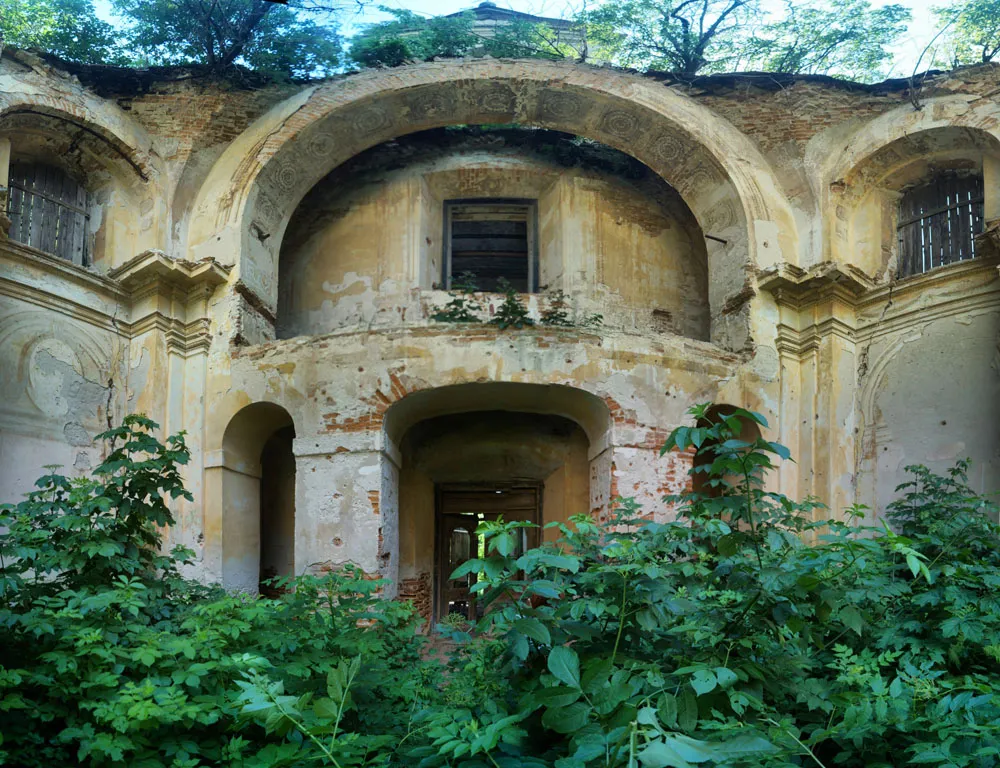
A very interesting monument in Tuchyn is the Baroque church, built in 1786–1796 in the Baroque style and consecrated in honour of the Holy Trinity and the Archangel Michael. The construction was financed by the then owner of the town, Michał Walewski. Originally the church had no bell tower; it was added in 1929.
From Tuchyn we move to the other side of the E-40 highway, to Hoshcha. In the town stands the ruin of the palace of the Walewski princes. Interestingly, around the palace there is an exemplary park with little alleys and a decorative monument to a carriage, but the local authorities have no money to restore the palace.
Hoshcha. The Walewski Palace.
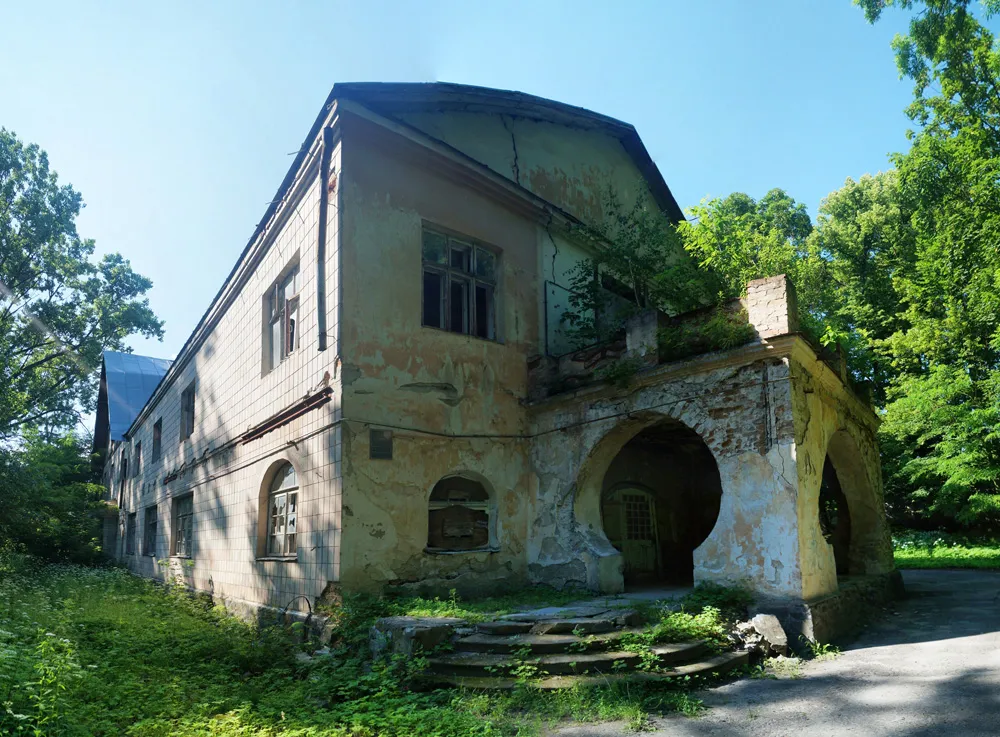
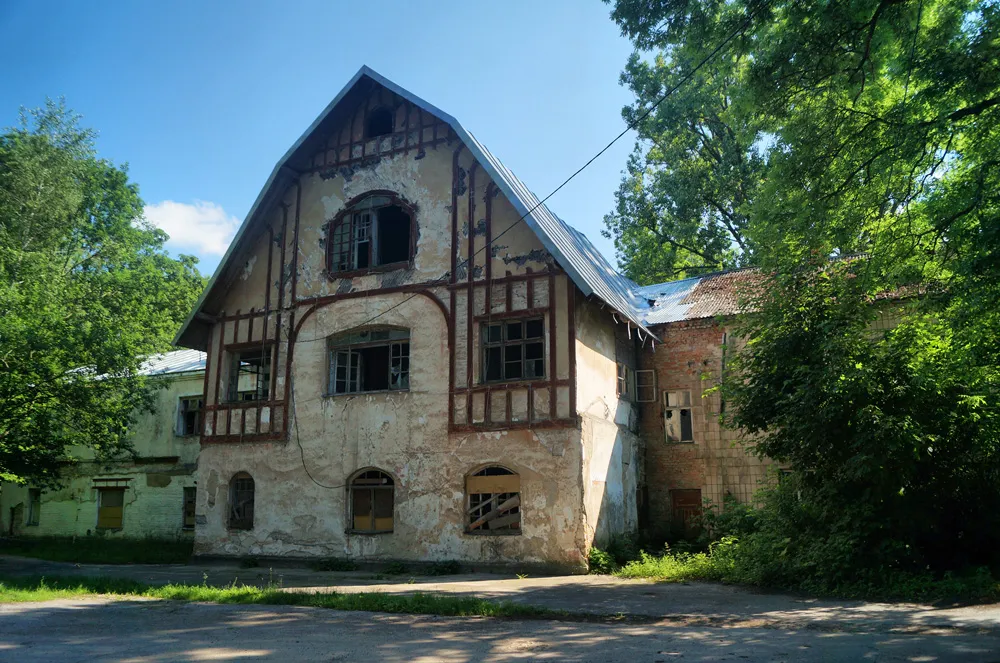
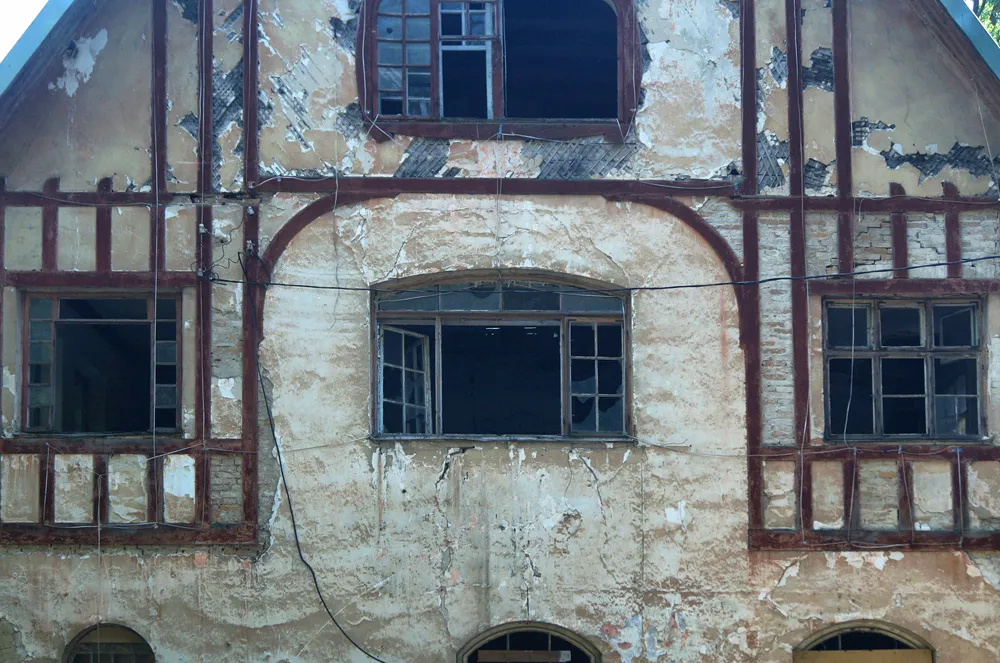
The palace of the landowners the Walewski, who owned the estate in Hoshcha in the 1840s, is unique for Ukraine. It is built in the chalet style, that of an Alpine house with a half-timbered facade and an attic floor. Unfortunately, in Soviet times its south facade (and partly the north one) was clad with ordinary facing tiles, which turned the manor into an ordinary house of the socialist era.
From the Rivne bypass we turn left to the village of Taikury, where a few pieces of the castle walls remain among the nettles, and not far away stand the majestic ruins of St. Lawrence’s Church.
Taikury. St. Lawrence’s Church.
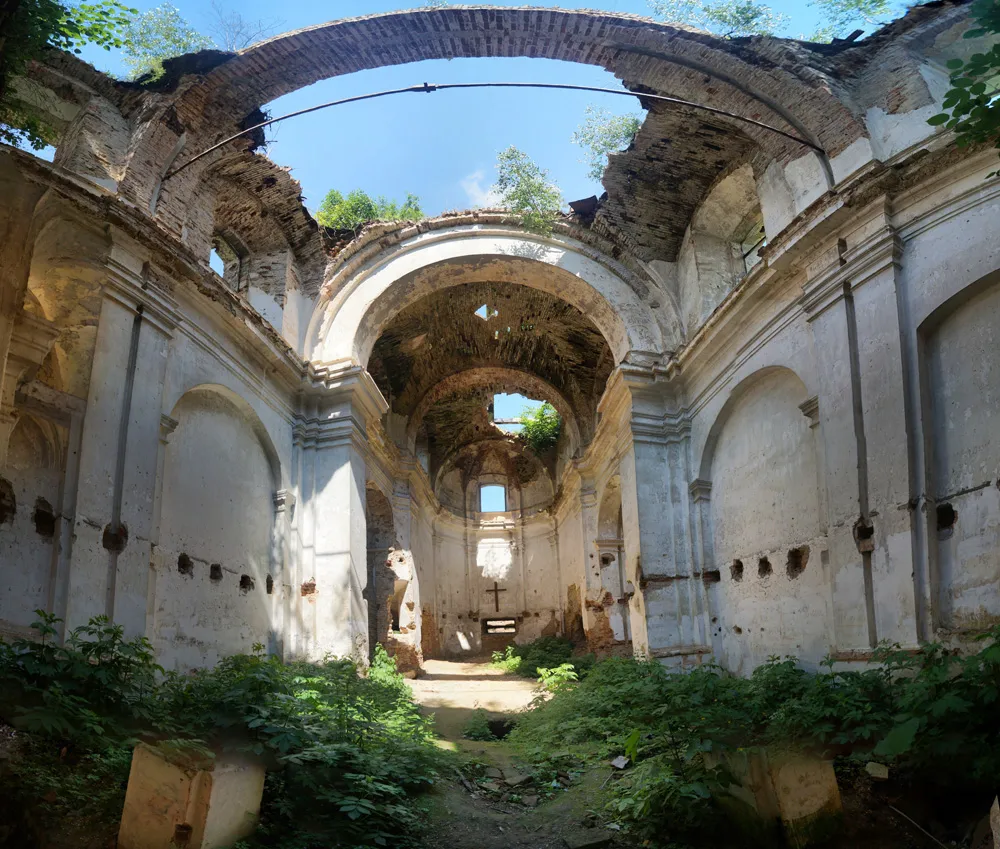
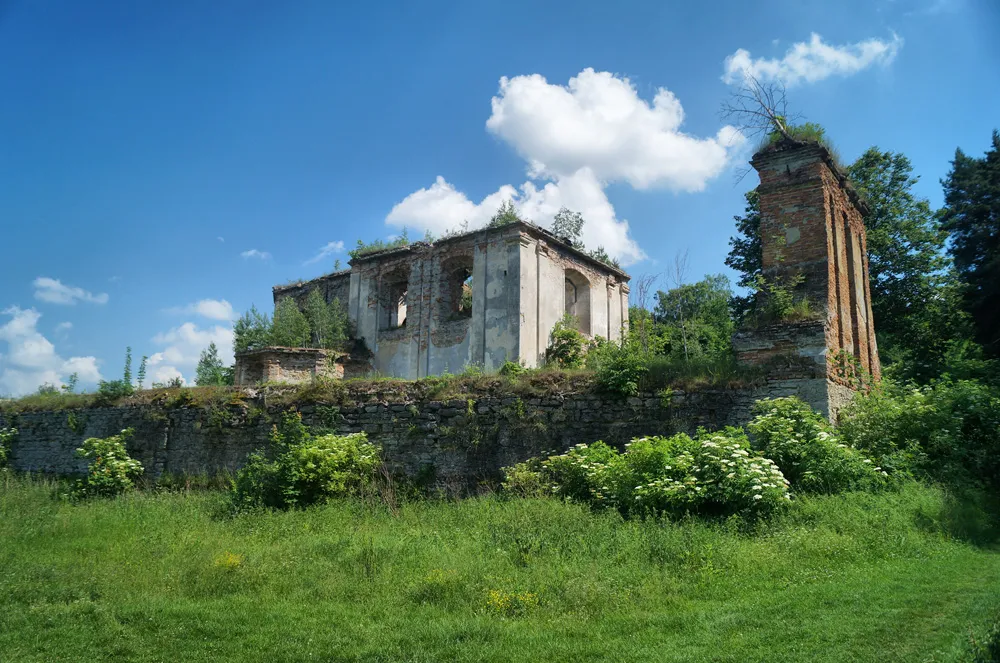
The church in Taikury was built in 1710 with funds from the local landowner Wawrzyniec Stanisław Pepłowski.
Next, beyond Dubno, we are met by the impressive and large Tarakaniv Fort.
Tarakaniv Fort.
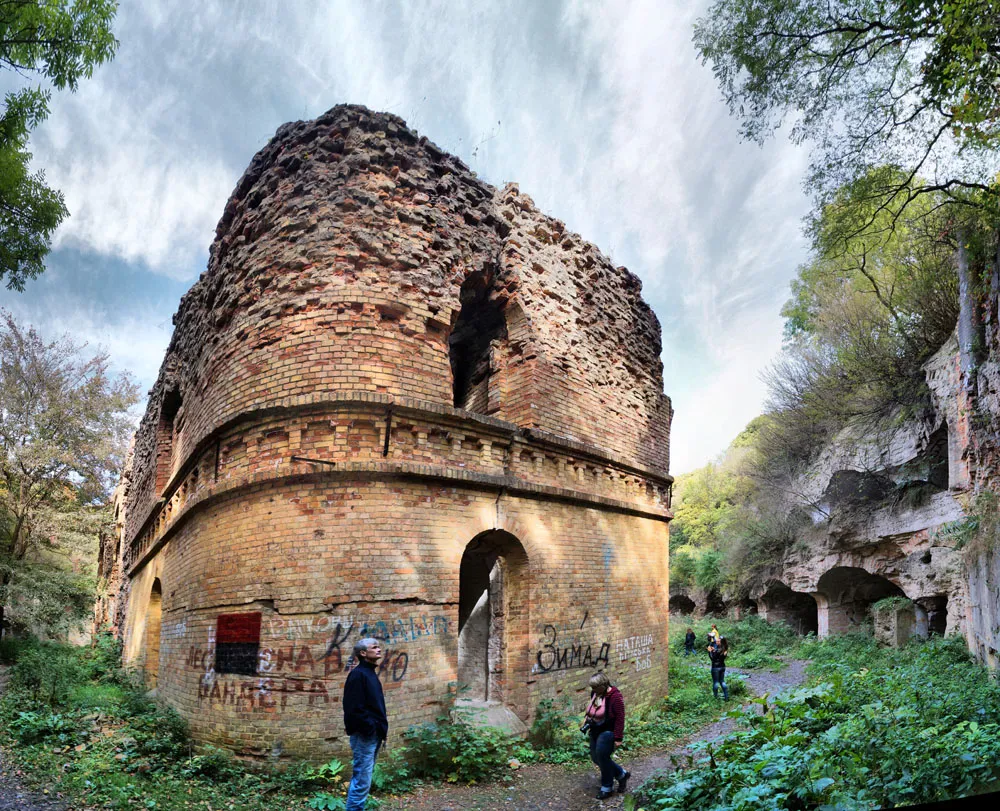
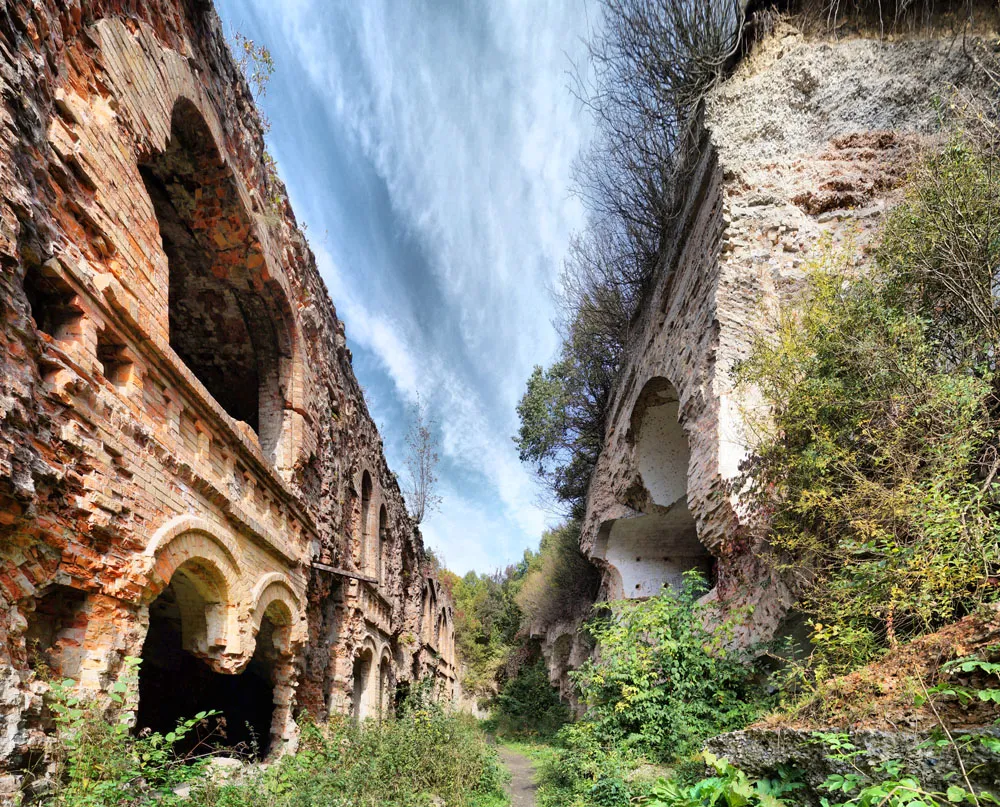
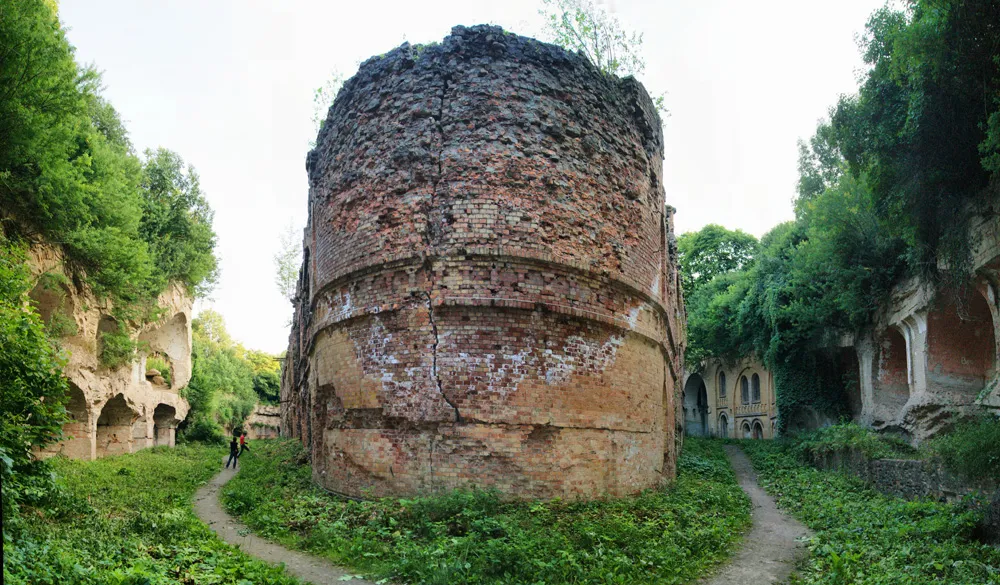
Tarakaniv Fort, Dubno Fort, the New Dubno Fortress: these are the most common names of the fortification located three kilometres from Dubno and one and a half from the village of Tarakaniv. The officially closed site is in a dilapidated state. A playground for “wild” tourists, diggers, psychic-battle fans and paintball players. What could it be in, say, the Czech Republic? I do not know, perhaps a museum, a hotel… but certainly not what it is in Ukraine. But no one is going to move it to the Czech Republic (and I am not campaigning for that), so it stands without signposts above the Ikva, right behind the Tarakaniv cemetery, and is steadily falling apart. The Ukrainian authorities (especially the present ones) have no interest in such sites. Something was babbled about setting up a museum, but who believes that? (Text from 2014: has anything changed?)
Our next stop is in Brody. Here we have two majestic ruins: a unique synagogue and a castle.
Brody. The synagogue
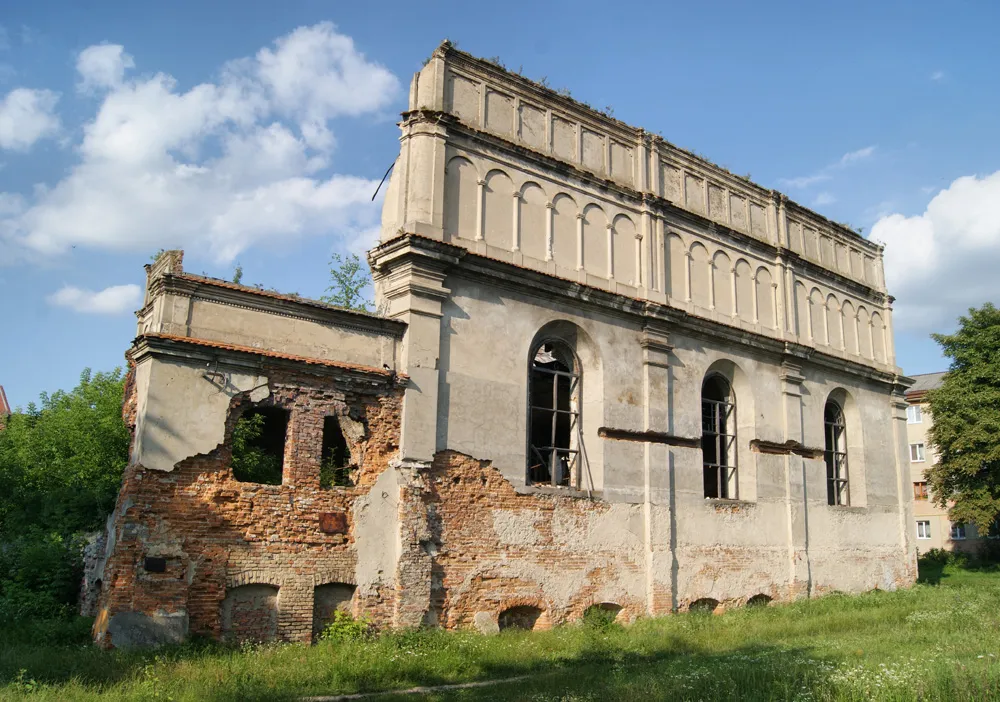
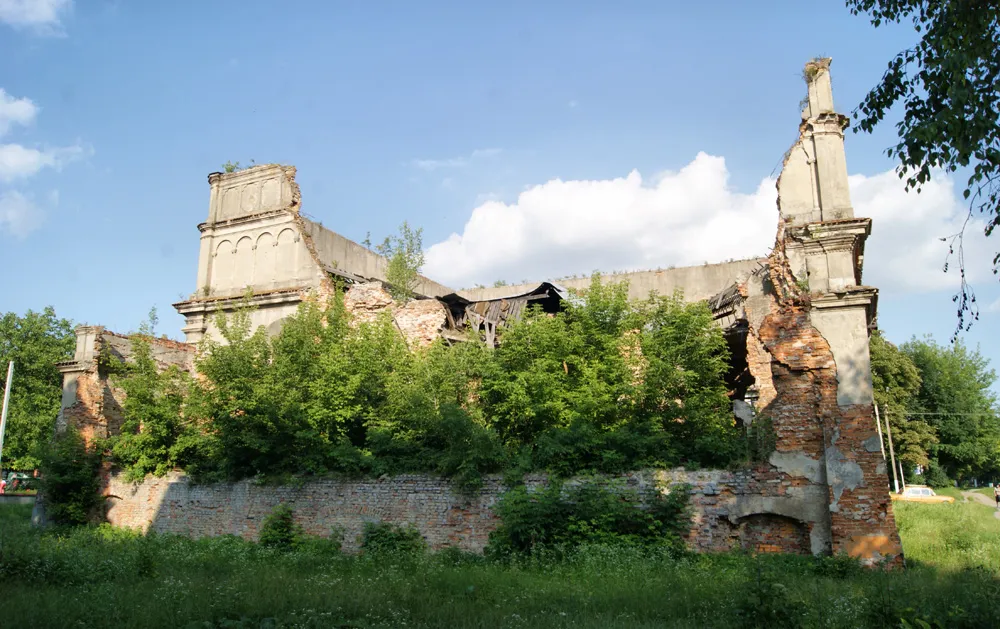
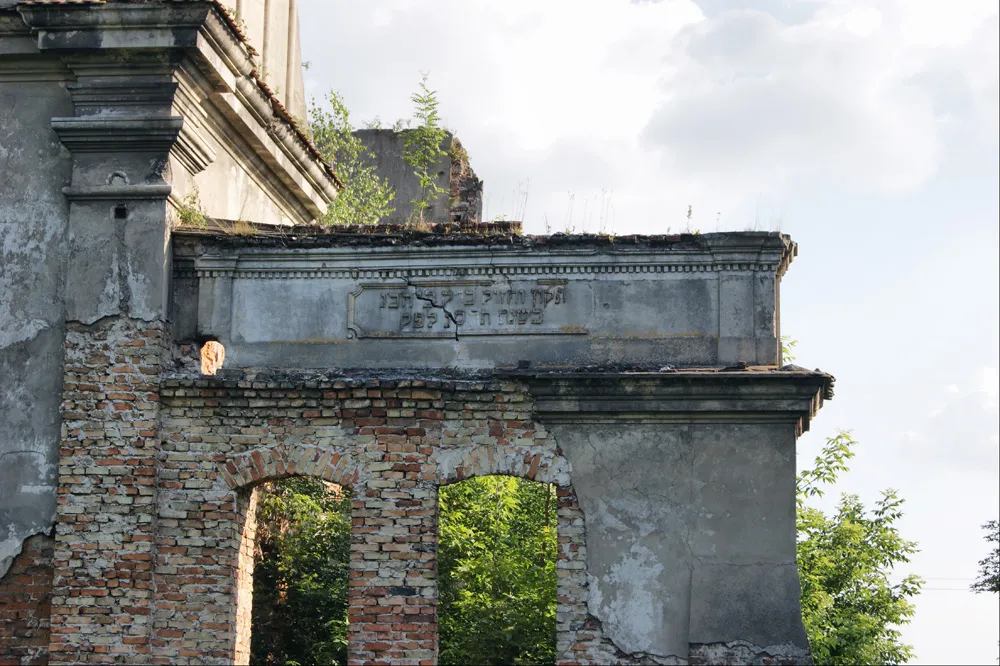
The foundation stone of the synagogue, which later became known as the Great Brody Synagogue, was laid in 1742. And it really became a great synagogue, probably one of the largest in Ukraine. In addition, the building was also constructed to serve fortification functions (those were troubled times, especially for Jews; Tatars roamed about, and the local population was always ready to blame the “God-chosen ethnos” for all its troubles), so the synagogue became a real citadel.
During its history of more than two hundred years the Great Brody Synagogue suffered many misfortunes (wars, fires, etc.), but the greatest misfortune was the Soviet period, and then the period of Ukrainian independence. That is why this beautiful building stands in a dilapidated state and is slowly being destroyed by rain and weathering.
Brody Castle
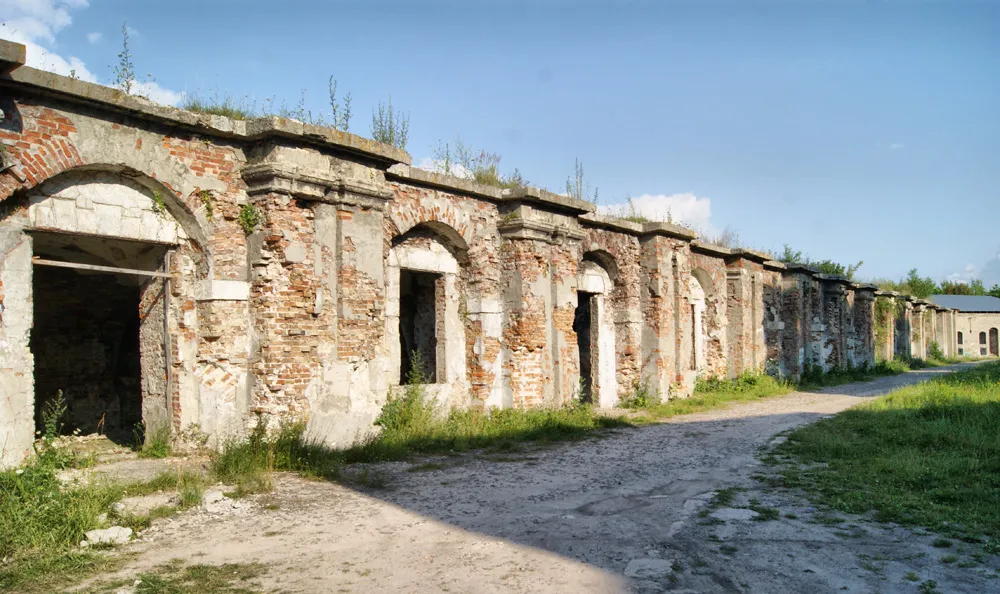
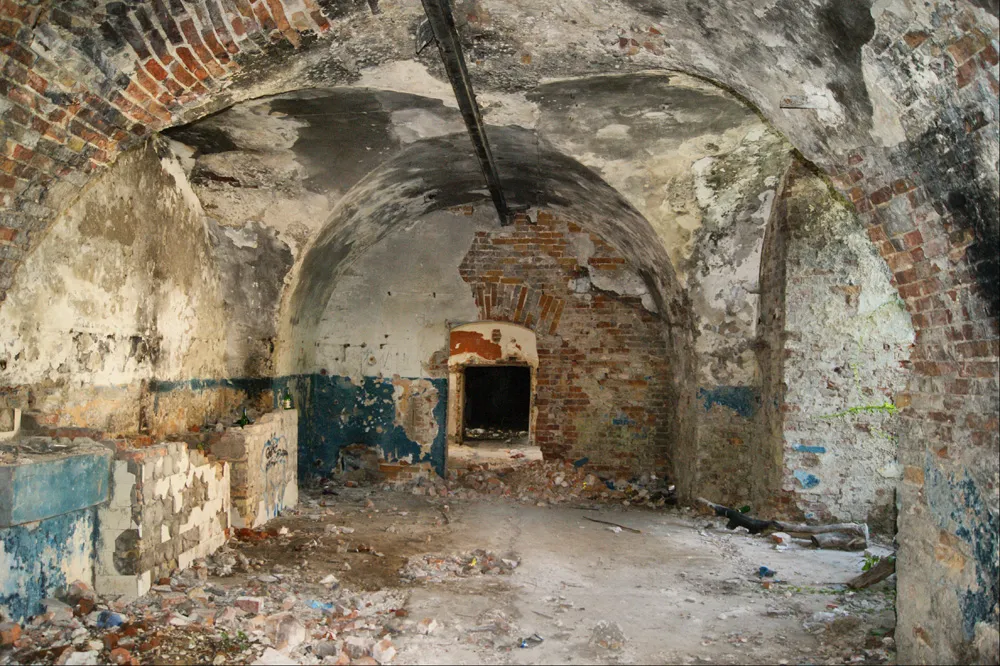
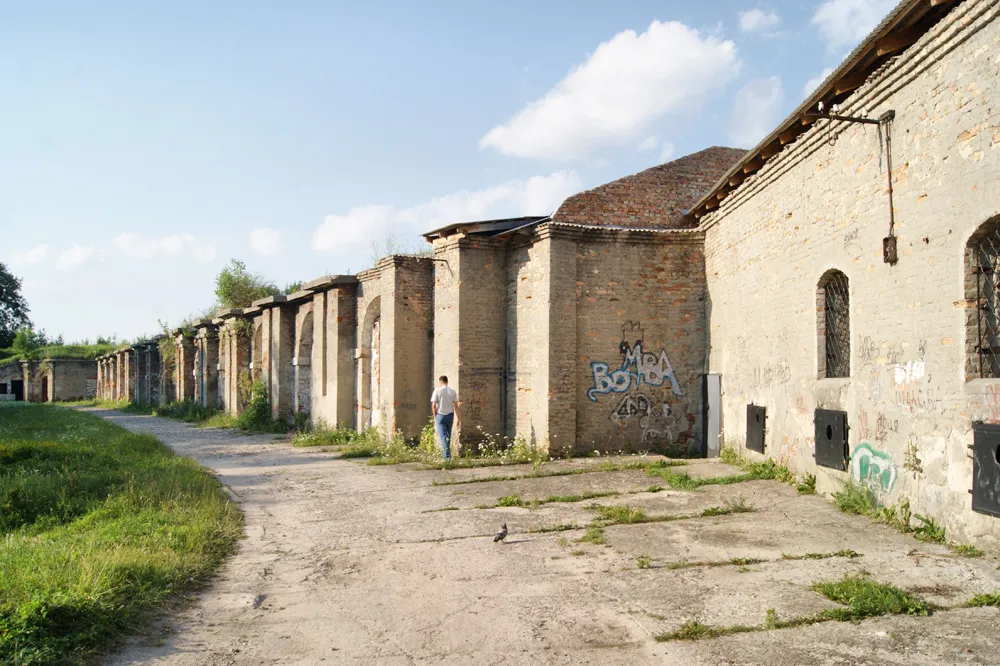
Another “highlight” of Brody is the castle. Old and large, but one could hardly call it beautiful or interesting. One acquaintance of mine mistook it from a distance for a garage cooperative (he took the casemates for garages), so what more can be said about this castle. The building was brought to this state by the valiant Soviet army, which was based in it for a long time.
Brody Castle was designed by the famous architect Andrea dell’Aqua and the famous engineer Guillaume Le Vasseur de Beauplan, commissioned by the Koniecpolski family in the 1630s. The castle was a pentagon and consisted of five bastions that the ramparts abutted closely, with casemates inside them. A deep moat filled with water was dug around the castle. That is how it used to be. Later it was owned by the Sobieski, and later still by the Potocki, who built themselves yet another palace here (which, after the military, does not look like a palace at all). The stronghold lost its defensive significance in 1812, when, at Russia’s demand (the Russians feared that Napoleon would use the castle as a rear base), the Austrians destroyed the gate tower and the ravelin and filled in the moat. Since then a warehouse was housed in the castle’s casemates, and a library was kept in the beautiful Potocki palace.
In the Soviet period a plant for repairing military forklifts was placed in the castle. During that period the building was radically disfigured. In 1990 the military left the castle, and today it is used mainly as a public toilet for the needs of market traders (the market is next door). Although since 2007 the local museum of local lore has been trying to raise money to restore the building. A small piece has even been restored.
Here we have mentioned the ruins of truly large and very significant monuments. We did not mention the smaller ones… The scale is staggering. The destruction continues. To stop this global process we created the public organization “Ukraine Incognita”. Ukraine’s cultural heritage must be saved.


