

Velyka Yaromyrka: crosses, a palace and a giant vase
As part of the partner project “Graves of the Ancestors”, which the NGO “Ukraine Incognita” is carrying out together with the Department of Culture, Nationalities and Religion of the Horodok City Council (Khmelnytskyi Oblast), the old cemetery in the village of Velyka Yaromyrka was surveyed. Unfortunately, this expedition brought no special discoveries, such as those made in the neighbouring village of Lisovody. Mainly because the oldest part of the necropolis was destroyed in the 1970s during road construction.
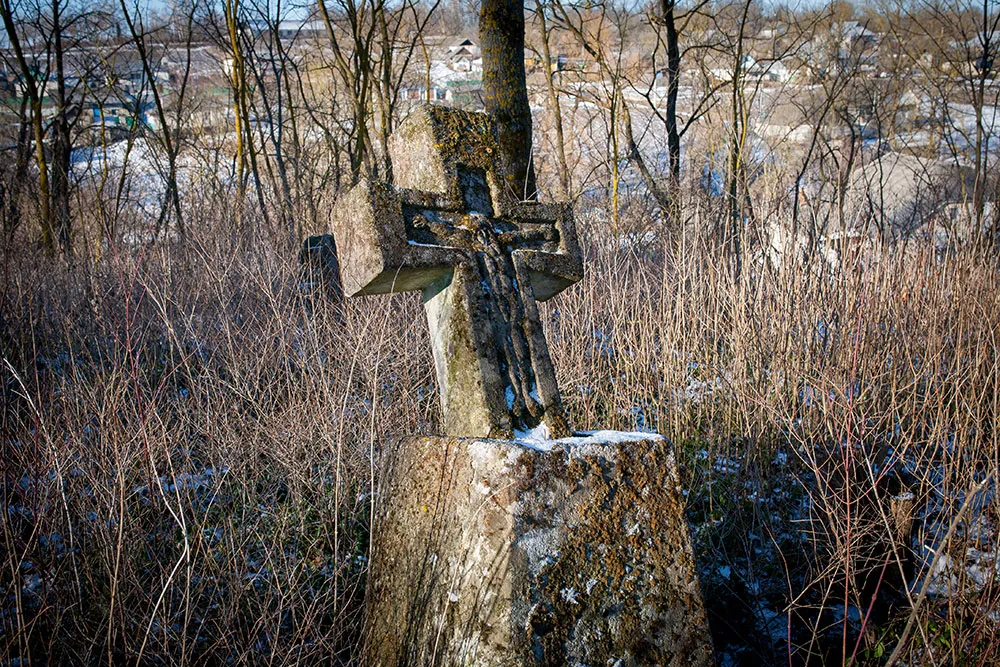
A wayside cross?
The old crosses found proved to be of the “cross-shaped” type typical of this corner of Podillia (that is, each arm of the cross takes the form of a separate cross). All of them date from the late 19th and the very early 20th century.
Of interest was the find of a cross that stood out from the general background both in size and in shape. Moreover, on its sizeable pedestal there was not the slightest hint of an epitaph. Most likely it is simply a sacred figure (a small shrine). Such figures are found in this area. Not all that often, but they exist.
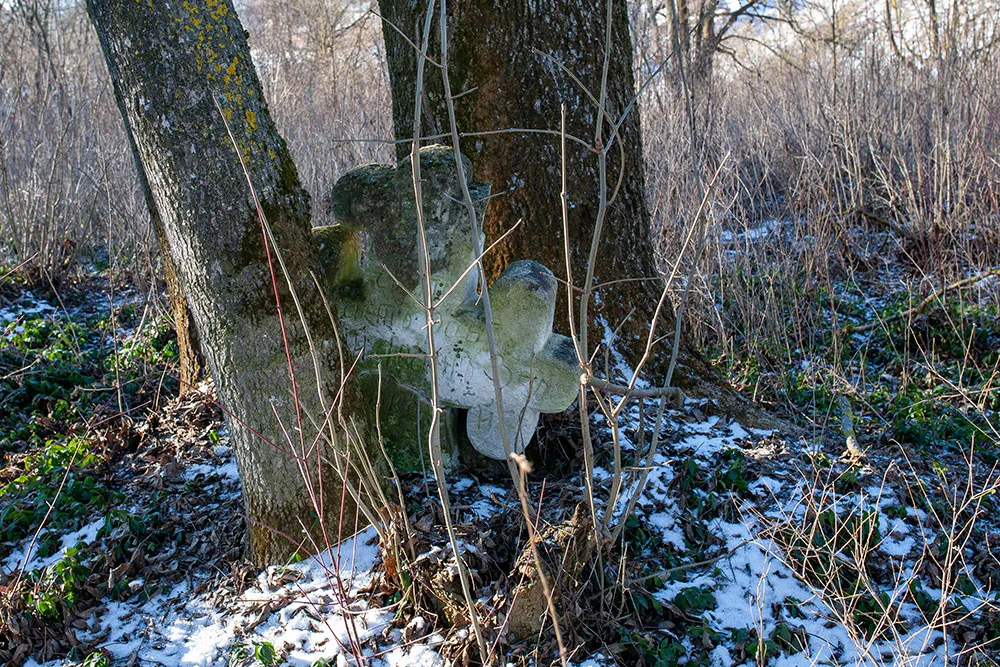
This cross may well date from the mid-19th century. But the fragment with the year has been “eaten” by a tree
The cross on the grave of Maria Dembitska deserves special mention. The date here was intriguing: 1921. This is one of the youngest gravestones of this type. The find shows that “cross-shaped” crosses (in this case a cross-shaped one with petal-like elements) were used in this corner of Podillia from the second half of the 18th to the first half of the 20th century. The oldest such gravestones, found in the vicinity of neighbouring Satanivi, date from 1770.
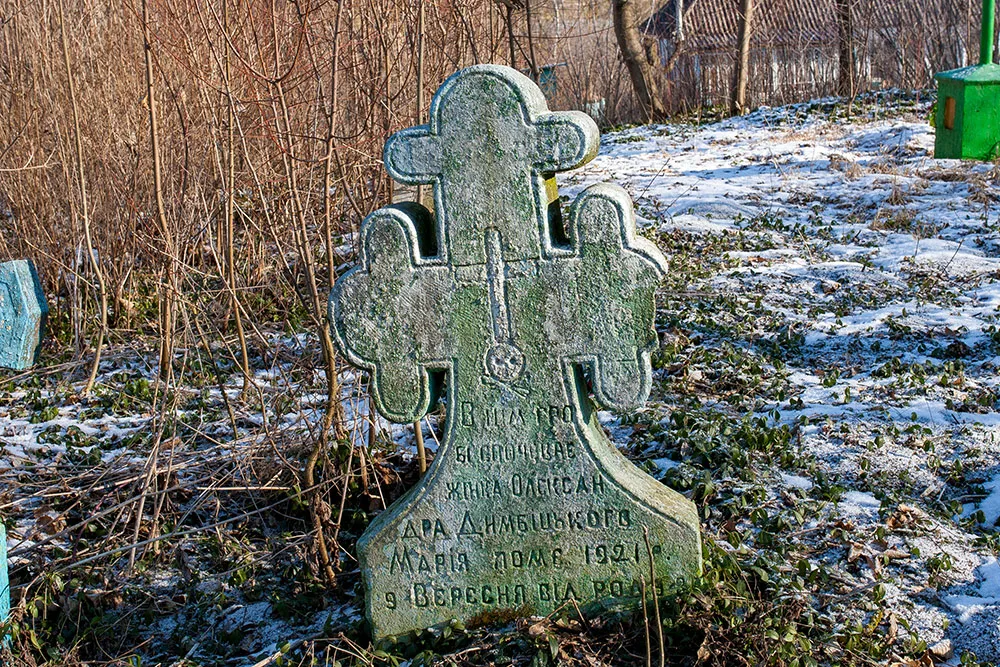
The cross of Maria Dembitska is also interesting because its epitaph is in Ukrainian. On older ones we have either Church Slavonic or Russian.
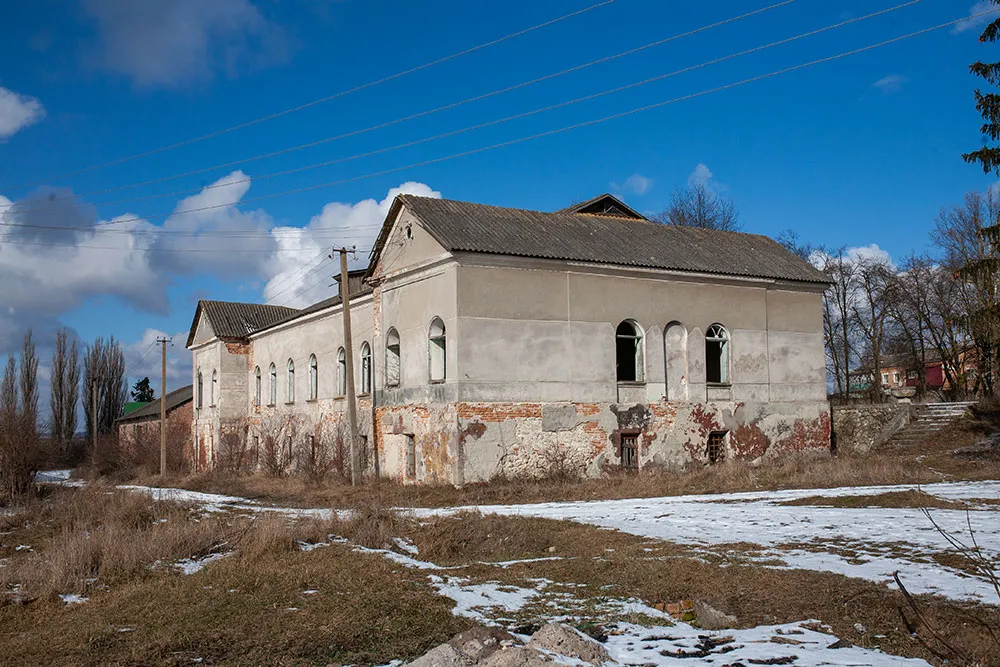
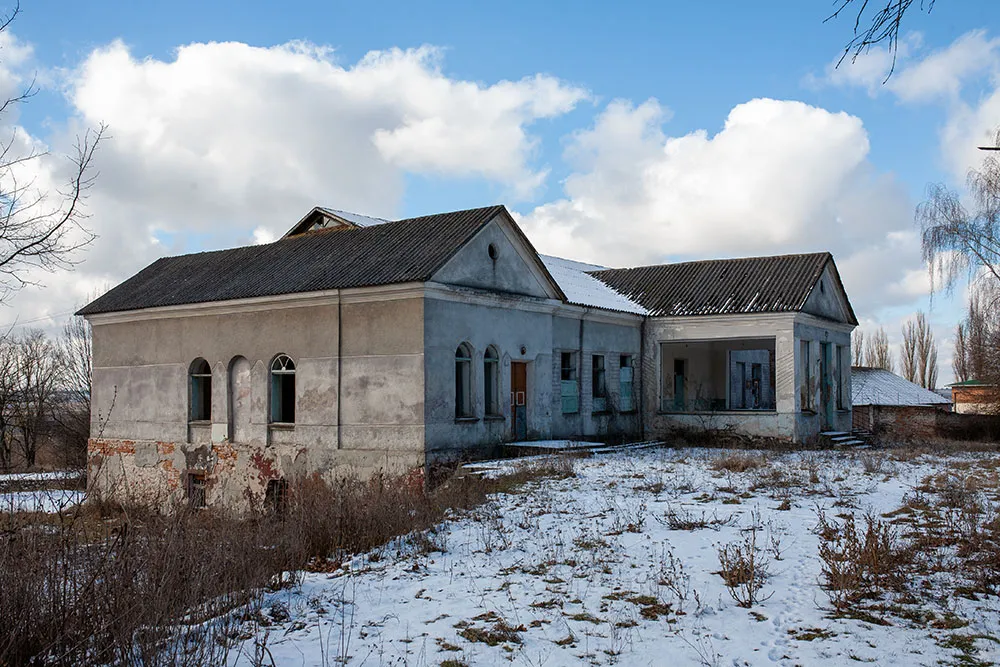
Among the interesting finds is the palace of the Sadowski family (Lubicz coat of arms), a very distinguished noble house. In particular, after the Potocki family, the Sadowskis owned such a notable town as Chortkiv. According to pre-revolutionary registers, the last owner of the village was Feliks Sadowski. Locals, however, for some reason recall only a certain Mrs Sadowska (probably the wife or daughter of Mr Feliks).
They say she was a very kind lady, famed for her exceptionally friendly attitude to the peasants: she paid well for their work and always helped families who found themselves in difficulty. According to tradition, when Mrs Sadowska was forced to leave the estate in 1917, the whole village saw her off with icons in their hands.
Let us recall that most landowners in these lands left their family nests as early as the first half of 1917. To a large extent this was caused by the fact that the front then rolled back to the Zbruch and bands of deserters armed to the teeth roamed the area. Yet many landowners, especially those who cruelly exploited peasants and workers, were also fleeing a fully deserved reckoning.
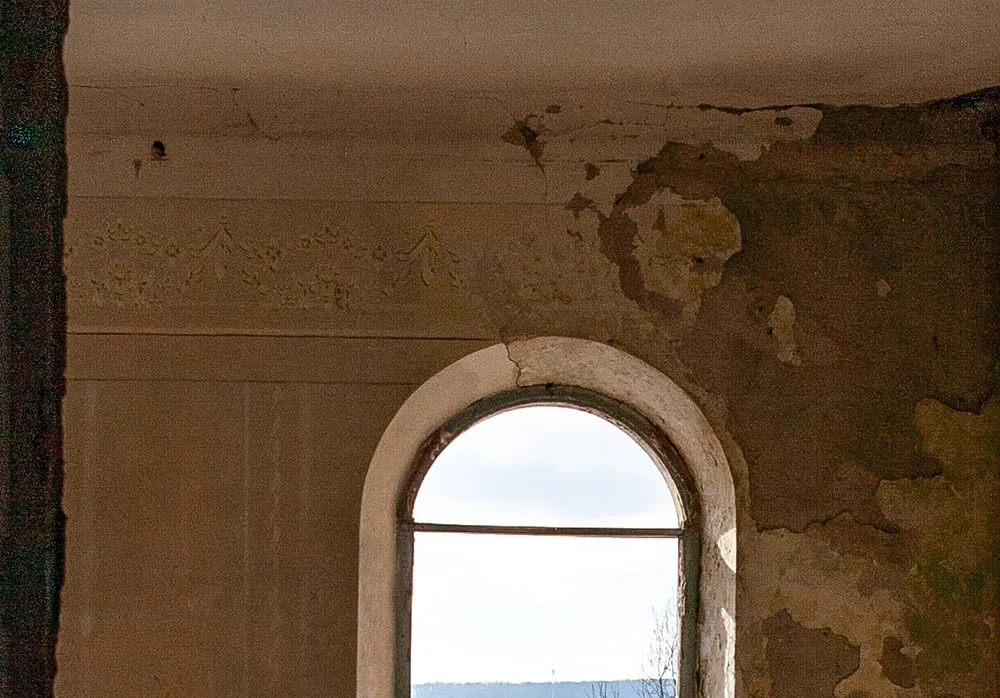
Remains of the murals. Photographed through a crack in the door, so there is no better picture
The friendly attitude of the peasants towards the Sadowskis is vividly attested by the fact that the palace was not destroyed. By contrast, the very beautiful palace complex of the 18th to mid-19th century in neighbouring Nove Poriccha, which at the time belonged to Countess Ignatieva, was razed “to the ground”. Likewise, the estate of the Russian scientist Sergei Winogradsky in Horodok was smashed to pieces (so that not a trace of it would remain). Both Ignatieva and Winogradsky squeezed the last juices out of the “muzhiks” and were not noticed in any charity towards the “half-idiots” (this is how Professor S. Winogradsky characterised the common people). However, Winogradsky, although of Ukrainian origin, like Ignatieva had a purely Russian imperial worldview. He called Ukraine “Little Russia” and the Ukrainian People’s Republic “Petliura’s bands”. By contrast, in his memoirs he wrote very warmly about Denikin’s White Guards. The latter, let us recall, were advocates of a “one and indivisible” Russia and fiercely hated everything Ukrainian.
The palace in Velyka Yaromyrka is one of the most mysterious manors in the Khmelnytskyi region. Open sources, whether Ukrainian, Polish or Russian, say not a word about it. Indeed, nor about its very existence. What is more, the Polish Wikipedia article on Velyka Yaromyrka states that the building was destroyed in 1917. In fact it underwent only a minor reconstruction. In particular, thoroughly inappropriate doors were cut in the side wings, and the very beautiful portico arcade disappeared from the façade.
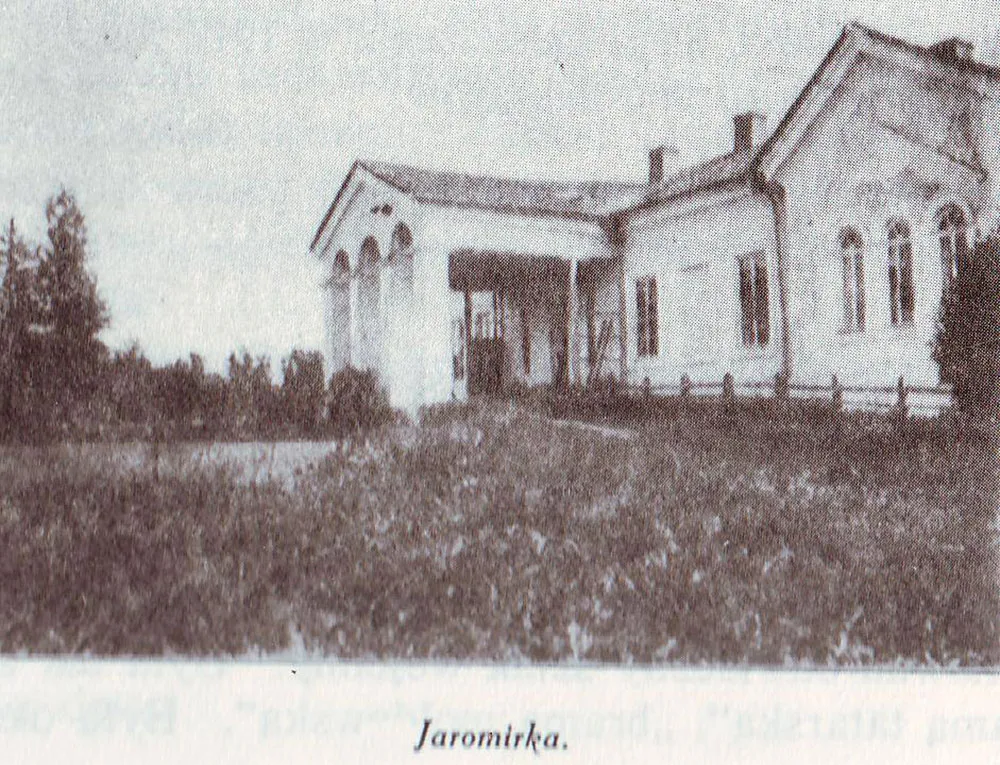
The original appearance of the palace
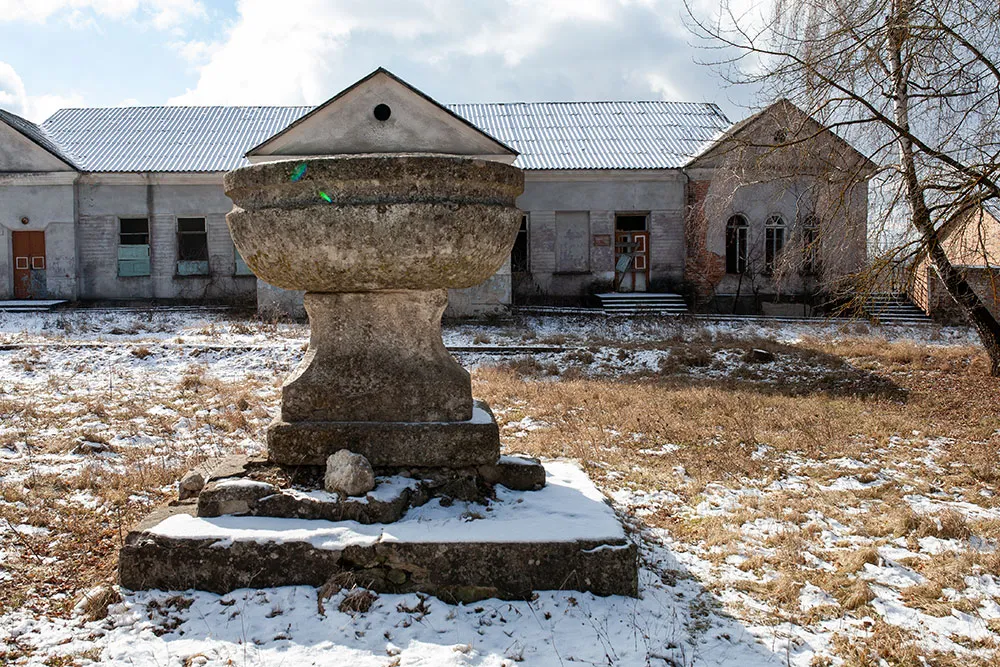
When the building was erected and who its architect was, there is no information (perhaps it exists somewhere in the archives of Poland). From the shape and size of the brick, the palace can be dated to at least the mid-19th century. However, it would not be surprising if this date were pushed back to the late 18th century.
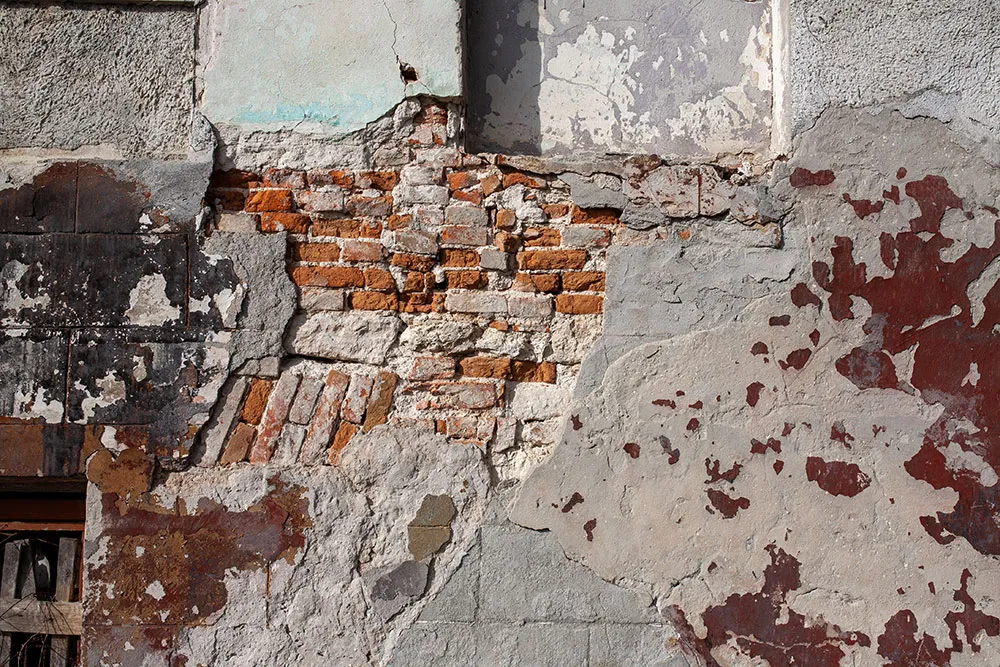
The brick corresponds to at least the mid-19th century
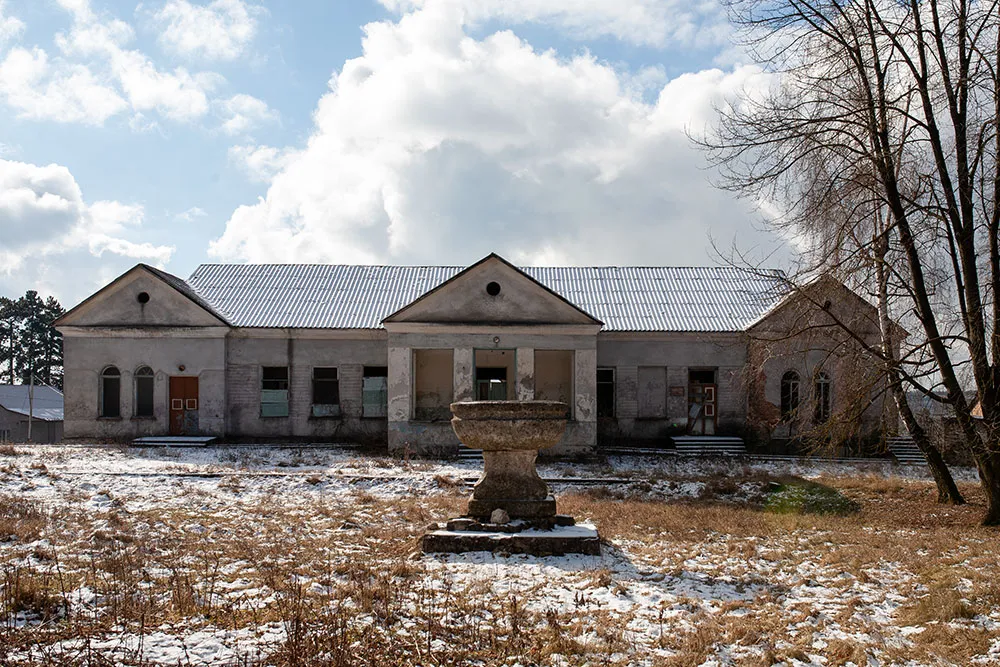
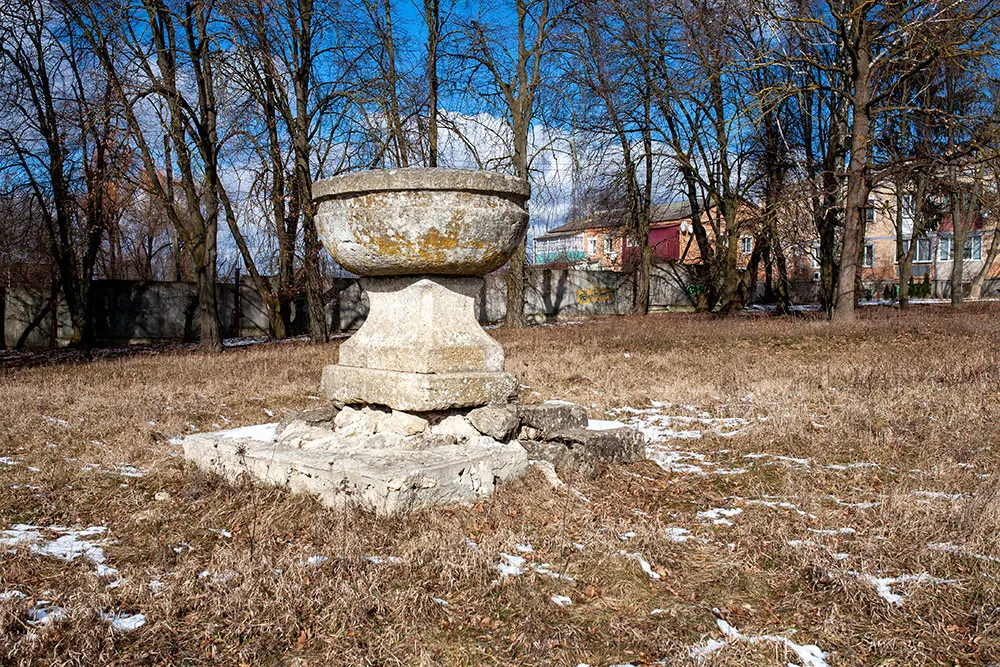
The giant stone bowl, over 2 m high, in front of the palace made a great impression. At first it seemed to be concrete. But no, it is carved from a block of limestone. There used to be two such bowls, but about 30 years ago one fell from its pedestal and shattered.
Text and photos: Dmytro Poliukhovych


