

The mysteries of the Podillian portrait of the King of the Avignon Illuminati
Until recently only three portraits were known of Count Tadeusz Grabianka, one of the most famous Podillians in the world, renowned as one of the most prominent mystics and esotericists of the 18th century. Recall that he was the official king of the Avignon Illuminati, one of the largest and best-known secret societies in Europe at that time. Moreover, even at the beginning of the 20th century quite a few very respected researchers studying the history of the Freemasons were firmly convinced that the Podillian Count Tadeusz Grabianka and the famous Count Alessandro Cagliostro were one and the same person.
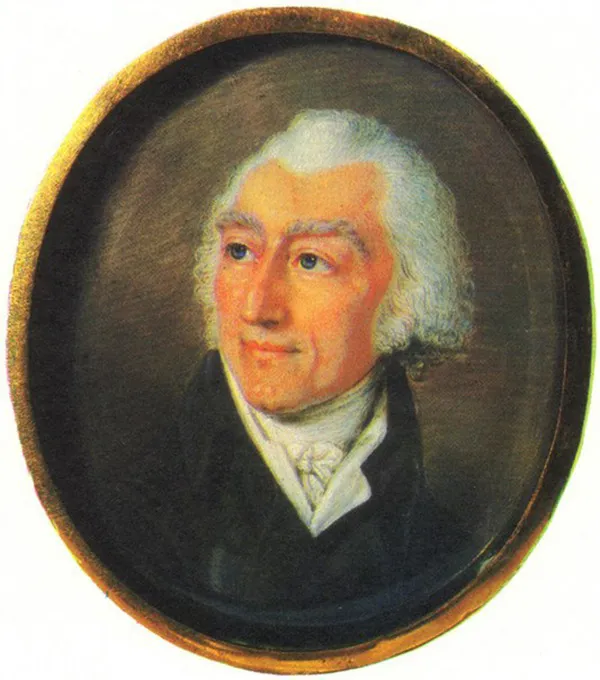
As befits respected prophets, Grabianka was tormented to death by earthly tsars. By order of the Russian emperor Alexander I he was thrown into the casemates of the Peter and Paul Fortress, where he was most likely poisoned. The author of these lines devoted an entire book to the Great Illuminatus, “Tadeusz Grabianka – King of the Illuminati”, which came out in 2024 from Ruslan Khalikov’s publishing house. If you haven’t read it, do: it is an extraordinarily interesting “life”, and the character himself was quite an adventurer. I hope an adventure series will be made about him one day.
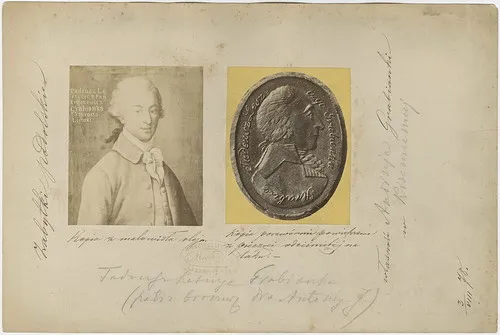
photo by Greim
Now to the portraits. For a long time researchers knew of only three images of the King of the Illuminati. The best known is a miniature in a medallion. Here Grabianka is old and grey-haired. This portrait, incidentally, illustrates all the articles about the mystic in the various-language sections of Wikipedia (there are more than a dozen).
We also have two photographs by the famous 19th-century Kamianets-Podilskyi photographer Mykhailo Greim. One shows a portrait of a fairly young Grabianka. The other shows an impression of the mystic’s signet ring, which depicts the same Grabianka in profile.
Recall that in the 1870s Mykhailo Greim photographed a number of portraits that were in his own collection as well as in the collections of several aristocratic families. In 1879 he donated these photographs to the Anthropological Commission of the Polish Academy of Sciences, where they are still kept.
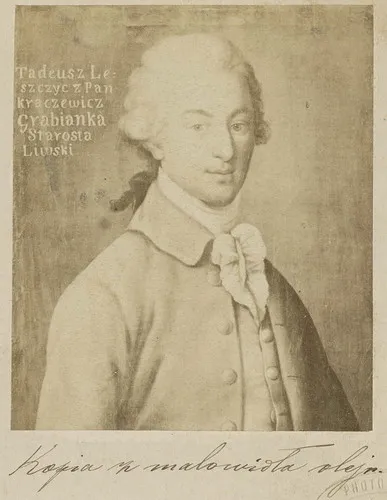
Which portrait of Grabianka Greim once photographed, and what became of it later, long remained unknown.
A few years ago, Myroslav Poberezhnyi, head of a department at the Lviv Historical Museum, found in the museum’s storerooms a little-known portrait of the king of the Illuminati by an unknown artist. According to the documentation, it was donated in 1894 to the former Lubomirski Museum in Lviv by Michał Rolle, the son of Józef Rolle, a well-known historian and Grabianka’s first Polish biographer.
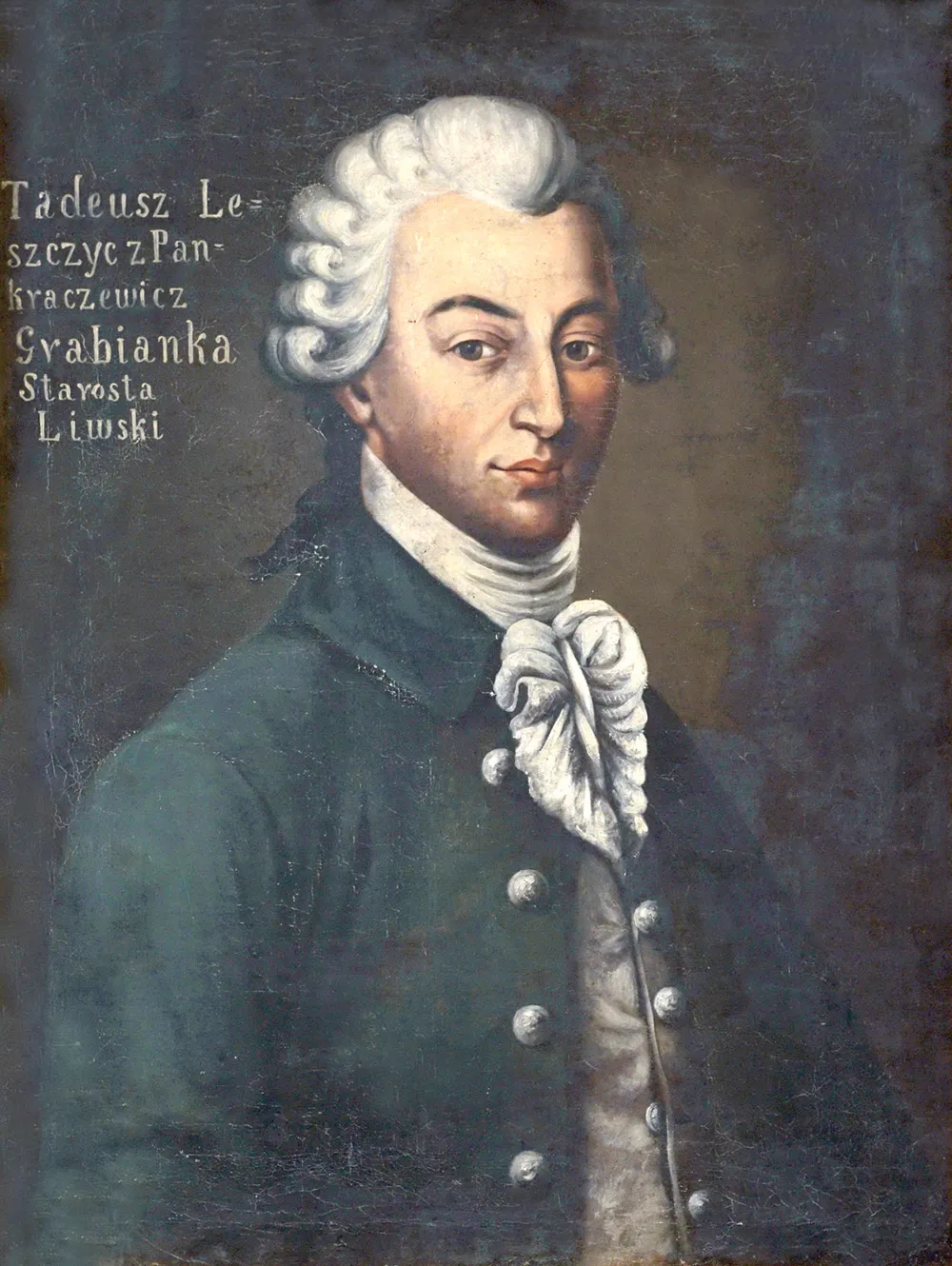
It is known that while preparing the monograph “Tadeusz Leszczyc Grabianka, starosta liwski i Teresa z Stadnickich, jego małżonka” (“Tadeusz Leszczyc Grabianka, Starosta of Liw, and Teresa, née Stadnicka, his wife”), the historian had a good deal of contact with the descendants of the great mystic. Evidently, in gratitude for preserving the memory of Count Tadeusz, they gave Rolle a portrait of their famous ancestor, which his son later donated to the museum.
Mr Poberezhnyi believed from the start that the museum’s portrait was one of the old copies of the portrait recorded in Greim’s photograph (this practice was once quite common).
Why was it a copy from the start? In the upper left corner of the painting there is an inscription: “Tadeusz Leszczyc z Pankraczewicz Grabianka Starosta Liwski” (Tadeusz Leszczyc of Pankraczewicz Grabianka, Starosta of Liw). It is clearly visible that the inscriptions on the original painting and on Greim’s photograph differ quite considerably. This is especially evident if the corresponding fragment from the Lviv portrait is overlaid on Greim’s photograph.
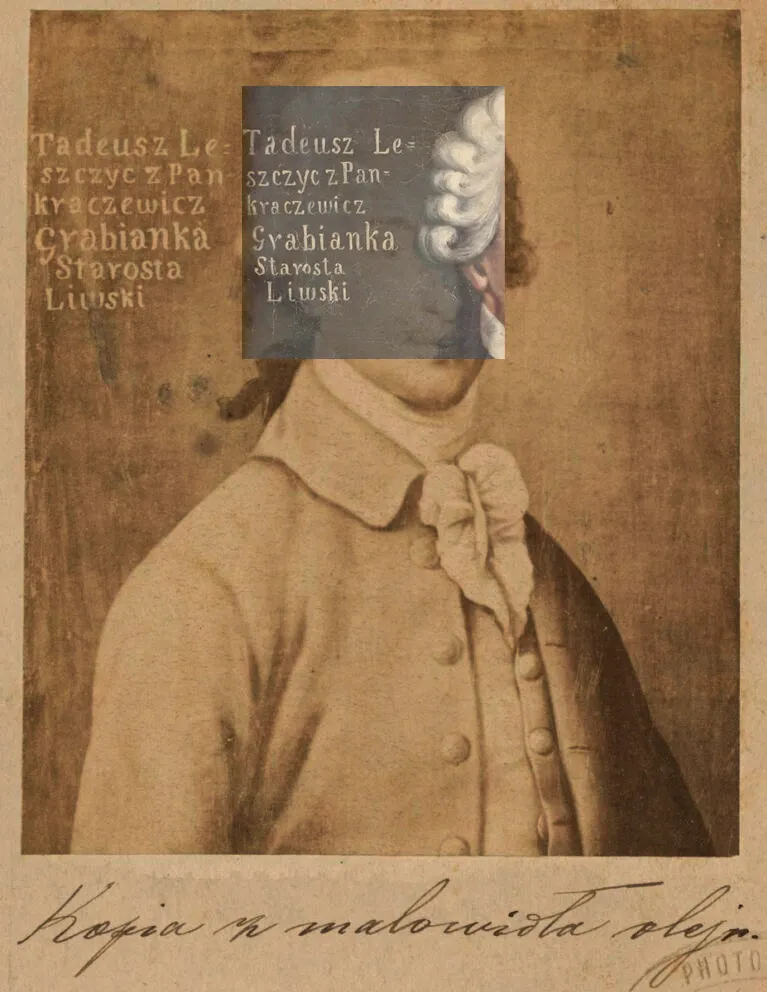
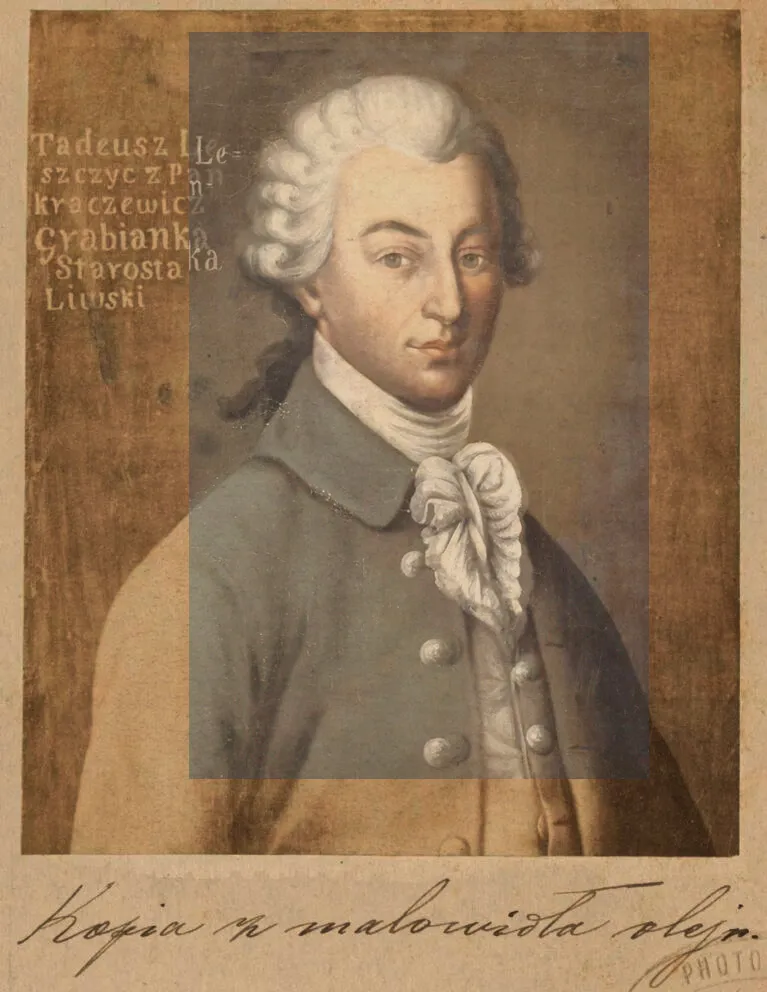
However, the author put forward a hypothesis that it is one and the same portrait, and the discrepancy in the inscription is due to later retouching and corrections.
To test this, a semi-transparent layer from the portrait kept in Lviv was overlaid on Greim’s photo. The images coincided completely (1:1), which would not have happened had it been a copy: when an artist repaints a picture, even a careful one, there would be differences.
Recalling his work on the book about Grabianka, Rolle lamented that he had not been able to study the mystic’s archive, which was kept in the library of the Grabianka house in the town of Kupyn (now a village in the Horodok community, Khmelnytskyi Oblast). Rolle was especially sorry about the folder of correspondence between Grabianka and Count Cagliostro, which he had seen personally. Unfortunately, work on this archive was put off until later, and soon a fire broke out in the library, and the mystic’s archive went up in smoke.
Most likely the portrait adorned the walls of the library of the Grabianka family’s house in Kupyn, and it is precisely the only thing that was saved. That the portrait went through a fire is clearly indicated by traces of soot and fire (sintering of the paint) that are plainly visible on the canvas.
Accordingly, the difference in the inscriptions becomes clear. In Greim’s photo we see the portrait before the fire, which someone slightly touched up after it had been through the flames.
The fire, by the way, can be counted as part of the aura of mysticism that accompanied Grabianka’s life and afterlife. The rebellious spirit of the King of the Illuminati, they say, did not want outsiders poking their noses into his secrets and so burned down the library with the archive. Though, most likely, the situation is banal: at that time houses were lit by candles, less often by kerosene lamps. And such lighting was extremely dangerous for fire.
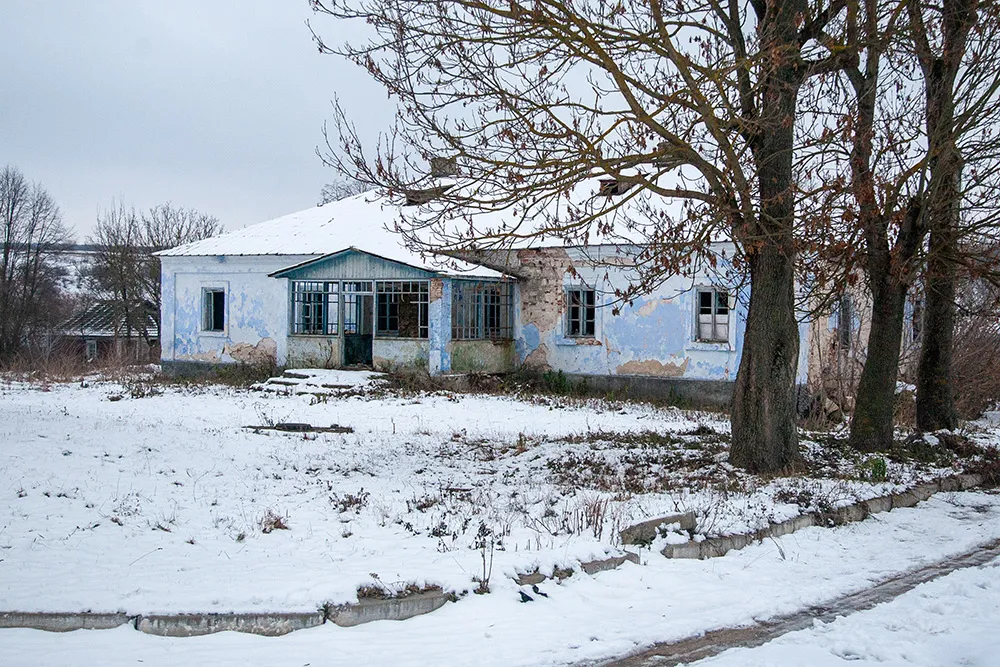
Cagliostro’s letters were once kept here
The house has survived to this day. Until recently the local school was here, but when a new one was built, the old building became unneeded and stands empty and decaying.
As for the legacy of the Grabianka family in Kupyn, as late as the 1980s one could still see on the local cemetery a chapel-mausoleum of the count’s family. In addition, one can see here the remains of a luxurious tombstone made of snow-white Carrara marble. Unfortunately, only the plinth-base, without the slightest inscriptions or decoration, and a symbolic urn set in a groove by which a now-lost part was once fixed to the base have survived to our days. The urn bears the coat of arms “Leszczyc”, which belonged to the Grabianka family, and the coat of arms of the German baronial family von Geismar. These are the arms of Tadeusz Grabianka’s grandson Kajetan and of Maria von Geismar, daughter of a well-known general who once owned Horodok, the neighbour of Kupyn.
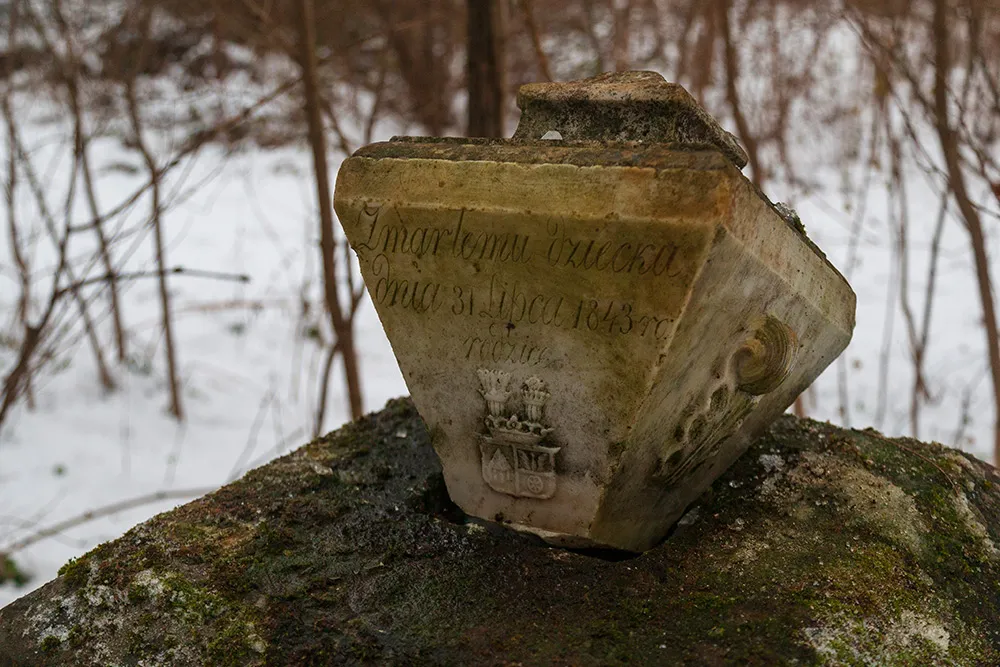
A Polish inscription reads: “To the departed child from the parents. On 31 July, 1843.” Which child exactly is not stated (probably everything was spelled out in the epitaph on the lost part). It also proved impossible to establish the name from genealogical books.
Text and modern photos (except the painting): Dmytro Poliukhovych


