Zhydychyn. The oldest monastery in Ukraine

· 4 min read
Zhydychyn Monastery is the oldest Orthodox monastery on the lands of Rus – in Basilian chronicles it is mentioned under the year 975. It is hard to believe: there were still 13 years until the baptism of Rus by Volodymyr the Great, and on its lands a monastery already existed, with Anect as its abbot. Although, when you look into it, there is nothing strange about this, because the boundary of the Moravian diocese – the very one governed by the legendary Cyril and Methodius – ran along the Styr River. The monastery in Zhydychyn probably also belonged to the Moravian diocese.
The next written mention of Zhydychyn Monastery dates from 1227 and appears in the Galician–Volhynian Chronicle. By then the monastery was already quite large – 80 monks took their vows here – and was well known and revered, since even Danylo of Halych, the future king, travelled to pray before its miraculous icon of St. Nicholas. Incidentally, this icon was kept in the monastery until the First World War. Where it went is unknown.
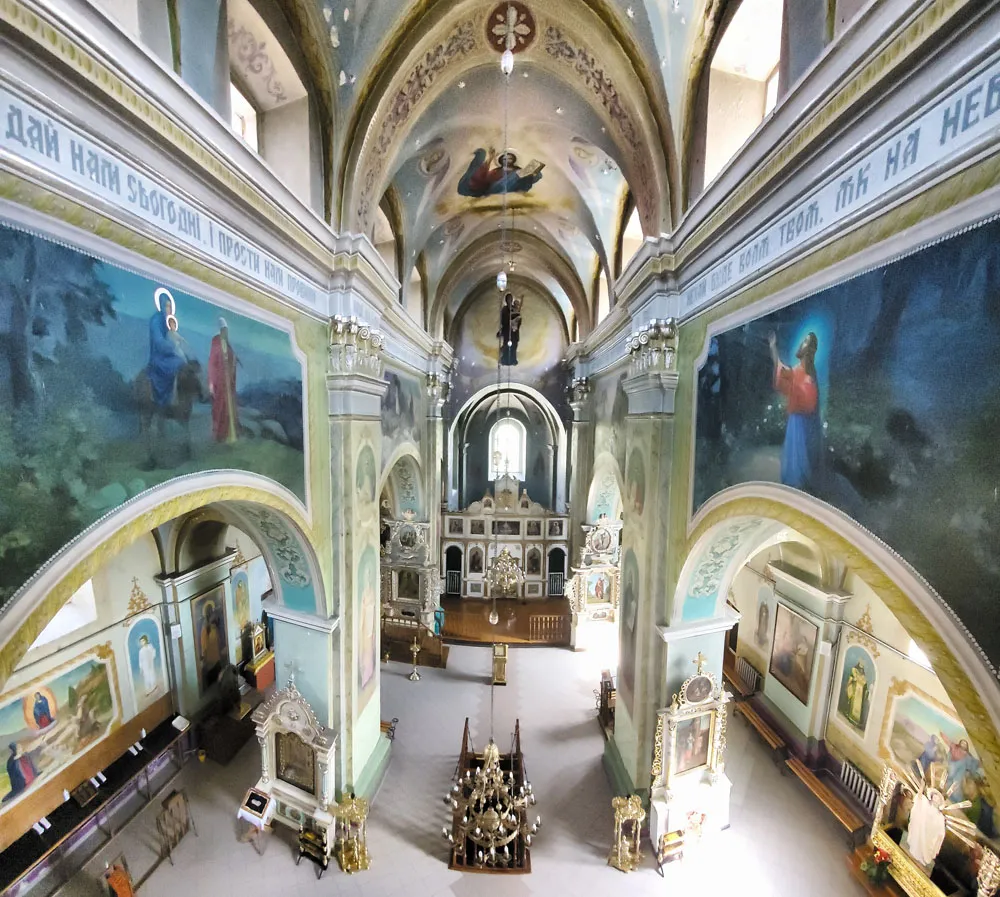
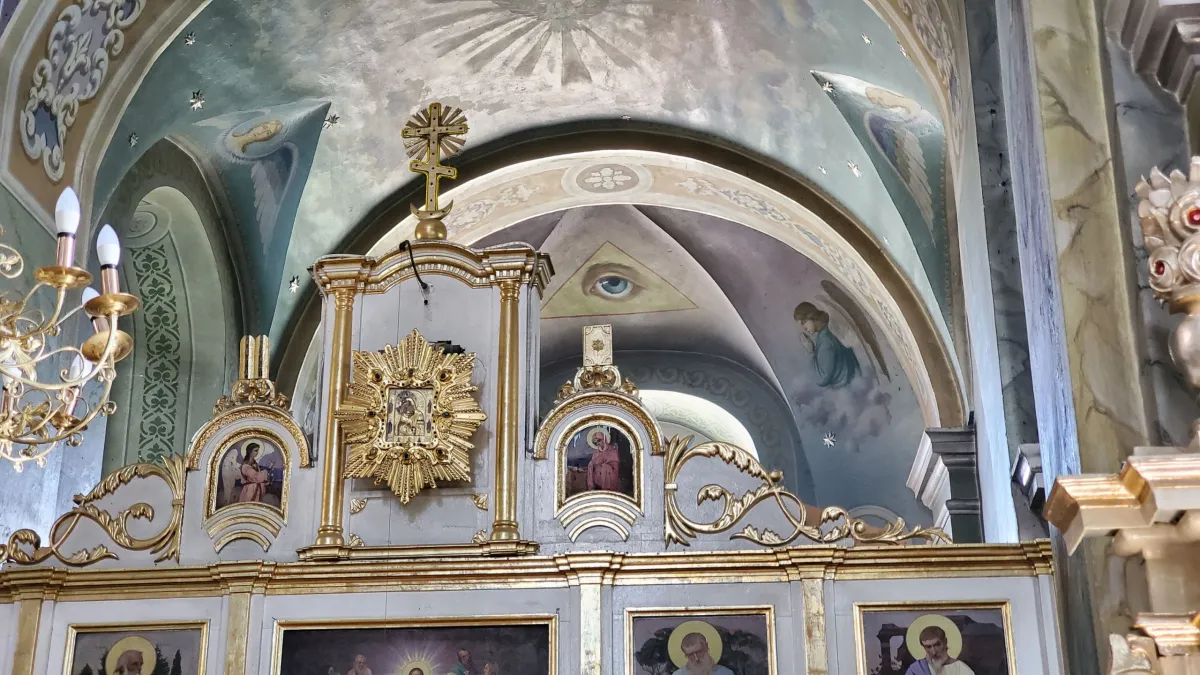
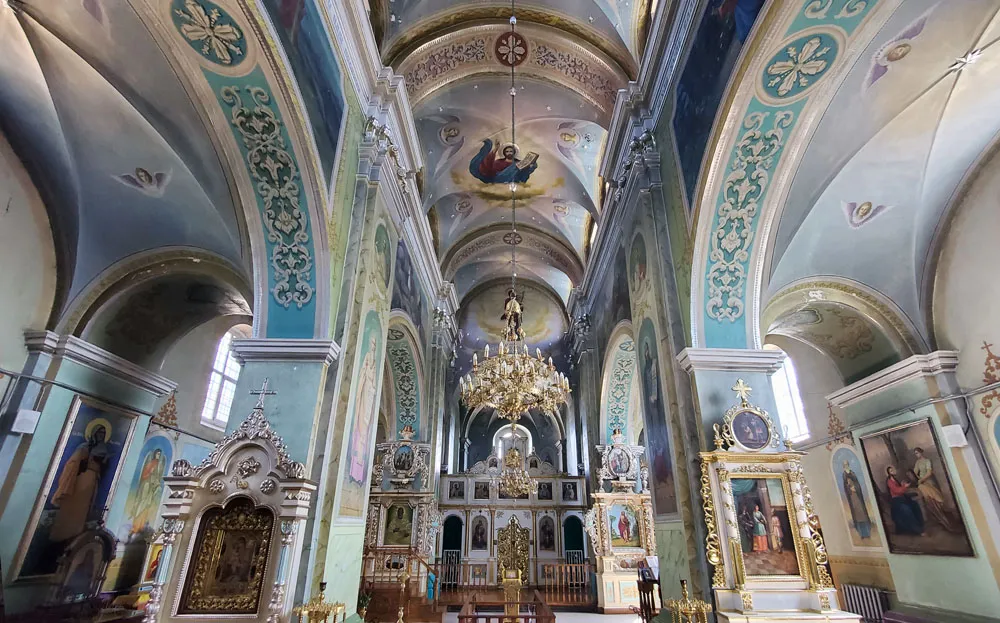
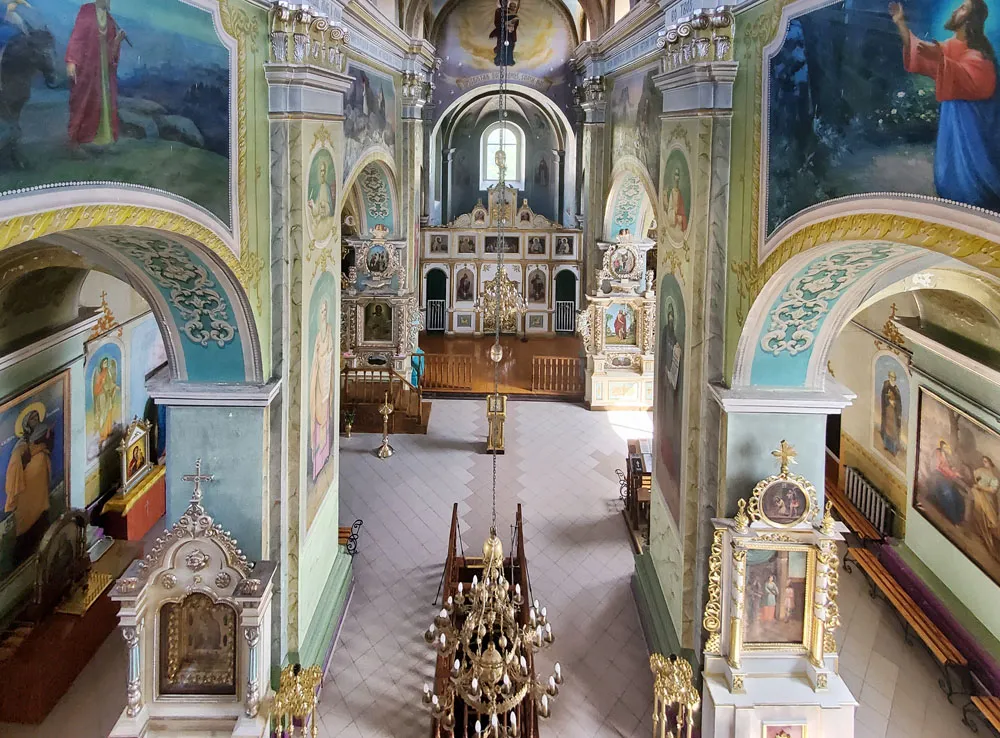
Interiors of the St. Nicholas Church
In 1496 the monastery was burned by the Tatars. It was restored at the expense of the local nobility.
From 1507 the monastery belonged to Prince Kostiantyn Ostrozkyi, who made it the richest in Volhynia. It owned an entire volost – seven villages and the small town of Zhydychyn. At the beginning of the 17th century, in wealth and importance Zhydychyn Monastery was considered second only to the Kyiv Pechersk Lavra. The abbot of the monastery was the well-known Orthodox religious figure Gedeon Balaban, who ruled with a firm hand and resisted the Union. But after his death in 1618 King Sigismund III Vasa appointed as archimandrite the Greek Catholic Yosyp Bakovetskyi-Mokosii, a former royal secretary. Basilian monks began to look after the monastery.
After the partition of Poland in 1795 the Russians came to Volhynia and banned the Greek Catholic Church. In 1829 the monastery was handed over to the Roman Catholics, and in 1839 it was closed altogether. The walls and some of the buildings were dismantled, and the bricks were taken to neighbouring Kivertsi to build a railway station.
For over half a century the monastery buildings stood in ruins. Only in 1894 was the archimandrite’s palace repaired – this was done by Modest, Archbishop of Volhynia and Zhytomyr. Later the palace was a regimental headquarters; in the Polish interwar period an orphanage was housed here, and in the Soviet postwar period a school. In 1913 the St. Nicholas Church was restored and its paintings renewed. The St. Nicholas Church is the main monastery church. It was built, together with the bell tower, in 1723. It is a three-nave basilica built in the Baroque style characteristic of Greek Catholic churches of that time. Since its construction this church has housed the miraculous icon of St. Nicholas, with a particle of the saint’s relics. Today there is a copy of that icon here. A particle of the relics is there too.
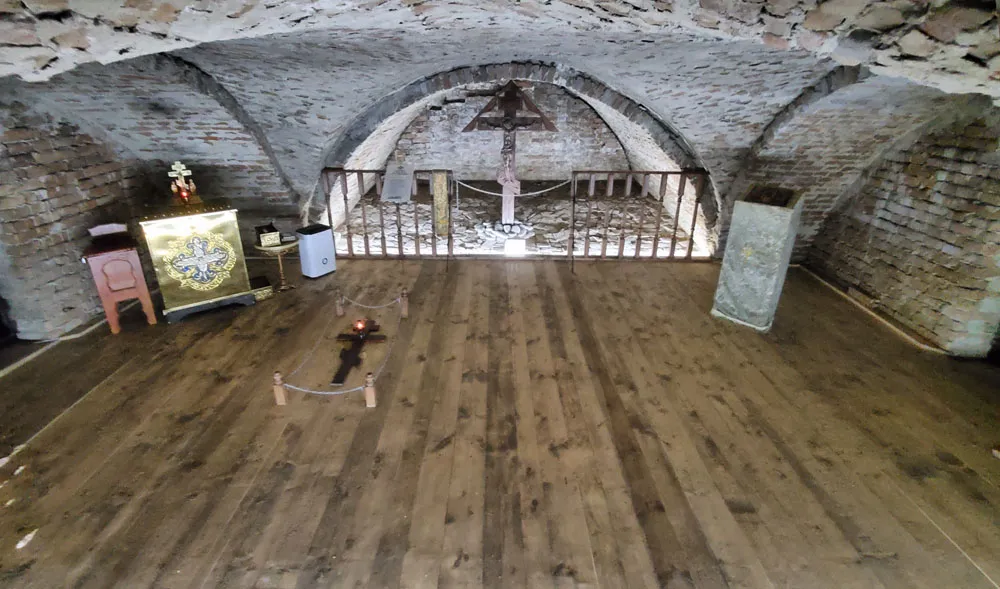
The unique monastery burial vault
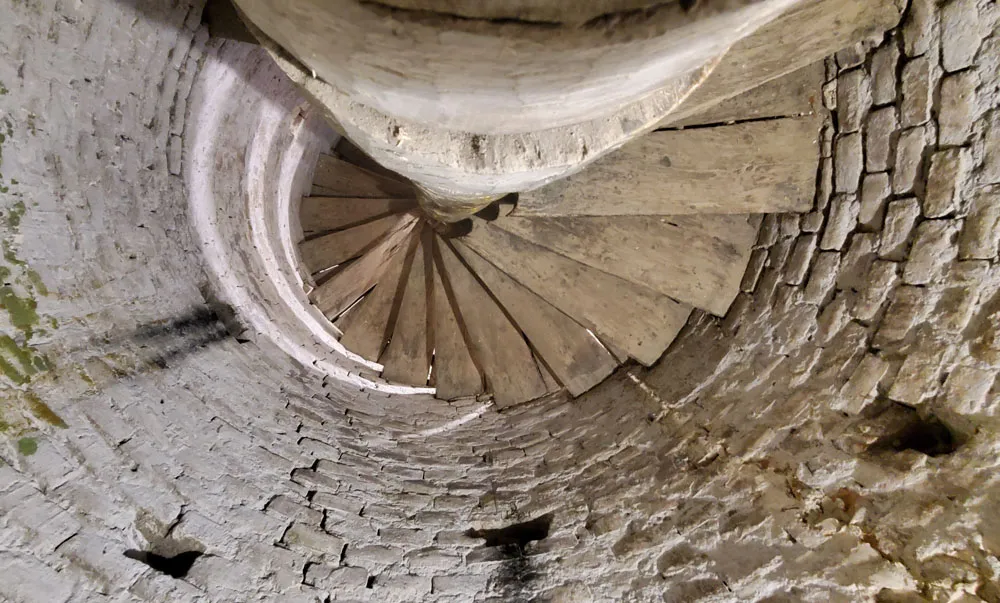
Wooden stairs to the choir gallery
In 2003 the revival of Zhydychyn Monastery began, at the expense of the Orthodox Church of the Kyiv Patriarchate. Much has been done here in 16 years, but much work is going on right now (summer 2021), when the monastery belongs to the Orthodox Church of Ukraine.
The monastery has two sketes – a men’s one in Zhydychyn and a women’s one in the village of Lypliany.
A wonderful tour is given around the monastery grounds – there is an information centre about the monastery. We were shown amazing things that we probably would not have seen on our own – in particular the monastery burial vault directly beneath the main hall of the St. Nicholas Church. We also climbed up to the choir gallery by a unique wooden spiral staircase (I have seen similar ones only in Romania) to admire the church interior from above.
The monastery burial vault simply astonished me. It was found quite recently – in Soviet times it was filled in. More than a dozen monks rest here. The burial is probably multi-tiered. Nobody will determine the exact number for now – they say there is no need.
Text and photos by Roman Malenkov.
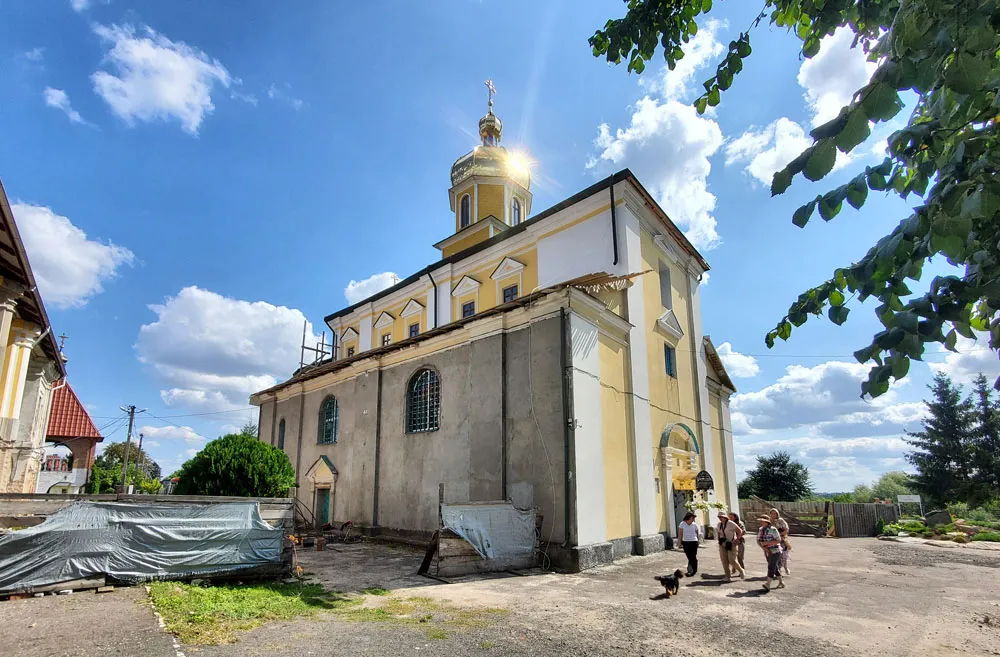
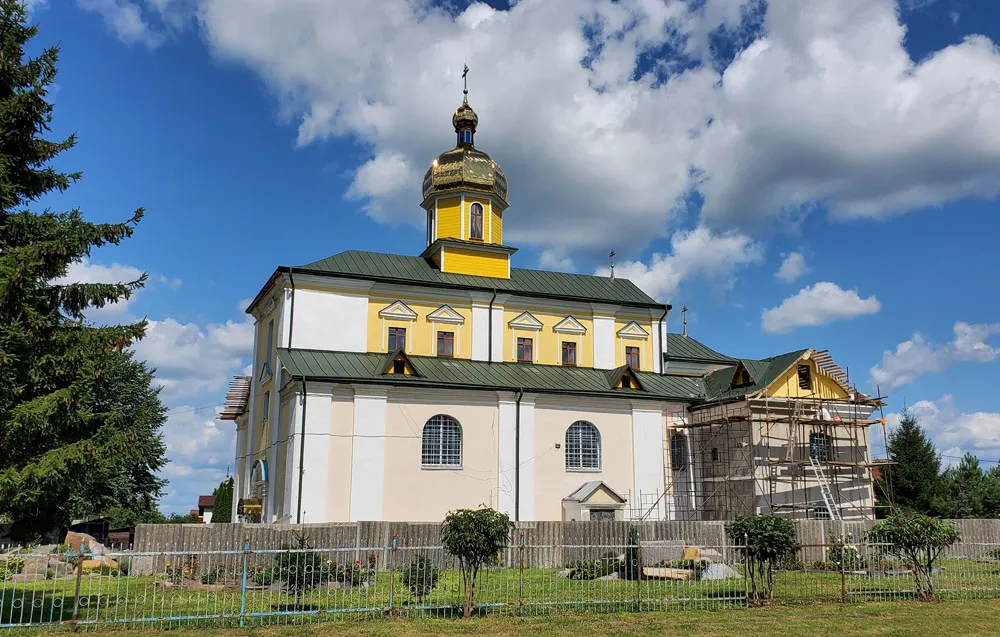
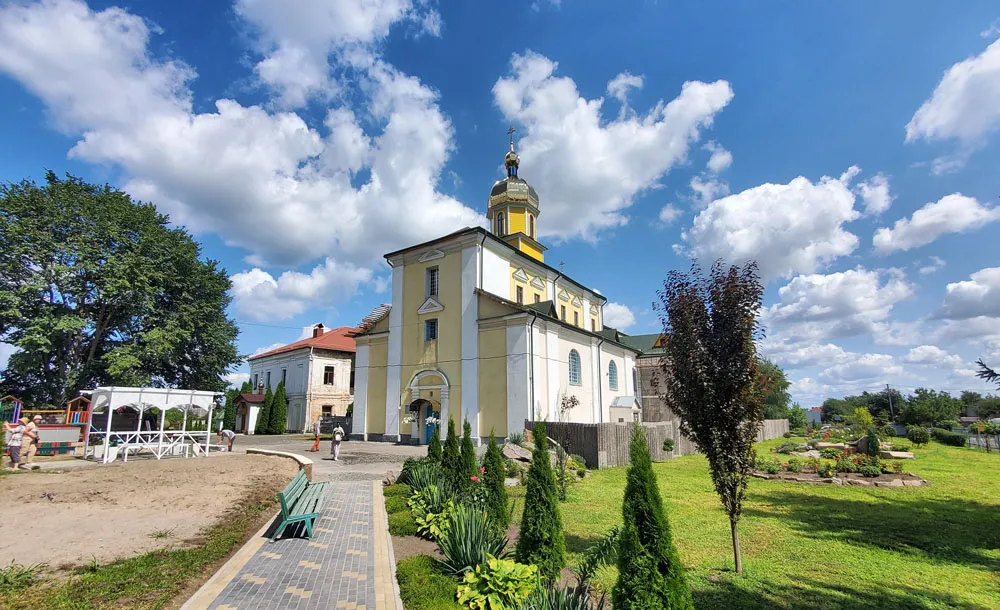
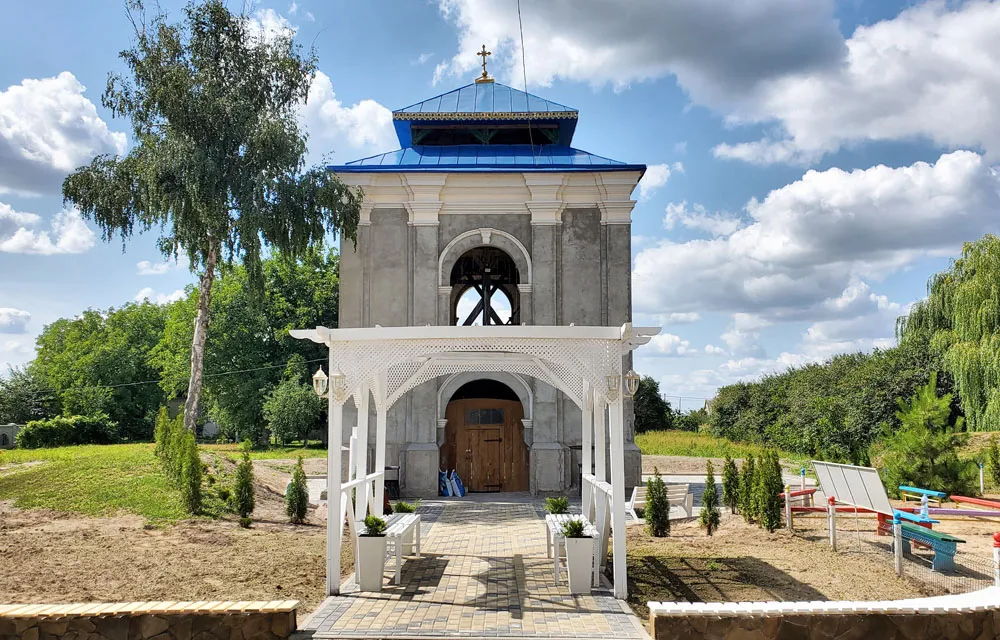
The St. Nicholas Church and bell tower
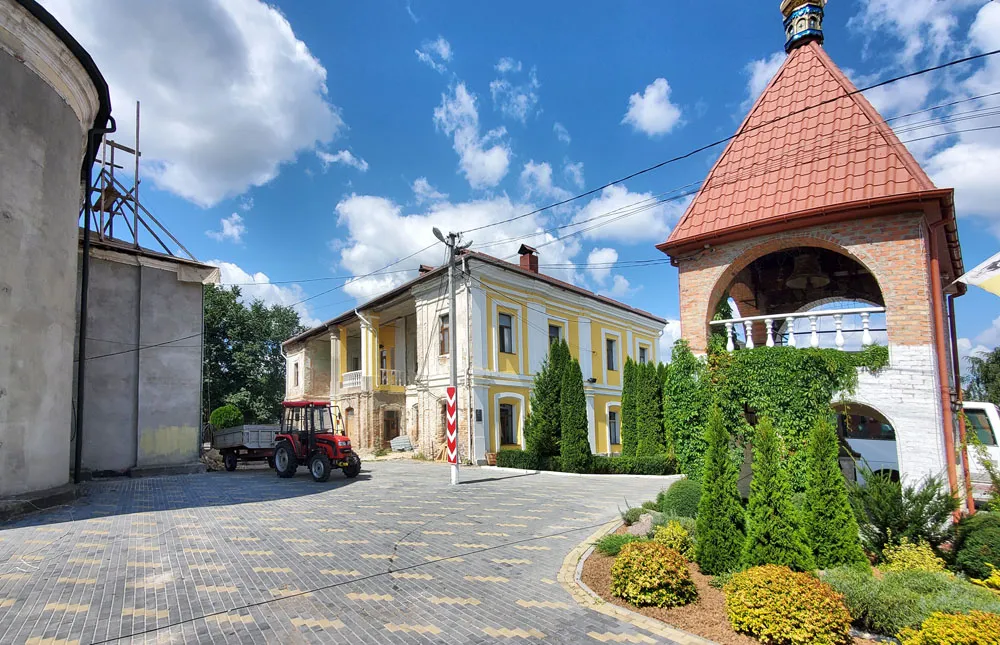
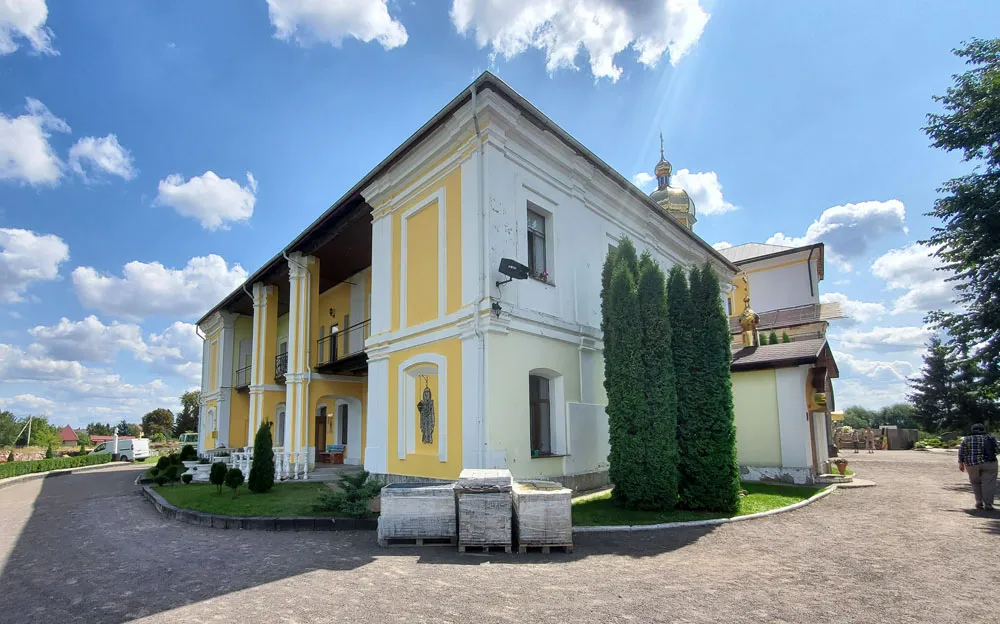
The bishop’s palace