

Kurisove. A fairy-tale palace

· 3 min read
Kurisove was founded somewhere at the end of the 18th century, although this may be a contentious question, because the Russian occupiers, when they came to the lands of the Ottoman Empire, seized Nogai settlements, but nothing about them was recorded in historical documents, as if it had been a wild empty field. The settlement was founded by Ivan Kuris, head of Suvorov’s chancery. A descendant of the Cossack officer class, a many-times governor of various territories and a far from poor man, he named the settlement Kurisovo-Pokrovske. In Soviet times it was called Petrovske and Petrivka.
In the 19th century Kurisove was a small town with about six hundred inhabitants. In 1824 the Church of the Intercession was built here, a Classicist church that has survived to our time. It was built with the Kuris family’s money. The Kuris family also built a complex of farm buildings, which likewise exist today. And in 1810 construction began on the village’s main landmark, the palace, which can be considered one of the most beautiful in southern Ukraine. At the beginning of the 20th century the Kuris family built another palace, in Isaieve. But that was much later. We have written about it.
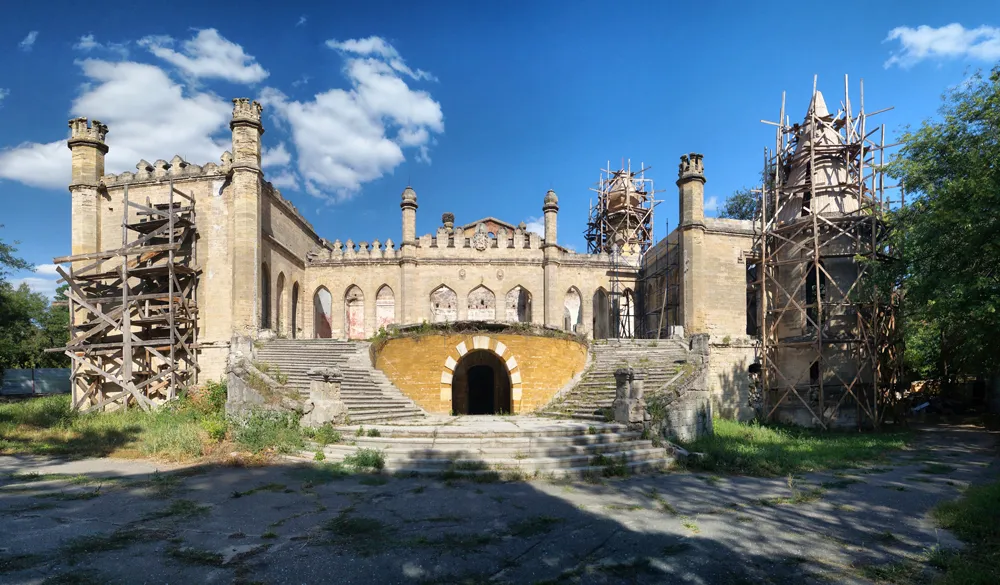
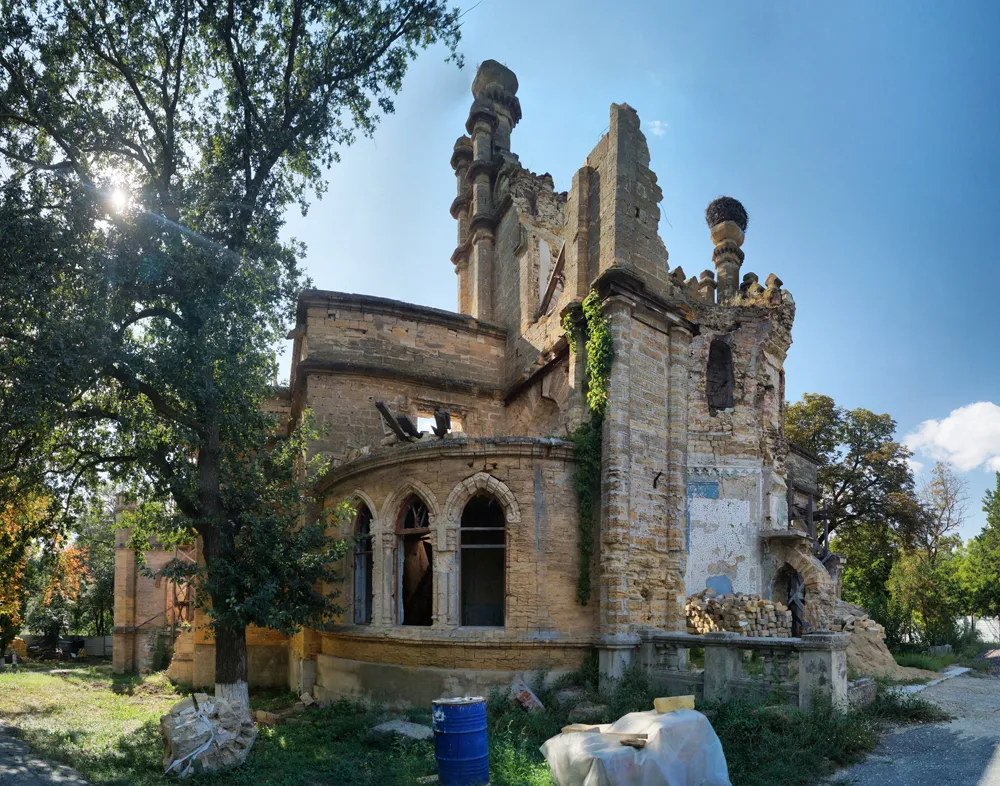
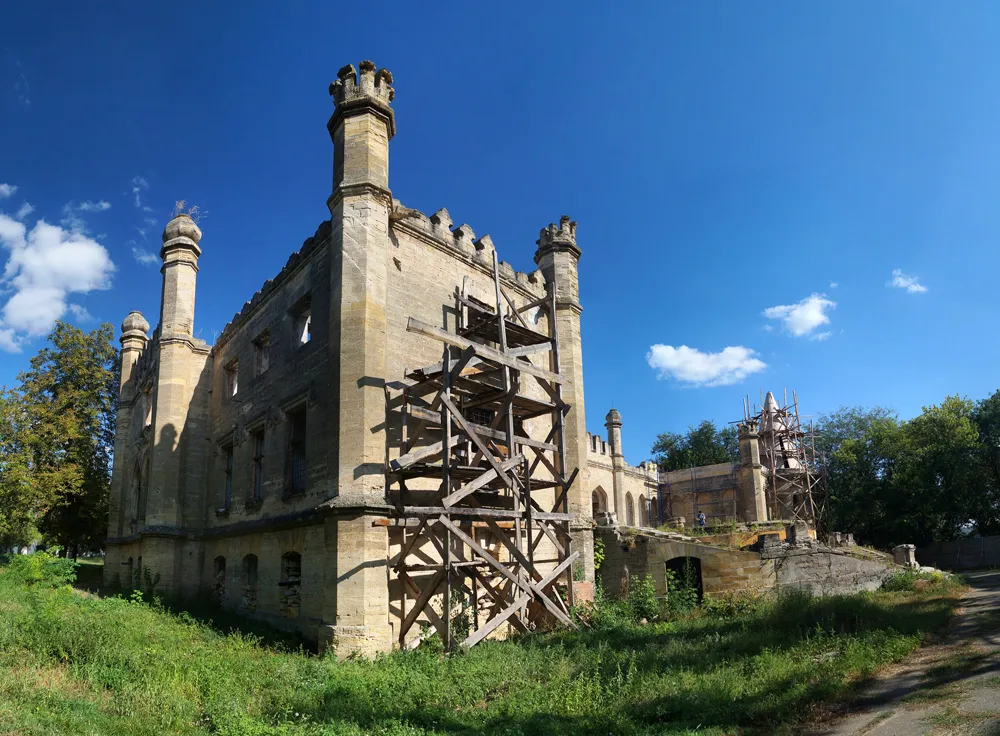
The architect of the first stage of the palace in Kurisovo-Pokrovske is unknown. The construction was carried out by serf craftsmen whom the Kuris family specially brought from their estate of Lutsykivka in the Kharkiv region. The building was made to resemble a medieval castle. It is astonishing how, without a known architect, one could build such a harmonious and beautiful building, containing elements of Gothic, Renaissance and Moorish style. But they built it. Perhaps there was a famous architect, but history has not preserved this information for us. In any case he was a qualified and gifted builder.
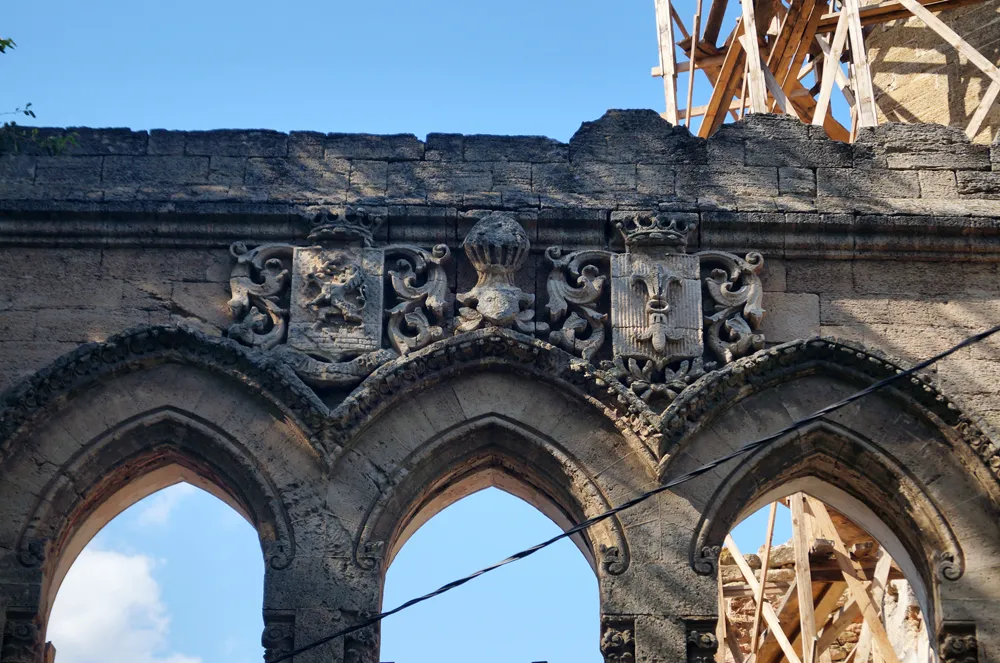
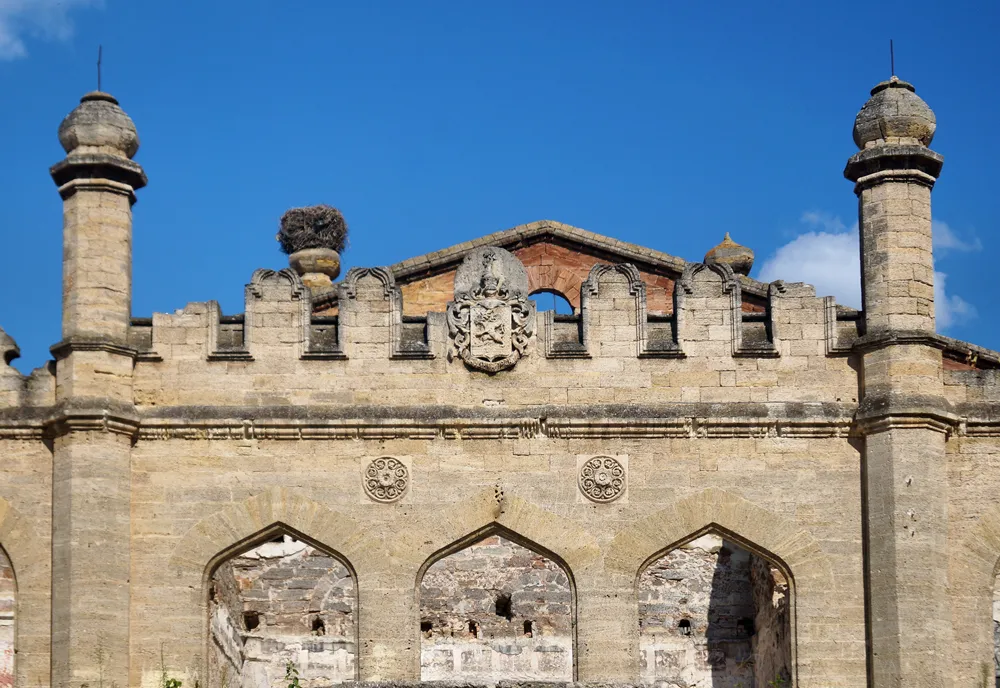
The palace in Kurisove was built not far from a river, a tributary of the Tylihul, next to a forest, in a beautiful spot. In 1891–1892 the palace was completed and its western part was built. The work was directed by the Odesa architect of Polish origin Mikołaj Tolwiński. It was just then that the Kuris family united with the magnates Gyzhytski (this is covered in the story about Isaieve), so the Gyzhytski coat of arms, a lion and a lily, appeared on the façades.
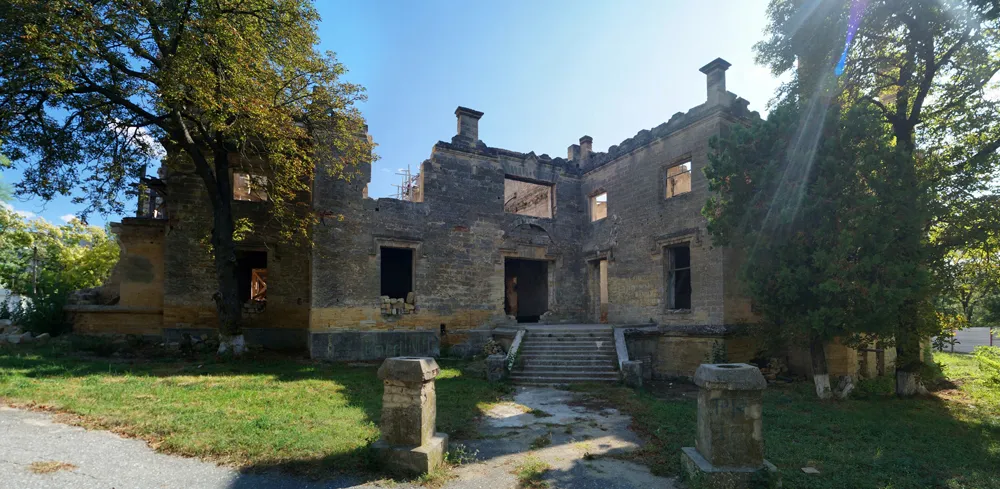
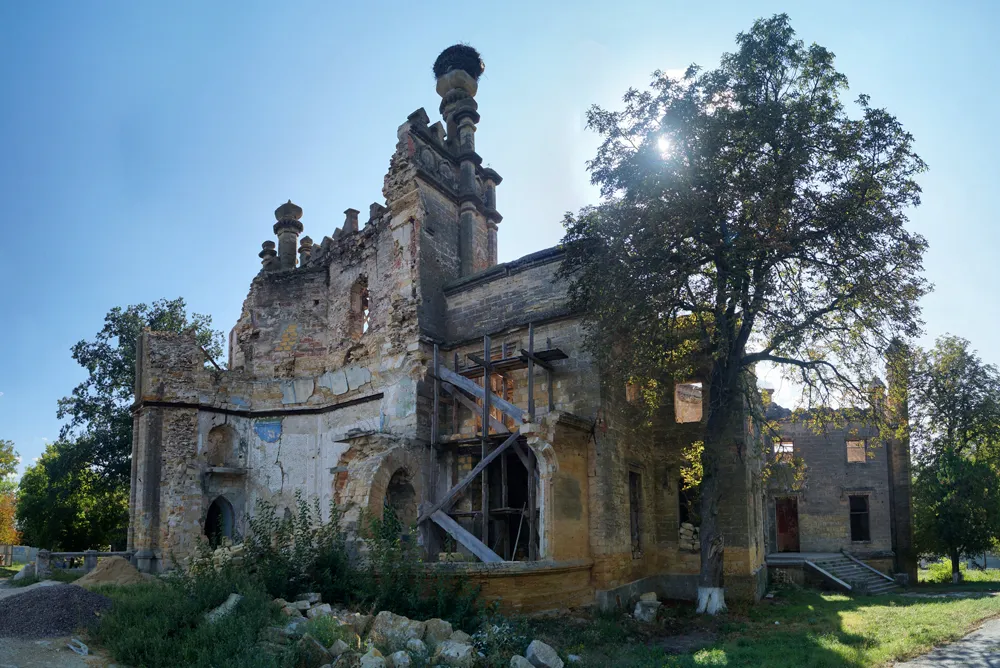
Quite complex in plan, it had a crenellated roofline like a castle and minaret-like towers around the perimeter. Inside there were 78 rooms, and also a ballroom, a mirror room and a library containing 20,000 books. Around it a park was laid out with gazebos, little bridges, park sculptures and benches. In all, the palace and park ensemble occupied an area of over 30 hectares.
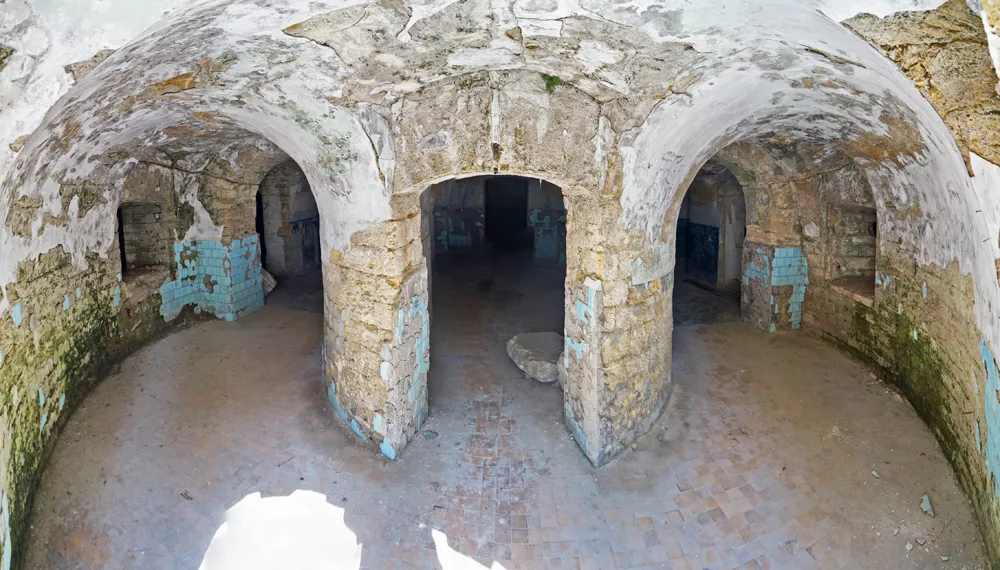
In 1921 an agricultural school was placed in the Kuris estate. During the Second World War there was a Romanian commandant’s office here; they say it was the Romanians who destroyed the park, using it for firewood. After the war restoration was carried out. And in 1990 lightning struck the palace and a fire began. So the locals say. Lightning. All the wood burned out. For 25 years the palace stood a complete ruin. But some 4–5 years ago someone bought it and gradually began repairs. Now it is in full swing and the palace has already been roofed. This was reported to us from Odesa. When we are there we will certainly photograph everything. For now, the photos are two years old.
Text and photos by Roman Malenkov.
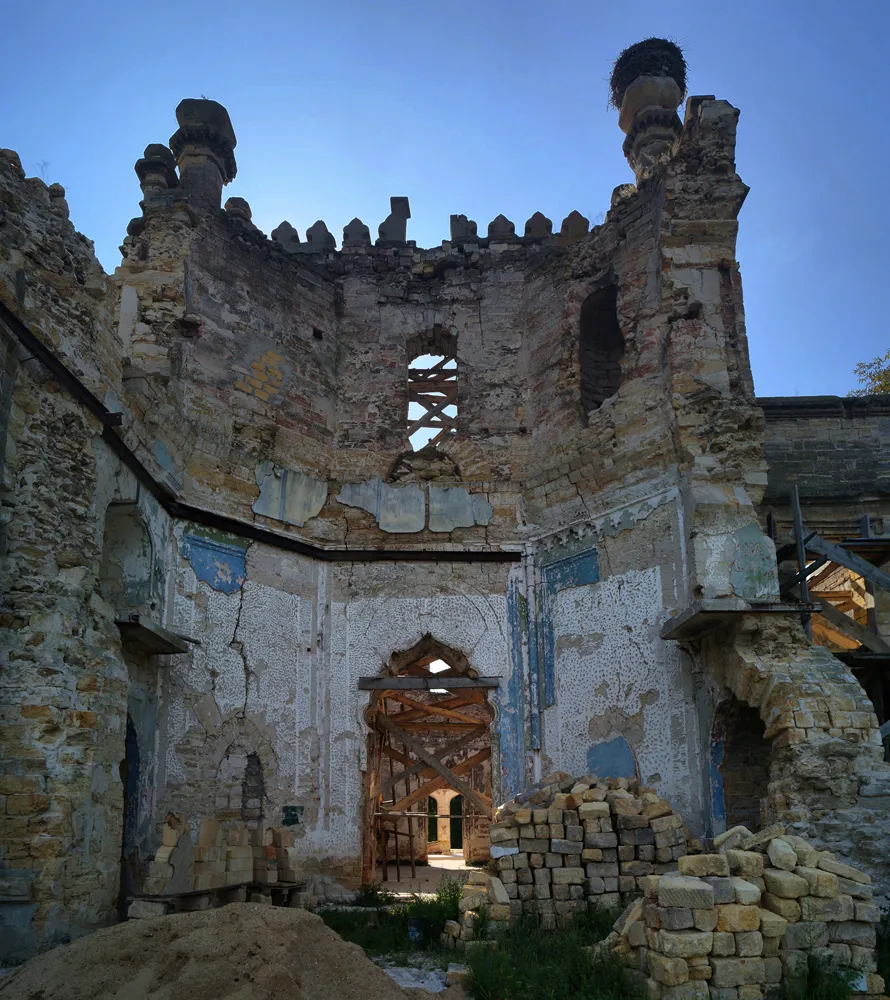
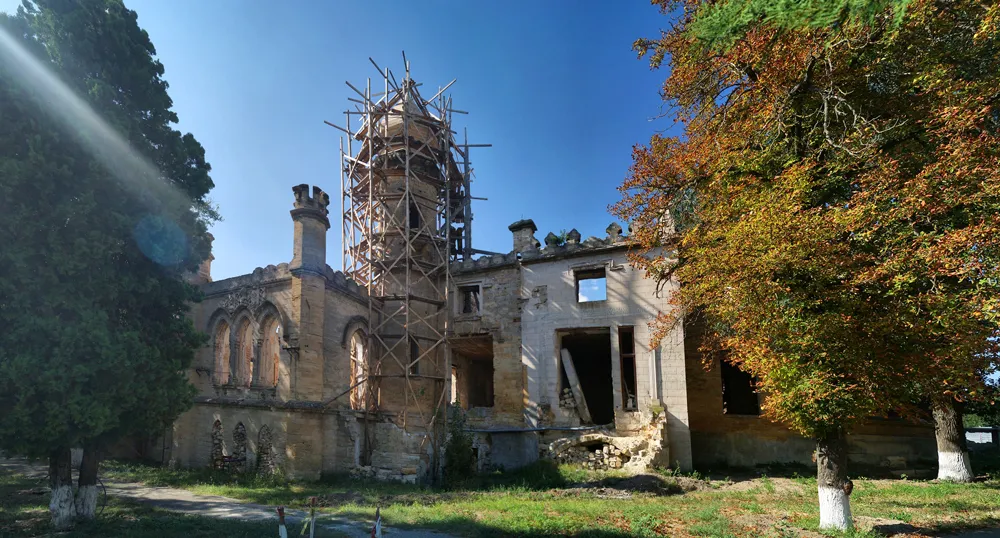
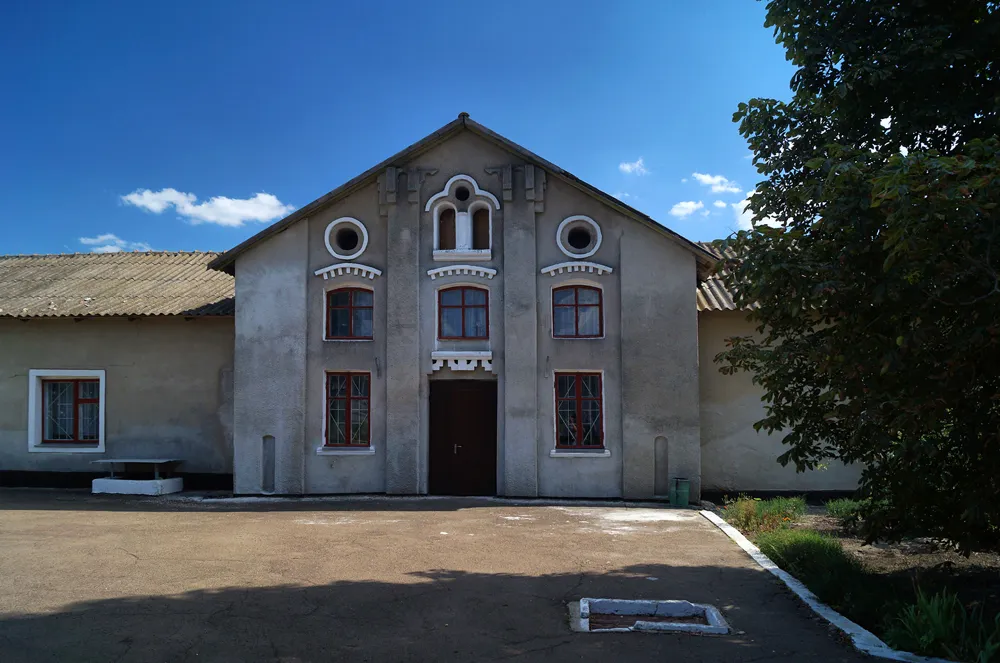
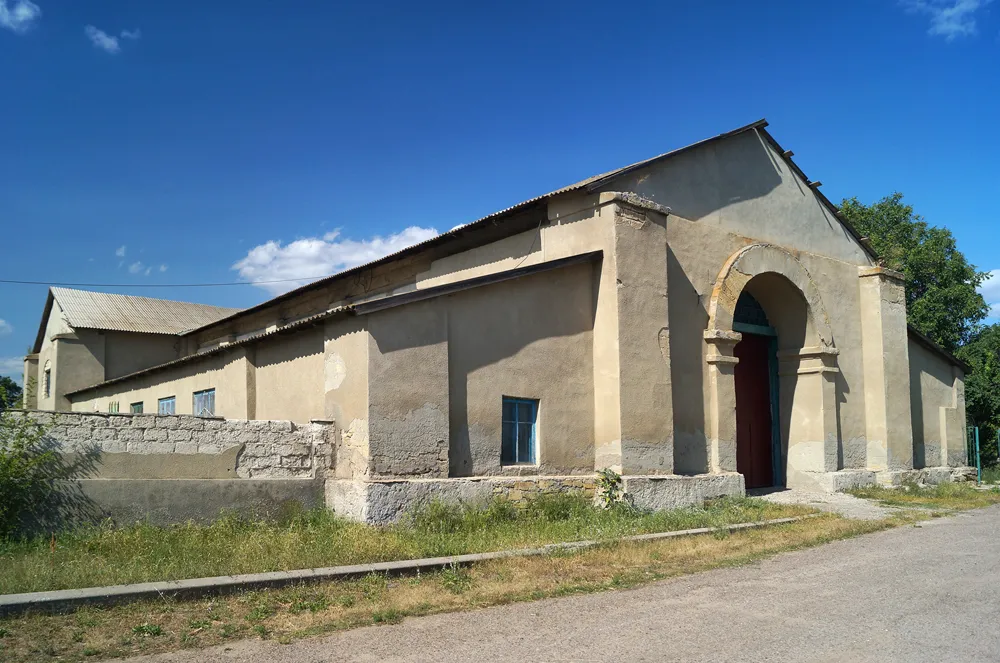
The last photos show the farm buildings.
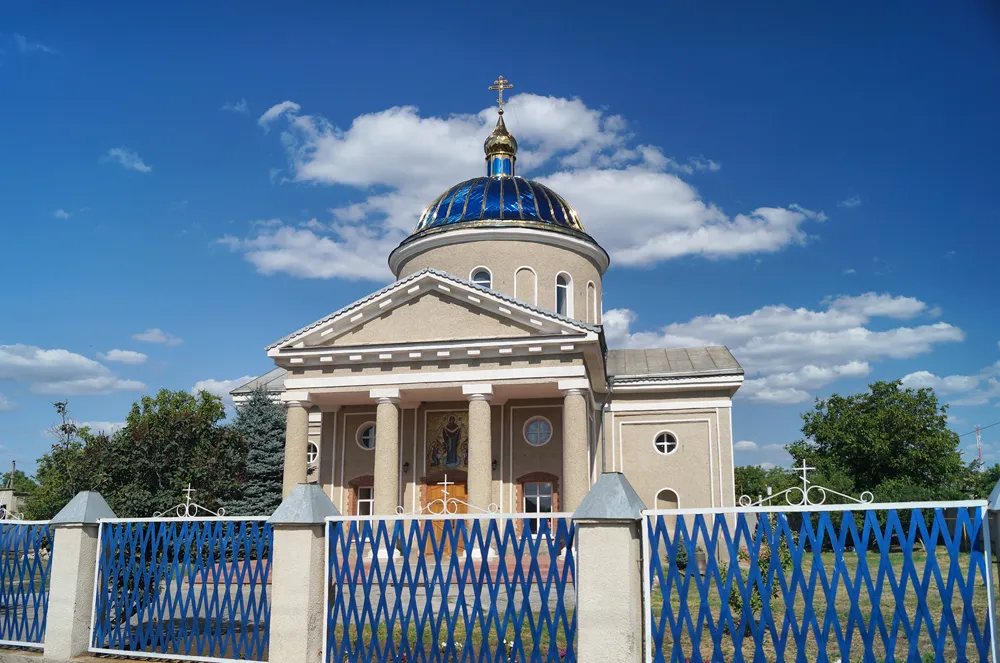
The Church of the Intercession.


