

To God alone, the King and the Fatherland will it surrender its keys…
The town gate of Sataniv (Khmelnytskyi Oblast) is an extremely rare type of architectural monument. In Ukraine, medieval-Renaissance TOWN gates (not to be confused with castle, fortress or monastery gates) can be boasted of only by Kamianets-Podilskyi, Ostroh, Kyiv, Dubno, Olyka and Sataniv. The Sataniv one, moreover, is the most decorated and ornamented of all those listed.
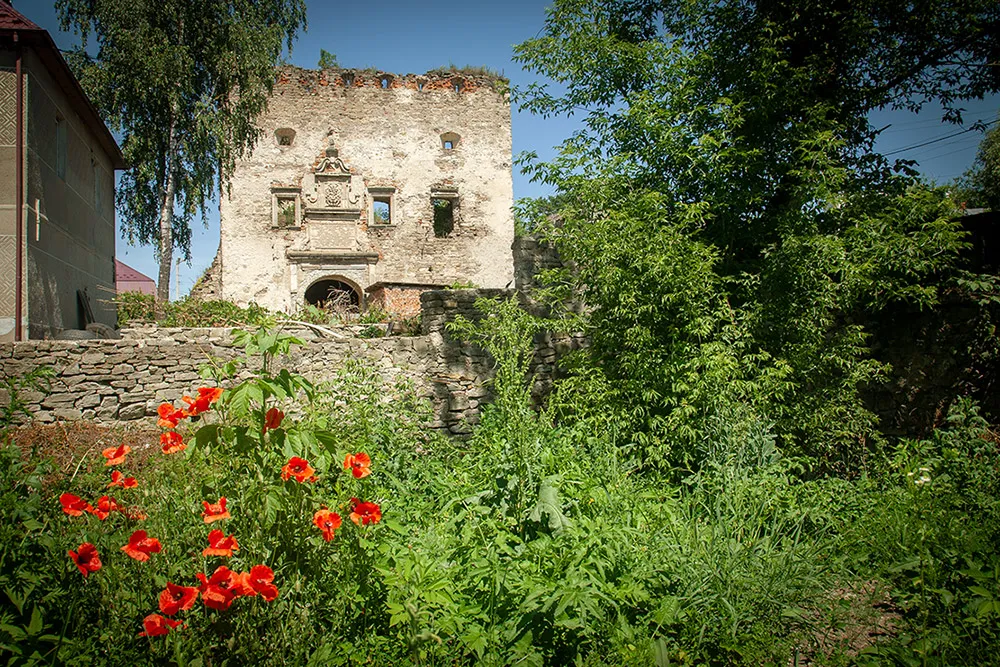
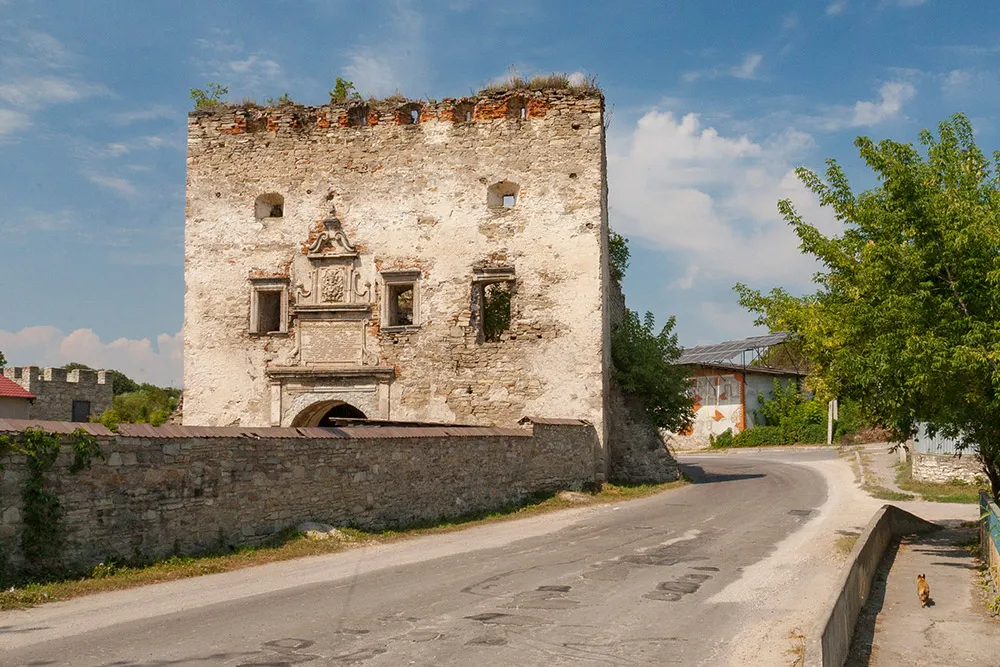
The Kamianets Gate of Sataniv
Gates were considered one of the main symbols of any respectable town. They were revered, cherished and adorned, and the attitude to the Gate vividly demonstrated the attitude of the residents and authorities to their town. Let us recall only the Golden Gates of Constantinople and Kyiv, or the gate of Lviv, which even made it onto its coat of arms. Besides their defensive function, these structures served as a kind of triumphal arches, through which victors returned home or honoured guests arrived.
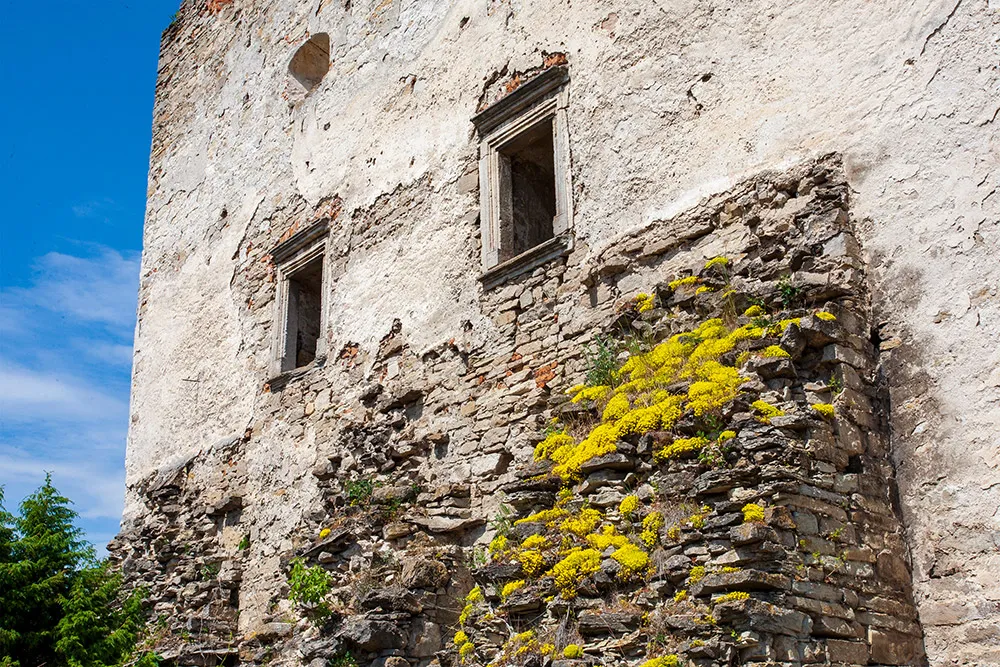
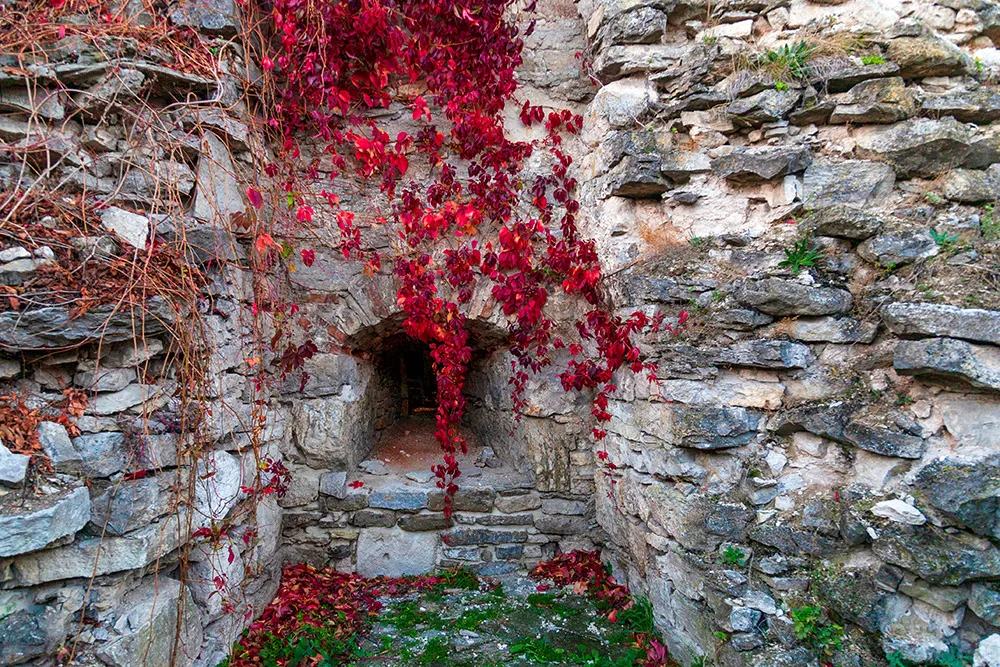
Sataniv once had two gates: the Kamianets and the Horodok ones. The Horodok Gate, where the road to Horodok began, has not survived to our time. Only the Kamianets Gate has survived. It was also the main ceremonial entrance to the town, since guests came from the regional capital this way.
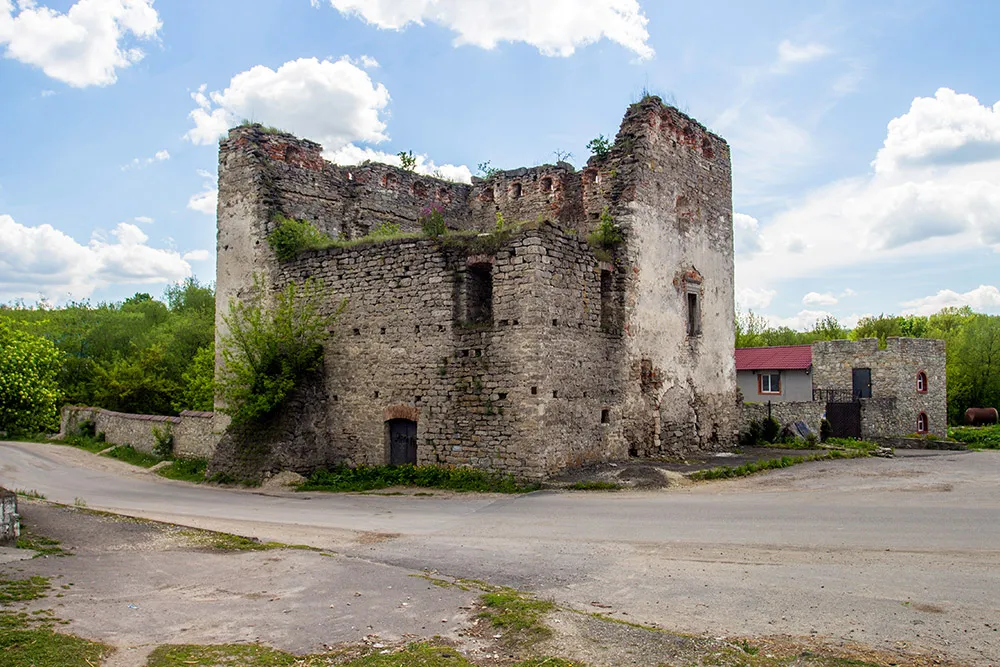
The gate arose in the 15th century. In the 16th it was radically reconstructed. In 1676, during the siege of Sataniv by the Janissaries, it suffered considerably and was radically rebuilt in 1722–1724.
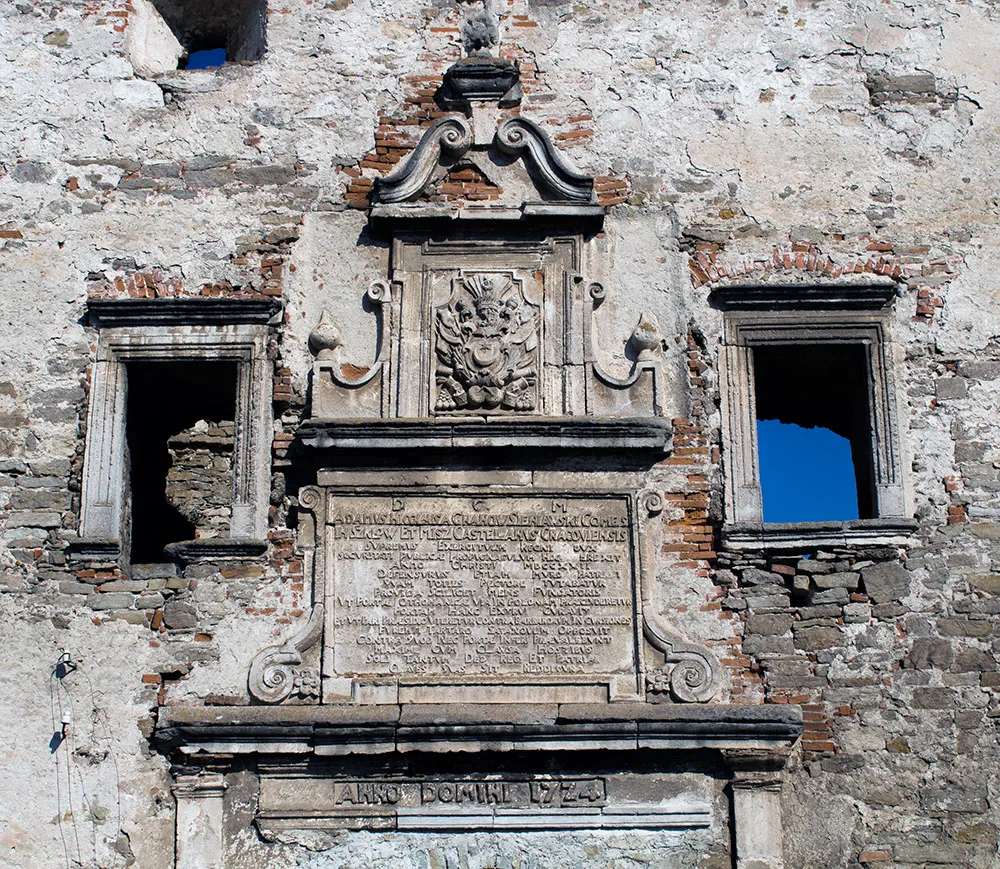
Decoration of the facade. The Leliwa coat of arms and the memorial plaque
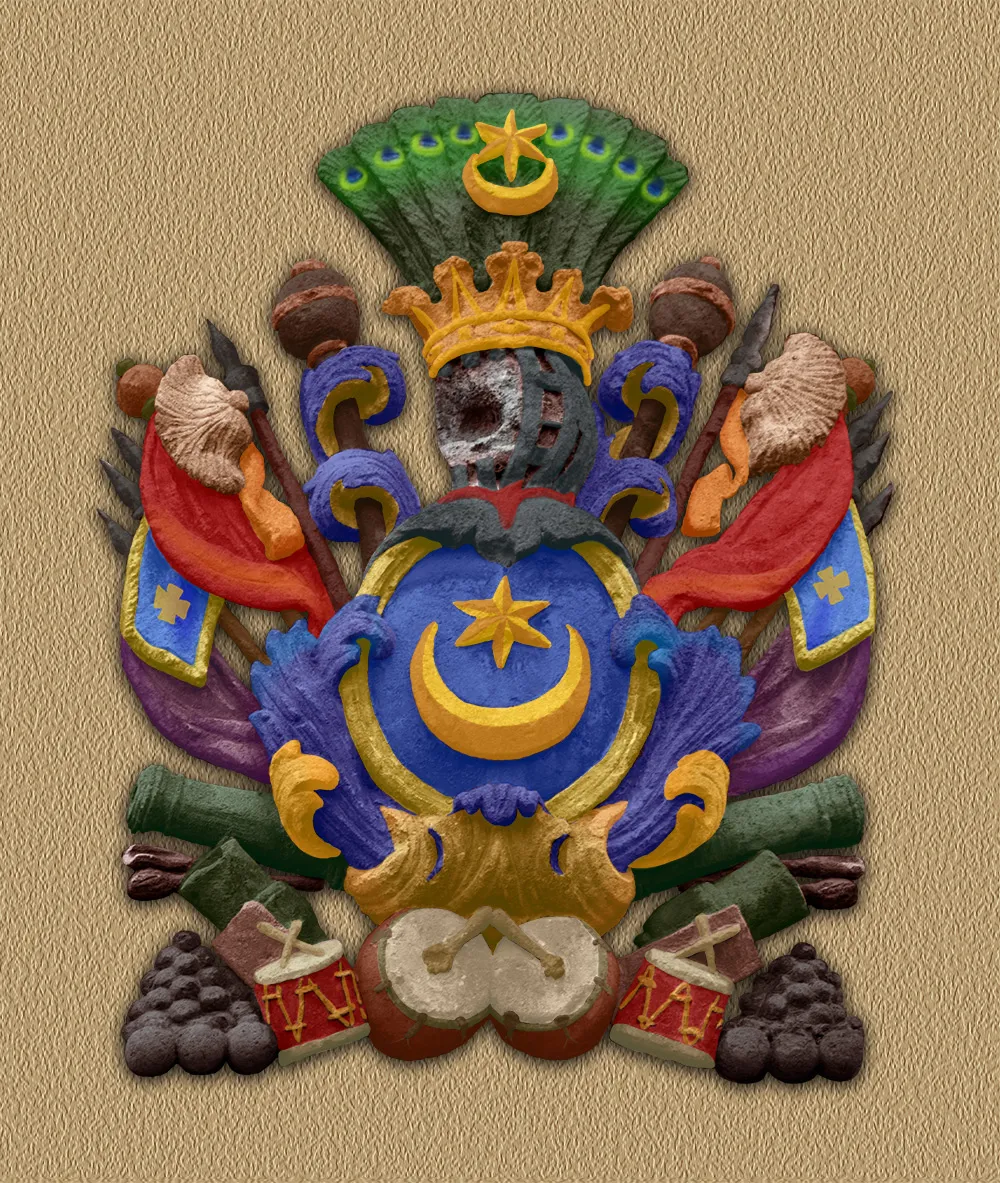
It is possible that the decoration was once polychrome. Reconstruction by the author
It was then that its facade was adorned with the “Leliwa”, the coat of arms of the town’s owner Adam Mikołaj Sieniawski, set against a background of military trophies, and a memorial plaque in Latin. Its translation into Ukrainian reads as follows:
“Adam Mikołaj Sieniawski of Granów, owner of Shklov and Mysha, castellan of Kraków, supreme commander of the state army, restored this stronghold for public safety in the year of Christ 1722, intending to defend with walls the fatherland that he had so many times defended with his breast. Thus the prophetic thought of the founder took care to build this gate, to bar the way to Poland to the Ottoman Porte, and to have equal strength against the attacks of barbarians, he set Sataniv against the fierce Tatar, against which even the gates of hell will not prevail, especially when [this stronghold] is closed to enemies; to God alone, the King and the Fatherland will it surrender its keys. In the year of the Lord 1724.”
Somehow it never came to testing this boastful maxim, “to God alone, the King and the Fatherland will it surrender its keys” (and thank God!). The last military performance in its history remained the scuffle with the Janissaries in 1676. About those events we have an interesting tradition, which can be read in the “Podolskie Eparkhialnye Vedomosti” (Podolia Diocesan Gazette), published in Kamianets-Podilskyi, in issue three of 1862. The priest Mykhailo Orlovskyi noted down the following:
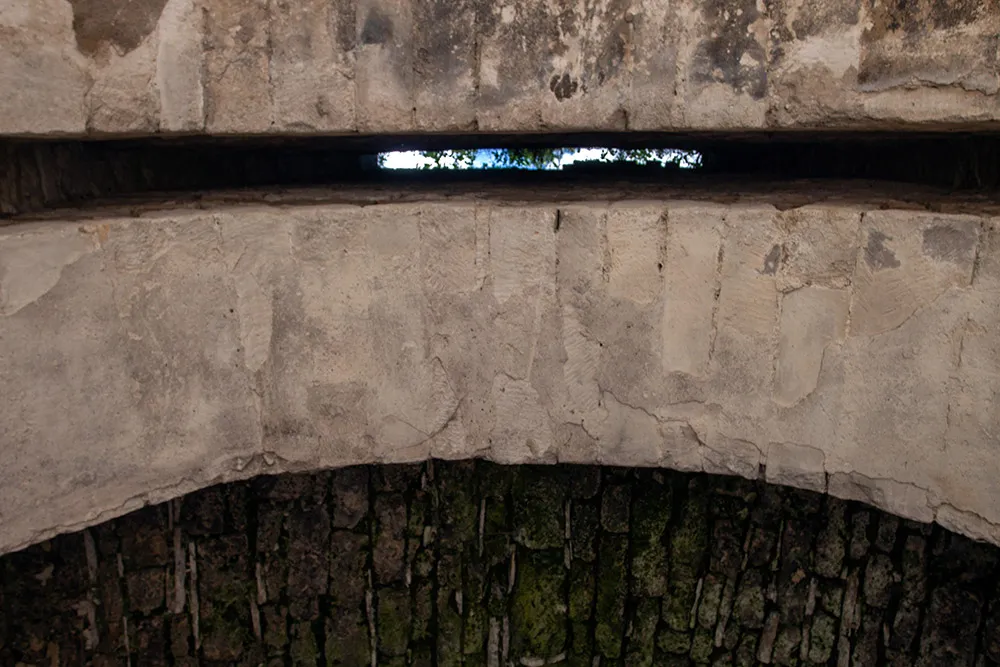
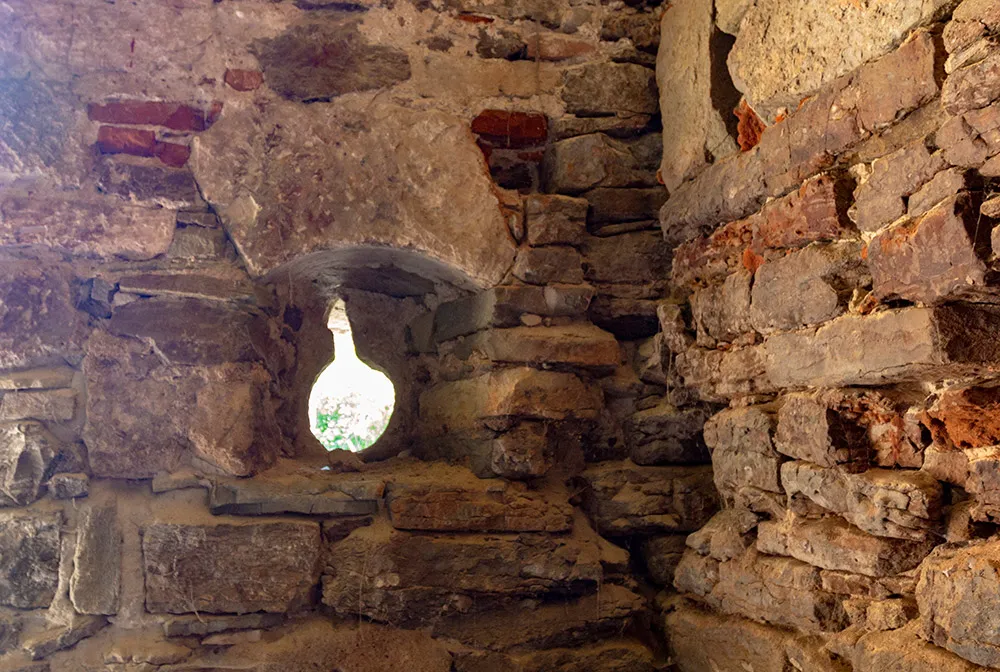
The groove along which the portcullis was once lowered
“On 22 April 1676, during the Ottoman Porte’s rule over Podillia, the Turks plundered and burned Sataniv. Its inhabitants then hid wherever they could: in the fortified gates, in the churches (the Annunciation, the Resurrection, St. George’s), in the Jewish school or synagogue. Legend has it that the Turks, learning of the residents who had hidden in the Sataniv town gate, piled firewood around it and set it alight, wishing to heat the walls of the gate red-hot and thereby force the besieged to surrender. But the defenders of the gate, pouring boiling water on the Turks from above, forced them to retreat. The walls have remained sooty on the inside to this day. The enraged Turks burned the town. According to the tradition of old-timers and of Father Kalynskyi, up to four thousand inhabitants were killed in Sataniv then.”
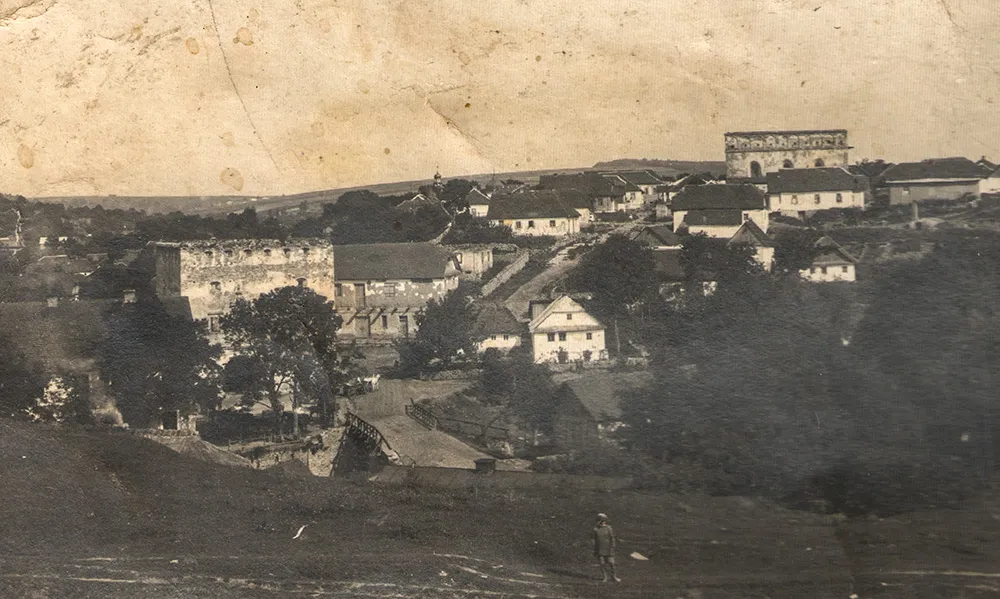
The gate as it was around 1913
The tradition by no means corresponds to reality. The very claim that people supposedly hid from the Turks in the Church of St. George is astonishing. That church stood in the hamlet of Yuryntsi, far beyond the defensive walls, and hiding there from the regular Ottoman army would have been senseless. Moreover, the Turks did not retreat anywhere and afterwards ruled the town for quite a long time. The said Church of St. George they turned into a mosque and even built a minaret beside it. The latter was later rebuilt into a bell tower. Unfortunately, this church and the former minaret were destroyed by the Communists in the 1930s.
In general, Father Kalynskyi (whose gravestone the author found only quite recently) was a notorious storyteller. In the same “Vedomosti”, for instance, his tale is mentioned about a local icon painter who dug a shaft under his house where he washed gold and sold it in Lviv, making a great profit from it.
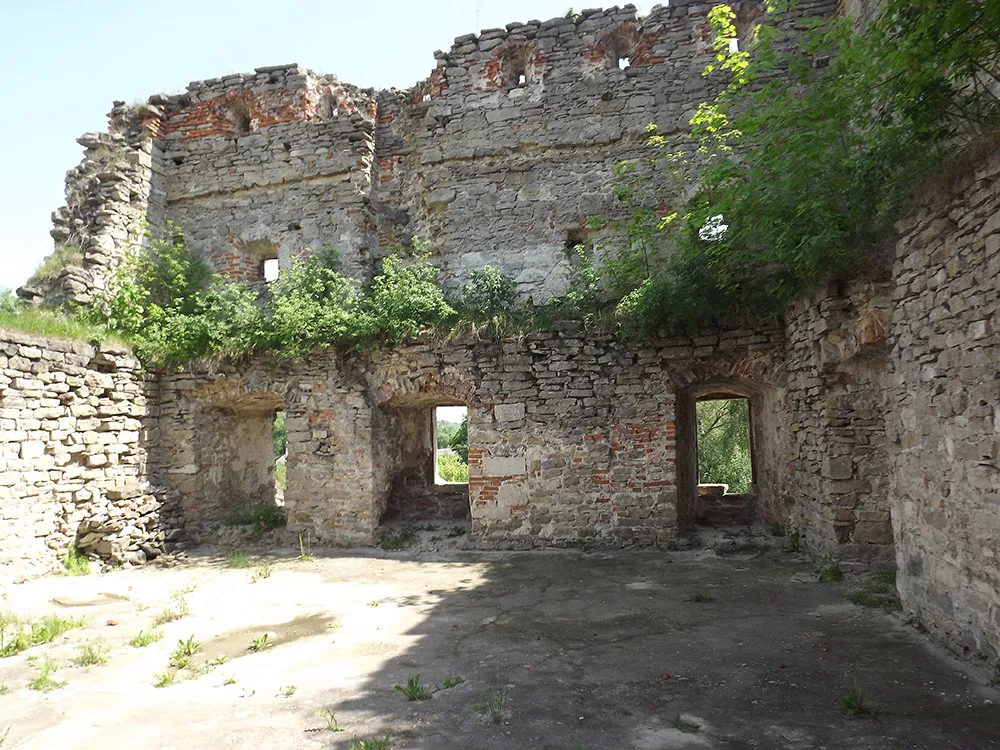
On the second tier of the gate
Despite all this, the early local-history “Sataniv studies” are built on traditions recorded from his words. Let us note here that as a historical source this is nonsense, but as a vivid and interesting body of Podillian folklore it is priceless.
Incidentally, the author never found any traces of soot on the masonry of the tower…
As for the location. Note that the gate did not arise here for nothing. It is an exceptionally convenient place for defence. On one side it is covered by the Zbruch, on the other by its tributary, the Shmaivka (also known as the Shondrova). The latter is small, but flows through a deep ravine.
By the first third of the 19th century, Sataniv’s fortifications had lost any military significance and were dismantled. In local-history literature (and even the author of these lines relayed this in early publications) one finds the claim that the town walls were taken down as punishment for the Sataniv residents’ support of the November Uprising of 1831. But this is hardly so. Recall that by then they had not the slightest defensive significance. They did, however, hinder the town’s development, and a heap of building material was going to waste.
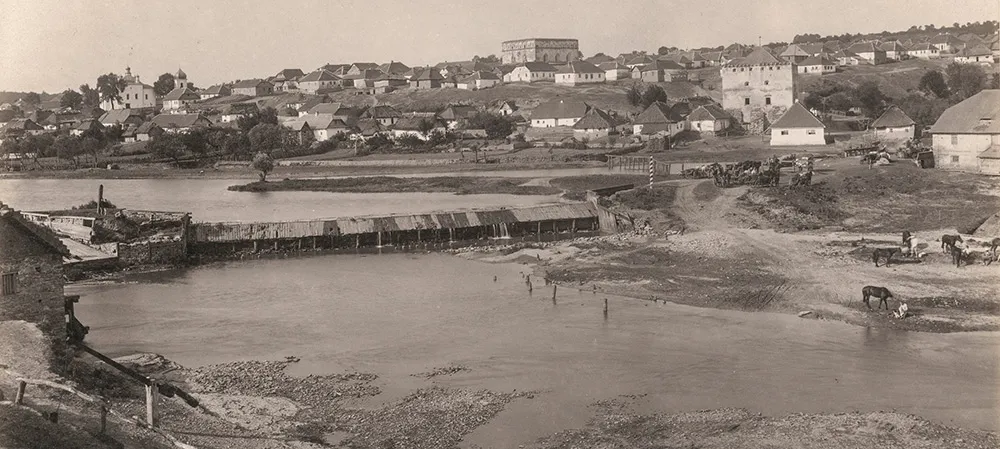
Panorama of Sataniv in 1890. The Russian and Austro-Hungarian border posts are clearly visible
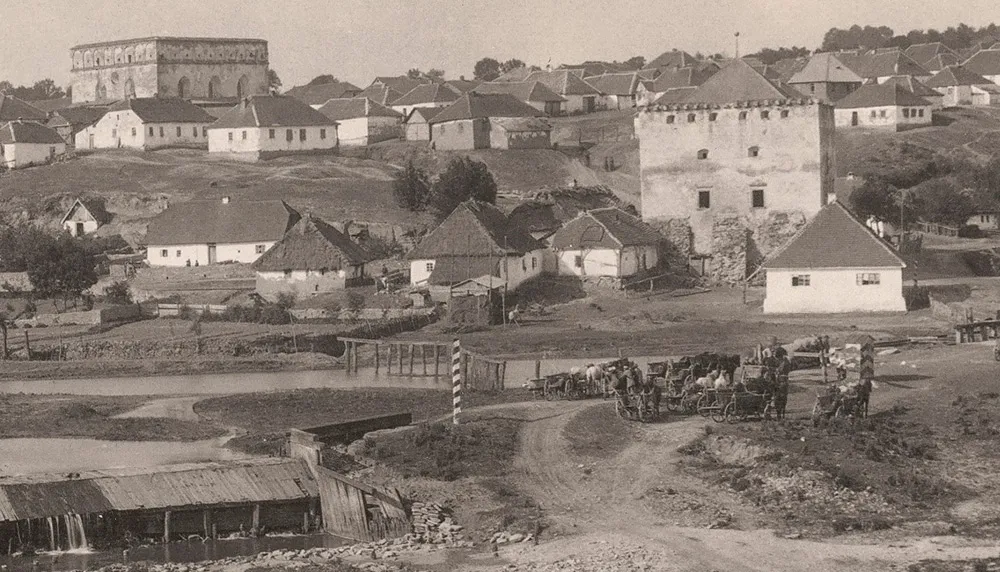
Border post at the border crossing
The Kamianets Gate survived solely because Russian border guards and customs officers adapted it for their needs. Right beneath its walls ran the road leading to the left bank of the Zbruch, to Austria (later Austria-Hungary). The border crossing itself was less than a hundred metres from it. This is clearly visible in the old photograph of 1890. The same photograph shows that the gate was the main office of the customs officers and border guards. The two-storey building of the Russian customs house appeared only at the turn of the 19th and 20th centuries. In the photograph mentioned above it is still absent.
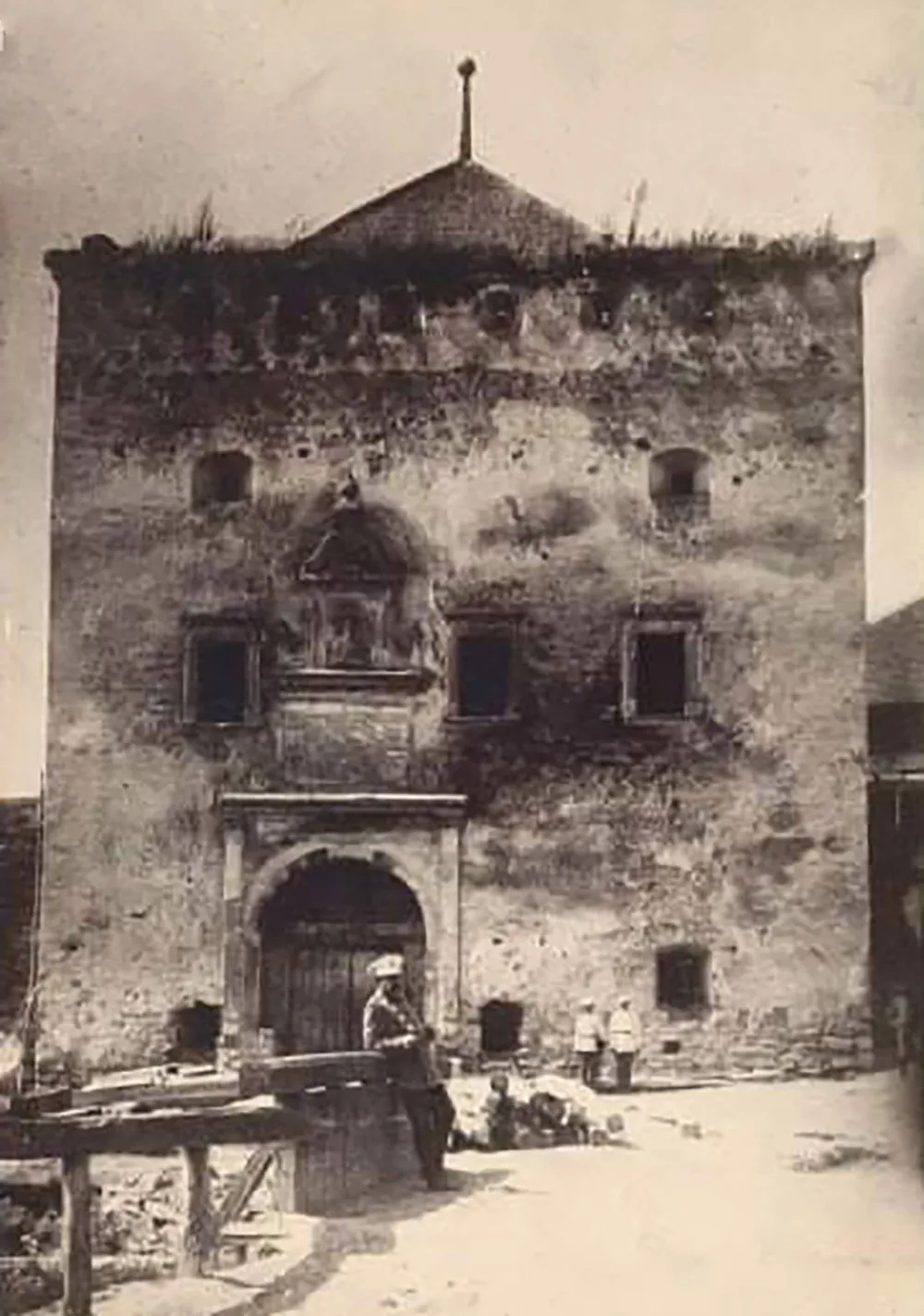
Tsarist border guards. The turn of the 20th century
Note that in tsarist times the border was fairly porous, and local residents sometimes strolled across the Zbruch even without documents, since both the tsarist and the imperial border guards knew everyone by sight.
With the occupation of Ukraine by the Russian Bolsheviks, the border (by then with “Bourgeois Poland”) was firmly closed, and Soviet border guards shot to kill without warning even at anyone approaching the Zbruch without the appropriate written permit. The crossing point was also liquidated then, “because there is no need to go visiting the bourgeoisie”. Soviet border guards now settled in the gate and the former customs house.
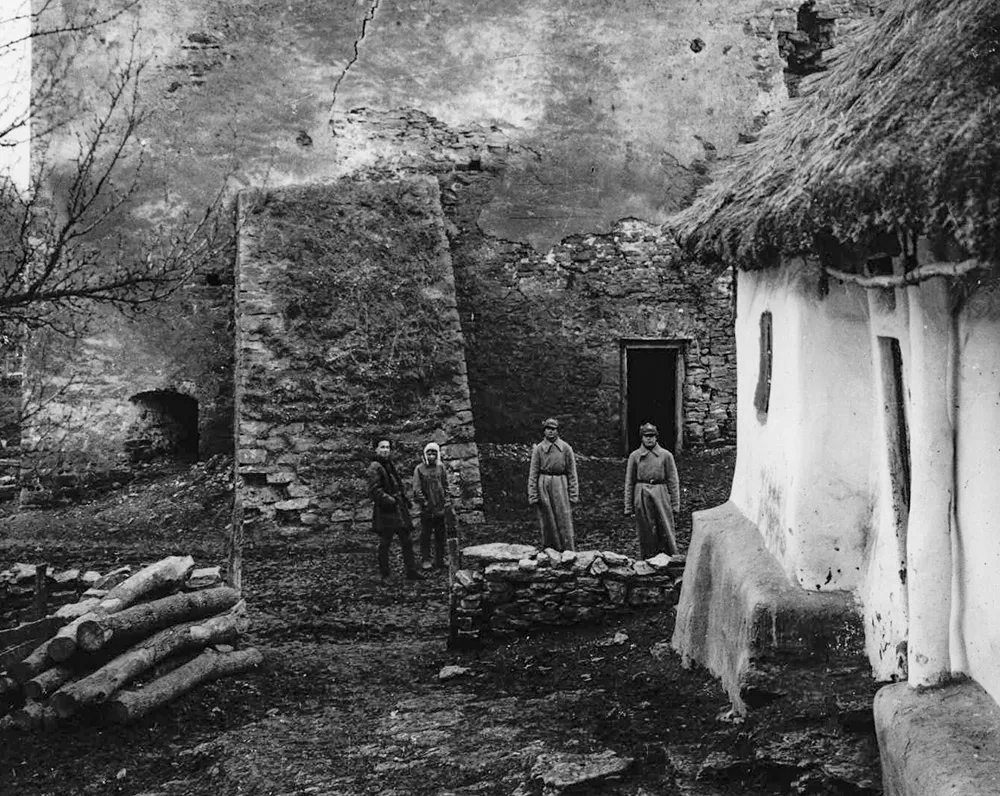
The gate and Soviet border guards. Early 1920s
About the Soviet “border” period of the gate we have an interesting mention in an anonymous local-history and archaeological note of 1928, held in the collections of the Kamianets-Podilskyi State Historical Museum-Reserve. Its author is unknown, but judging by the text he was some geologist surveying the Tovtry with a view to organising limestone extraction:
“The entrance to the town from the south-west is guarded by a large three-storey tower (occupied by a border post). It stands right by the Zbruch. On the first floor of the tower, the vaulted gate is closed by cast-iron doors (now walled up with stone masonry on one side)… From the tower to the Polish side there was an underground passage running beneath the Zbruch. It began in a cellar, the door to which is on the right side of the tower. According to one Red Army border guard who served at this border post long before the war of 1914–1918, on the Polish side the passage was closed by three pairs of cast-iron doors. Border guards often used it to cross to the Austrian side. This violated the integrity of the border, and to avoid this the passage was bricked up at the very beginning…”
There really is a cellar on the right side of the gate. Probably powder and cannonballs were once stored in it. But there are not the slightest traces of a walled-up passage. Probably the author of the note is retelling one of the Sataniv legends, like the local tales of underground passages leading all the way to Kamianets, Medzhybizh, Pochaiv and… Lviv (!)…
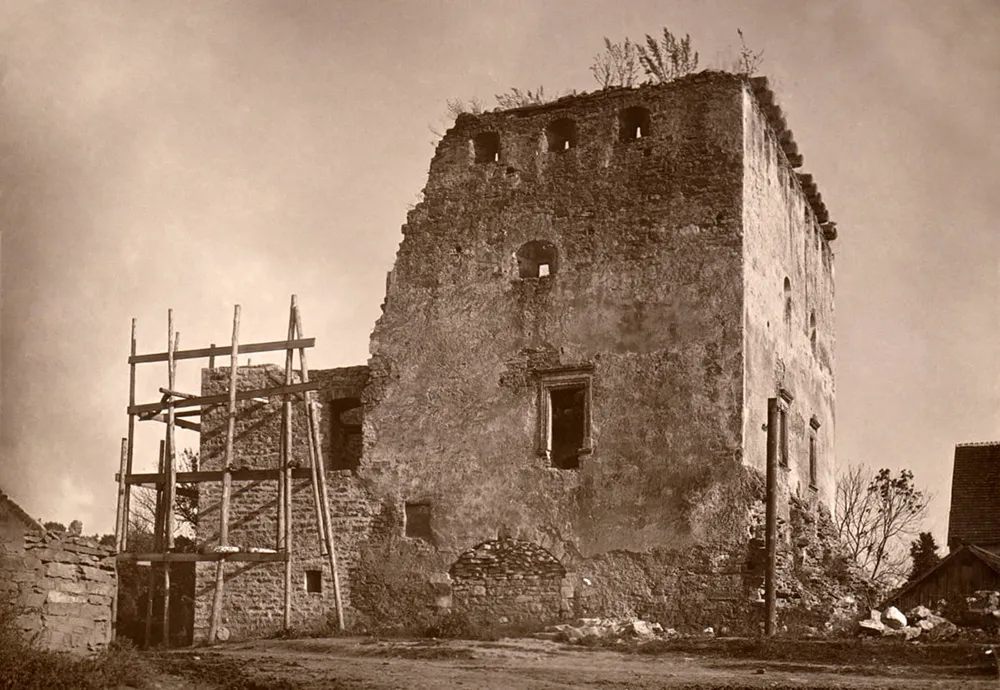
The never-completed repair of the gate. 1920s
At the end of the 1920s the north-western corner of the gate collapsed. Almost immediately the gate was partly rebuilt (the rebuilt part differs well in colour), but work was abandoned in the middle of the rebuilding. For what reason, the author has still not managed to find out.
After the Second World War the gate was used as a warehouse of the consumer cooperative. A huge heap of petrified salt has survived here from that time.
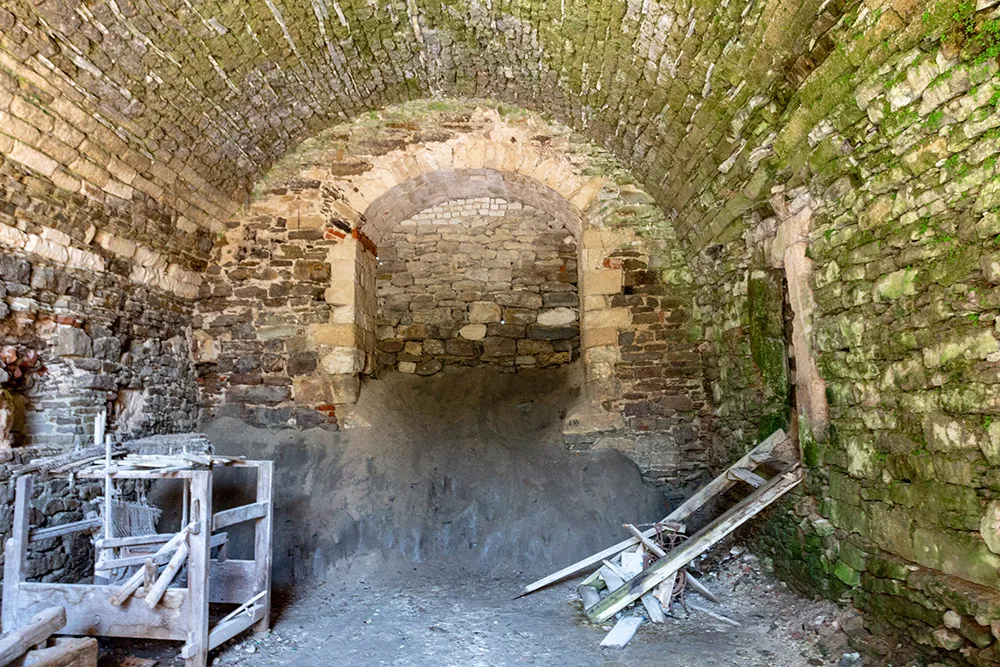
The petrified mound of salt
The further fate of the gate, which is a monument of national significance, is hidden in fog.
Text and contemporary photos by Dmytro Poliukhovych


