

Oboznivka. A wonderful church

· 2 min read
The village of Oboznivka is located in Kremenchuk district of Poltava Oblast. Earlier it was in Hlobyne district. The population is about 400 people.
Oboznivka was founded in the 1630s, although the name, according to tradition, arose much later – in the time of the Great Northern War, when a large military baggage train (oboz) stopped on the village’s territory. Something else was also connected with the wagoners (oboznyi) who stayed to live in the village after the train left. Although how did it leave without the wagoners? Probably they retired, and then settled.
At the end of the 18th century Oboznivka was owned by the landowner Shushkov, who was distinguished by great cruelty towards the peasants. No wonder the peasants killed such a master. How it happened is not exactly known, but the next master, surnamed Bashmakov, was not much better – he never appeared in the village at all, and a steward acted in his name, who showed no mercy to the serfs.
At the end of the 19th century Oboznivka passed into the ownership of Baltazar Skadovskyi, who gave it as a wedding dowry to his daughter Sofiia and her husband Oleksandr Panaiotov. The latter built the village’s main monument – a beautiful example of brick Russian Art Nouveau – the Epiphany Church. Even the architect is known – Mykola Nikonov, the architect of many St. Petersburg churches.
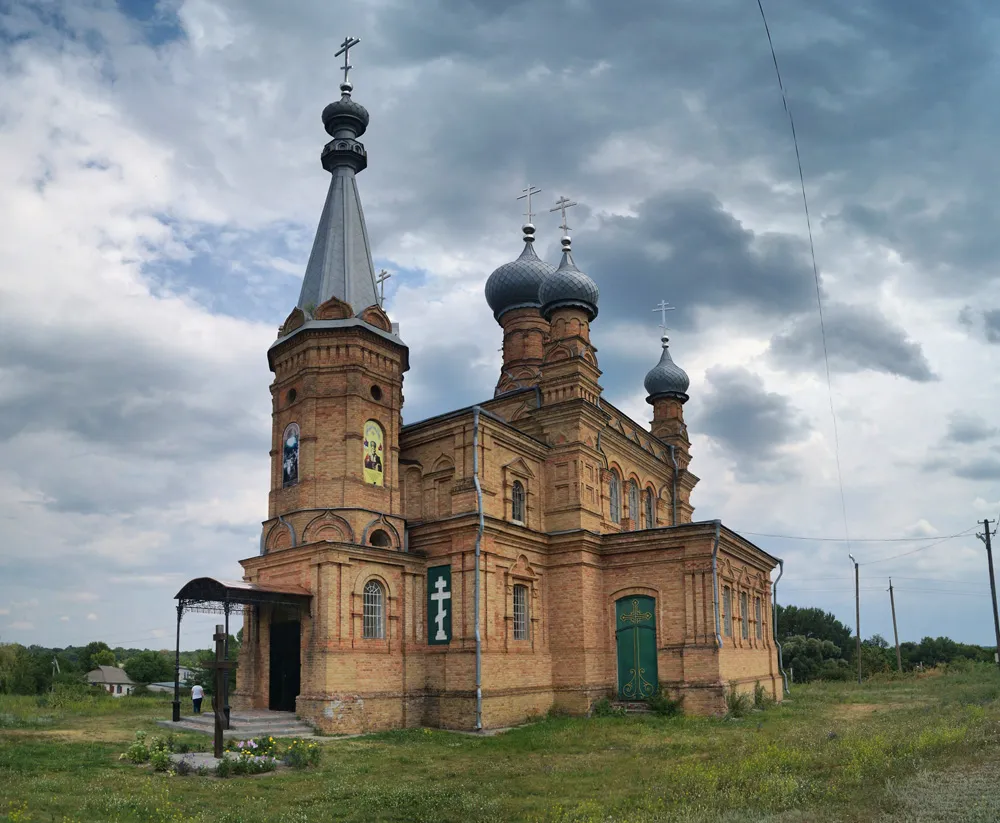
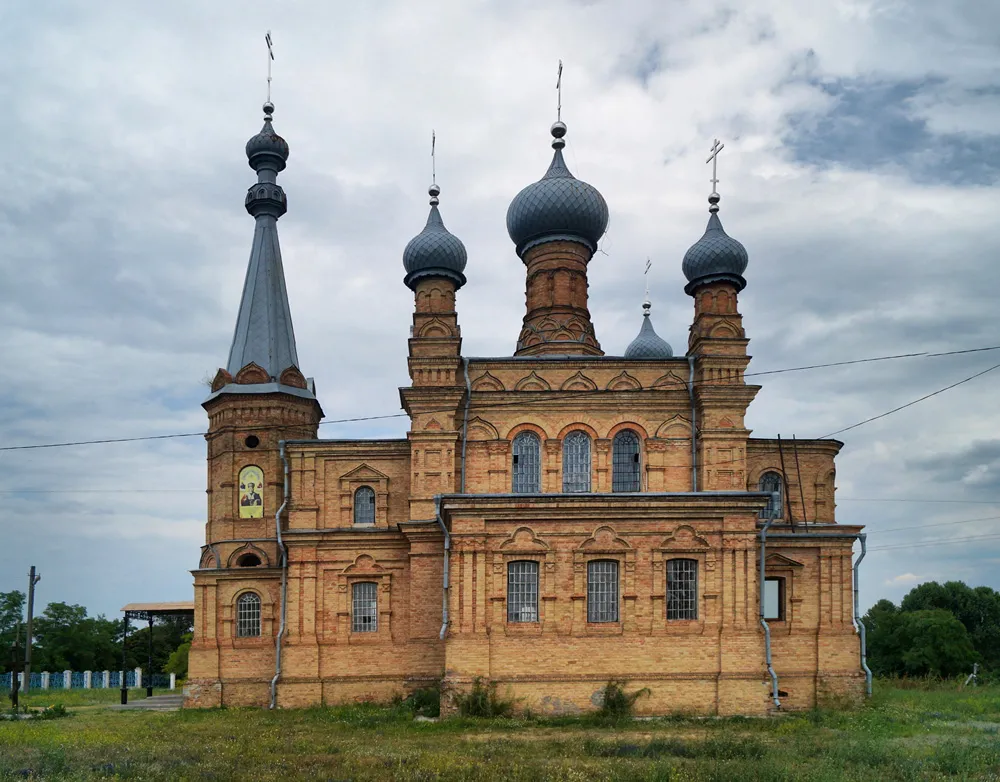
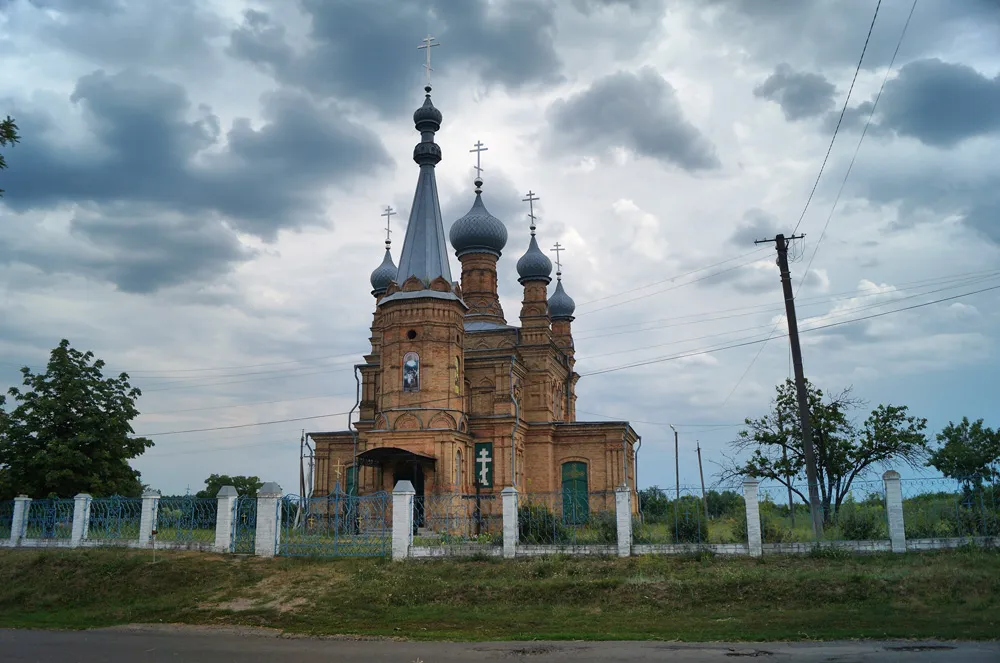
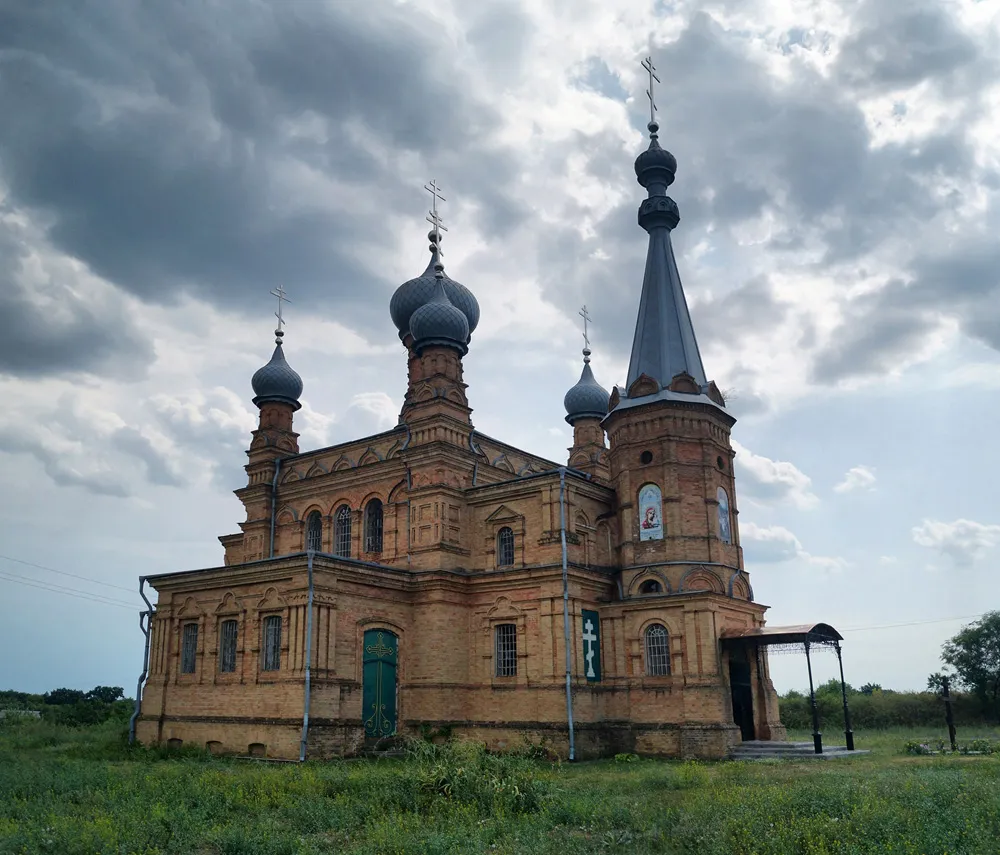
The church was built from 1896 to 1901. The bricks were supplied from Panaiotov’s own factory, so they bear the stamp “A.P.”. It is oriented not east–west, as is required in an Orthodox church, but north–south – such was the whim of the client, so that it would be more convenient to view.
In the centre of the church is a cubic volume traditional for Russian sacred art, crowned by five domes. Above the narthex is a bell tower with a tented top. Under the eastern side chapel is the Panaiotov family crypt, although, most likely, the bodies have long been gone from it. The Kyiv St. Volodymyr’s Cathedral was taken as the model for the interior decoration. The paintings were done by the well-known artists Murashko and Sokolov. Unfortunately, we did not visit the inside of the church, so we have no photos of the interiors.
Text and photos by Roman Malenkov.


