

Vepryk. Two masonry churches

· 3 min read
The village of Vepryk lies on the bank of the Psel, between Bobryk and Velbivka, not far from Hadiach. The village has about 2,900 inhabitants. Vepryk was founded in the early 17th century. In the 18th century it was a company town (sotenne mistechko) of the Hadiach Regiment. In Soviet historiography Vepryk is known for the battle that took place here in January 1709 (24 December 1708, Old Style). Here is what Wikipedia writes about this battle:
At the beginning of the 18th century Vepryk was a company town of the Hadiach Regiment of the Zaporozhian Host. The town had no complex fortifications, but was enclosed by a quadrangular earthen rampart 6–8 metres high with a palisade of pine logs, and by a moat.
The town had a garrison of 1,100 soldiers of the regular army of the Tsardom of Muscovy and several hundred Cossacks of the Kharkiv Sloboda Cossack Regiment. The commandant of Vepryk at that time was Colonel William Fermor (a Scot by origin), and his deputy was Lieutenant Colonel S. Ya. Yurlov, commander of a battalion of the Ivangorod Infantry Regiment. Relying on the help of local residents, the Muscovite troops and the Kharkiv Cossacks repelled Swedish attacks for a long time.
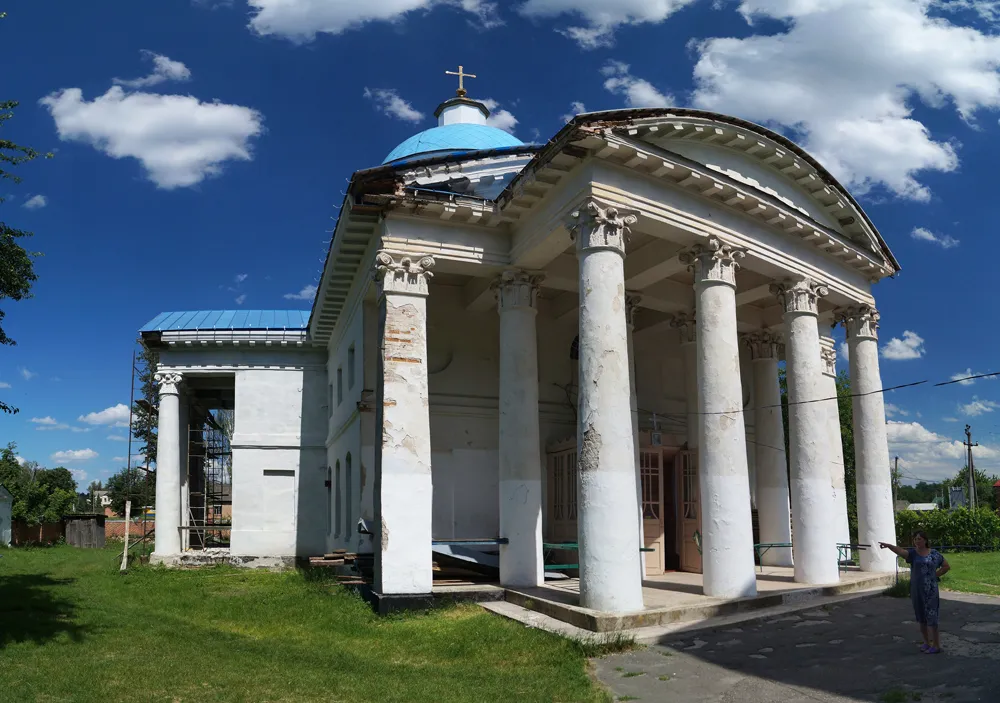
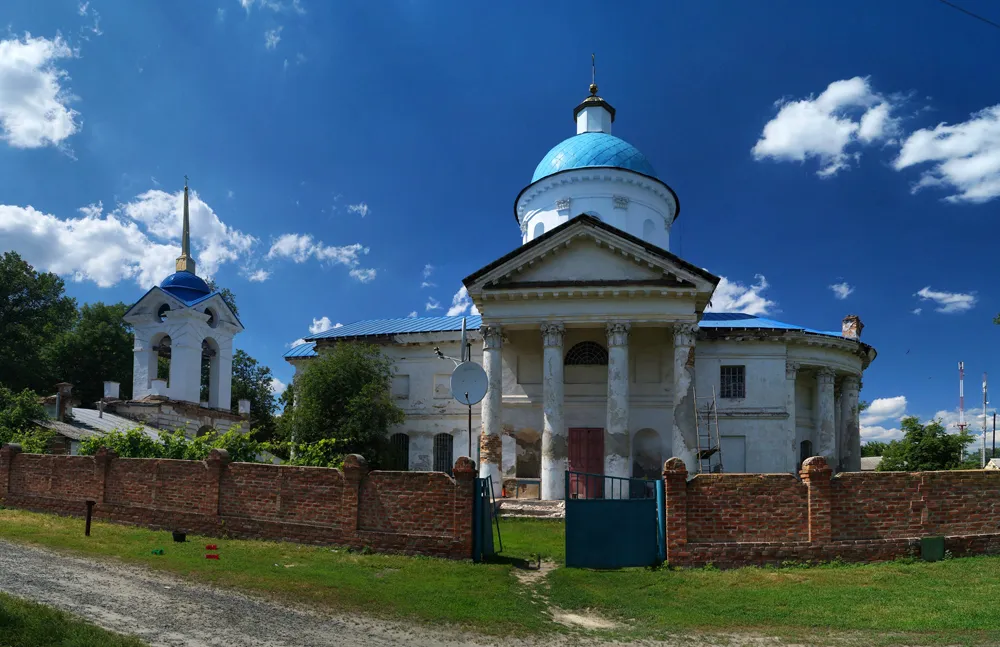
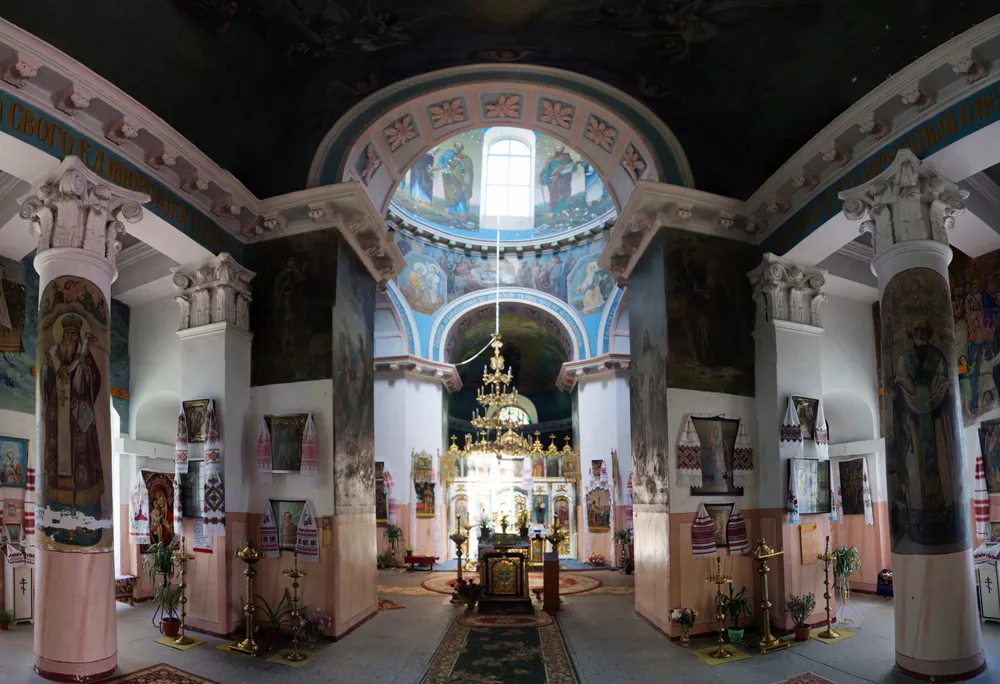
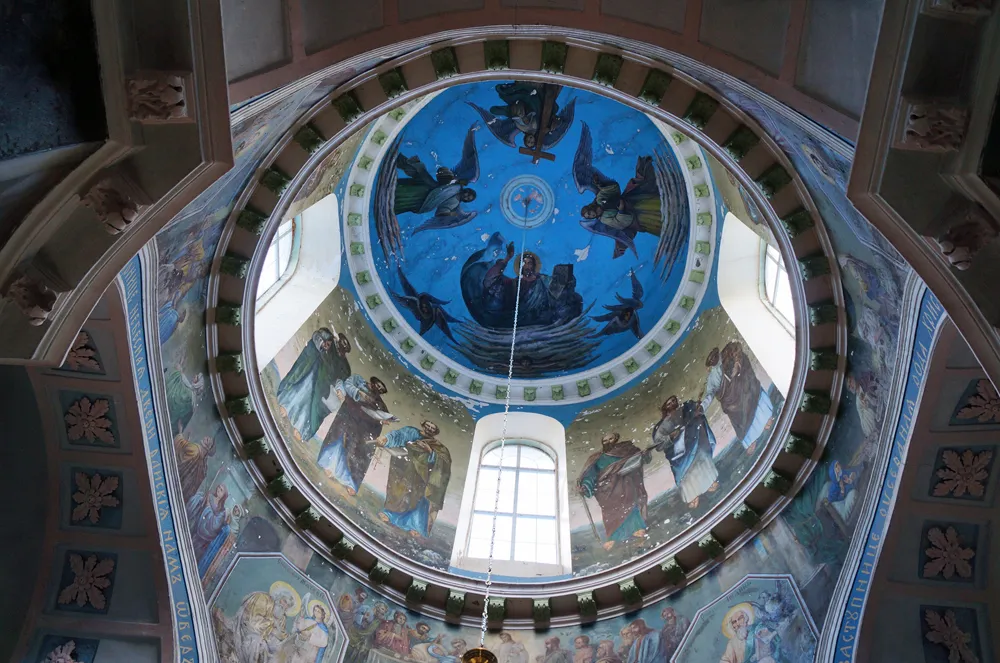
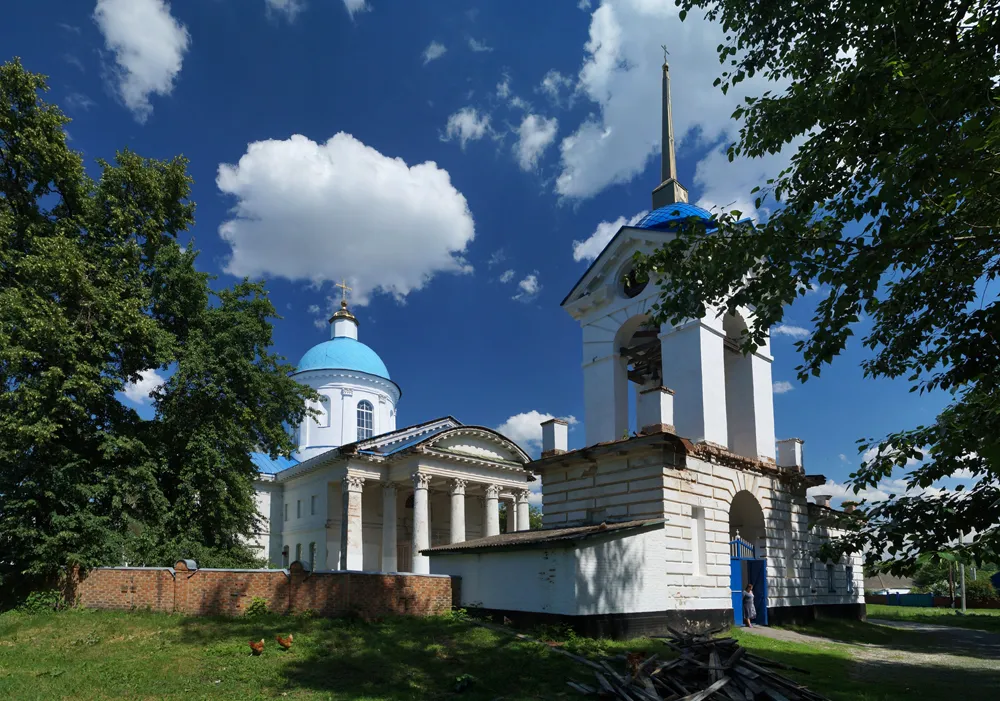
Dormition Church
On 22 December 1708 detachments of the Swedish army led by Charles XII moved on Vepryk, but they failed to capture the town at once and laid siege to it.
On 6 January 1709 the regiments of Charles XII and Ivan Mazepa began an assault on the fortress of Vepryk from three sides, but it proved unsuccessful. Charles XII ordered the assault to stop and sent a parliamentarian to the besieged with an offer to surrender, promising to spare their lives and property. Otherwise he threatened to leave no one alive. Vepryk capitulated.
The king kept his promise and in addition gave each prisoner 10 Polish zlotys as a mark of respect for the courage shown. The fortress was burned by the Swedes. In the assault they lost 2,000 men killed and wounded. The defenders’ losses were 7 officers and 167 soldiers killed and 150 wounded.
In the 19th century Vepryk had a population of over 4,000 and was a significant centre of trade and crafts. Four fairs were held here each year, and weaving and tailoring were well developed. The town had five hundred households and 4 churches: two wooden ones that have not survived, and 2 masonry ones, St Nicholas (1823) and Dormition (1821), which are now the adornment of Vepryk. Both churches were built in the Empire style at the expense of the landowner Masiukov. There are full articles about them on Wikipedia (St Nicholas, Dormition), so we will not repeat ourselves. I will only note that somewhere in Vepryk there are remains of Cossack ramparts, but they are so overgrown with weeds that we could not identify them.
Vepryk also has the former Masiukov palace, built in the 19th century, although it has been rebuilt so heavily that it is very hard to recognize the former landowner’s nest in the Soviet-era house of culture.
Photos by Roman Malenkov.
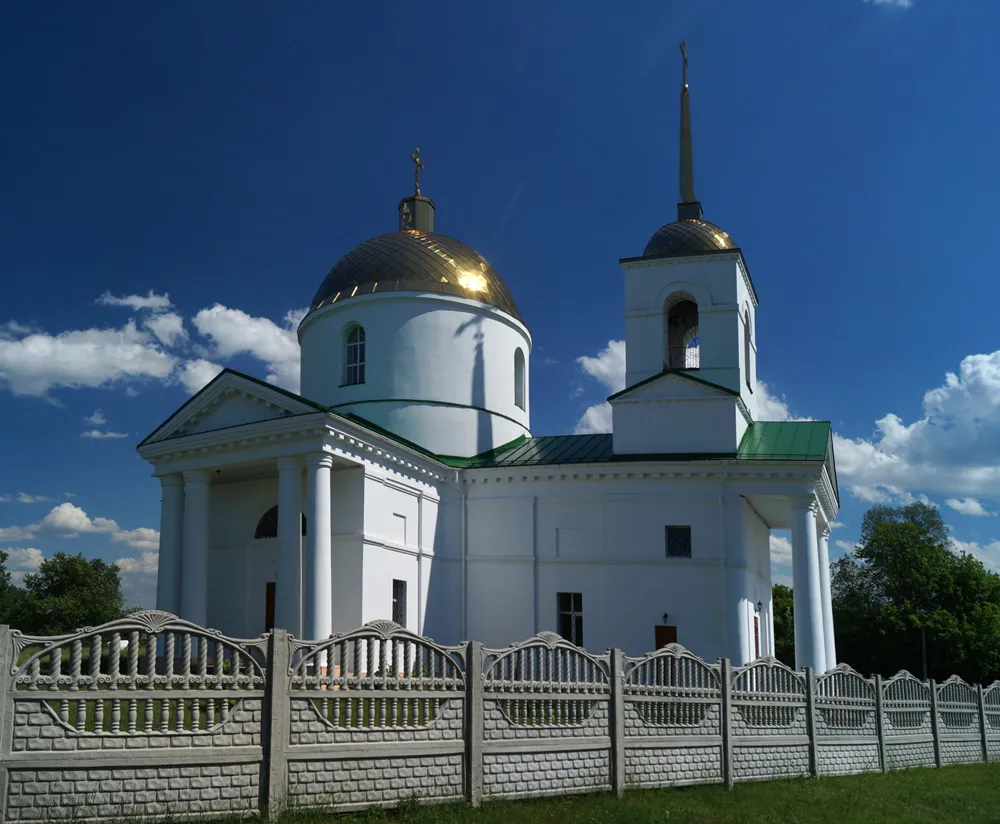
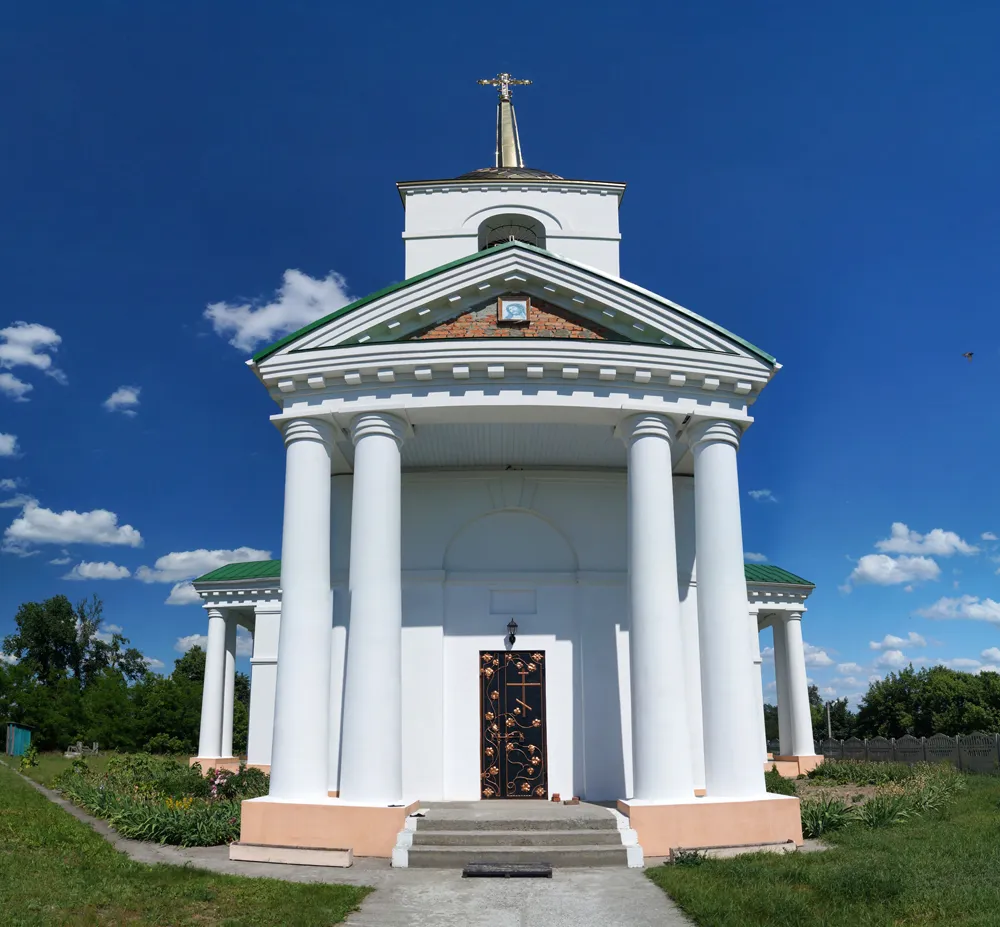
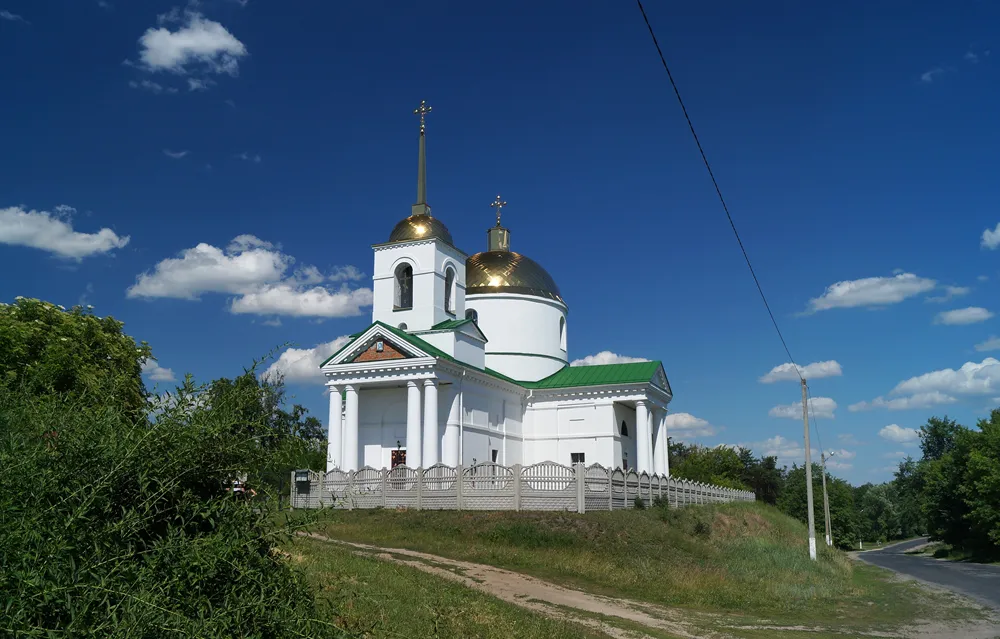
St Nicholas Church
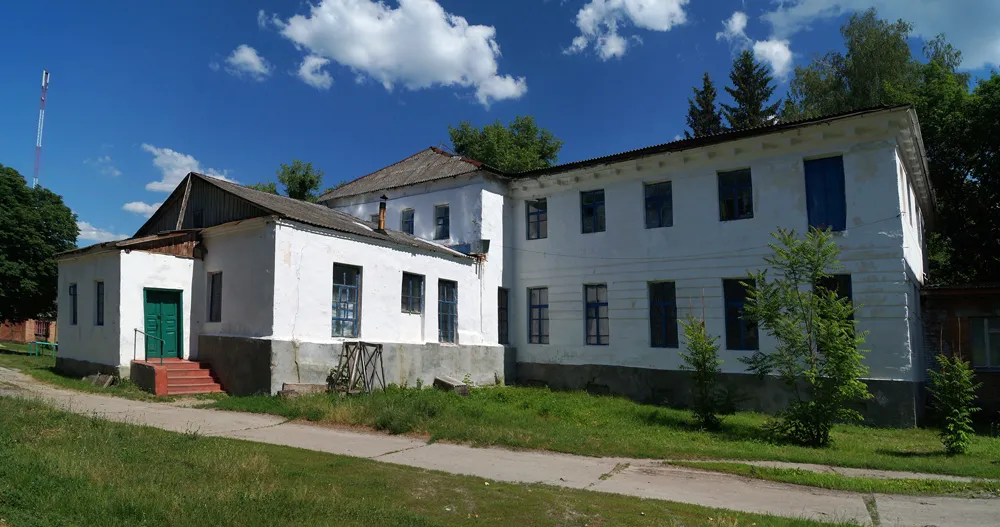
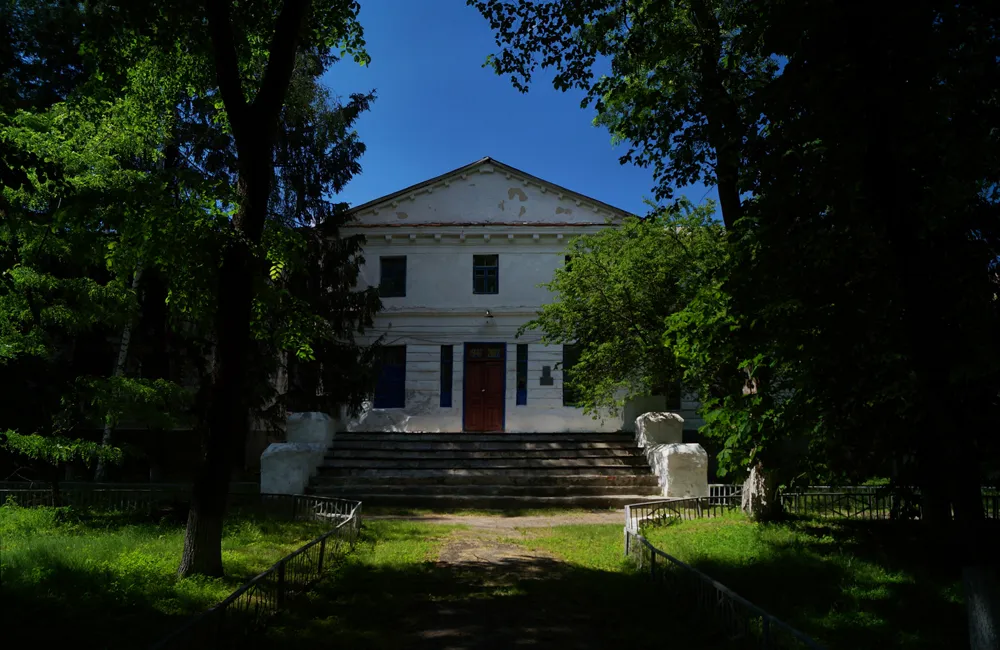
The rebuilt Masiukov palace


