

Pervomaiske village. Or is it Yanivka after all?

· 3 min read
The village of Yanivka lies on the banks of the Lovra River in the Hlukhiv area. It was founded in the 17th century by migrant Cossacks. The Cossacks settled in small farmsteads, and one of them was named after its founder, a petty landowner of Cossack origin named Yan. In time the farmstead grew and became a village. It was called that until 1928, when it was renamed Chervone (Krasne). Probably the name Krasne still chafed the Soviet party officials a little, since “krasne” in Ukrainian means “beautiful”, or perhaps because there is another Chervone nearby; in 1957 there was another renaming, and the village came to be called Pervomaiske. And here a small digression on the language question. Even setting aside the Soviet symbolism, why exactly the Ukrainian form Pervomaiske and not Pershotravneve? Probably they did not want to repeat themselves, because nearby there is a small village called Pershe Travnia (May Day).)
In the 19th century the middle-ranking landowners, the Karpeka family, lived in Yanivka. Oleksandr Karpeka owned estates in Lovra and Yanivka, but was in debt all the time. Everything changed under his son Danylo Karpeka. After his father’s death Danylo in a short time became a wealthy owner, using the latest technology and equipment on the estate. He took up lines of business new to him, engaged in forestry and commerce, and had success everywhere, for which he received the nickname “the American of Hlukhiv county”.
Having a small old distillery, in the 1890s the entrepreneur Danylo Karpeka developed and expanded it, acquired a vodka factory and together with his sister’s husband created a wine monopoly. Thanks to his commercial talent the landowner paid off all his father’s debts and even bought land and estates from other landowners and several apartment buildings in Kyiv; he became a trustee of the Chernihiv boys’ gymnasium and built a 57-room palace and a school from his own brick.
The entrepreneur had big plans in the sugar business, and the example of the Tereshchenko family pushed him toward it. Karpeka bought the Uzyn sugar factory. And perhaps we would have had a second “Tereshchenko”, but an unpleasant event occurred.
His wife Yevheniia Lukivna started an affair with Danylo Karpeka’s nephew. This, and the subsequent divorce, greatly affected the entrepreneur’s moral state and, as a result, his commercial activity and finances. In 1914 Danylo Karpeka died.
During the revolution of 1917 the Karpeka estates were destroyed, the house burned, and the factory plundered and also destroyed.
Danylo Karpeka left three children, of whom the best known was his son Oleksandr Danylovych Karpeka, one of the founders of aviation in the Russian Empire, who studied under Sikorsky, worked in his workshop, and died young, in 1918, of typhus.
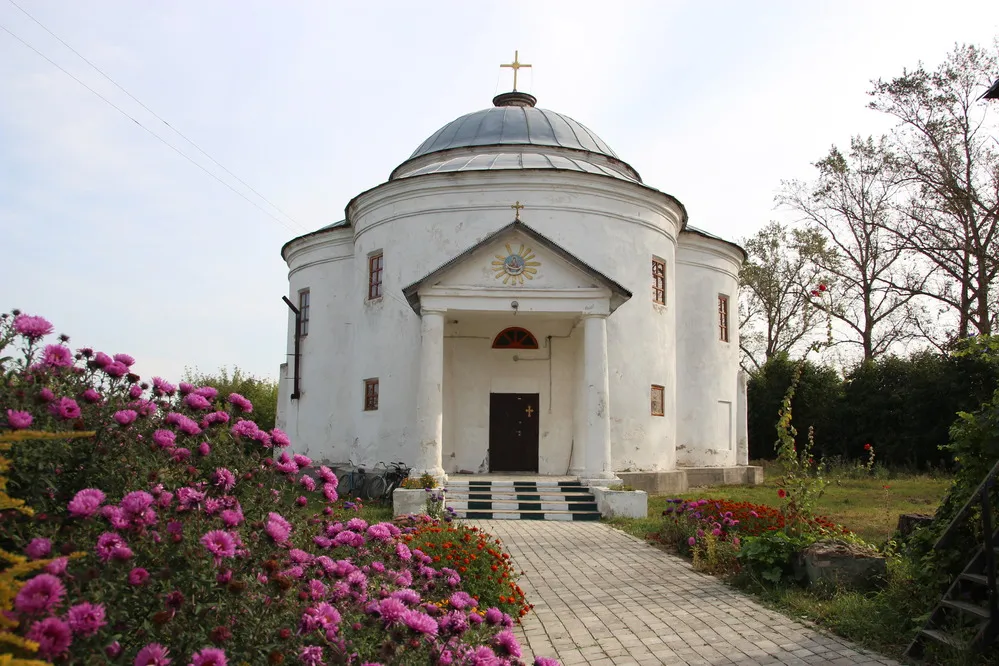
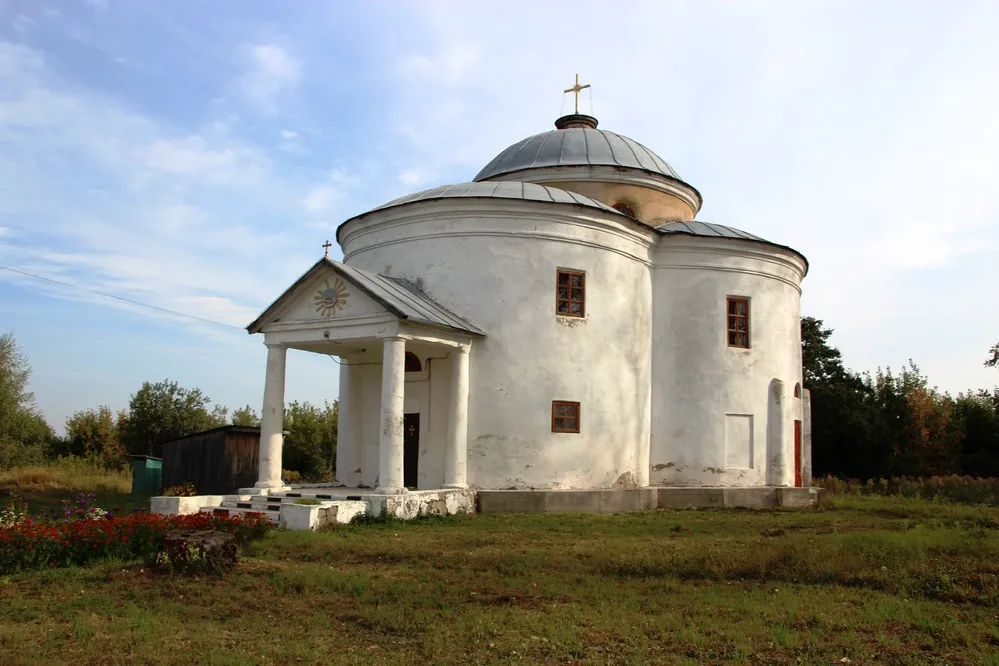
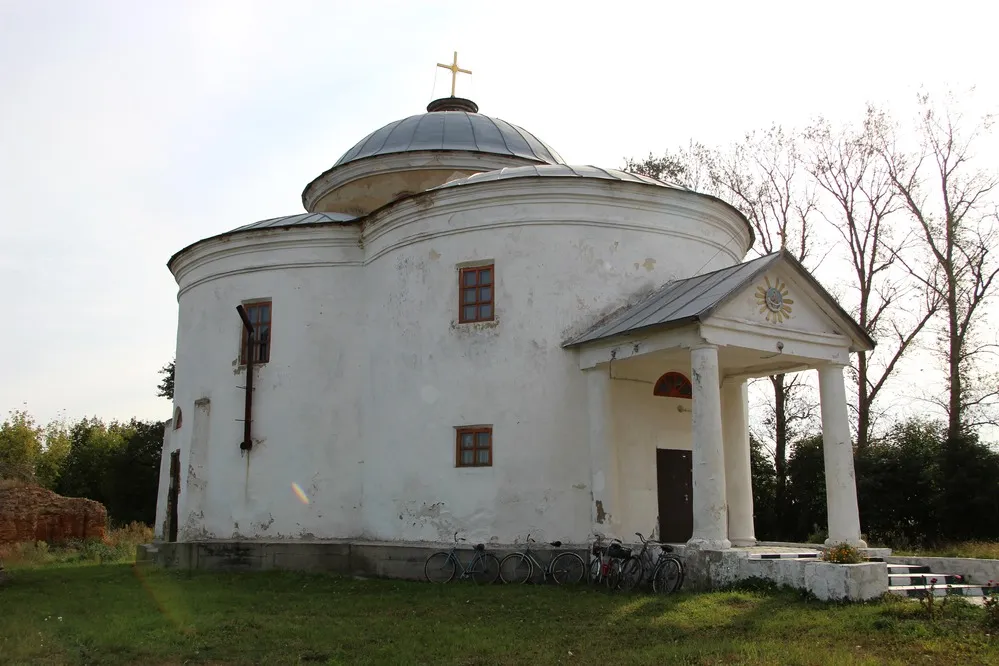
The Church of the Intercession in the village was laid down in 1803 and consecrated in 1812. The church was built with funds from the landowner Mykhailo Karpeka. It is said that the landowner wished the church to be consecrated in honour of the Archangel Michael, but during prayer the Mother of God descended from heaven and covered the church with a silvery veil. That is how it became the Church of the Intercession. The parish of the church included up to fifteen villages and farmsteads, and there was a church choir of 18 singers. An exceptional case: the church was never closed and services were held under all regimes.
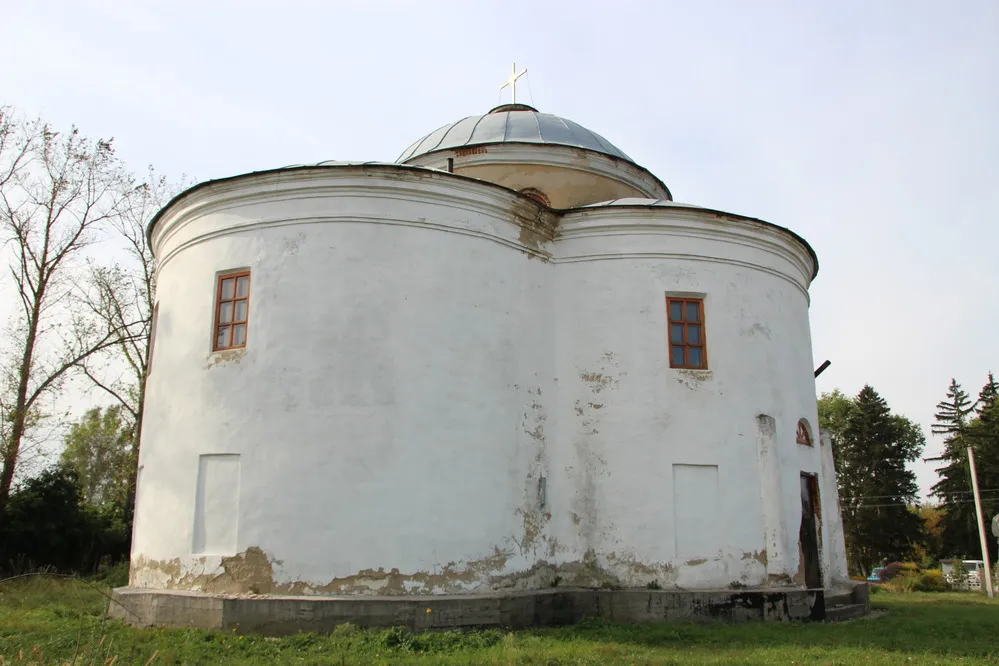
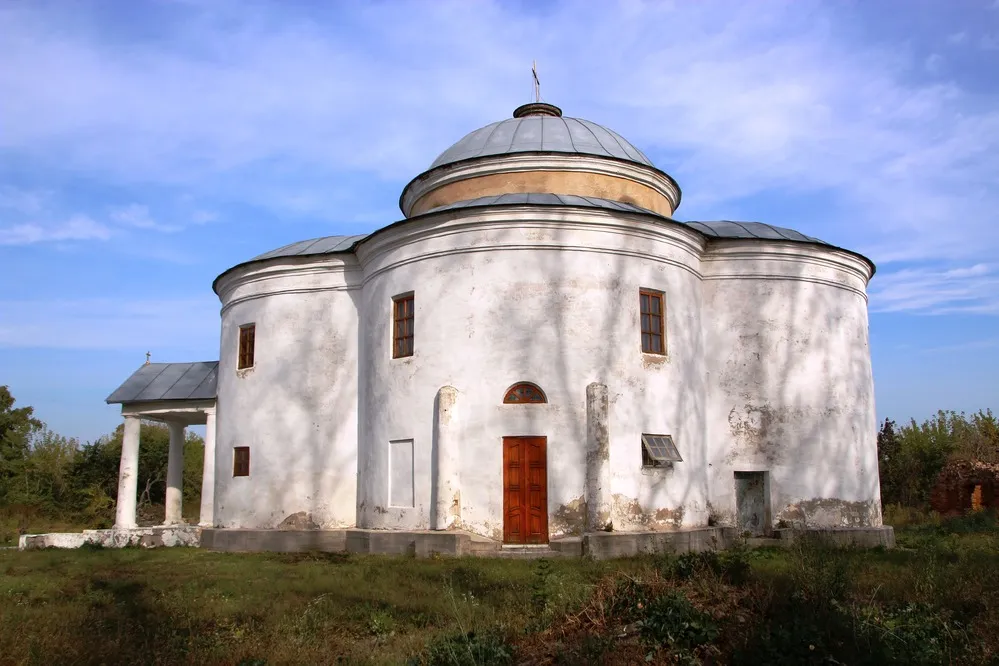
The church has an unusual shape, thanks to which from afar it can resemble a rotunda, although it is cross-shaped, the cross being formed by four hemispheres.
Text and photos by Ihor Dorozhko, Oleh Hoda and Maksym Nazarenko.


