Battlefield of Konotop

· 4 min read
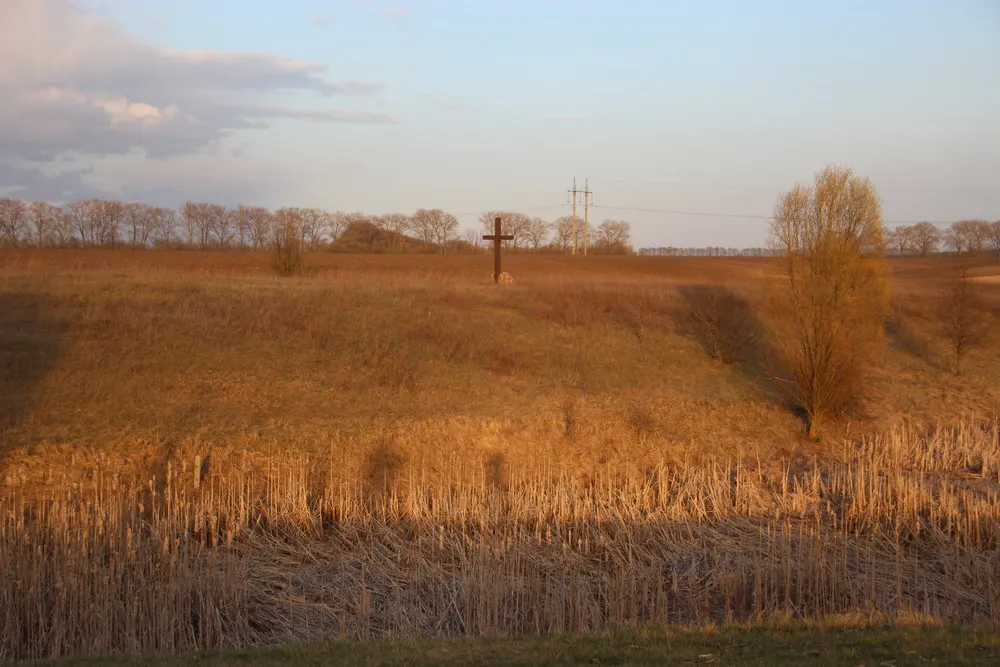
A significant place in the heroic history of Ukraine, a broad field richly soaked with the blood of our Cossack ancestors and of the invaders from Muscovy who encroached on the freedom and independence of the Cossack state: this is the field near Konotop where in 1659 a great battle, victorious for the Cossacks, took place, which is called the Battle of Konotop.
And this battle was fought not against the Kingdom of Poland, as earlier under Khmelnytskyi, but against the army of Tsar Alexei Mikhailovich, a picked one and far superior in numbers to the Cossack and allied forces.
In 1654 the Pereiaslav Council took place, and already in August 1658, in violation of the agreements, tsarist troops led by the Belgorod voivode G. Romodanovsky were brought into the Left Bank.
In response Hetman Ivan Vyhovskyi concluded the Treaty of Hadiach, under which a new federal Polish-Lithuanian-Ukrainian state appeared. And already at the end of 1658 Vyhovskyi’s troops, together with the Crimean Tatars and Polish units, drove Romodanovsky’s troops out of the Left Bank.
In April 1659 a 100,000-strong army of the tsar’s boyars, Princes O. Trubetskoy, S. Pozharsky and S. Lvov, moved into Ukrainian lands. The Russian historian Solovyov in the 19th century gave the figure of 150,000, while now the Russian Wikipedia bashfully gives a total of 28,500 and, in addition, 6,500 Cossacks of Moscow’s protégé Hetman Ivan Bezpalyi, while writing that the Cossack-Tatar army numbered about 50,000, with Vyhovskyi’s Cossacks only 16,000 of them.
The heroism of the defenders of Konotop fortress must be noted: 5,000 Cossacks in all, led by the Nizhyn colonel Hryhorii Huliantskyi, who held the town’s defence for 2 months under siege and constant assaults by the 100,000-strong tsarist army.
This allowed Ivan Vyhovskyi to agree on help with the Crimean Khan Mehmed IV Giray and to gather the loyal Cossack regiments.
The course of the Battle of Konotop is described quite fully and widely in various sources, so we will not retell it; we will note only that, according to various data, from 30,000 to 60,000 tsarist soldiers fell on the Konotop field, a large number of tsarist commanders were taken prisoner, among them Prince Pozharsky, Prince Lvov, the Buturlin brothers and Prince Lyapunov, and that the Battle of Konotop was won thanks to military art, not numerical superiority, and is one of the grandest victorious battles in the history of Ukraine.
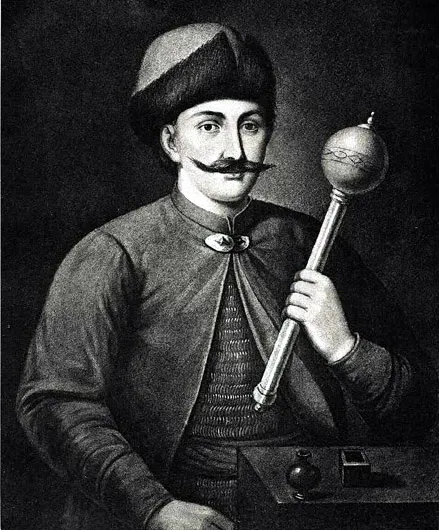
Ivan Vyhovskyi
It will not be superfluous to note that even imperial historians of the 19th century acknowledged the crushing defeat of the Muscovite army; in particular, the well-known Russian scholar Sergei Solovyov (1820–1879), professor and rector of Moscow University, wrote about the Battle of Konotop:
“The flower of the Moscow cavalry, which had made the successful campaigns of 1654 and 1655, perished in one day, and never after that was the Moscow tsar able to put such a brilliant army into the field. Tsar Alexei Mikhailovich came out to the people in mourning clothes, and horror seized Moscow…”
And the Konotop victory is also celebrated, very laconically but capaciously and to the point, in a kobzar song:
“To the city of Konotop the army was approaching,
Voivode Trubetskoy’s camps took their stand.
Our glorious Hetman Ivan Vyhovskyi, against that siege,
Gathered a Cossack army, and a Horde as well to help.
The Cossacks wanted to teach the Muscovite a lesson,
And to that end they thought of damming the river.
Secretly, by day and by night, they heaped up the dam,
After which everything around turned into a bog.
The Horde on the left, and the army on the right, glorious with the Cossacks,
Lay in hiding in the floodplain, awaiting the fight.
Detachments were sent to Trubetskoy’s camp,
To lure the Muscovites onto the slippery road.
The meeting came, the slaughter came, the cannons roared,
The sabres clashed, and the Cossacks began to retreat.
The Muscovite roars, the Muscovite presses with all his might,
Until they lured them into the bog.
Then, in the bog, they surrounded them nicely,
Beat, slashed and hacked, trampled them into the bog.
From early morning until noon the cannons roared,
Spears bent and broke, and arrows flew.
The Muscovites earned what they did not wish for:
Shot and hacked, they died in the mud.
Glory to father Ivan Vyhovskyi, glory to Ukraine!
Glory to the Cossack army from time immemorial to this day!”
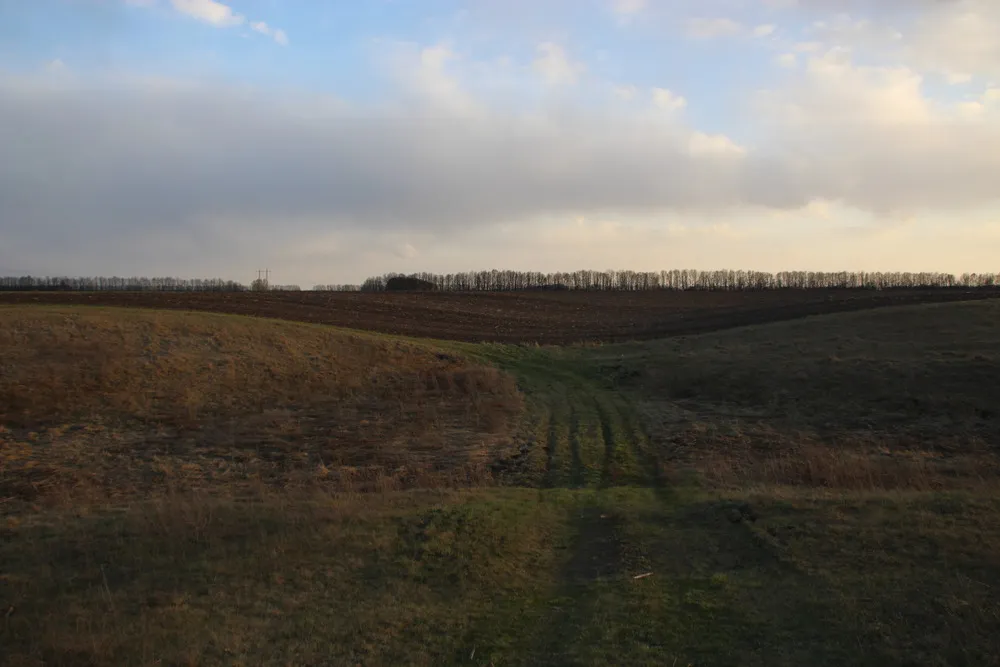
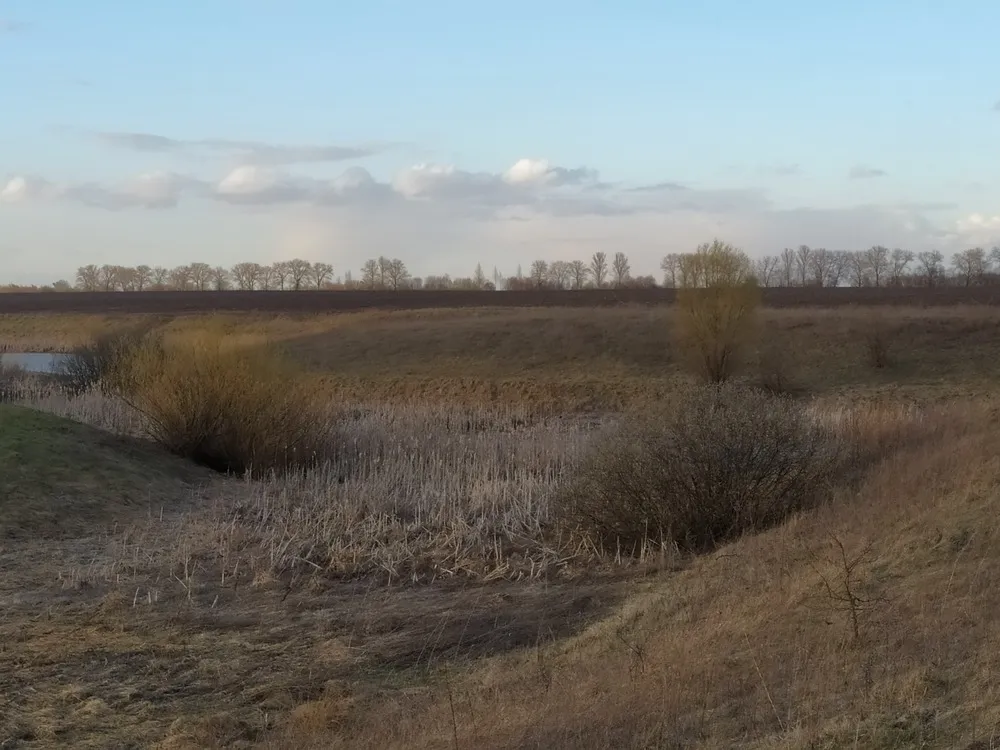
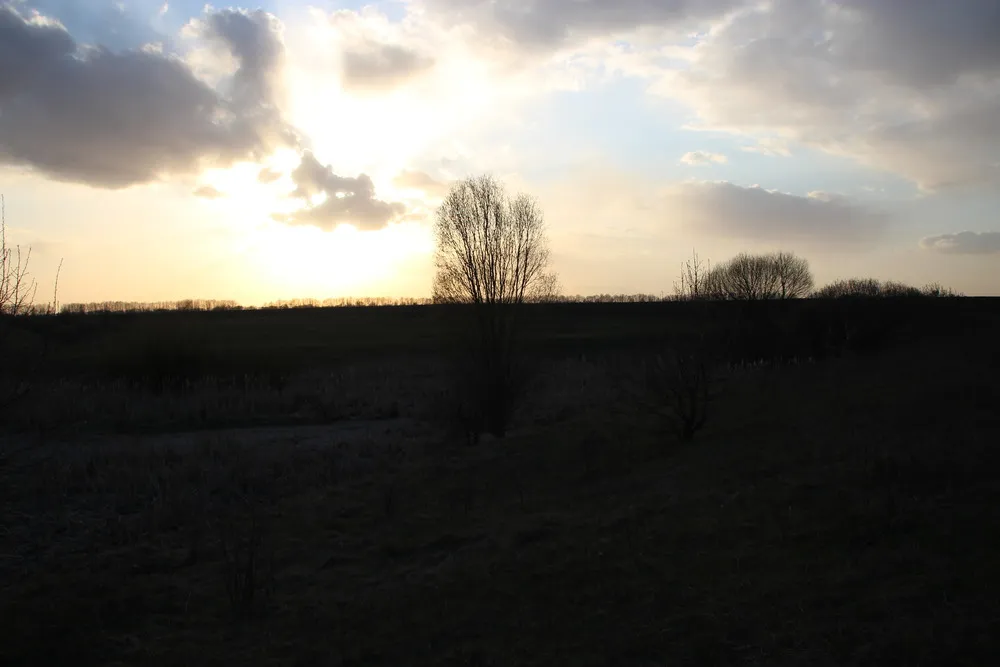
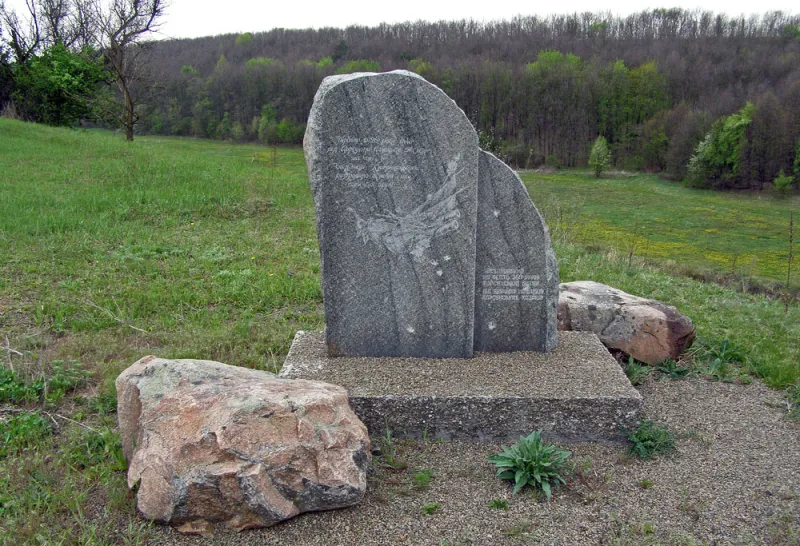
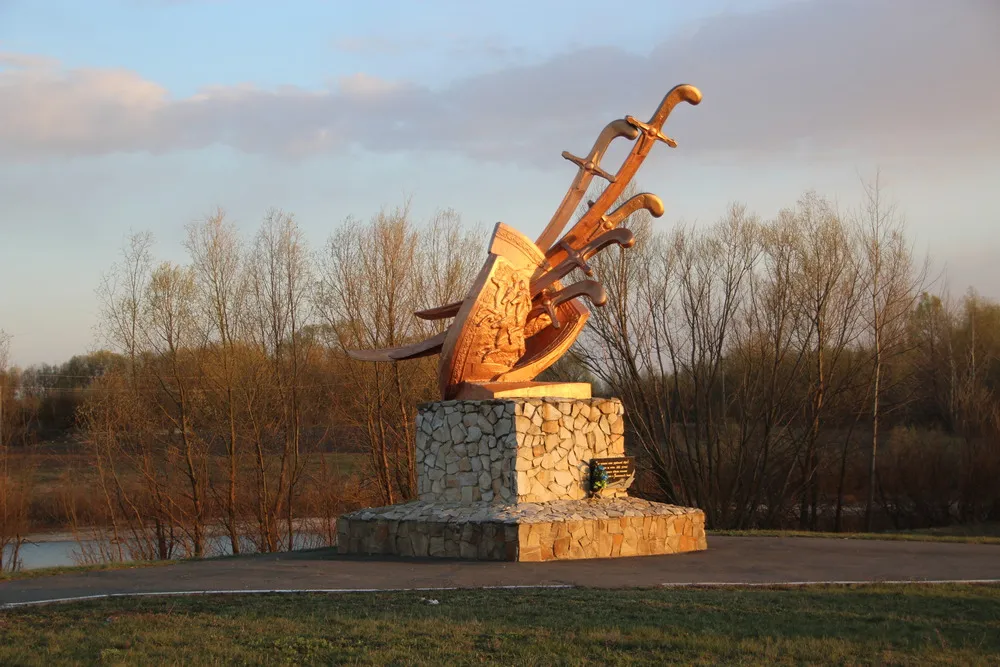
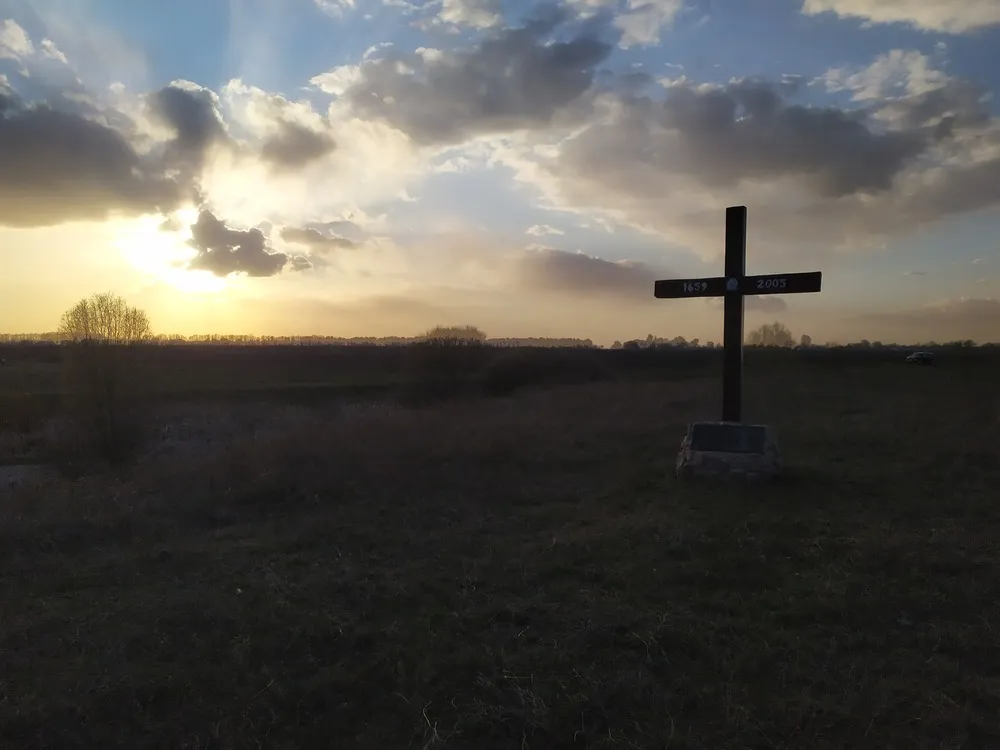
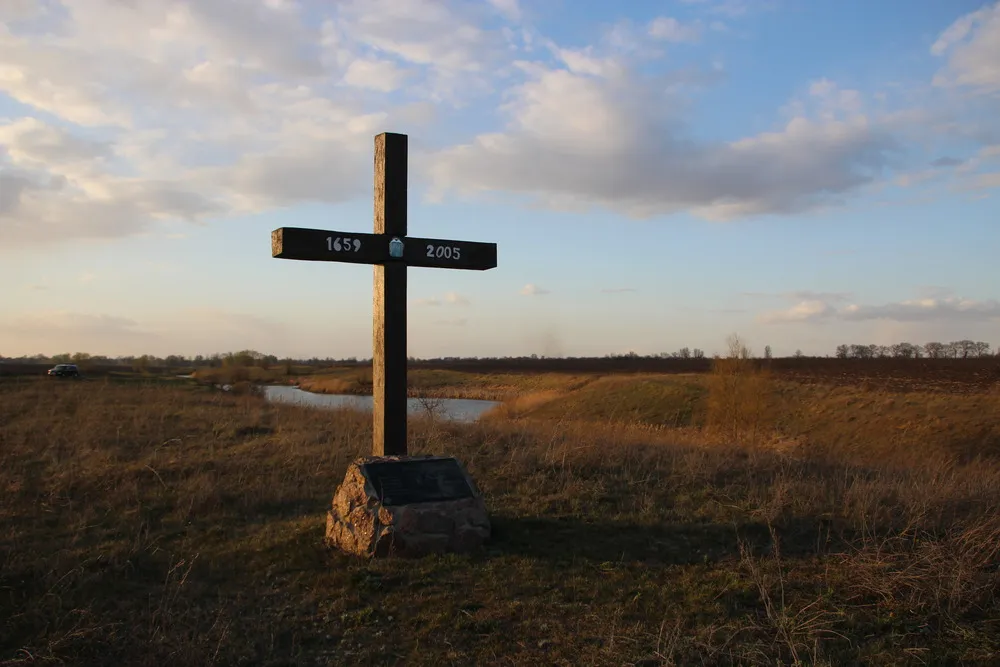
And once again we stress that such significant events in Ukrainian history deserve a full memorial, not just a modest pedestal, a cross and a few reminder plaques.
And for reflection, we give a quotation about the level of Ukrainian national consciousness from Maksym Strikha’s interview for “Radio Svoboda”:
“We really are a people that is still ready to mourn its heroic dying and be proud of it (meaning the Battle of Berestechko, the authors’ remark), but we underestimate our brilliant victories, of which there were also plenty in our history.”
Text and photos by Ihor Dorozhok, Oleh Hodyna and Maksym Nazarenko.