

Hrunivka. The Bariatynskyi family’s village half-church

· 4 min read
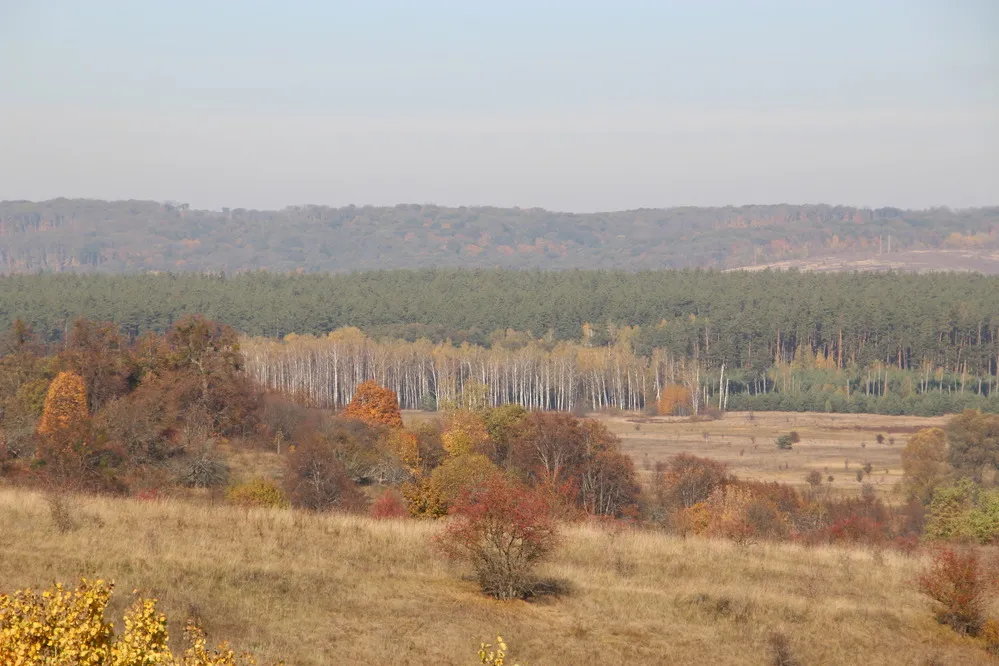
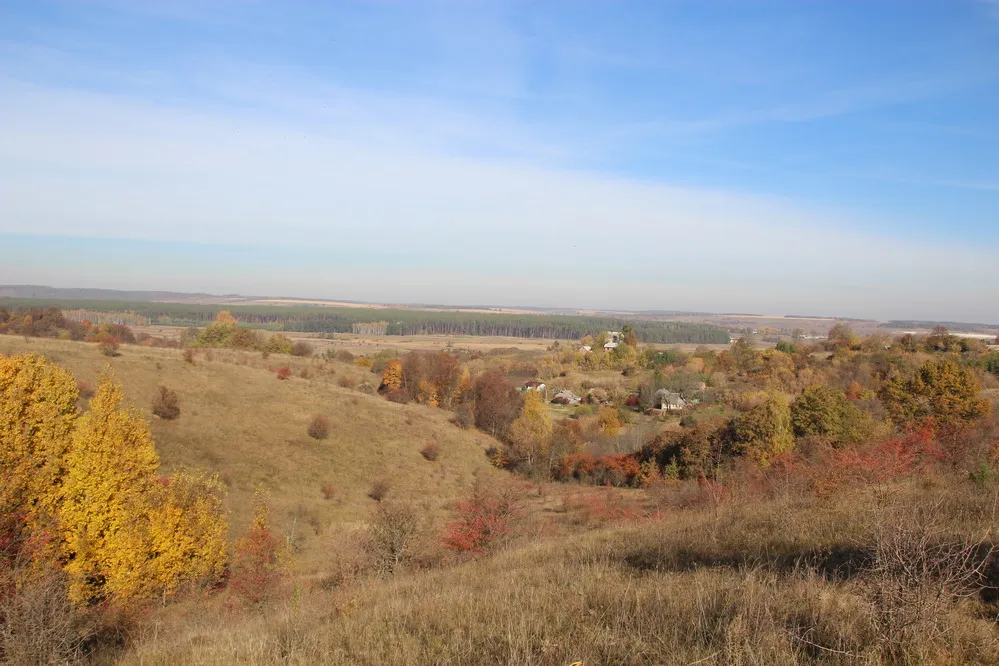
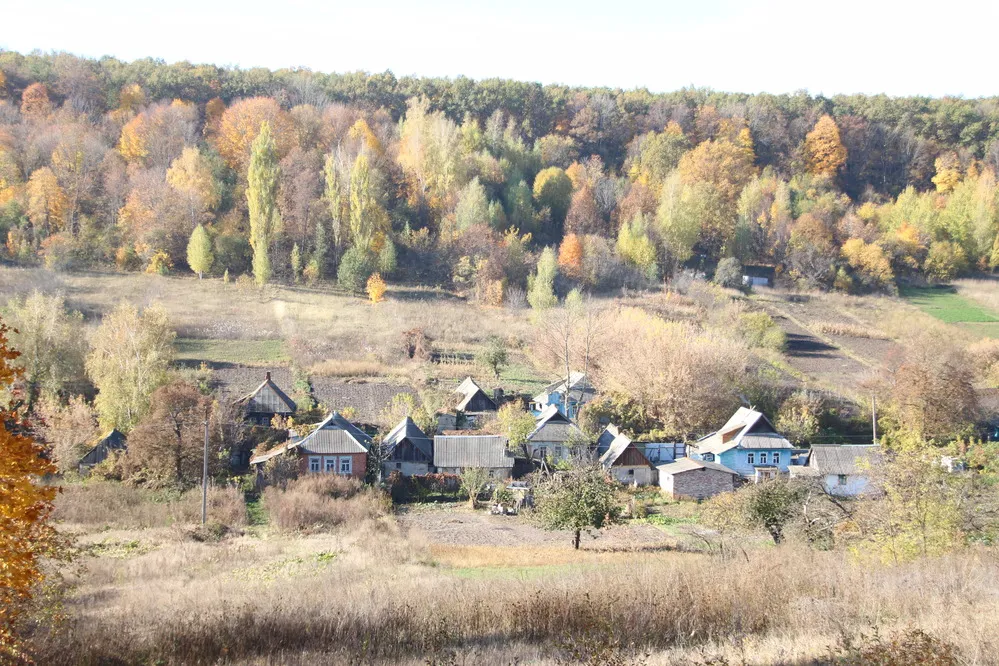
Today the village of Hrunivka in Krasnopillia district is an ordinary Ukrainian village in Sumy region with no more than 160 residents.
But it was once owned by one of the most famous princely families of the Russian Empire – the Bariatynskyis. It was under the Bariatynskyis, whose lineage goes back to Prince Michael of Chernigov, a descendant of Rurik in the eleventh generation, that the village reached its greatest flourishing.
We will not tell the story of the family itself; quite a lot of information about it, as about its individual members, can be found online. We will dwell only on a few interesting facts from the biography of the last owner of the estate in Hrunivka, Prince Viktor Ivanovych Bariatynskyi (1823-1994).
Viktor Ivanovych was the son of Ivan Ivanovych Bariatynskyi (1767-1825), a well-known diplomat who worked in England and Bavaria and a wealthy landowner who owned at least 20,000 serf souls in the Kursk and Kharkiv governorates. The Bariatynskyis’ main estate was in the village of Ivanovskoe, now in Russia; the family crypt, where almost all members of the family were buried, was also there, but in the 1930s it was looted and destroyed.
Viktor Ivanovych was the youngest of all 8 children; his father died when little Viktor was only two years old. From his father he inherited the estates in Hrunivka and Mykolaivka. But he settled in Hrunivka only after retiring. Before that Bariatynskyi had a stormy, eventful life connected with his military service, which, of course, did not allow for a settled existence. He served in the navy, took part in the defence of Sevastopol, was at various times under the personal command of Admirals Lazarev, Kornilov and Nakhimov, and rose to the rank of captain 1st rank.
Bariatynskyi had a considerable gift for archaeology and carried out research; he took part in the excavations of Tauric Chersonesos, and while living for some time in Greece he was the first to determine theoretically the exact place where the Theatre of Dionysus was located at the foot of the Acropolis in Athens. These calculations of his were later confirmed by Schliemann.
In Hrunivka the prince paid much attention to the estate: he built a 42-room palace with a large farmstead beside it, and the road was paved with cobblestones. The palace had a museum, a library and a picture gallery. Viktor Ivanovych inherited a large library from his elder brother Oleksandr, which, in fulfilment of his brother’s will, he loaded onto 60 carts and took to Kursk and then to Moscow. Along with the books a huge family archive was taken away. Most of it is now in museums. Incidentally, since we mentioned the elder brother, he is probably the most famous of the Bariatynskyis. Oleksandr Ivanovych made a brilliant military career in the Caucasian and Crimean wars and rose to the rank of general field marshal.
In Hrunivka Viktor Ivanovych was also actively involved in public affairs as an honorary justice of the peace and a zemstvo councillor.
For the last 12 years of his life the prince was ill and spent almost all his time abroad, in Rome, where he died of nephritis in 1904 (kidney diseases were characteristic of many Bariatynskyis).
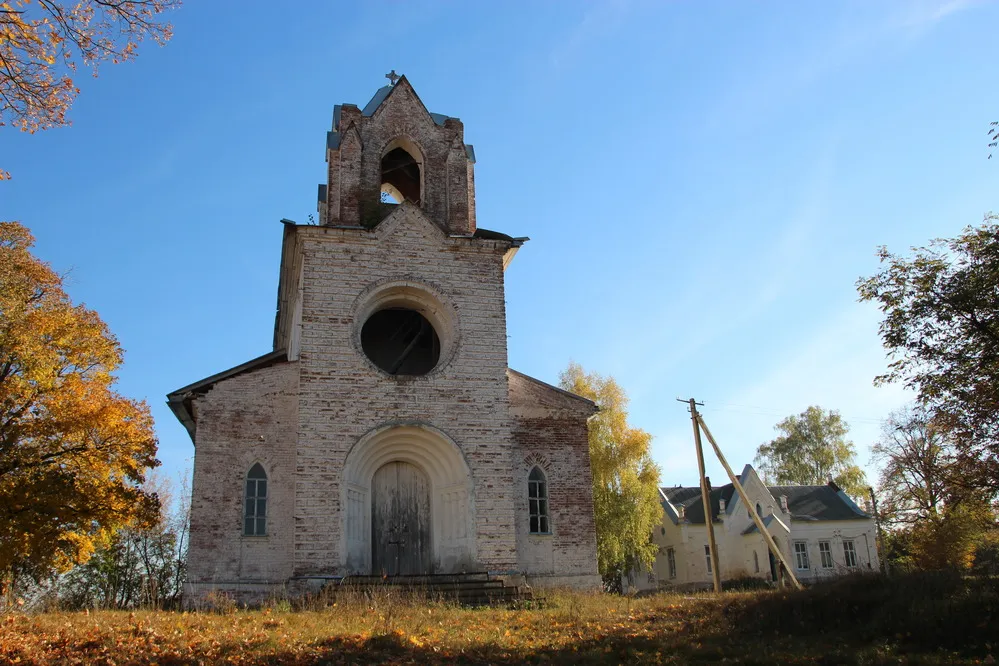
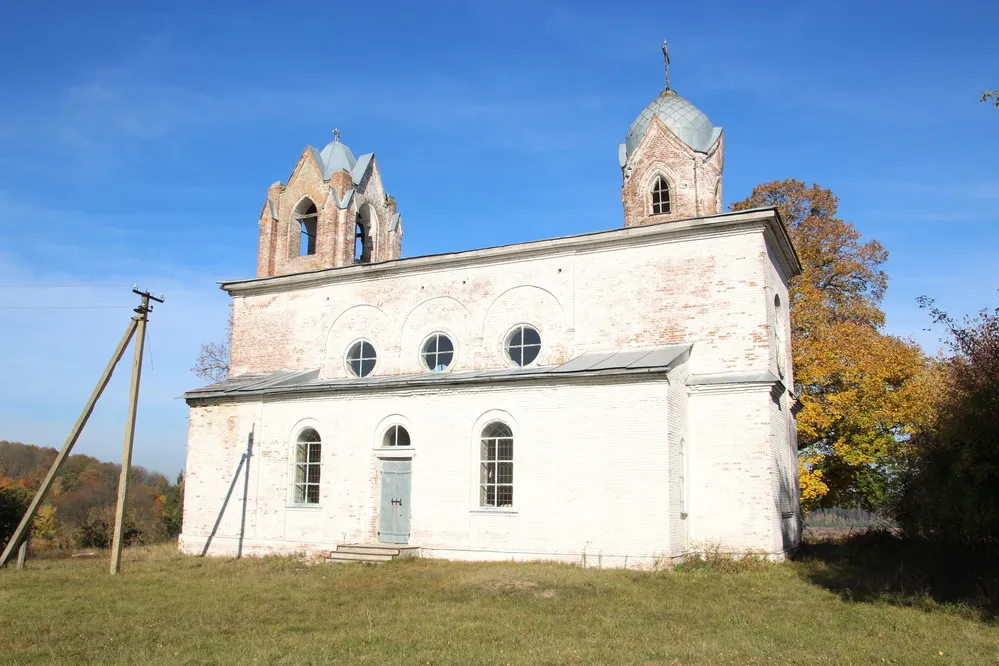
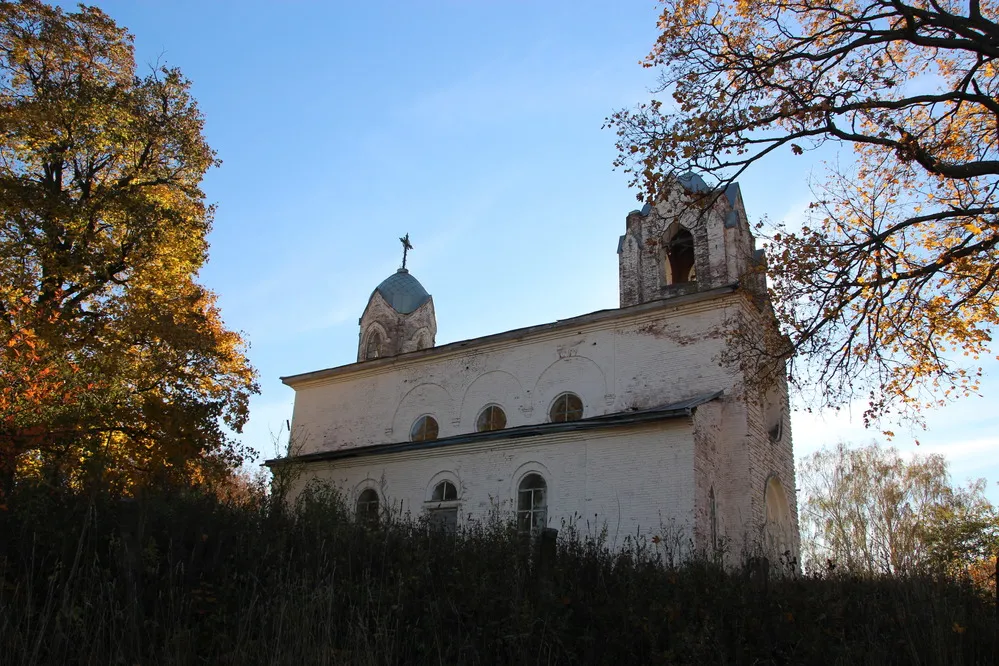
In 1860-1861 (at least that date is given as the time of founding; they say there was also a brick with the imprint “1861”, but its trace has been lost) Viktor Ivanovych built in the village a red-brick church, consecrated in honour of the Archangel Michael. The church is absolutely unique; nothing similar can be found in Ukraine.
At first glance one notices architectural motifs characteristic of Roman Catholic churches. And so it is: in the past this was a half-Catholic church and half Orthodox church. Both Catholic and Orthodox services were held in it. The thing is that the wife of Viktor Ivanovych Bariatynskyi, Maria Apollinarivna, née Butenieva (1835-1906), whom he married in 1855, had lived almost all her pre-marital life in Italy and was a believer of the Latin rite.
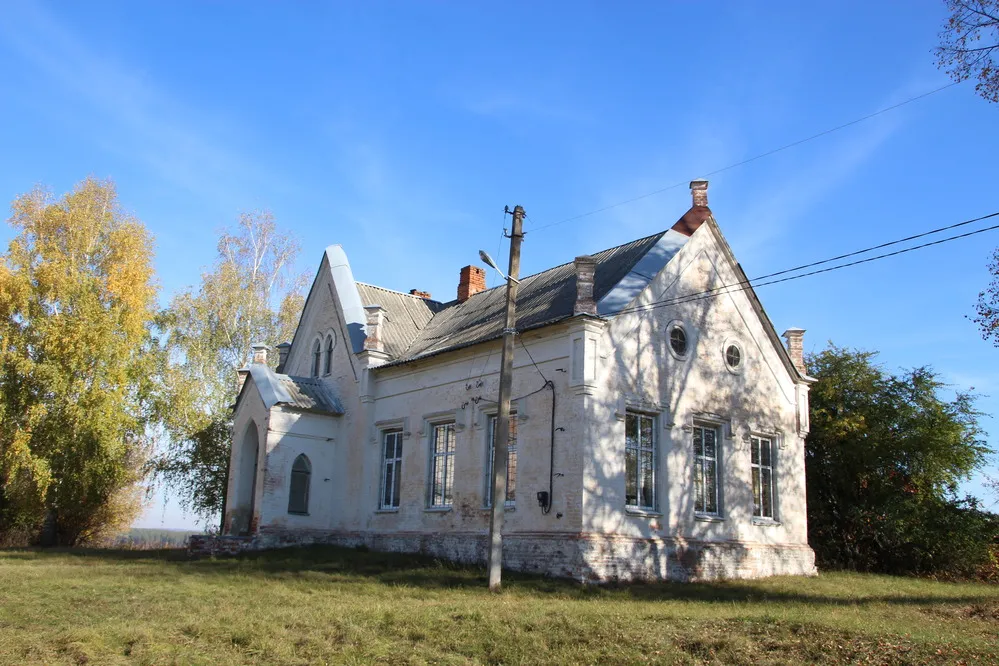
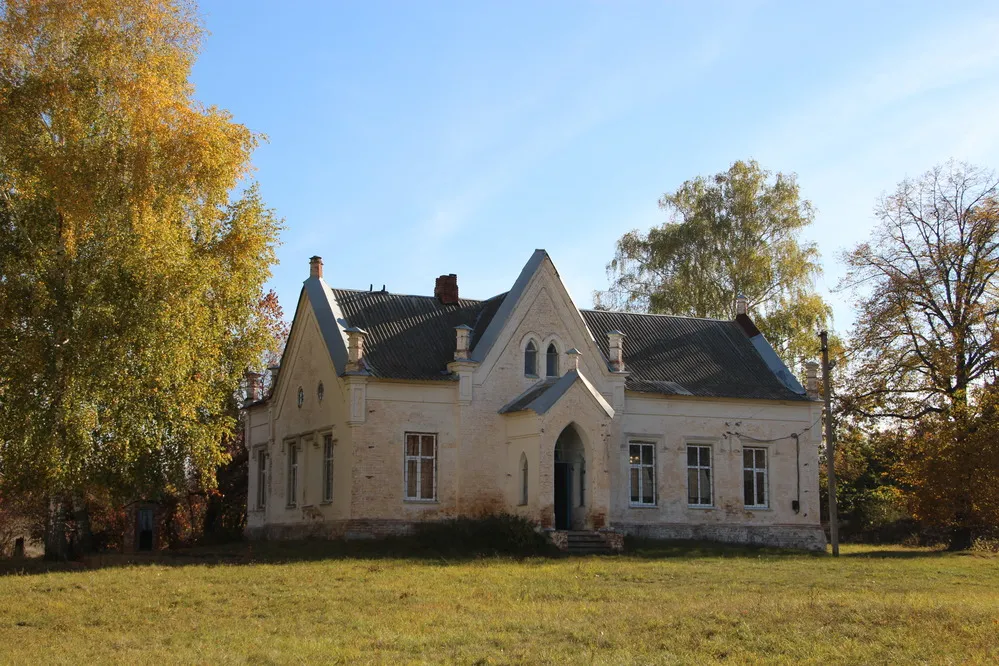
Not far from the church stands a parish school, which has been well preserved to this day. In 1874 Princess Maria Bariatynska opened a children’s shelter in the village.
The fate of the church in Soviet times is similar to that of many others.
In 1929 it was closed and the building was handed over to the needs of the collective farm, which turned it into a storehouse.
Then, during the war, services resumed and continued until 1962. Then the church was closed again, all the church inventory, utensils and liturgical attributes were handed over to the church of the village of Zapsillia, and the premises again went to farm use. Since 1995 services in the church have been resumed.
But of the huge estate of the Bariatynskyi princes in Hrunivka not a trace remains.
Text and photos by Ihor Dorozhko, Oleh Hoduna and Maksym Nazarenko.


