

Dubovychi. The Kochubei residence

· 8 min read
The village of Dubovychi is one of the oldest in the Krolevets area. Unlike most others, founded by Cossack settlers in the mid-17th century, Dubovychi is mentioned earlier, as early as the 16th century. And before that there was a fortress here, built by order of Volodymyr the Great to guard the borders of Kyivan Rus.
The first settlers in the rebuilt settlement were peasants from across the Dnipro who were fleeing the oppression of the Polish nobility. Then, under Khmelnytskyi, Cossacks joined as well. Until the 1680s
Dubovychi was a free village. A new page in the history of the village, which lasted about 240 years, began with its transfer, by a universal of Ivan Mazepa in 1699, into the possession of Vasyl Leontiiovych Kochubei, General Scribe and General Judge of the Zaporozhian Host. The villages of Dubovychi and Yaroslavets and the farmstead of Retyk were given into Kochubei’s ownership.
All would have gone well in the relations between Kochubei and Mazepa, but in time Kochubei headed an anti-hetman coalition. Kochubei three times appealed to the tsar with denunciations of Mazepa, claiming that he was holding secret negotiations with Poland and Sweden, but Peter I did not believe it. The last time Kochubei, together with the Poltava colonel Ivan Iskra, came in person to the tsar’s field chancellery. If only he had known how it would end. Kochubei and Iskra were subjected to brutal torture, forced to retract their words, and then handed over to Mazepa. And he, of course, executed them for treason. The families of the executed suffered repression, their property was confiscated, and relatives were resettled to remote farmsteads. Only after the Battle of Poltava, where Ivan Mazepa came out against Peter I on the side of Charles, the tsar, acknowledging his mistake, returned the estates to the Kochubeis, and Vasyl Leontiiovych Kochubei and Ivan Iskra themselves were made heroes and buried in the Kyiv Pechersk Lavra as martyrs, and their families were endowed with significant titles and privileges. It has always been so: under any regime they made heroes of those who supported that regime. During the commemoration of the 200th anniversary of the Battle of Poltava the Russian Empire decided to honour Kochubei and Iskra too. Few people know that on Arsenalna Square in Kyiv a monument to Iskra and Kochubei was originally put up in 1914 on the pedestal known to everyone. It did not stand for long. In 1918 the new authorities, by then Ukrainian, dismantled the monument and put a plaster monument to Ivan Mazepa on the pedestal. When the soviets came, they built their own, in honour of the Arsenal workers. There were plenty of cannons, so a cannon was placed on the pedestal, but they did not bother with the memorial plaque, turning it over to the other side and making a new inscription.
What drove Kochubei to betrayal? Was it really a political position, or did a father’s heart push him to this deed? The thing is that relations between Kochubei and Mazepa worsened greatly after Vasyl Leontiiovych found out that his 16-year-old daughter Motria was seeing the 65-year-old hetman and, what is more, was his mistress. Mazepa, already a widower, courted Motria, but her father refused, and Motria was hastily married off to another.
With this we will end the lyrical digression and move on to Dubovychi and its subsequent owners.
It happened traditionally in the Kochubei family that one of the sons, as a rule the first, was necessarily named Vasyl. And in the overwhelming majority the Vasyl Vasylovyches became owners of the family village. To tell the truth, we ourselves sometimes got confused about which of them was in charge when something happened in the village, but we did sort it out. So, in order not to confuse you too, we propose the following from here on. Conventionally we will call the Vasyl Vasylovyches “VV”, adding a number that will mean the “generation”, and, again conventionally, we will consider Vasyl Leontiiovych Kochubei a representative of the 1st generation.
After the return of the estates to the Kochubeis, the property was divided among the sons: Fedir Vasylovych got Yaroslavets, and VV2 (1680–1743), Poltava colonel and bunchuk comrade, got Dubovychi and Retyk, which he owned until his death. By the way, this Vasyl Vasylovych, according to the stories, had 20 children, and even history has not brought down to us all their names.
After the death of VV2 the estates in Dubovychi, the farmstead of Retyk, and also in Yaroslavets went to the second son by age, VV3 (1728–1791). For some reason the elder son, Semen Vasylovych (1725–1779), was left aside, who meanwhile became better known, becoming General Quartermaster (and that was the second person after Hetman Rozumovskyi), Nizhyn colonel, privy councillor and major general. Still, he too was buried in the family nest, in the Church of the Nativity of the Mother of God, which was built in the village by his brother VV3 in 1777. VV3 and his wife Marfa Demianivna had two children: a son, of course VV4 (1750–1800), and a daughter, Yelyzaveta.
This next Vasyl Vasylovych, or VV4, already had sons: Demian, owner of the farmstead of Retyk, where he built a paper factory; Arkadii, governor of Oryol governorate, owner of Yaroslavets (we wrote about this branch in our article about Yaroslavets); Oleksandr; Ivan; and Vasyl, or VV5 (1784–1844), actually the next master of Dubovychi, who built a sugar refinery and a distillery here in 1839. For quite a long time after his death the estate was looked after by his wife, Olena Vasylivna.
The next Vasyl Vasylovych, or VV6 (1829–1878), is known for building in 1863 the house church of the Presentation of the Mother of God on the estate. It is known that in these 2 churches, of the Nativity of the Mother of God and of the Presentation, and next to them, at least 11 members of the Kochubei family were buried. But about the churches a little later.
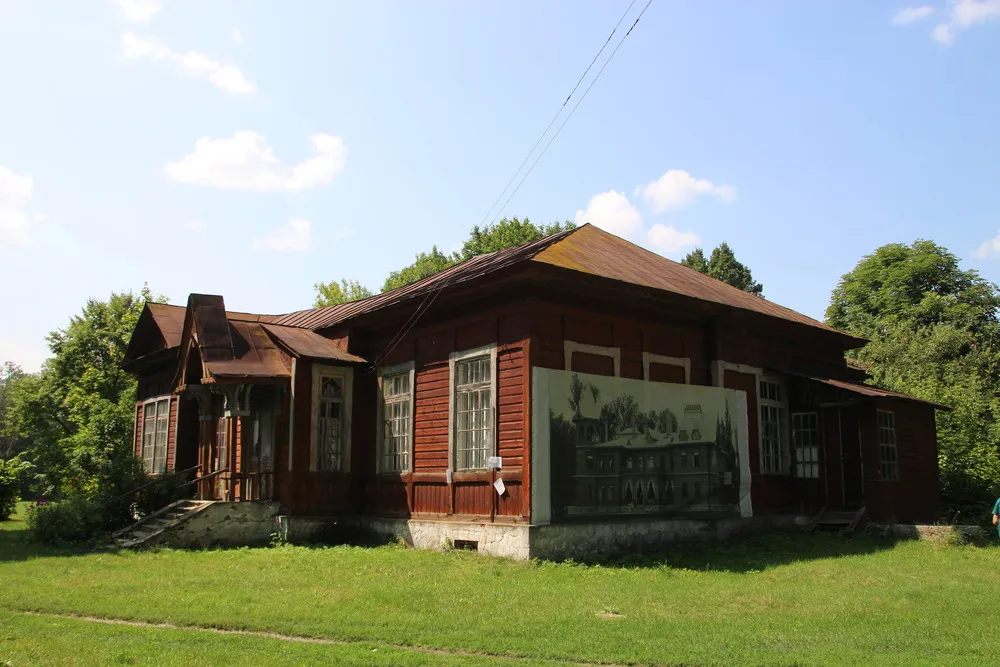
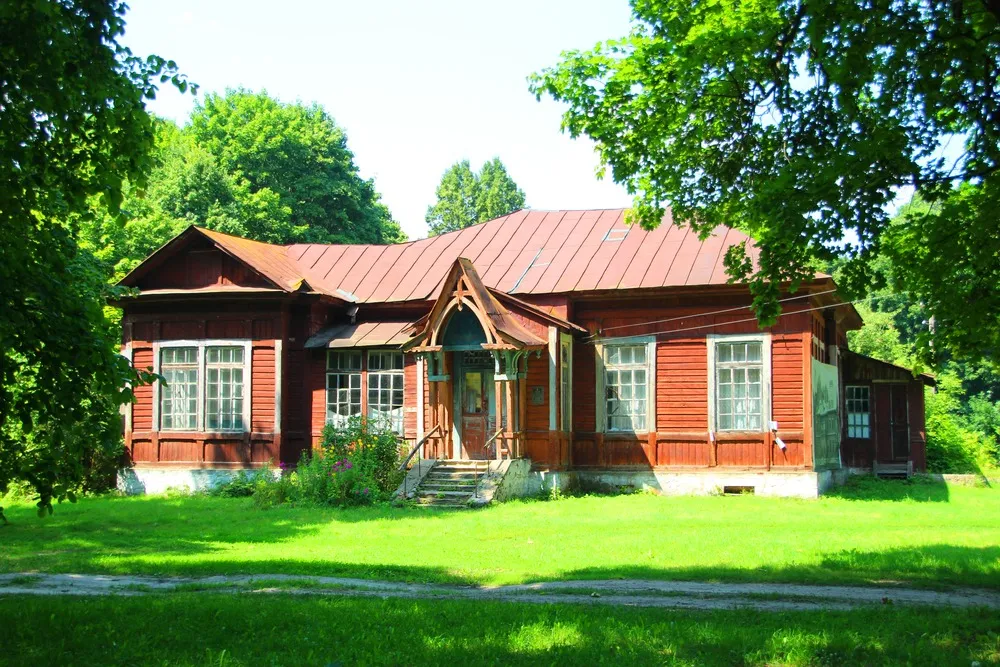
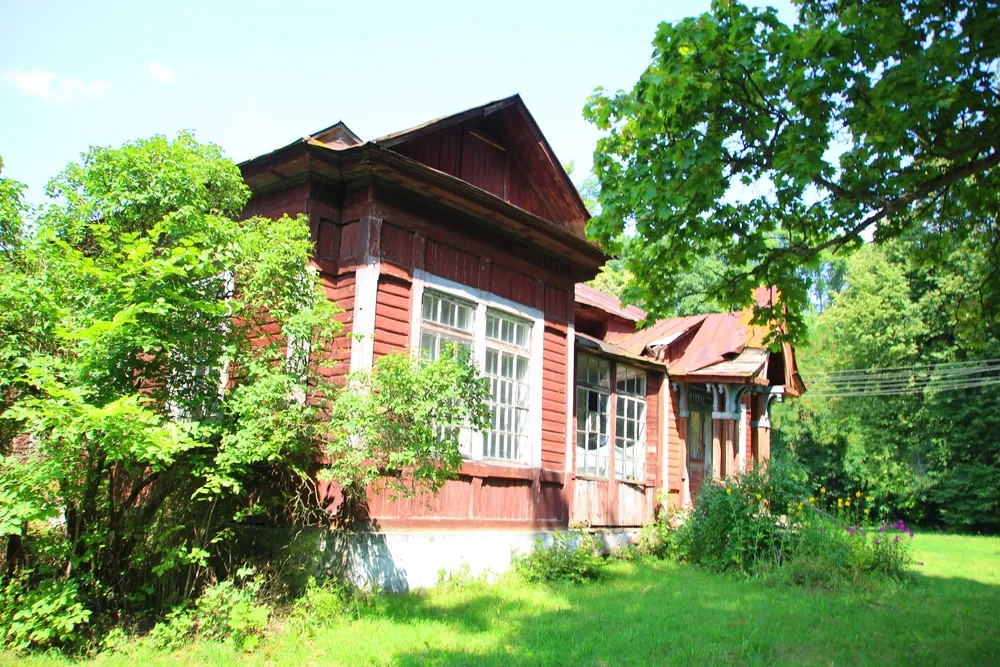
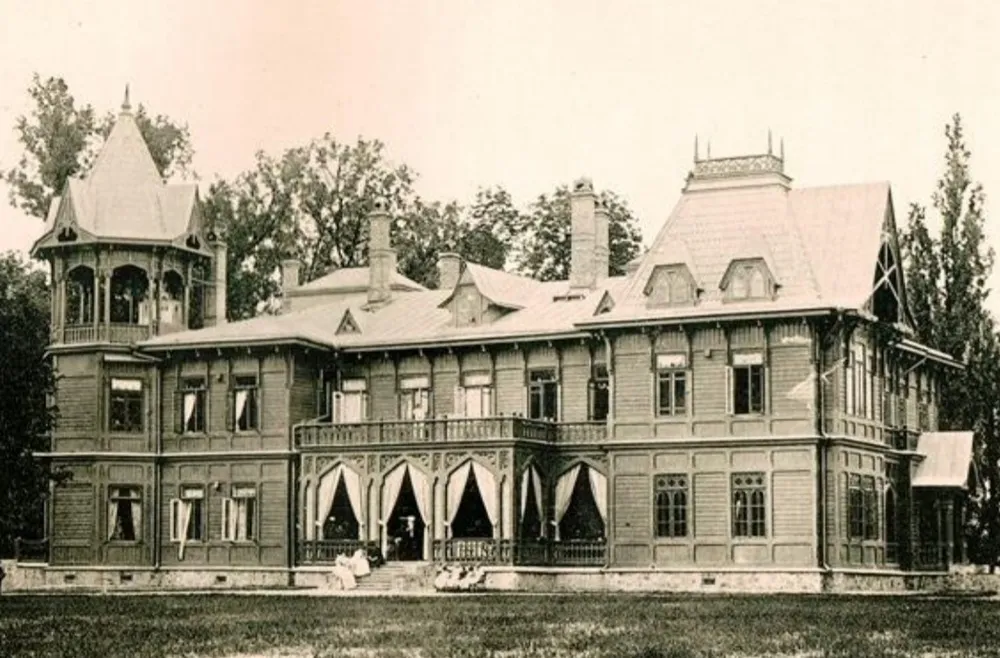
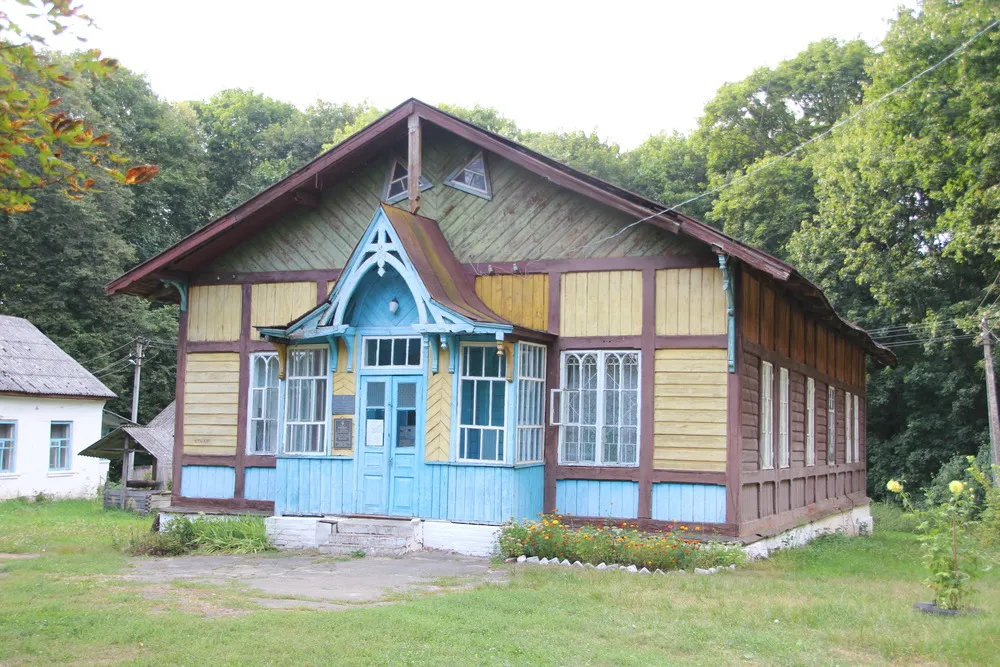
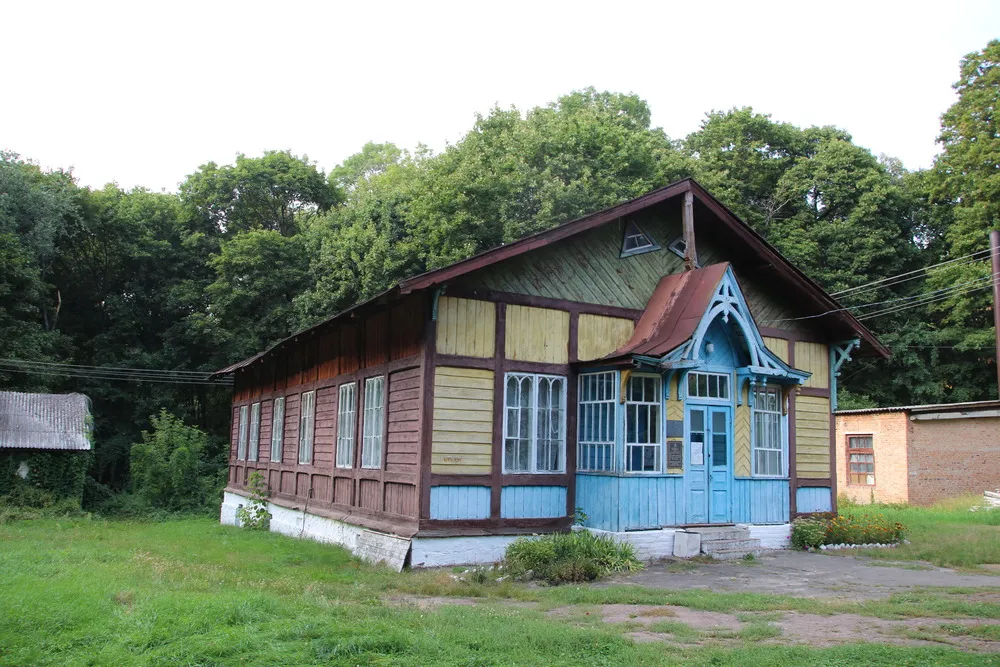
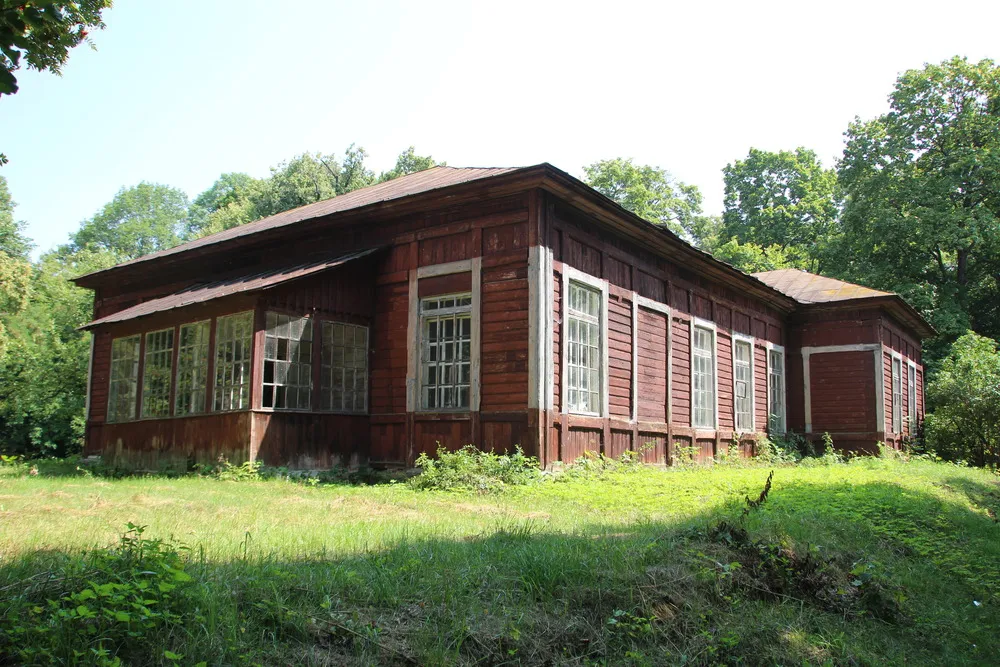
After the death of VV6 and until 1882 part of the Kochubei lands was sold off. The last owner of the village was Varvara Vasylivna Kochubei, daughter of VV6 and great-great-great-great-granddaughter of Vasyl Leontiiovych, that is, Dubovychi was owned by 7 generations of the Kochubeis. It was for her, in 1890, that the Kochubei manor complex in Dubovychi was built, which has come down to our time in a truncated form. These are the manor house and an outbuilding. It all looks more or less decent (everything is known by comparison), but if you look at an old photograph, you can see how beautiful this palace was in its best times. The complex has monument status.
Dubovychi had three churches. Now not one of these old churches remains; all were destroyed in Soviet times.
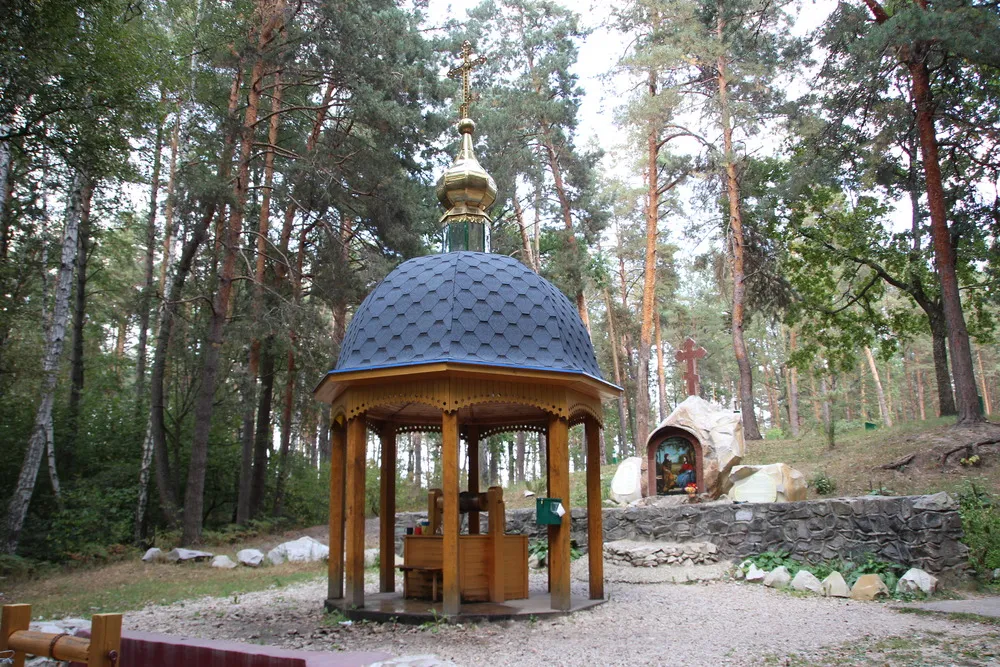
The proto-church, that is, the very first, which existed before these three, was St. Michael’s. It was built as early as the end of the 16th century on the spot where a miraculous icon of the Mother of God was found. It functioned until the construction in 1777 of the already mentioned Church of the Nativity of the Mother of God. On this spot there is still the Dubovychi well with a (modern) chapel. The well is tended and put in order, and thousands of believers come to it.
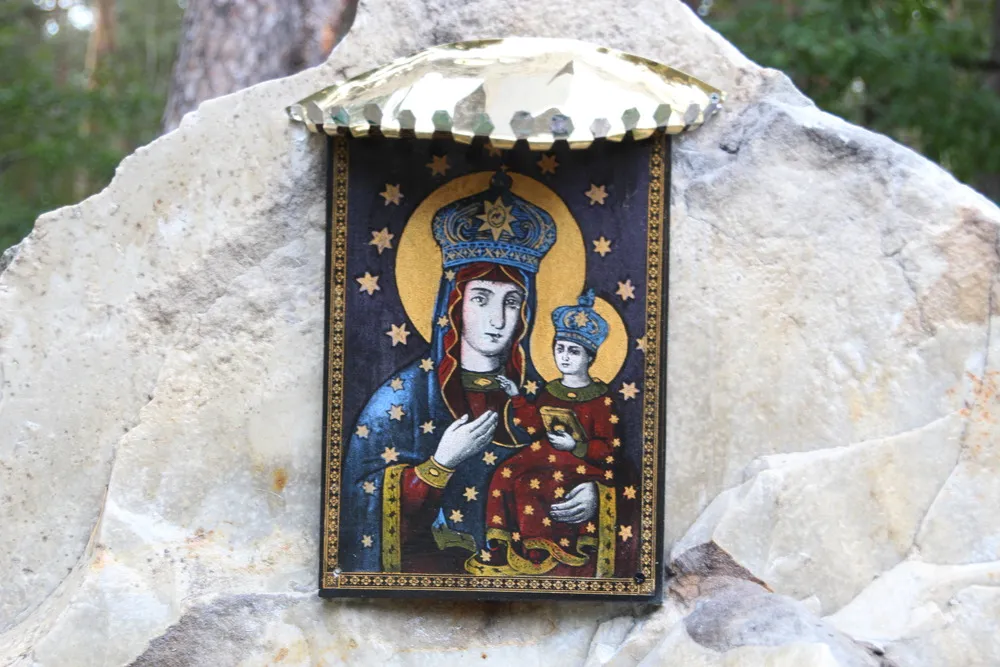
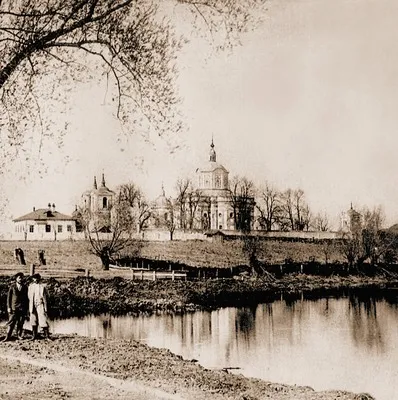
The Church of the Nativity of the Mother of God was the most majestic and richly decorated. The “Chernihiv Diocesan Gazette” wrote in its time (quoted here in translation): “A splendid church, in size and decoration; moreover, surrounded by a beautiful fence.” The church kept many old items dating from the time of Vasyl Leontiiovych Kochubei: a silver chalice with a name inscription, old books. It is firmly established that buried in the church were the founder of the church VV3, his brother Semen Vasylovych, and his children VV4 and Yelyzaveta, and also his grandson VV5, with his wife Varvara Mykolaivna, née Rakhmanova. In 1917 the church was plundered, in 1929 closed, in 1936 dismantled, and its brick was used for the building of a house of culture (which stands to this day). During the war services were allowed in the house of culture, but a year later they were moved to the former manorial kitchen, and in 1960 they were stopped altogether. The bell tower, which stood next to the church and had 8 bells, was destroyed in 1938. The Church of the Nativity of the Mother of God in Dubovychi was revived only in 2001. The miraculous icon is currently kept in Kyiv.
The second oldest church in the village was the Dormition Church. It was built in 1710 in the farmstead of Retyk by Vasyl Leontiiovych’s wife, Liubov Fedorivna. In 1803 its property was moved to Dubovychi, to the Church of the Nativity of the Mother of God, and the church itself in 1855 was also moved to Dubovychi as a cemetery church.
The last church, the Presentation Church, was built by VV6 in 1863 as a house church, with the permission of Archbishop Filaret, in the Kochubei park next to the manor. In this church and near it were buried VV6 himself, his wife Nadiia Mykhailivna, née Markevych, and their children Vasyl (VV7), Maria and Olena. On the spot where it stood a cross and a small monument with its image were put up.
The “Kochubeievskyi” park, laid out in the first half of the 18th century, with an area of 22 ha and about 30 species of trees and shrubs, is a landscape garden art monument of local significance and has been protected since 1972.
For science fiction lovers, of whom I am one, it will be interesting to know that Natan Zalmanovych Strugatsky, the father of the classics of the genre Arkady and Boris Strugatsky, was born in 1892 and lived in Dubovychi.
Text and photos by Ihor Dorozhko, Maksym Nazarenko and Oleh Hodyna.


