

Lypova Dolyna

· 11 min read
Lypova Dolyna is one of the smallest district centres of the Sumy region, with a population of just over 5,000. Only Yampil is smaller.
Unfortunately, not many landmarks have survived in the settlement.
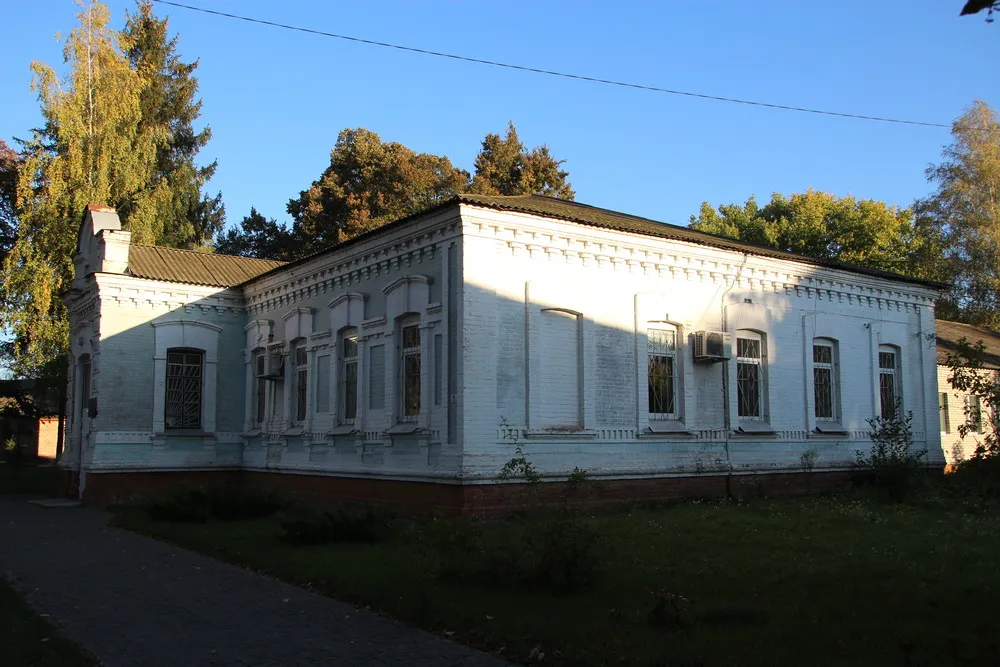
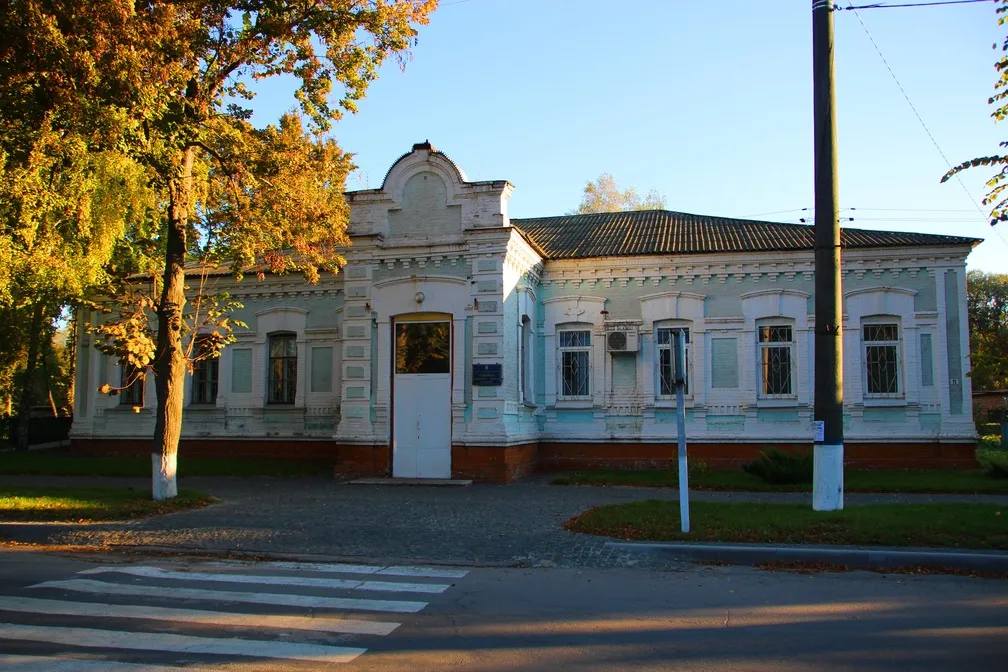
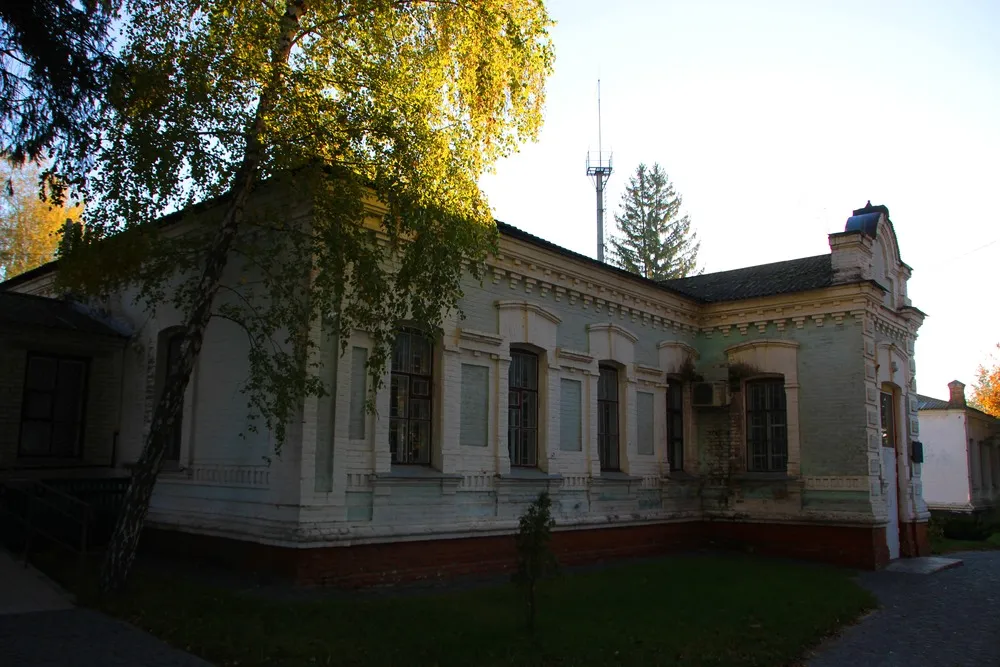
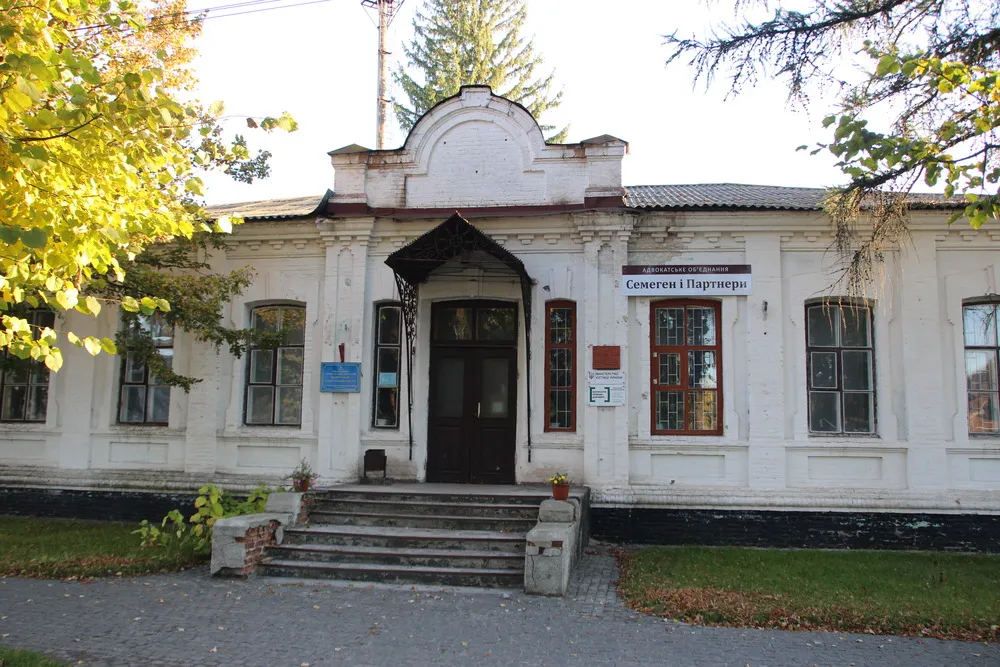
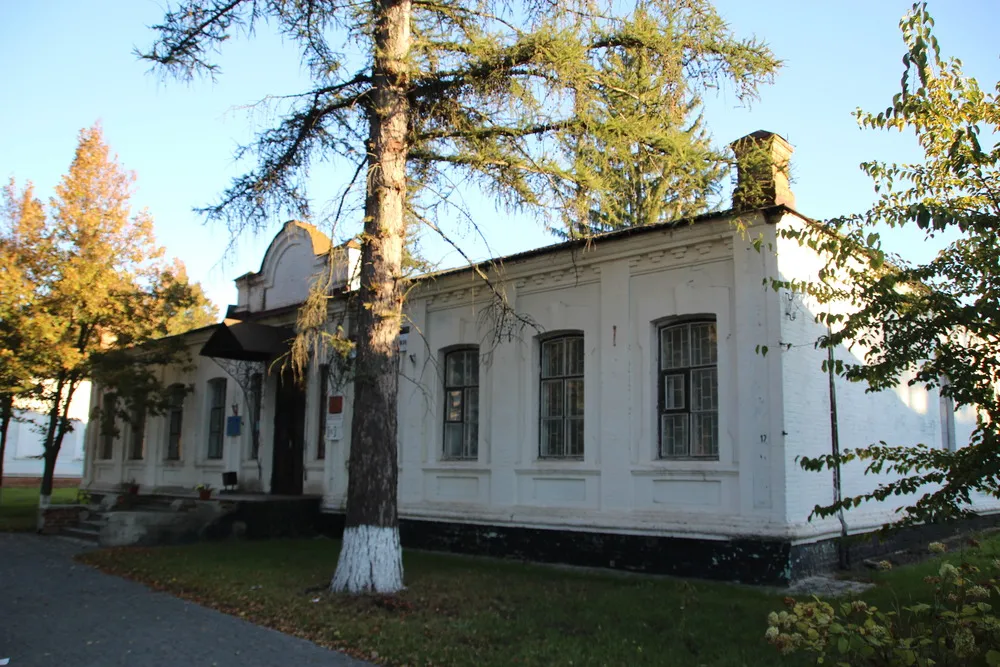
One can name hardly anything but the building of the former volost administration, which is an architectural monument of local significance. It was built in 1890. An absolutely identical volost administration building, built in the same year, stands in neighbouring Rusanivka, so they were probably built to the same design. The volost administration was housed here until 1918, then various institutions occupied it, and at the end of the 20th century the district administration moved in.
The church in the district centre is new: this is the Holy Trinity Church, construction of which began in 2005 and which was consecrated in 2016. It was built on the site of a destroyed Cossack cathedral. There is also a new Church of the Intercession, from 2007. No old churches have survived. Yet once there were two of them in Lypova Dolyna.
The Annunciation Church was wooden. It is unknown when it was originally built, but it was in use in 1744. One may assume that it was the first church, dating from the mid-17th century, since in 1750 it was decommissioned because of decay, and such wooden churches, as history shows, stood for up to 100 years. The church was rebuilt in 1755, and in 1870 a new one was built again.
The Trinity Church also went through three stages. It is unknown when it was first built. The bell tower next to it was built in 1704, so the church and the bell tower can be considered to have been built almost at the same time. The second church was bought in the village of Krasna Luka and built in 1755. The church was built for the third time in 1846.
We present the history of Lypova Dolyna in abridged form from the website of the Lypova Dolyna Central Library.
“Taking advantage of Lithuania’s defeat during the Livonian War (1558-1583) against Russia, the Polish king Sigismund II Augustus convened a joint Lithuanian-Polish Sejm in Lublin, at which Lithuania was forced to agree to a union with Poland and hand over Ukrainian lands to it. With the signing of the Union of Lublin in 1569, the domination of the Polish nobility began in Ukraine, including in our region. Huge land holdings fell into the hands of Polish magnates. The Wiśniowieckis had especially large estates. As early as 1590, by a decision of the Warsaw Sejm, a large territory of Ukraine was given to the Cherkasy and Kaniv starosta Oleksandr Korybut, who received the surname Wiśniowiecki after the name of the main town of his family estates in Volhynia, Vyshnivets. The settlement on the territory of present-day Lypova Dolyna emerges from the mists of history during the second Cossack colonization of the region, at the end of the 16th and the beginning of the 17th century. The first known date in the history of Lypova Dolyna was 1647. In 1647 the French envoy Guillaume Levasseur de Beauplan, having visited Ukraine, shared his impressions of the journey in his book “Description of Ukraine”. The map included in the work testifies to the existence of a settlement called Lypova Dolyna in the upper reaches of the Khorol.The Wiśniowiecki princes owned 134,822 households, including those of Lypova Dolyna. Jeremi Wiśniowiecki had a bellicose and rapacious nature; he won the lands of the Psel basin back from Adam Kazanowski, a friend of the Polish king, for which he was expelled from the Commonwealth. But the powerful nobleman obtained the title of envoy from the bribed Lutsk nobility at the Sejm, appeared in Warsaw, threatened to disrupt the parliamentary session with the right of “liberum veto”, and King John Casimir gave him Romny, Korovyntsi, Lypova Dolyna and Kostiantyniv.
He often visited the newly built castle in Romny. The time of his rule over our region became a black page of local history. Jeremi cruelly took revenge on his fellow countrymen for their patriotic stance, but this was finally put to an end. Ukraine rumbled with the stormy Khmelnytskyi uprising.
The population of the village took part in the liberation war of the Ukrainian people of 1648-1654, as evidenced by the facts of speeches by Bohdan Khmelnytskyi’s envoys in the towns of the Wiśniowiecki lands. Thus, it is firmly known that one of these envoys campaigned in Romny in the summer of 1649, urging people to join the army. To attract the maximum number of peasants to the insurgent army, Bohdan Khmelnytskyi promised to enter all participants in the Cossack register, that is, to make them free people. In 1648-1654, as a result of the liberation war, the village rid itself of Polish noble domination and became part of the Myrhorod Regiment.
According to the general description and revision of 1766, Lypova Dolyna belonged to the third regimental company of the Hadiach Regiment, which was obtained by Hetman Briukhovetskyi as his “hetman’s mace” and formed the so-called “Hadiach key”. Under Hetman Samoilovych, Lypova Dolyna was held by the regimental quartermaster Yukhym Vetchurka, then by the regimental esauls Mykhailo Kiiashko, Andrii Katrych, Prokip Morenko and Ilko Veronchenko. But under Mazepa the village was taken over to the “castle”. When the districts were formed, the village first became part of Hlynsk, and from 1803 of Hadiach district. The village had a medical school that trained zemstvo feldshers. There were bazaars and three big fairs a year. There was a post office.
After the death of Bohdan Khmelnytskyi, at a council of the Cossack officers Ivan Vyhovskyi was elected hetman. His name can also be found in the history of Lypova Dolyna.
Khmelnytskyi’s follower Ivan Vyhovskyi reached an agreement with the Poles on entering an equal union with the Commonwealth. But already on 11 August 1658 the troops of the tsarist voivode, Prince G. Romodanovskyi, opposed it. At the end of the month the Cossack and Muscovite armies were on the territory of the present-day Lypova Dolyna and neighbouring districts. The parties made an attempt to come to an agreement and solve the problem peacefully.
So, on 30 August the Polish diplomat S. Beniewski arrived in Lypova Dolyna, and the next day the Russian envoy K. Kikin; there were also representatives of Hetman Ivan Vyhovskyi and Kara Bey, a confidant of the Crimean khan. Towards the end of the meeting Vyhovskyi himself appeared. But the negotiations reached a deadlock.
Having come to power, Ivan Vyhovskyi began a struggle against Moscow. One of its pages is the defeat near Konotop, by Ukrainian regiments and the Crimean horde in the summer of 1659, of the Russian army under the command of Princes Pozharskyi and Romodanovskyi. Prince Trubetskoi had to retreat hastily to the north. After this battle Vyhovskyi turned via Romny towards Hadiach, seeking to capture Pavlo Apostol, the acting hetman opposed to him. That same year the Tatars appeared near Lypova Dolyna and met fierce resistance from its inhabitants. However, the forces were unequal, and an unfortified settlement, of course, could not withstand the horde. The Tatars seized the village and plundered it.
In 1676 the troops of the Left-Bank hetman Ivan Samoilovych and the Russian voivode G. Romodanovskyi united in Lypova Dolyna, and set out from here for Chyhyryn, against the Right-Bank hetman Doroshenko, who was supported by the Crimean khan.
After Samoilovych the hetman’s mace went to Ivan Mazepa. The hetman took many lands to the “castle”, that is, into full hetman’s use. Lypova Dolyna was among such towns and villages. The Mazepa era was a time of flourishing of the settlement. Solid houses appeared, the stone Trinity Church was built, and a school and a hospital opened beside it.
New historical events of the early eighteenth century again did not bypass Lypova Dolyna. In 1700 the Great Northern War between Sweden and Russia began. The Cossacks of the Hadiach Regiment also took part in this war.
Autumn 1708 was approaching. The military actions of the Northern War reached our region. The events of the Northern War, at one of its most important stages, took place on the territory of the Poltava region. Hetman Mazepa with several thousand Cossacks went over to the side of the Swedish king Charles XII. On 18 November 1708 the Swedes took Romny and placed the main part of their army here for winter quarters. Charles ordered three of his generals, headed by Mazepa, to capture Hadiach, which was done.
On 23 November 1708 a military council of the Russians was held, at which it was decided to move the headquarters of the Russian army and the Ukrainian troops to the town of Lebedyn. The main forces of the Russian army were now also drawn up here. Many Ukrainian Cossacks were killed in Lebedyn for having gone over to the Swedes.
The population of the region supplied the Russian command with important information about the disposition of the Swedish troops and the condition of the Swedish army. On 26 November Major General Inflyant, on Menshikov’s order, sent from Bedyn to the area between Romny and Hadiach the Cossack Ostap Svydynov of the village of Lypova Dolyna, “and ordered him to find out truly about everything that was going on there”.
On 3 December 1708 a military council was held in Lebedyn, attended by Peter I, Chancellor Golovkin, the chief of artillery Bruce and others. This council discussed questions of the further struggle against the Swedes. It was decided to send most of the Russian army to Hadiach, and for General Allart to advance on Romny. To lure Charles out of Romny, the Russian command began to deploy its troops demonstratively near Hadiach, as if with the aim of capturing it. Charles XII with several regiments hurried to Hadiach to help the Swedes. On 16 December he immediately set out from Romny and arrived the same day in Lypova Dolyna, which he found completely deserted. At that time there were very severe frosts. Their hands, feet and faces frostbitten, many Swedes never reached Hadiach. A Swedish hospital was located in Lypova Dolyna. Meanwhile General Allart with the Ukrainian Cossacks took Romny. As the main Swedish forces approached Hadiach, the Russian army retreated to Lebedyn. The losses on both sides were quite significant, not so much from being killed as from freezing in the extremely fierce frosts. According to the Slovak Daniel Krman in his “Travel Diary”, a battle took place near Lypova Dolyna in which the Cossacks and Swedes utterly defeated the Muscovites, who retreated leaving three hundred dead. Mazepa and Charles XII greeted the New Year 1709 near Lypova Dolyna. And already on 1 January their troops moved from Lypova Dolyna to Hadiach.
By the order of Empress Anna Ivanovna of 26 May 1730: “the Hadiach key shall belong to the hetman with all its revenues, so that no revenues from it shall be collected into the army treasury by the treasurers”.
The order of Empress Elizabeth Petrovna of 1750 states: “The Hadiach castle and other estates belonging to the hetman’s office, which to this day are named as not distributed, with all their appurtenances and revenues, shall be given to Count Kirill Razumovsky”.
Dismissing Kyrylo Rozumovskyi from the hetmancy on 10 November 1764, Empress Catherine II “granted him and his children the eternal and hereditary possession… of the Hadiach castle”. In that same year of 1764 Lypova Dolyna was bound by serfdom. Neighbouring Rusanivka withstood by way of defiance and armed resistance: the village remained Cossack. In 1785 the village was sold to the treasury.
In 1802 the village became a volost centre, first of Hlynsk, and a year later of Hadiach povit. Hadiach povit was created on 16 September 1781, after the liquidation of the remnants of the regimental system in Left-Bank Ukraine, from part of the Hadiach Regiment. At first it was part of the Chernihiv Viceroyalty, in 1791 it was joined to the Kyiv Viceroyalty. From 30 November 1796 it was part of the Little Russia Governorate, and from 27 February 1802 of the Poltava Governorate, which was created by a decree of the Senate.
The village had two churches, and fairs were held three times a year: Havrylivskyi, Heorhiivskyi and Uspenskyi.
In the 19th century crafts developed in Lypova Dolyna: weaving, shoemaking, carpentry; windmills, oil mills and smithies operated. The overwhelming majority of the land around Lypova Dolyna belonged to the Tumanskyi landowners (5.5 thousand desiatinas).
The 19th century was marked by a certain breakthrough in the development of rural culture.
Thus, in 1840 a parish school was opened in Lypova Dolyna. In 1877 a ministerial one-class rural people’s school opened. In 1900 there were already 2 schools, a church-parish one and one of the Ministry of Education. In 1904 the school became two-year.
In 1931 Lypova Dolyna became part of Romny district, in 1935 it became the district centre of Kharkiv Oblast, and in 1939 of Sumy Oblast.”
Text and photos by Ihor Dorozhko and Maksym Nazarenko.


