Rydoduby

· 2 min read
The village of Rydoduby is 11 km from Chortkiv. We ended up there by accident: on the way to Budaniv we decided to take a shortcut, and did not regret it, although usually in such cases one thinks that he who takes shortcuts does not sleep at home.
The name is connected with oaks and weeping. The standard legend says the Tatars burnt the village and the residents wept somewhere in an oak grove (among the oaks). But I found out the name of the village (not its interpretation) only after I saw the colourful Roman Catholic church, built of red stone just like that in the Dzhuryn valley near Chervonohorod. The Dzhuryn river flows ten kilometres from Rydoduby, and probably there is a deposit of similar stone somewhere here too.
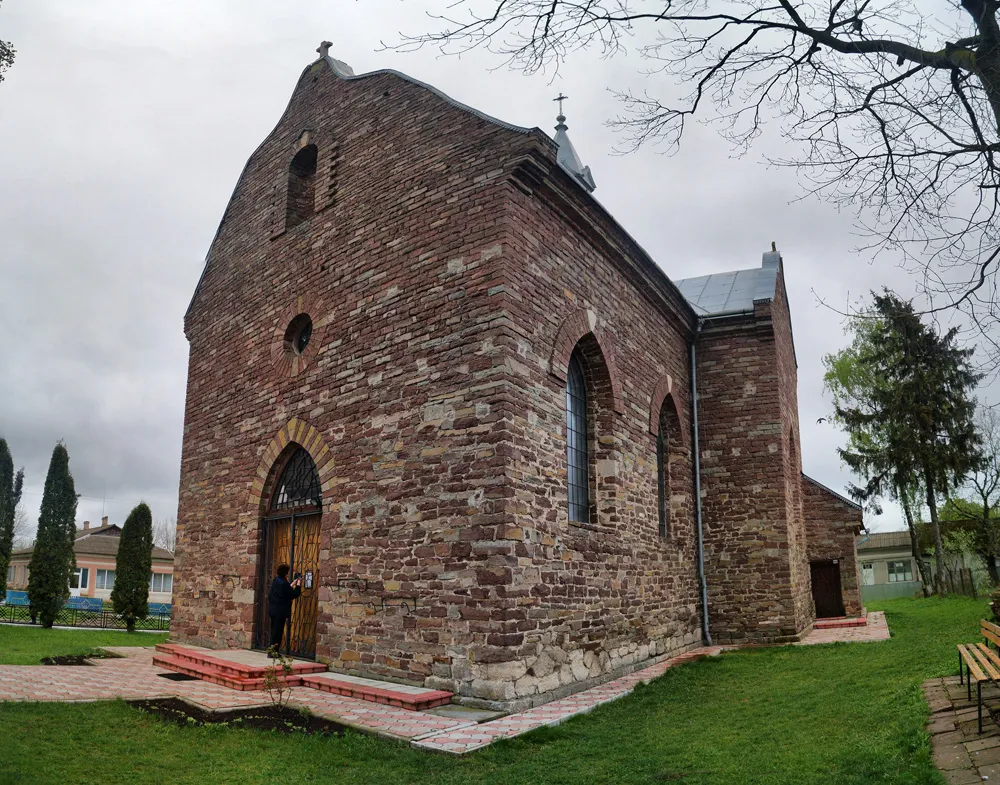
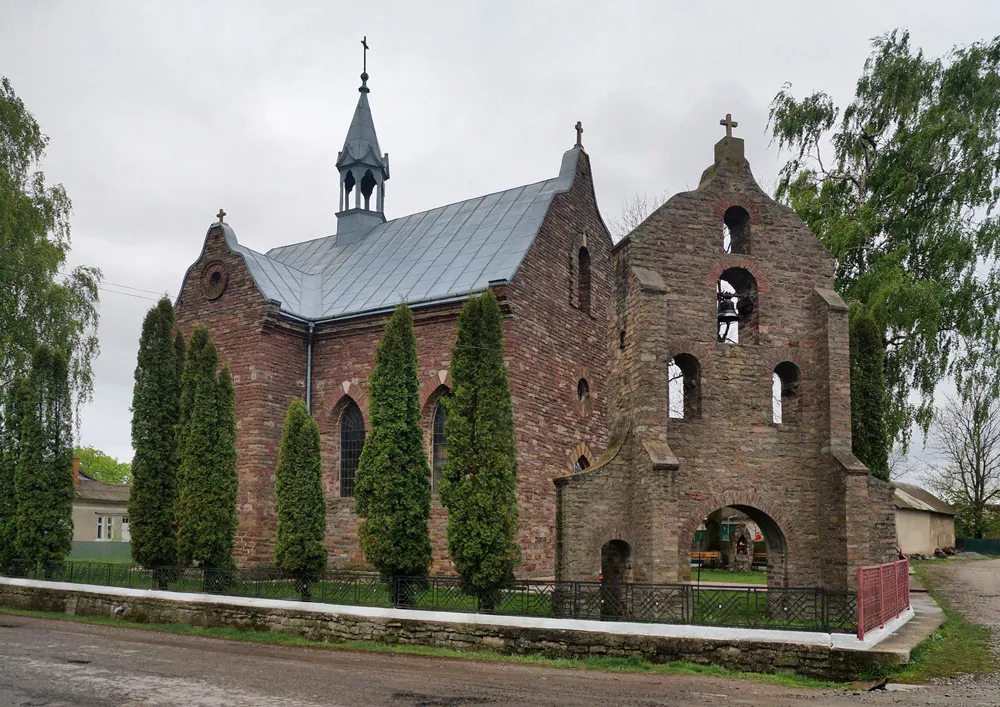
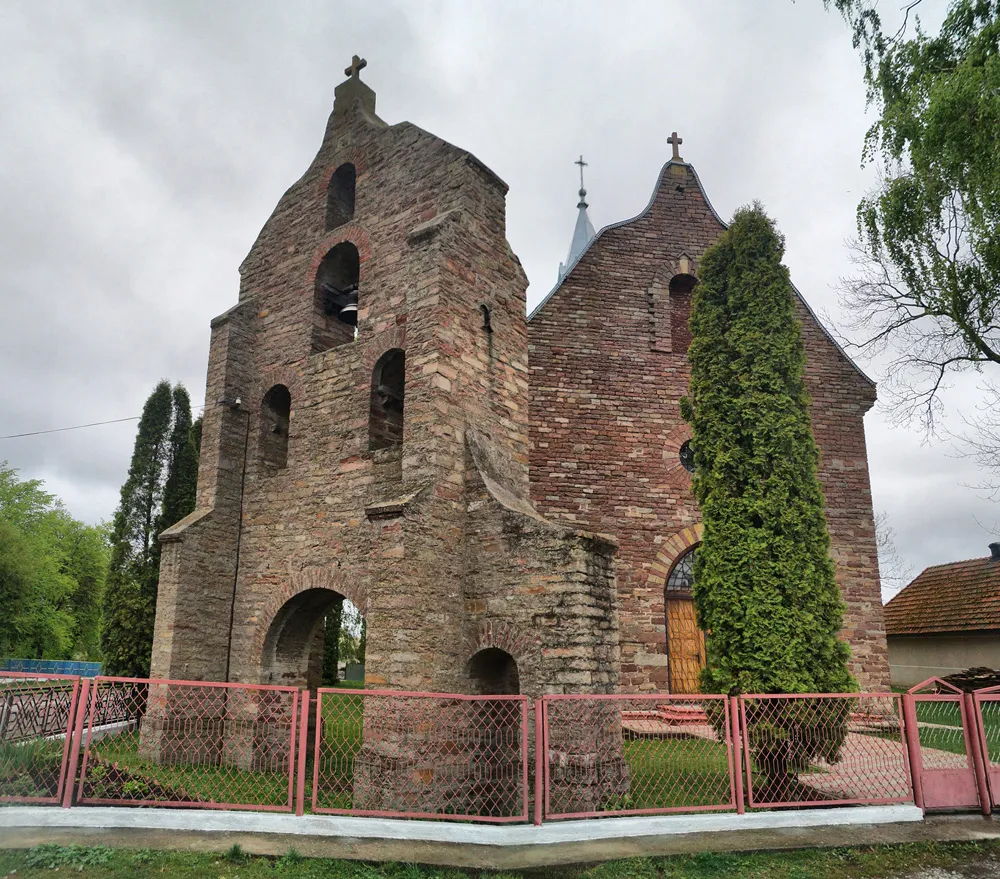
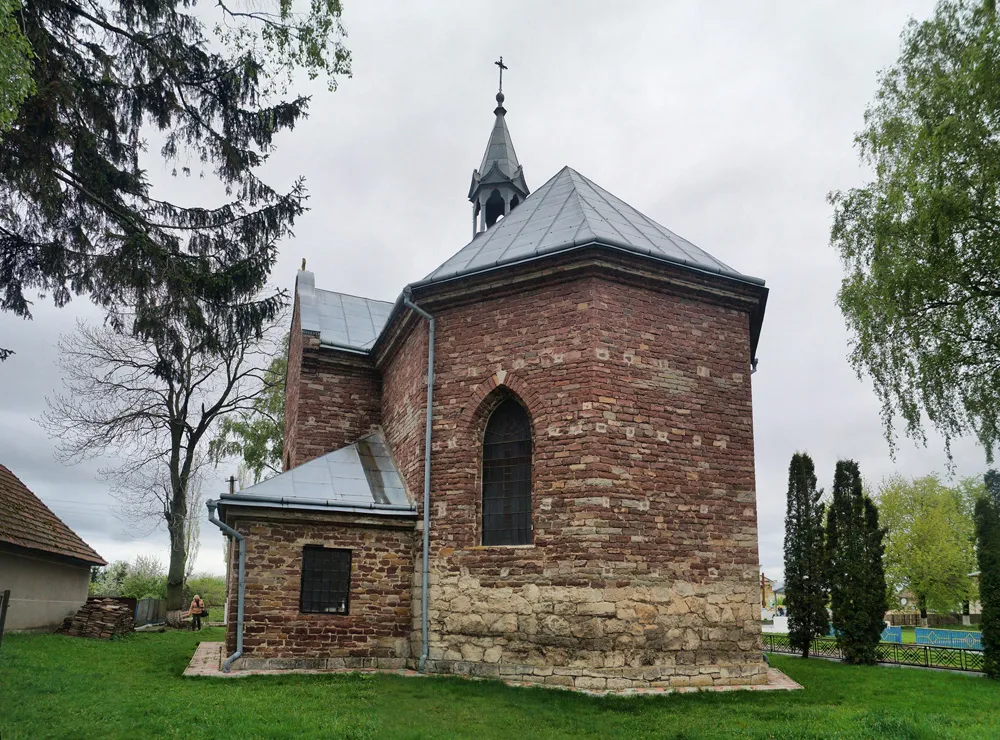
Roman Catholic believers gathered building materials for a church at the beginning of the 20th century, but during the war everything was looted. In the 1920s, already under Poland, they again collected funds for construction, and in 1923 laid the foundation stone. They invited an architect from Chortkiv, Teodor Wtuzecki. Construction lasted until 1934. The church was consecrated in honour of the Assumption of the Blessed Virgin Mary.
I liked the Rydoduby church very much. It reminded me of the church in Butsniv.
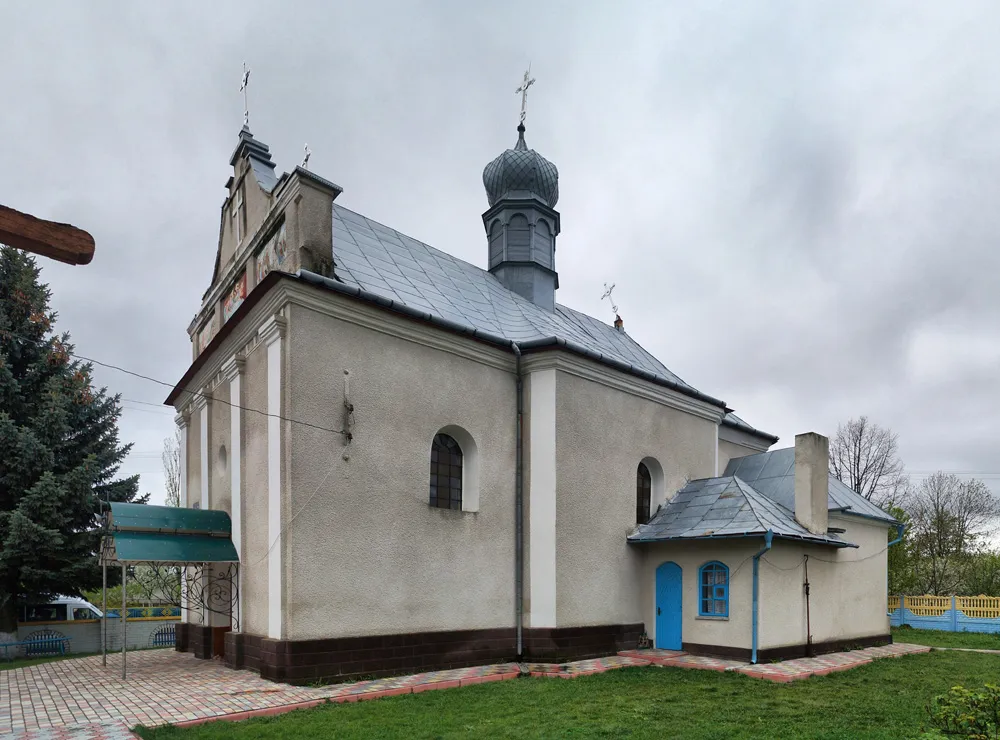
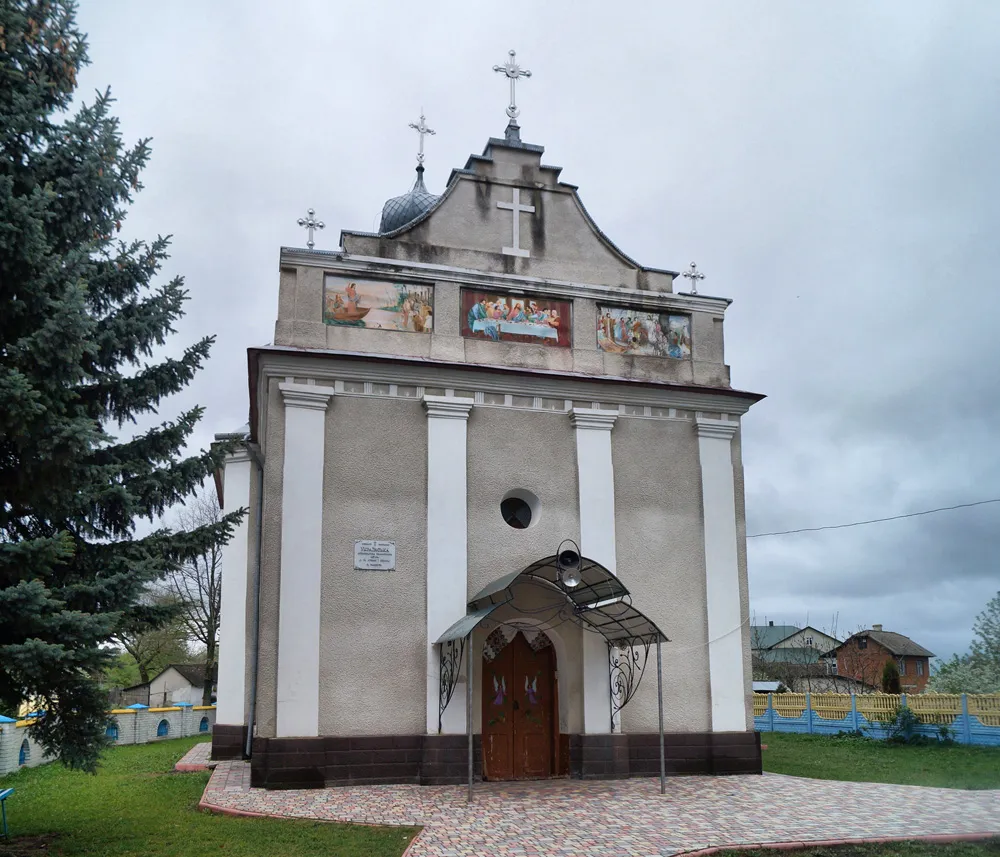
Not far from the Roman Catholic church there is also an Orthodox church. It was built in 1923 and consecrated on 4 August, the feast of Mary Magdalene. But later the church was consecrated again, or something like that: on 14 November it was re-consecrated on the feast of Cosmas and Damian.
In 1960 the church was closed, and instead a museum of atheism was placed in its hall, operating until 1989. Today it is a church of the OCU.
Text and photos by Roman Malenkov.