

Skalat Castle and the church destroyed three times
The very name of the town of Skalat makes it clear that rocks (“skala”) were involved. And so it is: the town arose beside three rocks, part of the Medobory/Tovtry ridge.
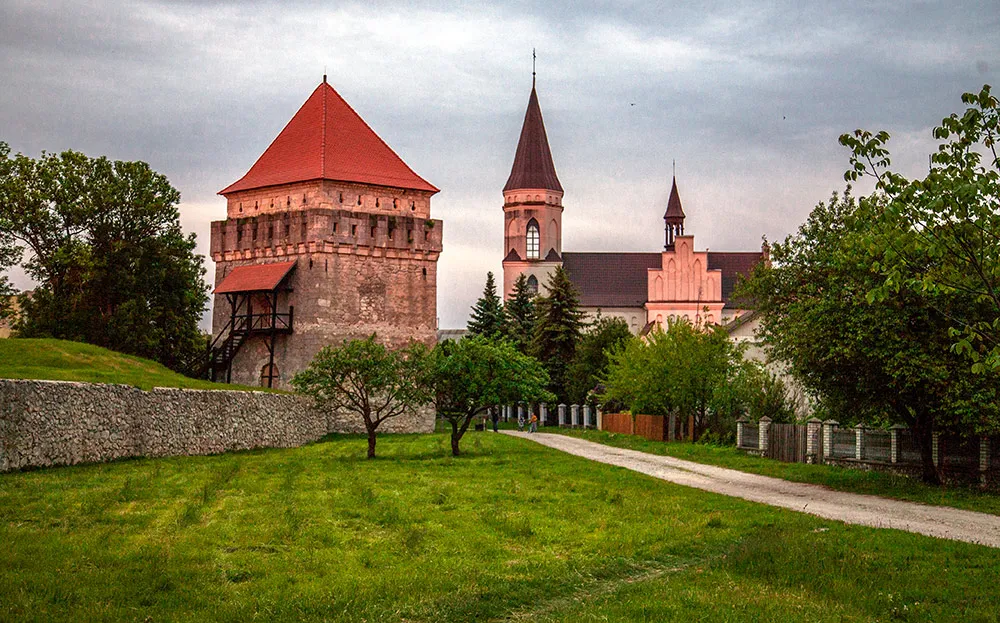
The first written mention of the settlement dates to 1512, when Janusz Sverchovsky, castellan of Wiślica, starosta of Terebovlia and Lublin, received permission to buy the villages of Skalat, Loshniv and Sushchyn from their previous owner, Stanisław Łoszniowski. In 1600 King Sigismund III granted the town Magdeburg law. At that time, however, it bore a different name.
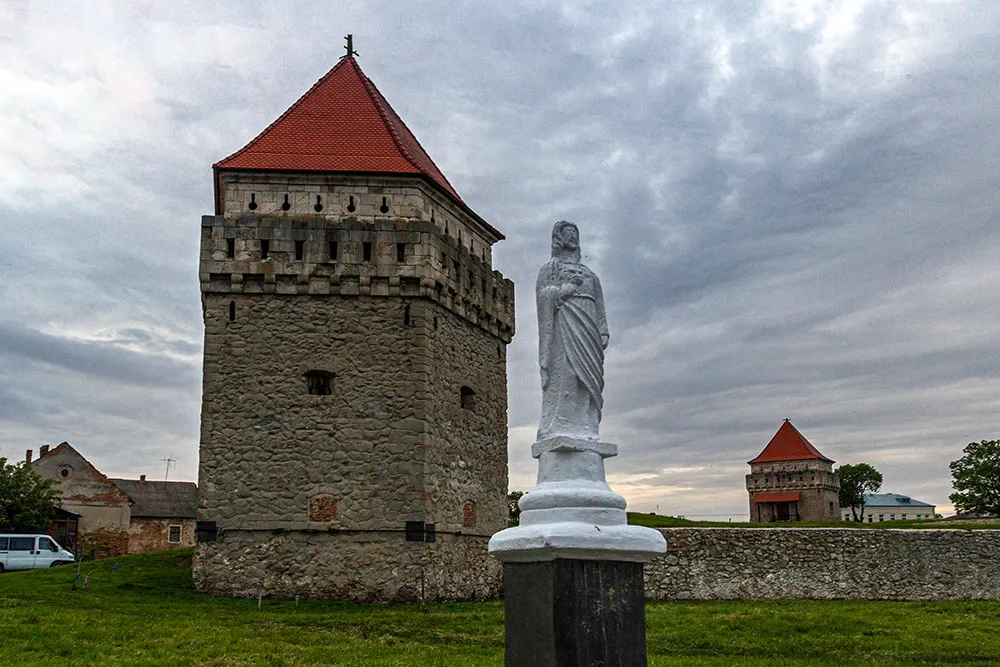
The castle in Skalat is believed to have appeared only in 1630, built by the swordbearer Krzysztof “Pomian” Wichrowski. In fact, fortifications in Skalat are mentioned as early as the 16th century, which was confirmed during the latest restoration.
The present-day castle bears little resemblance to the original stronghold. At the end of the 19th century, at the expense of Moritz Rosenstock von Rostocki, a member of the town council and deputy to the Galician Sejm, it underwent a “restoration”.
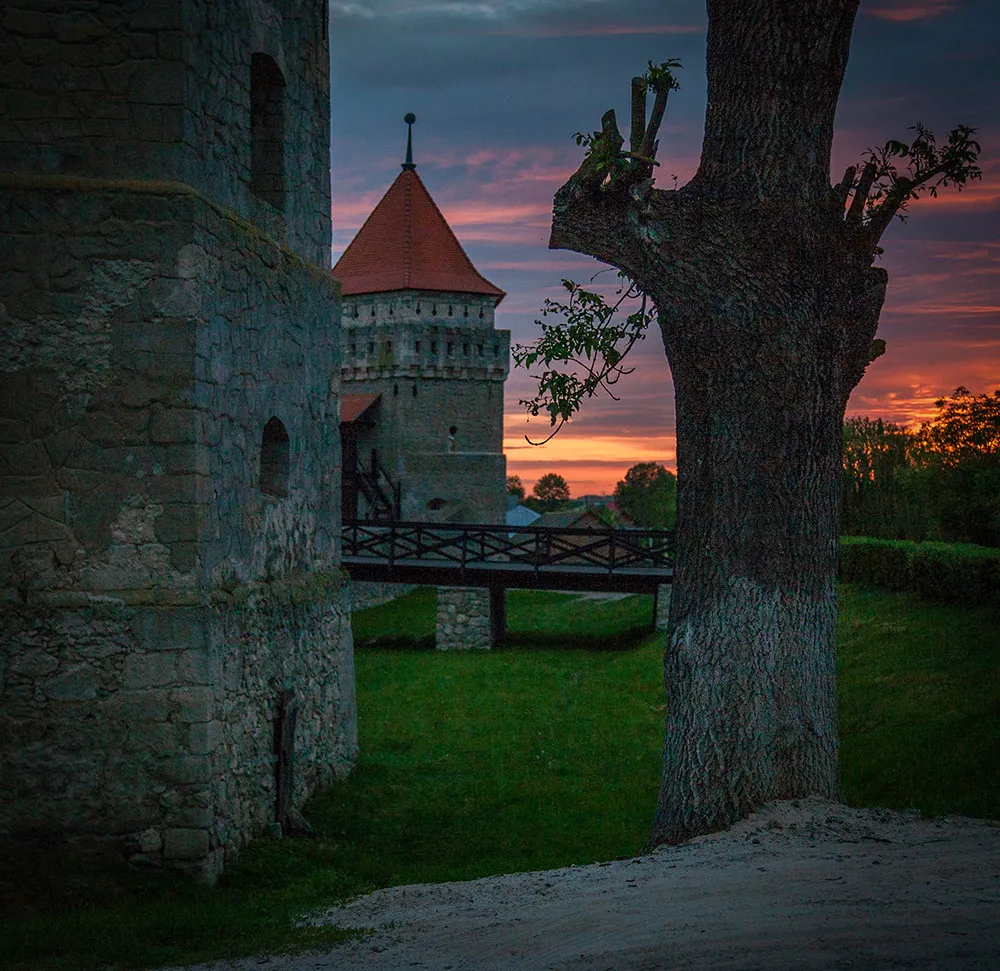
The word is in quotation marks for a reason. In reality it was a complete rebuilding in the rather fanciful style of the pseudo-historicism that was popular at the time. The project was designed by the renowned architect Teodor-Marian Talowski (the author of the well-known St. Elizabeth’s Church in Lviv, on the so-called “Station” square).
But there is no point in throwing stones at those “restorers”. We have similar examples today. Suffice it to recall how, already in independent Ukraine, “restorers” gave the famous Old Fortress in Kamianets-Podilskyi a complete “makeover”. Now we have something incomprehensible in the style of Disney cartoons (not to mention the tower that collapsed as a result of the clumsy intervention).
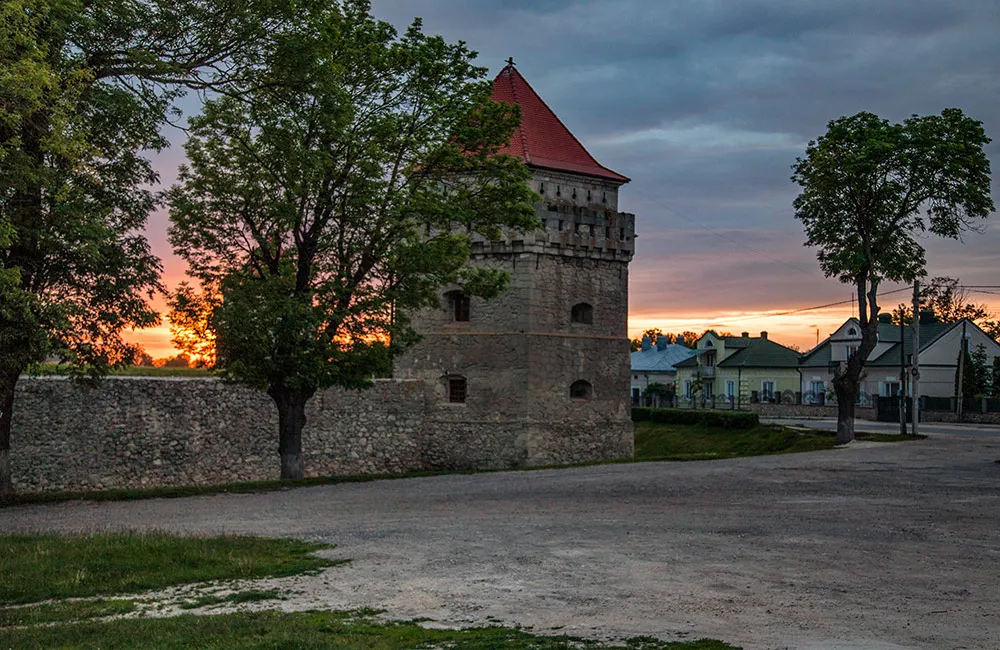
Throughout its history Skalat repeatedly suffered from Tatar raids. But the greatest disaster occurred in 1675, when the army of Vizier Ibrahim Shyshman razed the town and castle to the ground. The Crown troops of Jan Sobieski tried to recapture the fortress, but without success.
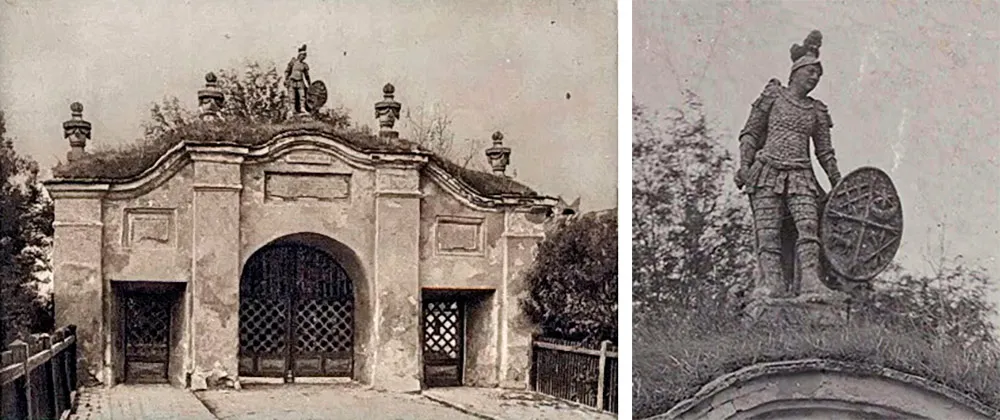
After the Ottomans returned Podillia to the Polish–Lithuanian Commonwealth in 1699, Skalat came into the possession of Jan Firlej, castellan of Sanok. He rebuilt the castle shattered during the war with the Turks, but no longer as a defensive structure, rather as a residence. In particular, besides repairing the towers and walls, he built a palace and a magnificent Baroque gate decorated with a statue of a knight and stone plaques bearing the history of the castle engraved on them. This gate was destroyed in the Second World War.
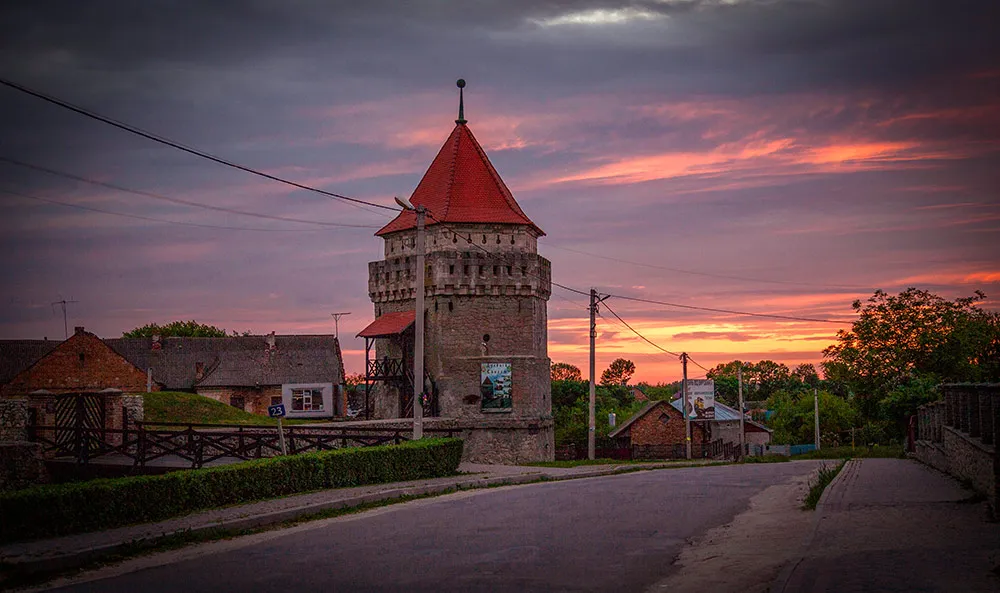
The stronghold also suffered badly in the First World War. The monument was then rebuilt, but not completely: Aleksander Potocki, the castle’s owner at the time, simply ran out of money. Unable to cope with the stronghold, he donated it to the town. But soon a new world war broke out, which also left considerable scars on the body of the castle. Only in the 1960s was the monument put in order: the towers were patched up, the upper tiers were restored (from photographs), covered with red roof tiles and fitted with metal tie rods. A new stage of restoration and repair began after a storm in 2004 brought down the roofs of several towers.
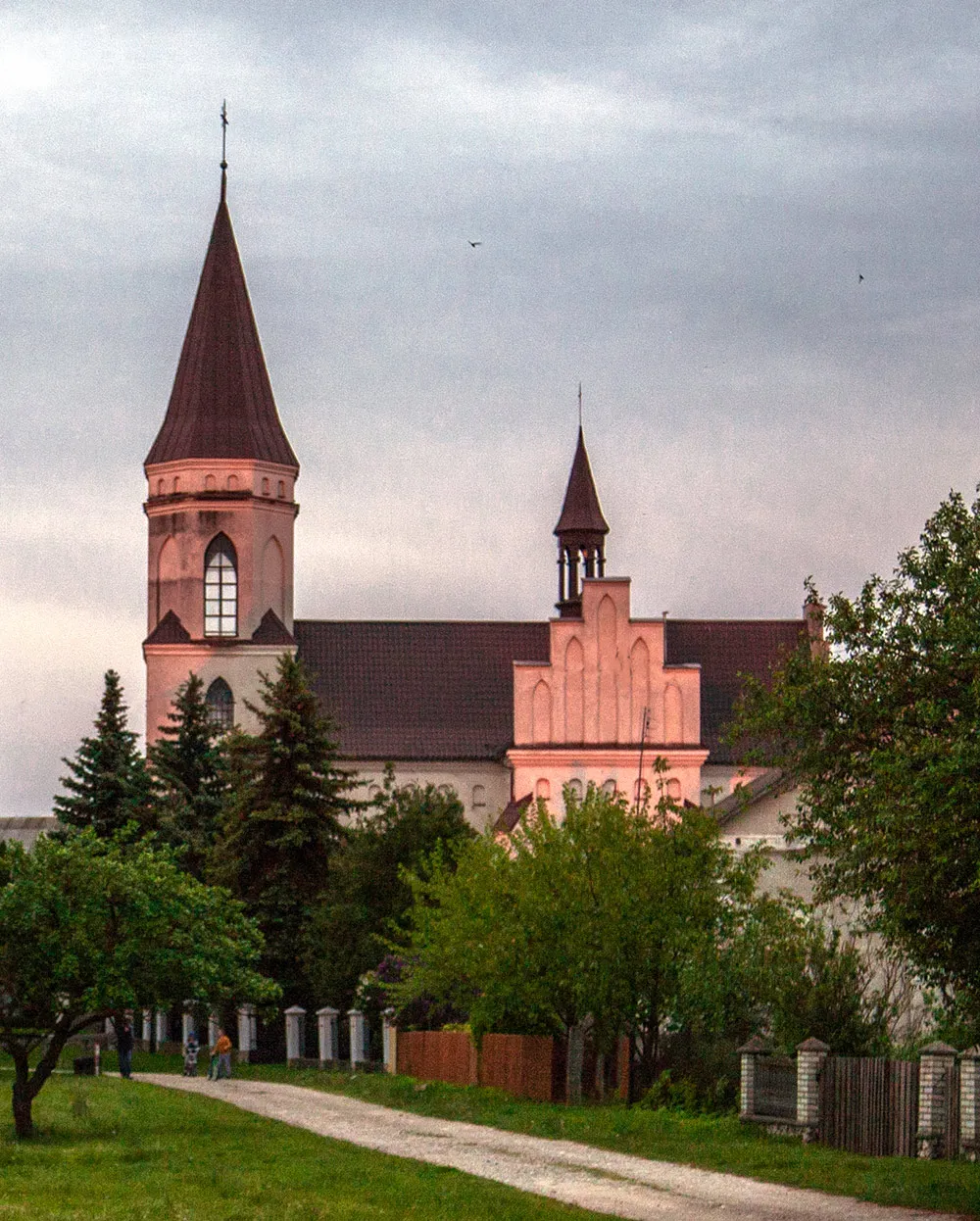
Near the castle rises the majestic and beautiful Neo-Gothic Church of St. Anne. At first glance it seems to be as ancient as the fortress. But that is a mistake. The church is entirely modern. Its construction was completed in 2002.
The first church on this site was built as early as 1642. During the war with the Turks and under Ottoman rule the church suffered considerable destruction. So in 1702–1703 it had to be rebuilt almost from scratch. What happened to that church afterwards is unknown. Either it burned down, or, given the earlier damage, it became unsafe and had to be taken down. It is known that work on the third church began in 1817, and it was consecrated ten years later, in 1827, in honour of the Assumption of the Blessed Virgin Mary. One may suppose that the early 18th-century building was not demolished at all, but used as a kind of “core” for its successor.
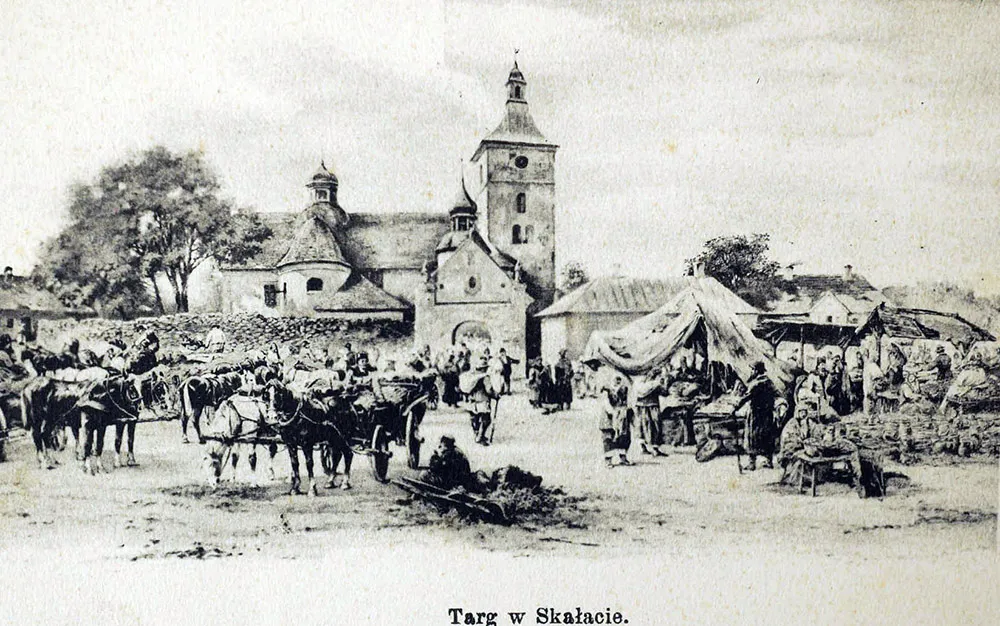
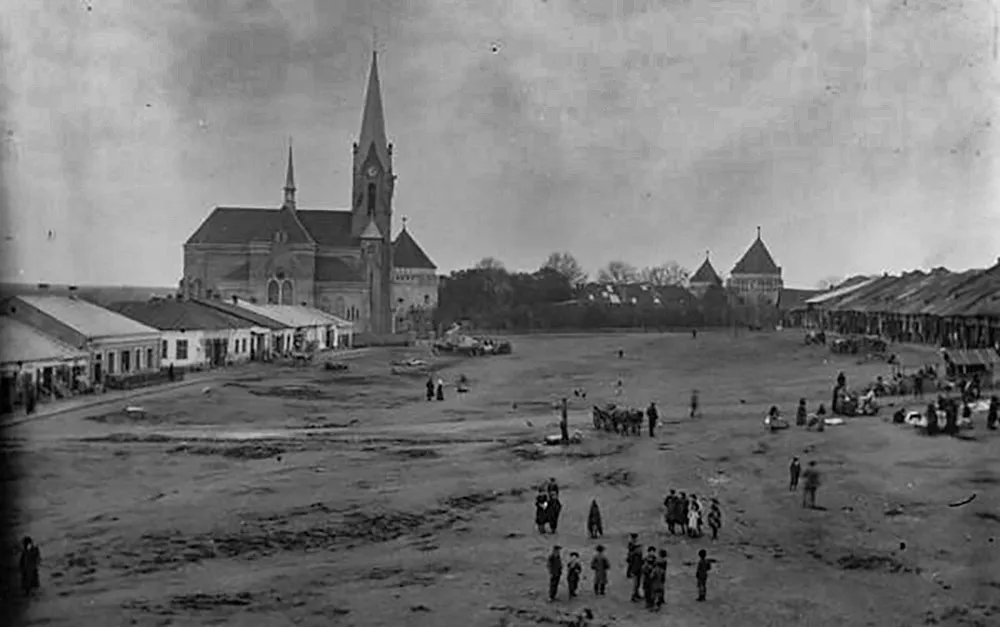
The church before the fire of 1898. The features of a defensive structure are clearly visible.
The latter stood until 1898, when it burned down in yet another fire. Many photographs of it have survived to our time. It is clearly visible that the church had pronounced defensive and fortification features. This supports the version that at the beginning of the 19th century what took place was not construction “from zero” but a large-scale reconstruction of the previous church.
The Neo-Gothic church, built to a design by the architect Teodor-Marian Talowski
Whatever happened in 1817–1827, after the fire of 1898 the church had to be rebuilt from scratch. It was built in 1900 at the expense of the then owner of the town, Maurycy Rostocki, and the starosta Antoni Szydłowski, to a design by the already mentioned Teodor-Marian Talowski (the one known for St. Elizabeth’s Church in Lviv). Recall that Talowski also drew up the project for the restoration of Skalat Castle.
The church survived the First World War, the Ukrainian–Polish and Polish–Soviet wars. But in 1944, when Soviet troops were driving the Germans out of Skalat, the church got its share too. In particular, several Soviet shells smashed its bell tower.
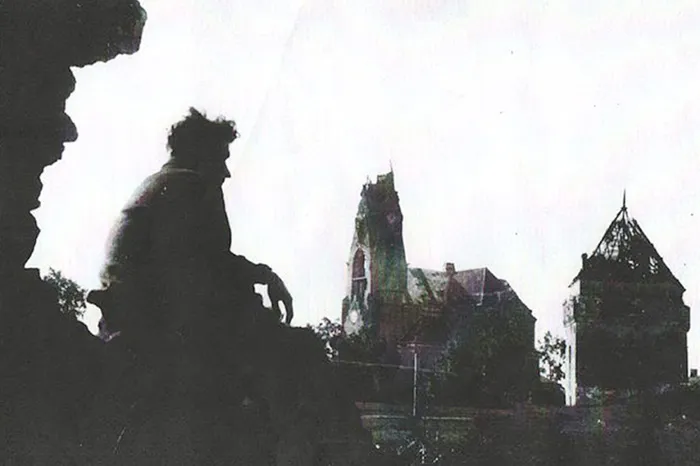
The church with traces of shelling
The majestic church was finally finished off in 1959. According to a widespread local legend, it was destroyed in anticipation of a visit by Nikita Khrushchev, who had just launched an active anti-religious campaign. In fact, the church was demolished for reasons having nothing to do with the hypothetical visit of the Soviet Union’s chief “corn-grower”. The reason was more prosaic. At that time workshops of “Silhosptekhnika” (the agricultural equipment agency) were being built in Skalat, and the wise managers decided that the badly damaged church could be an inexhaustible source of scarce bricks and stone. And so they did.
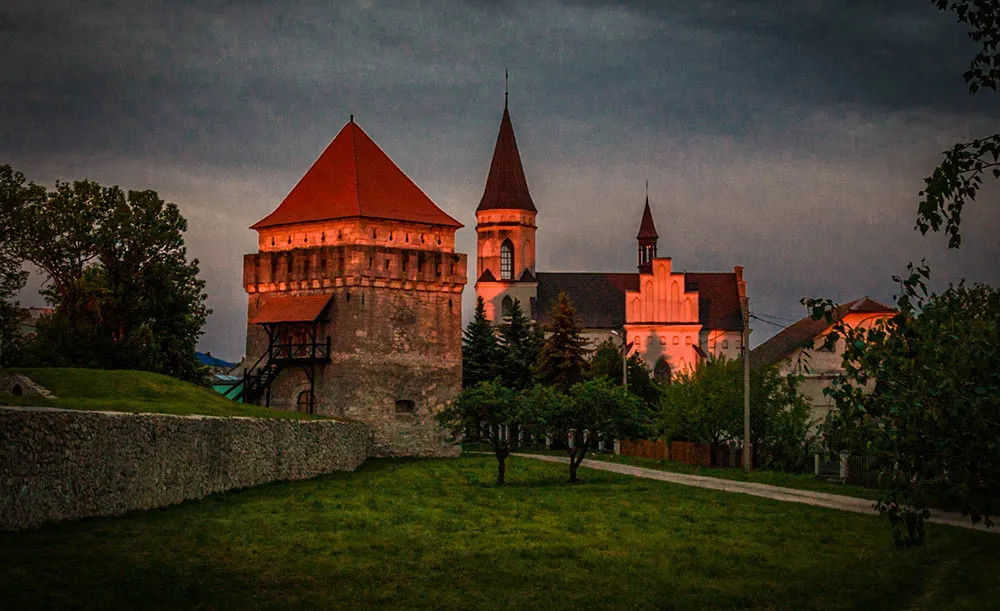
The castle and the church in the last rays of the sun
Text and modern photos: Dmytro Poliukhovych


