

A unique gravestone in Budaniv. How a policeman gave his life for Jews

· 3 min read
The village of Budaniv (formerly the town of Budzaniv) in the Ternopil region can boast a full set of historical monuments typical of this part of Ukraine: a castle and a church (kostel), a synagogue, churches, historical civil buildings and cemeteries: one Christian and as many as two Jewish.
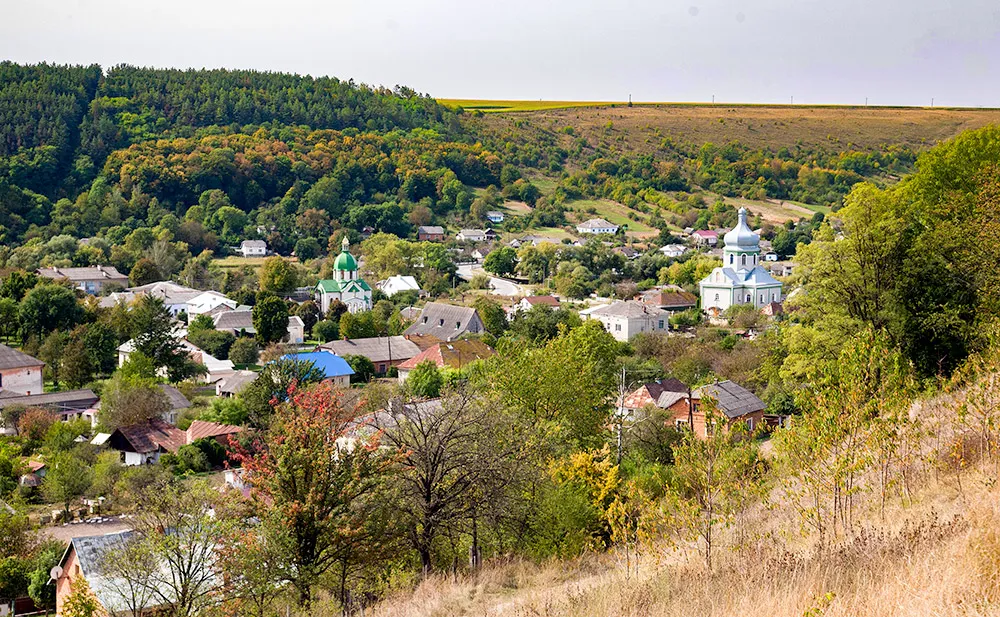
Budaniv. View from the hill where the old cemetery is located
The latter is not surprising. The Jewish component very often defined the face of Galician towns.
Recently, in addition to the traditional triad of “synagogue, Jewish buildings, cemetery”, a monument has appeared here to a famous native, the German-language writer Soma (Solomon) Morgenstern (1890–1976). Incidentally, the founder of a famous acting school, Lee Strasberg, whose students included Al Pacino, Marilyn Monroe, Dustin Hoffman, Robert De Niro and others, also came from here. In the Ukrainian provinces, we note, monuments to Jewish cultural figures are a rarity. As, however, are those to Ukrainian ones (we do not count monuments to Shevchenko).
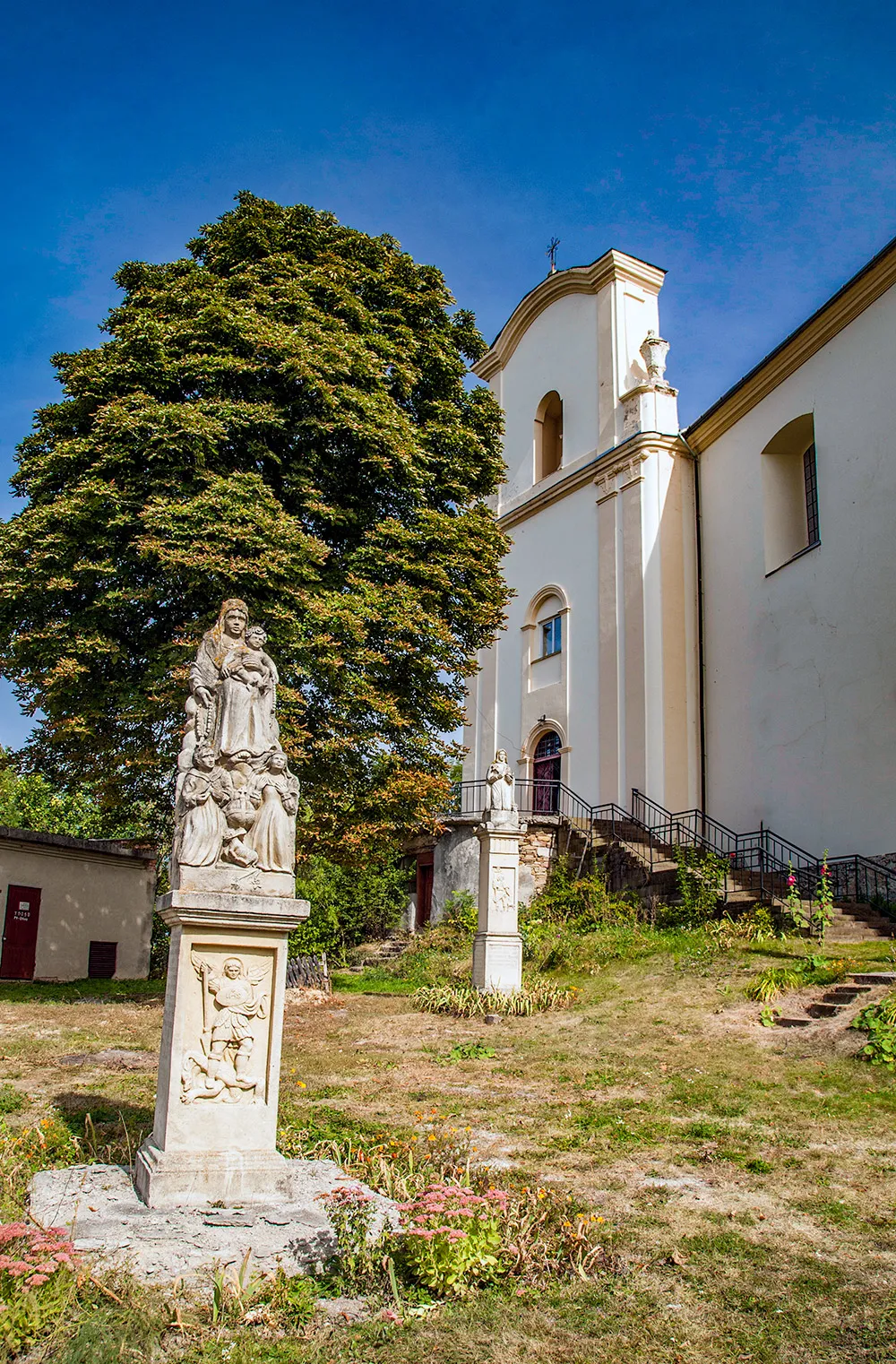
Budaniv. The church (kostel) and the castle
The Budaniv native Morgenstern, we note, is also interesting because during a census conducted by the Polish authorities he wrote “Ukrainian” in the nationality column.
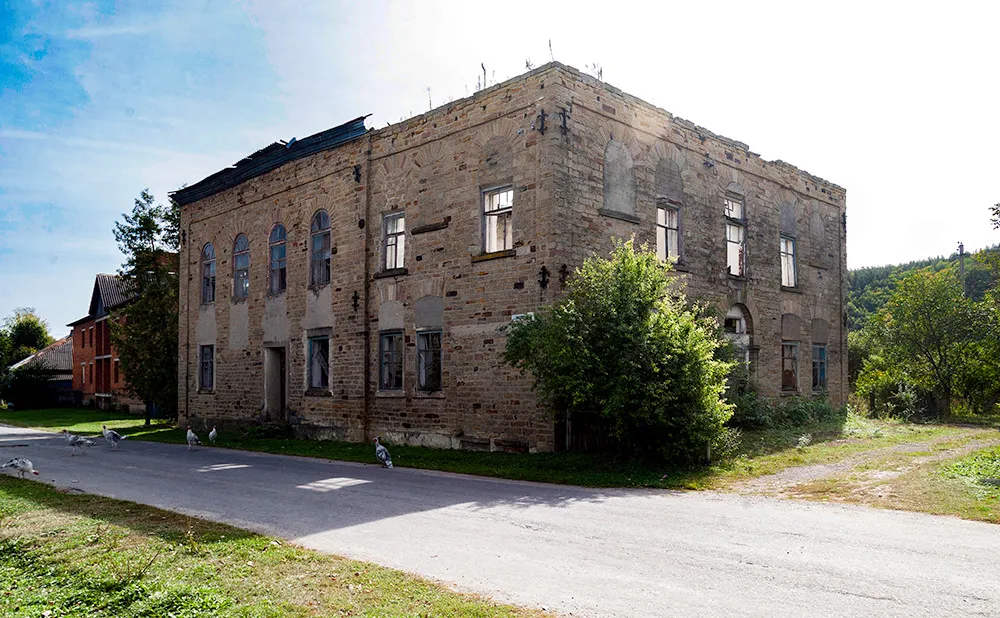
The synagogue in Budaniv
Budaniv has one more absolutely unique and even incredible monument, which has a direct bearing on both Ukrainians and, at the same time, Jews.
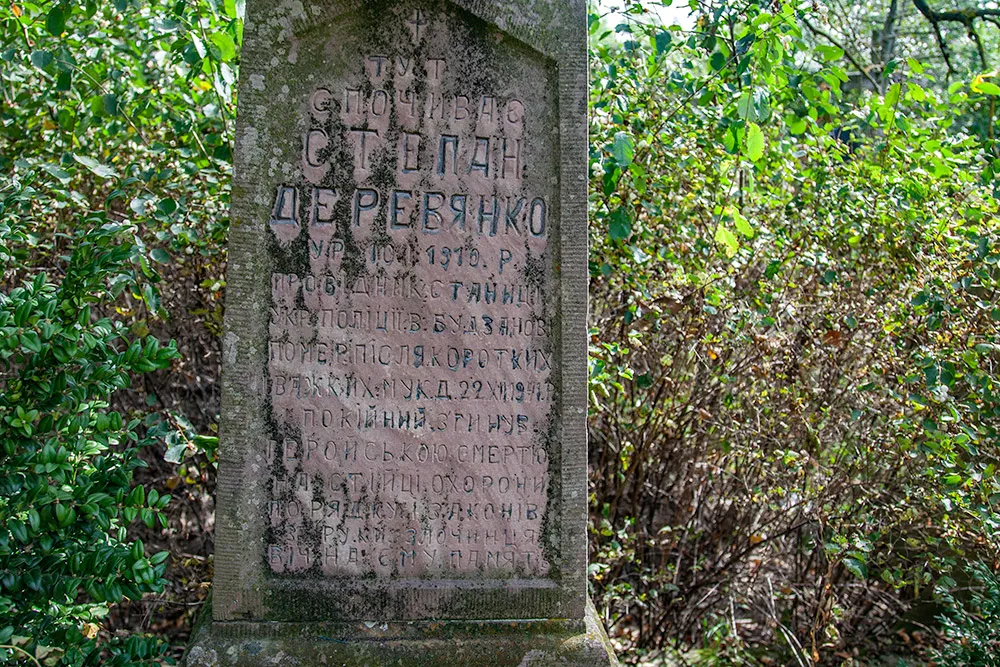
In the old Christian cemetery, between the medieval castle and the “New” Jewish necropolis (Budaniv also has an “Old” one), stands a small gravestone. For these parts it is entirely standard: an obelisk of local red sandstone with a bas-relief in the form of a cross.
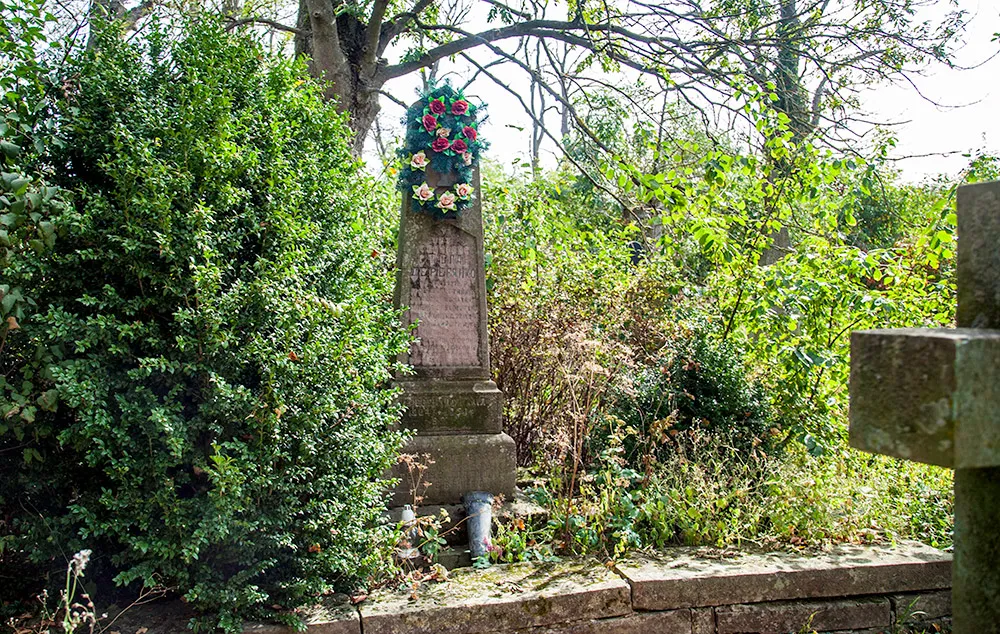
The grave of police chief Stepan Dereviako
The epitaph, however, is puzzling:
“Here rests Stepan Dereviako… Leader of the Ukr. police in Budzaniv. Died after brief, severe suffering on 22.XII.1941. The deceased perished a hero’s death at his post guarding order and laws…”
That a monument to a police chief of the German occupation was not torn down in Soviet times is already a marvel. It is clear that the deceased enjoyed the respect of his fellow villagers, since the locals did not “leak” the information to the communist authorities.
It is known that in the summer of 1941 the Ukrainian population greeted the Germans with flowers and sincerely regarded them as liberators. Considering WHAT the Russian communists had done from September 1939 until the summer of 1941, this is hardly worth wondering at. After the atrocities of the Russians, one would rejoice even at the devil.
Moreover, at the first stage the German occupation regime was much “milder” toward Ukrainians than not only the Soviet but also the Polish one (of course, unlike Ukrainians, Jews were not covered by this).
Besides, many Ukrainians regarded work in the occupation authorities, including the police, as a first step toward the restoration of Ukrainian statehood. When the futility of these hopes became obvious, most policemen joined the UPA, and many were destroyed by the Nazis.
Police chief Stepan Dereviako was one of those who wanted to serve Ukraine and protect the interests of the residents of Budzaniv. And there was someone to protect them from: in the district, many gangs armed to the teeth were operating, made up both of ordinary criminals and of Russian deserters.
As the local old-timer Yevhen Baran told, at the end of 1941 the leaders of the town’s Jewish community turned to Dereviako with a request for protection. Rumours had reached them that the riffraff and criminals from neighbouring villages had decided to take advantage of the Germans’ negative attitude toward Jews and show initiative from below (and rob at the same time). The new authorities, they reckoned, show the Jews no mercy, so one could stage a pogrom without fear and profit handsomely.
The information was confirmed. A small unit of the Budzaniv police headed by Stepan Dereviako met a crowd of pogromists on the bridge over the Seret at the entrance to the town. A quarrel broke out that turned into a shoot-out.
Meeting armed resistance, the pogromists immediately fled. In this clash, Stepan Dereviako, the defender of his Jewish fellow townsmen, was mortally wounded and soon died.


