

From bas-reliefs to the lubok: artistic memory of the “Horodok” hussars
The battle of Horodok on 17 August 1914 was one of the first major clashes of the First World War. On the eve, the 5th Cavalry Division of Honvéd (Hungarian) hussars under Field Marshal Lieutenant (Lieutenant General) Ernst von Frorreich Szabó crossed the Zbruch near the town of Sataniv and, without any reconnaissance, advanced deep into the territory of the Russian Empire. On the outskirts of Horodok, Frorreich’s hussars were awaited by well-entrenched Russian troops with guns and machine guns.
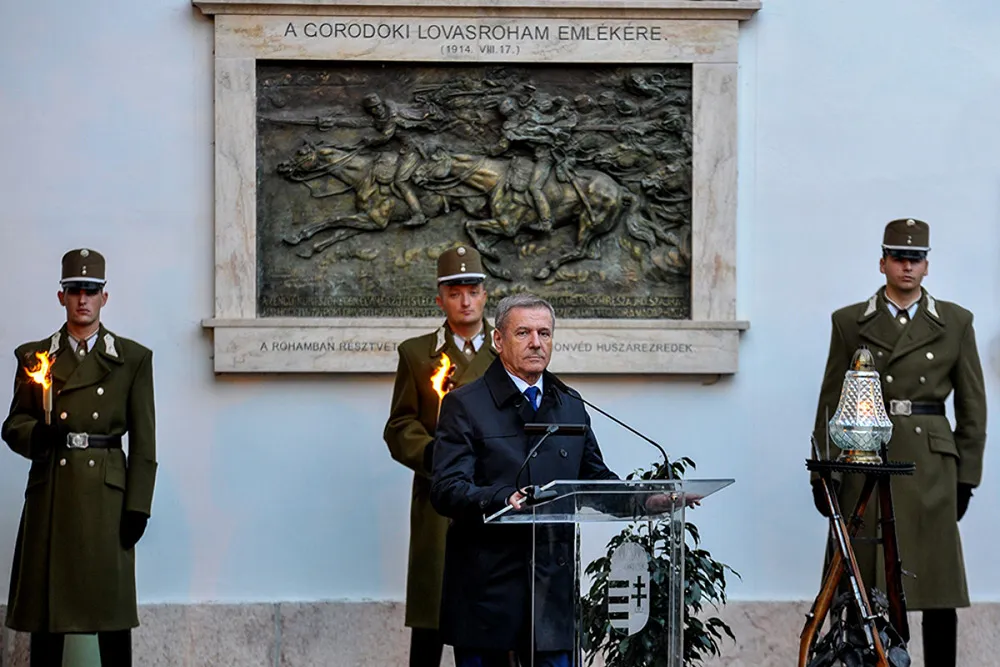
Commemoration of the “Horodok hussars”. Budapest.
The outcome was predictable: a cavalry hussar charge against machine guns, desperate in its insane courage, ended in a complete rout of the imperial troops. Almost 500 hussars were killed, against 13 on the enemy side.
Tactically, this battle became the start of the Battle of Galicia, in which Russian troops occupied almost the whole of Galicia.
Of course, against the background of the “meat grinders” that followed, where entire armies met on the battlefield and the number of the fallen ran into millions, the battle of Horodok looks like a marginal event. Although for the Hungarians this defeat still hurts today. But that long-ago battle has one aspect that raises it to the level of the Historical (with a capital H).
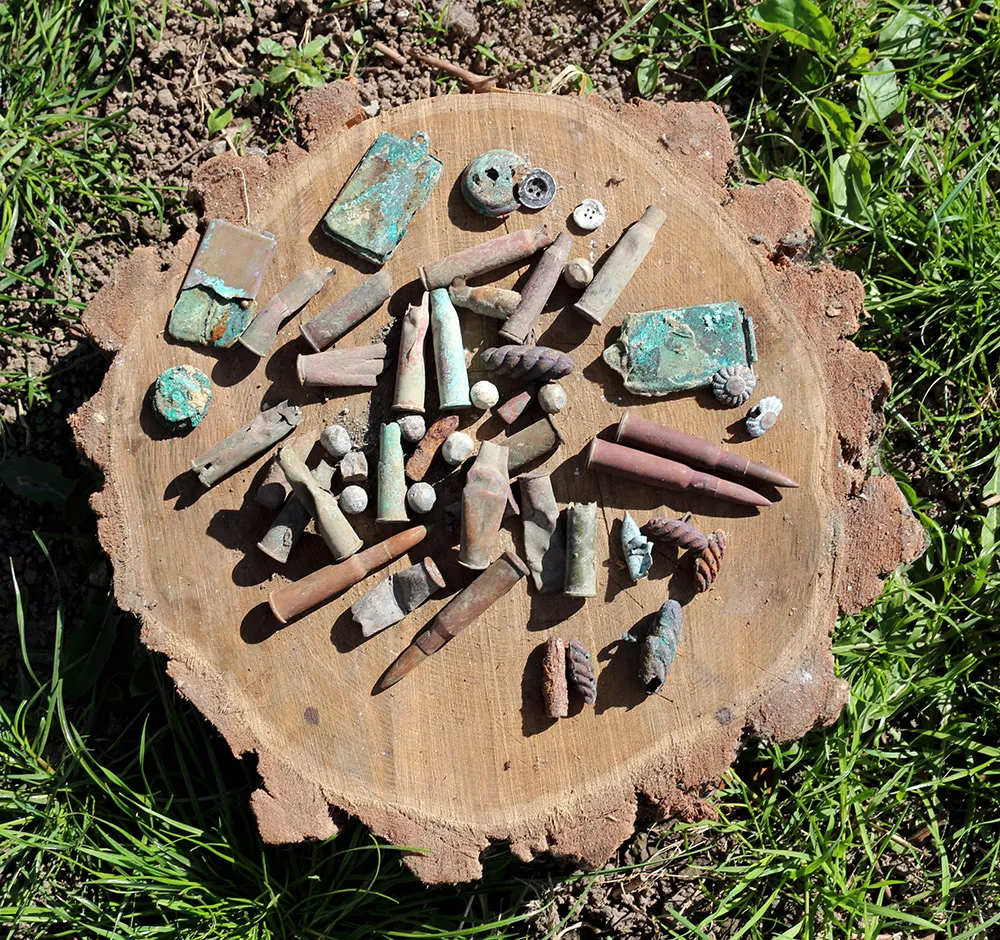
Artefacts from the battlefield, long since handed over to the local museum. Photo from 2015.
Where exactly and when the world history of the hussars began, nobody can say. It is only known that it was a Hungarian invention. But we know for certain that the glorious history of this famous type of cavalry, which dominated the battlefield for almost three centuries, ended on the outskirts of Horodok on 17 August 1914.
Of course, hussar units remained afterwards. They fought even in the Second World War. But they were never again used anywhere as the main striking force, and were hussars only in name and as a tribute to tradition. Reconnaissance, pursuit of a fleeing enemy, raids behind enemy lines — yes. If it came to an attack, it was on foot, like ordinary infantry. The battle of Horodok was the last time mounted hussars were used as the main striking force. It ended badly for them, and no side has used such tactics since.
In this article we will dwell on the “artistic” echo of those events.
The battle of Horodok was immortalised in two very beautiful and almost identical bas-reliefs, “Cavalry Charge at Horodok”, by the artist Manó Miltiád in collaboration with the sculptor György Németh. The well-known Hungarian artist Manó Miltiád, we should stress, took part in this battle, where he was severely wounded.
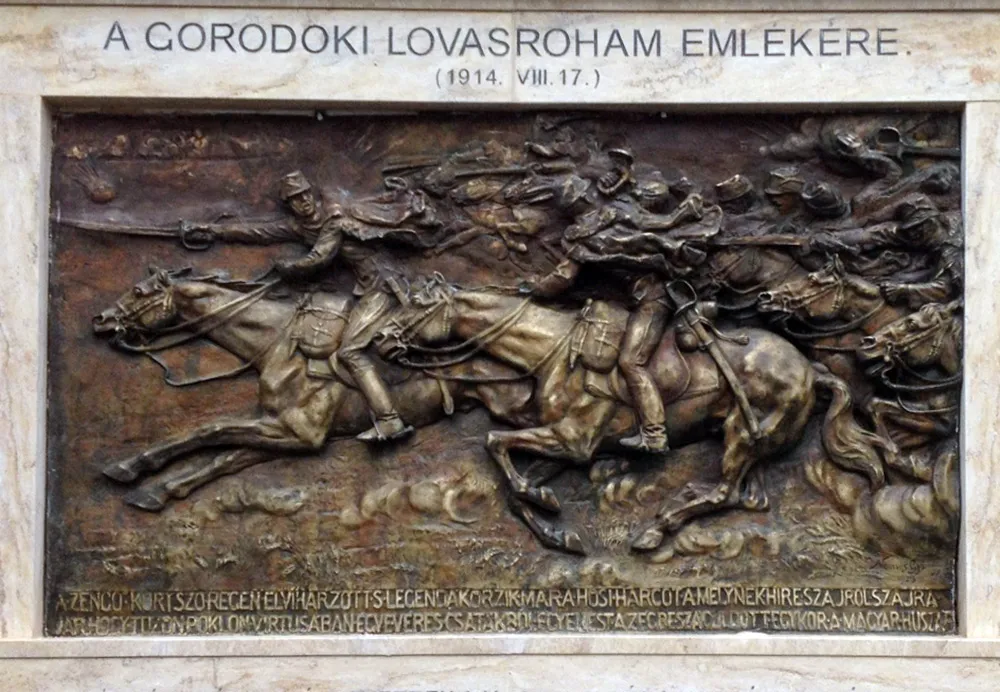
One of the bas-reliefs was once installed on the hussar barracks in Budapest. Today it can be seen in the Hungarian Museum of Military History (pictured).
Another bas-relief is the main element of the monument to the hussars who fell in the battle of Horodok in the town of Pápa. Recall that the heaviest losses were suffered by the Pápa 7th Regiment, which was almost completely destroyed and had to be rebuilt practically from scratch.
The bas-relief shows hussars rushing headlong into the charge. In the foreground is an officer with a raised sabre, behind him a rider sounding a trumpet. In the background several hussars, hit by bullets, fall from their horses.
Manó Miltiád embodied what he saw with his own eyes: the heroic charge and death.
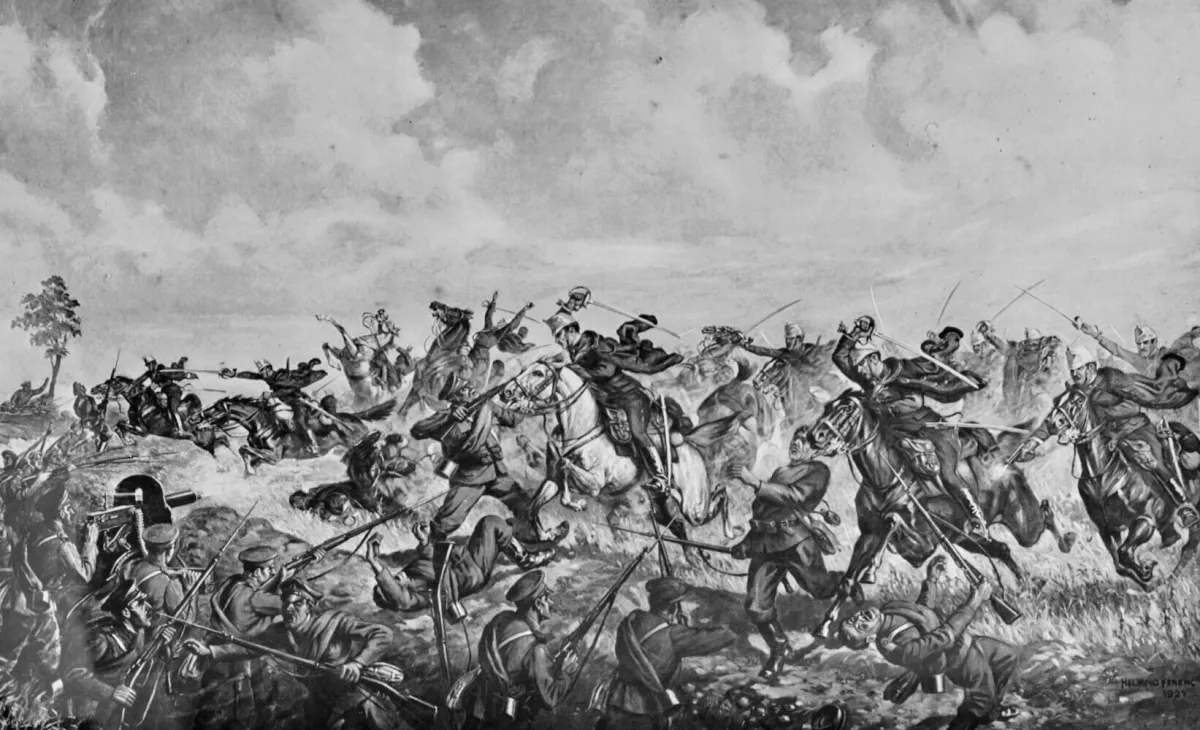
By contrast, the painting by the no less famous Hungarian artist Ferenc Helbing, who among other things designed the 1,000-korona banknote issued in 1920, shows something different.
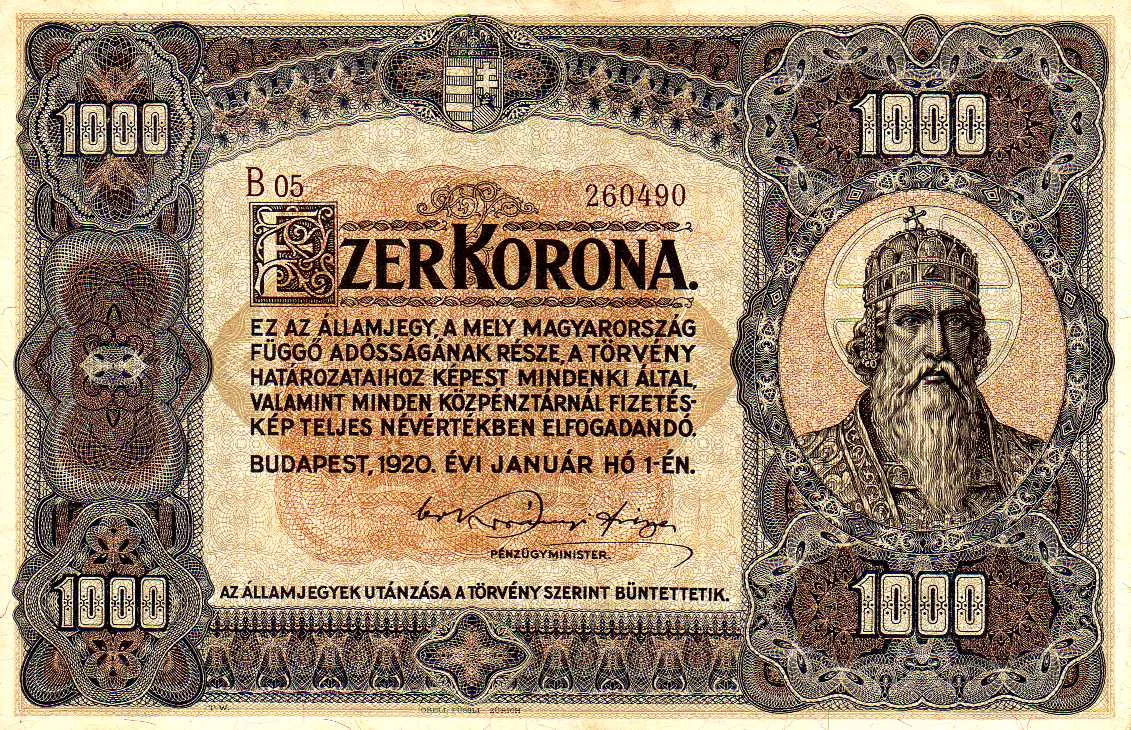
On this pathos-filled battle canvas (over 2 m wide), victorious Hungarian hussars chop timid Russians like cabbage. It is historically inaccurate, but ideologically “correct”.
The story of how this painting came about is rather sad.
In the vanguard of the Austro-Hungarian attack on Horodok was Lieutenant Miklós Perczel (pictured below), who was killed before the battle even began. In fact, his unit, which was carrying out reconnaissance, was the first to come upon the positions of the Russians who had dug in on the western edge of the town.
The young lieutenant was mourned by his young wife Teréz Igmándy of Bolgodosasonfa, his father (Lieutenant General József Perczel, the eldest son of General Mór Perczel), his mother and three brothers — hussar officers Móric, Armand and Olivér, who also fought at the front.
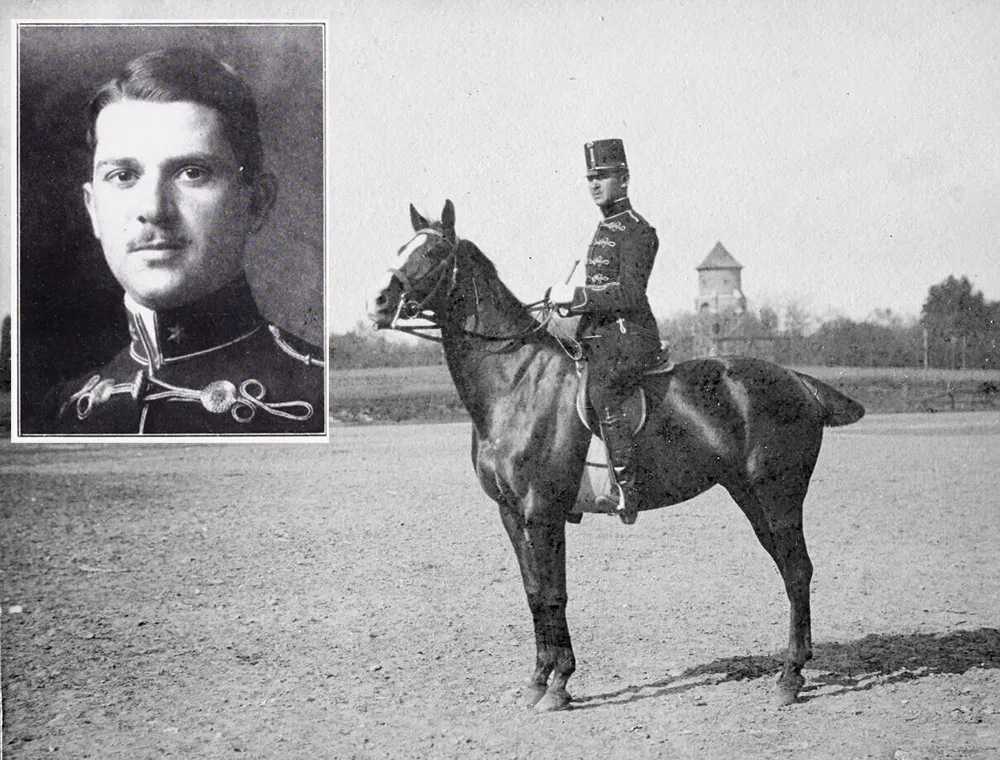
Today this looks strange: the son of a general and the grandson of a general ends up, with the rank of lieutenant, at the tip of a suicidal charge.
In the early 1920s, Armand Perczel, brother of the lieutenant killed at Horodok, headed the Military-Political Department of Hungary’s Ministry of Defence. At that time, in honour of his younger brother, he commissioned the famous Hungarian artist Ferenc Helbing to paint the battle picture already mentioned, titled “The Charge of the Horodok Hussars”. From the position of the commissioner, incidentally, the ideological slant of the painting becomes understandable.
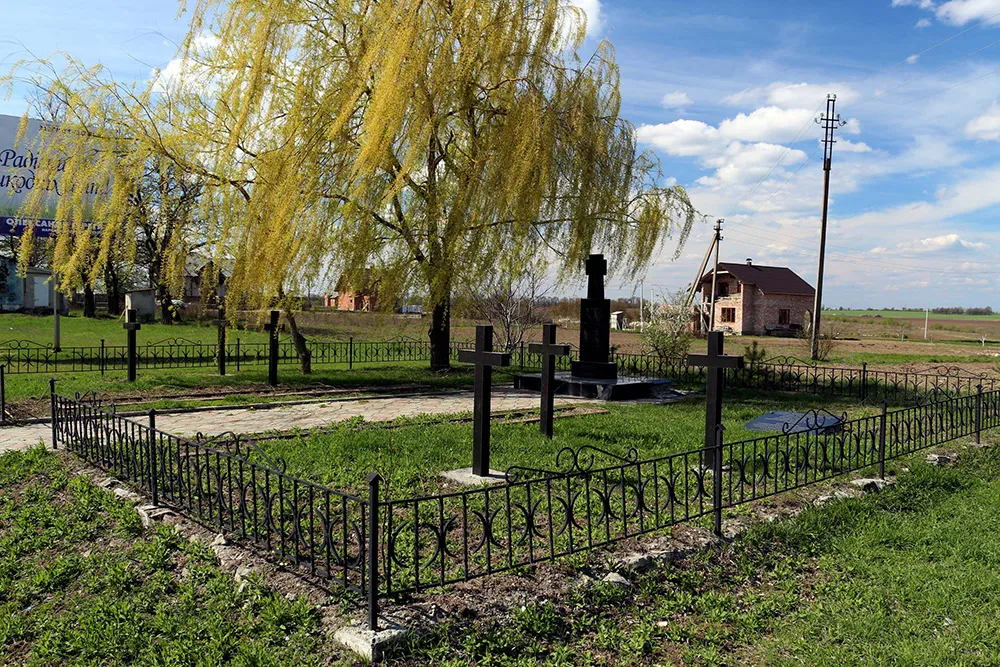
Most likely Lieutenant Miklós Perczel is buried in this mass grave on the outskirts of Horodok
The painting was later displayed in the Ministry of Defence and then in the Ludovika Academy. Unfortunately, the canvas was destroyed in the Second World War during the fighting for Budapest. Only a photocopy remains.
In Horodok itself, they have no inkling of this vivid and interesting fact.
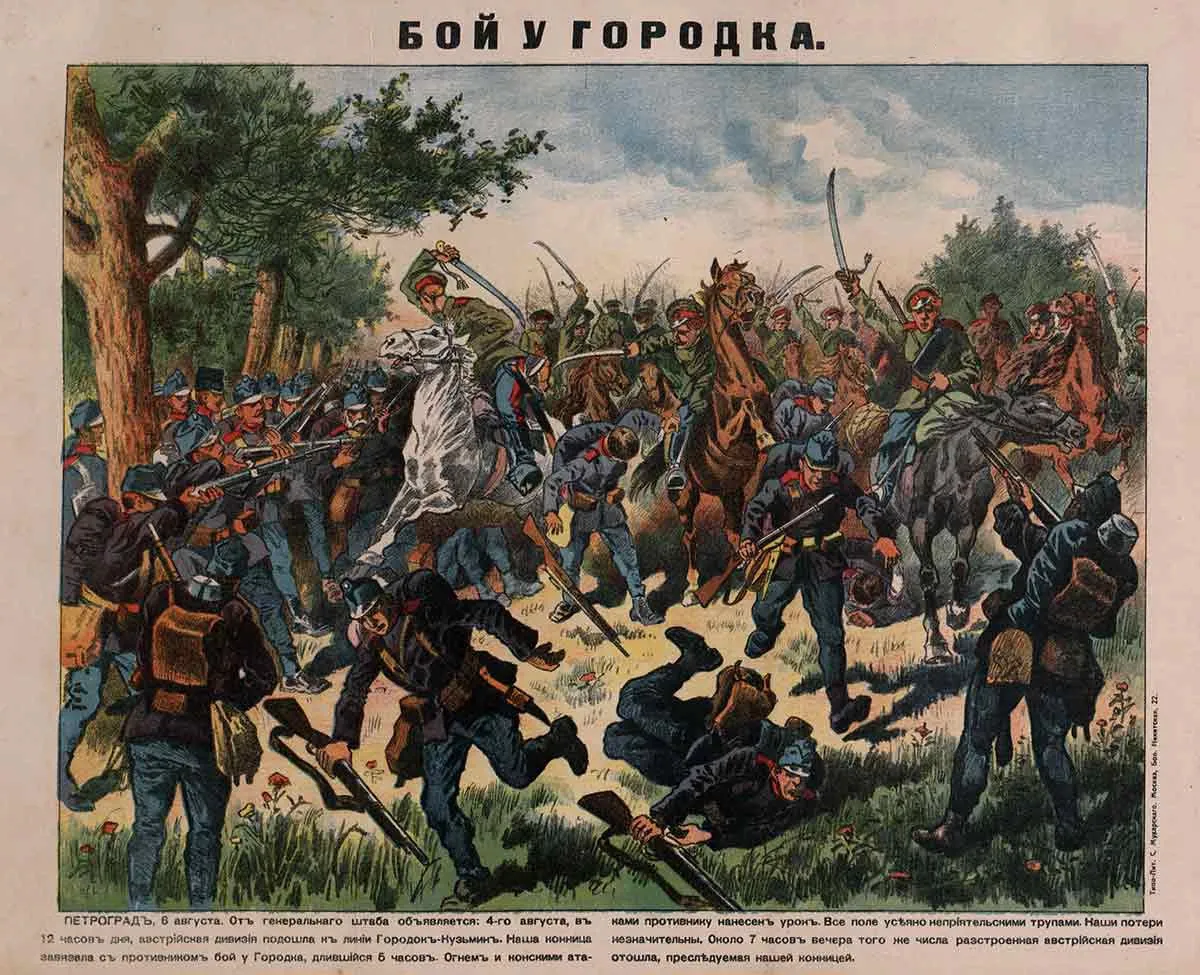
The work of art on the battle of Horodok best known to Ukrainians is the lubok by the Russian artist Stepan Mukharsky, promptly published in Petersburg a few days after the event. The artist was not much concerned with the question “What actually happened there?”, so he depicted Russian Cossacks cutting down frightened imperial infantry with their sabres. That is, instead of proud hussars in high boots, red trousers with braiding and smart blue jackets, he drew ordinary Austro-Hungarian infantry.
Dmytro Poliukhovych


