

An echo of an ancient battle near Horodok: why a small Podillia town finds itself every year at the centre of attention of all Hungary
On the outskirts of the small town of Horodok in Khmelnytskyi region, by the road leading towards Husiatyn, you can see a small memorial erected on 9 October 2004 on the mass grave of soldiers of the 5th Cavalry Division of Honvéd hussars, once commanded by Field Marshal Lieutenant Ernest von Froreich Szabo.
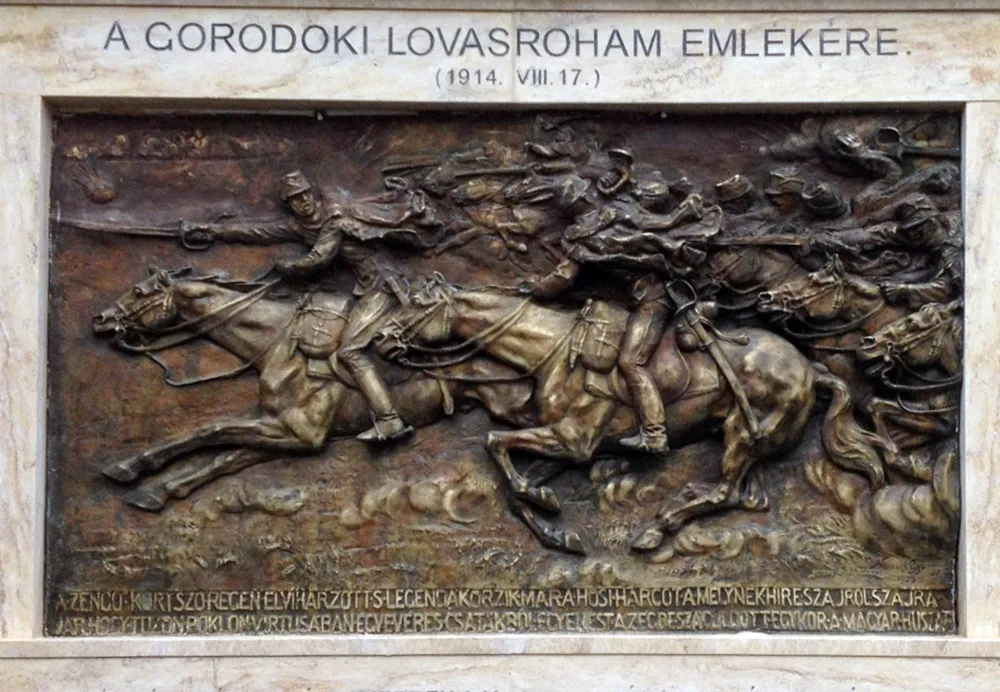
Bas-relief “In memory of the Horodok cavalry charge. 1914.VIII.17”. Budapest. Photo: open sources
On 17 August 1914 von Froreich’s hussars died in a heroic but utterly senseless attack on the trenches of well-entrenched Russian infantry, which also had machine guns and artillery with shrapnel shells. It was one of the first significant battles of the First World War on the Eastern Front and the last battle in history in which cavalry was used as a shock force against a well-fortified enemy (besides trenches there were also rows of barbed wire).
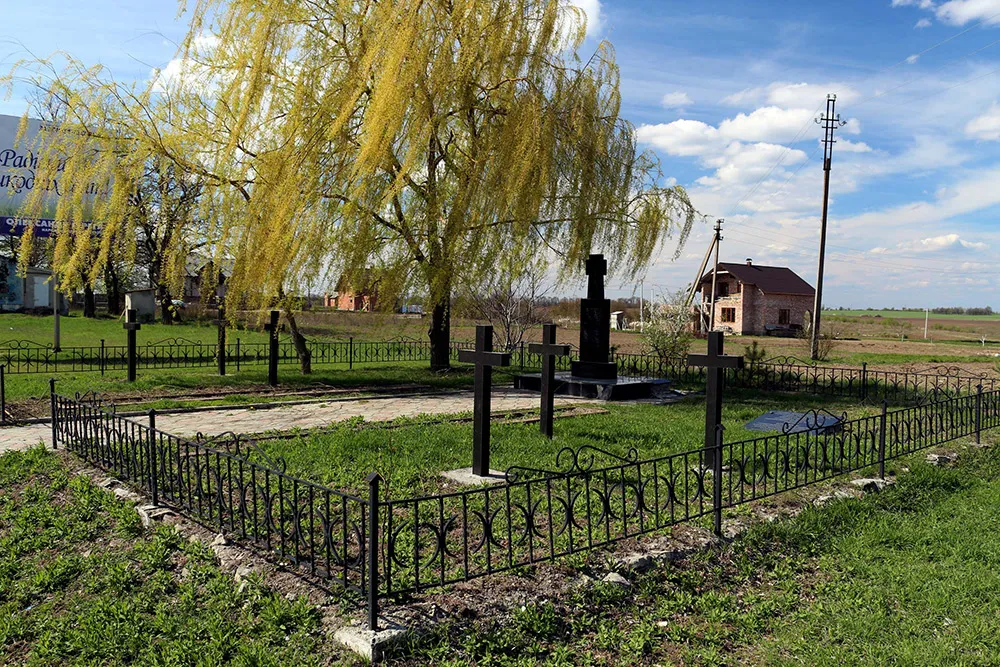
Memorial on the mass grave of the fallen hussars
We shall leave out the details of those events as insignificant. Of interest here are the very emotional memoirs of a participant from the Russian side, Count Fedir Keller, General of Cavalry and “Russia’s first sabre” (his sabre, by the way, was later carried by Symon Petliura).
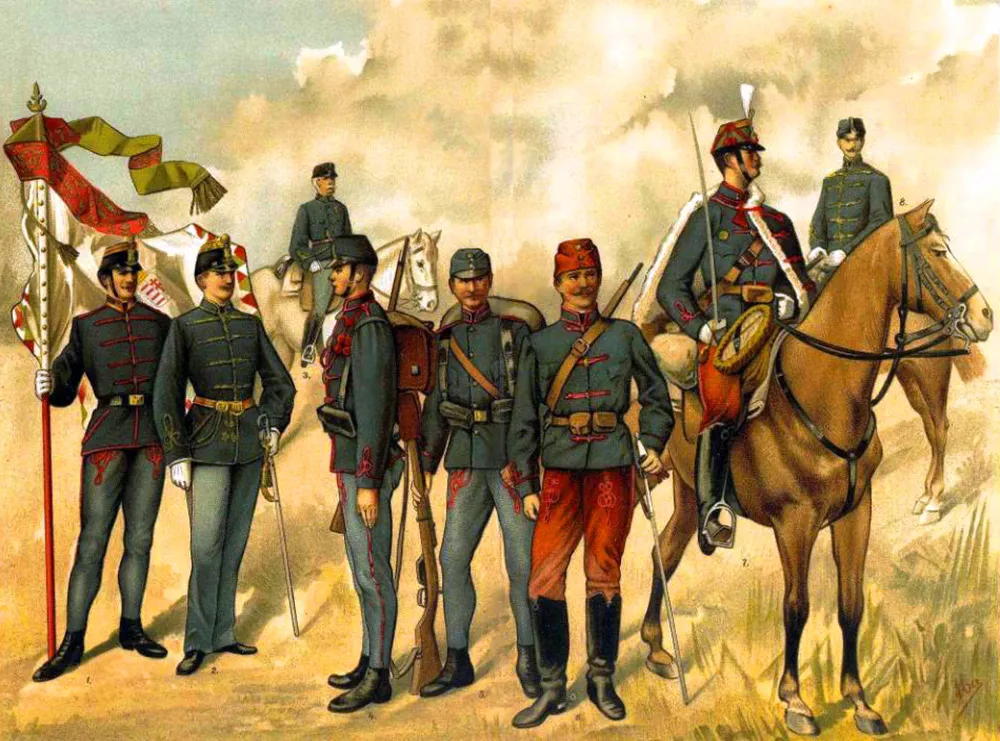
Hungarian hussars of the early 20th century
“As for the deadly attack at Horodok, I partly watched it from a high point and partly learned of it by telephone.
I must note that the arena of this cavalry attack was the field near Horodok, which was covered by our positions from all points, something the enemy command should, however, have known [but did not].
When I saw a cavalry charge going against the wire obstacles and the well-placed machine guns, my blood ran cold, as that of a born cavalry officer. At first we did not understand what was going on and thought it was some tactic unknown to us. We thought that perhaps they wanted to advance to a suitable place and then continue the attack dismounted. But this did not happen.
They raced like madmen. It was terrifying…
Our machine guns were manned by officers who had strict orders to let the mass of cavalry come closer, preferably in front of the wire obstacles, and to open fire when they could destroy the hussars galloping in tightly packed ranks.
Our officers carried out the order, and I, an enemy soldier, was twisted in convulsions by this sight. The cavalry attack fell apart within minutes, and the hussar squadron… lay sprawled on one another’s backs, writhing, groaning and dying.
Such heroism and such recklessness, which made one’s hair stand on end, had not been seen even by our oldest soldiers, who had already been through several wars…
Several machine-gun officers burst into tears…”.
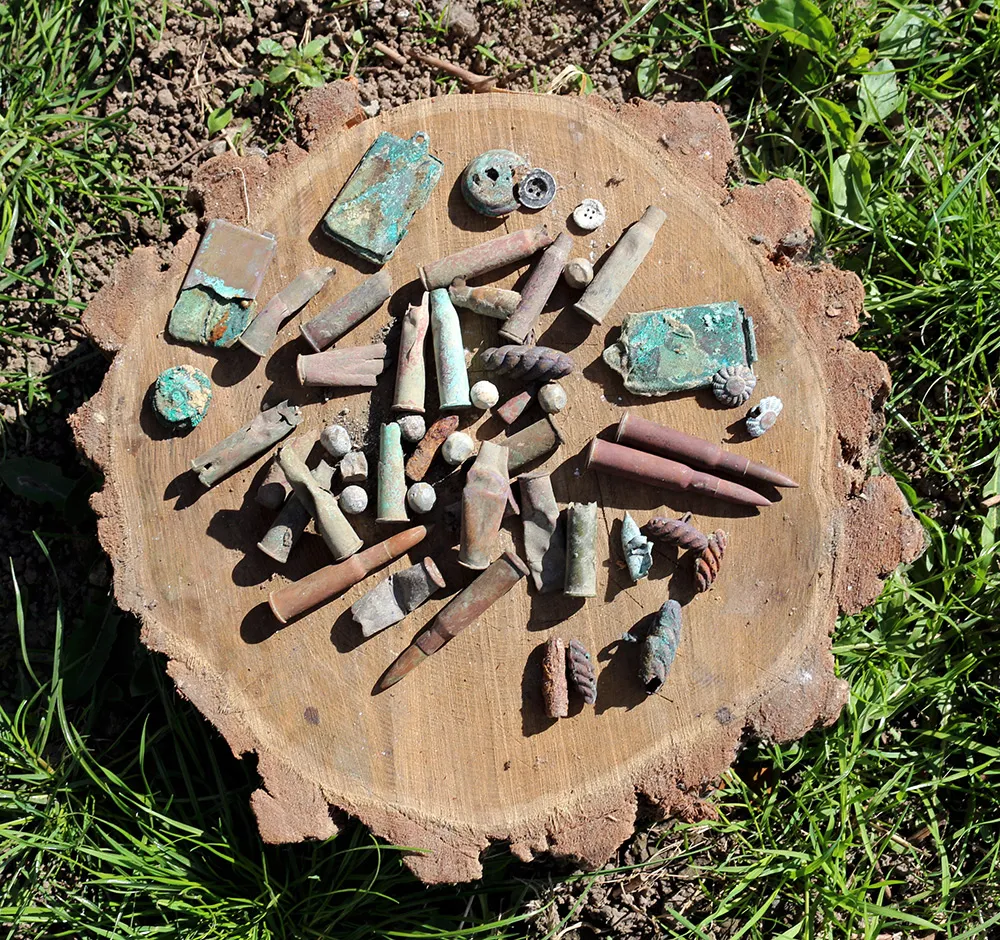
Artefacts from the battlefield: buttons, cartridges, shell casings and memorial medallions (the latter found during the official exhumation)
The rout of the Hungarians continued even after their retreat to Sataniv. It was catastrophic.
Almost at once all the newspapers of the Russian Empire trumpeted the victory. In St. Petersburg a patriotic poster “The Battle of Horodok” was even promptly printed. True, the metropolitan artist, who had not the slightest idea of what had really happened there, depicted ordinary Austrian infantry in grey instead of Hungarian hussars in red trousers, but that is not so important.
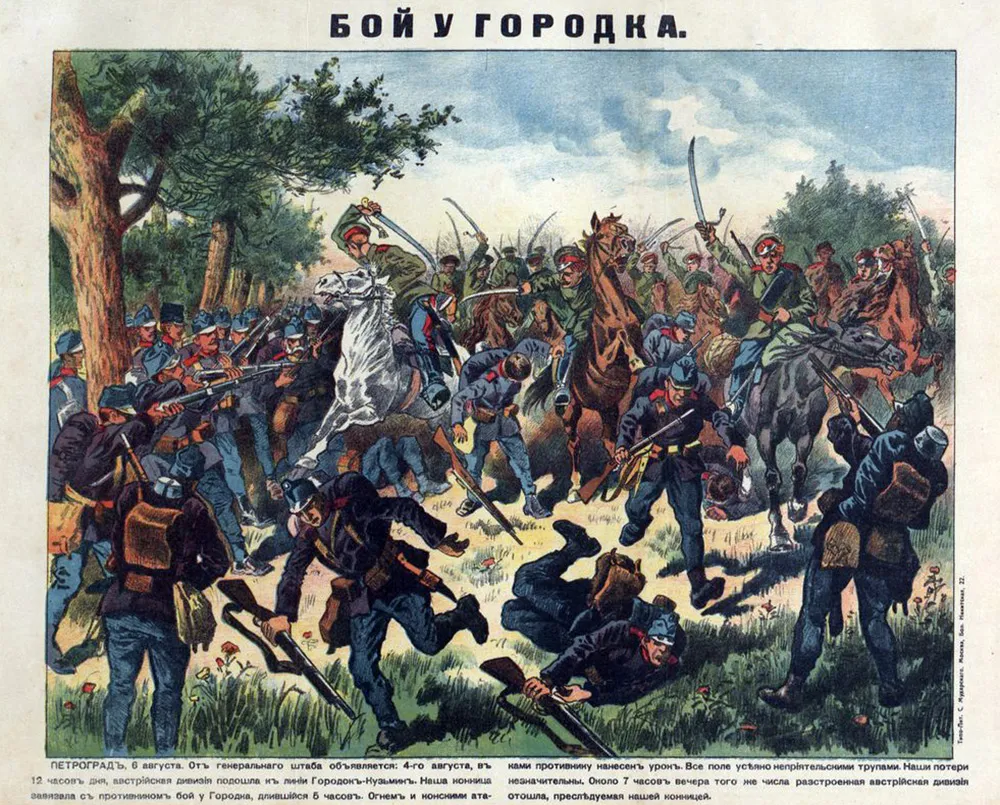
According to post-war Hungarian sources, the 5th Cavalry Division lost 24 officers, 450 hussars and 650 horses in those battles.
Field Marshal Lieutenant Ernest von Froreich Szabo, through whose miscalculations these losses occurred, put a bullet in his temple. He proved to be a poor military man, but a Man of Honour.
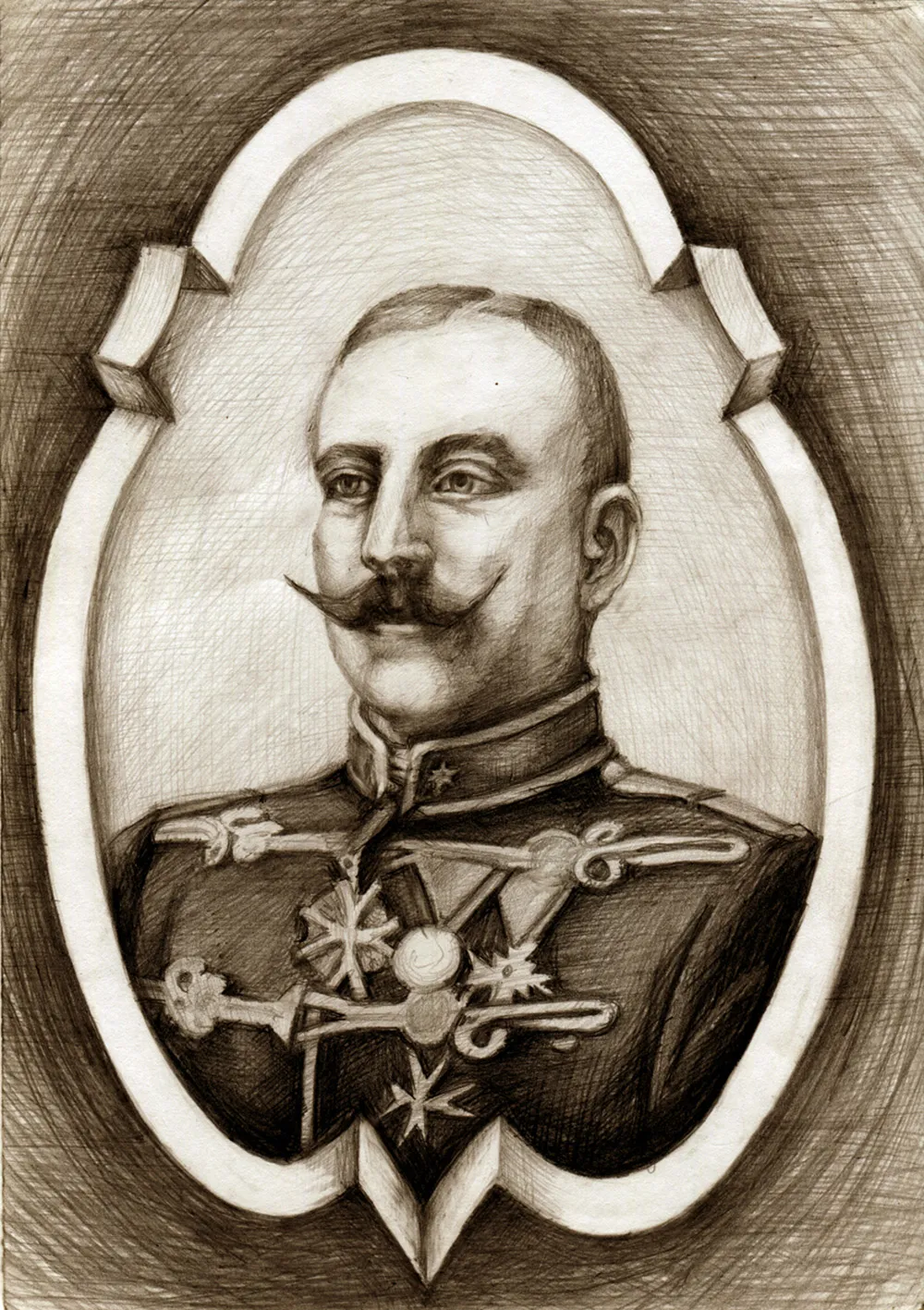
Ernest von Froreich Szabo
On the Russian side, in units of the 2nd Consolidated Cossack Division and in companies of the 14th Rifle and 60th Zamość Infantry Regiments, losses amounted to a little over fifty men (including the wounded).
As for the showdown between the Russians and the Austro-Hungarians that took place on the outskirts of the Podillia town with the eloquent name Horodok (“little town”), today it concerns hardly anyone except historians who study the period of the First World War. Ukrainians took part in that meat grinder on both sides of the trenches, but it was still not their war.
We recalled this story for another reason.
While in Ukraine, and even in Russia, this battle is today a long-forgotten third-rate historical event, in Hungary the ancient defeat, “Gorodoki lovasroham” (the Horodok cavalry charge), still hurts. In Hungarian historical mythology this battle occupies the same place as the famous Charge of the Light Brigade at Balaclava does in the British one.
In the Museum of Military History in Budapest you can see an interesting memorial plaque dedicated to the “Gorodoki lovasroham”. It is adorned with the bas-relief “Cavalry Charge at Horodok” by the artist Manno Miltiades (by the way, a participant in the battle, where he was wounded) in collaboration with the sculptor György Németh.
The bas-relief shows hussars racing headlong into the attack. In the foreground is an officer with a raised drawn sabre, behind him a rider blowing a trumpet. In the background several hussars struck by bullets fall from their horses. It is rightly considered one of the most beautiful bas-reliefs in the city.
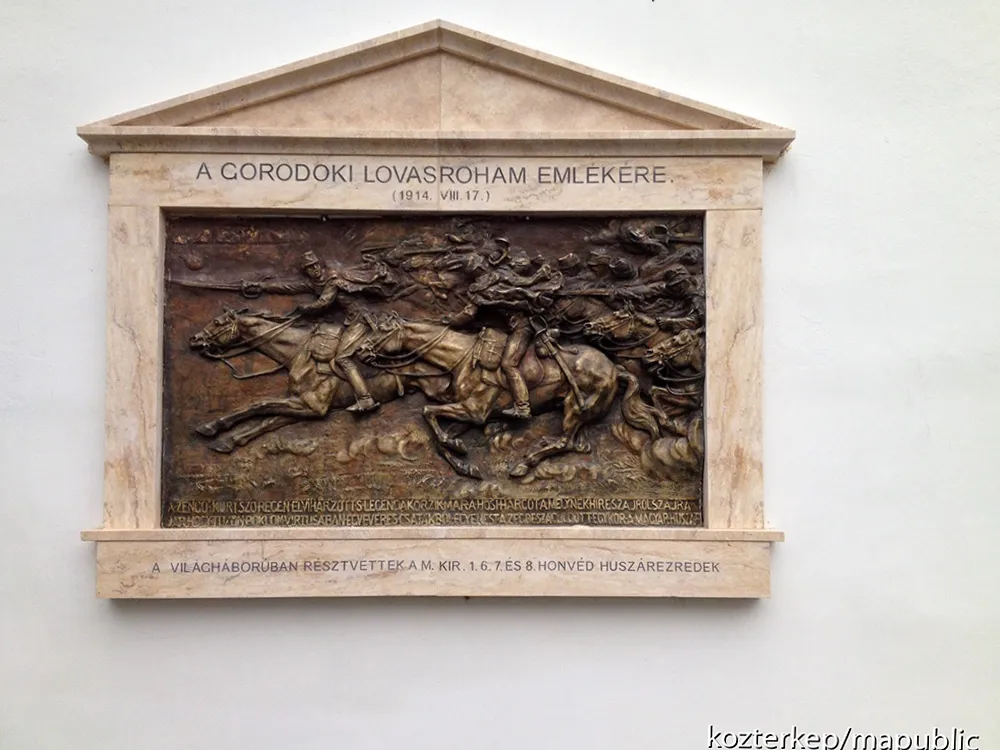
At the bottom of the bas-relief is a dedicatory poem. The translation, unfortunately, does not convey all its beauty:
“The loud blowing of the horn has long since passed. And only legends now keep the heroic battles. Their glory passes from mouth to mouth. As in a whirl of fire and hell, burning with virtue from bloody clashes (battles), the Hungarian hussar rose (ascended) to the sky.”
On the limestone frame is the inscription: “In memory of the Horodok cavalry charge. 1914.VIII.17”, and below it: “The attack involved the Hungarian 1st, 6th, 7th and 8th Honvéd Hussar Regiments.”
The history of that bas-relief is quite rich and interesting. The author knows it well, but in this case it would be superfluous to dwell on it.
Let us tell about the present.
Every year at the end of October Hungary marks Halottak napja (the Day of the Dead). It is a non-denominational veneration of deceased ancestors.
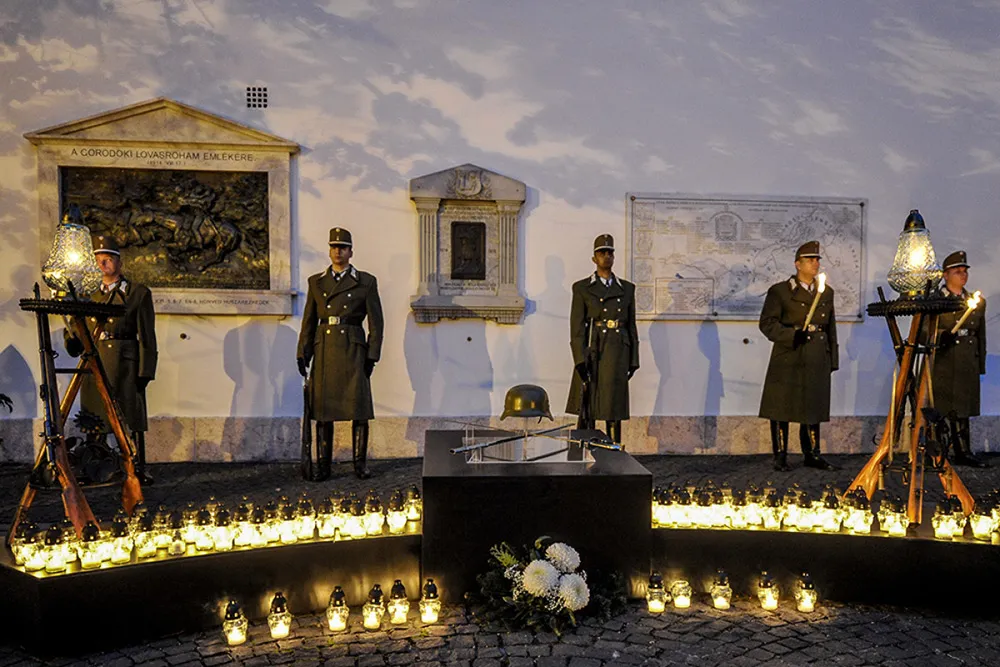
Lighting of candles. Photo: honvedelem.hu
On that day a beautiful and solemn ceremony takes place by the “Gorodoki lovasroham” bas-relief: the Lighting of Memorial Candles, attended by the country’s leaders, the Ministry of Defence, military attachés of foreign embassies accredited in Budapest (Ukraine’s among them), and clergy (Roman Catholics, Protestants, rabbis).
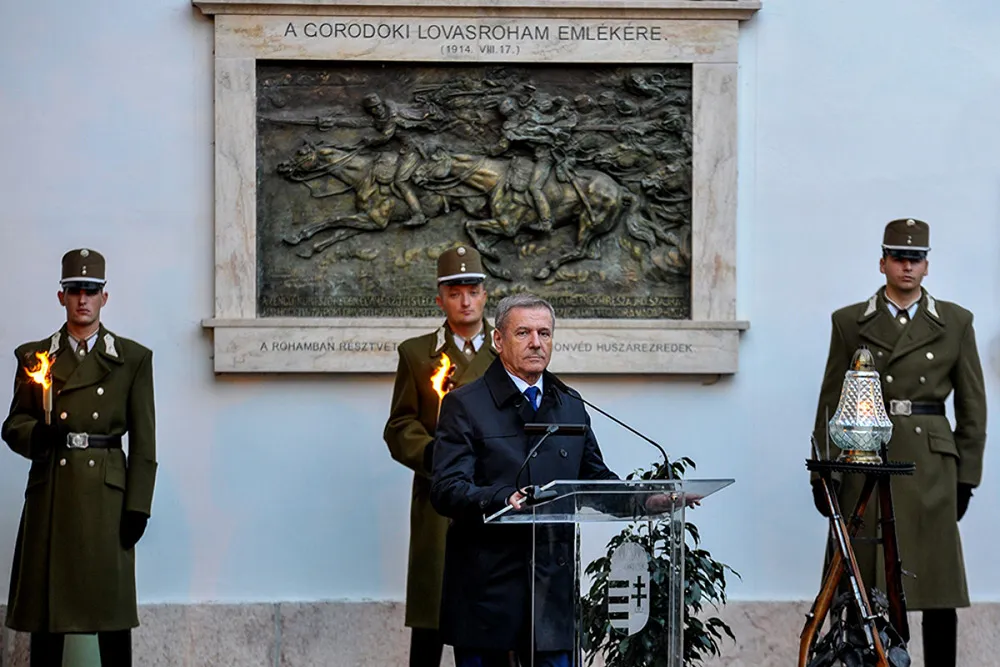
Lighting of candles. Photo: honvedelem.hu
Moreover, candles are lit not only in honour of the Hungarian soldiers but also of their adversaries, because both served their Homeland.
Of this interesting and vivid fact, which directly concerns the history of the Podillia town, until now nobody knew even in Horodok itself.
Now they will know…
Dmytro Poliukhovych


