Sokil. A village-town with a heap of monuments

· 6 min read
The Volhynian village of Sokil turned out to be a real discovery for me. I had long known of its existence and its monuments – I had read about them on the “Castles and Churches of Ukraine” website – but I still did not realise how interesting a place it is. A masonry fortified church of the 15th-16th centuries, a wooden church of 1853, a Roman Catholic church of 1907, a brick mill and the ramparts of a castle-fortress of the pre-Mongol period, and all around fairy-tale Polissian nature and the Styr River, with its wide floodplain and oxbow lakes. Only the road here from Rozhyshche, the former district centre, is terrible, so Sokil has never seen tourists, nor they it.
Today fewer than eight hundred people live in Sokil, but a hundred years ago there were twice as many residents, and Sokil was a small town to which the rules of Polish urban development applied, with not only churches and schools but also a substantial library. The Second World War and the Soviet era changed everything…
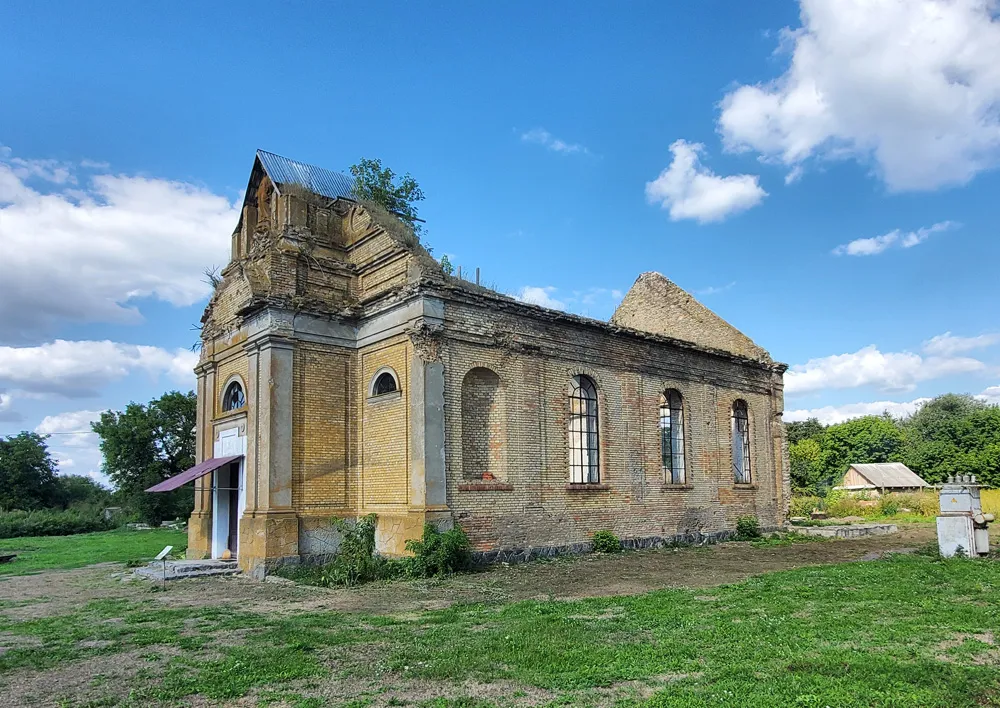
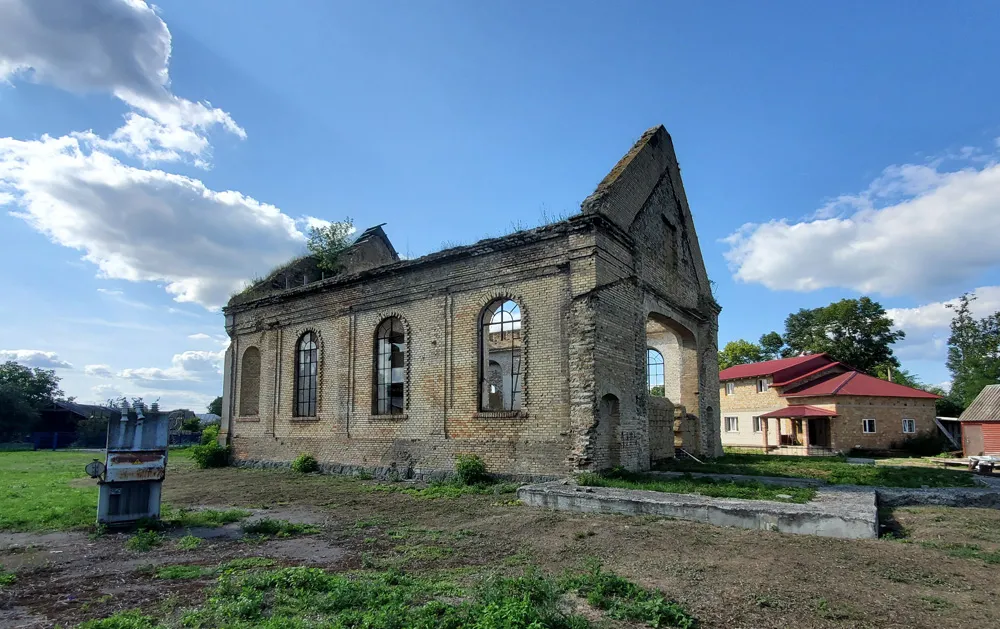
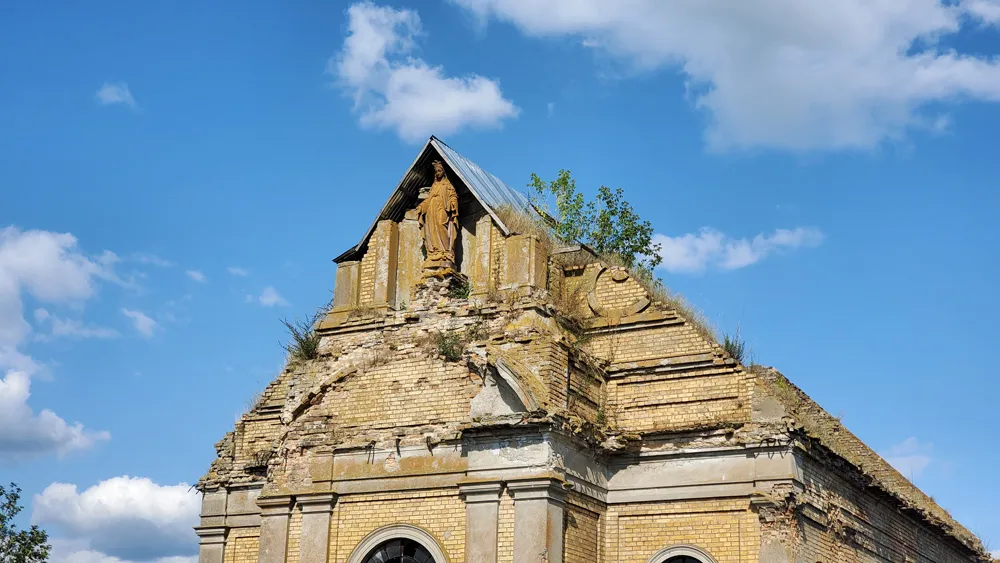
The Roman Catholic church
The settlement called Sokul on the bank of the Styr is believed to have been founded in the 11th or 12th century – it is not known exactly, but it is known that it already existed at the time of Batu’s invasion, and it was then that an earthen castle with a wooden palisade appeared above the Styr. It was rectangular, measuring 80 by 90 metres. The ramparts that survive from it are now 5 metres high and 10 wide. Of course, they were once higher, but it is good that they have survived at all.
In the 16th-18th centuries Sokil was inhabited by craftsmen – coopers, potters, furriers, blacksmiths – and in the 19th century there was already a Jewish community here, and trade developed accordingly. In those times there were two churches, a Roman Catholic church and a synagogue, two mills and several shops here… The centre of Sokil is still called the town by locals, although it has long been a village.
The name of the settlement is connected with the falcon (sokil), which hunters once tamed here. I cannot trace when the old name Sokul changed to Sokil, and it does not matter now – nobody will rename it back. In 1939 the USSR seized the town, and in 1941 the Germans came here. And trouble came…
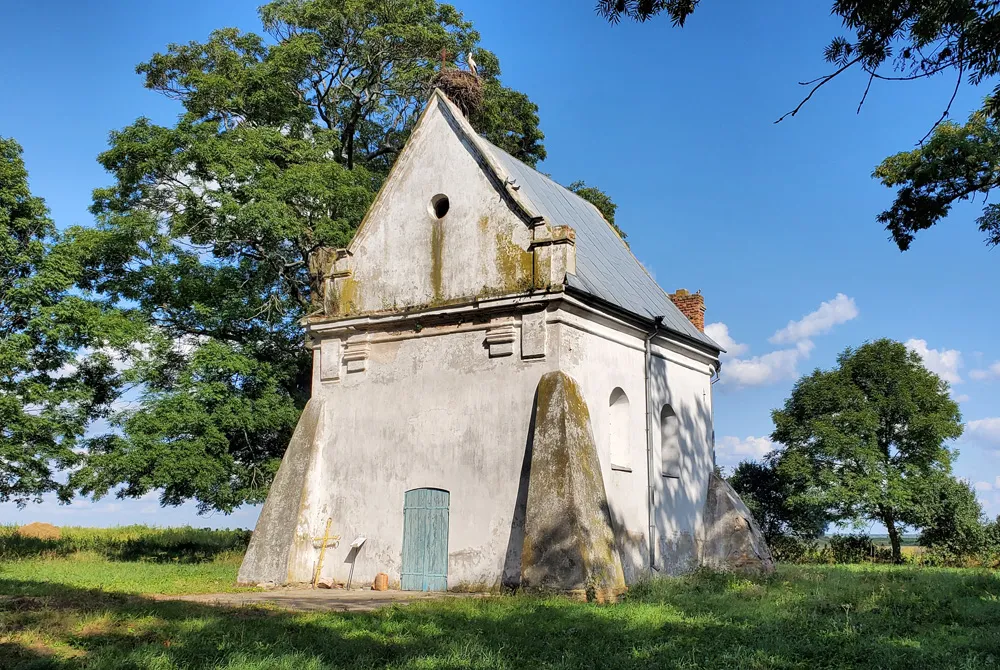
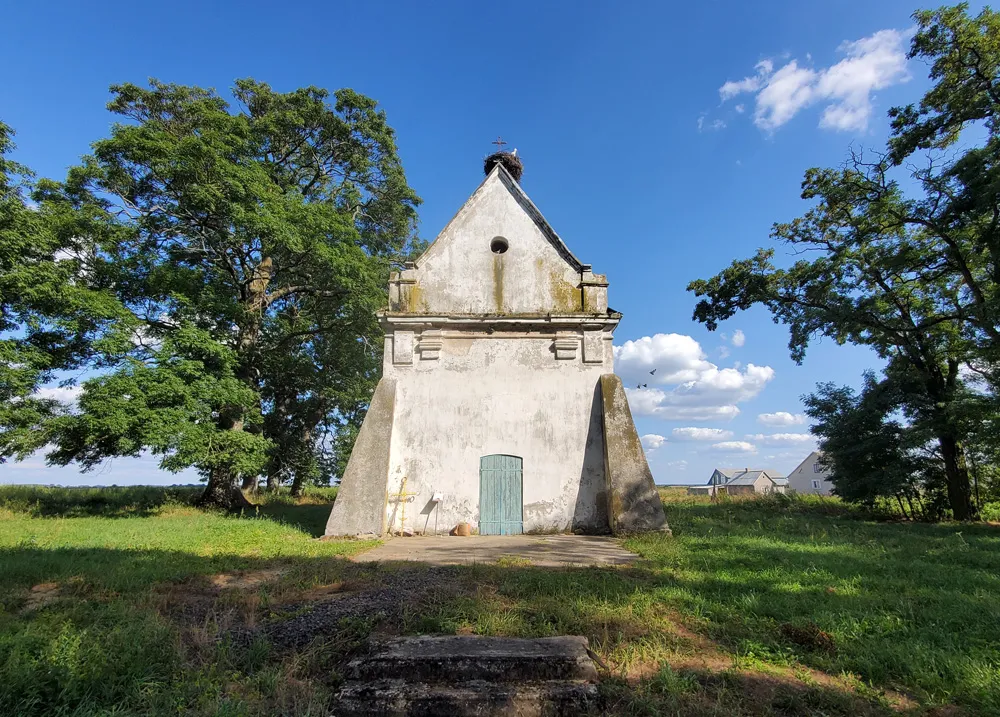
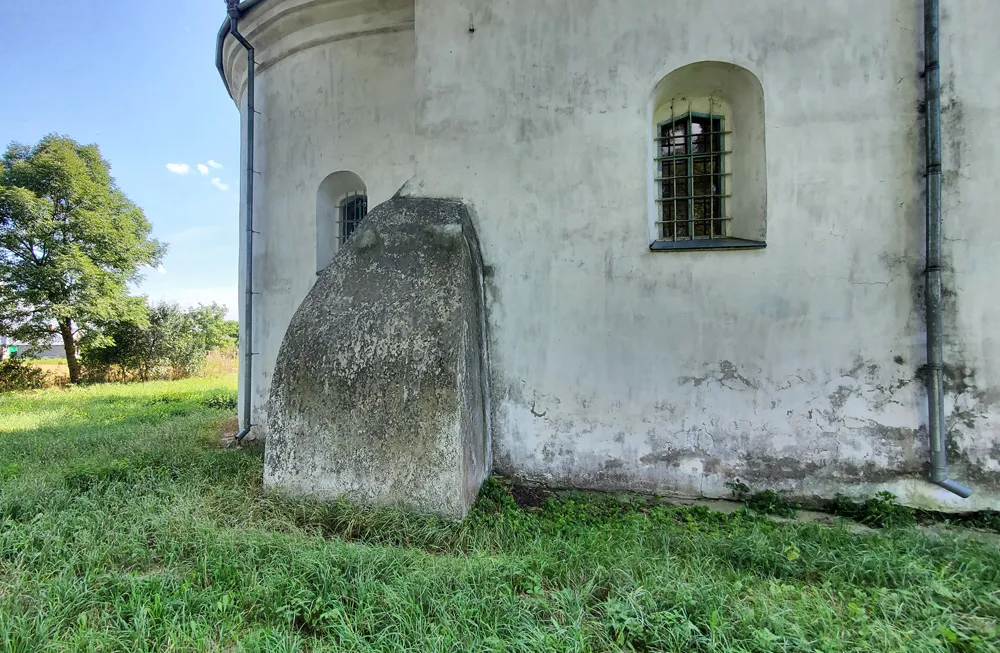
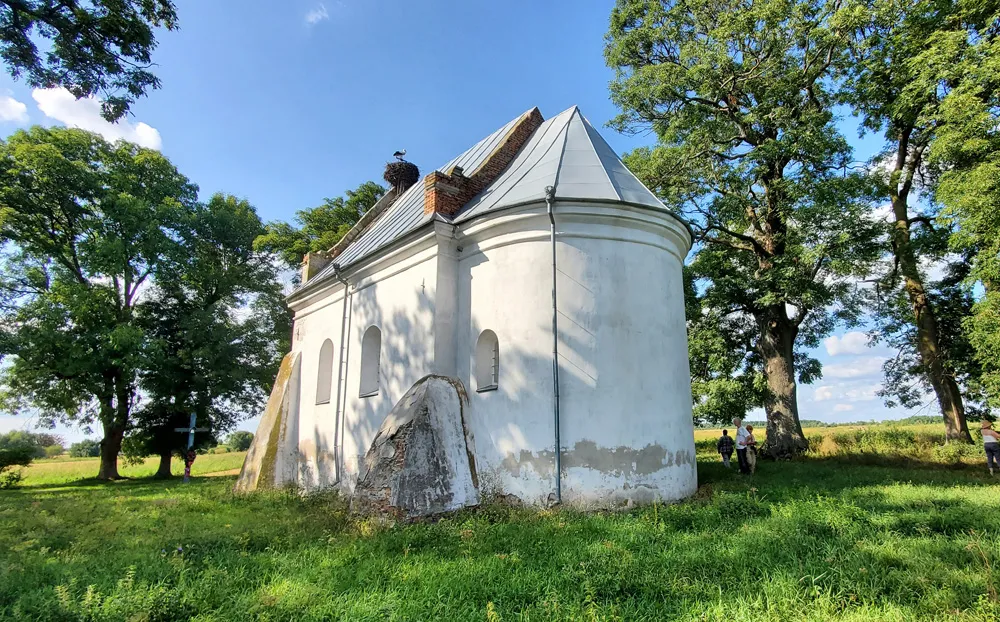
The Church of the Dormition
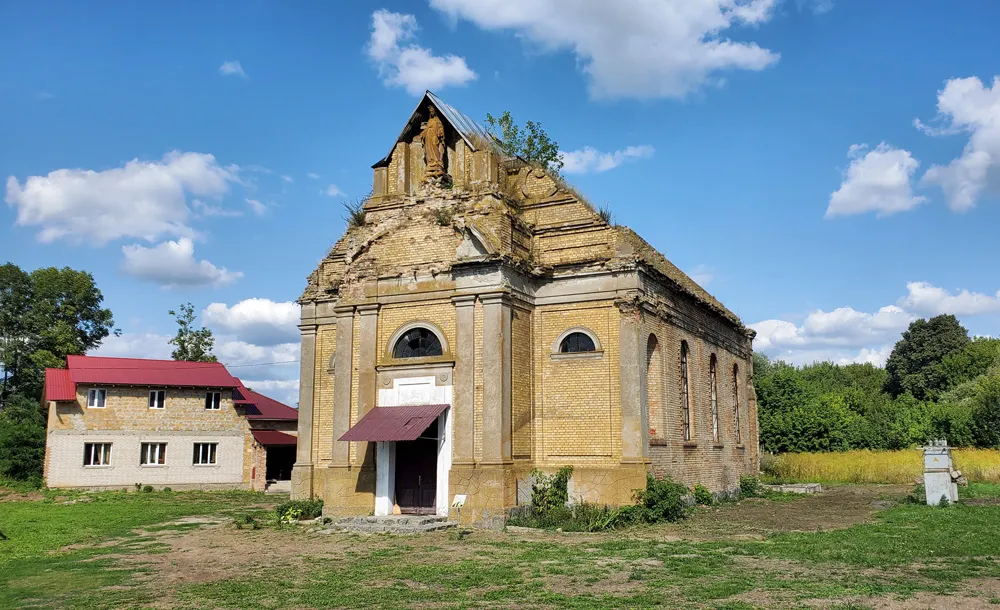
Poles and Ukrainians had lived side by side on these lands since ancient times. There were quite a few villages where Poles were the majority, whereas in Sokil they were a minority, but there were still quite a few of them, so in 1902-1907 they built themselves a fairly large masonry church. Ukrainians and Poles lived mostly in peace, but the situation changed after the Germans seized Poland in 1939. Volhynia then went to the Soviets, but the Poles did not accept this situation, and after the arrival of the German occupiers units of the Home Army appeared in Volhynia – an underground military formation comparable to the Ukrainian UPA – each fighting for its own people. I will not go into detail about who started it first and who responded, but it so happened that a bloody feud began between Ukrainians and Poles, which Poles now call the genocide of Poles in Volhynia, completely forgetting their own bloody “exploits”.
It is written that many Poles joined the local police created by the Germans. Together with Home Army units, in 1943 they carried out punitive raids against Ukrainian villages – killing villagers, including women and children. Present-day Poles have completely forgotten this. Senseless cruelty always produces a similar response – in August-September 1943 UPA units destroyed two villages located not far from Sokil – Wola Ostrowiecka and Ostrivky. In the postwar period the Soviet authorities did not rebuild those villages – they were simply ploughed up with tractors and became fields. And in Sokil the Polish church was then set on fire, probably by some vagrants, drunkards, “titushky”… Then came strange events that led to the burning of a considerable part of the town’s houses. Who did it is hard to understand, since for a long time this crime was blamed on the Germans, but now it is said to have been done by the Poles, who tortured to death 19 residents of Sokil in the process.
One can argue for a long time about the confrontation between Poles and Ukrainians in Volhynia at that time, but still the winning side was Poland, which got an independent country after all, while Ukraine, with Volhynia, again went under the yoke of a colony. The Polish Home Army undoubtedly destroyed more Ukrainian villages than the UPA destroyed Polish ones, since it did so in the Lemko region and the Boyko region too… And in 1944-1947 the entire population of the ethnic Ukrainian lands of Poland was deported. Villages continued to be destroyed, but now by the regular army, as, for example, in 1946 Zawadka Morochowska was destroyed.
The Trinity Church
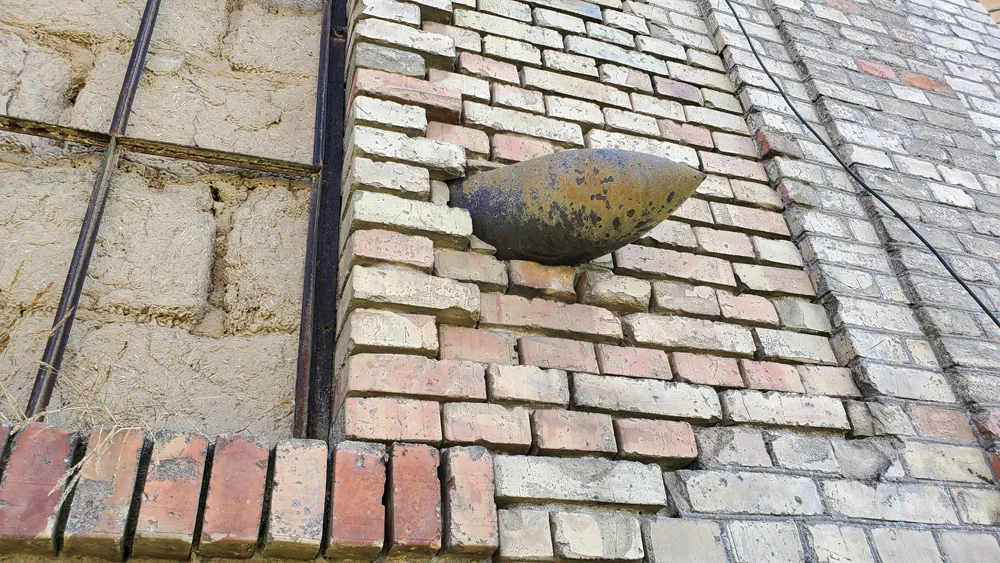
In the postwar period the church in Sokil was turned into a grain store. In 1990 it was handed to the Roman Catholics, but because of the lack of parishioners the building was later given to the Orthodox Church of the Kyiv Patriarchate. A Dormition Monastery was officially established here, but the church, which stands without a roof, doors or windows, without its altar part, looks like a ruin. Its turbulent history is recalled by a large shell lodged in the wall, and its future is hidden in a fog of uncertainty.
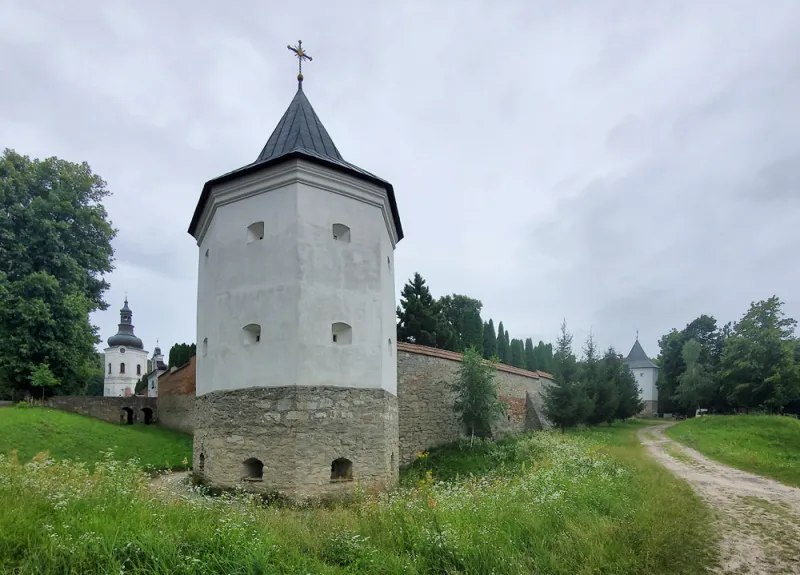
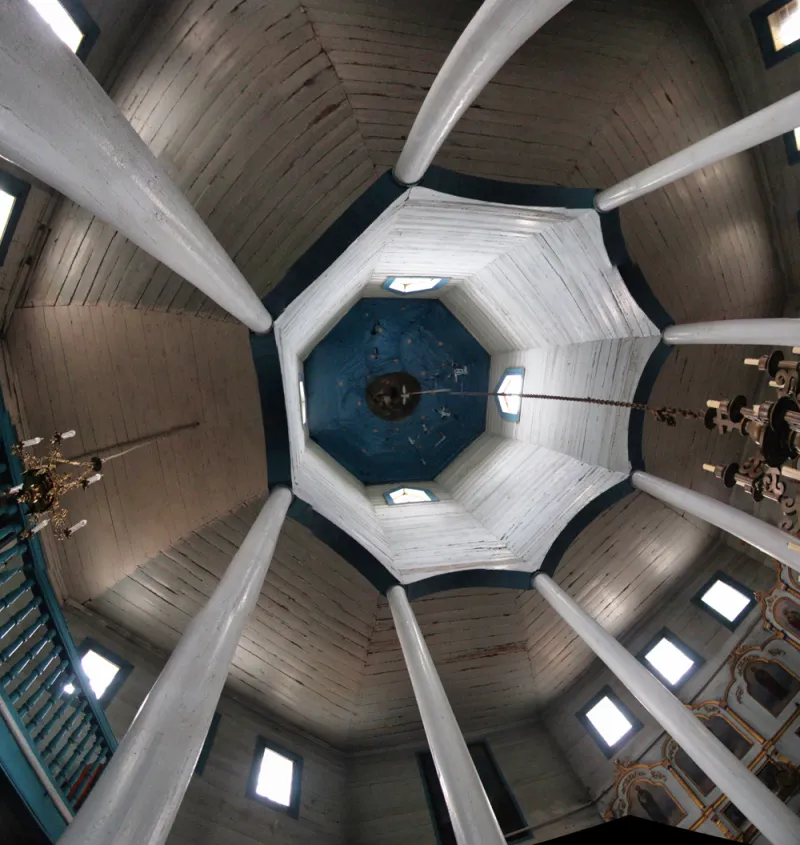
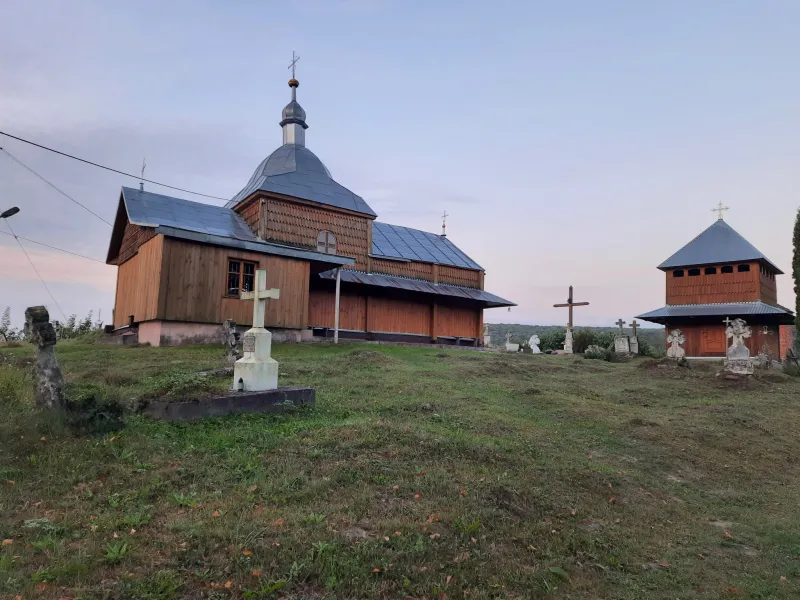
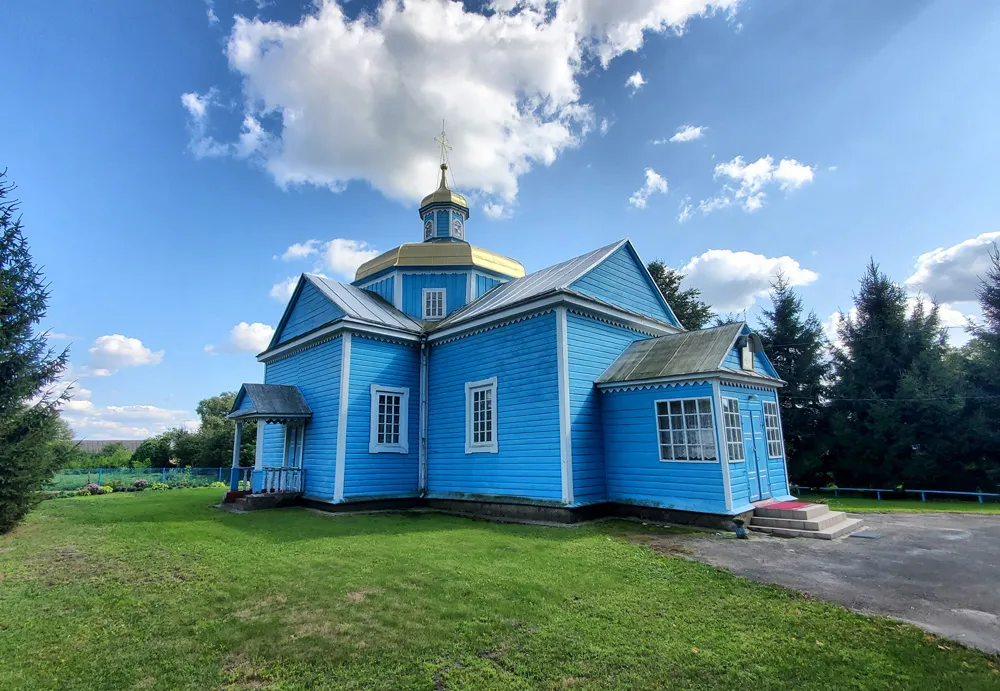
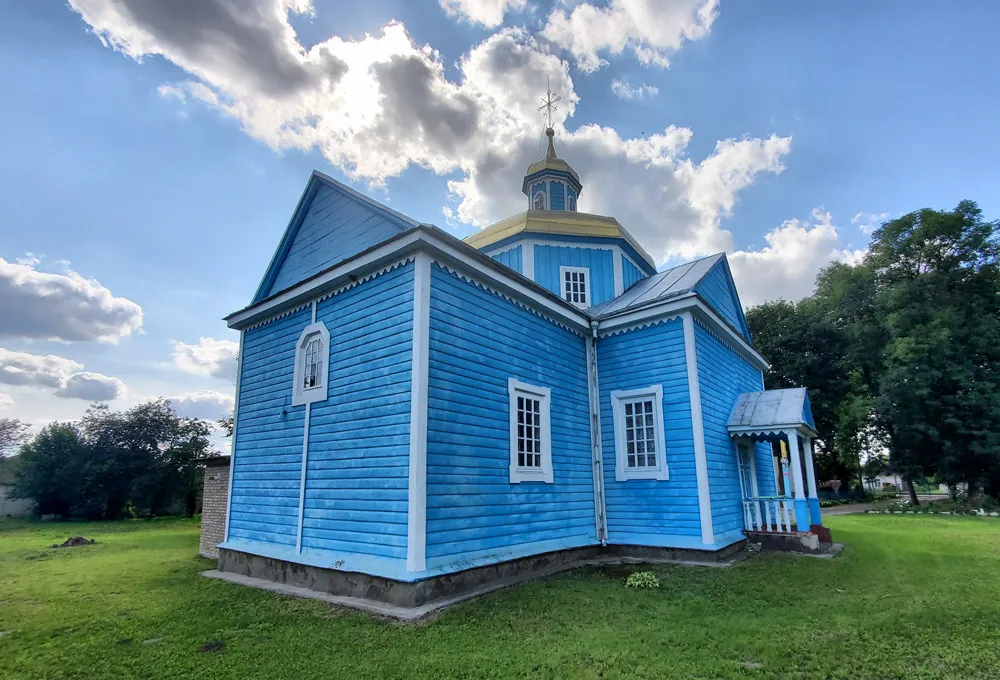
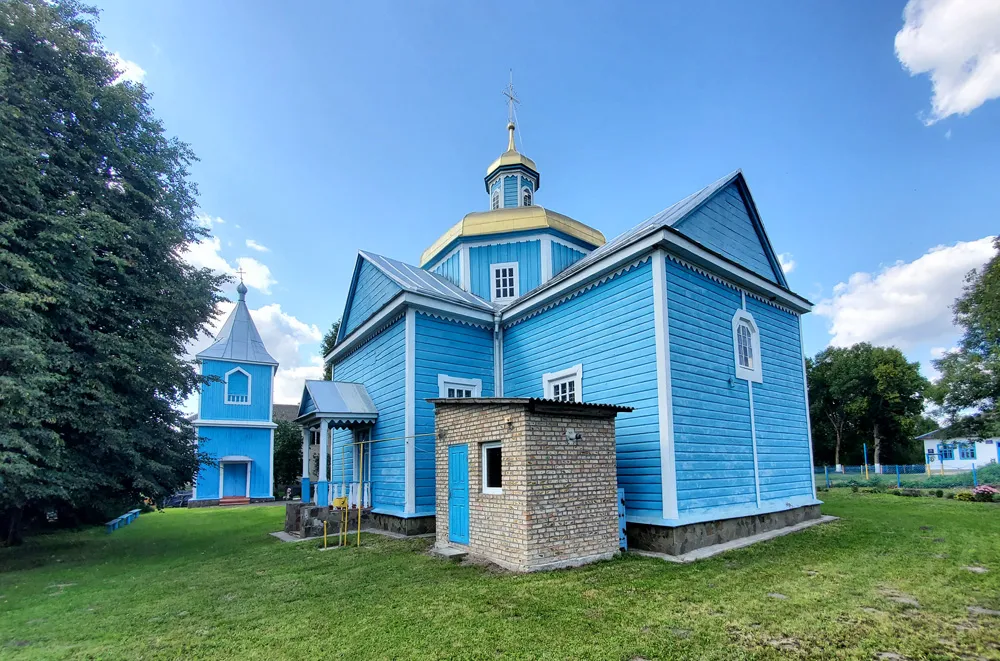
The active church of Sokil is the Trinity Church. It is a wooden church built in 1853 on the site of an old one that had burnt down. It is typical for Volhynia, fortunately not an “eparchial-synodal” design. The bell tower stands separately. The colour, of course, is blue – there are few others here. Its condition is excellent. The village’s other church is much older and more interesting than the Trinity Church – the Dormition Church. It stands in a grove at the end of the village. It is an extraordinarily colourful structure, with massive walls, supported by buttresses on four sides. Its construction fell at the turn of the 15th-16th centuries. The church was built as a fortified one, so it has narrow windows and thick walls. In ancient times a wooden porch was attached to the main stone volume. The church had three domes. It received its present appearance at the end of the 19th century. In the Soviet period it was used as a warehouse, and services were resumed only in 2001. For some reason the internet often gives 1816 as the date of construction. This is certainly untrue, since even by its architecture the church is much older.
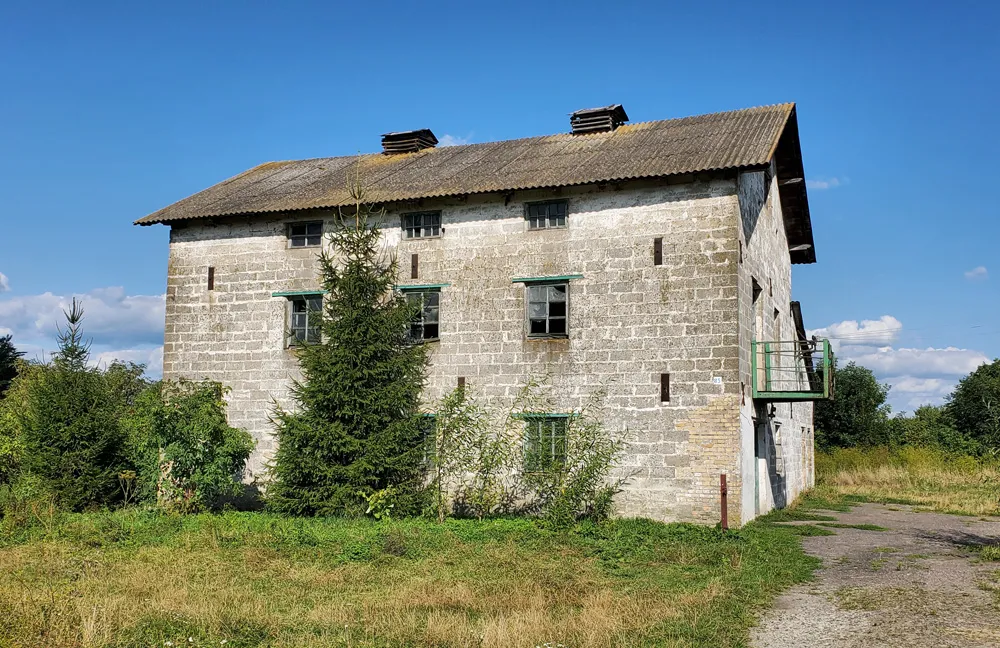
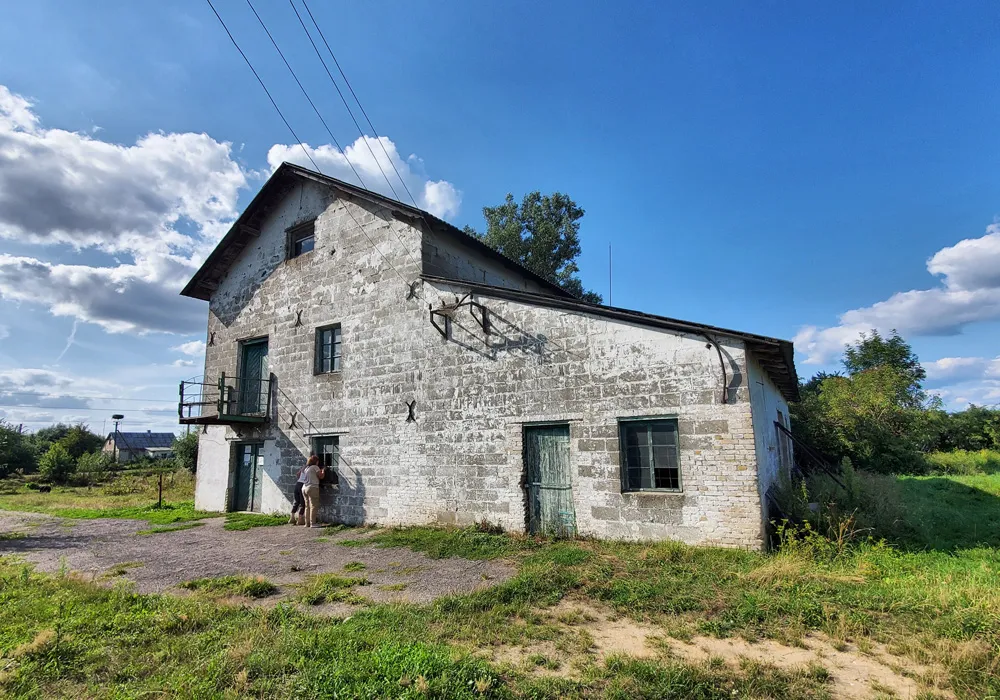
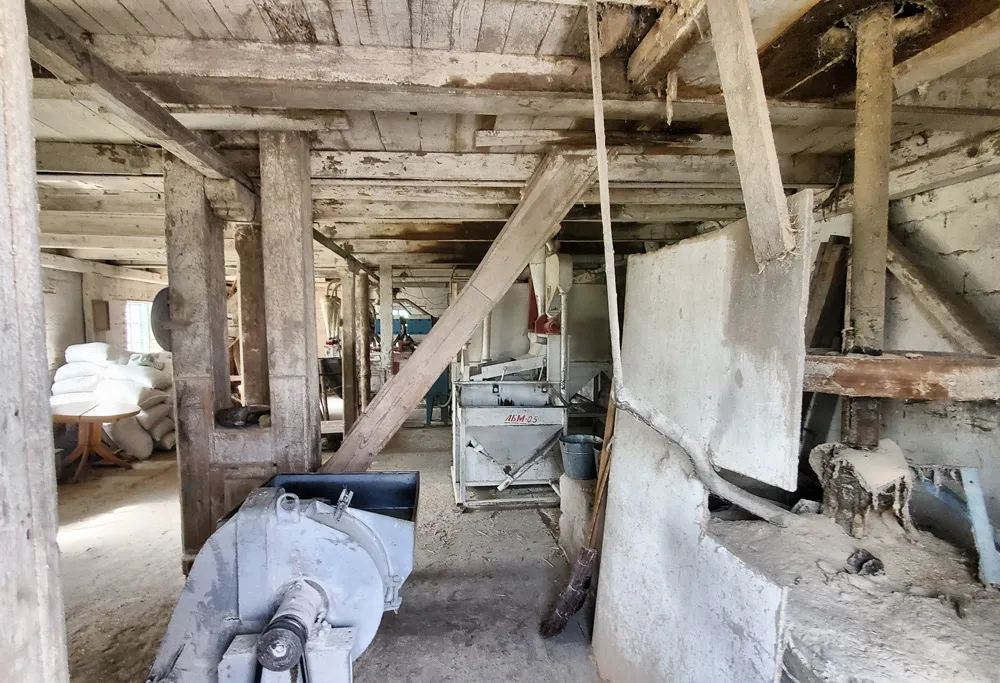
Another monument of the village is a (formerly) steam mill built in the Polish interwar period. It is still working today, although the machinery has long run on electricity.
Such is the old town-village of Sokil-Sokul. There is still much more to tell about it. But it is better to go and see for yourself. Though the road is awful.
Text and photos by Roman Malenkov.
The mill