Monastery in Nyzkynychi

· 7 min read
The Dormition Monastery for men is an Orthodox monastery of the Ukrainian Orthodox Church in the village of Nyzkynychi, Ivanychi district, Volyn Oblast, founded in 1643 by Adam Kysil. After the founder’s death in 1653 he was buried in the monastery’s Holy Dormition Church. His wife Anastasia (daughter of the Kyiv nobleman Filon Hulkovych) is also buried here.
The monastery was founded on 16 September 1643. Its founder was the Ukrainian magnate Adam Kysil, at that time the general castellan of the Chernihiv starosty. Adam Kysil bequeathed to the monastery in perpetuity a castle with the land around it and three peasant families who were to serve the monastery, three thousand thalers and two thousand zlotys, from which the monastery was to receive 7 per cent annual income, and a tenth sheaf from his estates. According to the founder’s will, twelve monks were to live in the monastery, devoting themselves to prayer and spiritual enlightenment. At first the main church was consecrated in honour of the Intercession of the Most Holy Virgin Mary, and the monastery itself was called the Intercession Monastery.
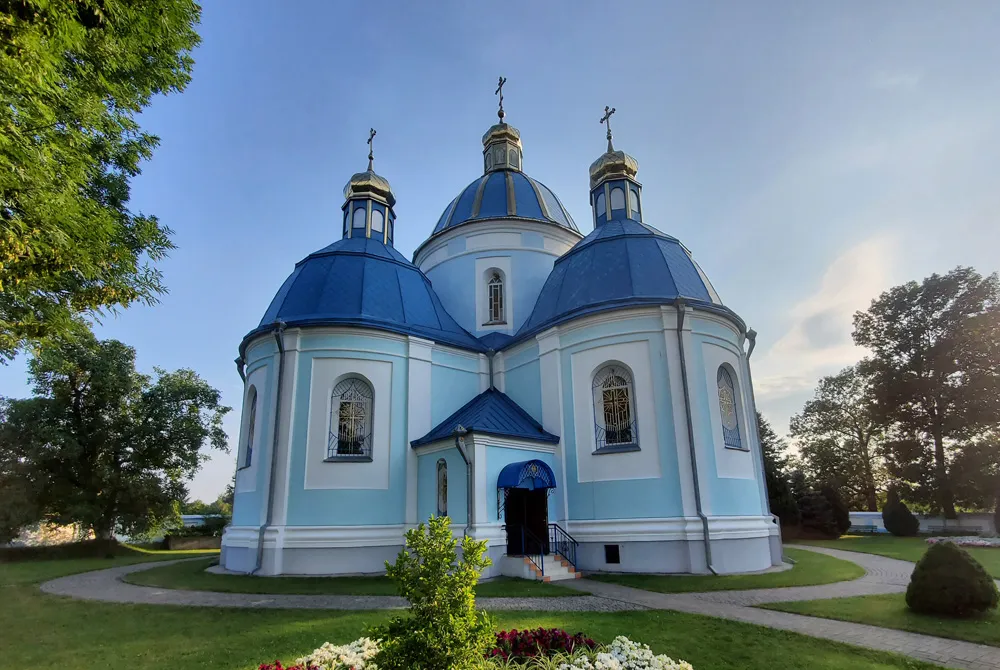
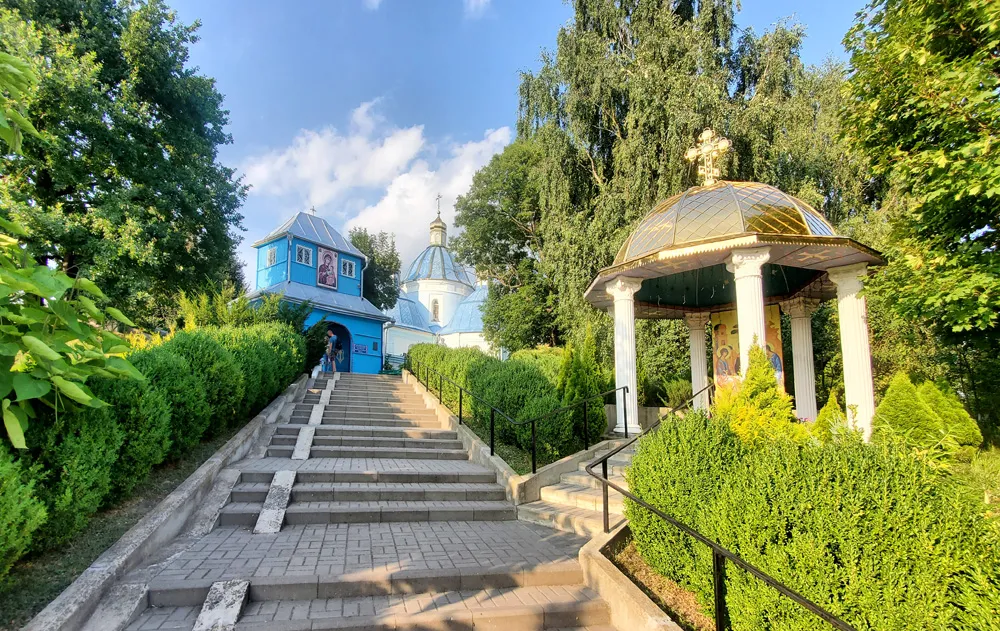
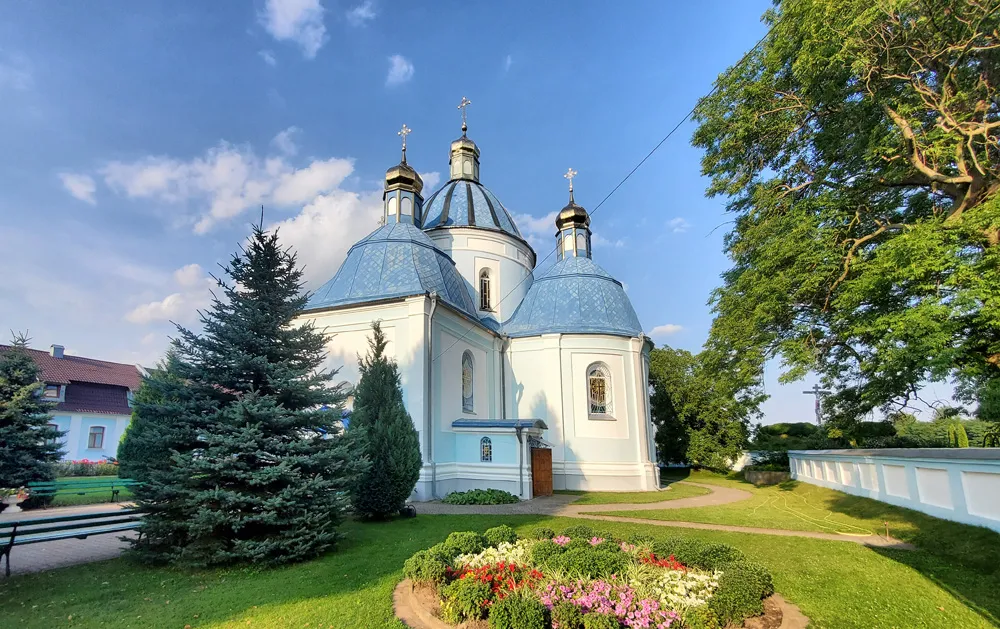
The monastery occupied a strategically advantageous site outside the village, on top of a low hill. The bastion-type fortifications consisted of an earthen rampart and a dry moat, which supplemented the natural defensive lines. They surrounded a monastery courtyard that was square in plan, with four bastions. The curtain walls of the square bastioned fortress, placed parallel to the walls of the Dormition Church and therefore oriented to the cardinal points, measured about 60 m. The monastery courtyard was small, approximately 0.3 ha. The entrance was in the southern curtain, near the south-western bastion, which differs markedly from the other corner bastions in height, larger size and plan shape. In plan it approaches an oval, while the other three were originally rhomboid. Because of this the south-western bastion looked like a small burial mound with steep slopes. This suggests that it served as the base of a tall wooden watchtower.
Long before the founding of the monastery, Kysil began building a new masonry church on his estate, since the previous one, a wooden church located outside the defensive ramparts, was even then called “old”.
In the foundation charter Adam Kysil wrote:
“I wish that this Nyzkynychi monastery and House of God should not only have foundations of walls, and not only walls completed to the glory of God, but also that twelve monks should live in it in perpetuity… Let them, during my life in the fear of God, for as long as the Lord grants me a happy age, and after my death, for my sinful soul at my grave, and for the souls of my ancestors and fathers – for relatives living and dead – let the brethren send up in the holy Liturgies a daily sacrifice to the Lord of death and life.”
For the proper upkeep of the monks and to complete the construction of the main shrine, over ten years Adam Kysil made considerable donations to the new monastery. On 18 August 1646 the endowment was confirmed once more by the magnate, and 5,000 zlotys were added to Nyzkynychi, which was duly entered in the Volodymyr Land Court books. A similar note appeared in an entry for 1646, when the founder gave the monks a large tract of field; in all, according to later testimony of the abbots, there were more than 100 desiatinas of arable land alone. In addition, the voivode diligently delivered a tenth of his entire harvest to the monastic granaries and obliged all his successors to carry out this pious duty.
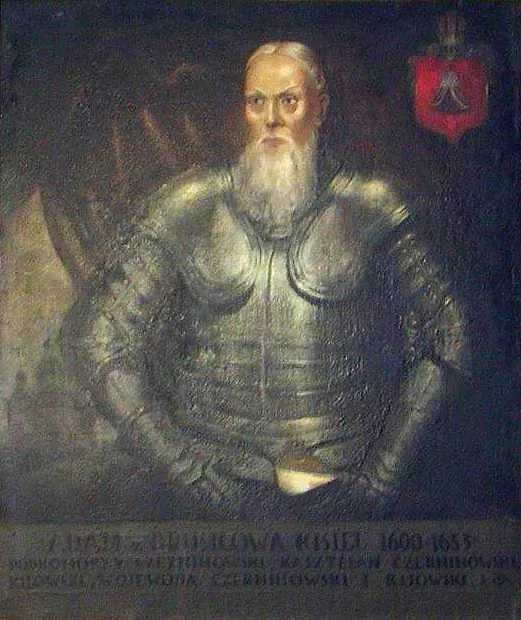
Adam Kysil
After Adam Kysil’s death his family did not maintain direct ties with Nyzkynychi for long. For several years the title of patroness (guardian) of the monastery was held by Adam’s wife Anastasia, then by his niece Olena, the daughter of his brother Mykola. In 1662 the Nyzkynychi estate was leased to the Kadebych-Konchynskyi family, and from 1680 it passed on lease to the Dovhiał-Tsyryn family. Unfortunately, the latter, having converted to Catholicism, began a harsh persecution from 1690, which turned into a real struggle between the monks and the leaseholders and brought the monastery to decline and a departure from Orthodoxy.
During the time of the Union the monastery remained active and was even embellished: the church was painted, and a choir loft and an organ were built.
With the change of the political order in the region, when Western Volhynia finally came under the rule of the Russian Empire, the situation changed radically. The forced transfer of Greek Catholic parishes into the bosom of the Orthodox Church began. In the same year the Intercession Church passed to the Orthodox clergy and became a parish church. After a 98-year break, the Orthodox liturgy was celebrated here again.
In 1909 the future new martyr Bishop Thaddeus (Uspensky) visited the Nyzkynychi church. He duly examined the antiquities and the interior decoration of the church and recorded his impressions in the “Volyn Diocesan Gazette”.
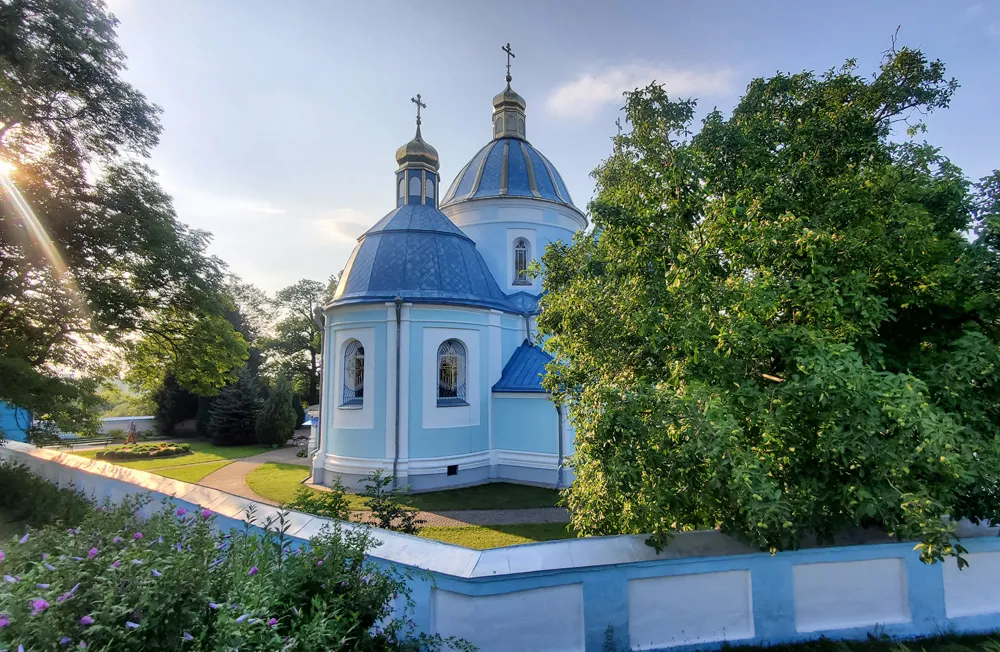
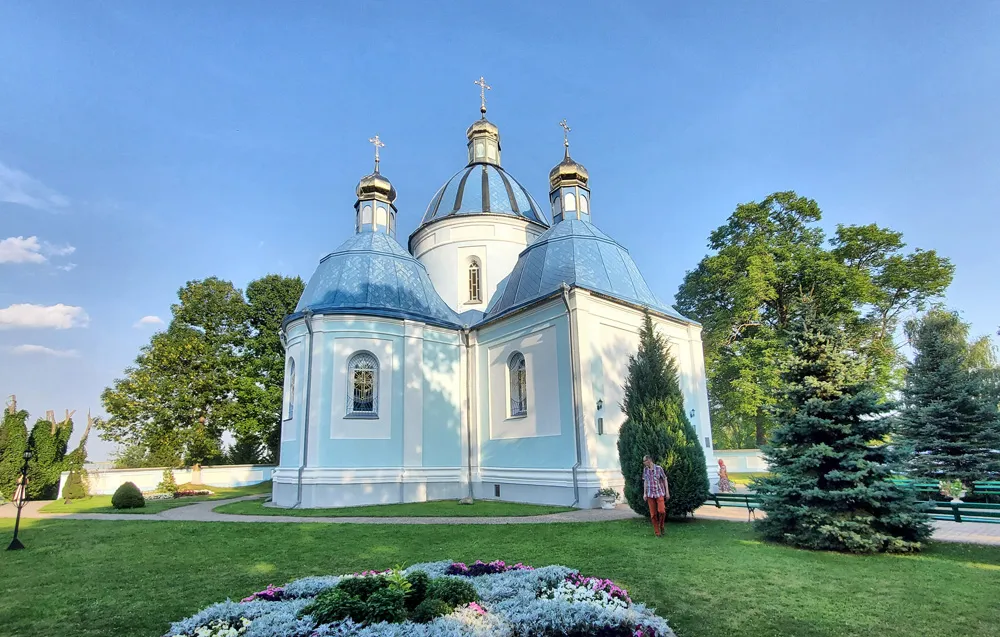
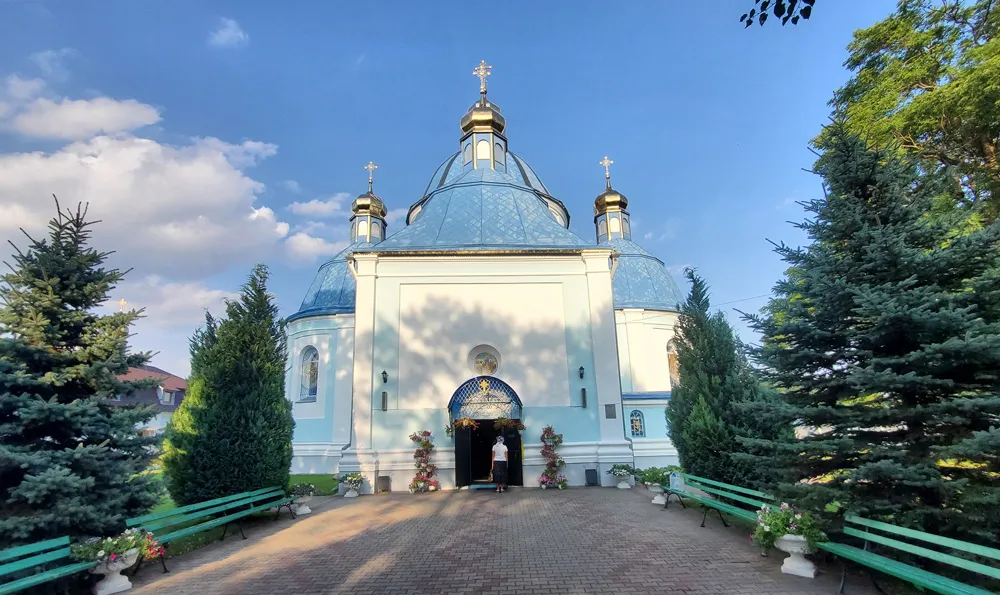
The turbulent twentieth century left the bloodiest mark on the life of the church, the burial vault of the Kyiv voivode. The First World War not only dashed the hopes of local parishioners, but after it ended a great many valuables disappeared from the church, and from the bell tower the original bell with coats of arms and an inscription by the founder himself.
Under Polish rule the church was one of the first in Volodymyr county to be slated for revindication. The church was not returned to the Catholics, but in the interwar years it was plundered, and after the barbaric opening of Adam Kysil’s sarcophagus the regalia and the late magnate’s golden mace vanished from it.
In Nyzkynychi there is a local tradition that in the 1930s the head of the Polish state visited the burial vault and did not at all live up to the hopes of the then supporters of the papacy, since he said that “if the founder of the church was Orthodox, then let this shrine remain so”. Moreover, from 1935 its restoration began under state auspices.
The Second World War did not pass the church by either. During the advance of Soviet troops the front line passed by it, leaving behind a destroyed top of the central dome and countless holes in the roof. In those hard years the parish was headed by Fr Trofym Moroz, who restored the shrine in the post-war period. His signature is also on the acts of 8 August 1946, when the church, bell tower and tomb monument were recognised as architectural monuments of republican significance.
In 1961 the church, like most Volyn churches, was closed, but was not removed from the register, which later made it possible to resume services.
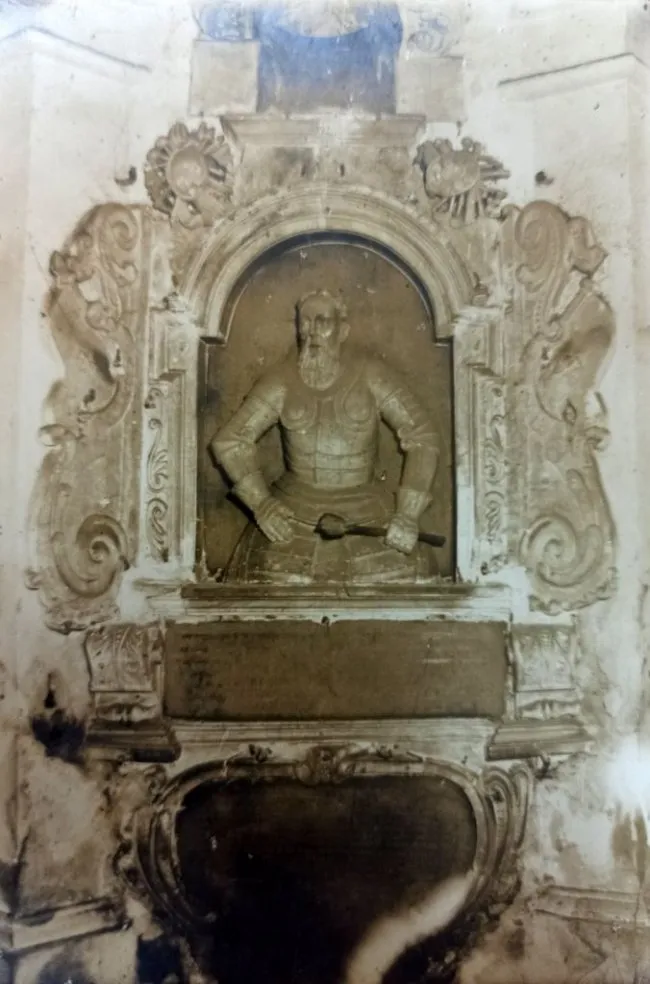
But before then Adam Kysil’s repose was disturbed by young Soviet God-fighters, who on 14 March 1962 broke into the burial vault, completely wrecked the sarcophagus, scattered the bones and played football with the skull. According to eyewitnesses, the drunken Communist youths tore off the church locks with knives and saws and burst into the church. They shook the iconostasis loose, desecrated the altar and the icons, and threw the liturgical books and documents onto the floor. The founder’s bust also fell victim to the militant atheists: it split in two when it hit the floor.
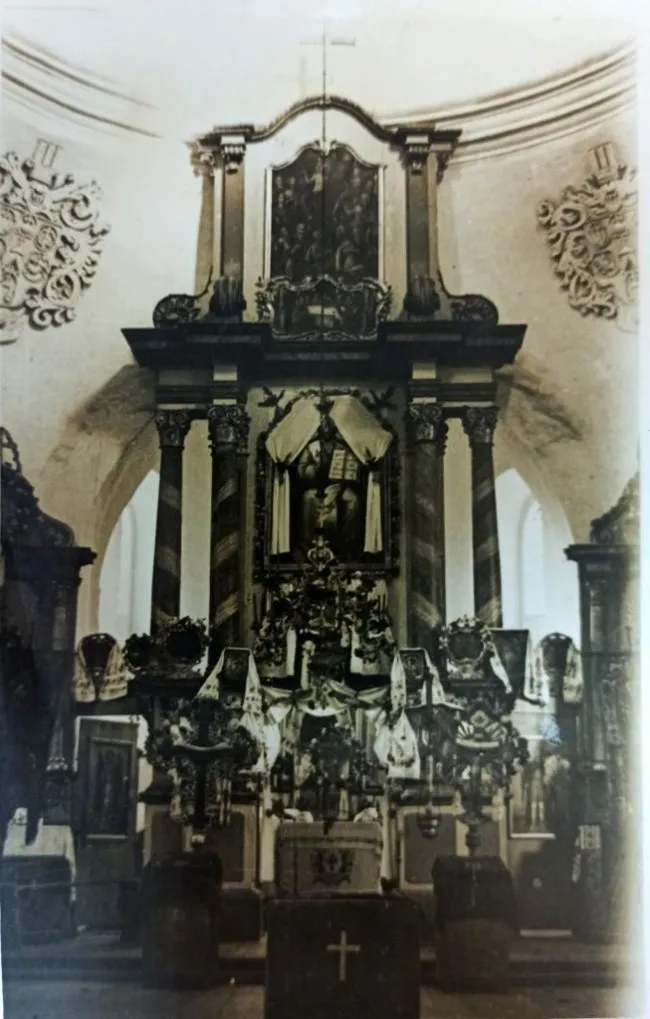
In 1987–1994 the abbot of the monastery was the present head of the Kyiv Pechersk Lavra, the notorious pro-Russian Pavlo Lebid. Under his leadership the 18th-century Baroque iconostasis disappeared from the church and was replaced with a new one of the Russian type.
In a church in Volyn the iconostasis was destroyed because it did not conform to the canons of the Russian church
Photos of the Dormition Church in the village of Nyzkynychi, found in the State Archive of Volyn Oblast, were taken in 1936. They show the Baroque iconostasis, bas-reliefs with the family coats of arms of Adam Kysil and a wooden pulpit.
The photographs were published by Yurii Velinets in the Facebook community “Novovolynsk Info”.
The author notes that such architectural monuments as the Baroque iconostasis, the bas-reliefs with Adam Kysil’s family coats of arms and the wooden pulpit were destroyed in 1987–1994, when the Nyzkynychi parish was the charge of the present abbot of the Kyiv Pechersk Lavra, Pavlo (Lebid).
“The reason for this crime was the inconsistency of the church interior, in particular the iconostasis, with the canons of the Russian church,” the post says.
The Royal Doors of the iconostasis are kept in the Novovolynsk City Museum of History and need restoration. The whereabouts of the remaining elements of the iconostasis are unknown.
Source: BUG
Photos by Roman Malenkov (except archival ones)