

Nialab, the royal castle

· 7 min read
A real royal castle in Transcarpathia… there was one. Most ordinary tourists now are unlikely to make a detour to look at the remains of stones. But we are not ordinary, so let’s go to Korolevo, to the castle of Nialab, Nelab, Nyolab, in Hungarian Nyalábvár.
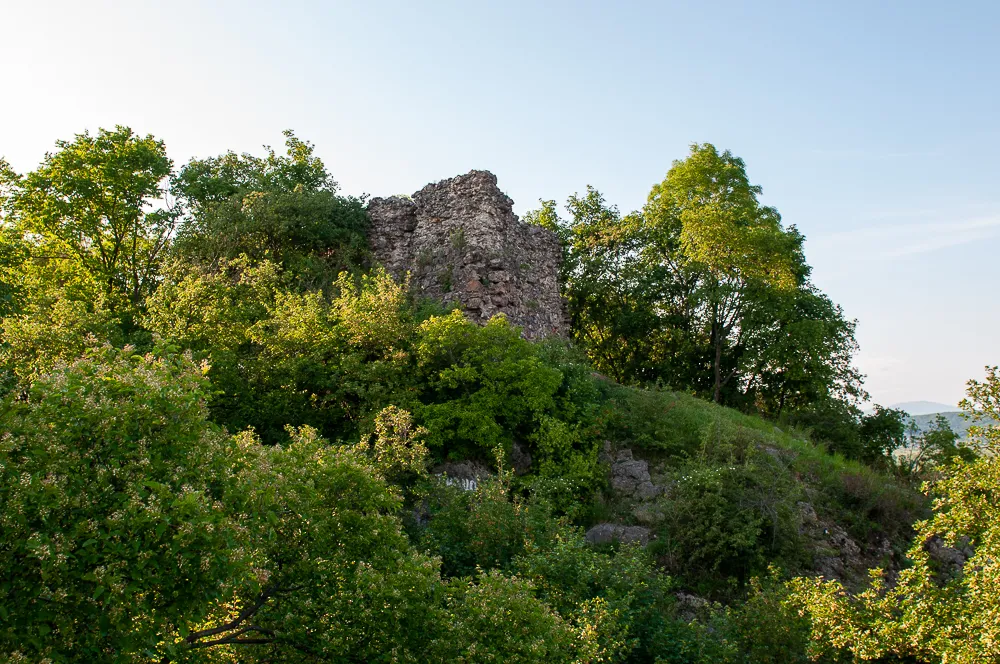
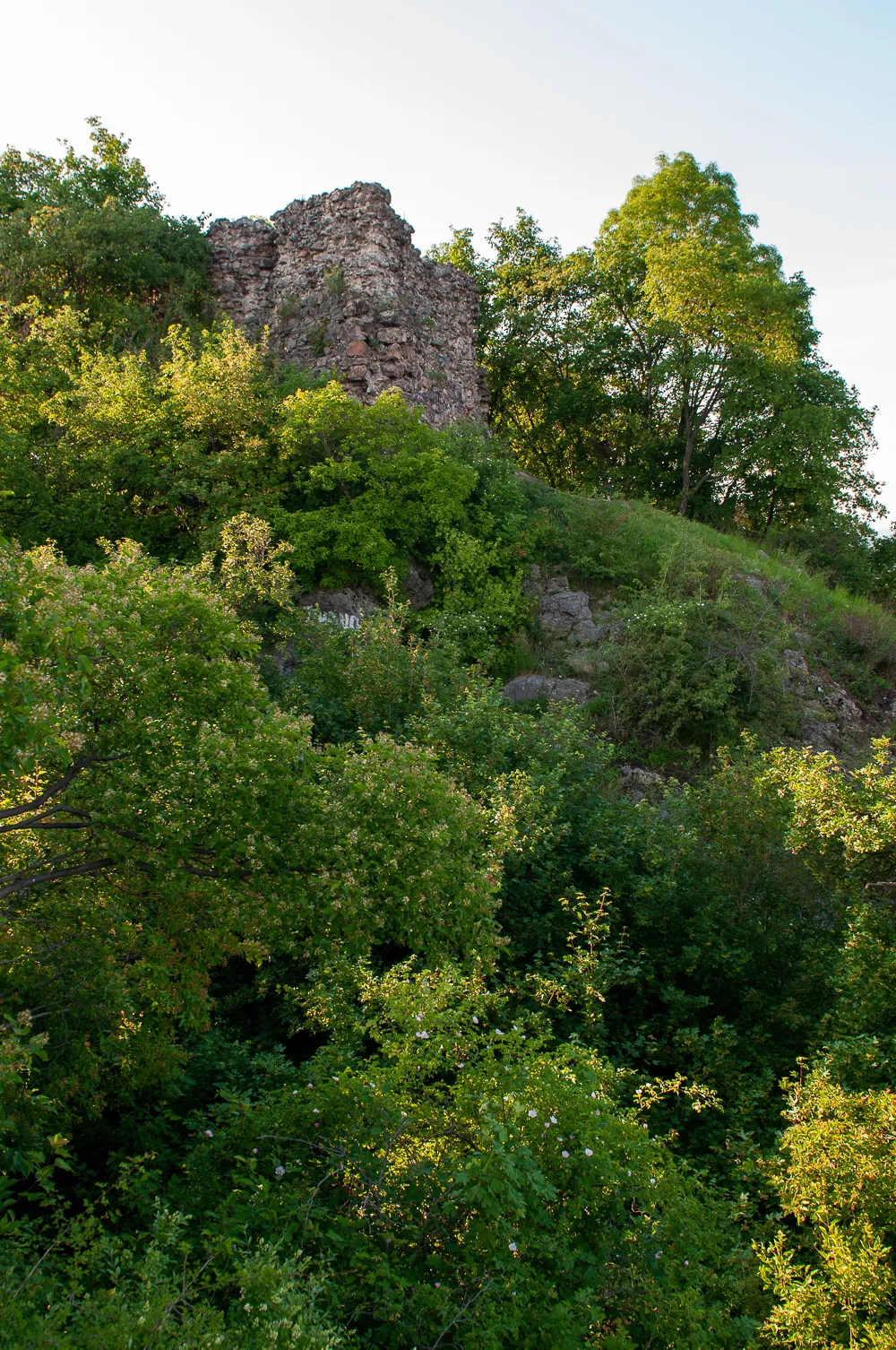
The castle was built on an elongated oval hill of volcanic origin about fifty metres high. Possibly even before the Hungarian tribes came to these lands there was a Slavic hillfort here.
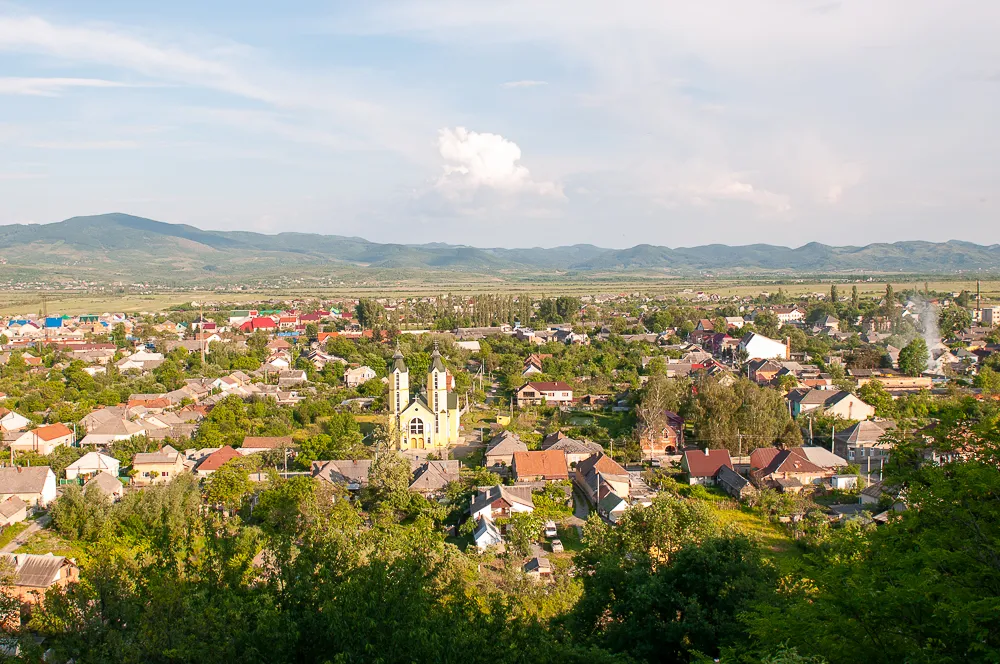
If for many cities Batu’s campaign was such a sad watershed, then the castle and the Mongol hordes in the spring of 1241 were separated by the Tisza, extraordinarily full of water at that time. Somewhere right after that, the forests around the settlement, rich in all kinds of wild boar, bears, elk and deer, attracted the attention of the future Hungarian king Stephen V. The king comes to hunt, but where is he to live? Yanukovych, even in the 21st century, built lodges, and for the king a wooden royal hunting lodge, that is domus regalis, was built on the hilltop. Latin is Latin, but in Hungarian it is Király háza, in Ukrainian :) Kiralkhaza.
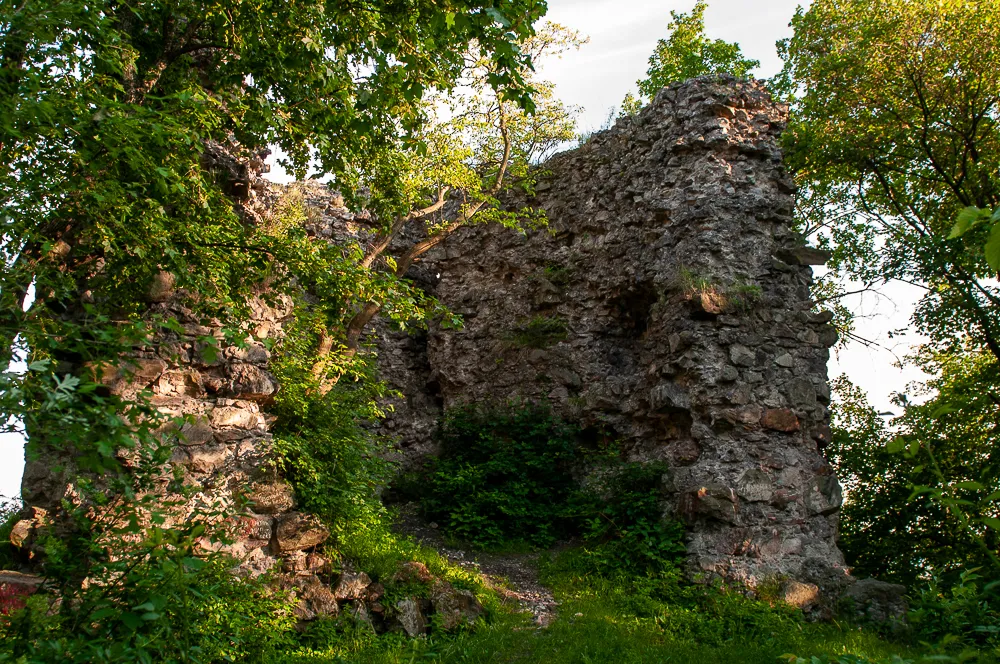
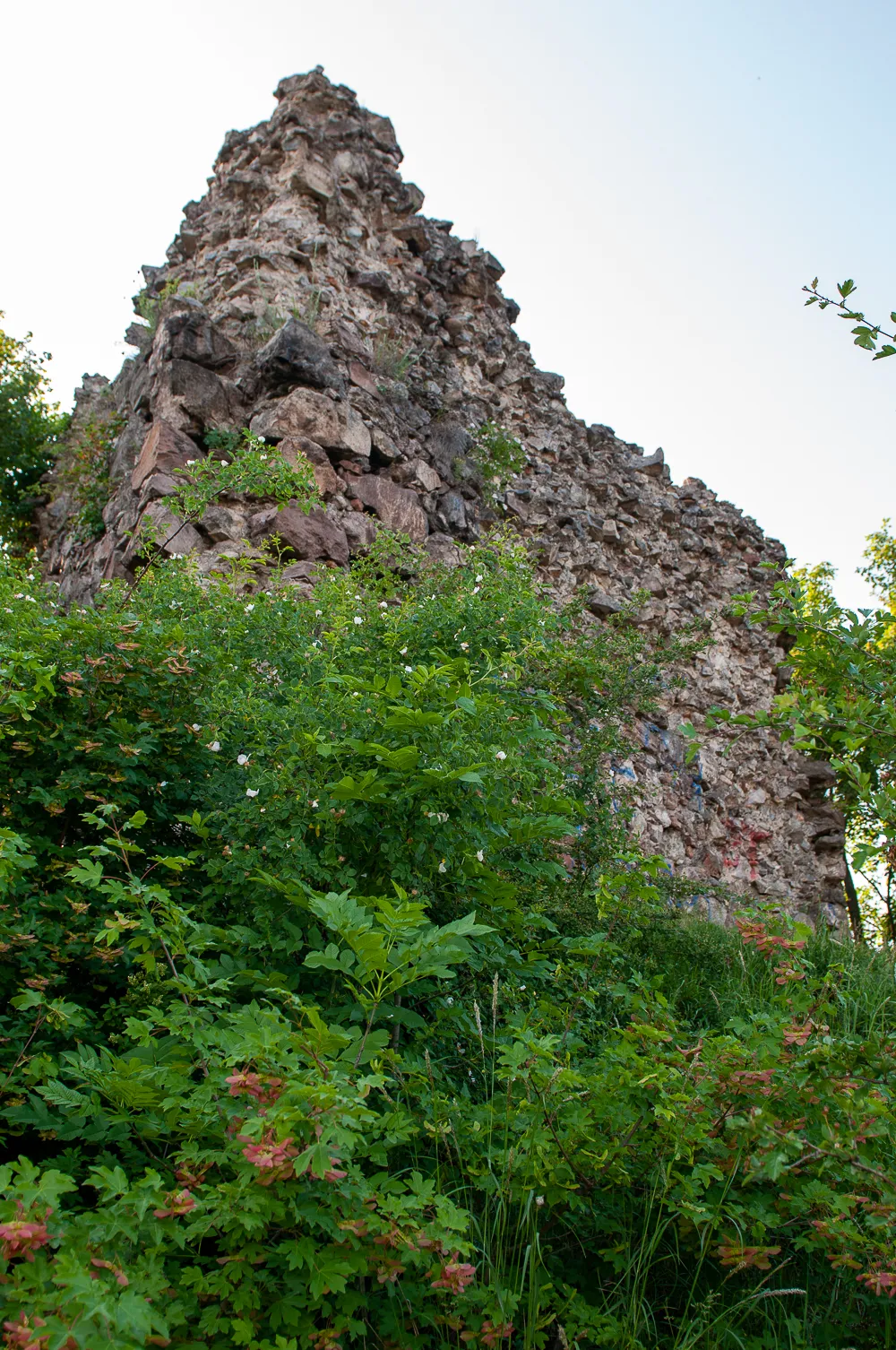
Possibly it was the next king, Ladislaus IV, who turned the lodge into a castle and invited German colonist craftsmen to settle in the surroundings, so that there would be ordnung, and not what you have. Entertainment aside, the castle, alongside the castles in Khust, Seleuş and Vyshkovo, guarded the “salt road”, which was valued in the Middle Ages at its weight in gold. It was along the Tisza that salt was carried from the mines of Maramureş to the central regions of Hungary for consumption and sale. Accordingly, from the end of the 13th century the castle is already mentioned under the name Nialab. The most popular legend links the castle’s name with the name of a robber knight called Nialab, who seized the castle in Korolevo and held it for some time. According to another version the castle got its name from the fact that merchants paid the toll in “bundles of goods” (“nyaláb” in Hungarian means a bunch, sheaf, armful or bundle).
With the change of the Hungarian dynasty, not everyone supported the new king Charles Robert, and they began a struggle against him. The ispán Béke Borsa, who at that time owned Seleuş (present-day Vynohradiv), joined the anti-royal coalition of feudal lords, which was eventually defeated. Royal troops occupy Seleuş and take Seleuş Castle by storm. The ispán hid in Nialab Castle, which the royal troops immediately besiege. The castle is damaged during the siege and assault, but restoration begins at once.
In 1378 King Sigismund I of Luxembourg handed the castle and the domain of Nialab to the wealthy Wallachian voivode Drag in settlement of debts. 27 years later, in order somehow to balance the influence of the voivodes Drag and Balk, the king appointed his comrade-in-arms from the Battle of Nicopolis, Péter Perényi, ispán of Ugocsa. And handed over to him control of the “salt road” and Seleuş. In 1405 Perényi had it registered as a hereditary possession for his services to King Sigismund, the suppression of the Hungarian baronial revolt of István Debrei. Sigismund I of Luxembourg was king of Hungary, titular king of Galicia and Lodomeria (1387–1437), king of Germany (1411–1437) and Elector of Brandenburg (1378–1388, 1410–1415), of Bohemia (1419–1421, 1436–1437), Holy Roman Emperor (from 1433), the last representative of the House of Luxembourg. After the death of the Czech king Wenceslaus IV (1419) the Hussites rose against this emperor as a claimant to the throne and offered the Czech crown to the Polish king Władysław II Jagiełło, and when he refused, to the Grand Duke of Lithuania Vytautas. On 14 July 1420 Jan Žižka defeated Sigismund’s troops near Prague (the Battle of Vítkov Hill).
Divide et impera. Nialab was taken from Drag against his will and he hurriedly left the castle, without even managing to take a couple of chests with him. A document has survived according to which Péter Perényi, overjoyed at such a significant acquisition, returned a couple of chests of their property to Drag’s widow and her sons.
The former owners fought in the courts for almost a hundred more years, until in 1506, in the time of King Vladislaus, they were refused finally. Such a long investigation and dragging out of a lawsuit for a hundred years surely cannot fail to surprise us. Meanwhile the castle in that time turned into the main residence of the Perényi family.
In 1467, under Matthias I Corvinus, the Italian architect and military engineer Aristotele Fioravanti came to Hungary, who would later build the Dormition Cathedral of the Moscow Kremlin in Moscow. For now he was engaged in modernising the fortifications of Nialab Castle. The ruins of the tower in the southern part of the castle courtyard appeared precisely in this period. Separate sections of the fortifications were decorated with a net ornament of bog-iron brick.
In 1511 the Hungarian king placed Khust Castle as well under the authority of Gábor Perényi. After that the Perényis controlled 2 counties, Ugocsa and Maramureş, and as many as 3 castles of the region: Khust, Nialab and Kankiv (Seleuş). In 1514 the kuruc of György Dózsa tried to take Nialab by storm, where at that time the nobility of Ugocsa county and the Perényi family had taken refuge in the castle. Gábor Perényi, who was in Khust at that time, hurriedly set out towards the castle with a detachment of the Khust garrison, and the rebels scattered without a fight.
On 29 August 1526, in the battle of Mohács, tragic for the army of the young “crusader” king Louis II Jagiellon, against the Turkish army of Suleiman the Magnificent, the owner of Nialab, Gábor Perényi, was killed.
After Gábor’s death the castle remained under the care of his wife Katalin, who in the 1530s invited Benedek Komjáti to the castle as tutor for her son János. As it turned out, he was the founder of Hungarian Renaissance literature and the first translator of the printed Bible into Hungarian. Its publication was sponsored by Katalin.
The reliability of the fortifications of Nialab Castle is attested by the fact that the crown of John Zápolya, who ruled Hungary under the protectorate of the Turkish sultan, was kept here for some time.
In the centre of the castle a well was dug at least 55 metres deep through a thickness of volcanic rock. The castle walls were 2–3 metres thick. It was divided into southern and northern separate defensive courtyards. Between them was a ditch and a wooden bridge. The northern one, the main courtyard, surrounded by walls up to 10 metres high, followed the contours of the terrace and was close to a square, approximately 60 by 50 metres. Possibly the castle had no proper towers; instead the line of fortifications was reinforced by semicircular and wedge-shaped projections of the castle walls. The castle gate was set in the southern wall and was additionally protected by a barbican. Unlike the northern courtyard, the southern one was very elongated and was protected by stone defensive structures at the ends and wooden ones.
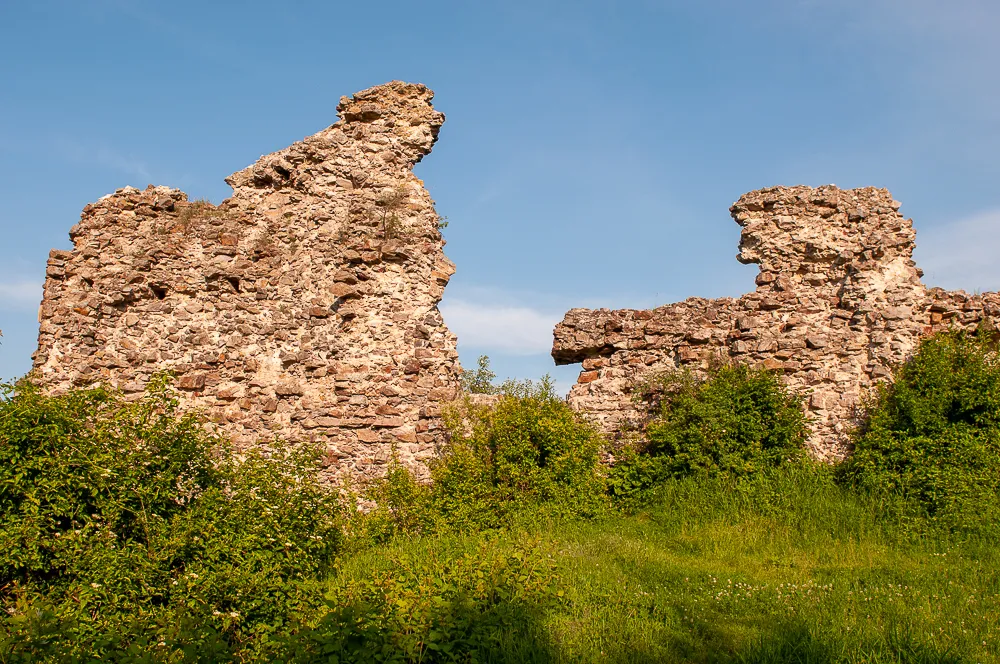
In 1661 the castle was held under siege for half a year by Turks or Tatars. During the 16th–17th centuries there were private disagreements between the Perényis and the Austrian Habsburgs, who had included Hungary in their sphere of interests. For this reason the Perényis aroused distrust among the Habsburgs. The Austrian emperor Leopold I brought his troops into the territory of Transcarpathia, part of which occupied the castle. In 1672, after another anti-Habsburg uprising led by Petar Zrinski, it was decided to destroy the castle. The Perényi family, who were more or less loyal to the king of Hungary and did not take part in the uprising, did not believe until the last moment that the castle would be destroyed. The sentence was carried out: the castle fortifications were probably blown up. Since then the castle has been in ruins and was not restored afterwards.
The exhibition of the Museum of the Armed Forces of Ukraine includes a sword found during excavations in the castle in the 1970s.
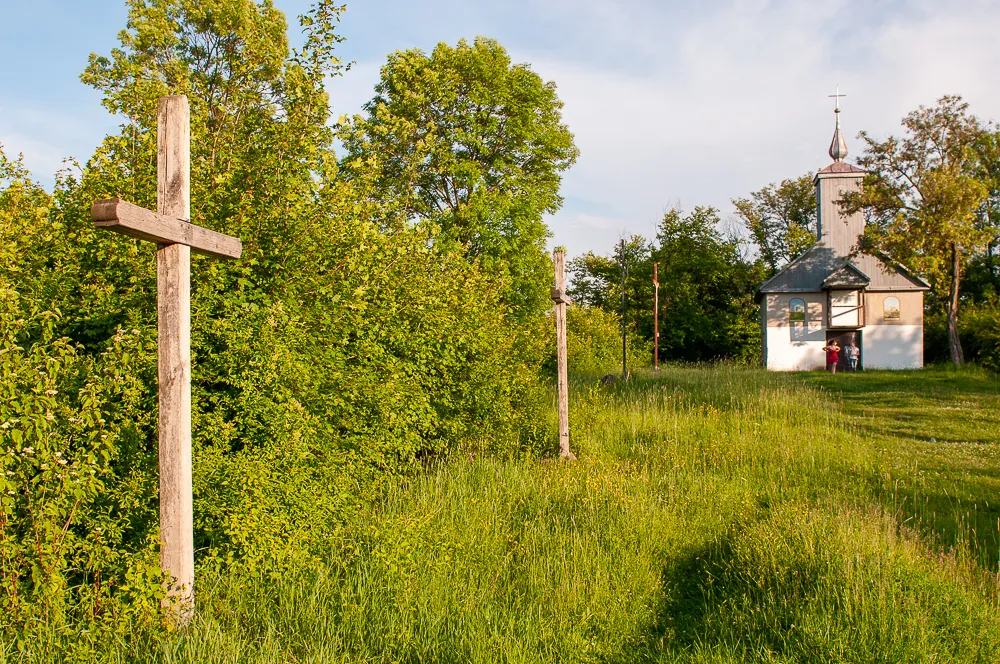
In the 1990s a small Church of the Blessed Virgin Mary was built on the site of a chapel destroyed in 1945.
Text and photos by Serhii Shcherbii


