Montenegro. Kotor is better. Kotor

· 6 min read
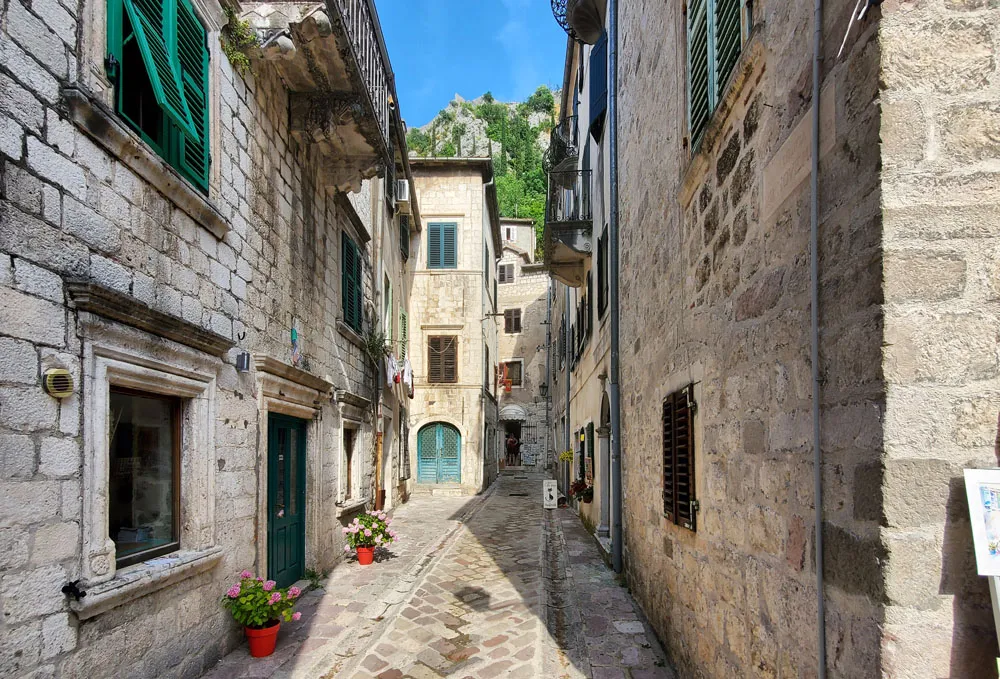
All the towns of Montenegro are small. Even Kotor, whose old town is the largest in Montenegro, can be walked around in a few hours. That is, if you only walk the streets, do not go into the museums, do not look at the churches outside the walls and do not climb up to the fortress. If you do all of that, seeing Kotor takes no more than a day. In three days in Kotor we learned its streets and alleys by heart, like a film you have watched dozens of times. But do not think this is a dig at Kotor – it is beautiful, similar to all the Venetian towns and at the same time unlike any of them. And this is confirmed by its status as a UNESCO World Heritage Site.
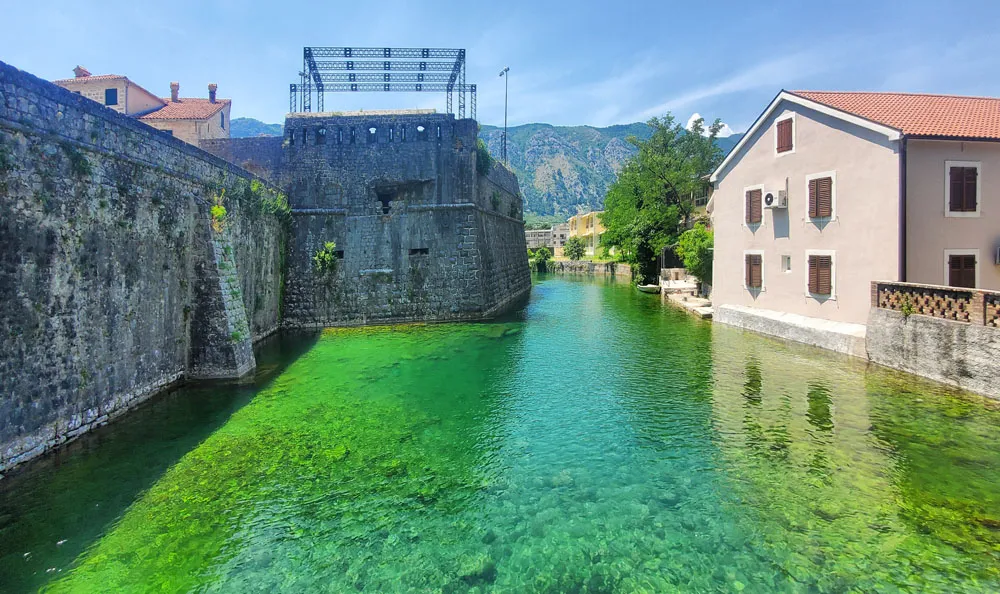
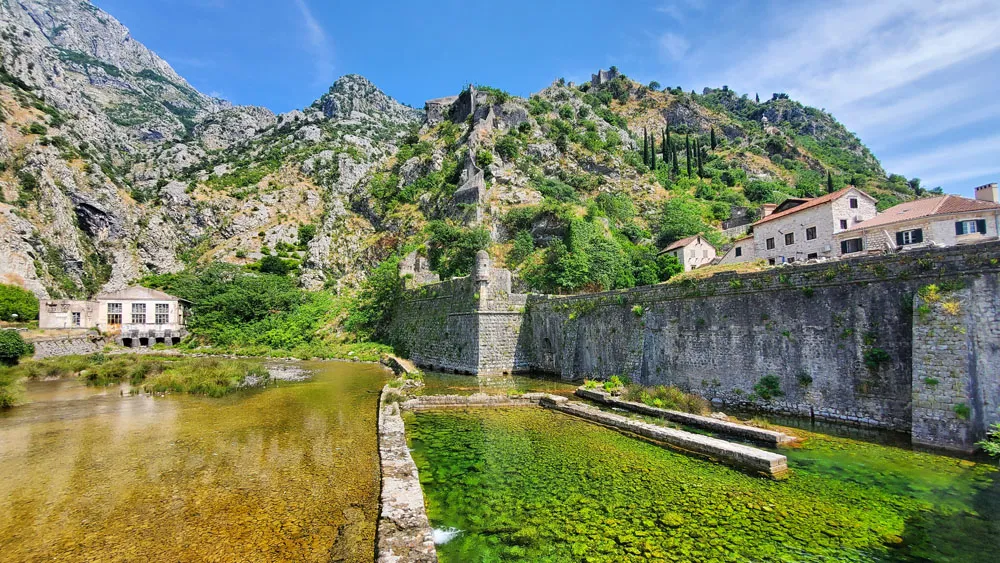
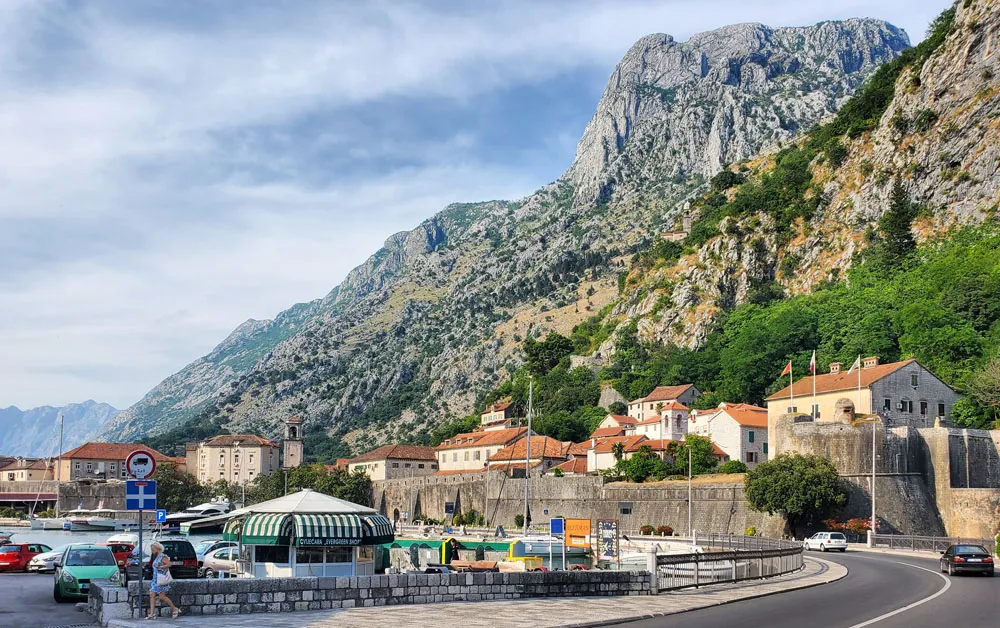
Kotor lies on a flat triangular patch of land, with one edge resting against a steep mountain, another against the sea, and a third against the Škurda river, with fantastically clear water. The river is fairly wide, although it seems to begin out of nowhere – from the mountain.
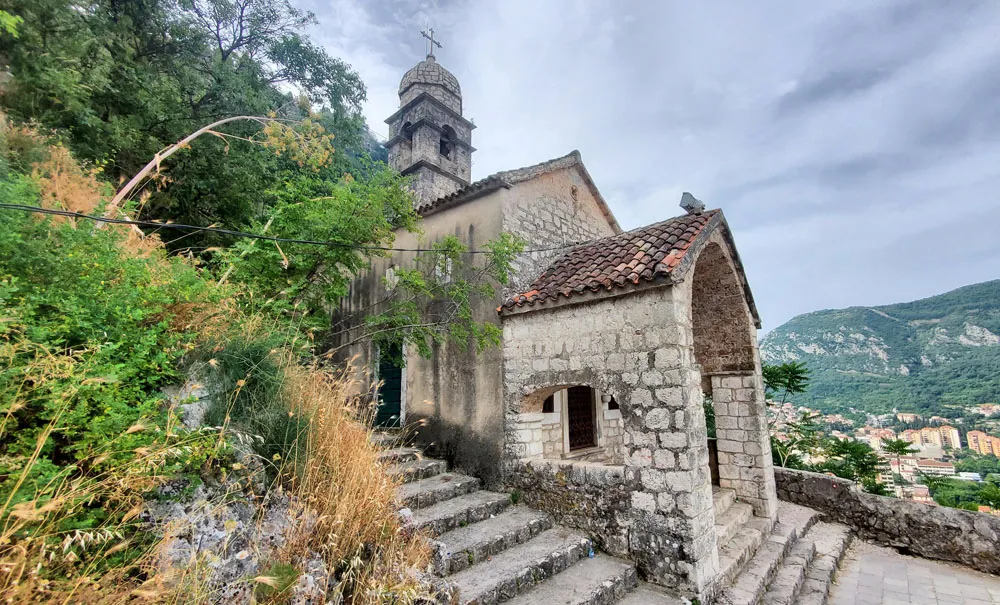
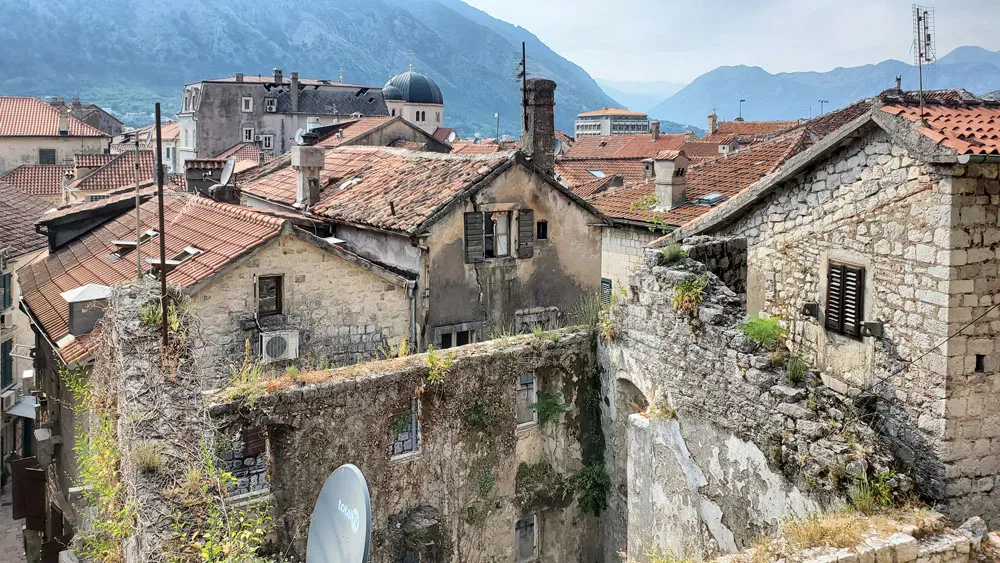
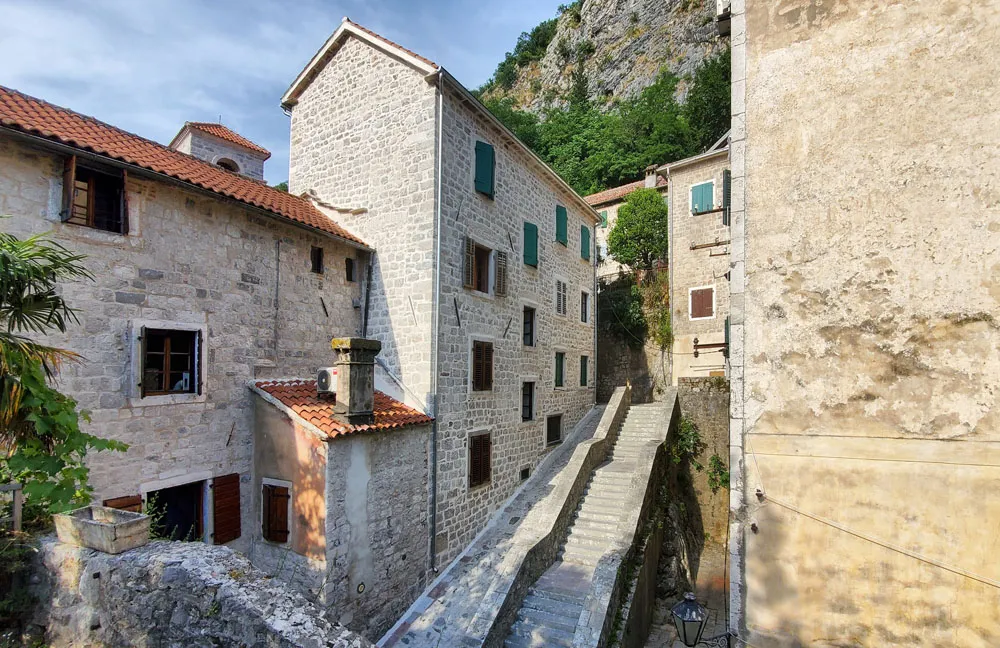
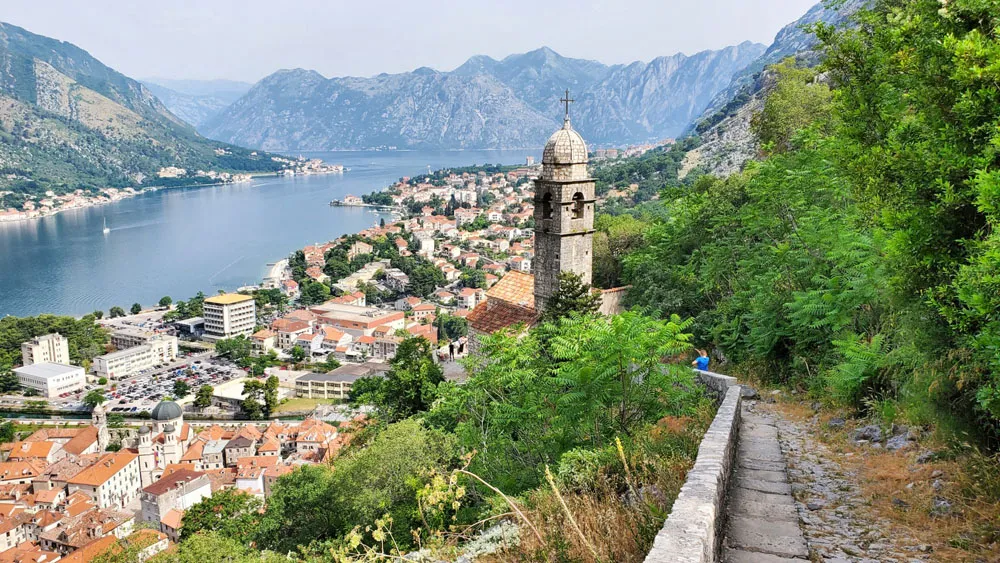
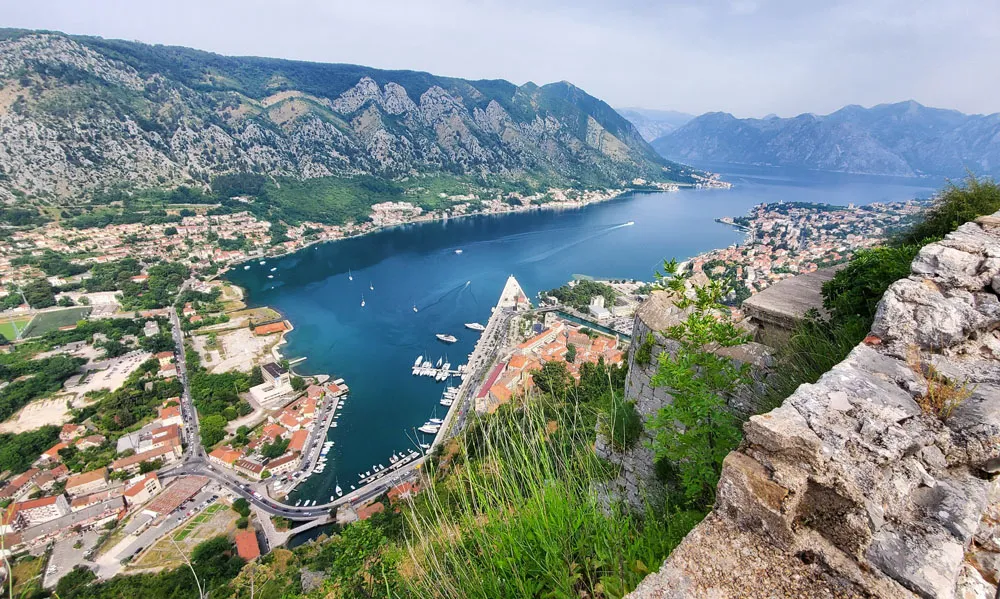
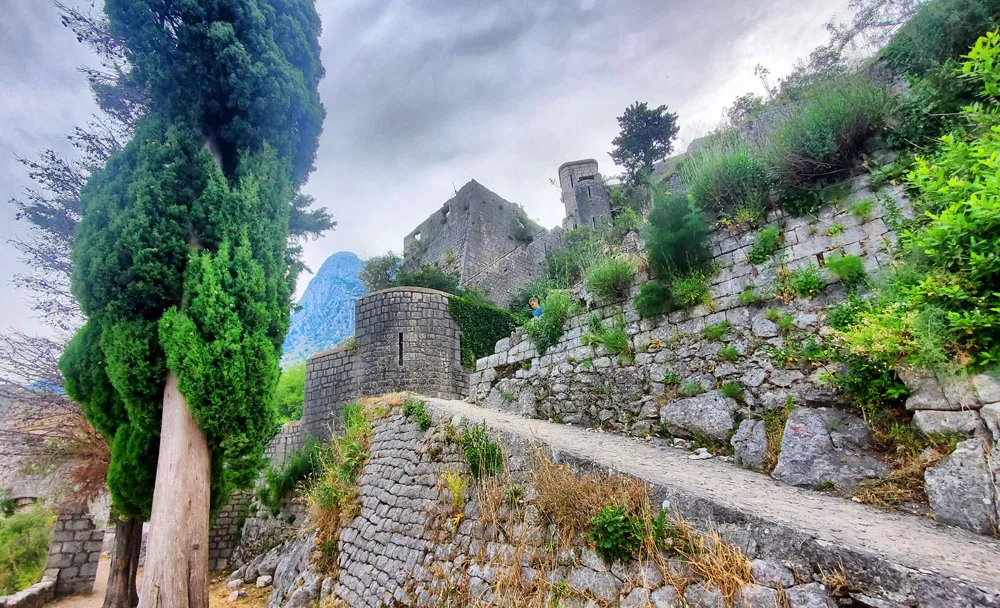
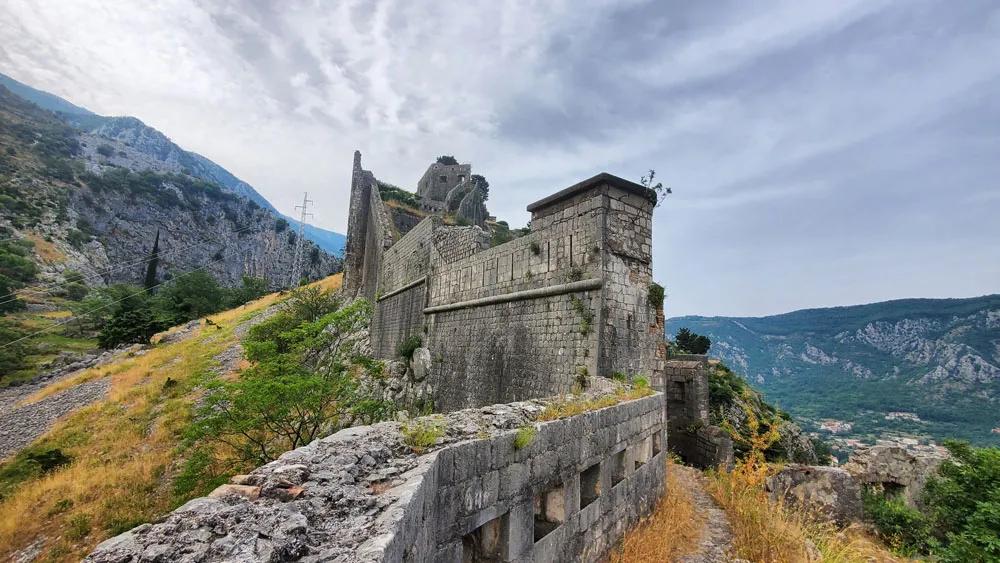
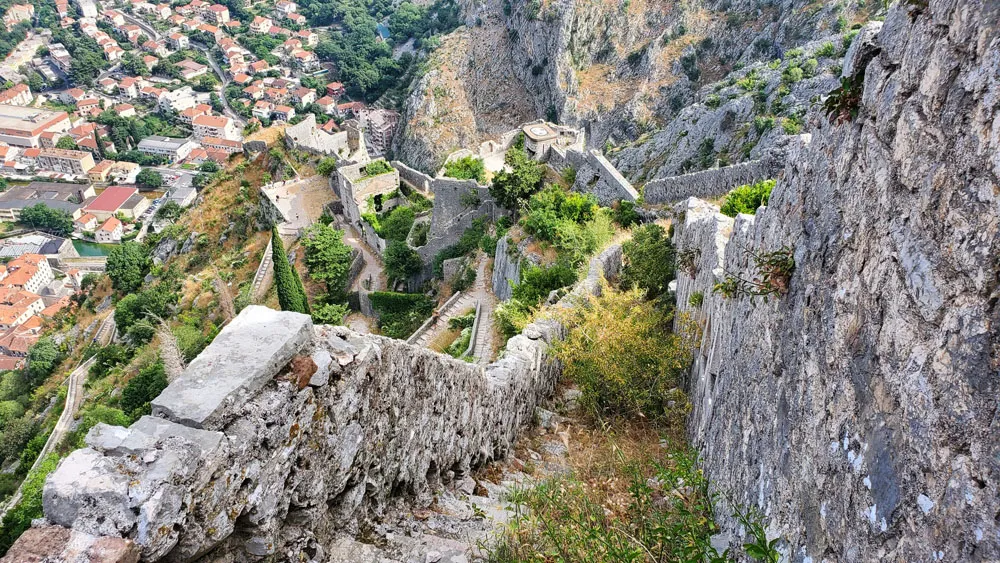
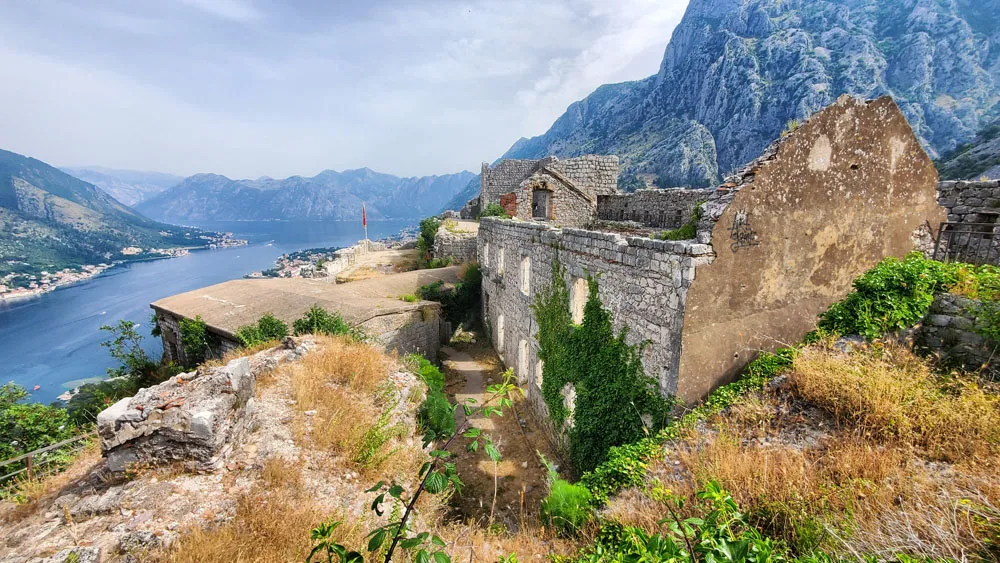
Kotor is enclosed by walls on all sides, and beyond the built-up area they climb high up to the fortress of St. John (Sveti Ivan, as the Montenegrins call him). The fortress stands at a height of 250 metres, and steps laid along a complex system of walls and bastions lead up to it. The total length of Kotor’s walls is 4.5 km, which is not small. It is not necessary to walk the walls in full, but I strongly recommend reaching the fortress of St. John – from up there you will see Kotor in a completely different way. And if you do not have the strength to climb 250 metres (in the heat, for an untrained person, it is not an easy task), at least get as far as the Church of Our Lady of Remedy. It is from there that people take the standard shots of Kotor, for Instagram, postcards or magnets.
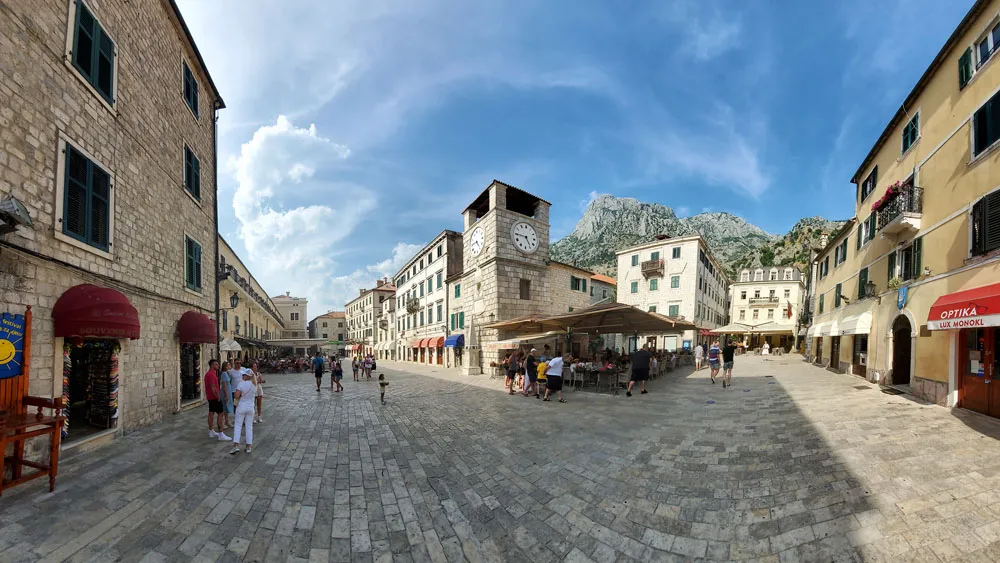
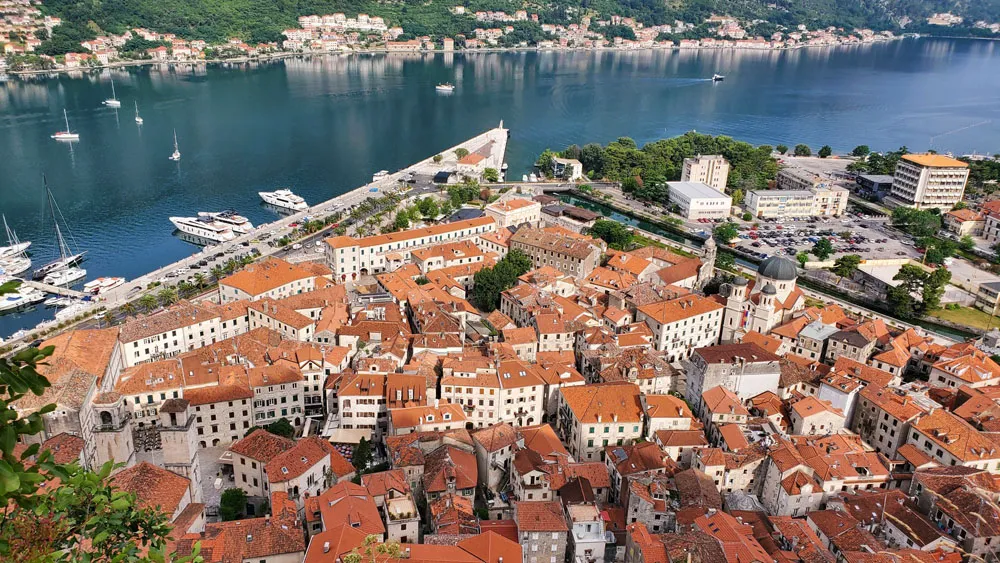
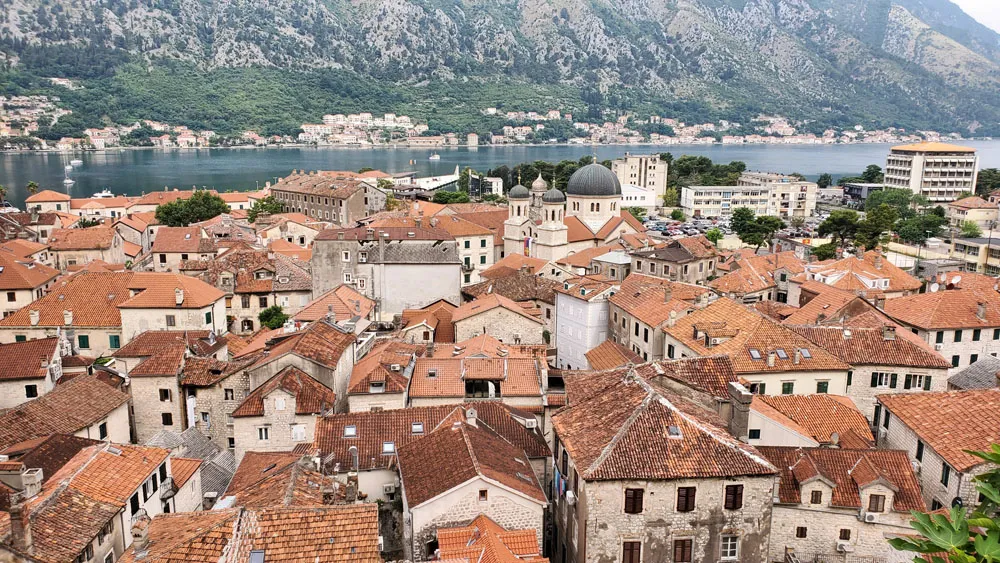
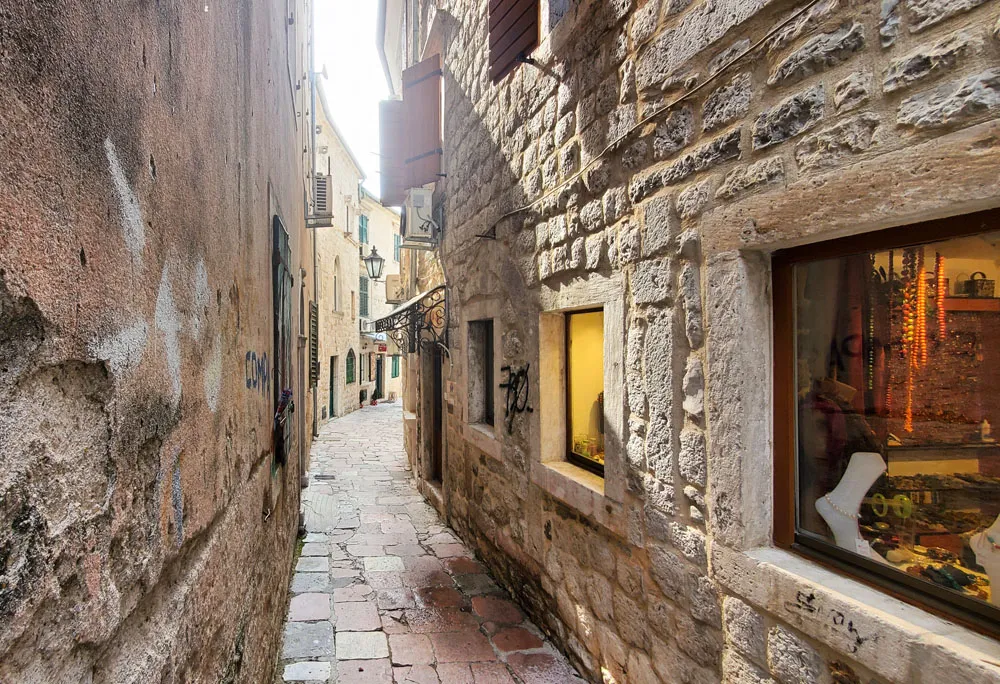
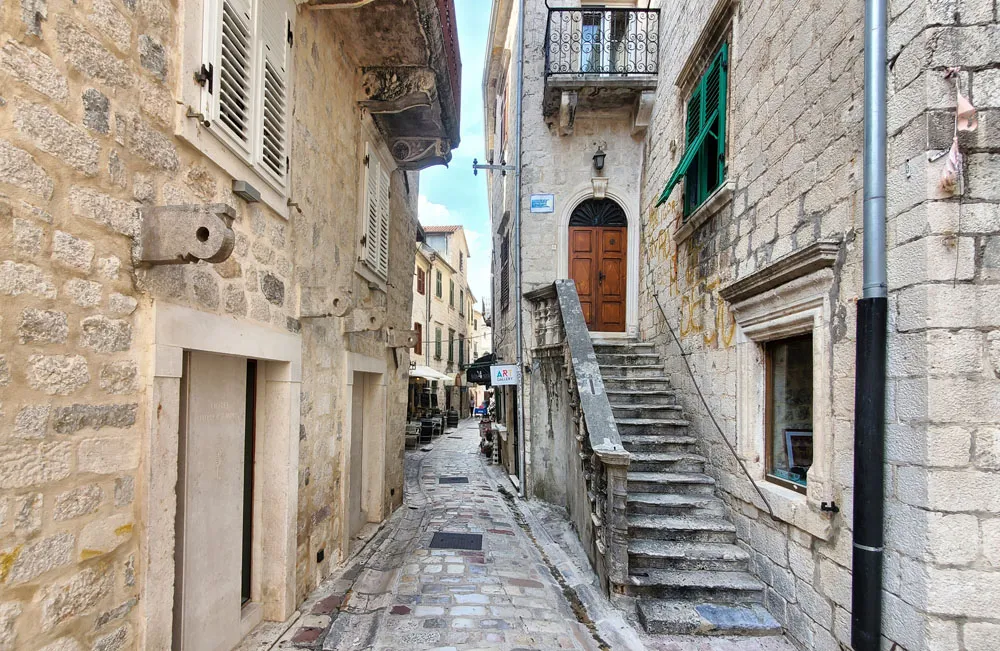
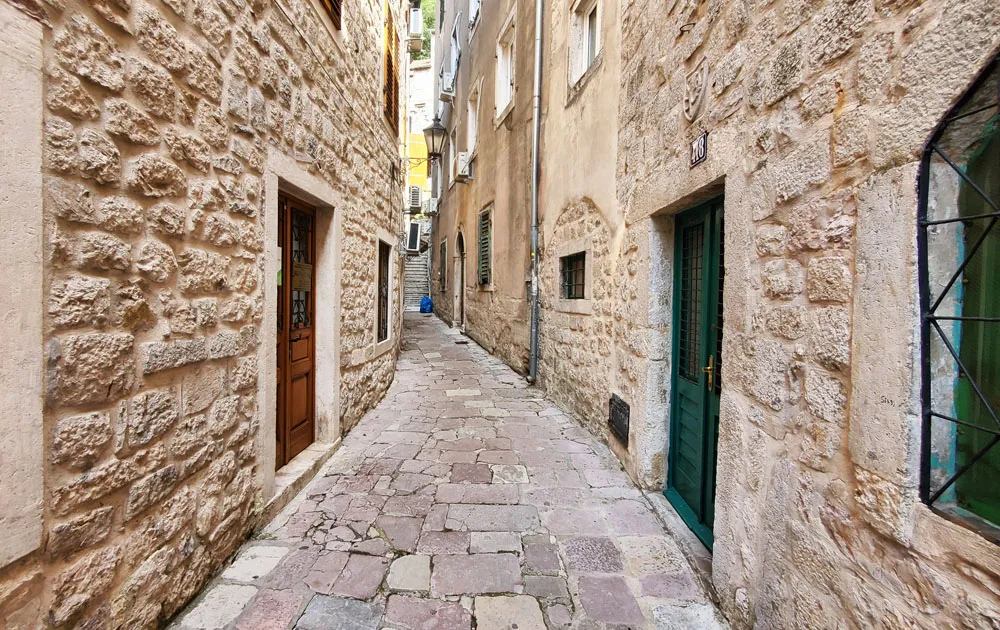
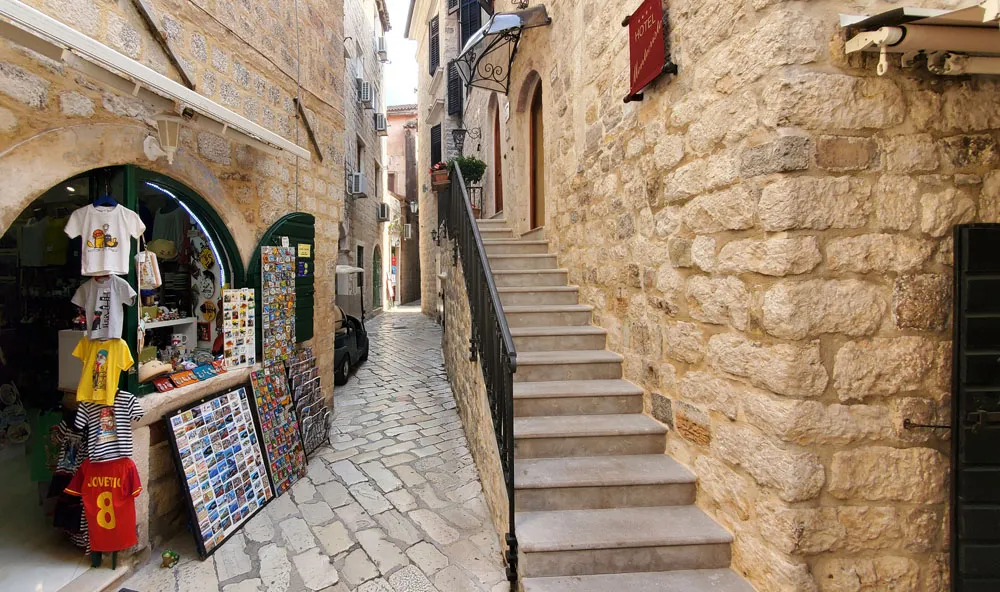
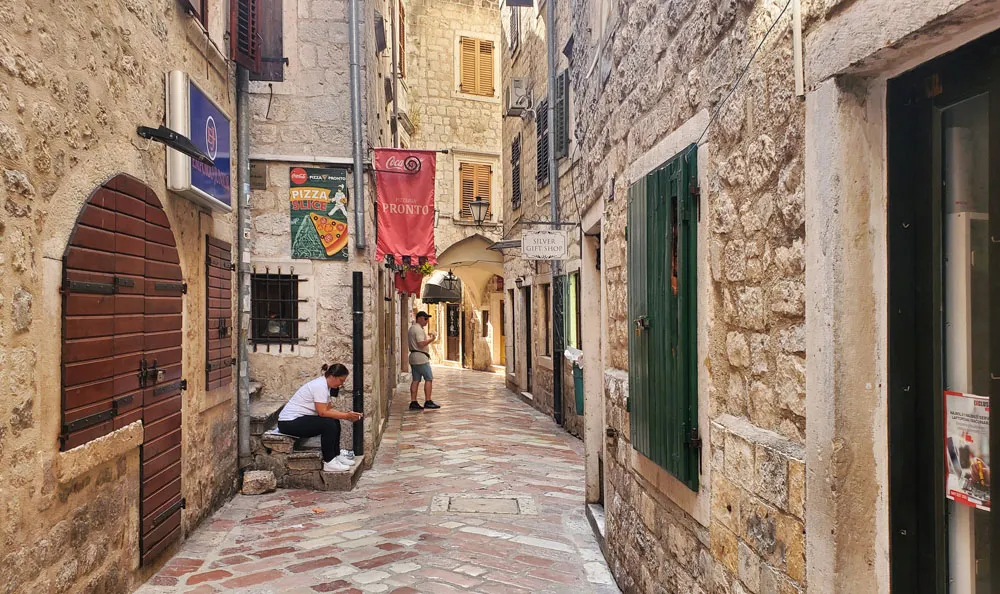
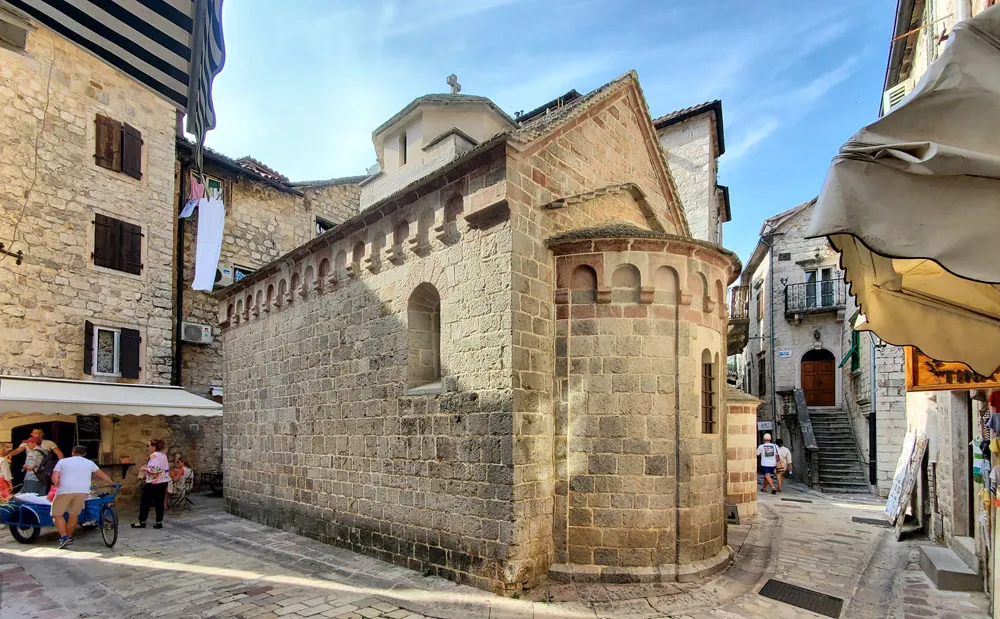
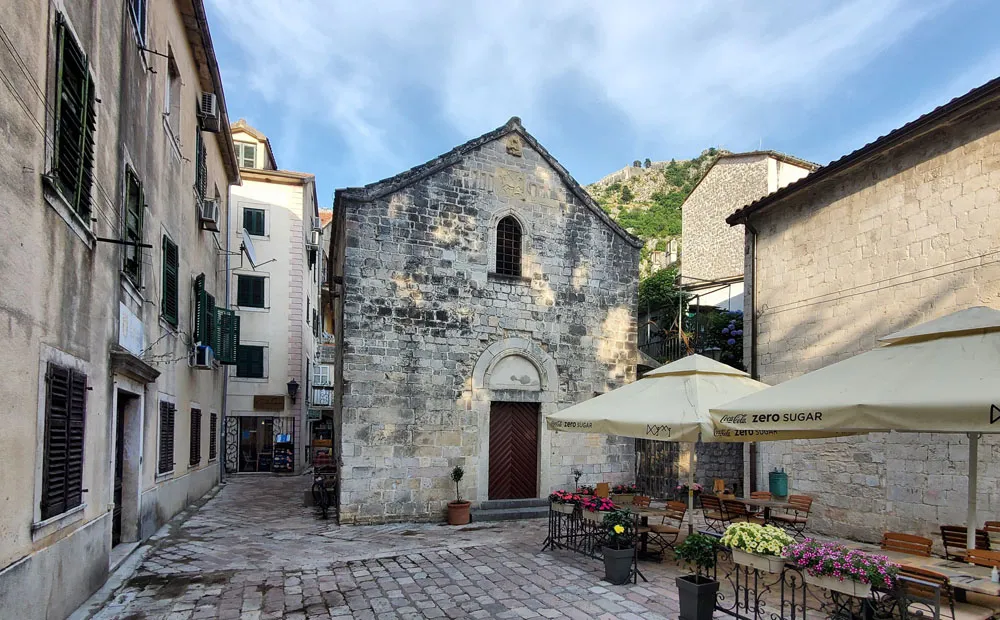
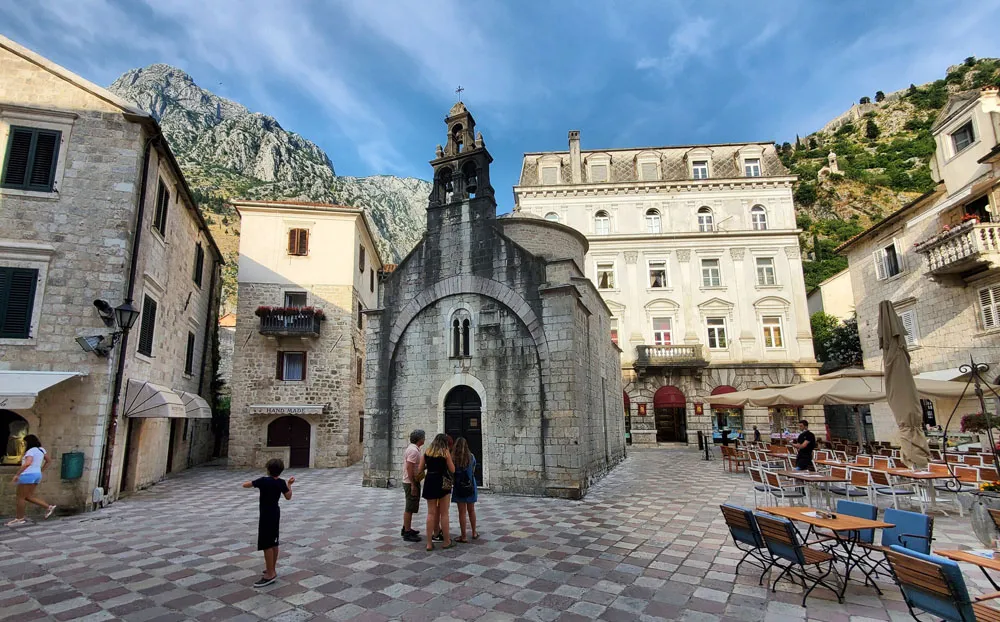
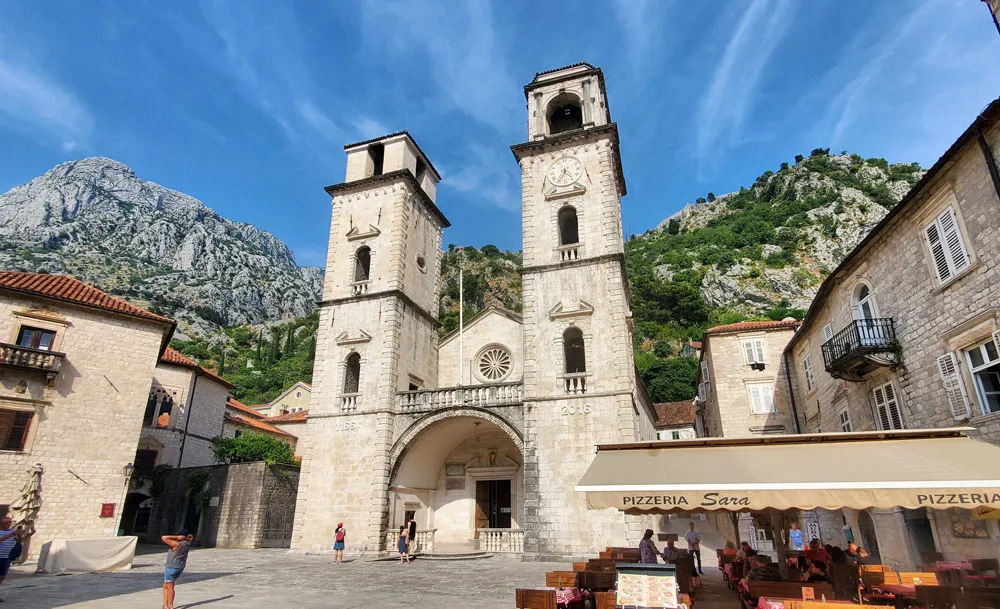
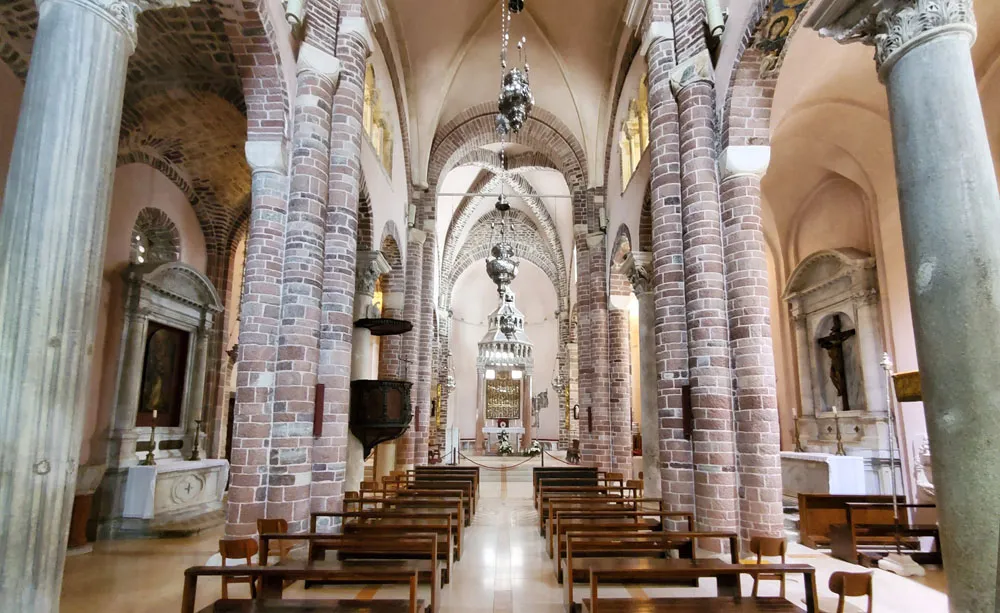
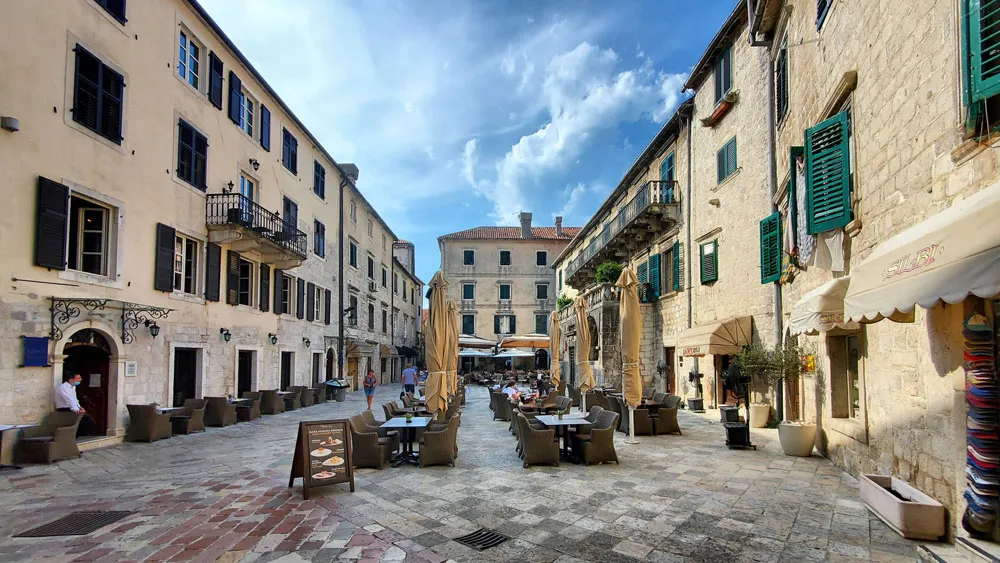
Kotor is a system of narrow streets that converge on numerous squares. The main and largest square is the Square of Arms, the Arsenal Square. It was the place of popular assemblies. There are also the Flour Square, the Museum Square, and the squares of St. Luke and St. Tryphon. The last two are named after saints whose churches stand on those squares. The Cathedral of St. Tryphon is the largest sacred building in the town. It is a Catholic church where services are rarely held, since the vast majority of the inhabitants are Orthodox. Catholics are only members of the Croatian diaspora. In fact it is a museum. Entry is paid.
The Cathedral of St. Tryphon (Tripun) was built on the site of a church in which the saint’s relics were once kept. The relics were brought to Kotor from Constantinople by Venetian merchants. Construction of the cathedral began in 1124, and it was consecrated in 1166. It was a Romanesque church with elements of Byzantine architecture. Over its history it was rebuilt four times after major earthquakes. Each reconstruction added new styles, so there are both Renaissance and Baroque features here.
They write that Kotor is 15 centuries old, but it is not known exactly when it was founded. Kotor’s predecessor is said to be the Roman Acruvium, although most researchers agree that Acruvium was located in a different place, albeit not far away. Here there was the village of Catarum, which in the Byzantine period turned into Decatera. The Italians called the town Cattaro.
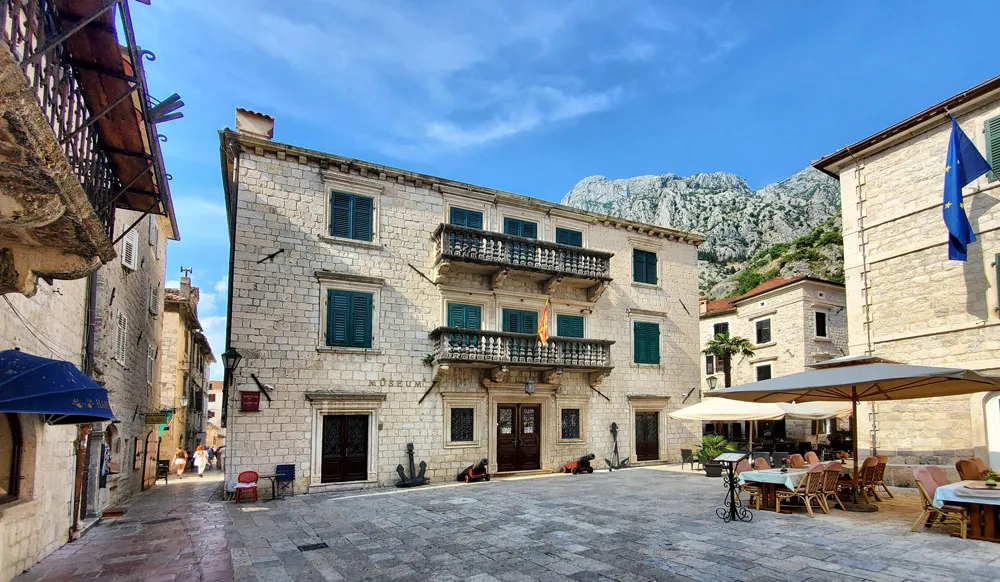
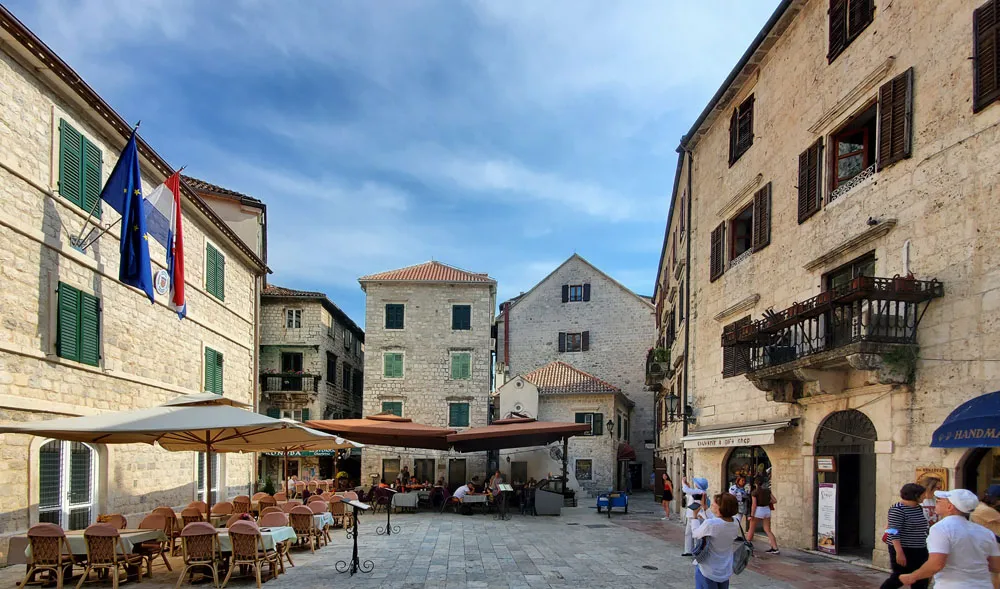
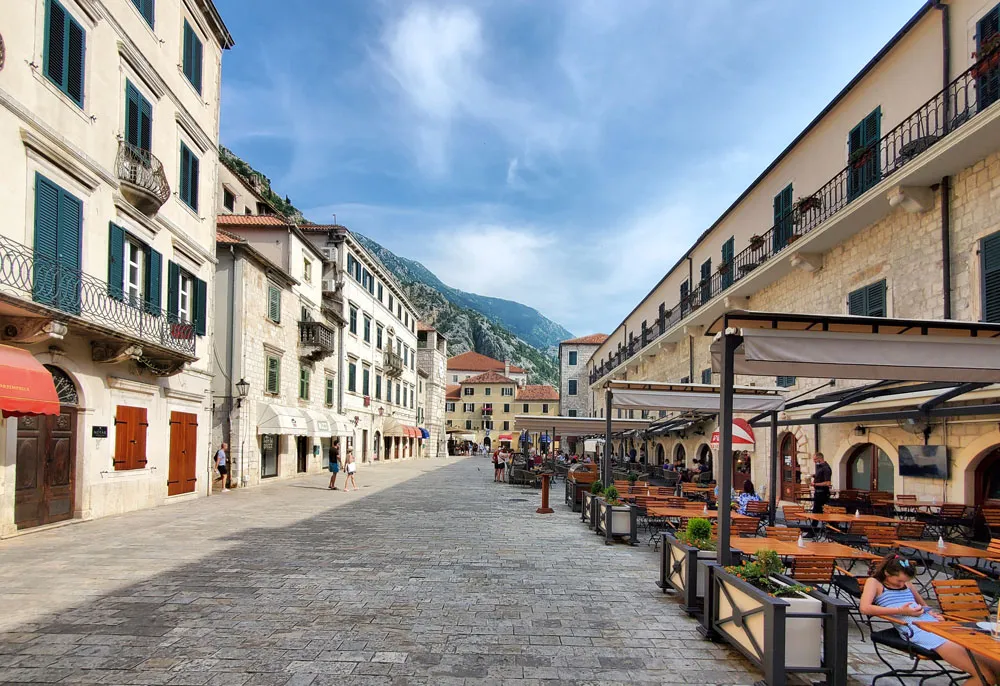
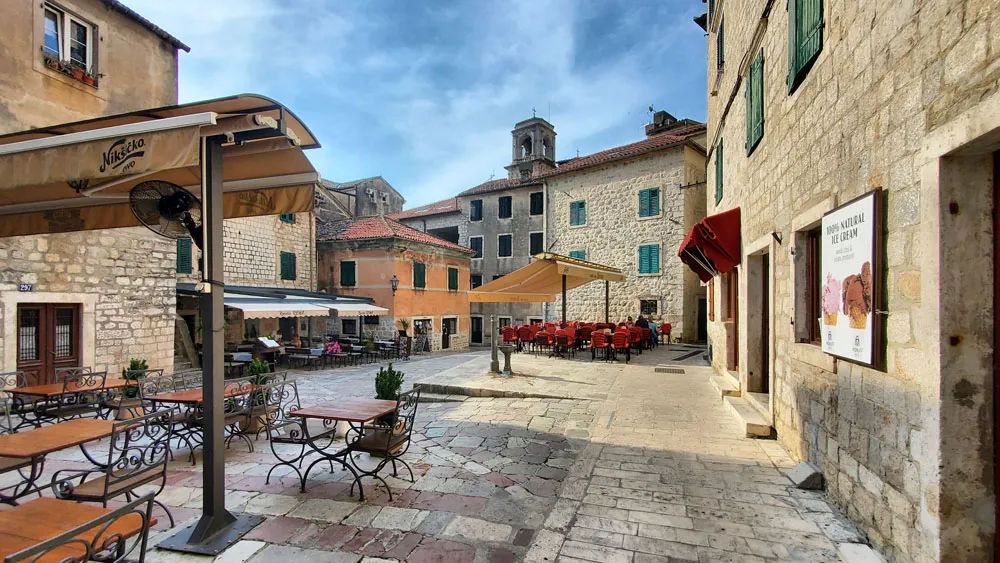
The rulers of the town in turn were the Illyrians, Romans, Byzantines, Serbs, Hungarians, Croats, Bosnians, Venetians, French and even the Russians. For some time Kotor was a city-state where power belonged to the city assembly, and from 1814 to 1918 the town belonged to the Austrians. Then came the Kingdom of Serbs, Croats and Slovenes, Yugoslavia, Serbia and Montenegro, and finally independent Montenegro. This is a very superficial view of the history of Kotor.
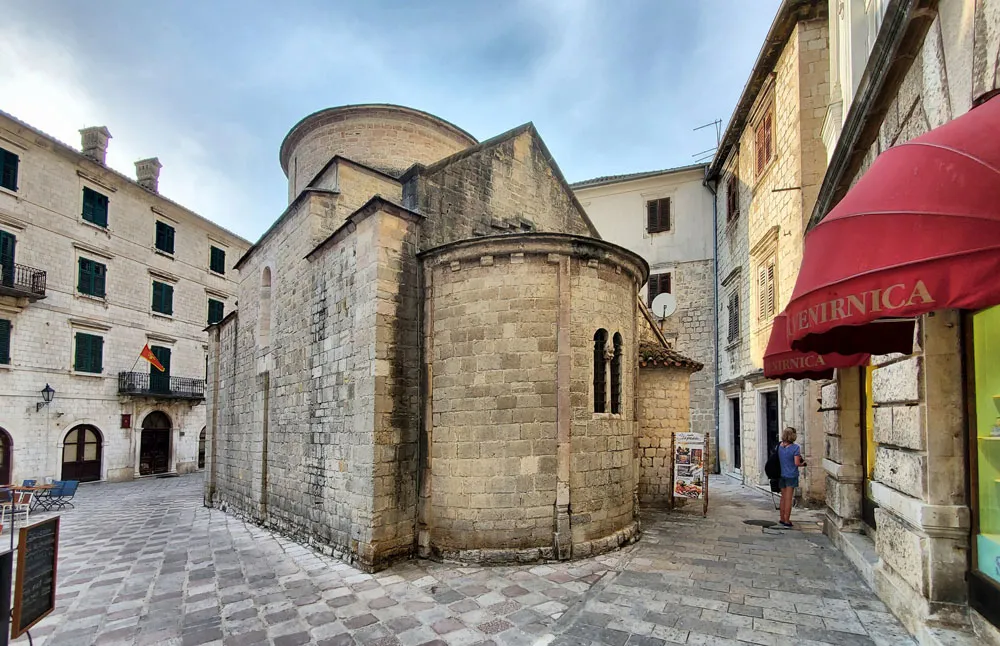
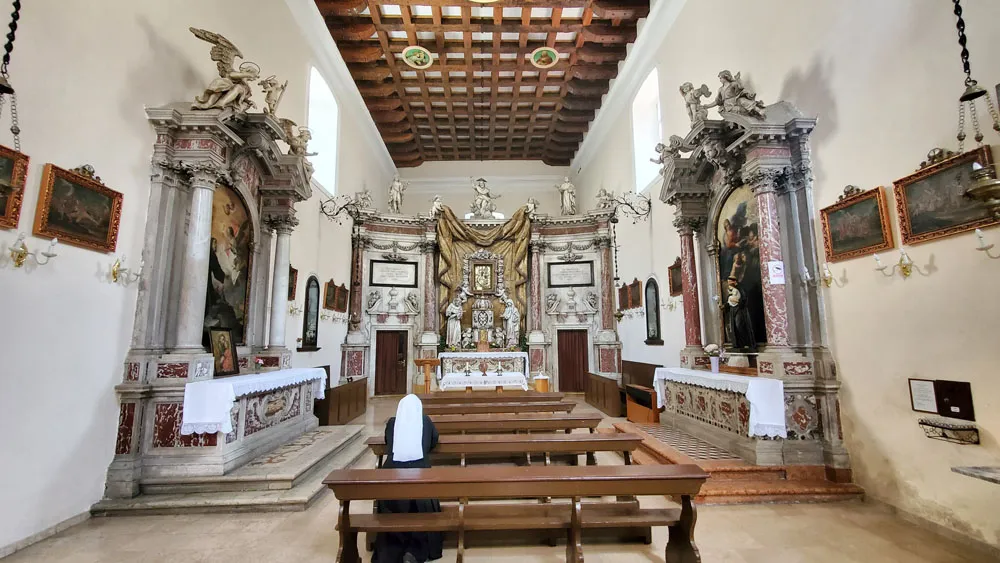
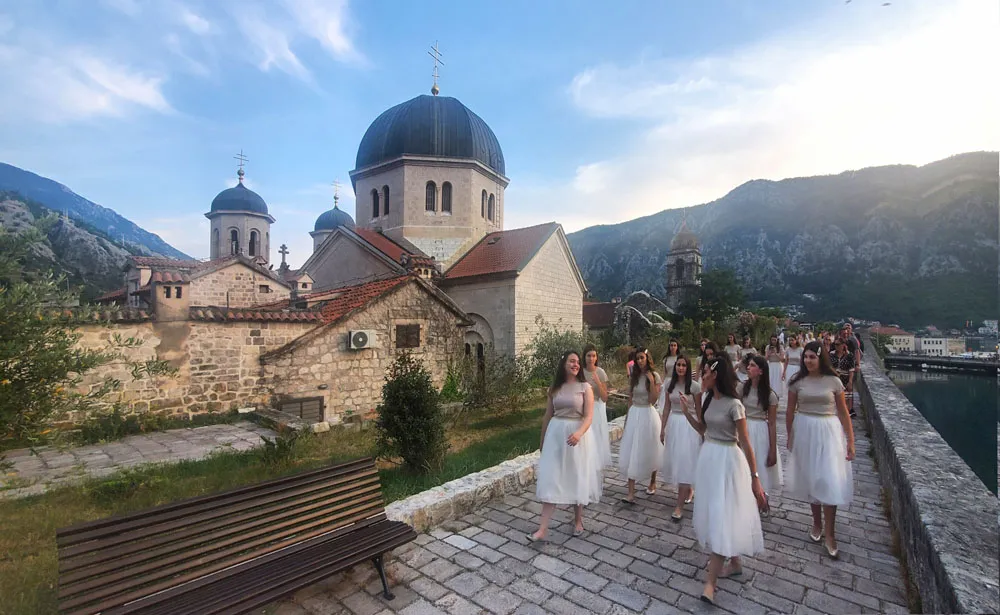
I had the impression that today the main church of Kotor is the Orthodox Church of St. Nicholas, built in 1902–1909. Of the Catholic churches built by the Venetians, apart from the Cathedral of St. Tryphon, the only one open was the Church of the Convent of St. Clare (late 17th century). But we did not manage to get into the churches of St. Mary (1221), St. Luke (1195), St. Anne (12th century) and Our Lady of Remedy at the fortress (15th century). A pity. According to the photos in the guidebooks they are impressive, but entry is by arrangement only. Whom to arrange it with, no idea.
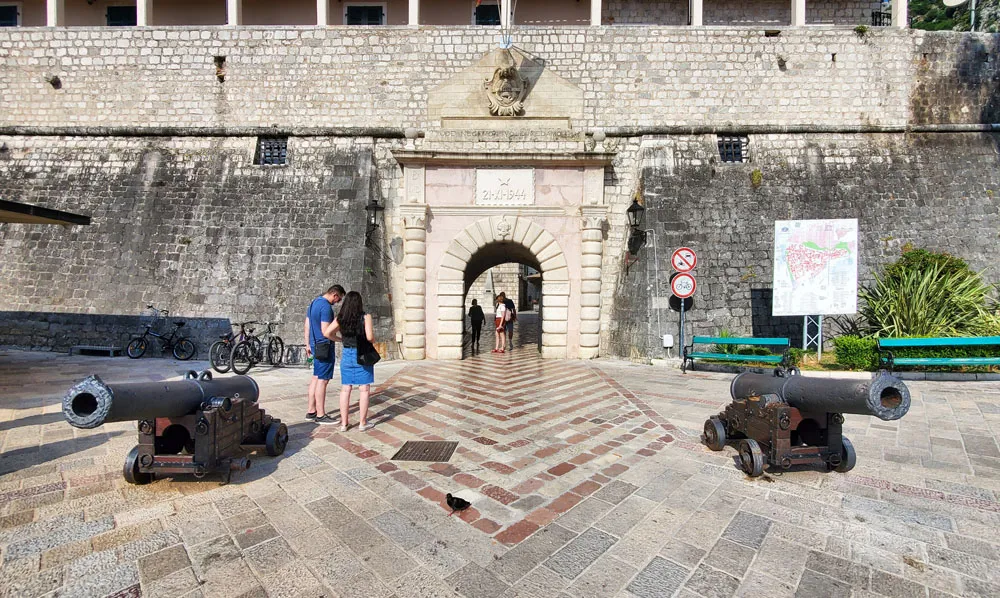
Three gates lead into Kotor. The main one, which the Venetians called the Sea Gate (Porta Marina) and the Montenegrins Vrata od Grada, was built in the 16th century and leads out onto Arsenal Square. Here there really is a former Venetian arsenal, as well as two palaces, the Clock Tower and the building of the Public Assembly.
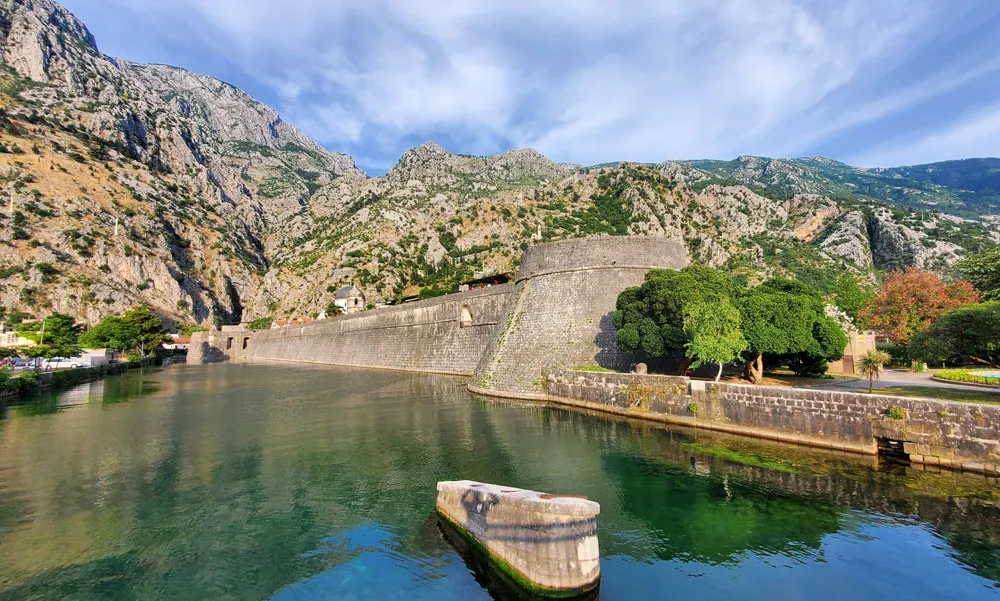
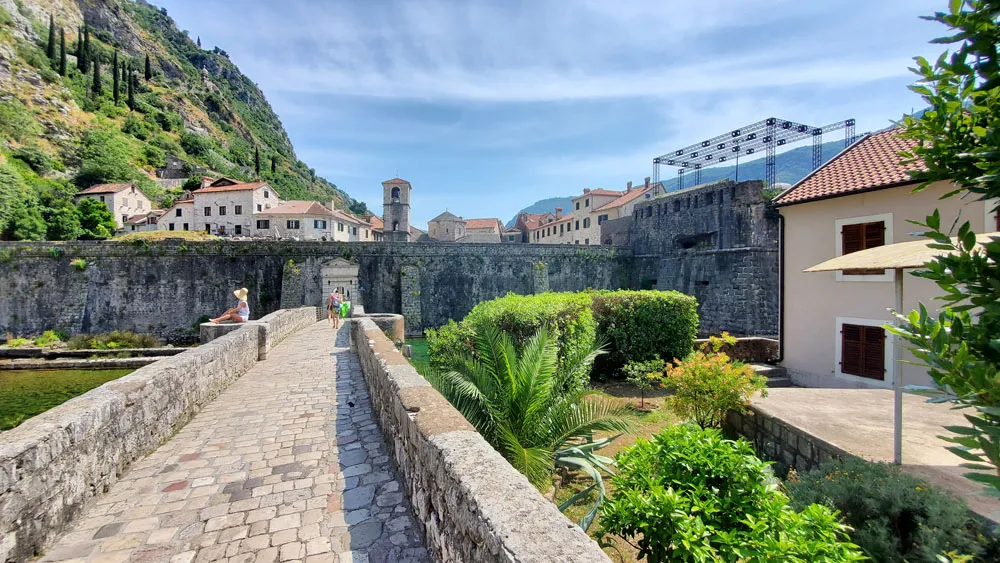
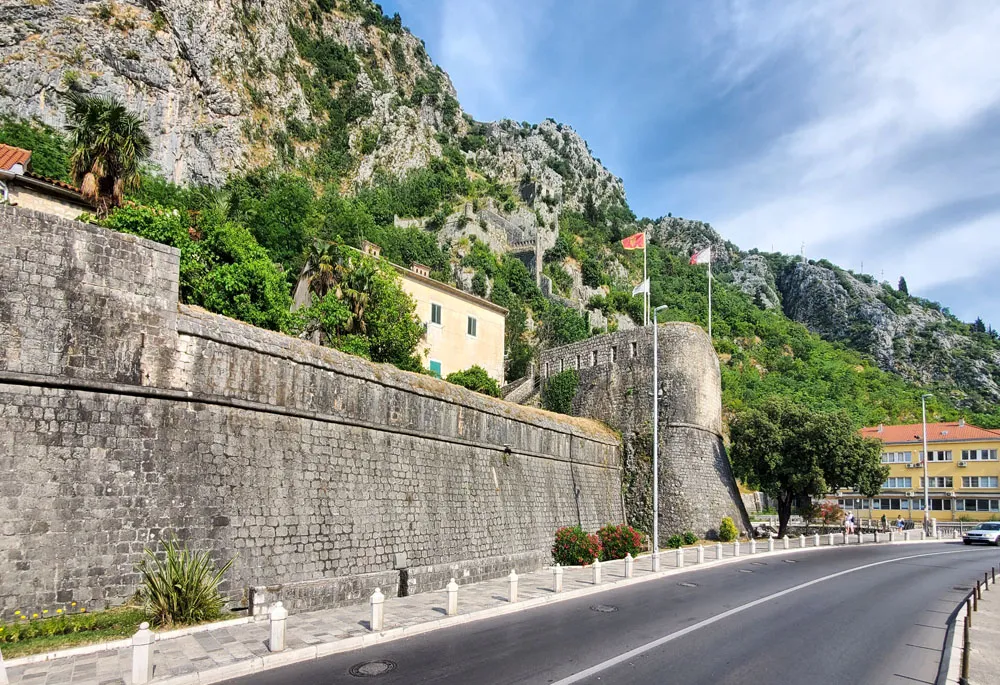
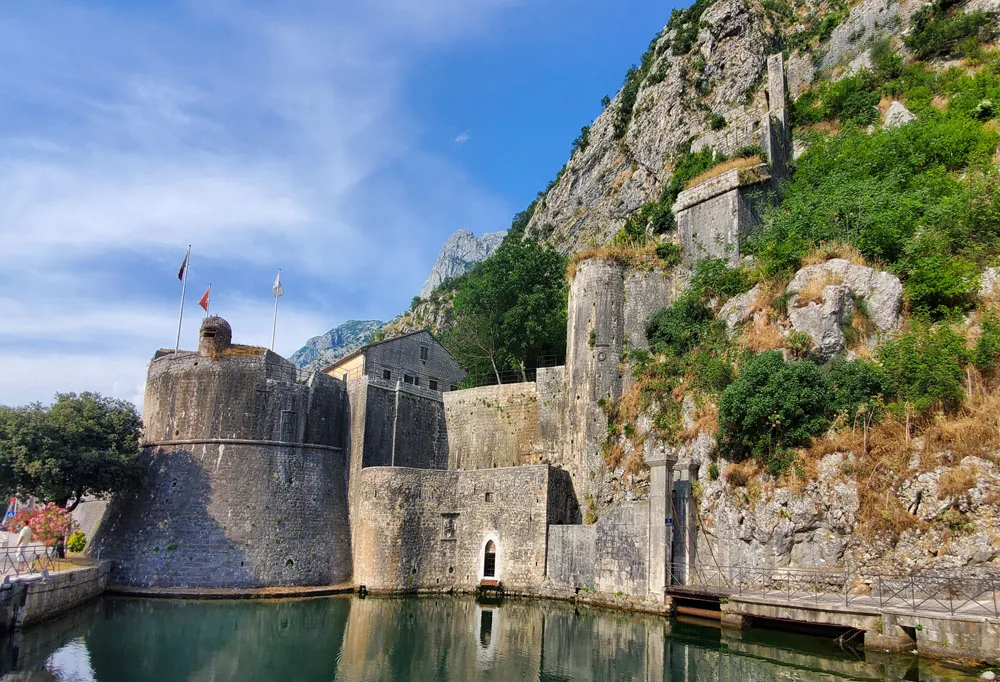
The second gate, the most interesting, is called Vrata od Gurdića. It was built and modified from the 12th to the 18th century. It is a powerful fort that had to take enemy blows first. Arches, a winding passage, a drawbridge – everything as it should be. You can also climb up onto the walls.
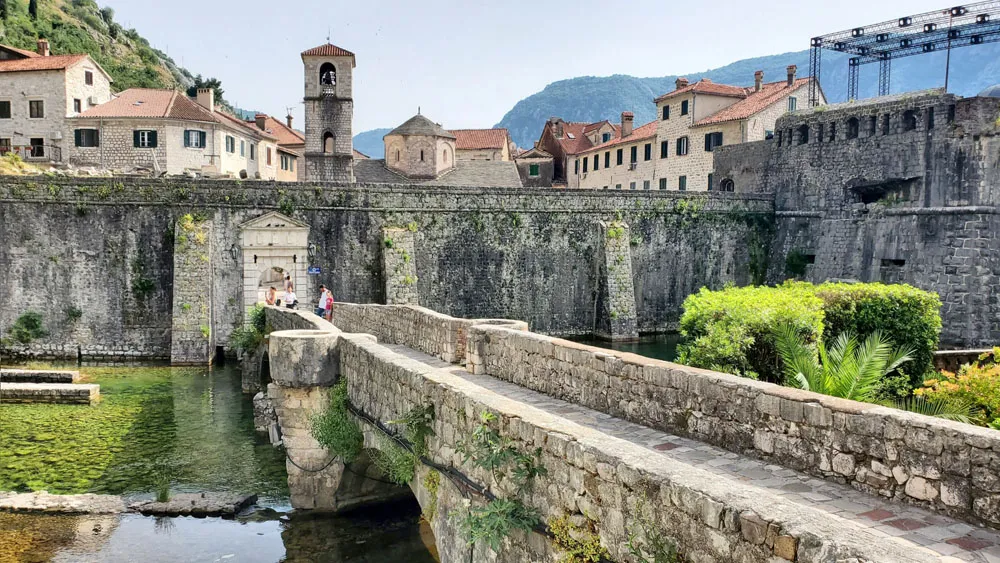
The third gate leads out to the Škurda river and is called Vrata od Reke. In my opinion this gate is the most romantic, because on one side of it is a bridge over a beautiful river, with shoals of fish, ducks and a view of the mountains, and on the other a square around the lovely Romanesque Church of St. Mary. By the way, from here you can climb up onto the walls and walk the whole stretch beside the river.
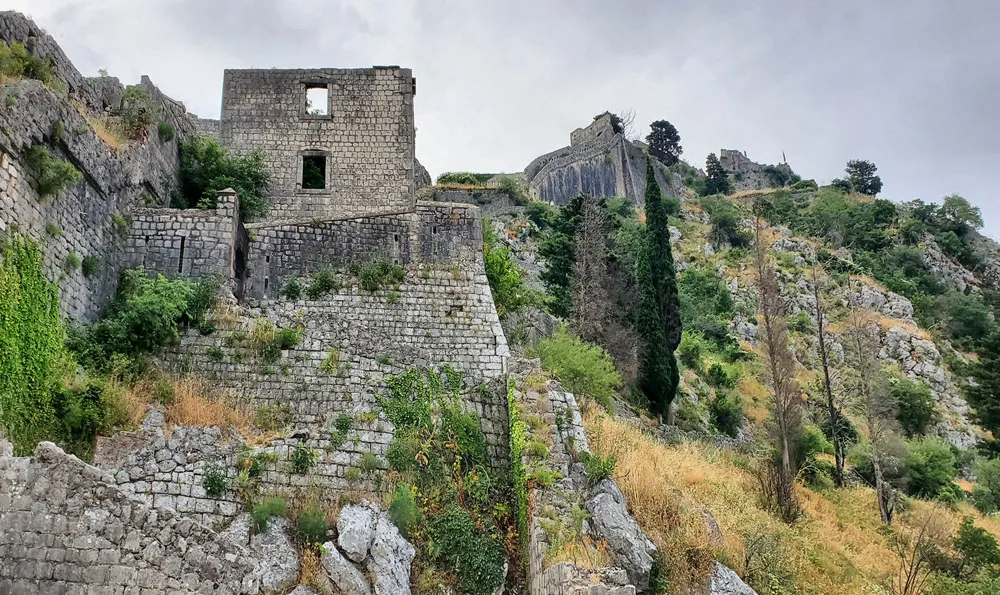
The fortress of St. John rises above Kotor. What we see is the work of the Venetians (16th–18th centuries), although the Byzantines had already begun building a citadel at such an incredible height. An intricate lacework of walls, interspersed with towers and bastions, ends in the main fortification at a height of 250 metres. The state of the fortress surprised me – in many places the structures are badly ruined, and it seems that nobody intends to restore them. Incidentally, most Montenegrin fortresses, of which there are quite a few in the country, are in a similar state.
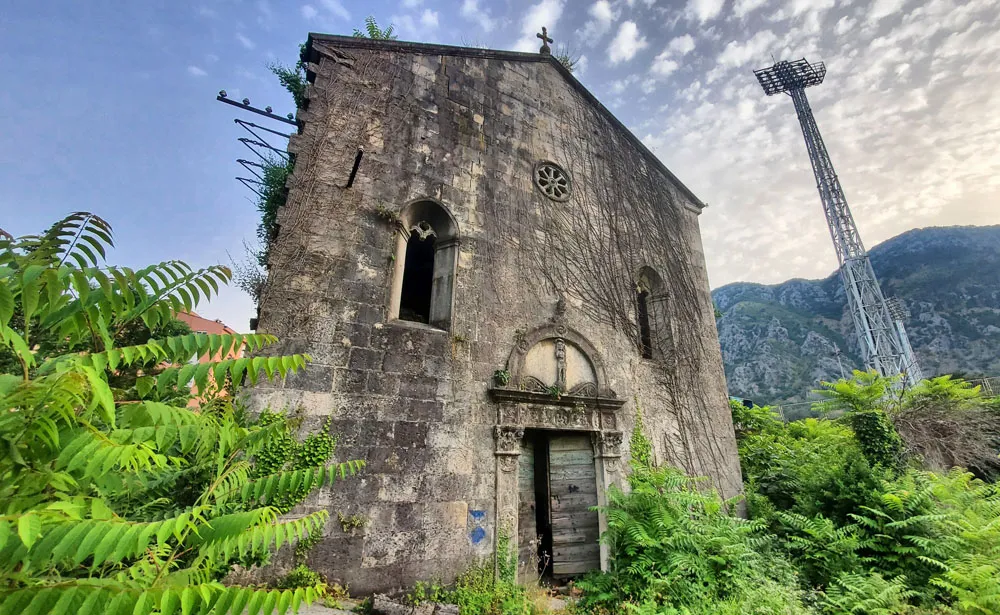
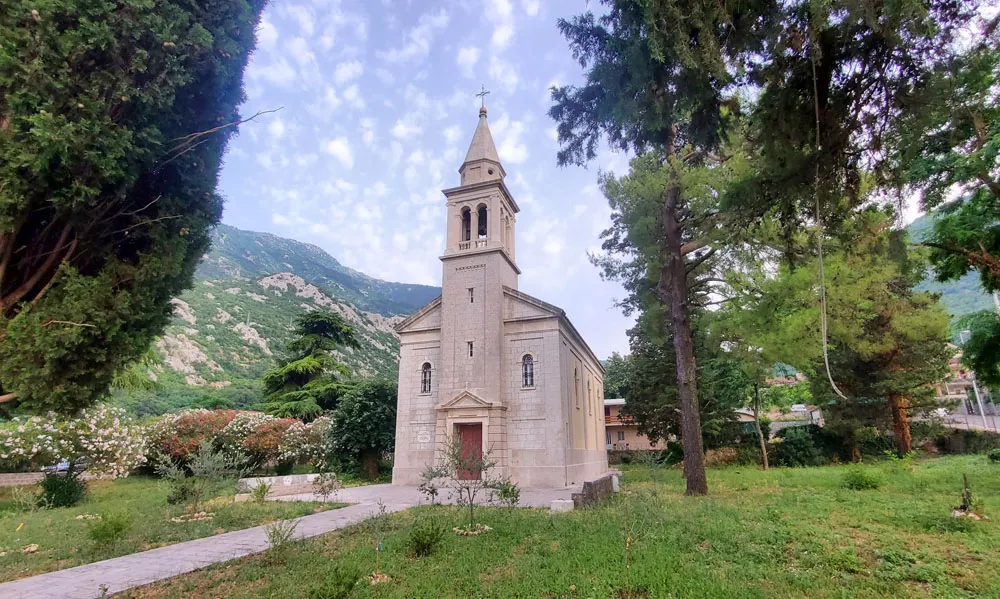
There are interesting things beyond the walls too. For example, an old cemetery with chapels, tombs of the town’s aristocracy and two churches. About a kilometre from the centre we also found an abandoned Catholic church, probably of the 17th–18th century, part of whose vaulting has already collapsed. It turns out this is possible not only in Ukraine.
From Kotor you can set off on a sea trip around the Bay of Kotor, but that is another story.
Text and photos by Roman Malenkov.