Greece: Salamis Island

· 4 min read
Salamis was my first island. Well, I do not count the islands on my native Ros River, Trukhaniv, Dolobetskyi and Venetian islands on the Dnipro in Kyiv, Berezan or Dzharylhach; I mean inhabited islands, rich in nature, architecture and colour. And so the first such one was the island of Salamis. Although again I am fibbing a little, because I have also been to Cyprus (who would say that is not an island?) and to Tenerife. But they are big, and hard to regard as islands in the stereotypical sense, where you get there by water and can walk from one side to the other, like those treasure hunters in Stevenson. The first such island was Salamis; I think you understand what I mean.
We simply came to Piraeus by metro, in ten minutes bought a ticket for the nearest, shortest and cheapest sailing, and ten minutes later were enjoying views of the Saronic Gulf, the mysterious outlines of near and far islands (it turns out there are plenty of them here), and sharp-peaked rocks emerging from the mist. I had not imagined that one has to go not to Asia or the Caribbean for such beauty, nor that it exists in Greece. But then, Greece has everything. For sure.
Salamis is a small island, only some 92 square kilometres, but known to the whole world, because in the narrow straits and bays near the island, in 480 BC, the legendary naval battle took place between the united Greek fleet and the gigantic armada of the Persian king Xerxes I. The Greek army had fewer than four hundred Athenian and Spartan ships, commanded by Themistocles, while the Persians came with thousands of warships (scholars give figures from 800 to 1,200).
When the Athenians learned of the Persian advance, they went to Delphi to the oracle. It said that only a wooden wall would bring salvation, and that divine Salamis would destroy someone. Something like that. The priests of Athens deciphered the oracle’s words literally: they built a palisade around the Acropolis and prepared for defence. The strategos of Athens, Themistocles, decided that it could not all be so simple: the wooden wall meant ships, so they had to board the ships and head for Salamis. He could not reach agreement with Corinth: the Corinthians said they had to fortify the isthmus and not let the Persians into the Peloponnese. But the Spartans, led by Eurybiades, joined the Athenians.
The huge Persian fleet, having entered the narrows near Salamis, completely lost its manoeuvrability and could not move properly. Its formation was broken and chaos began, intensified by the fact that the Persians constantly fell for Greek provocations and pursued decoy ships. The main part of the Persian fleet was destroyed. Xerxes, having lost about two hundred ships and a great number of troops, turned his forces around and fled from Greek waters. The father of European tragedy, the playwright Aeschylus, took part in this battle. He wrote a great deal about it… The Battle of Salamis blocked the Persians’ path to the conquest of Europe and changed the course of history.
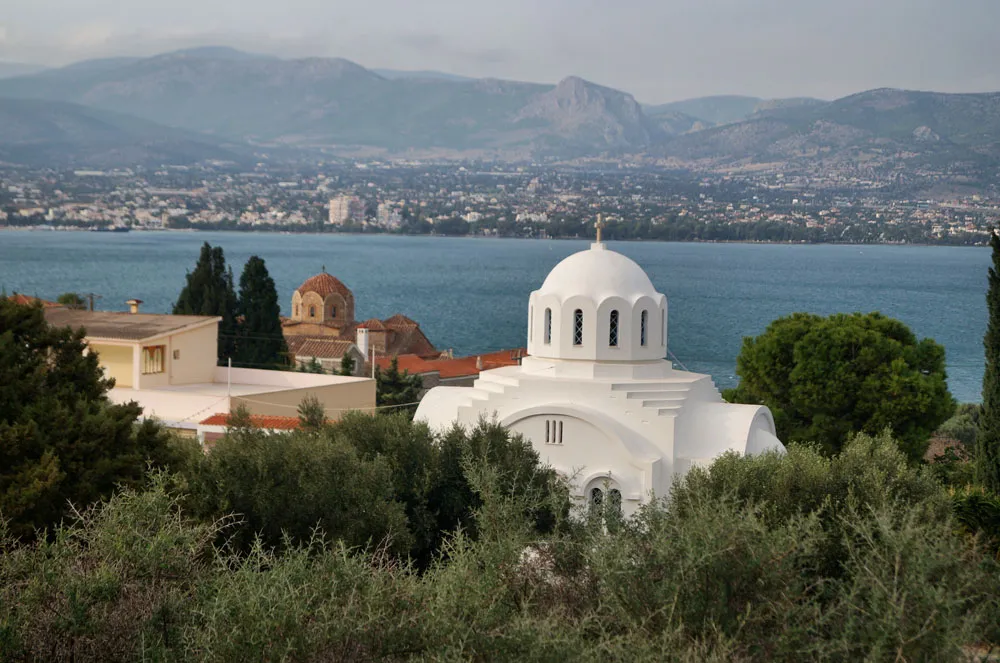
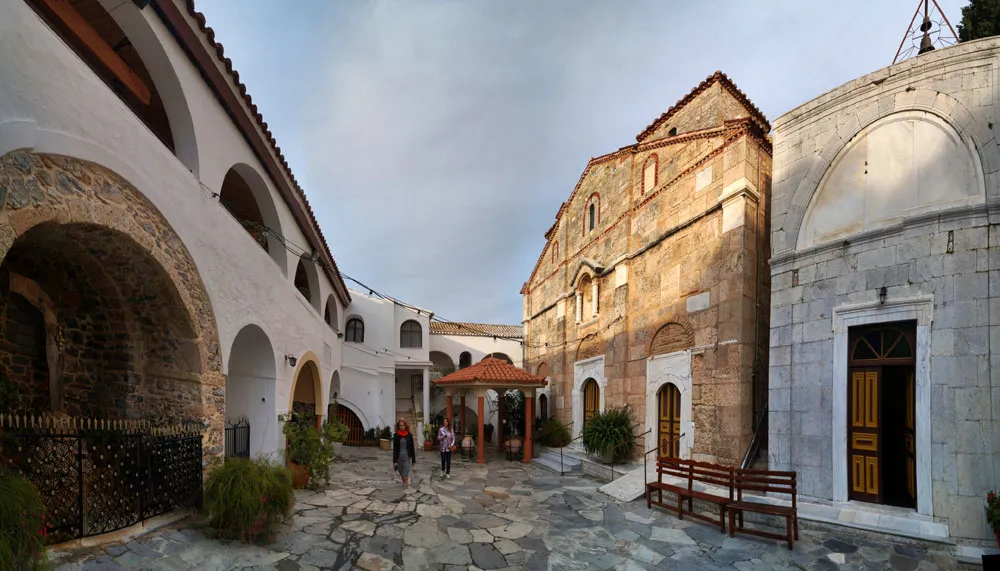
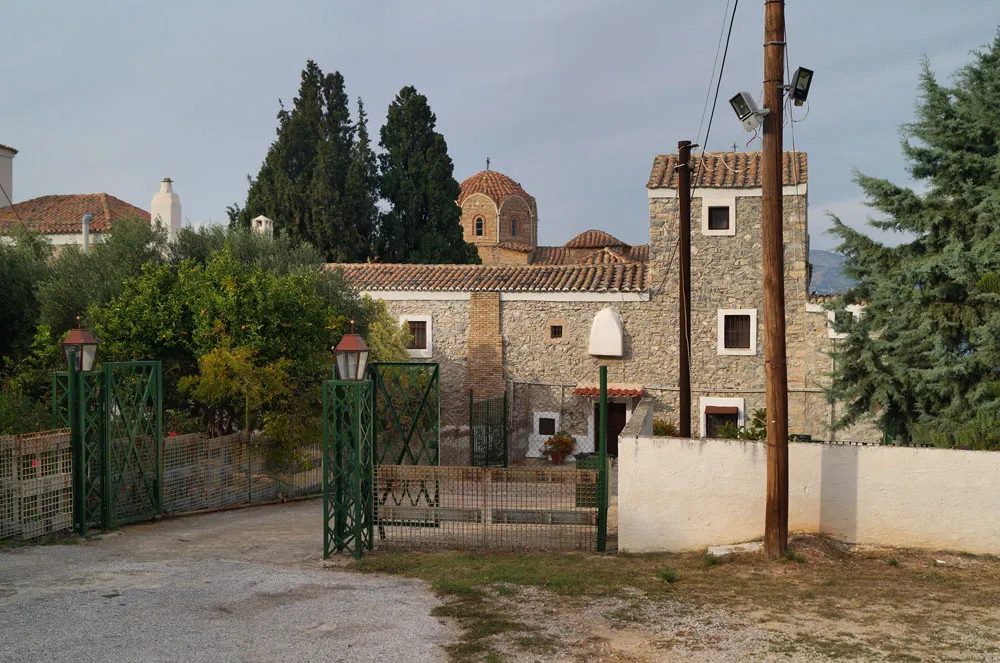
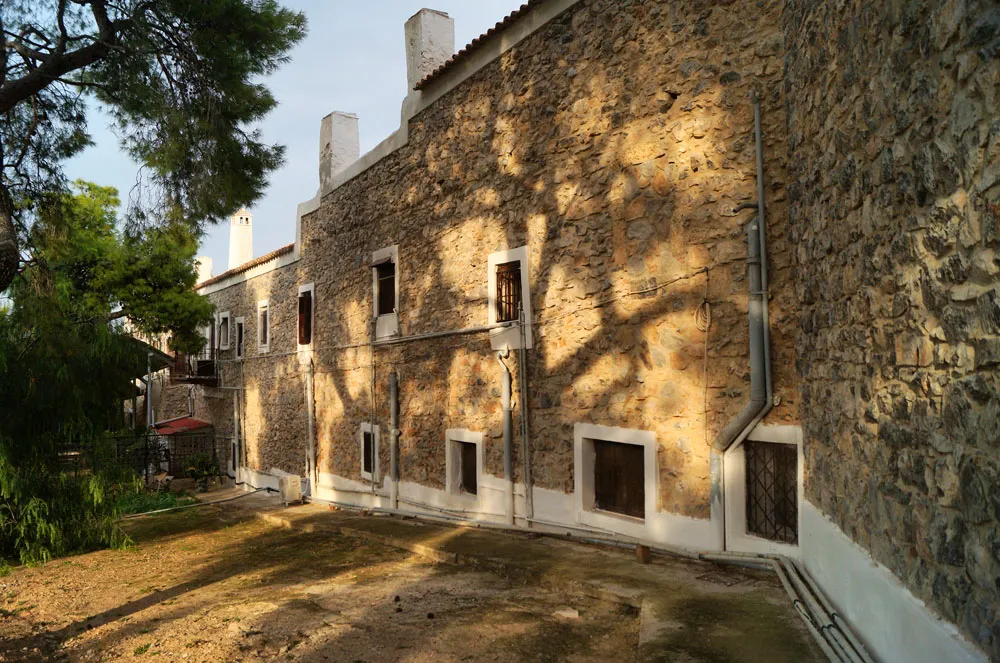
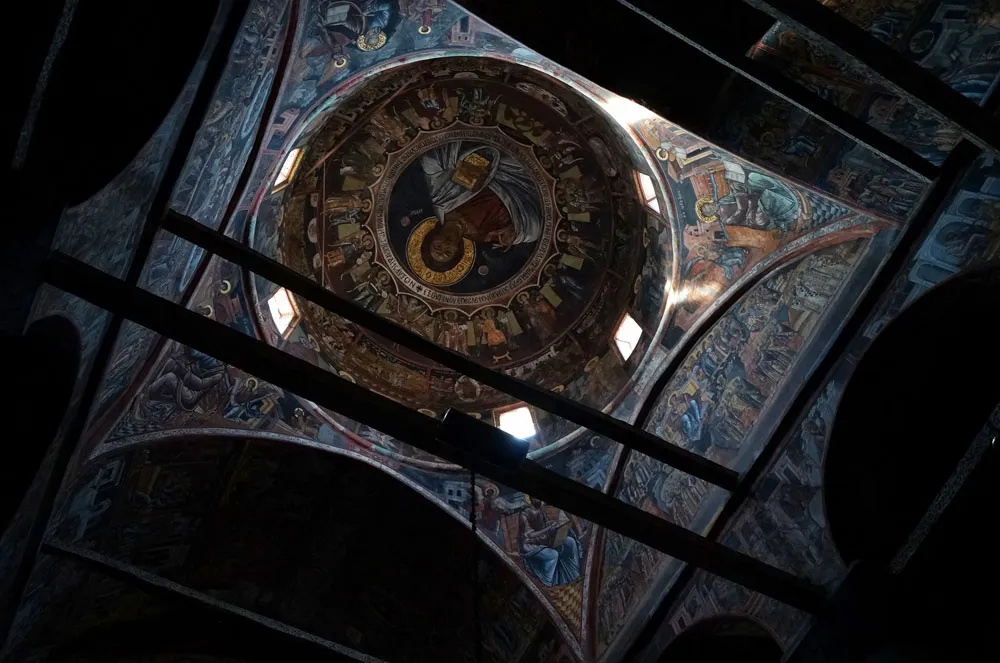
Monastery of Panagia Faneromeni
The island of Salamis is the birthplace of Ajax, the hero of the Trojan War; it was in his honour that the legendary Dutch football team was named. Natives of Salamis founded a city of the same name in Cyprus, which became a capital and a much better-known polis than the island near Athens.
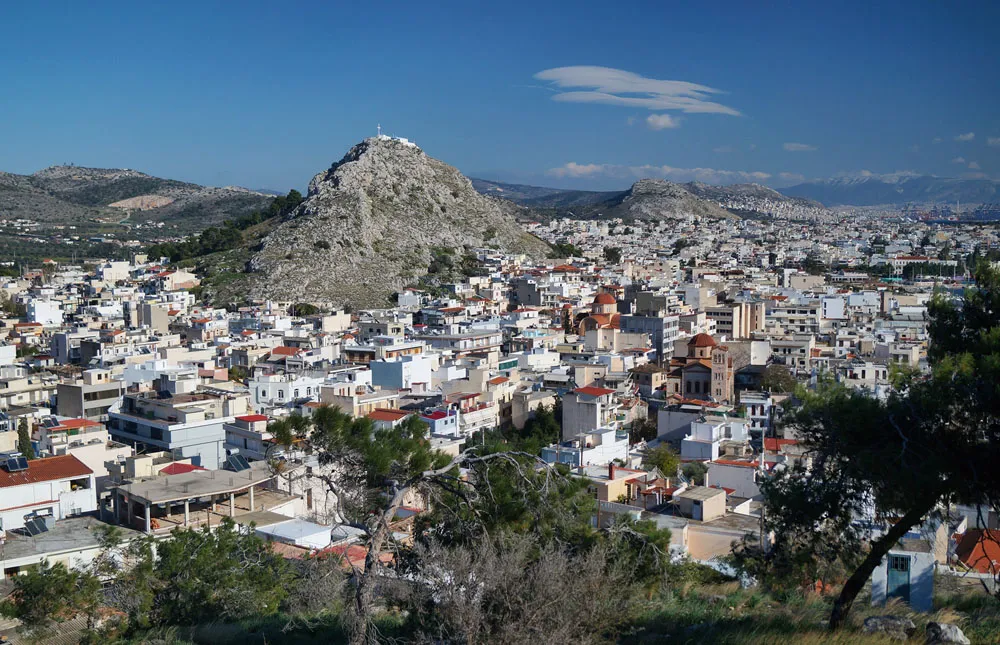
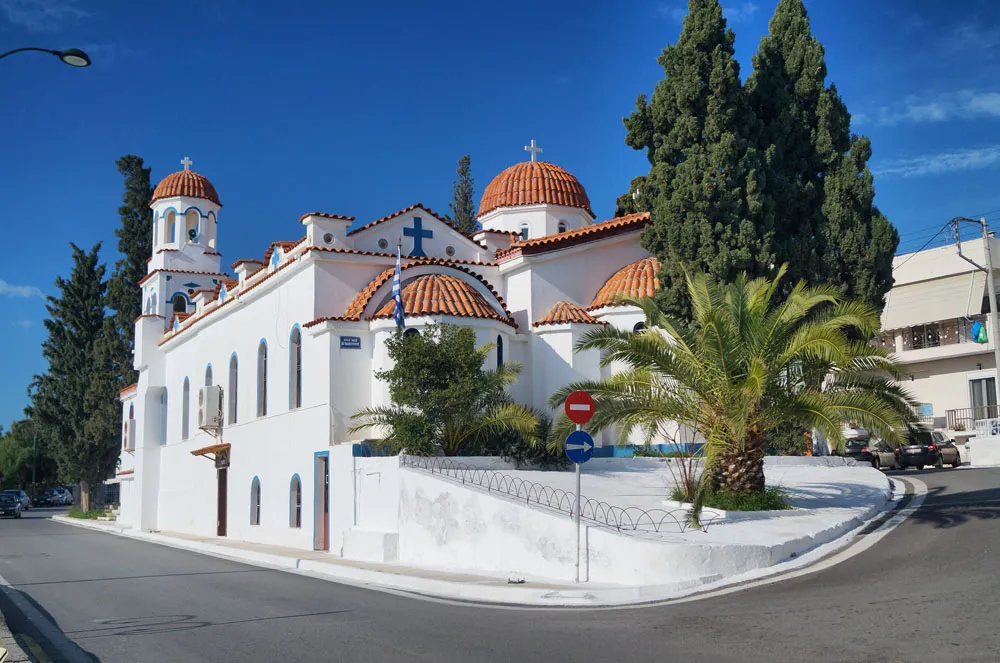
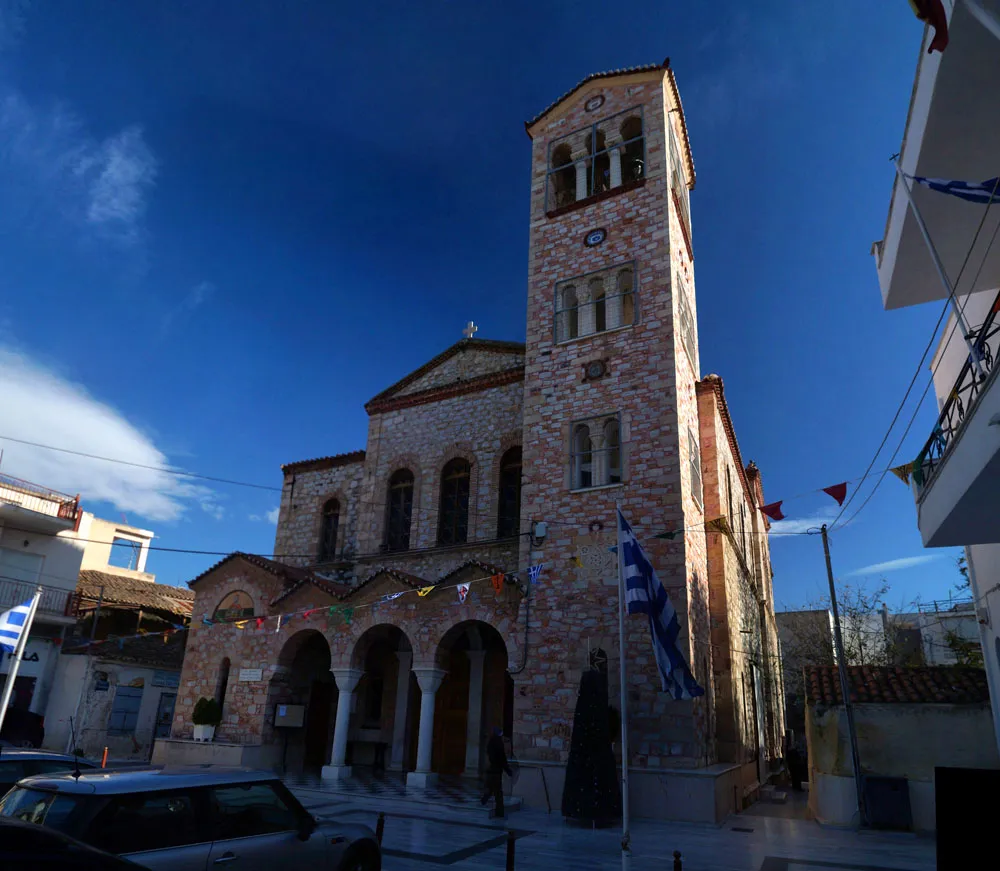
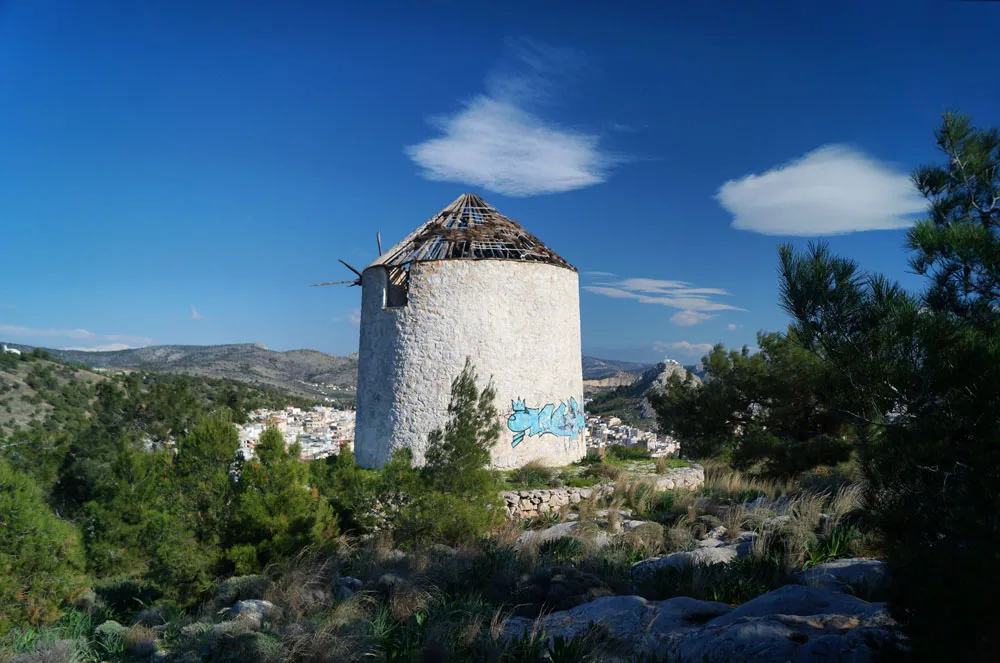
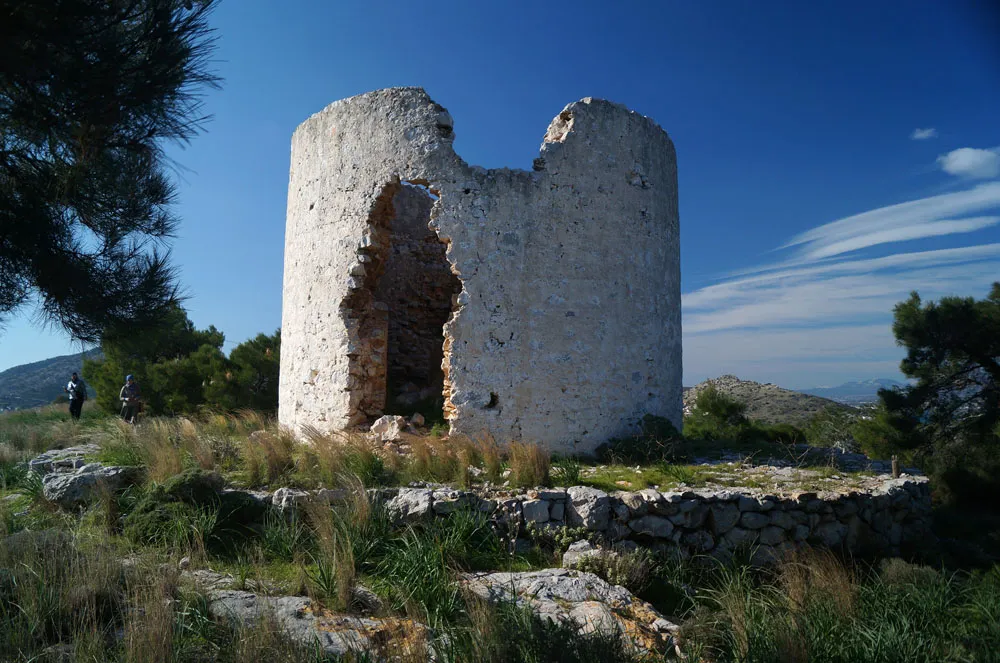
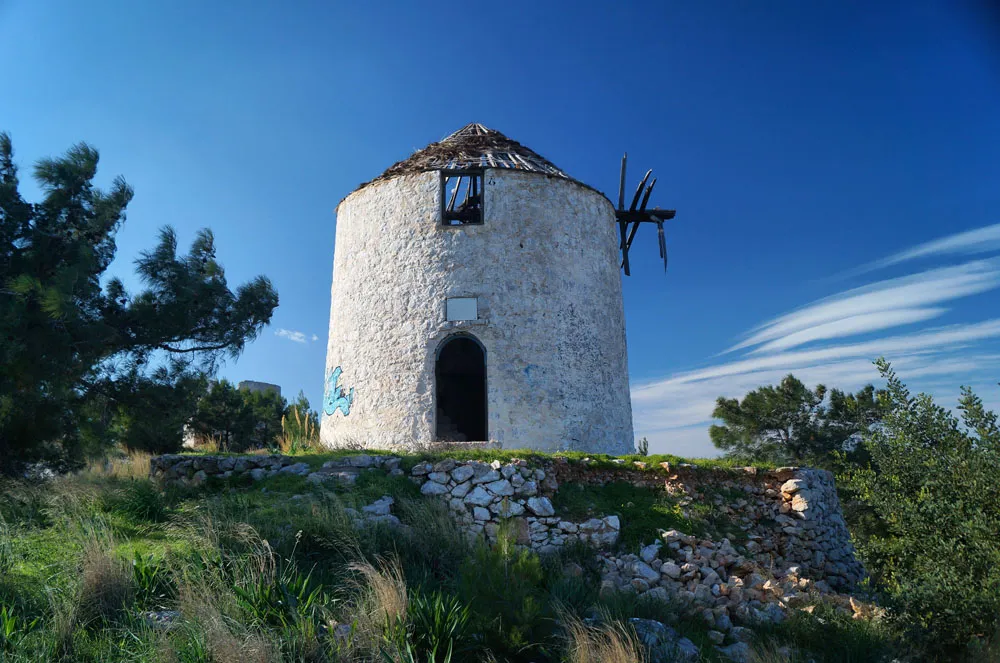
In January 2020 I visited Salamis for the second time. If the first time, probably some three years earlier, we visited only the Monastery of Panagia Faneromeni, located in the north of the island, then during the second visit we walked around the island’s capital, the town of Salamis, climbed picturesque hills with the skeletons of ancient stone windmills, visited the archaeological museum and several churches, and tasted seafood in several colourful tavernas. After all, how can one visit an island and not eat fish?
They say that somewhere on Salamis there is a cave where Euripides lived. I do not know where it is; I did not look for it. The whole island, like a hedgehog, is covered with sharp-peaked hills and mountains; climb the hill with the windmills and you will see fairy-tale views. Athenians adore these views, so there is a huge number of dachas of the capital’s residents here.
Salamis has two dozen settlements linked by bus service and a population of about 30,000. Most of the residents work in the service sector, in particular tourism, in fishing, including fish farming on sea farms, and in gardening. There are very many pistachio orchards here, but the Greeks themselves say that the best pistachios in the world are grown on the neighbouring island of Aegina.
Text and photos by Roman Malenkov.