

The unfinished Zubrivka–Panivtsi viaduct: almost “Roman ruins” above the Smotrych
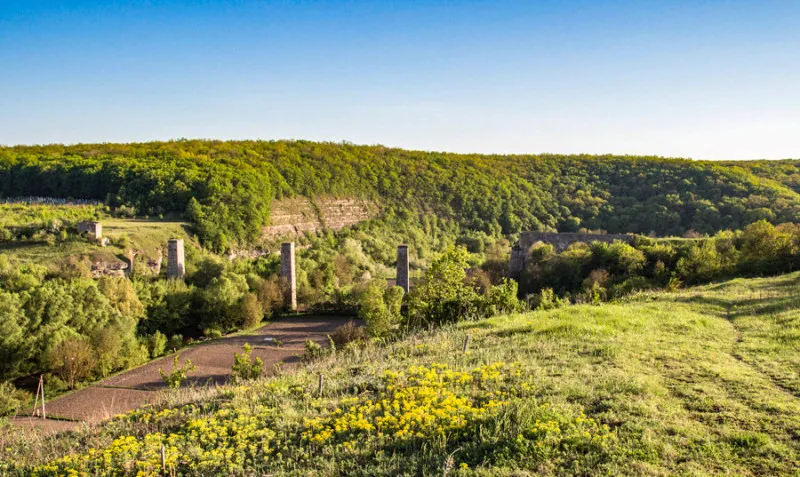
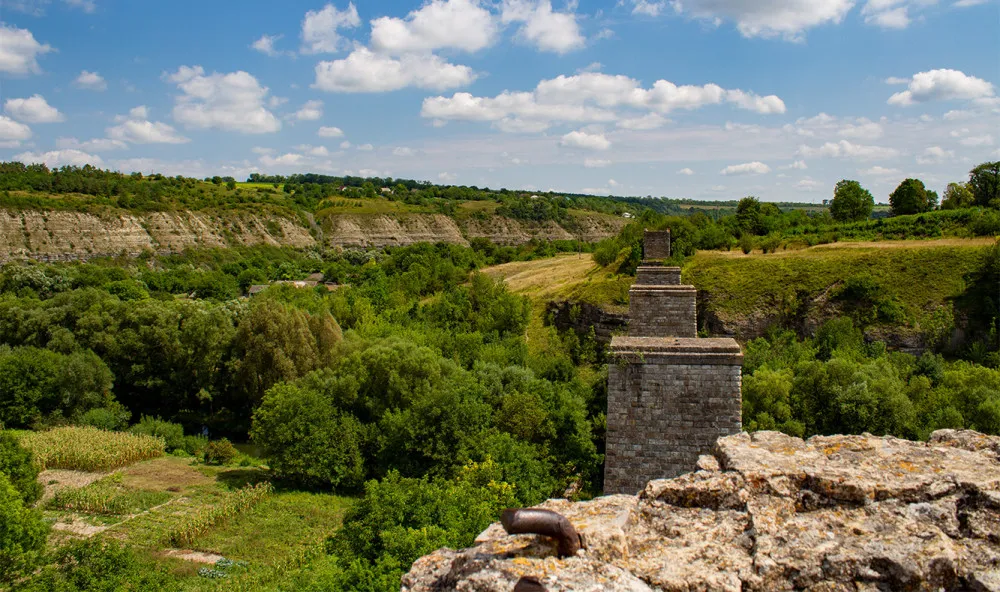
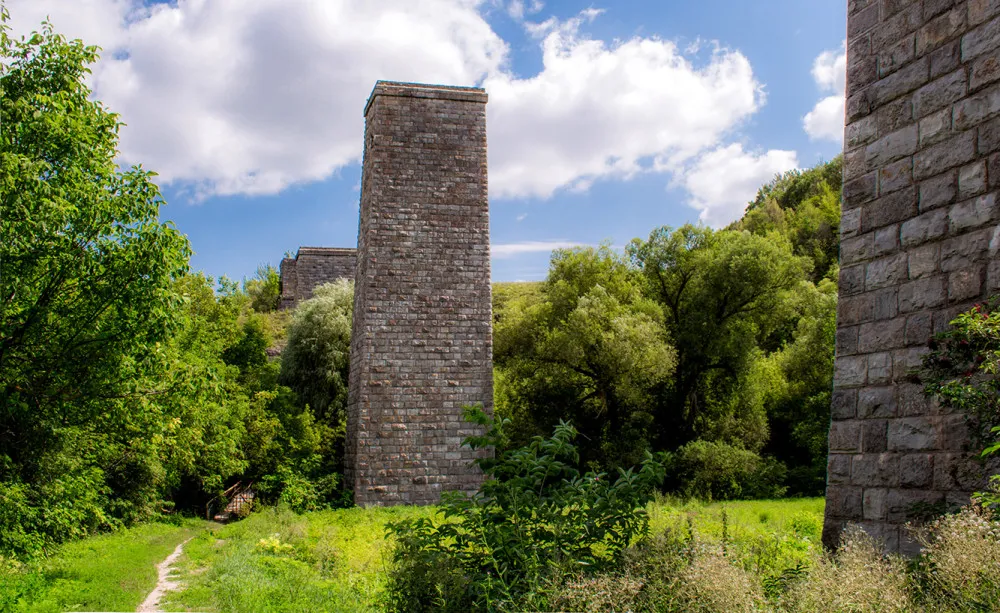
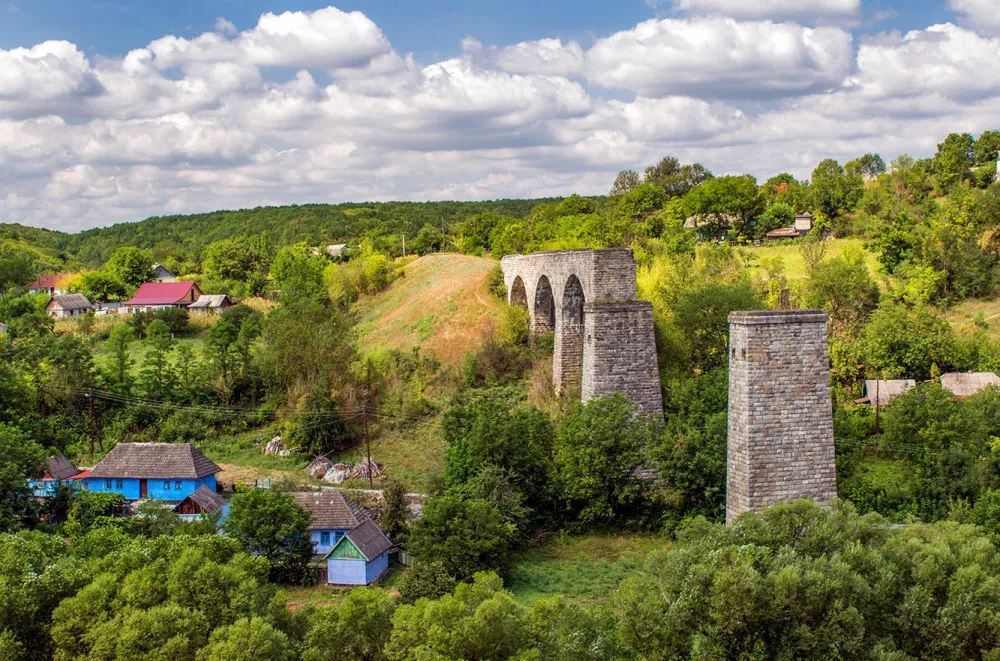
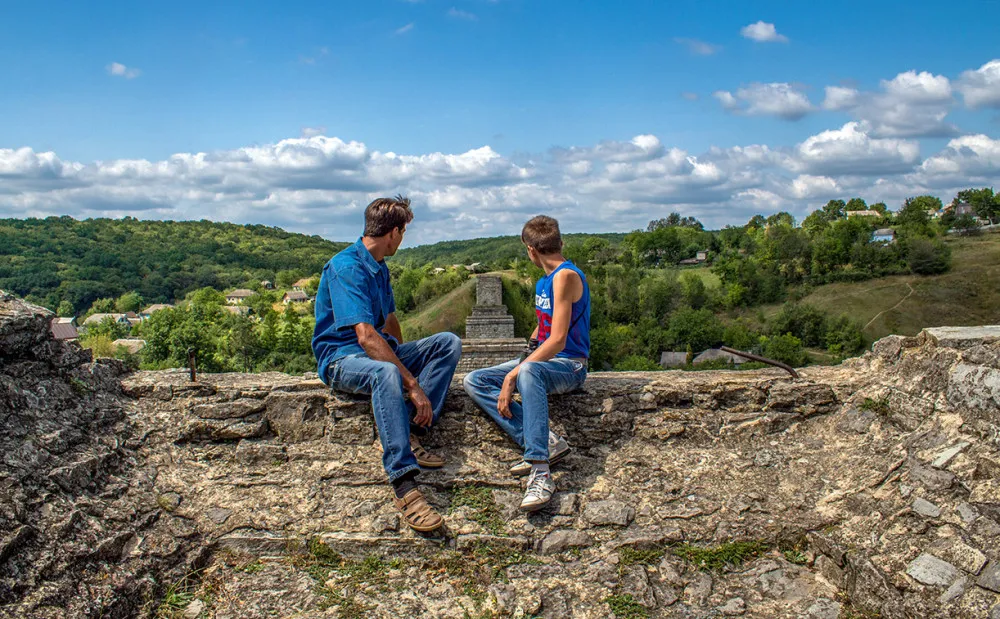
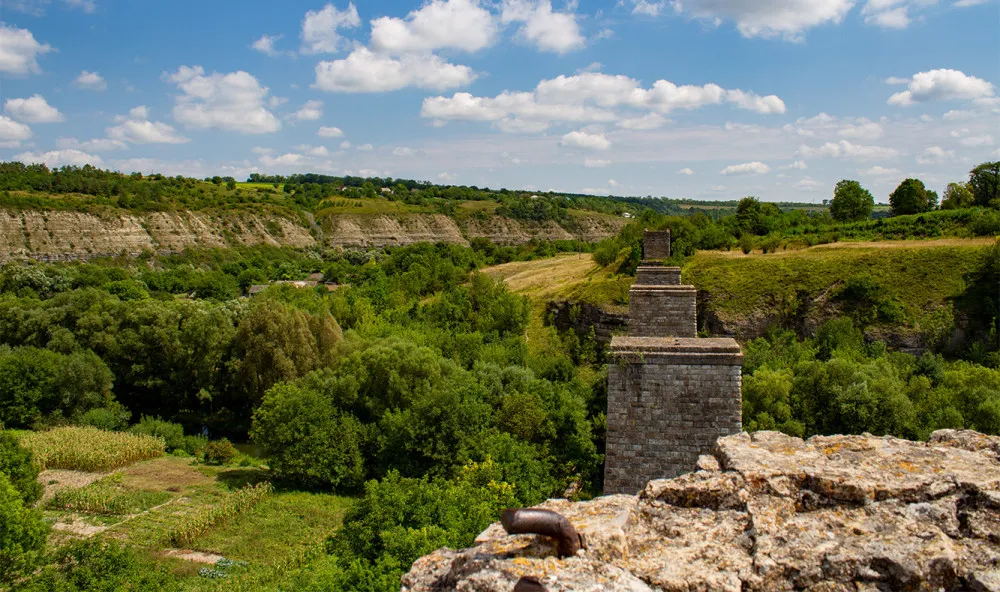
About 7–8 kilometres downstream along the Smotrych from Kamianets-Podilskyi lies the village of Zubrivka. Here, in the Smotrych canyon, you can see an original and very interesting monument: an unfinished railway bridge of 1916 (48°37’48.1”N 26°36’02.8”E). The structure is impressive and very beautiful. It resembles at once Roman ruins and the wizards’ towers from “The Lord of the Rings”.
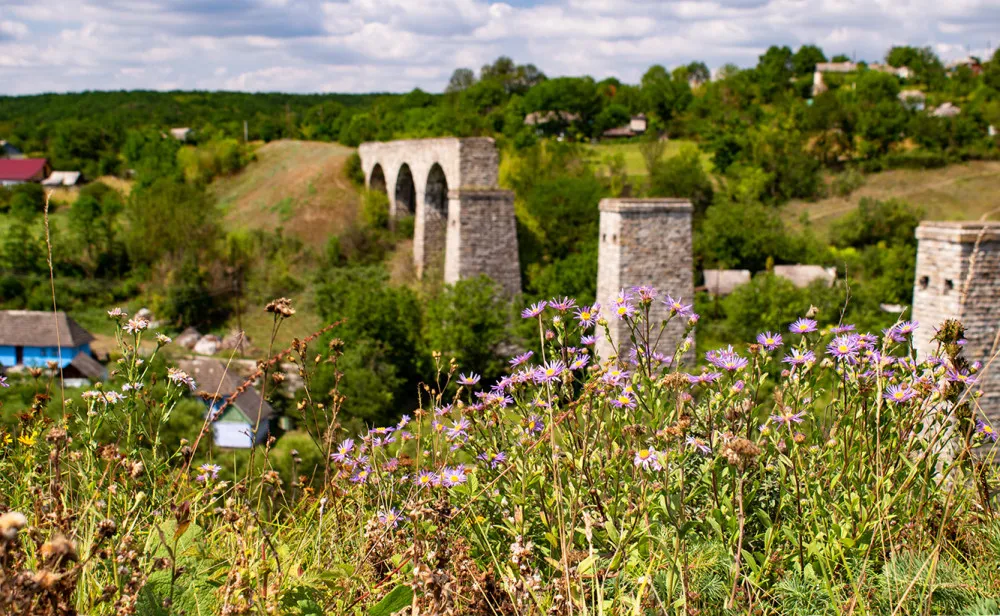
This unfinished structure is usually called the “Panivtsi viaduct”. But Panivtsi itself, also a rather interesting village, even with a castle, lies about a kilometre and a half farther on. The explanation is simple: Zubrivka belongs to the Panivtsi village council, so the “elder brother” appropriated the monument.
The history of the unfinished bridge is romantic and rather tragic.
At the beginning of the 20th century, the Russian Empire launched an ambitious railway project with the pompous name “Slavic Way”, which was to link the Adriatic Sea with St Petersburg. The “Slavic Way” was to merge into the no less grand “Indian Way”. On 15 December 1910 the newspaper “Podolia” wrote, among other things: “The construction of this [Slavic] route, which will also cross near Starokostiantyniv the planned “Indian Way” (so much is being said about it now: Warsaw – Dubno – Starokostiantyniv – Uman – Dzhankoi – Kerch – Batumi – Tehran), will be of enormous importance for our region. All the goods that previously went to Central Russia from the Mediterranean through the Black Sea and Odesa will go directly through Romania and then across Russia: Kamianets – Proskuriv – Shepetivka – Novohrad-Volynskyi – Zhlobin – St Petersburg”…
As part of the project, a branch was also planned from Kamianets-Podilskyi to Ivane-Puste (now a village in the Borshchiv district of the Ternopil region and an important railway junction), which was ultimately meant to connect Kamianets with Lviv. The First World War not only did not stop the construction but even accelerated it. After all, supplying the occupying Russian troops in the captured Galicia required powerful transport flows. In particular, on 15 April 1916 the Council of Ministers of the Russian Empire considered at its meeting the question of building the railway lines Yampil – Zbarazh and Kamianets-Podilskyi – Ivane-Puste.
Even the February Revolution did not hinder the construction. Already in March 1917 the Provisional Government considered the question of financing the project. The “Podillia Railway” then received a government credit of 10 million roubles. Even by the standards of the inflation of the time, that was a huge sum. The project was stopped only by the September offensive of the Austro-German troops.
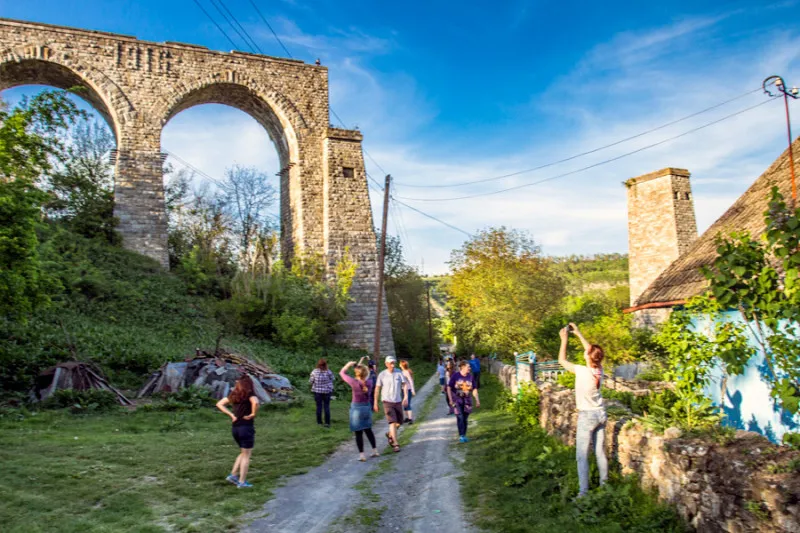
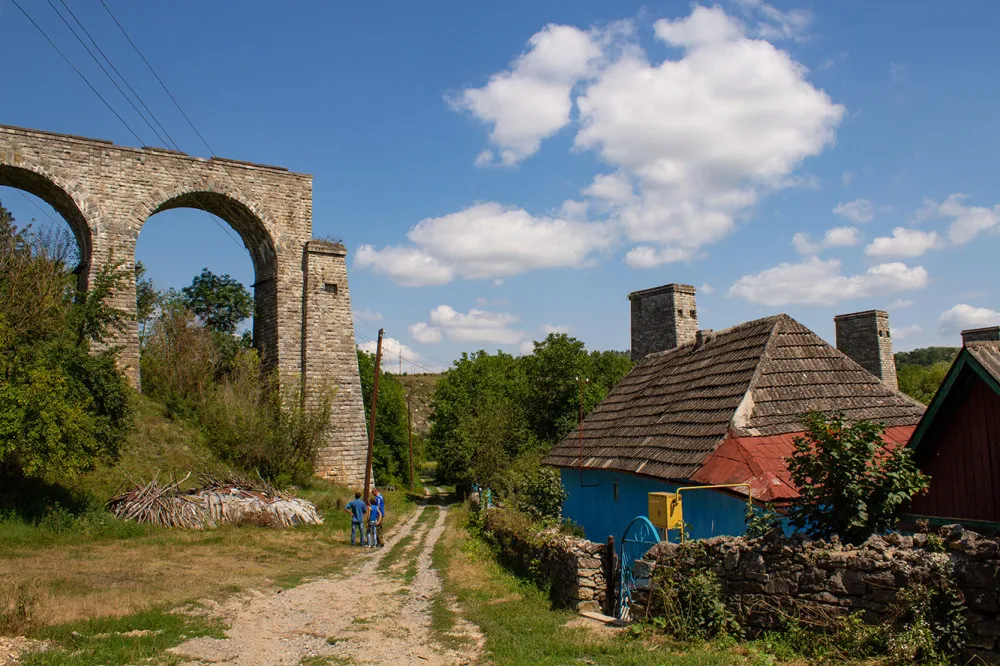
By that time the branch to Ivane-Puste had been built almost completely. In particular, the embankment had been completed along the entire section and most of the bridges had been put up, including the bridge over the Zhvanchyk river in Zhvanets.
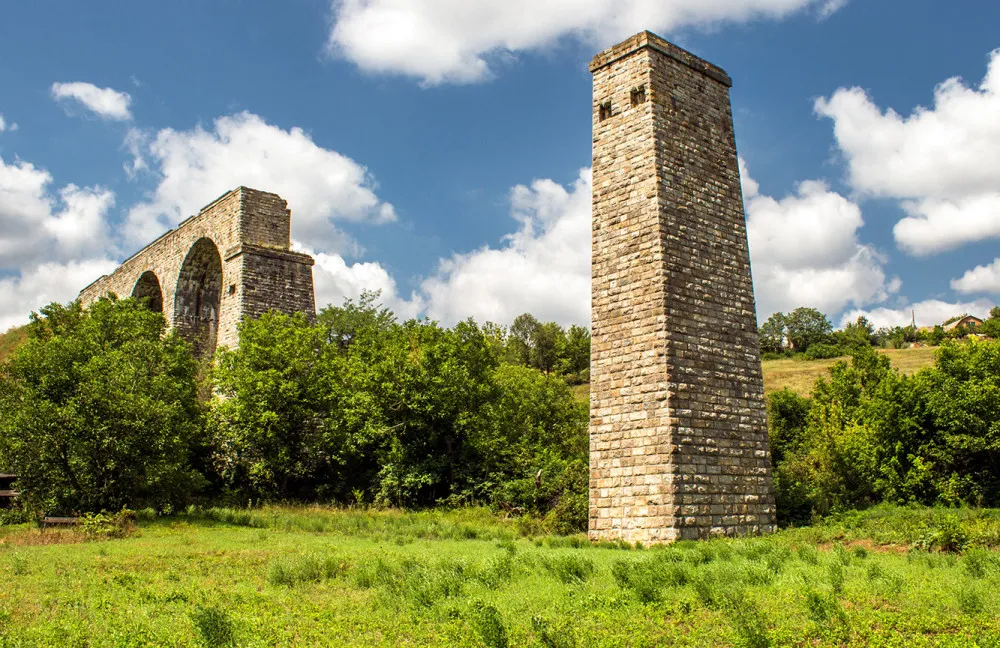
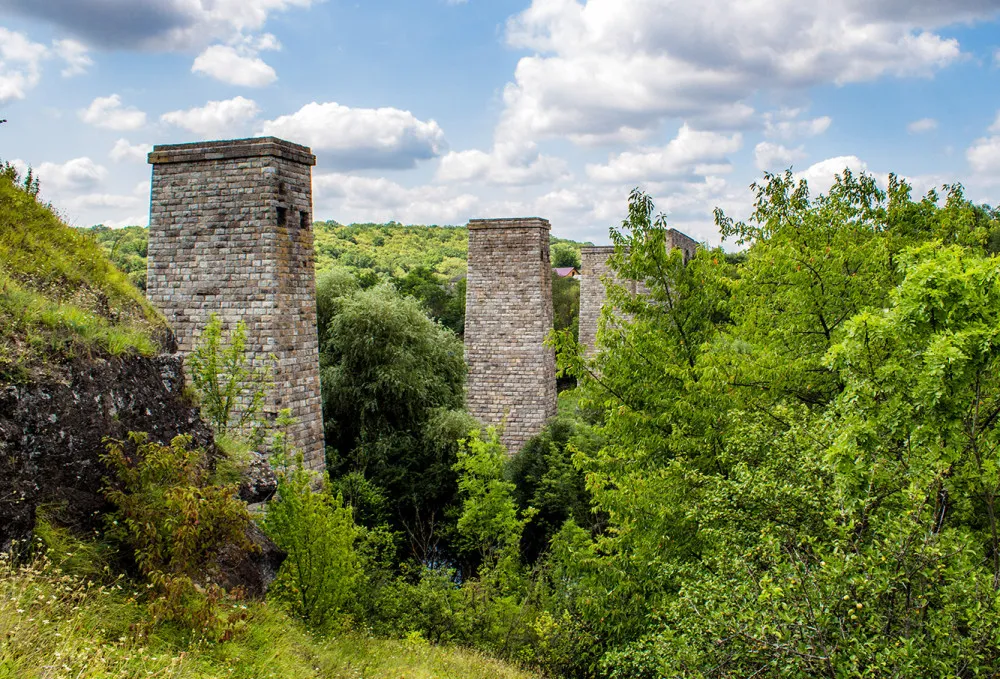
In Panivtsi they managed to complete the most difficult part of the project: they built the viaduct and giant pier supports more than 20 metres high. This stage was most likely completed in 1916. The latter is vividly attested by the corresponding date laid out in stones at the top of the viaduct. On the line to Ivane-Puste they even managed to lay part of the sleepers and rails. But it “did not work out”.
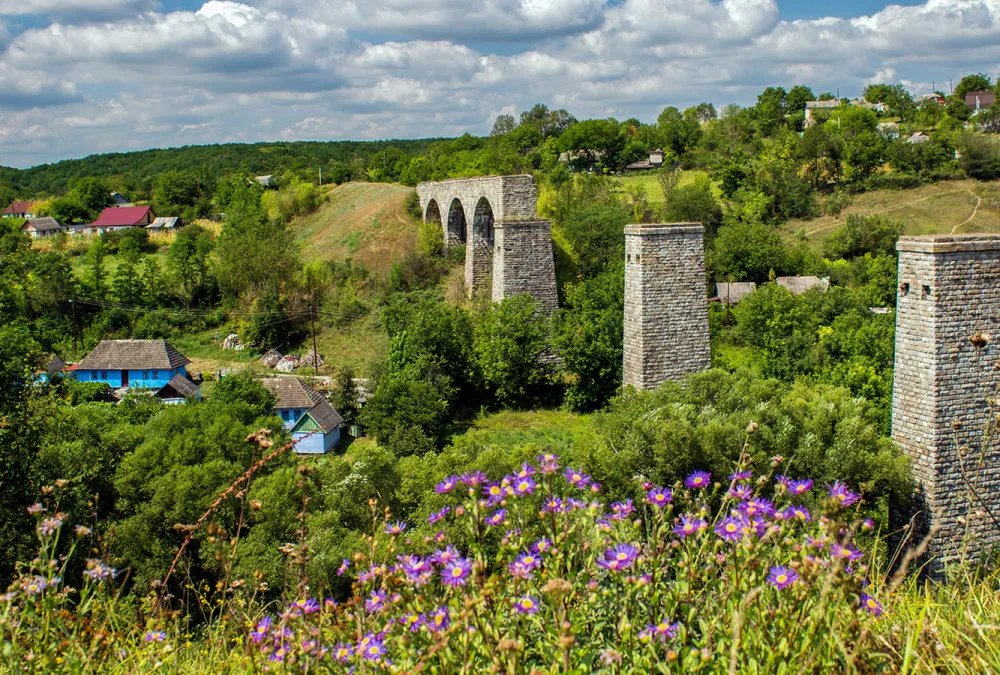
It is clear that in the turmoil that began in the autumn of 1917 there was no time for construction. Later the Soviet government abandoned the project: the level of trade with the “bourgeois West” fell sharply, and the railways existing at the time fully met the needs of the USSR. The structures of the never-finished bridge remained a silent monument to an ambitious project.
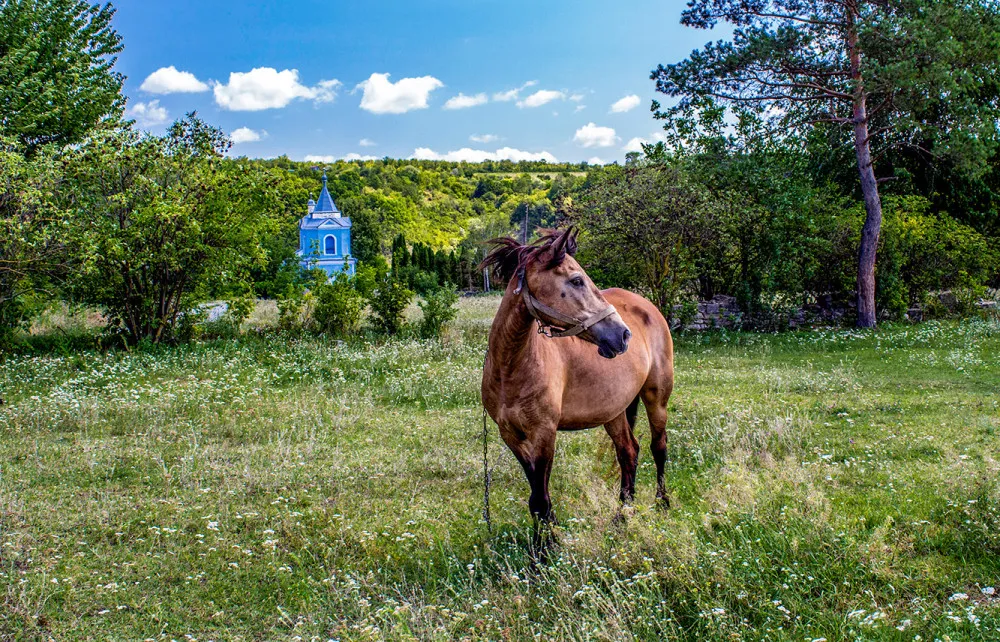
At the castle site in Panivtsi
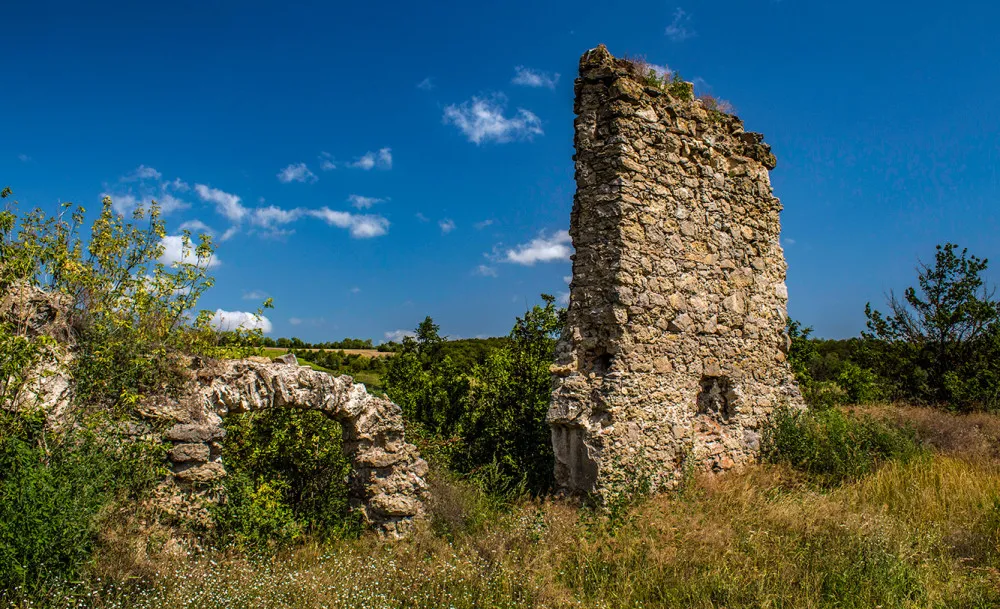
The castle in Panivtsi
Text and photos: Dmytro Poliukhovych


