Chernihiv. Church of Sts. Michael and Theodore
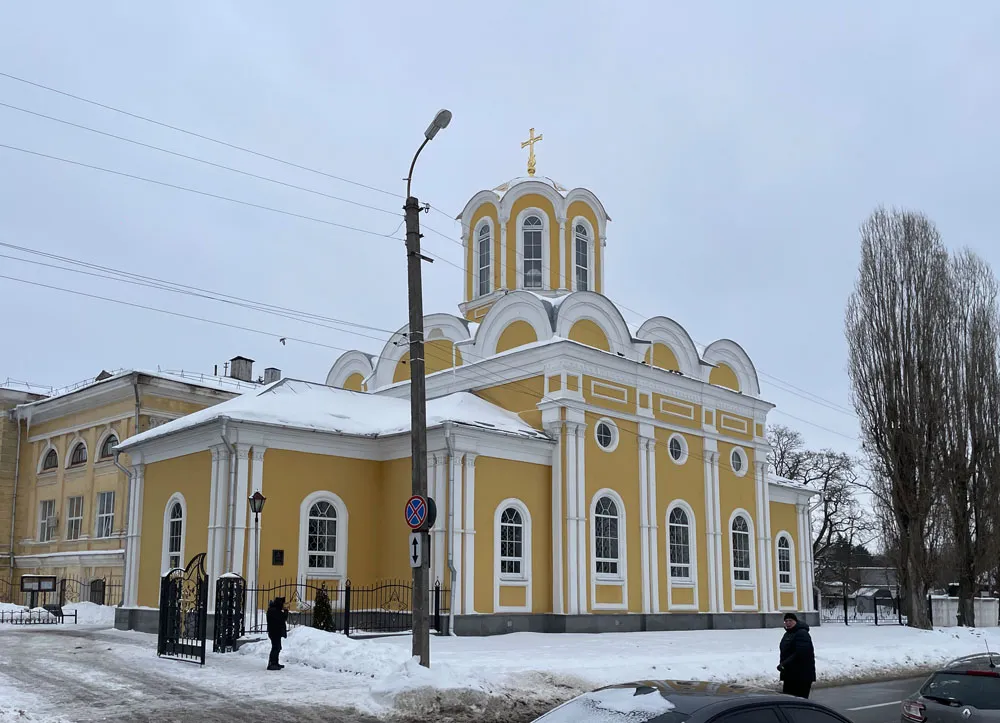
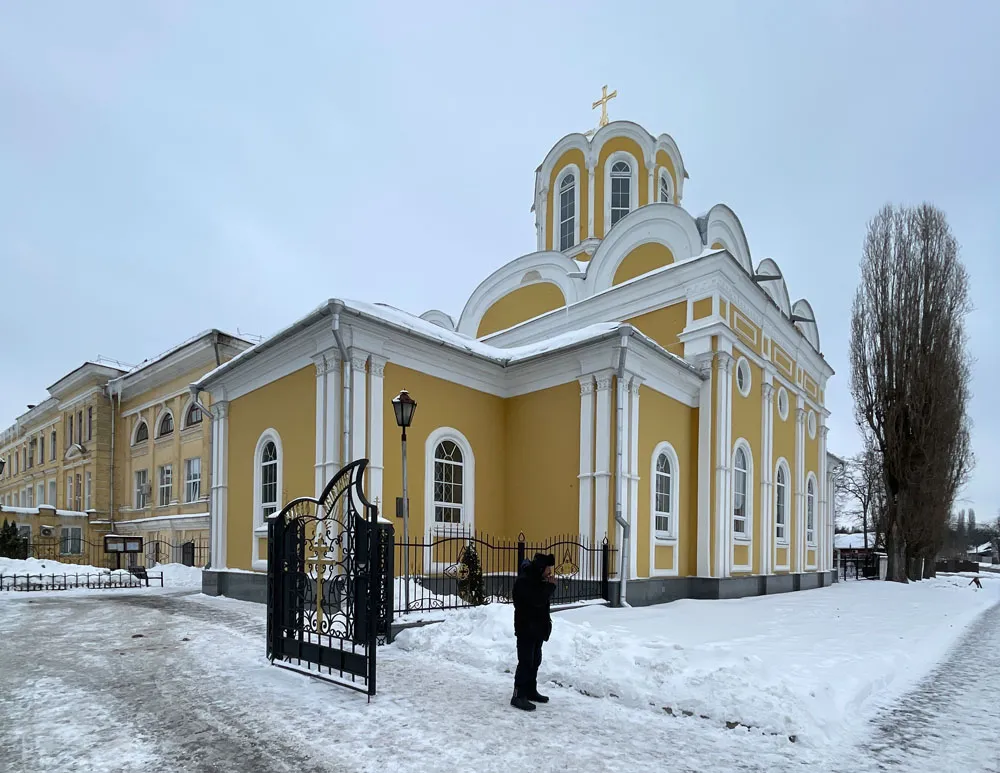
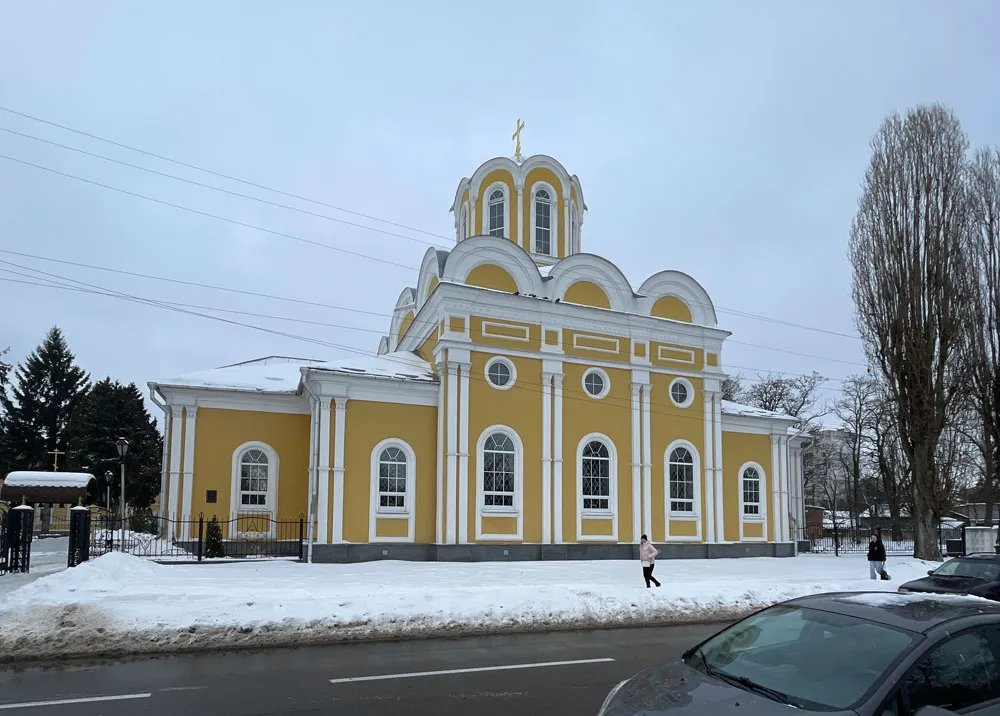
The Church of the Holy Martyrs Prince Michael and Boyar Theodore in Chernihiv is the only church in Ukraine consecrated in honour of these historical figures, and it stands on the bank of the Stryzhen River.
The history of this shrine goes back to the early 18th century, when its construction began with the support of the Chernihiv colonel Pavlo Polubotok on the grounds of his estate. Construction was completed around 1801, and the church was consecrated in honour of the Chernihiv prince Michael Vsevolodovych and his faithful boyar Theodore, who in 1246 refused to perform pagan rites in the Golden Horde and suffered martyrdom for their faith. During the 19th century the shrine underwent several reconstructions: at first a small seminary operated next to it, but later the church became part of a substantial theological seminary complex, acquiring new annexes, including a bell tower and teaching buildings. In Soviet times the church was closed and its premises were used for storage and as a gym; only in the 1990s was it returned to believers and fully restored.
Architecturally, the Church of Sts. Michael and Theodore is a vivid and unique example of the combination of Baroque traditions with elements of Classicism and Old Rus architecture. The building is a three-part, single-domed church whose façade is decorated with refined pilaster ornament, profiled cornices and semicircular zakomaras, which give the structure a particular plasticity. The walls are painted a warm ochre-yellow with white details, creating a solemn yet cosy appearance. A light drum with elongated window openings supports the dome, adding slenderness and loftiness to the whole structure. Today this monument is an architectural adornment and an important part of the “Ancient Chernihiv” Historical and Architectural Reserve.
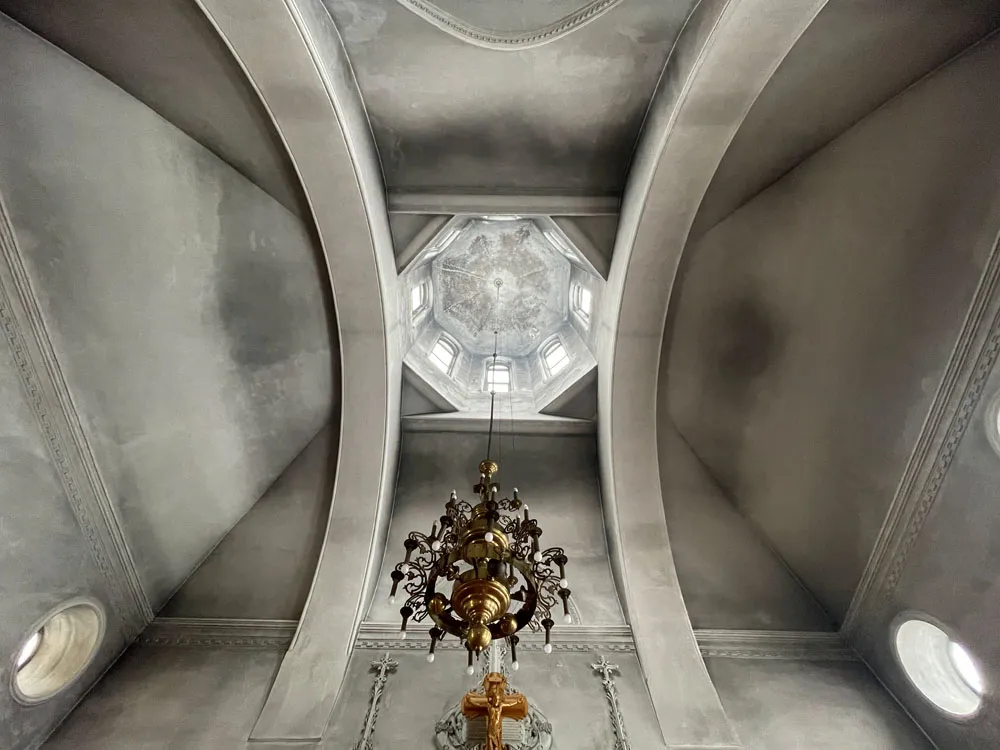
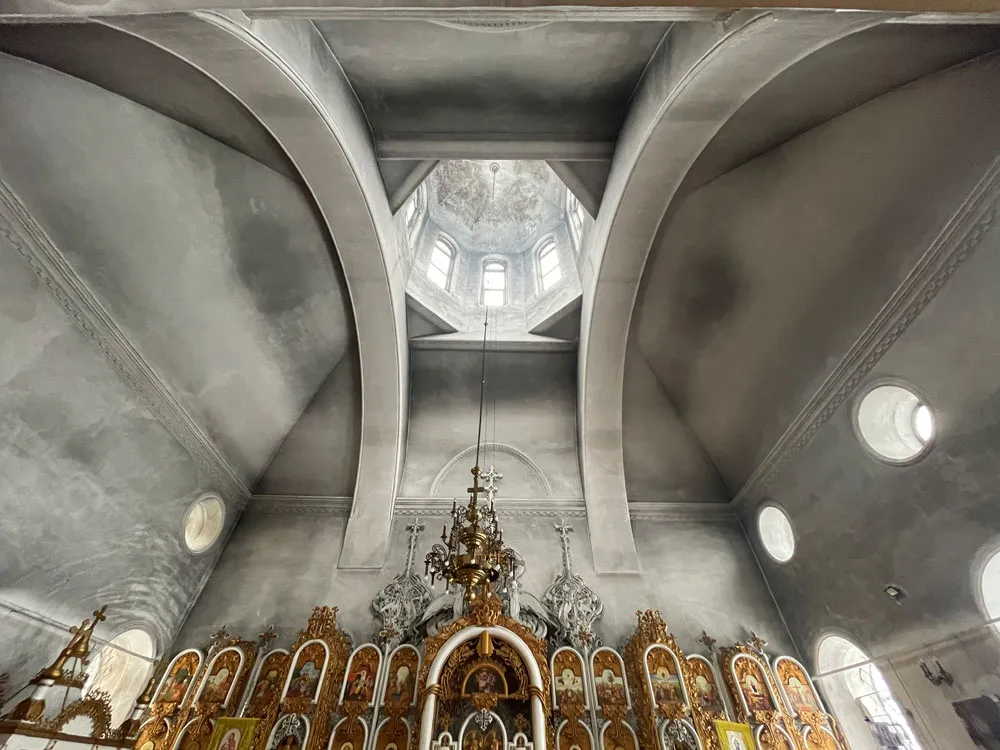
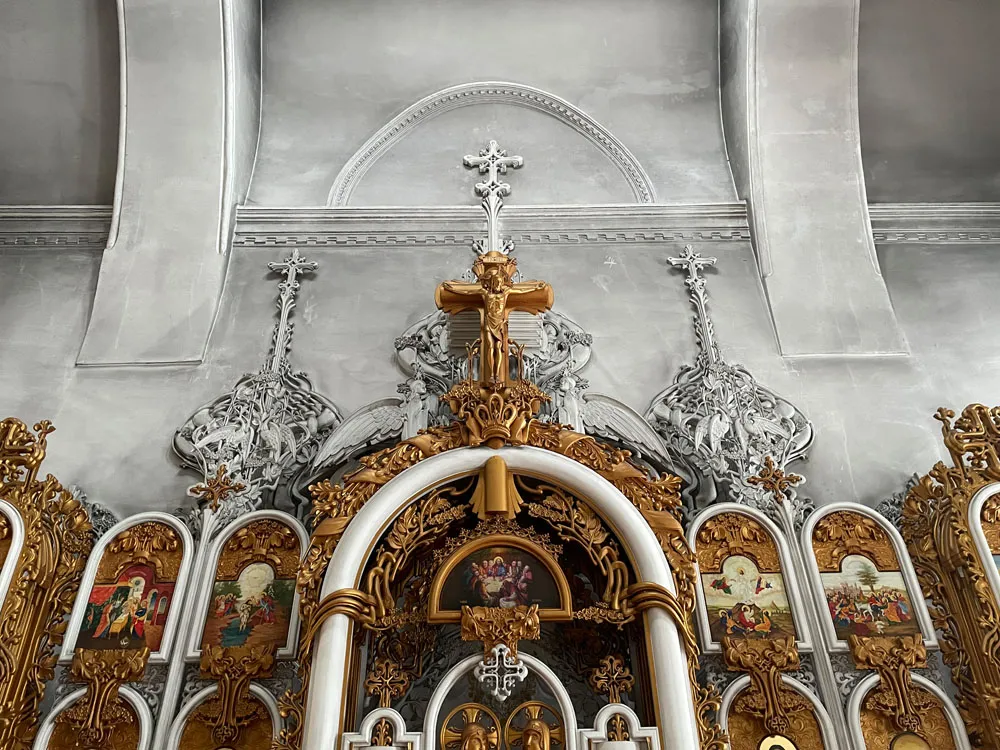
The dark (dark grey or graphite) colour of the walls inside the Church of Sts. Michael and Theodore is not a historical canonical requirement but a deliberate modern artistic and interior decision made during the restoration and furnishing of the church in the 1990s and 2000s. The main reason for this choice is to create an expressive contrast for the principal adornment of the interior — the unique carved lime-wood iconostasis made by the Nizhyn master Oleksandr Koshel in a warm golden-wood palette with elements of Ukrainian Baroque. The deep dark-grey background of the walls favourably emphasizes the volume of the carving and the gilding, making them visually richer. Moreover, the authentic 19th-century interior paintings were completely destroyed in the Soviet period, when the church was used as a gym and for storage, so the modern colour of the walls became an aesthetic solution after the major restoration of the premises. Finally, such a palette, combined with the natural light entering through the windows of the high dome drum, creates a special intimate, prayerful atmosphere, drawing the worshippers’ attention to the icons and the glow of candles.
Text and photos by Roman Malenkov