

Vodiane

· 3 min read
In the village of Vodiane in the Zmiiv district stands the Convent of Sts Boris and Hlib. It is not one of the old destroyed and restored monasteries but one of the newly created ones, founded in modern times. The convent was founded in 1997, preceded by the restoration of a neglected church of the late 19th and early 20th centuries.
The existing Church of Sts Boris and Hlib on the convent grounds began to be built as early as the beginning of the 1880s, on the site of a wooden predecessor of 1819, as stated on the convent’s website (Wikipedia says 1700; perhaps this refers to an even older church, since Vodiane was founded in 1640, or the church was moved to a new place).
The church was built with funds from the landowner Serafyma Mykolaivna Kliucharova and parishioners. Land for the construction was provided by the landowner H. Kochubei and by Fedir Oleksandrovych Zelenohorskyi, a professor of the Kharkiv Imperial University (incidentally, a publisher and researcher of the works of Hryhorii Skovoroda), who had in Vodiane what would now be called a dacha and a plot of land. The church is believed to have been built to a design by the Kharkiv diocesan architect Volodymyr Khrystianovych Nemkin, the author of many sacred buildings in Kharkiv. For the realization of this project a small brick factory was even built nearby. The murals were painted by the local self-taught artist Fedir Ruban, who was in Serafyma Mykolaivna’s service. The church itself was built for a very long time, about 25 years; the artist even died during that time without managing to finish his work. Finally, in 1905, the church was completed and consecrated. A year after the church was completed, in 1906, its main founders, Kliucharova and Zelenohorskyi, passed away within a month of each other and were buried beside the church walls.
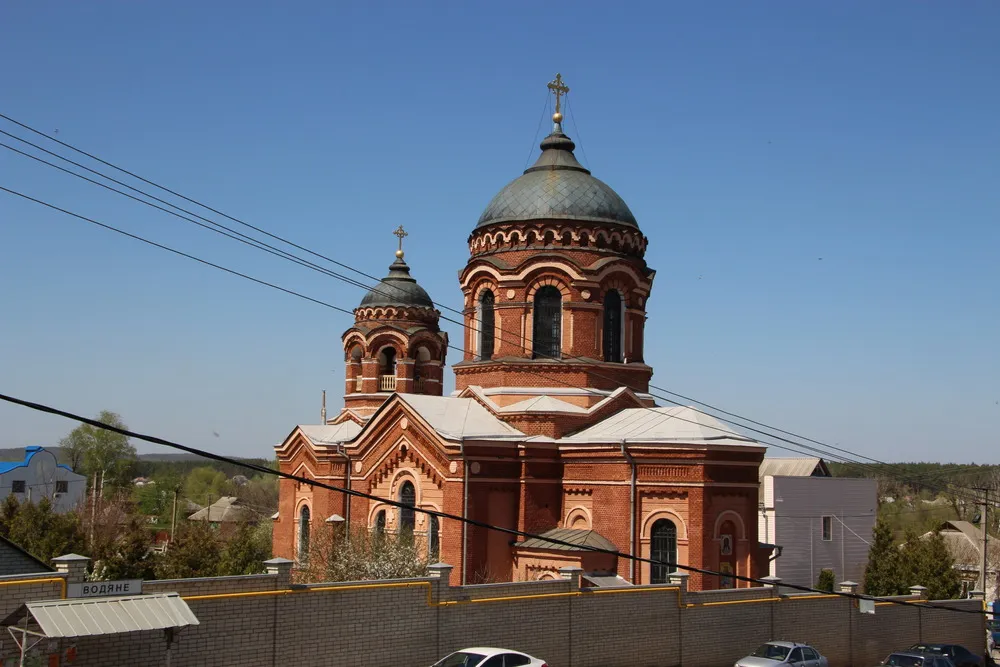
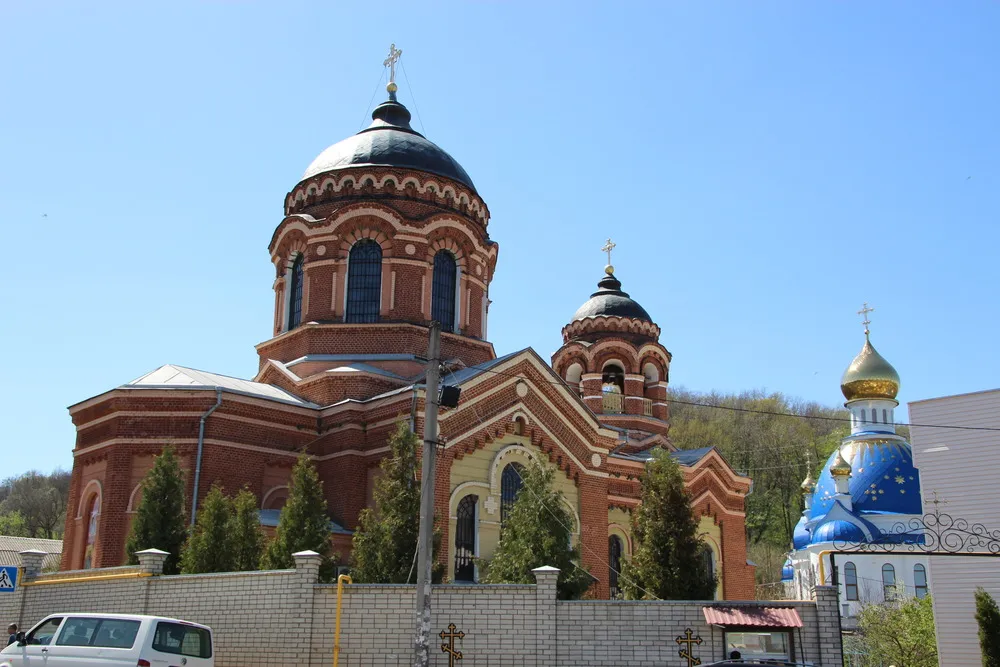
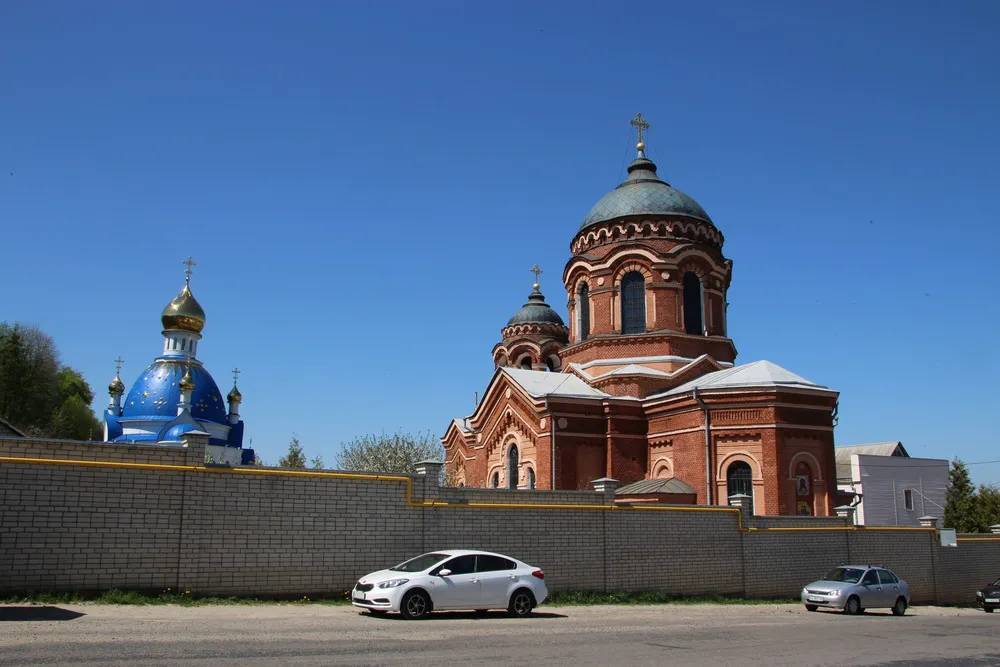
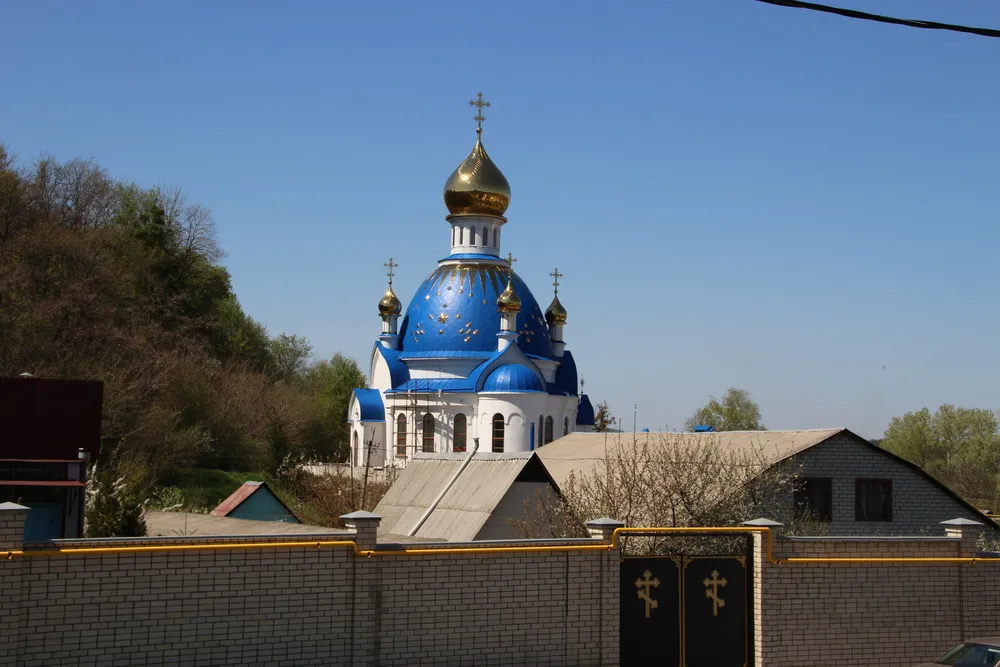
Services were held until 1932. That year the church was closed, as was the parish school that stood in what is now the convent’s refectory; all five bells were taken down, four of them were carried off somewhere, and the fifth, the largest, fell and broke; the founders’ gravestones were thrown onto a rubbish dump (during the church’s restoration they were found and returned to their place).
During the war, in 1942-1943, services were resumed, but then the church was closed again. After that the shrine stood in desolation for a long time, was used as a warehouse for mineral fertilizers and building materials, and in the mid-1980s Party officials even gave an order to blow up the church, which fortunately was somehow not carried out.
The first attempts to restore and revive the church were made as early as 1991, but only in 1995, with the appointment of Father Sevastian as abbot, did real restoration work begin, completed a year later. A monastic building began to be built at the same time, and on 15 April 1997 the Convent of Sts Boris and Hlib was officially approved.
The church is single-domed, cruciform, using elements of the Byzantine style, and is connected to a two-tier bell tower. Murals of the early 20th century are preserved in the interior. It houses the Miracle-working Icon of the Saviour.
Text by Ihor Dorozhko, photos by Maksym Nazarenko.


