

Church of St. Roch: the mysterious ruins of a church in the middle of a ghost town
Among the picturesque Tovtry hills, in the valley of the Ushytsia River in Dunaivtsi district, Khmelnytskyi Oblast, lies Sokilets, a ghost town with a deep history. It is one of the oldest settlements in Podillia: known as far back as the days of the Principality of Galicia, it experienced a true heyday in the 16th–18th centuries.
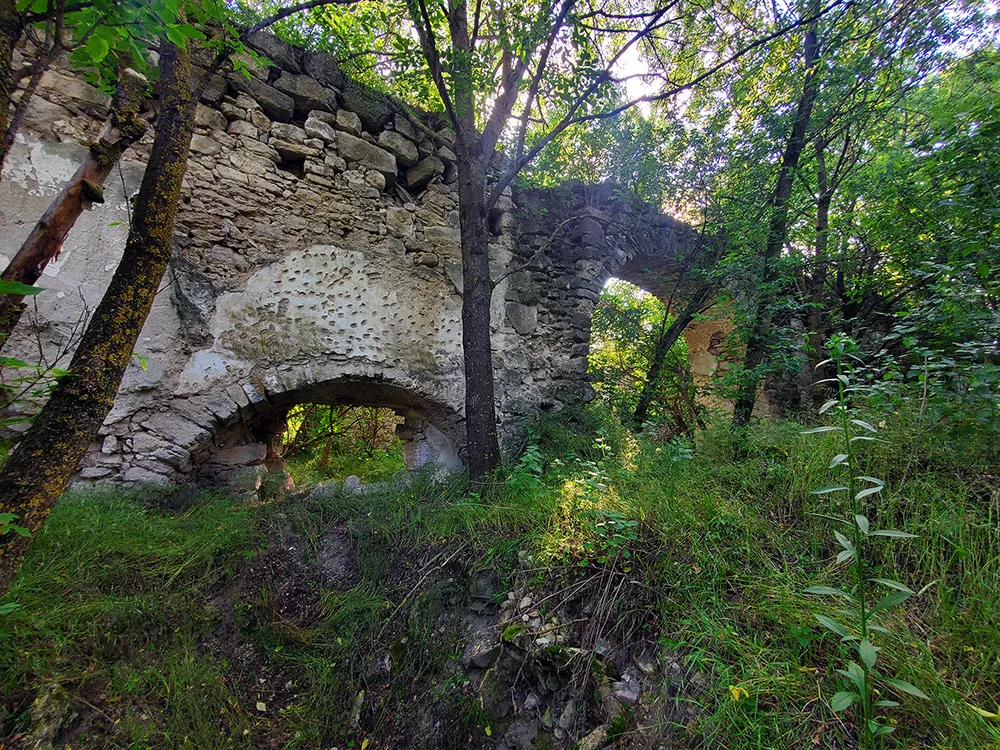
Ruins of the Church of St. Roch
Even at the beginning of the 20th century Sokilets retained its medieval-Renaissance structure: remnants of fortifications, a town hall, a market square. But after the construction of the Novodnistrovsk hydroelectric power plant in the 1980s, the settlement was moved from the left bank to the canyon on the right. The builders, fearing flooding, left the town to its fate; the water level turned out to be lower, but historic Sokilets never came back to life. “New” Sokilets remained only a shadow of the former one, with the name as the sole link.
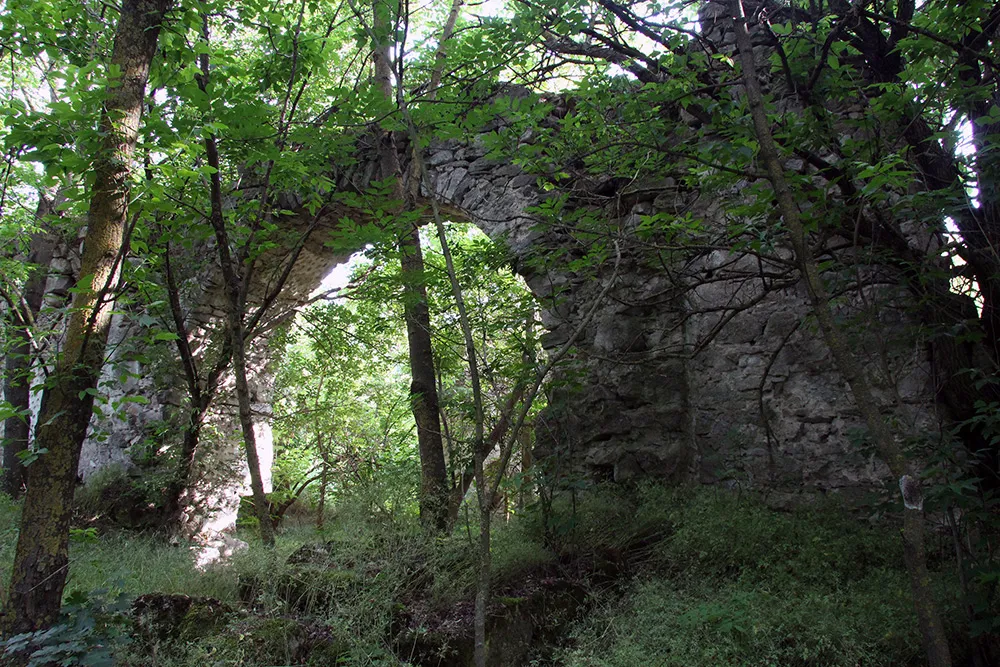
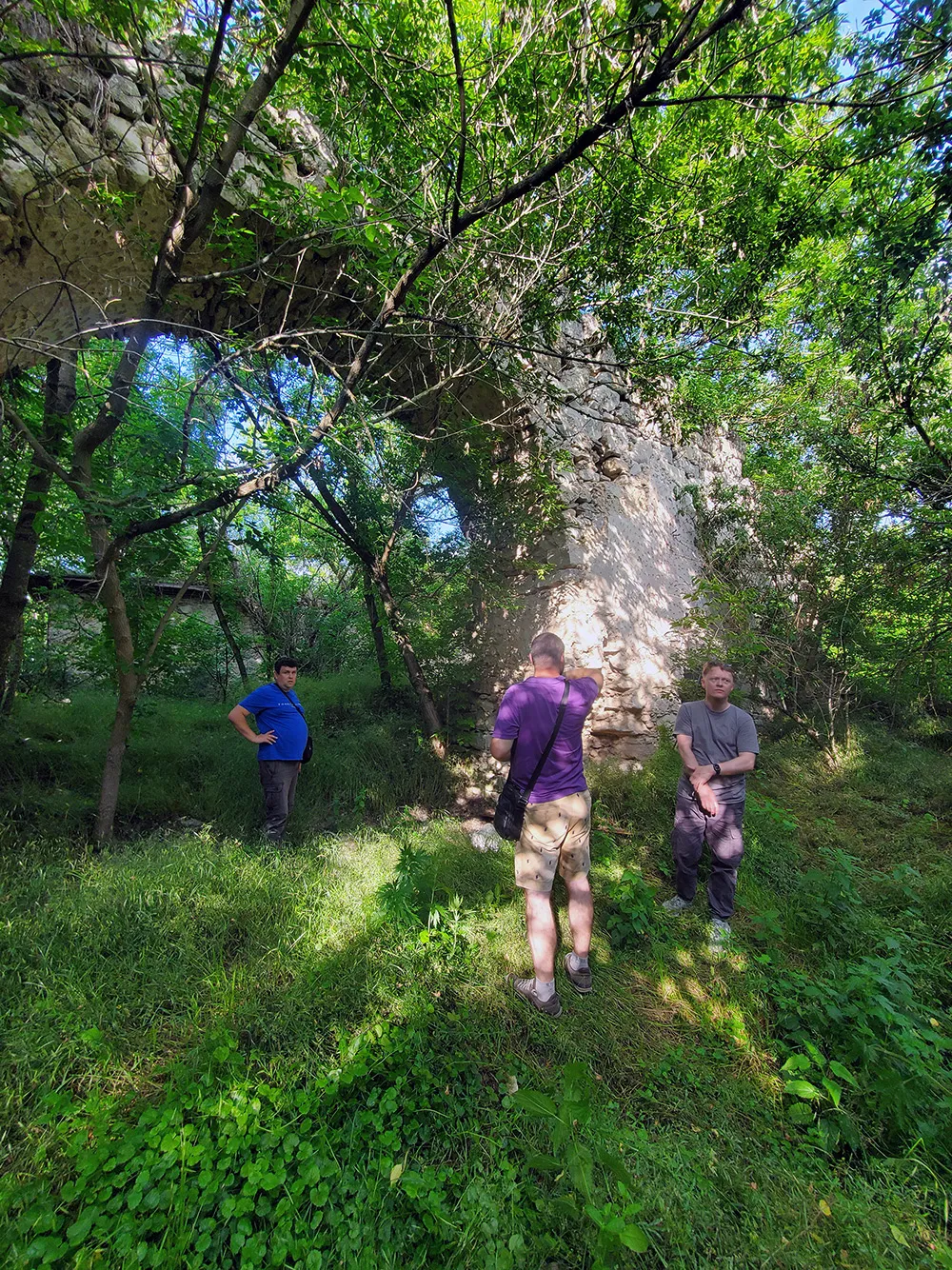
The most poignant monument of this “phantom town” is the ruins of the Church of St. Roch, part of a former Dominican monastery. Because of its remoteness it is little known to the general public, but that is exactly why the expedition of the NGO “Ukraine Incognita” set out for it with the support of Toyota Ukraine.
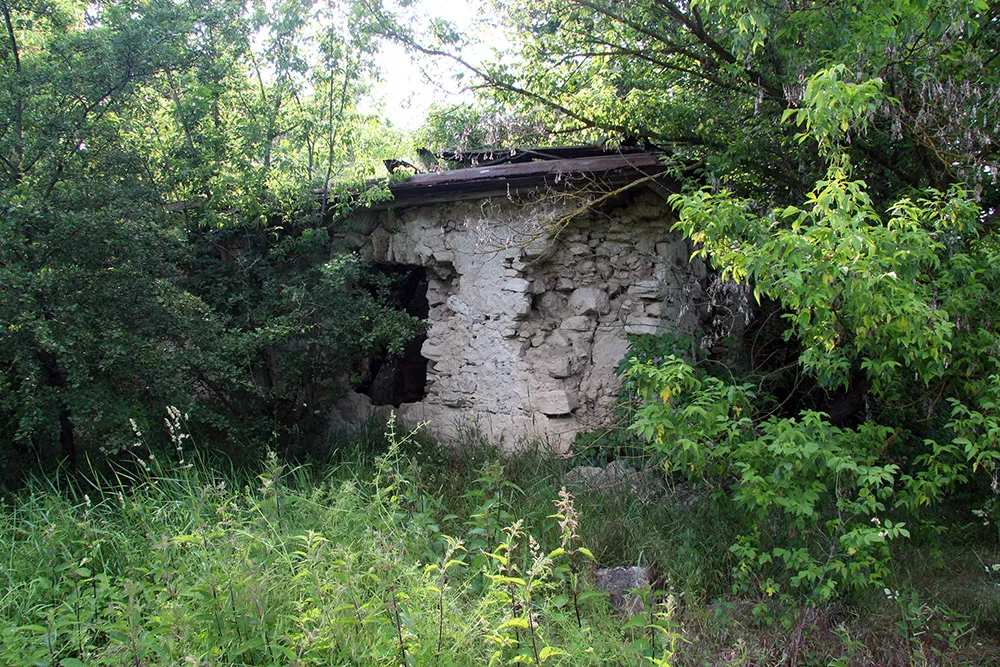
Ruins of the ghost town
This time the expedition’s goal was the lands of the “Minkivtsi state”, a unique phenomenon founded by the nobleman Ignacy Scibor-Marchocki (1749–1827). It was impossible to skip such a highlight.
History of the monastery
According to researchers, the Dominican monastery appeared in Sokilets around the 1660s. It was originally wooden, and in 1804, thanks to donations from parishioners, construction of a masonry church began. It was completed in 1821. However, as early as 1832, after the November Uprising (1830–1831) and repressions against the Roman Catholic Church, the monastery was closed, while the church was left to operate until the early 20th century.
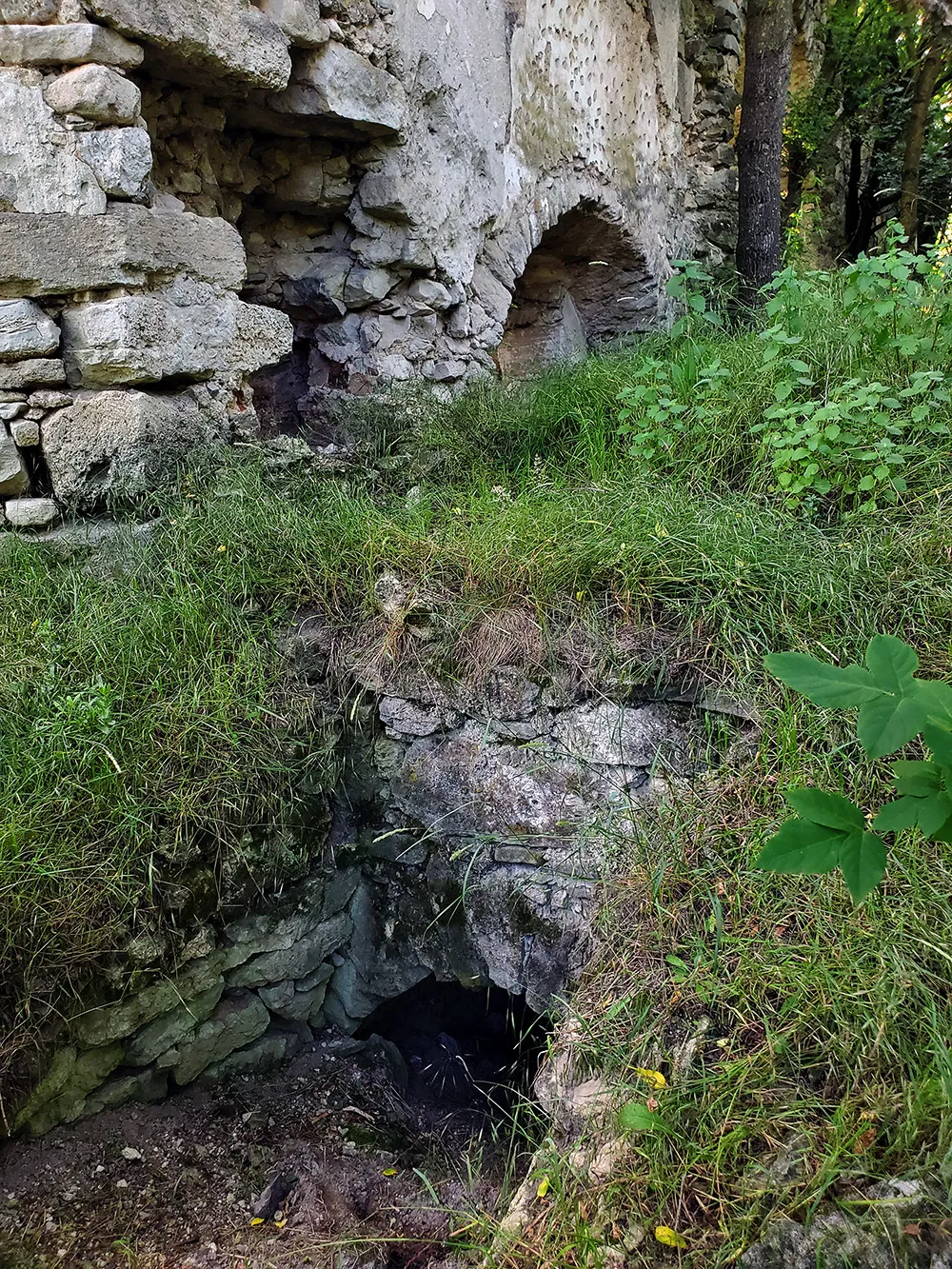
Entrance to the crypt
Notably, even before 1636 a masonry church was built here at the expense of Rewera Potocki. It was placed on a high hill above the Ushytsia, which gave it monumentality: the church looked majestic despite its modest size.
A dedication to St. Roch is extremely rare in Ukraine. This saint, although not canonized, has been mentioned in the Roman Martyrology since the time of Pope Gregory XIV. As a patron against plague, he was particularly venerated by the Dominicans.
Architecture and oblivion
Under Ottoman rule the church fell into decline, and there are legends that a mosque functioned here, although there is no documentary confirmation. Only in 1723 was the shrine revived by Voivode Stefan Humiecki of Rychty, whose portraits once adorned the church.
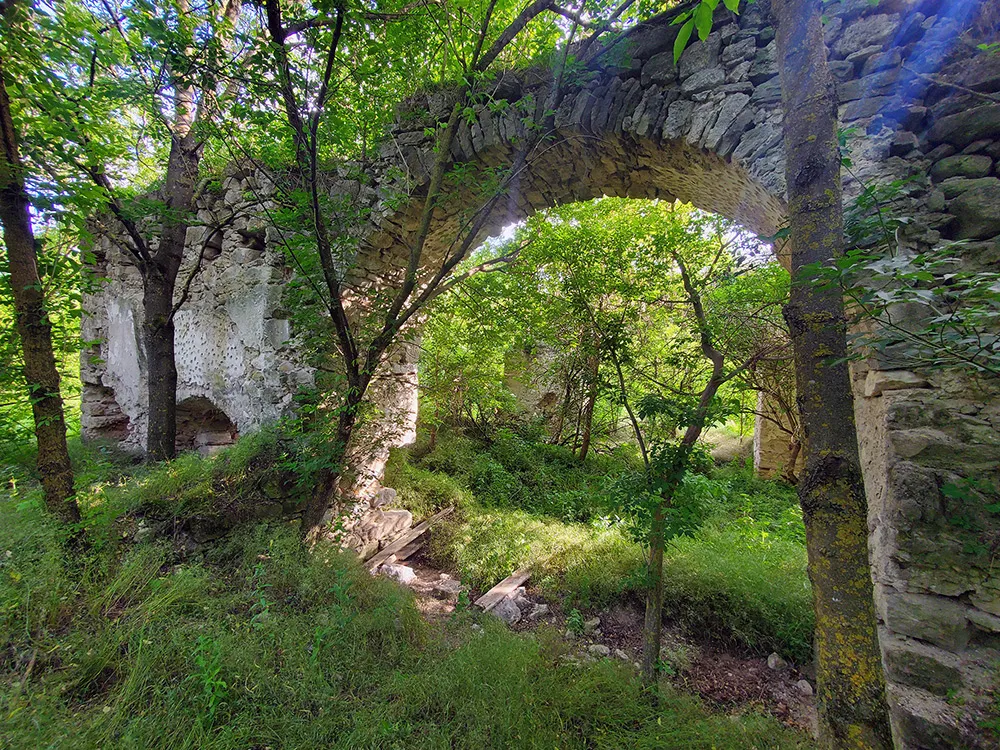
The church appears cruciform, but it had only one nave, with chapels attached on both sides. The central part of the façade was crowned by a bell tower, probably older than the church itself, with signs of defensive architecture. On the roof stood a ridge turret with an iron banner.
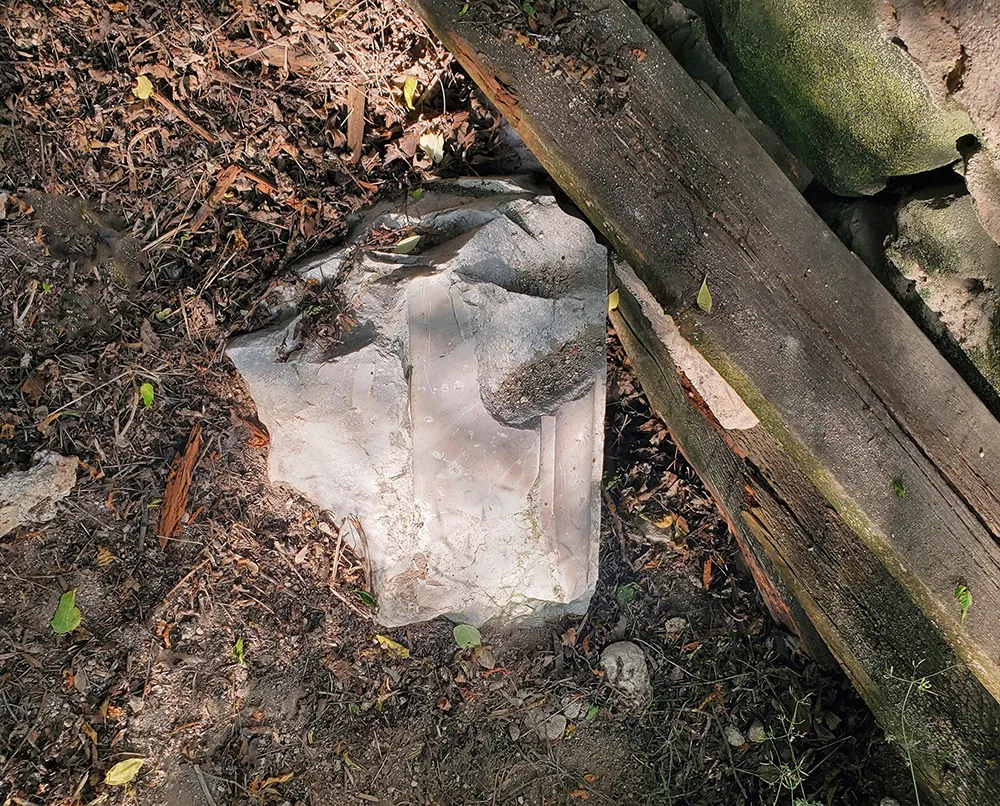
A fragment of carved decoration
The interior was also distinctive: a flat wooden ceiling, not vaulted as usual, and a sandstone floor laid in a chessboard pattern. The Gothic features of the architecture emphasized the link with the Counter-Reformation tradition and in the 19th century became a confessional hallmark of Polish sacred architecture.
The church had six altars, which is unusual for its size. In the 1920s the Bolsheviks closed the church. In the late 1930s its sheet-metal roofing was torn off and used to roof the district party committee building in Mynkivtsi. The icons and figures of saints disappeared, probably burned during atheist campaigns.
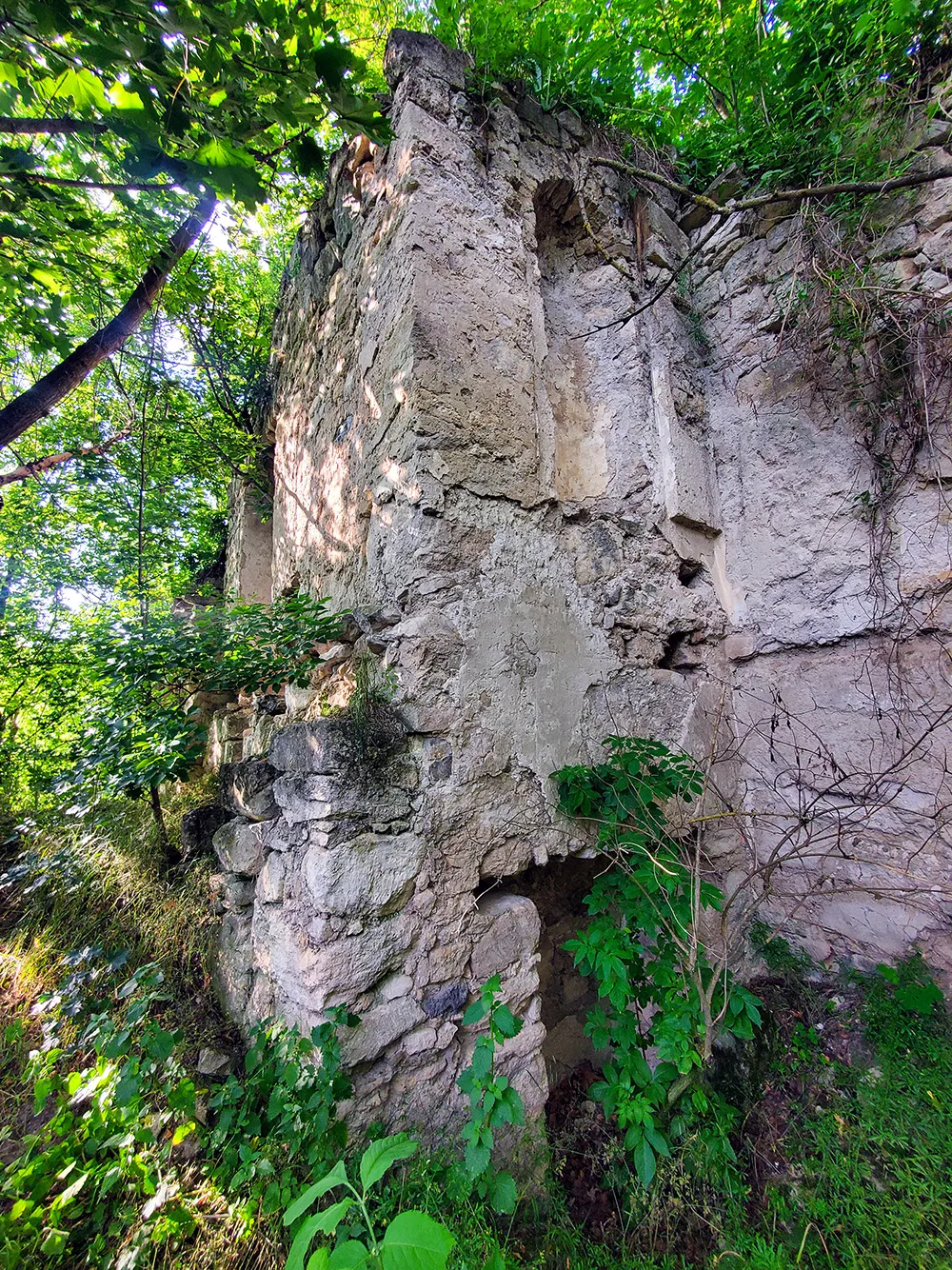
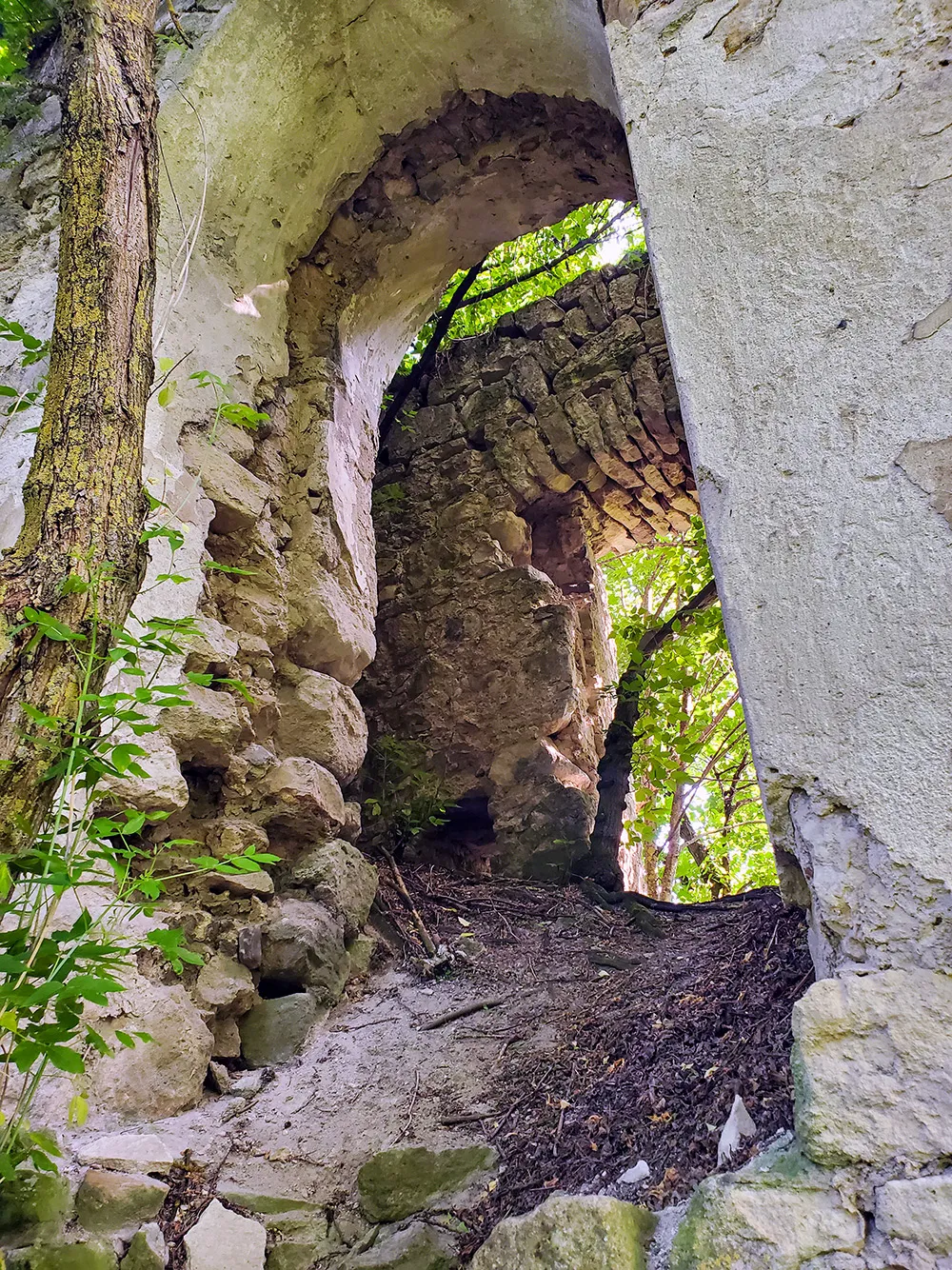
In the post-war years the shrine was turned into a calf shed. Luckily, not a pigsty… A few decades ago an image of the Archangel Michael could still be seen on one of the walls; it has not survived.
Atmosphere and legends
Abandoned churches have their own special, poignant atmosphere. And a church among thickets in an abandoned town is like a frame from a film about lost civilizations in the jungles of the Amazon… Only this is in Podillia.
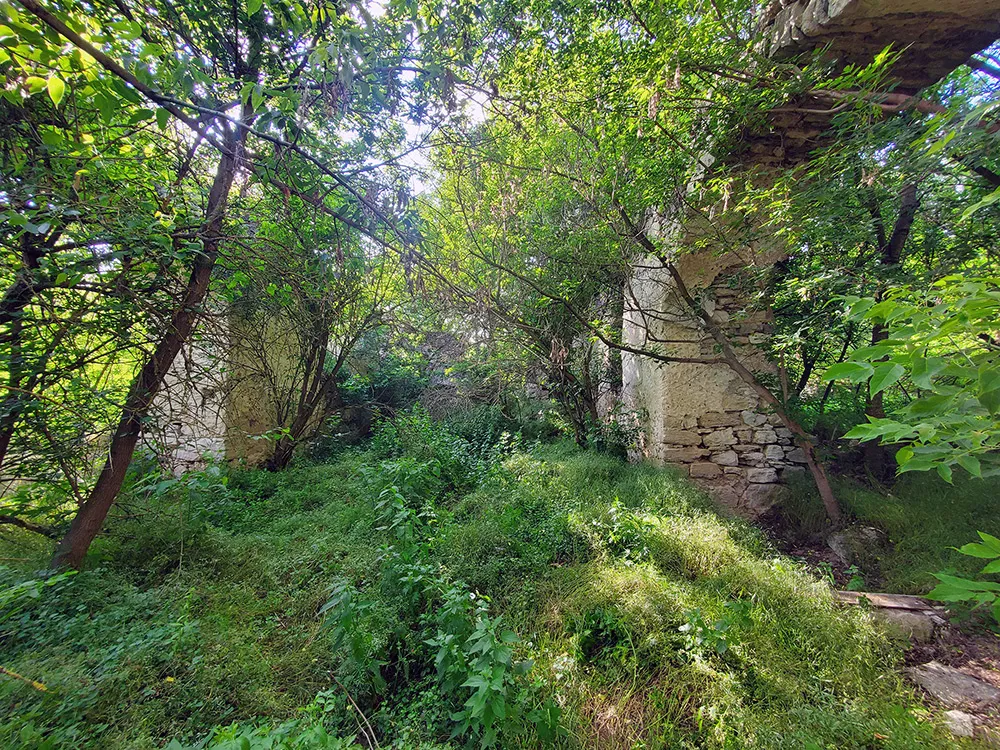
By the way, local residents tell of ghosts: in the dawn twilight on the outskirts of Sokilets a column of First World War soldiers sometimes emerges from the fog, walking in silence, from nowhere and to nowhere…
Among the thickets one can make out remains of houses, stone fences and paving stones, material witnesses of the vanished town. The expedition members even managed to find fragments of a defensive wall; a photo of it can be taken only out of leaf season.
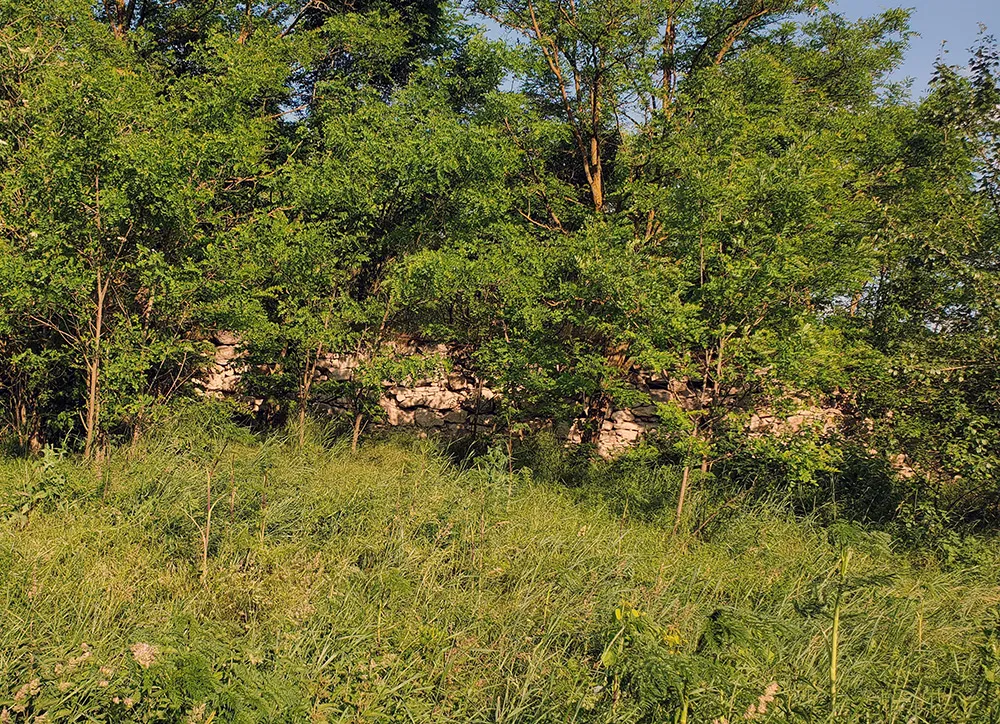
Sokilets has long been famous for its fortifications. In 1395 it withstood a siege by the army of the Grand Duke of Lithuania Vytautas, perhaps with wooden fortifications, but the spirit of resistance can still be felt here.
They say the remains of a bastion still survive somewhere, but they did not reveal themselves to the expedition. Even so, the church alone is worth a visit.
Text: Dmytro Poliukhovych
Photos: Roman Malenkov


