

Sambir

· 21 min read
Today Sambir has about 35 thousand inhabitants. It is a district centre in the west of Lviv Oblast.
The history of the town reaches far into the past. Archaeological research shows that settlements existed in this area as early as prehistoric times. Excavations in the town uncovered Roman coins of the 4th century, bronze axes, a sickle and bracelets made approximately in the 9th–8th centuries BC.
Sambir arose on the site of the Old Rus settlement of Pohonych, which is thought to have occupied the area along today’s Taras Shevchenko Street (formerly V. Tereshkova Street, earlier Peremyshl Street) and the northern bank of the Mlynivka River. It is assumed that not far from this settlement, on the hill where the Church of the Nativity of the Mother of God and the former Bernardine church now stand, there was an Old Rus fortified hillfort, one of many in the Carpathian foothills. It is not known when Pohonych arose. In 1929, bronze objects (axes, a sickle, a bracelet and others) dating from the 9th–8th centuries BC were found on the territory of the brickworks on Peremyshl Street. 18 km south-west of Pohonych lay the ancient town of Sambir (today’s Staryi Sambir), the administrative centre of the Sambir volost, which was destroyed by the Tatar-Mongols in 1241. The surviving residents of this town moved to Pohonych, which in time grew, and was called “Novyi Sambir” (New Sambir), while the town destroyed by the Tatar-Mongols became “Staryi Sambir” (Old Sambir). From 1390 the name “Sambir” became established for the old Pohonych. But in documents until 1450 the town is called both Sambir, and Novyi Sambir, and, in the old way, Pohonych. Both towns also had another name: Old Town and New Town.
Sambir lay at the crossroads of important trade routes leading east and west, to Lviv, Drohobych, Przemyśl, Hungary and Poland, which largely determined the economic activity and material prosperity of the town in the Middle Ages.
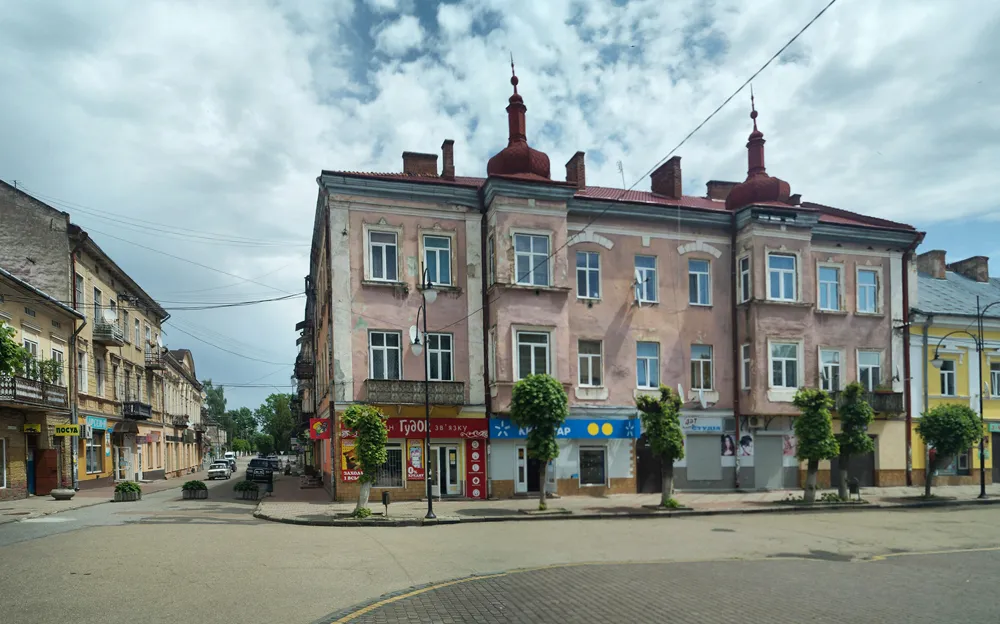
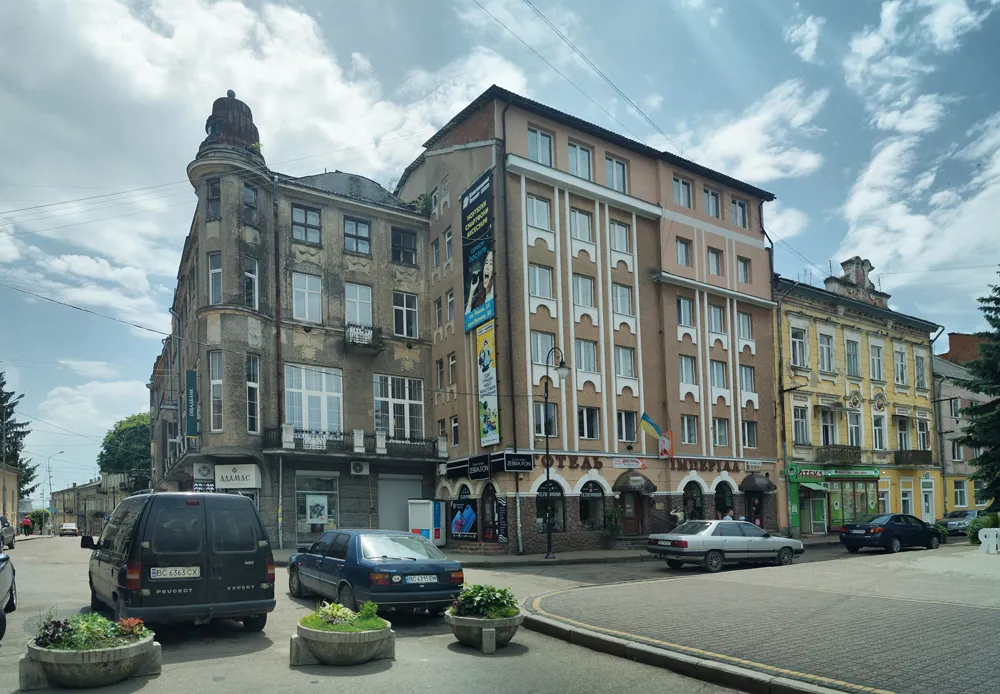
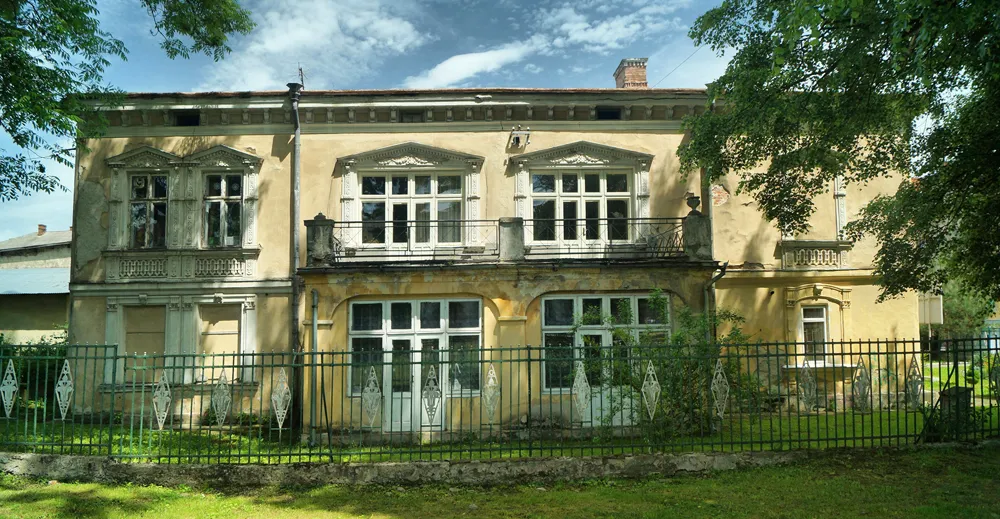
1241 is the year of the first chronicle mention of the town. That year the Horde laid waste the then town of Sambir (today’s Staryi Sambir), and the surviving inhabitants found refuge in the well-fortified suburb of Pohonych, which was hidden in forest thickets on the bank of the Dniester. From 1390 Pohonych became Novyi Sambir, and the former Sambir became Staryi Sambir (or Old Town). Later Novyi Sambir became simply Sambir.
In 1349 Sambir, like all of Galicia, was conquered by Polish feudal lords headed by King Casimir III. These Old Rus lands finally passed to Poland only in 1387, after a brief period within the Kingdom of Hungary. Within the Polish state the former Sambir volost, which had been princely property, became one of the four districts of the Przemyśl Land of the Ruthenian Voivodeship and the private property of Polish kings and magnates.
Until 1349 the settlement was part of the Galicia-Volhynia state.
Content of the deed from the book “Akta grodzkie i ziemskie z czasów Rzeczypospolitej polskiej z Archiwum tak zwanego bernardyńskiego we Lwowie” on the sale of Novyi Sambir by Spytek to Henryk in 1390.
1349–1390: the settlement was the property of Polish kings.
In 1387 the magnate Spytek of Melsztyn became the owner of the Sambir region (the territory between Dobromyl and Stryi). He received this estate from the king as a gift for military service during the seizure of the Old Rus lands.
13 December 1390: Spytek sold the office of vogt in Novyi Sambir to Henryk of Łańcut for 80 hryvnias of Prague coins, allowing him to found the town under Magdeburg law. From that moment Germans and Jews began to settle in the town, and in the same year, next to the old town (on its eastern side), on a low open hill, they began to build a new town on the model of Western European Gothic towns.
After Spytek’s death in the battle with the Tatars on the Vorskla (12 September 1399), the Sambir region was held by Spytek’s widow Elżbieta.
In the 15th century Sambir was a castle-fortress.
1415: the Sambir region was returned to the possession of the Polish kings, who often pledged the town and its surroundings to various magnates for loans of money. Thus in 1419 to the nobleman Henryk Hinch of Rogów, in 1431 to the magnate Piotr Odrowąż.
1451: King Casimir IV Jagiellon stayed in the town.
Starosta Krzysztof Odrowąż-Szydłowiecki did most to strengthen the town. In 1530 he fortified the centre of Sambir with walls, ramparts and moats.
An important administrative centre of the town was the princely castle (on the site of today’s Castle Square). The wooden castle burned down during a Tatar attack in 1498 and was not rebuilt. In the middle of the 16th century a new masonry so-called royal castle was built “na Blichu” (now the city hospital stands there). From that time the so-called “hunting house” has survived, in which the hospital church of St. Panteleimon is now housed.
In 1498 the wooden town hall and all the surrounding houses burned down. At the beginning of the 16th century a new one-storey town hall with a low tower and a clock was built. This town hall also burned down, and in its place in the second half of the 17th century a masonry one was built with a 40-metre octagonal tower and a lantern. (See Sambir Town Hall.)
1542: the town received a privilege against admitting Jews.
The Odrowąż family owned the Sambir region until 1545, when Queen Bona Sforza (the second wife of King Sigismund I the Old) bought out all the estates from Stanisław Odrowąż.
1553: Queen Bona forbade Jews to trade in the market and allowed Ukrainians to build a church in the town centre. After some time a wooden Church of the Nativity of the Most Holy Mother of God was built, which served until 1738, when a masonry one was built in its place.
1568: Sambir had 127 houses.
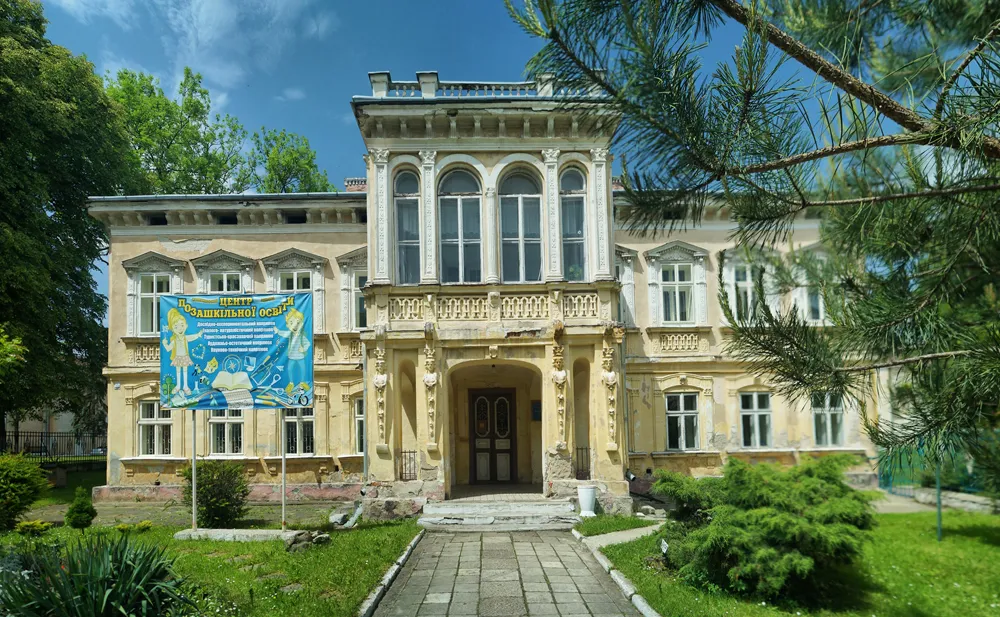
1568: on the site of an earlier wooden church (from 1370), burned by the Tatars in 1498, the present-day masonry Church of the Beheading of St. John the Baptist was opened. It also burned in 1637, but was rebuilt. After the last fire the church was restored in 1846, and in 1888 it was adorned with murals and new altars, an organ and a pulpit were installed.
On 25 August 1604 the united Ukrainian-Polish army set out from Sambir Castle, and on 20 June 1605 it captured Moscow.
At the end of the 16th and beginning of the 17th century the royal starosta of Sambir was the Polish magnate Jerzy Mniszech. He hosted in the Sambir royal castle Grigory Otrepiev, who posed as the son of the Muscovite tsar Ivan the Terrible, Dmitry, and helped this False Dmitry to take the Muscovite throne on 21 June 1605 (he held it until 17 May 1606). Jerzy Mniszech’s daughter Marina was False Dmitry’s wife.
The practice of pledging the town and its surroundings continued. Thus in 1676 King John III Sobieski pledged the town to Stanisław Skarczewski (on 12 September 1883 a cast-iron plaque with an inscription in memory of John III Sobieski was installed in the Church of the Beheading of St. John the Baptist).
1705: about two thirds of the inhabitants died of cholera. The cemeteries were completely full and it became necessary to bury the dead in parks. Only about 1,300 inhabitants remained in the town.
In 1732 Augustus II granted Jews the privilege of building houses on castle land and opening shops in them.
In 1771 an epidemic first broke out in the Jewish quarter of Blich and claimed 400 victims. From Blich it spread to the town, taking more than 3,000 lives.
1772–1918: Sambir was under Habsburg rule (from 1804 of the Austrian Empire, from 1867 of Austria-Hungary).
1773: creation of the Sambir Circle, an administrative unit of the Kingdom of Galicia and Lodomeria within the Habsburg Monarchy and the Austrian Empire.
On 13 May 1783 Joseph II issued a decree on the classification of the towns of Galicia and Lodomeria. Lviv (the capital, seat of the gubernial authority) was placed in the 1st class, the royal towns (which had a special imperial privilege) in the 2nd, and the municipal ones (all that had a magistrate) in the 3rd. On 26 July 1778 (or in 1788[11]) Emperor Joseph II granted Sambir by decree the title of “Free Royal City”. The status allowed better conditions for further development than those of municipal towns. The town housed the District Court and the “directorate of the department for the regulation of mountain streams of Galicia”.
1784: the defensive walls around the town were dismantled. At the end of the 18th century a Masonic lodge operated in the town.
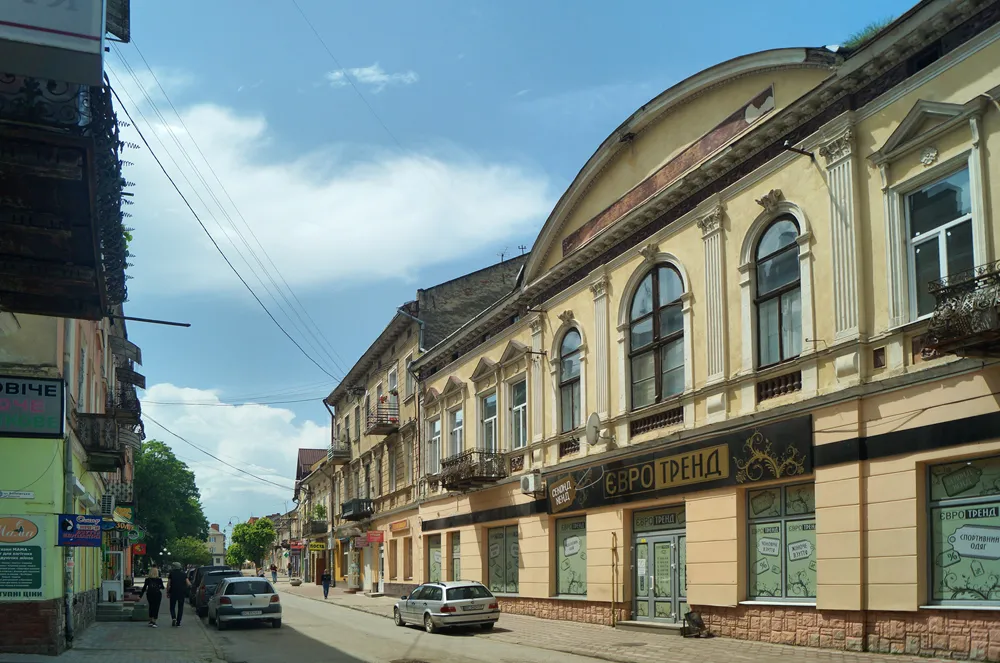
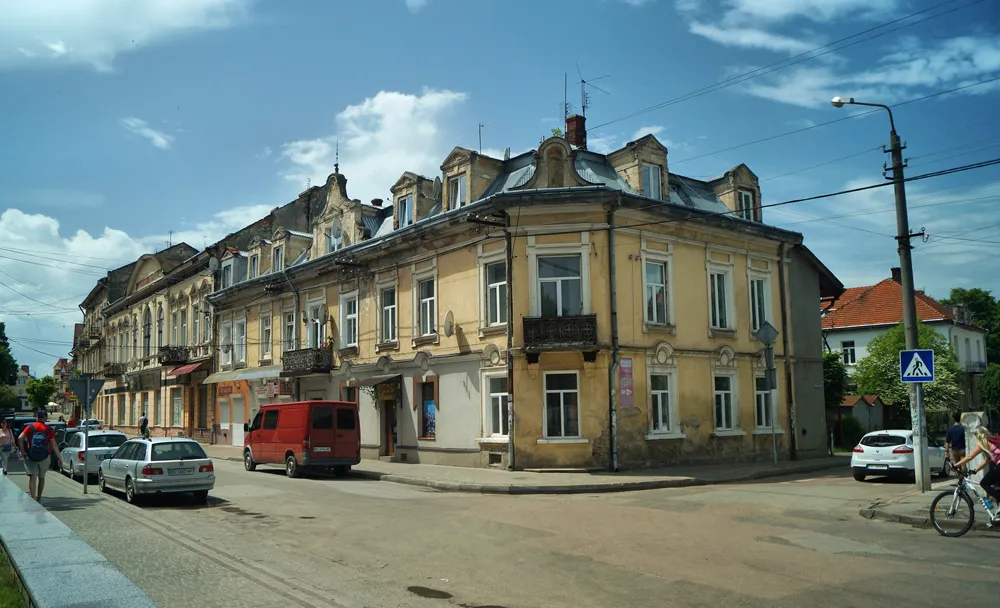
During the period of Austrian rule Sambir was adorned with new buildings. In 1890–1894 a large two-storey stone house was built for the gymnasium (now School No. 2 and the gymnasium), and in 1904 the building of the state men’s teachers’ seminary (in Soviet times a military unit was housed here; Sich Riflemen Street). In 1890 the post office building was completed.
1844: the reconstruction of the town hall was completed (entrance loggias were added, the place of entrance was changed and new facades were built). In 1877 the image of the Mother of God painted on canvas (1660, a gift of a missionary monk from 1760) on the town hall was replaced with one painted on tin (destroyed in Soviet times). In 1885 a clock with a chime and dials on 4 sides, purchased in Prague, was installed on the town hall tower. Above the side loggia at the entrance to the town hall the coat of arms of the town was placed, reconfirmed by a privilege of Emperor Joseph II of 26 June 1788 (a blue shield adorned with a golden crown, showing a deer running from right to left; the animal’s neck is pierced by an arrow).
In 1846 and 1847 Sambir went through famine. The population was forced to eat grass and leaves. Many inhabitants died.
1893: a Jewish elementary school was built on Shkilna Street (now a residential building, Kolessy Street).
1904: construction of the building of the Sokil sports society (now the People’s House) was completed.
1910: a 3-storey stone house of the Treasury Directorate was built (now a military hospital).
1898: a new cemetery was opened on Biska Street after the closure of the old one on Drohobych Street (now I. Franko Street). In 1908 a chapel was built at the new cemetery; in 1940 the Bolsheviks laid out a park of culture and recreation on the site of the old cemetery; in 1989 the graves of the prominent theatre figures Omelian Bachynskyi and his wife Teofiliia were found in the old cemetery.
In 1888 the town consisted of 4 suburbs: Miska (Town), Lviv, Peremyshl and Blich. The Town suburb had 3,042 inhabitants and 135 houses. The Lviv suburb had 1,986 inhabitants and 217 houses. The Peremyshl suburb had 1,729 inhabitants and 162 houses. “Blich” with the village of “Novyi Svit” formed a Jewish small town (shtetl), where 2,020 people lived and there were 148 houses.
1855–1858: construction of the Sambir–Drohobych highway via Lishnia.
December 1872: the railway connections Sambir–Boryslav and Stryi–Sambir–Khyriv–Przemyśl were opened.
In 1903 the construction of the Lviv–Sambir railway section was completed and put into operation, and in 1905 the Sambir–Syanky section. A railway station building was also built.
At the end of the 19th and beginning of the 20th century the Polish-language “Gazeta Samborska” was published.
During the First World War, from 17 September 1914 to 15 May 1915, the town was under occupation by Russian troops, who did it great damage. The library of the Prosvita society was destroyed, and a stable for officers’ horses was set up in the society’s building. The equipment of the laboratories, classrooms and offices of the teachers’ seminary was taken to Russia; local Ukrainian figures Danylo Stakhura, Teodor Bilenkyi and others were taken there too.
On 10 April 1915 the Russian emperor Nicholas II visited Sambir during a trip across the occupied territories of Galicia.
Memorial sign to the Ukrainians deported from Lemkivshchyna, Kholmshchyna, Nadsiannia and Pidliashshia
West Ukrainian People’s Republic
After the collapse of the Austro-Hungarian monarchy, on 1 November 1918 the authority of the West Ukrainian People’s Republic (ZUNR) was established in Sambir. The well-known writer Andrii Chaikovskyi was appointed state district commissioner of the ZUNR for the Sambir region (the Sambir district of the ZUNR).
On 5 November the authority of the Ukrainian state, the ZUNR, was established in the Sambir district.
On the evening of 16 May 1919 the town was captured by a division of the Polish army under the command of General Franciszek Aleksandrowicz.
In 1939 the town was annexed by the USSR. After the start of the German-Soviet war, from 29 June 1941 to 7 August 1944, Sambir was occupied by the Germans.
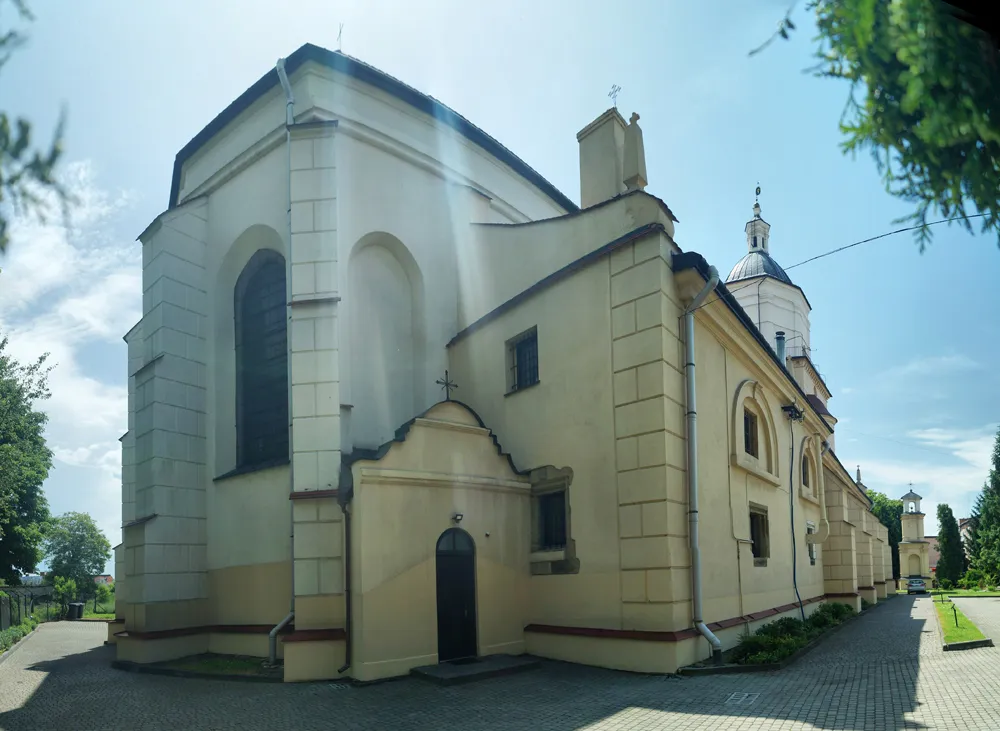
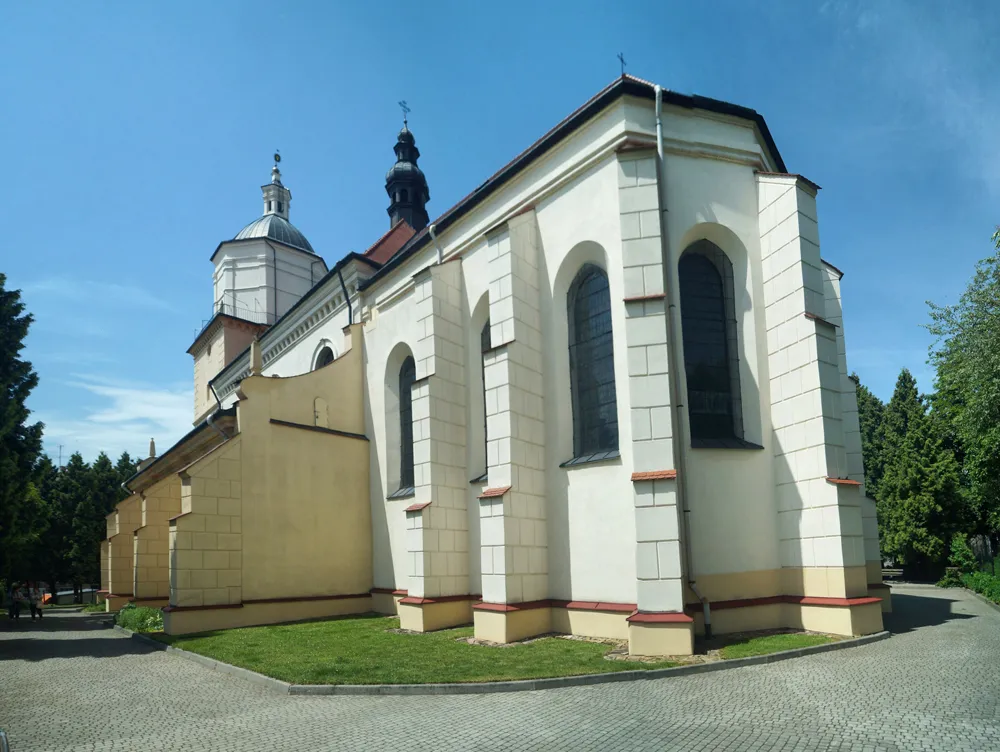
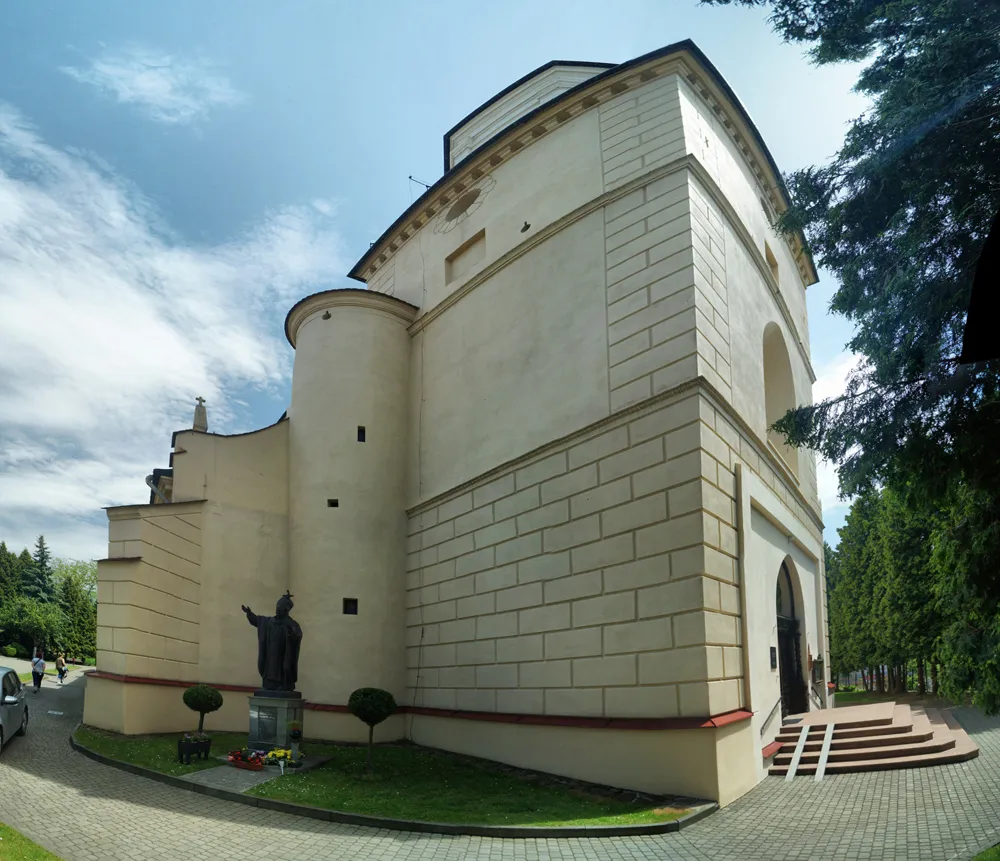
Church of St. John the Baptist
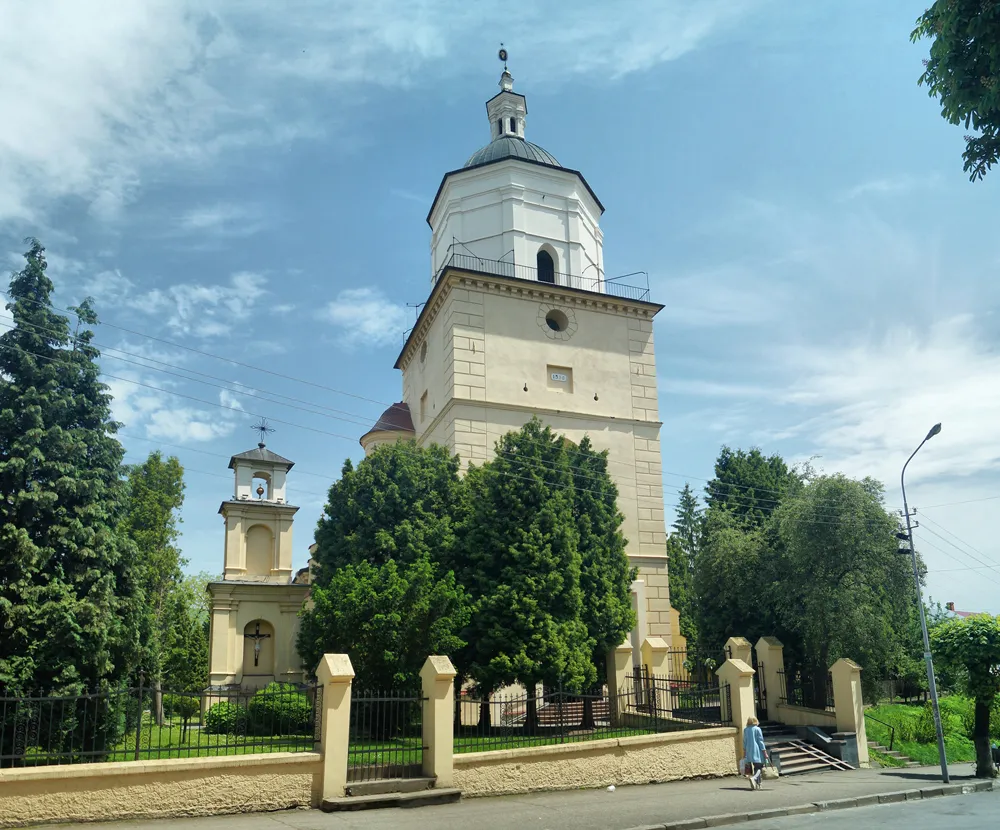
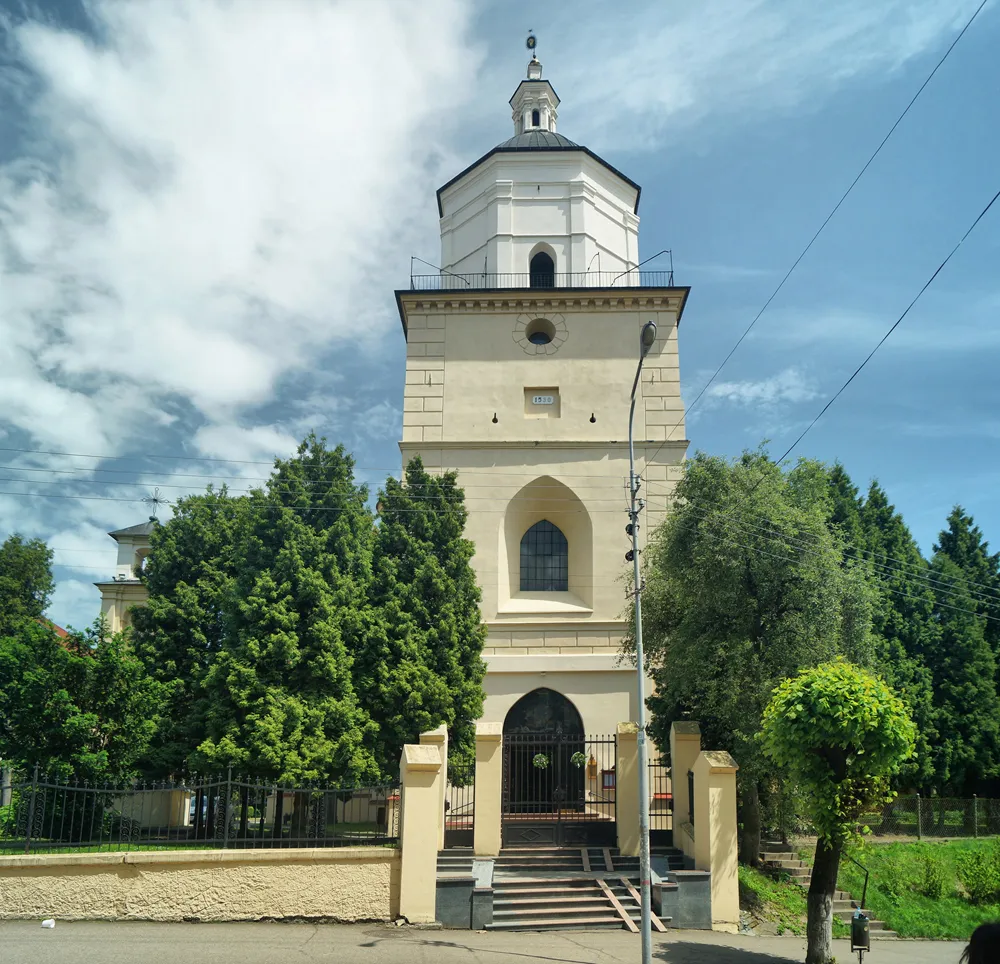
The Church of St. John the Baptist (also the Church of the Martyrdom of St. John the Baptist) is a Latin church in the city of Sambir, Lviv Oblast. It is active and subordinate to the Sambir deanery of the Roman Catholic Church in Ukraine. It is the tallest and oldest building in the town. The Church of St. John the Baptist is an architectural monument of the 16th century of national significance, protection No. 398.
In the 14th century there was a Roman Catholic parish here with a small wooden church built around 1370. After the Tatar attack on Podillia and Galicia in 1498 this church burned to the ground. In the middle of the 16th century construction of a new, stone church began on its site, to a design by the Polish architect Józef Tarnowczyk. The inscription “1530” has survived on the church’s facade, so that year can be considered the year construction of the shrine began. The building work lasted quite a long time and was completed in 1573–1574 with the construction of the church vault. The newly built church was consecrated by Archbishop J. Solikowski. However, already in 1637 the church suffered a great fire, as a result of which the tower and vault collapsed, and only the side aisles survived. By 1642 the church was completely rebuilt, and in 1664 it was consecrated again by Bishop S. Sarnowski.
In 1846 the church burned again, this time the fire destroyed the roof and significantly damaged the vault above the choir; after the fire the church was rebuilt again. In the 1880s work on decoration and restoration of the building was carried out: in 1886–1887 metal grilles were installed on the cornices, in 1889 the side aisles were restored, in 1893 the porch; the artist J. Tabiński executed the murals of the main nave. In 1923 stained-glass windows were installed, and in 1929 the choir was painted.
From 1864 to 1865 Bishop Józef Pelczar, whom the Catholic Church recognised as a saint, served in this church.
After the Second World War the church remained active; Fr. Kazimierz Mączyński worked here. Since 1990 the Church of St. John the Baptist has been looked after by the Resurrectionist fathers of the Congregation of the Resurrection of Our Lord Jesus Christ and by the sisters of the Congregation of the Sisters of St. Francis of the Family of Mary[1]. In 2001–2002 another restoration of the church building took place.
The church building is made of brick and stone; in architectural terms it belongs to the basilica type of church: three-aisled, consisting of a main volume square in plan, an elongated choir with a faceted apse, and a massive bell tower on the western facade. The symmetry of the plan is somewhat disturbed by a room attached on the north side of the choir and a semicircular tower between the bell tower and the north side aisle, in which a stone staircase to the choir and upper floors of the bell tower is arranged. The walls of the church are strengthened by buttresses. The bell tower is square in plan, consists of four tiers, the last of which is octagonal, and ends in a helmet-shaped dome with a lantern.
The church was built for quite a long time, in two stages, so its architecture combines features of Gothic and Renaissance. The oldest part of the building, erected in 1530–1565, is the choir with a side room; elements of the Gothic style have survived in their design: the star vaults of the choir with stone ribs, pointed windows and arches, the Gothic door of the side room. The main three-aisled volume of the church was built after the fire of 1637 and has features of Renaissance architecture: a barrel vault with lunettes in the main nave and cross vaults in the side ones. The stucco decoration of the main nave vault also belongs to that period.
Next to the church stood a one-storey parish house in which a Polish parish school operated. In 1715–1727 a masonry building was built on the site of the old school building, which has survived to this day. Today it houses the Boykivshchyna Museum. In 1990–2000 a new parish house was built next to the church.
A hospital operated at the church, and existed until the beginning of the 19th century.
In front of the church stands a monument to Pope John Paul II. The monument was consecrated by Bishop Marian Buczek on 18 May 2007.
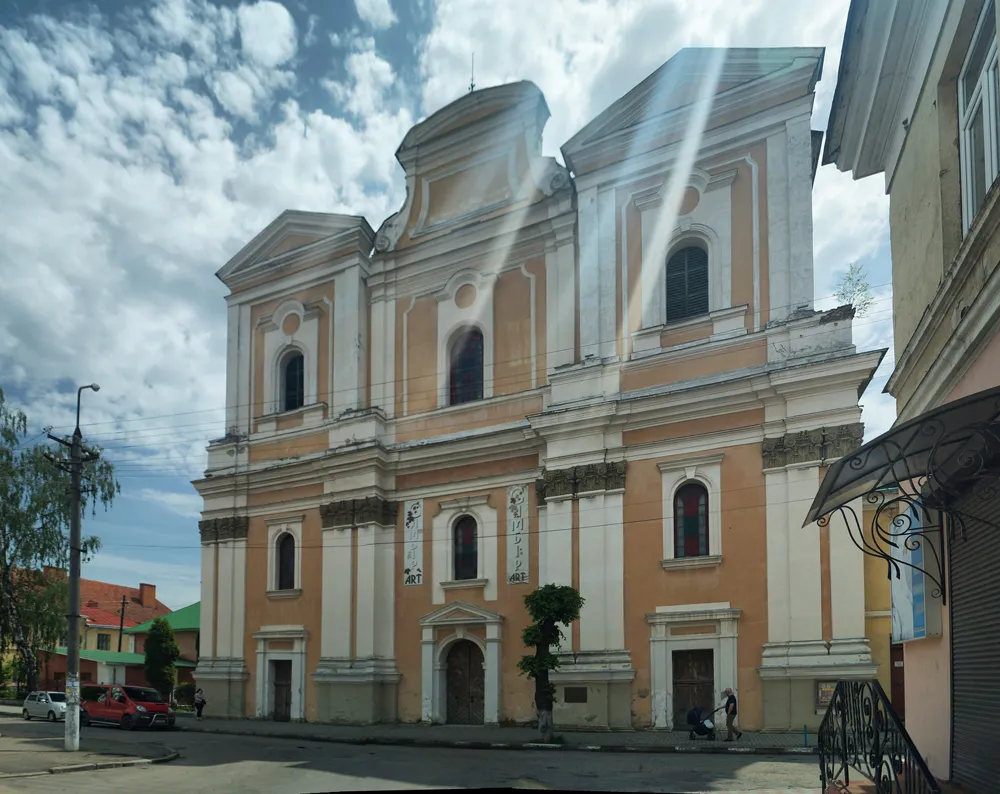
Church of St. Stanislaus and the Bernardine monastery
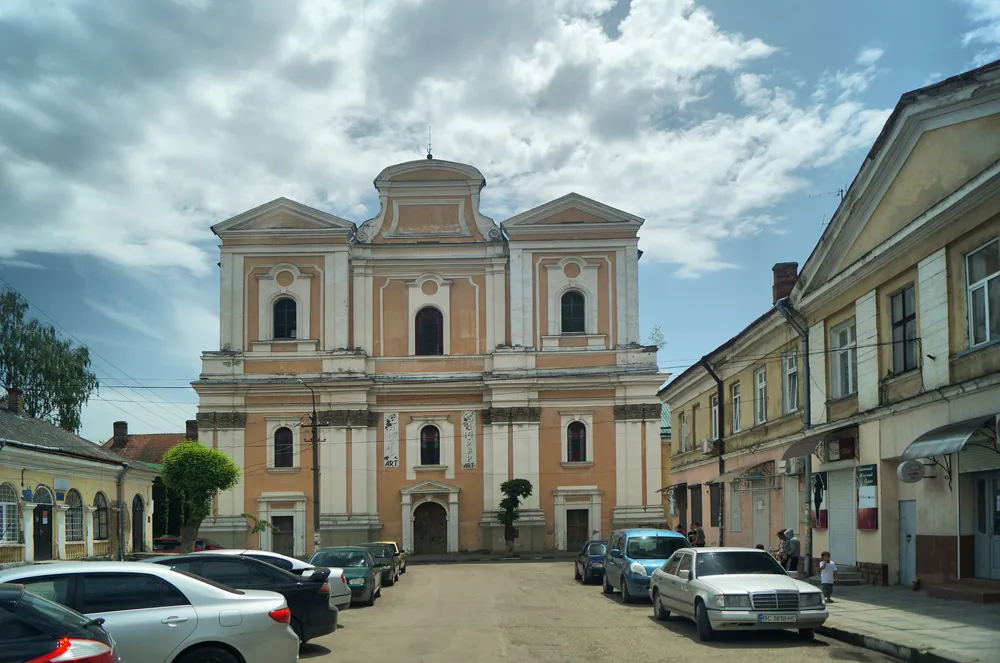
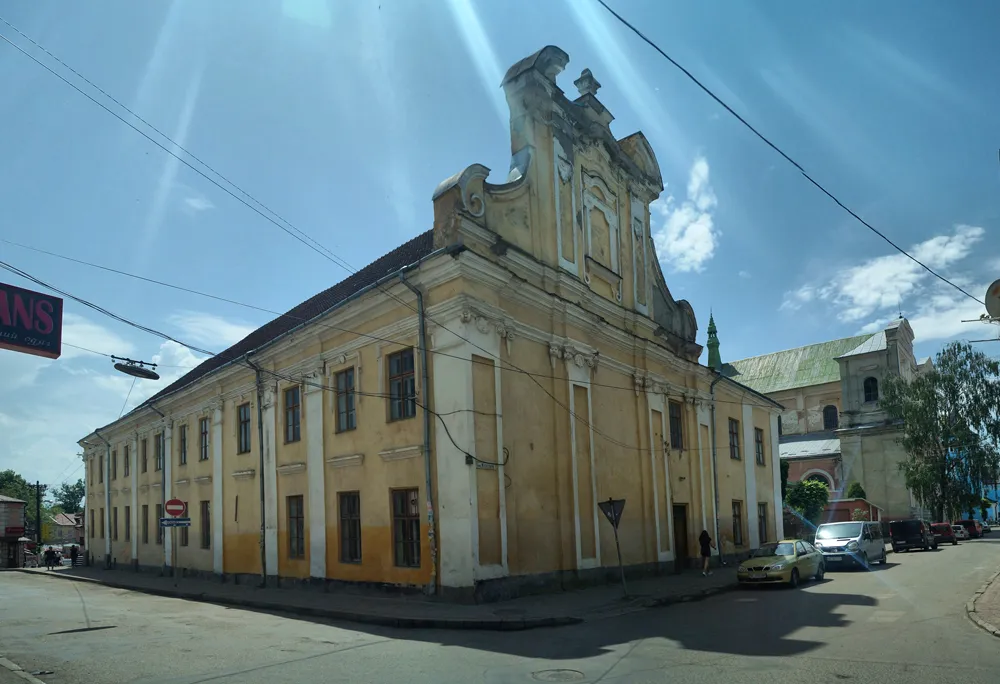
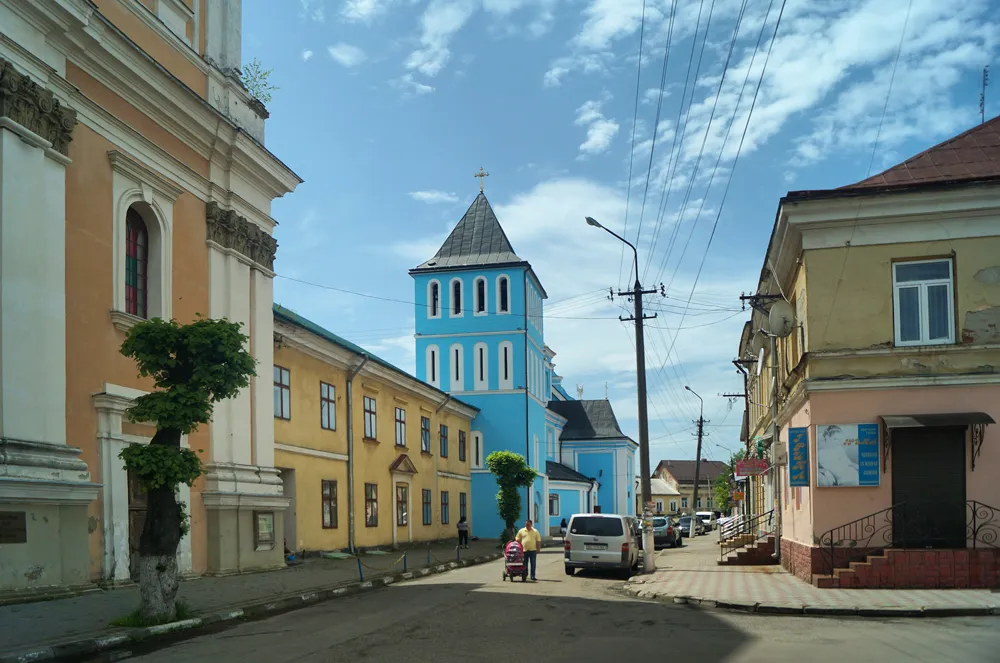
The Church of St. Stanislaus and the Bernardine monastery is a religious building and monastery in Ukraine, located in the city of Sambir, Lviv Oblast. The foundation of the complex dates to 1698. The monastery comprises the Church of St. Stanislaus, a bell tower and monastic cells.
The Bernardine monastery was built in 1471–1476. These buildings have not survived to this day. Construction of the stone monastery began in 1698.
First a cemetery was laid out (on the site where the juvenile correctional colony now stands). A small chapel was built in the centre of the cemetery. Mass was celebrated in it until 1474, when the Church of the Assumption of the Most Holy Mother of God was built.
In 1498 the monastery was burned by the Tatars. In 1514 the Bernardines began building a masonry defensive shrine. The monastery was surrounded by strong, high walls of brick and stone. On the western side of the monastery there was a gate, and on the southern a tower, square in plan, with a wicket gate.
On 5 February 1786 Emperor Joseph II abolished the Bernardine order, and all its property passed into state ownership. The buildings housed the district office, then the district police and a gymnasium. However, in 1905 all the monastery buildings were demolished, and in their place construction began of premises for the district court and prison.
In the new premises the monastery existed until 1939. In 1987 the church was restored and adapted as an organ music concert hall. The building is unique for its acoustic qualities. The echo lasts 6.5 seconds.
After the abolition of the Jesuit order, in 1847 the authorities handed the collegium and the former Jesuit church over to the Bernardines.
The church is Baroque, rectangular in plan, three-aisled, of the basilica type. The main facade has low two-tiered towers ending in triangular pediments. The church is masonry, consisting of a rectangular nave with 4 arches and a narrower presbytery with three arches.
A two-storey block of cells adjoins the south facade of the church. The building is of stone, with a corridor layout and cross vaults on the first floor. The south-western corner of the monastery building includes a three-tiered bell tower, square in plan, under a tented roof.
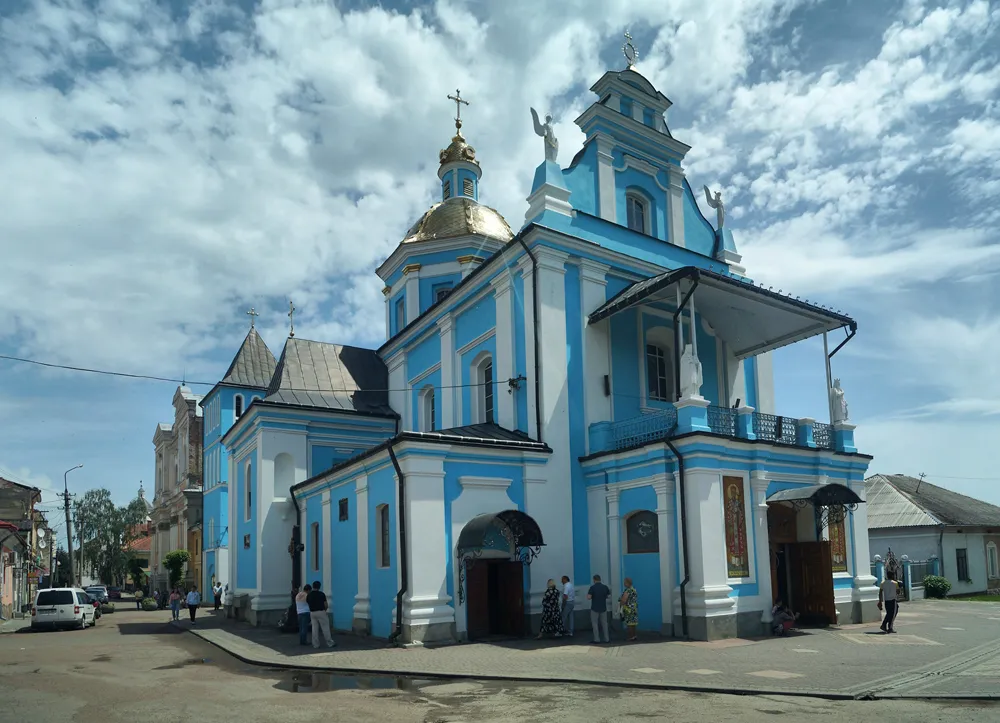
Church of the Nativity of the Most Holy Mother of God
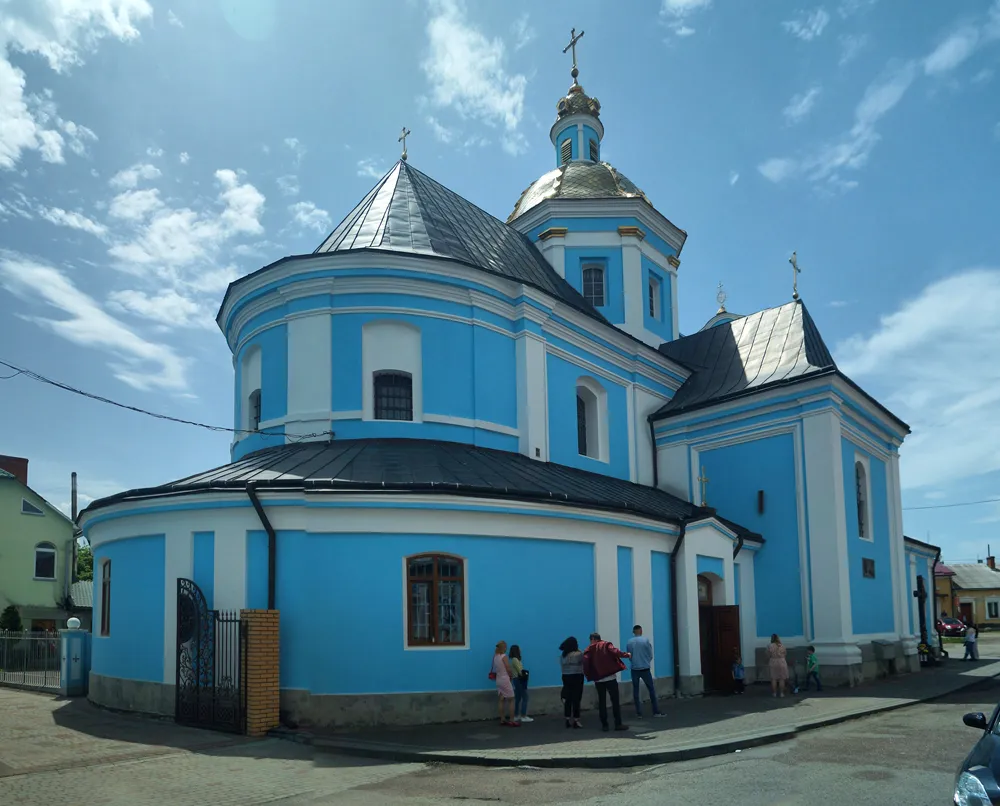
The Church of the Nativity of the Most Holy Mother of God is a Greek Catholic church in the city of Sambir, Lviv Oblast, an architectural monument of local significance (protection No. 798-M). It is the home of two relics: the Sambir miraculous icon of the Most Holy Mother of God and a particle of the relics of St. Valentine, the legendary patron of lovers.
The townspeople received permission to build a church in the town centre of Sambir on 20 January 1554. In the same year (according to other sources, in 1558) a wooden church was built. The present masonry church was built in 1738, next to the old wooden church, at the expense of the Ukrainian nobleman, hereditary owner of the village of Radlovychi, Illia Komarnytskyi and his wife Olena.
In 1841 the church was renovated and painted, in 1855 an arched sacristy was added, in which portraits of the church’s patrons were placed. Ten years later, in 1865, another rebuilding of the church took place: the church premises were enlarged by adding an altar, and an iconostasis by the master Mykhailo Fedorchak of Prešov was installed. At least some of the icons are by the brush of the painter Jabłoński. In 1886 the painter Sysynskyi renewed the icons and altars, and in 1893 further work on restoring the church exterior was carried out. In 1894–1895 the master Kornylo Ustiianovych painted the walls inside.
In the first third of the 20th century the church was repaired many more times. Thus in 1900 a vestibule was added, which was later replaced by a porch for services during indulgence festivals, and the sacristy was also decorated. In 1908 the rectory was dismantled, and its material was used to add a storey to the church bell tower; in 1912 the side aisles were added.
In 1935 the painter Volodymyr Zaporizkyi renewed the church’s interior murals and supplemented them. In the same year, during repair and restoration work, a crypt was found under the main altar, containing the burial of the church’s patrons, the Komarnytskyi couple and their daughter.
Some restoration work was also carried out in the USSR period, notably in the 1960s and 1980s.
After the Second World War the Church of the Nativity of the Mother of God was handed over to the Russian Orthodox Church[3]. In 1992 the church passed to the Ukrainian Greek Catholic Church.
Town Hall
Sambir Town Hall is an architectural monument of the 17th–19th centuries of national significance. The city council of people’s deputies and the mayor work in the town hall.
After Sambir received Magdeburg law in 1390, with the assistance of the then starosta Spytek of Melsztyn, the first Sambir town hall was built.
The original town hall was wooden. It burned down in 1498 along with all the surrounding houses. At the beginning of the 16th century a new one-storey town hall with a low tower and a clock was built. This town hall also burned down (1637), and in its place in 1638–1668 a two-storey masonry one was built with a 40-metre octagonal tower and a lantern. The ancient Renaissance portal has survived to this day. And although no documents on its making have survived, its forms and purity of style suggest that this portal was made together with the original building and that its master was influenced by the Italian masters who worked in Kraków. In 1844 the town hall was reconstructed: entrance porticoes were added, the place of entrance was changed and new facades were built.
On the south side of the town hall tower, in 1760, an image of the Mother of God was installed, donated by the Polish priest Valentyn Dudkevych. In 1877 this image was replaced with one made of copper sheet. It stood until the arrival of the Soviets in 1939. In 1997 a plaster figure of the Mother of God was installed in this place.
In 1885 a clock was installed on the town hall tower, bought in Prague from the clockmaker Heinz, with a chime and dials on four sides (the clock cost the town a considerable sum for those times: 1,200 zlotys). The clock was once illuminated at night. In 1980 it was repaired, but the dial on the north side remained out of order.
Above the portico at the side entrance to the town hall the coat of arms of the town is placed, which the Austrian emperor Joseph II reconfirmed for Sambir by a privilege of 26 June 1788. It is a blue shield showing a deer running from right to left. The deer’s neck is pierced by an arrow. At the top the shield is adorned with a golden crown.
The town hall building is of stone, rectangular in plan, with a corridor layout. The main three-storey volume, square in plan, has a staircase in the centre lit by top light. The western and eastern facades are accentuated by single-tier three-arched porticoes.
The first-floor rooms are covered with cross, barrel and sail-closed vaults. The height element of the building is a three-tiered tower, square in plan, on the south side. Its upper octagonal tier with clocks ends in an octagonal lantern.
According to legend, False Dmitry I delivered his first speech to the nobility from the balcony of the Sambir town hall, calling for a campaign against Moscow.
Photos by Roman Malenkov.


