

Kupyn’s “raisins”, the szlachta and the “pomeshchiks”
The village of Kupyn, once a small town, can boast what is perhaps the most varied collection of monuments and tourist attractions.

The Shum waterfall
Let us begin with the natural ones. The famous Smotrych Canyon, which reaches the peak of its grandeur near Kamianets-Podilskyi, starts right at Kupyn. Kupyn also has the Shum waterfall. By mountain standards it is simply a large rapid, but on the flat lands of Podillia it has the status of the largest waterfall in Khmelnytskyi Oblast.
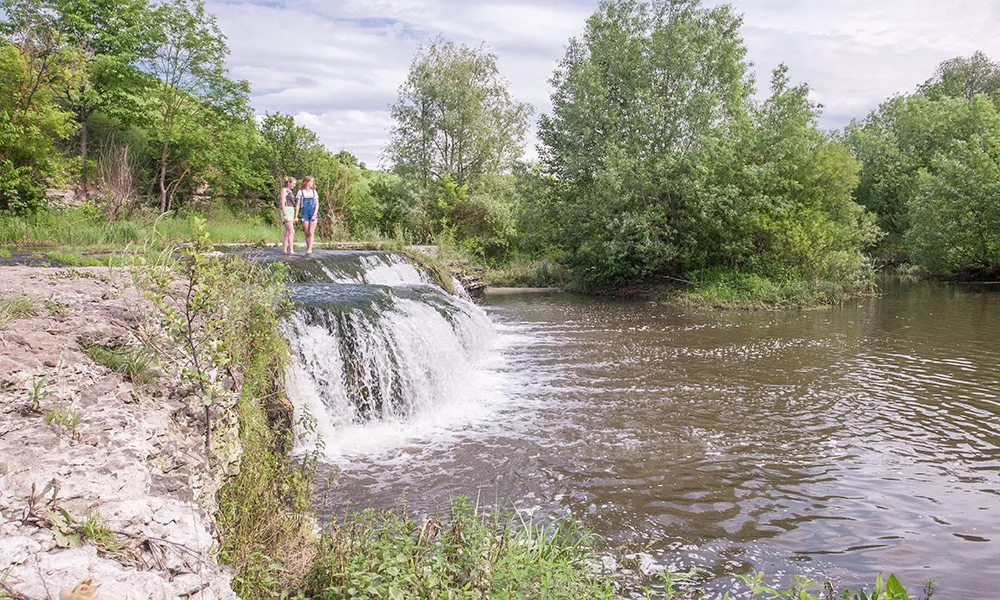
The Shum waterfall
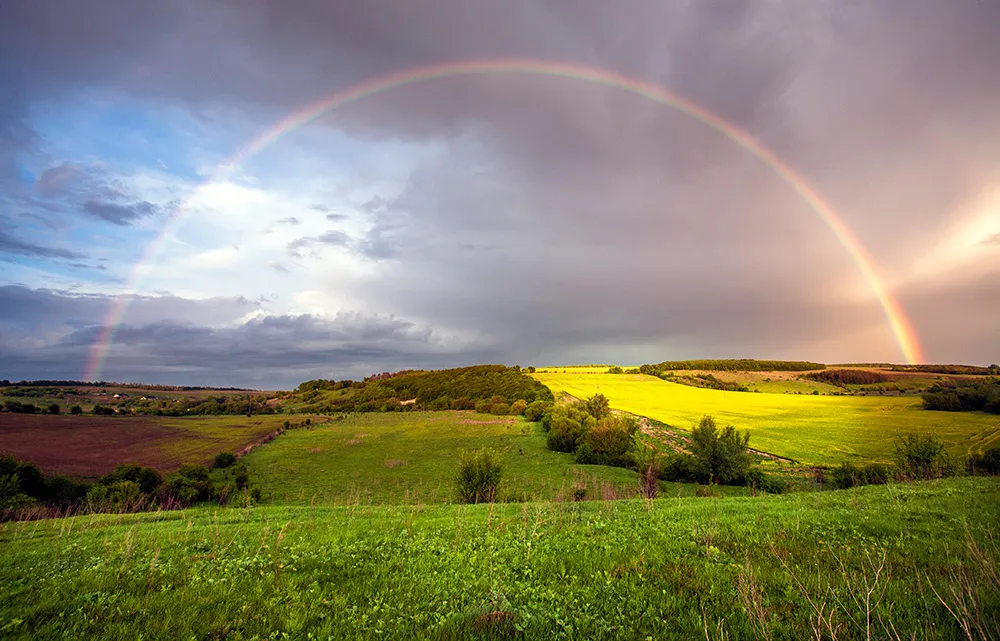
And the landscapes here are stunning. The well-known Polish physiographer Franciszek Ksawery Gižycki, in his book “Podróże w gór Miodoborskich” (Journey to the Medobory Hills), published in 1809, compared Kupyn and its surroundings to Dalecarlia in Sweden. Today that region is called Dalarna, and it really does look similar.
The historical sites of Kupyn are interesting for their variety, which goes far beyond the classic tourist trio of “castle, church, cemetery”.
The first “raisin” awaits right at the entrance to the former small town. This monument can be described as “three in one”.
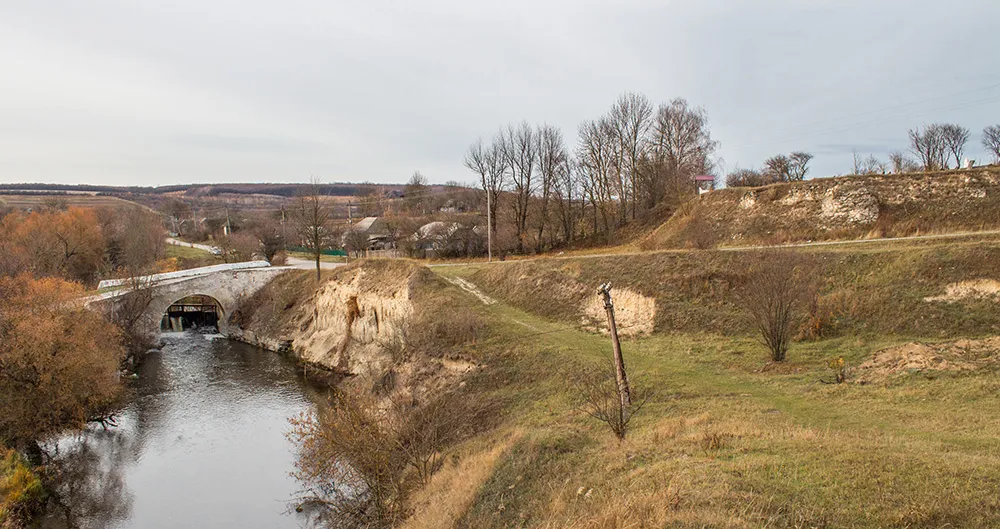
The cemetery plateau (on the right)
This is the plateau on which the old Jewish cemetery of the 18th–20th centuries is located. The cemetery is very interesting: here there are a number of matzevot decorated with extremely rare, and sometimes even unique, motifs.
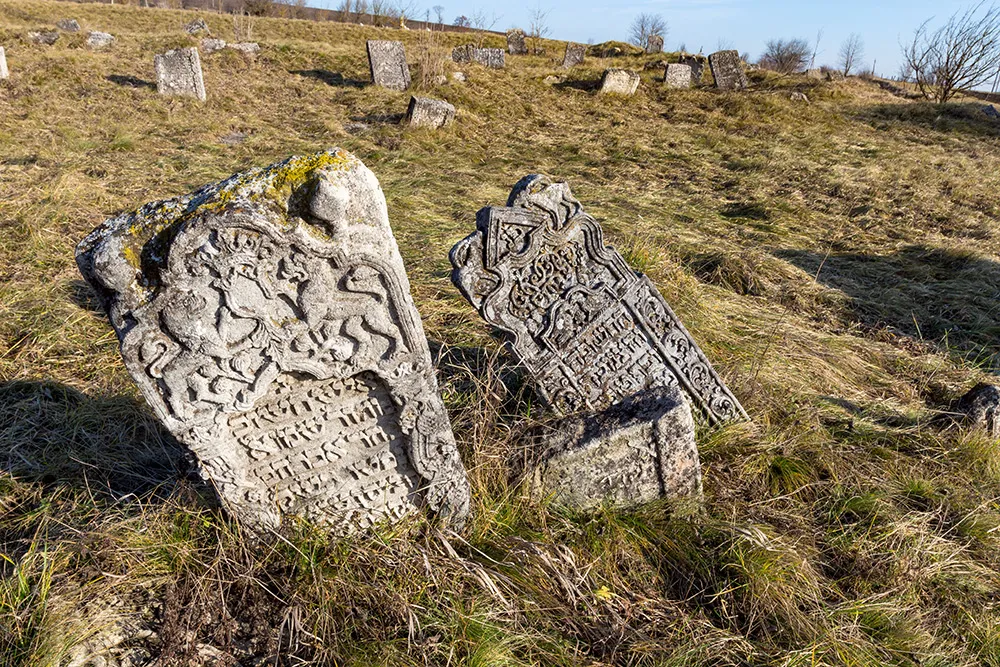
A very rare motif with ibexes (on the right)
In addition, within the necropolis one can clearly see a system of ramparts and ditches left over from the defensive structure of the 15th–17th centuries, on whose site the cemetery later appeared. Near the road one can also see the base of a masonry tower (the tower itself is mentioned by Yukhym Sitsynskyi).
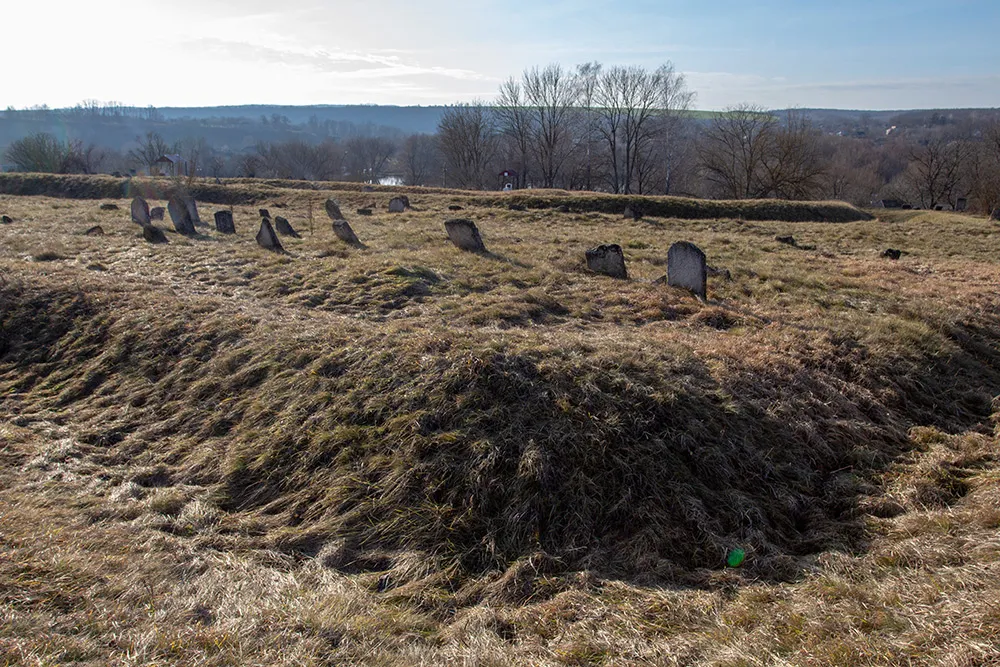
Think that is all? Not at all! People noticed this plateau above the Smotrych, so convenient for defence, back in remote antiquity. So here there is also a large settlement of the Early Iron Age (the Scythians).
There are Scythian burial mounds near Kupyn as well. Several of them were investigated in 2018 by an archaeological expedition led by the well-known Podillian archaeologist Anatolii Hutsal. The artefacts found became an ornament of the “G-museum” exhibition in Horodok.
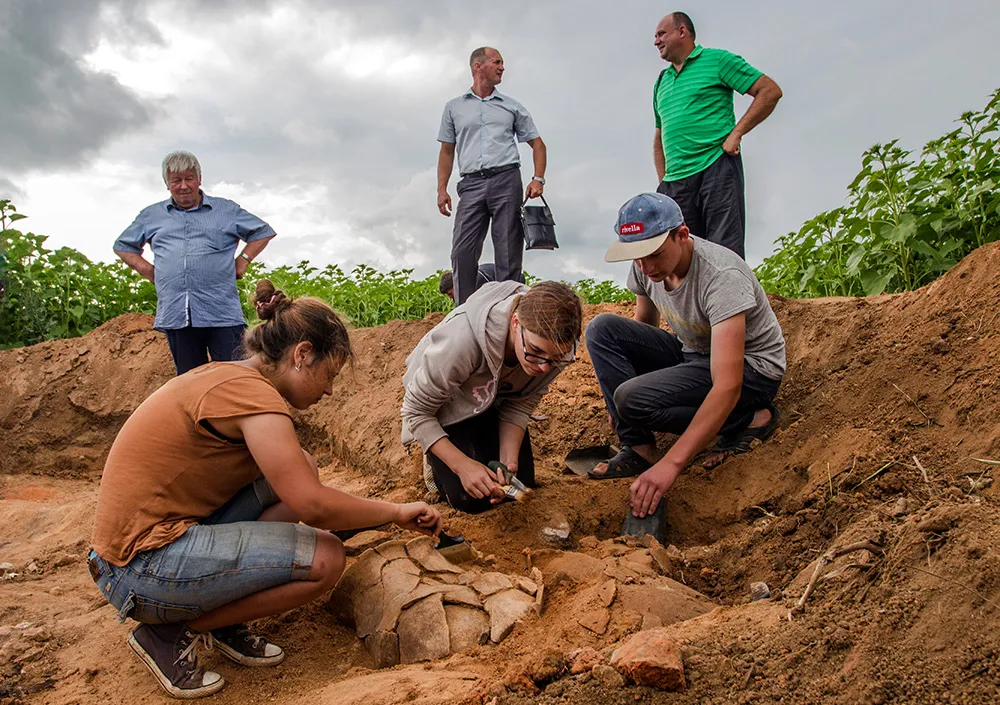
Excavation of a burial mound near Kupyn. 2018
In Kupyn, right below the cemetery plateau, there is another amazing monument, the so-called “Turkish Bridge”, a very picturesque old arched bridge which, as the name clearly suggests, was supposedly built by the Turks during the Ottoman rule of Podillia.
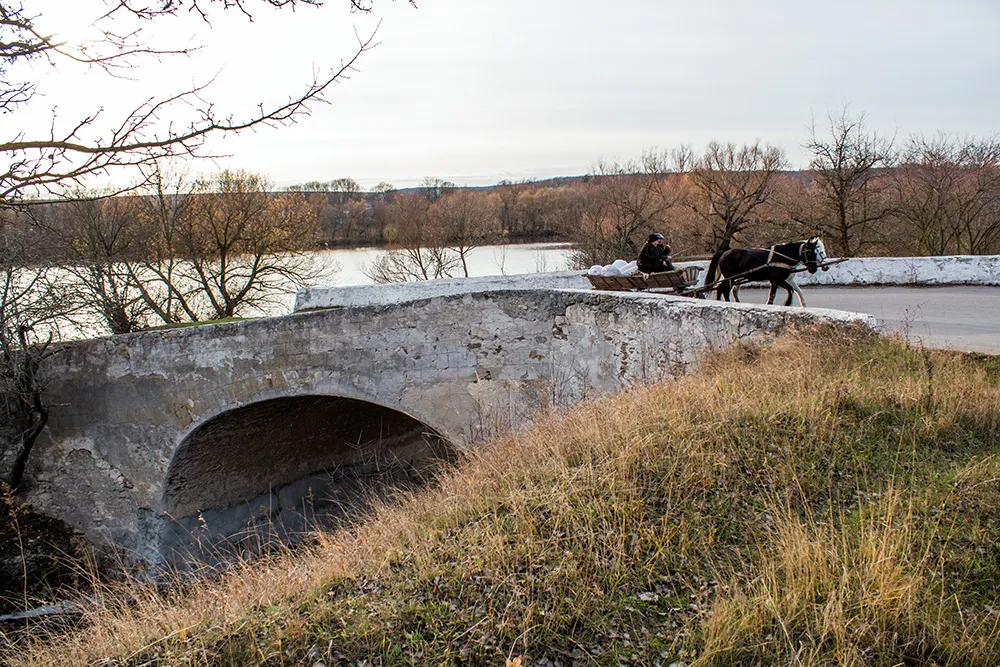
The “Turkish Bridge” is not actually Turkish
In fact, in Podillia they say “the Turks built it” about almost every ancient structure. This is as popular, yet completely groundless, a folk myth as the “underground passages to Kamianets, Khotyn and Pochaiv”. Not only historians but even amateur local historians know this perfectly well. Only a clumsy beginner in local history could believe in the “Turks”.
The local mills are interesting monuments. One stands on the Smotrych, the other on the Chornovodka River.
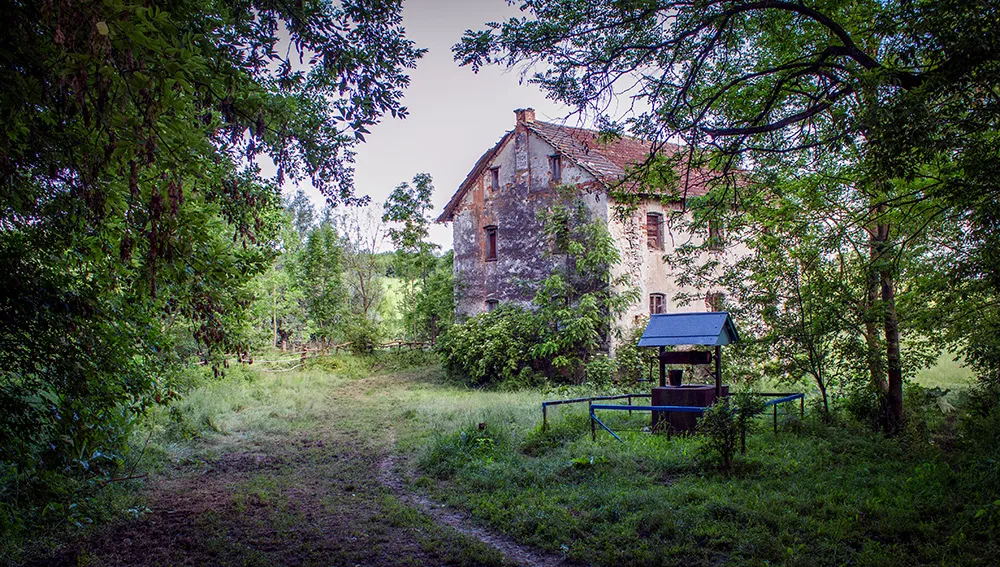
The mill on the Chornovodka
The old Christian cemeteries are striking sites too. In the “almost modern” part of the necropolis one can see a unique memorial to “lost love” (1967).
Kupyn has also preserved its “manor house”, which belonged to the Stadnicki and Grabianka families, the landowners of the town.
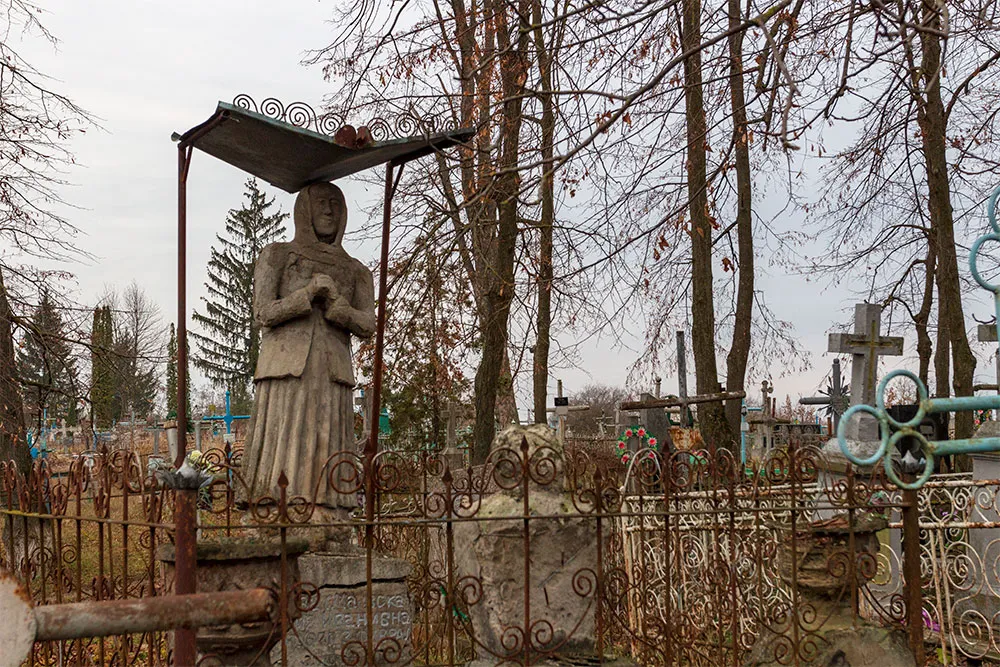
The memorial to “lost love”
The latter were extremely interesting figures. We will skip Tadeusz Grabianka, the king of the Illuminati of Avignon, whom at the beginning of the 20th century many researchers considered to be “that very Count Cagliostro”. Let us recall his wife, Teresa Stadnicka.
After her luckless husband effectively abandoned the family and left for Avignon to build a brand-new “Kingdom of God”, she soon moved from the pompous palace in the village of Ostapkivtsi to her relatively small house in Kupyn (she left Ostapkivtsi to her children).
Here she devoted all her energy to the development of the town.
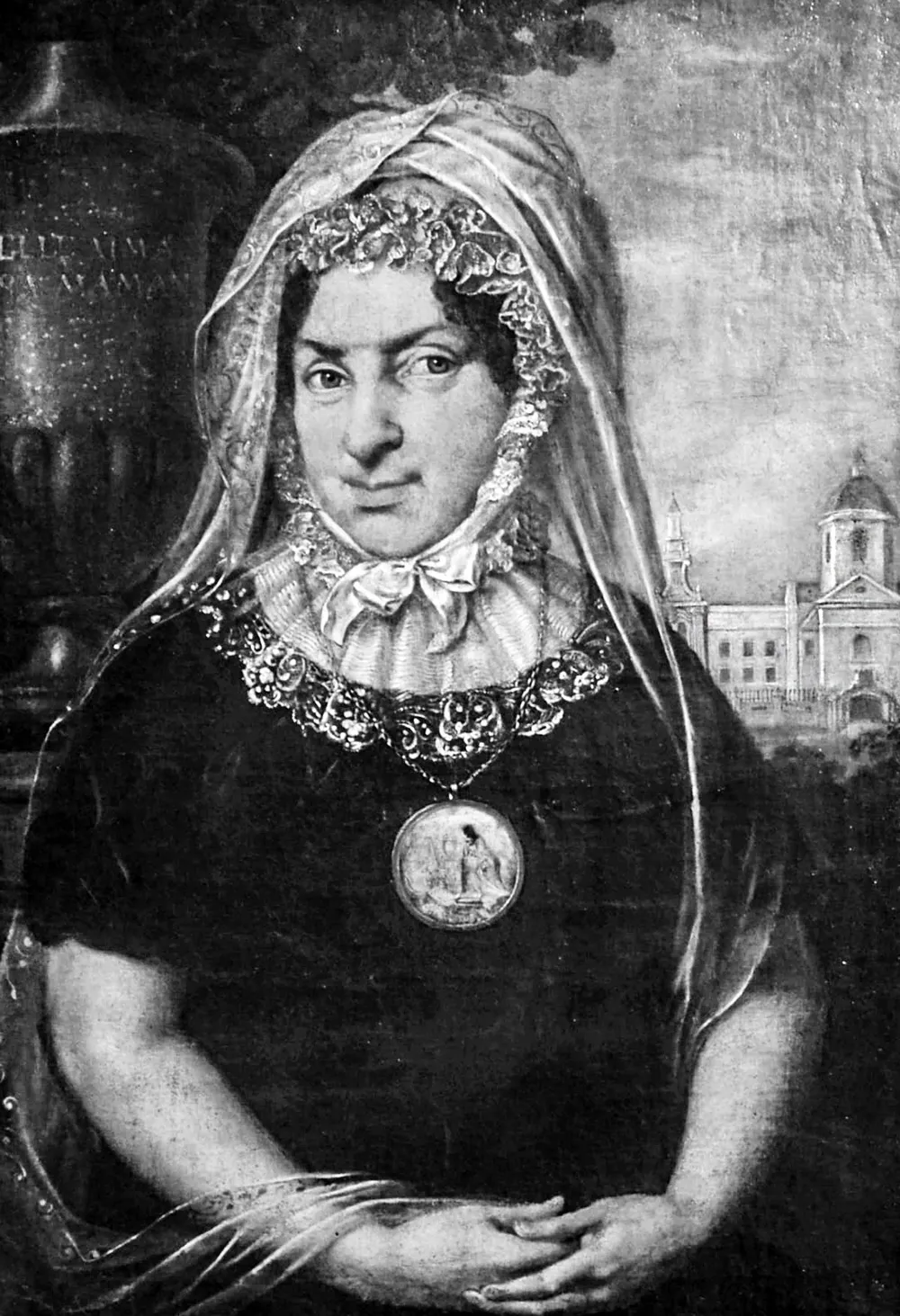
Teresa Stadnicka
The Polish-Ukrainian historian Antoni Rolle, in his work “Tadeusz Leszczyc Grabianka, starosta liwski i Teresa z Stadnickich, jego małżonka” (1875), writes in particular:
“In particular, Mrs Grabianka [Teresa Stadnicka] worked diligently for the prosperity of the peasants. Above all, she said, more light, and so she was one of the first to found village schools, and she wished to raise the Kupyn school to a district, three-class one. On the estate, in the two towns belonging to her [Kuzmyn, Kupyn], she restored churches at her own expense…”
In addition, every year she donated 2,000 zlotys to the church in neighbouring Horodok and the same amount to the Horodok convent of the Sisters of Mercy. At that time the Sisters of Mercy house was the centre of public life: girls were taught here, bread was baked for the poor, a special pharmacy for the poor population of Horodok operated, and so on.
After the Polish November Uprising of 1830–1831, as an act of revenge, the tsarist authorities abolished the Roman Catholic monastic orders in the territory of Ukraine controlled by St Petersburg. Among them, the two Horodok monasteries (of the Sisters of Mercy and of the Franciscans) were closed.
In the second half of the 19th century, the former monastery housed the apartments of the managers of the “Horodok” sugar company, which belonged to the then landowner of the town, the famous Russian-French microbiologist Sergei Winogradsky. Of course, there was no question of using the building for the benefit of the whole Horodok community under S. Winogradsky.
In the same Rolle we read:
“Mrs Grabianka made every effort to revive the declining trade, persuading merchants to settle [in Kupyn] permanently, easing for them the building of houses, allotting plots of land at her own expense, building shops, and so on and so forth.
In a word, this woman knew how to live up to the duties she had taken upon herself…”
It is important that she cared about all the people who lived on her lands. Not only Christians (Ukrainians and Poles), but also Jews!
In particular, Rolle mentions that:
“Even earlier she had tried to contact the Bishop of Kamianets about an instrument for [the building of] a Jewish school (synagogue) in Kupyn, which was to be built for the local Israelites (1783)”.
In general, when studying the history of Podillia, one constantly comes across an interesting pattern.
The “old” szlachta, who had owned estates in these lands since the Middle Ages, never treated commoners as slaves or their holdings as a feeding trough. These estates were seen first of all as a small homeland that had to be developed and, if need be, defended. The numerous castles in these places were built above all to protect the local population from Tatar raids.
The old noble morality and worldview, entirely in the spirit of the European trend, regarded the lands entrusted to them as a place to be cared for and developed. By contrast, in the Muscovite key it was a kind of feeding trough from which all the juices could and should be squeezed regardless of the people. Even officially, lands and people granted to landowners were “given for feeding”.
In the Polish-Lithuanian Commonwealth, let us recall, feudally dependent peasants had nothing in common with the “serfs” of the Russian Empire. The former were free people who, for the right to live and work on the landowner’s land, had in return to perform certain duties and labour, or to pay for it in money. They could be neither bought nor sold. The Russian “serfs”, on the other hand, were real slaves.
While the “old szlachta” are still remembered with warmth, in the case of the purely Russian landowners who began taking over property in Podillia from the second half of the 19th century, only bad things are remembered.
If we take only the Horodok region, which is the subject of this publication, even ordinary citizens (not historians or local historians) will tell you what good the Zamoyskis, Sieniawskis, Potockis, Tyszkiewiczes, Zaleskis, Stadnickis, Grabiankas and others did for the communities.
What good the newly arrived Russian lords did for the communities, even historians will not recall. What, for example, did Countess Ignatieva (Kutuzov’s granddaughter) do for Nove Porichchia? Nothing.
What good did the Winogradsky family, who owned these lands for almost half a century, do for Horodok and its surroundings? Also nothing! Except that with their management and greed they drove the locals to a revolt, which was then suppressed by Cossacks. The attitude of the peasants towards Sergei Winogradsky, the last landowner of Horodok, was so “warm” that in his memoirs he later complained bitterly that he was forced to walk around constantly with a “Browning” in his pocket…
Incidentally, when the “szlachta” was mentioned, it was not about Poles at all. All the more so since in the list above half of the families were of “Ruthenian” (Ukrainian) origin, and all without exception had a considerable share of Ukrainian blood. It is about worldview. In the first case it is European, in the second Asian-Muscovite. And blood is not the decisive factor here.
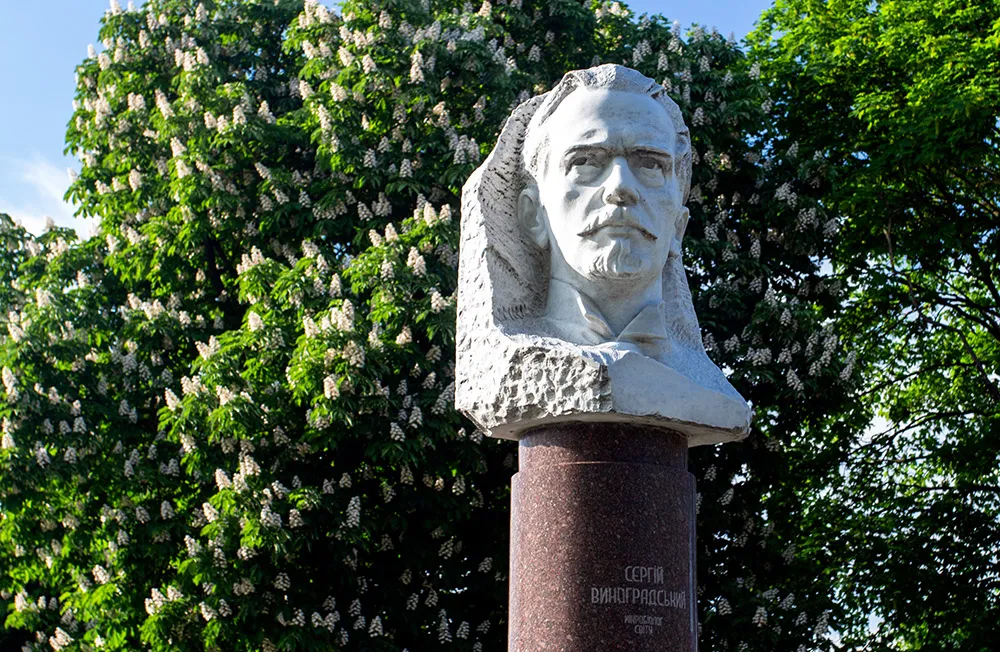
The bust of S. Winogradsky in Horodok
The Winogradskys themselves came from the Ukrainian Cossack officer class, which in exchange for the status of Russian “nobles” went to serve St Petersburg. Moreover, having become “nobles”, they at once turned into greater Russians than the true Muscovites. Sergei Winogradsky’s attitude to Ukraine as an independent state is easy to trace in his memoirs:
“The Petliura movement, having seized all of Little Russia, held out in New Russia only briefly. Petliura’s bands reached Odesa and penetrated it, but held on for only a few days.”
By contrast, the White Guard detachments are spoken of more than warmly in the same memoirs. Denikin’s “partisans of the indivisible Russia” were, mentally and in worldview, “one of their own” to Sergei Nikolaievich. Unlike the incomprehensible and hostile “Petliura bands”…
Sergei Winogradsky’s contemptuous attitude to Ukraine, by the way, may well explain one “bonistic phenomenon”.
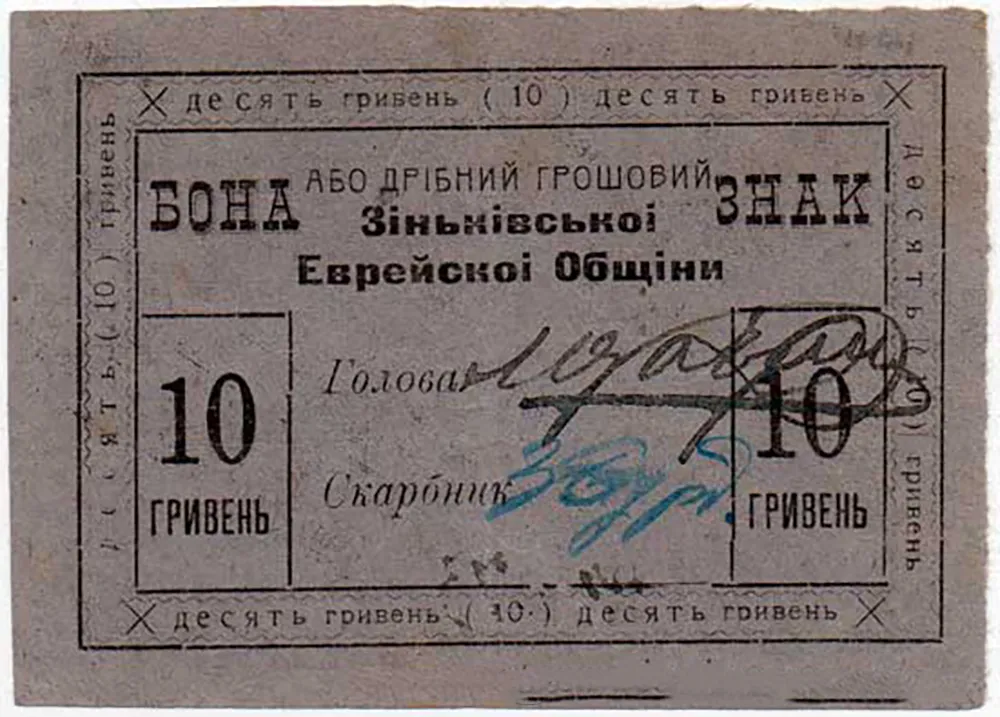
After the fall of tsarist rule in 1917, the old monetary system also collapsed in the post-imperial lands. Especially painful was the lack of small and at least somewhat secured cash. The solution was the mass issue of bons (scrip), a kind of surrogate money issued by local self-government as well as by cooperatives, mutual aid funds, shops, factories and so on.
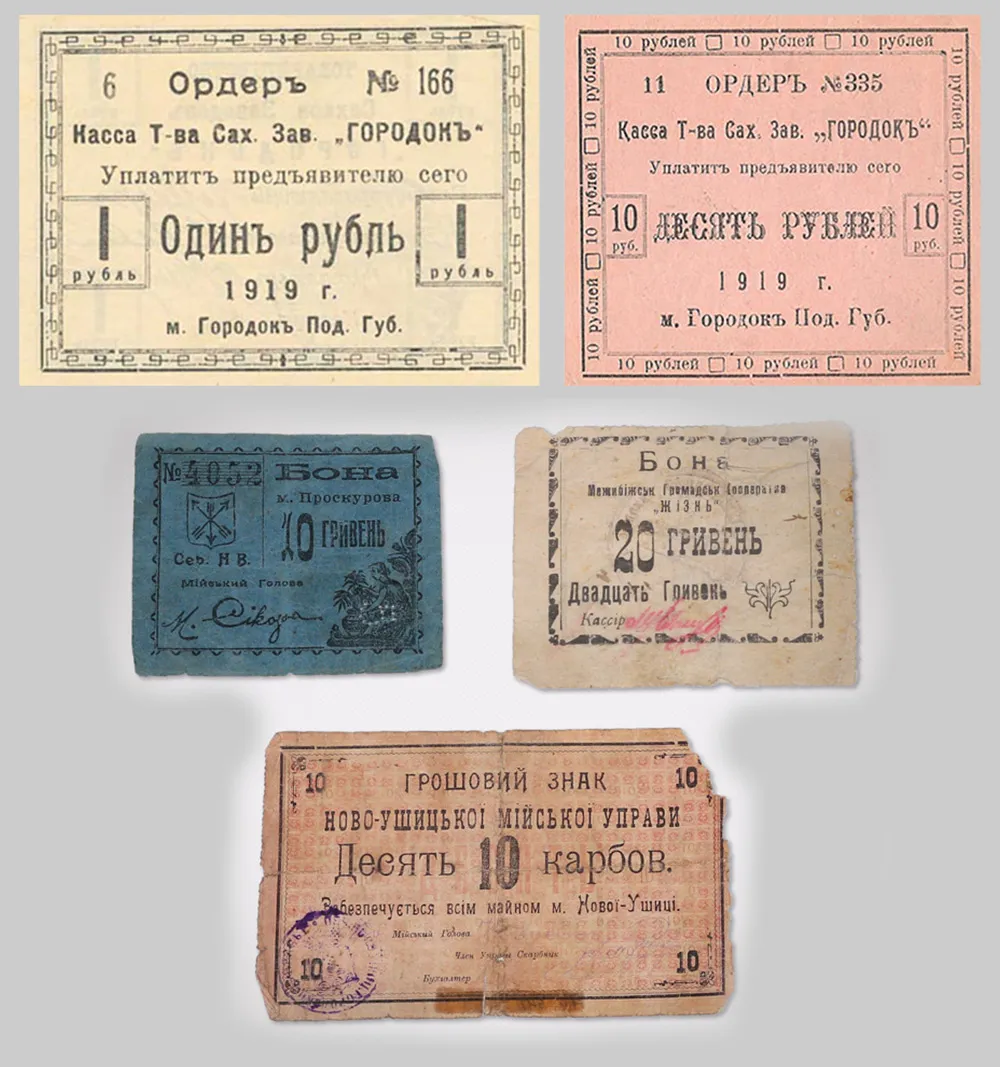
Photo from kraimuz.km.ua used
In 1919 the “Horodok” Sugar Factories Society also issued such banknotes. These notes had one interesting feature, unusual for the notes issued that year in this part of Podillia.
The others, as we see, were in Ukrainian (some combine Ukrainian and Yiddish) and issued in hryvnias and karbovanets of the Ukrainian People’s Republic.
The notes of the “Horodok” Sugar Factories Society are not only in Russian but also in imperial orthography (with “yat” and “yer” letters) and denominated in Russian roubles!
As the author sees it, without documentary confirmation it is impossible to say how true this really is, but we have the following situation.
Even while in Odesa, the Society’s principal shareholder (essentially its owner) continued to keep control of the sugar factory. It is clear that such an important step as the issue of notes had to be agreed with him.
Given Sergei Winogradsky’s extremely negative attitude to the “Petliura bands” and his favourable attitude to the bearers of the idea of “one and indivisible Russia”, this worldview of the sugar factory’s actual owner was reflected on the notes.
The hypothesis seems quite plausible.
Dmytro Poliukhovych


