

The Immaculate Virgin has returned to Sataniv
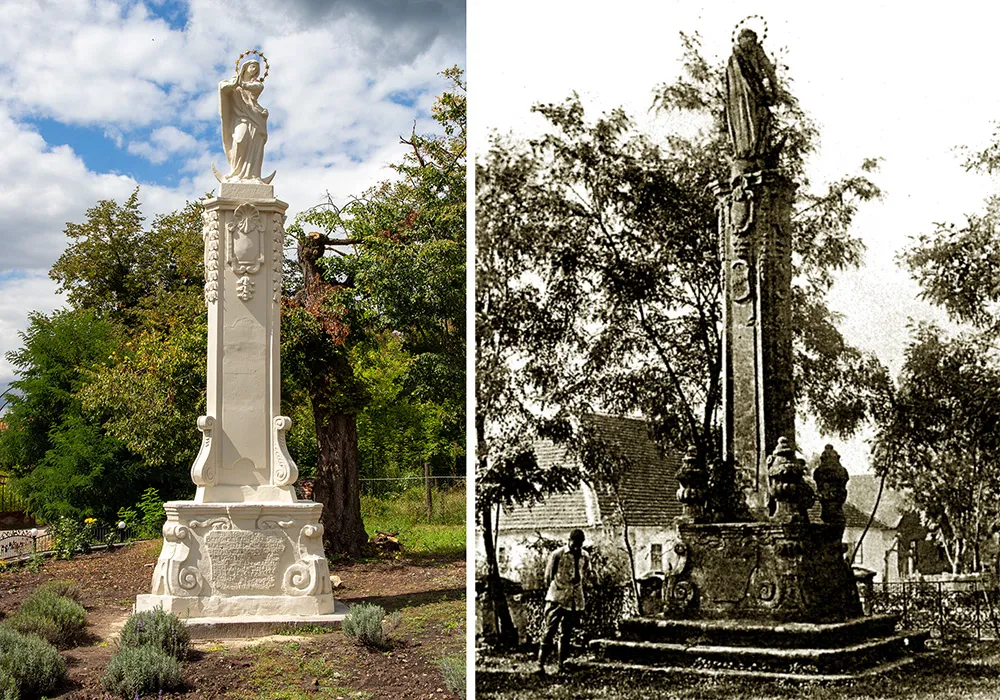
In Sataniv (Khmelnytskyi Oblast) the famous Annunciation figure is being restored. A correspondent of “Ukraine Incognita” learned of this by chance during a trip to this ancient town.
Until recently, this remarkable monument was recalled only by its sizeable stone base, which the Communists lacked the strength to smash and the technical means to haul away.
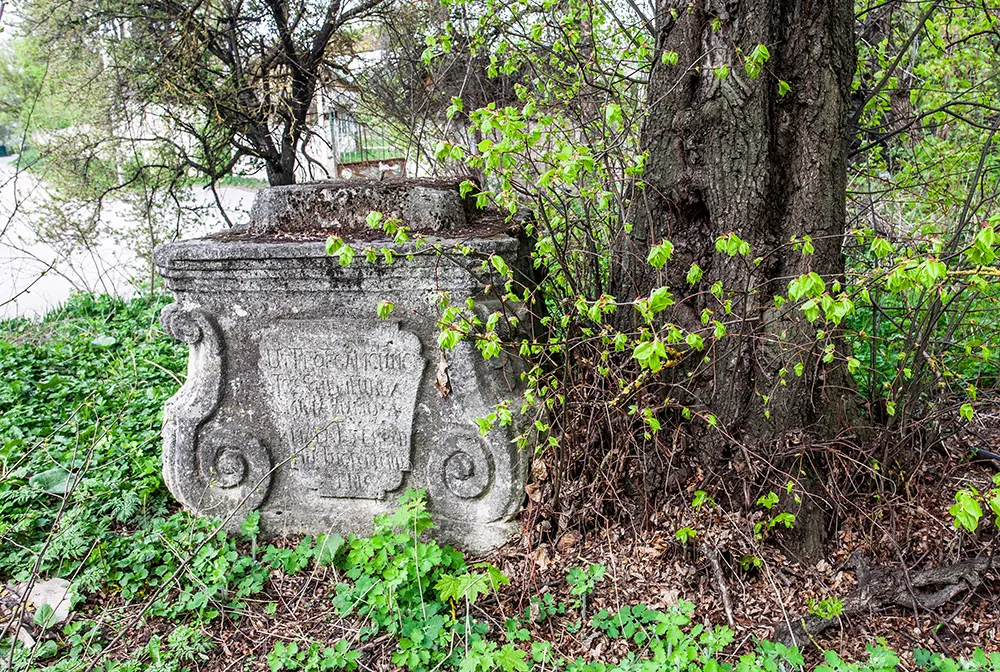
This is how the “Peter’s Stone” looked in 2019. Photo: Dmytro Poliukhovych
Covered in Baroque carving and Latin inscriptions, the huge boulder that stood almost in the very centre of Sataniv has long amazed tourists and suggested a venerable age. According to a version popular until recently, launched around the 1970s by some local “amateur historian”, the stone was erected in honour of the Muscovite Tsar Peter I’s stay in Sataniv in 1711 (hence, supposedly, its name). In many local-history guides, and even in official certificates (!), the stone is dated to 1555 altogether. Where such a fantastic date came from, however, is unknown.
In fact the monument is much younger and was erected in 1744 – this year is mentioned twice on its faces. Because of weathering and the growth of moss and lichen, the date really did look like 1711, hence the “local-lore” version about Peter.
Let us recall that 1744 is one of the pivotal years in Sataniv’s history. That year Zofia Czartoryska, née Sieniawska, obtained from King Augustus III a charter introducing an annual four-week fair in Sataniv, thanks to which the town at once became almost the main centre of fair trade in western Podillia.
The transformation of Sataniv into a powerful fair centre changed the whole look of the town. Besides raising the townspeople’s prosperity, it also radically changed the town’s ethnic composition. It was after this that the local Jewish community grew rapidly and the “Old Testament tribe” came to make up an absolute majority here. It was precisely after the introduction of the fair that Sataniv turned into the “Jewish capital” of Podillia.
The fair, which lasted a good month, attracted not only merchants but also aristocrats from nearly all of Podillia, Volhynia and Galicia. Accordingly, so as not to fall flat on its face in front of distinguished guests, the town smartened itself up energetically.
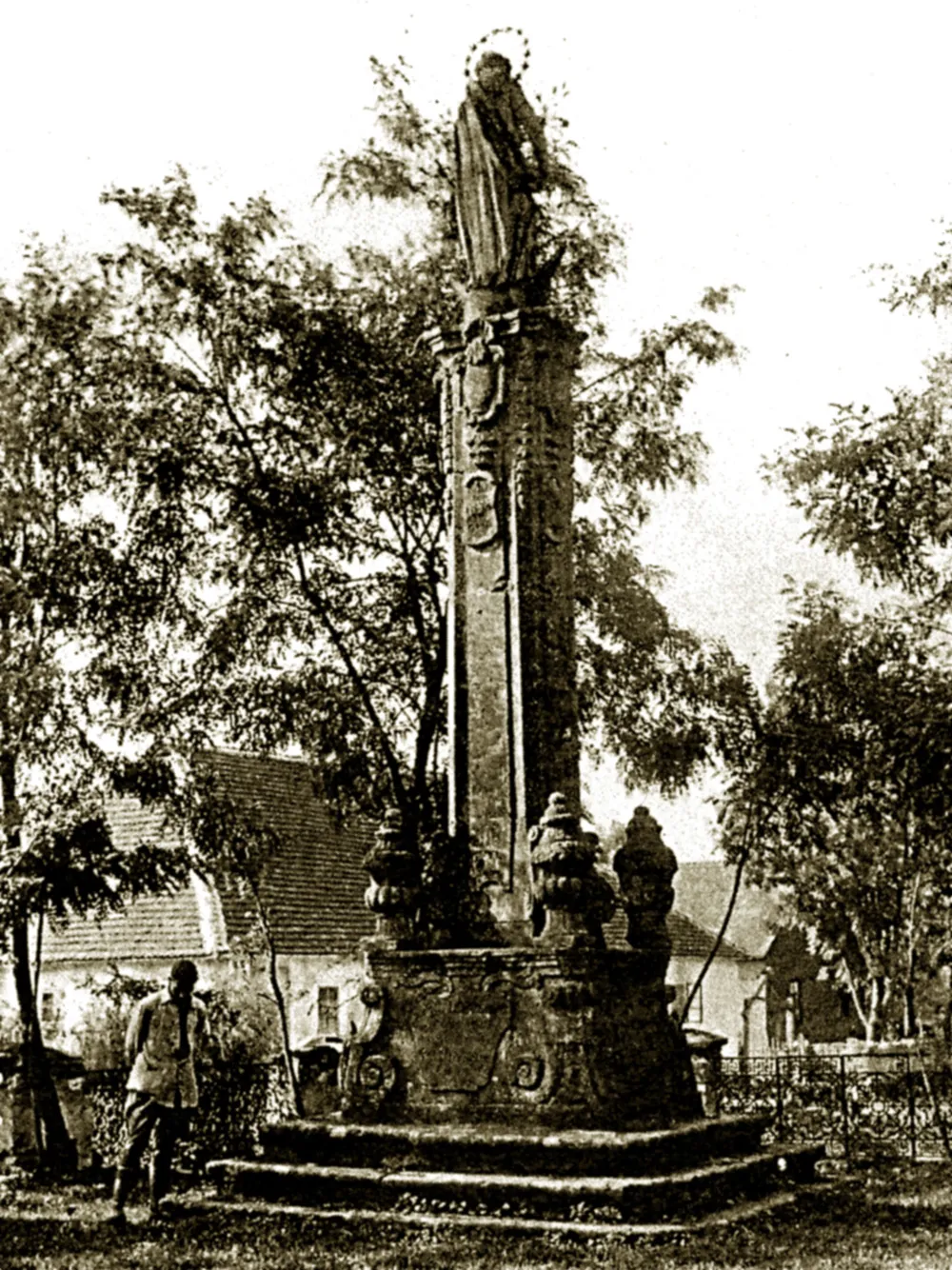
In particular, in 1744 the local monastery underwent a huge reconstruction and rebuilding. It may well be that precisely to commemorate this landmark event for Sataniv, a very beautiful Baroque figure of the Annunciation was set up near the Church of the Holy Trinity (destroyed in 1936). After all, for the town the news of the royal fair privilege truly was “good tidings”.
The column with the statue was destroyed at the same time as the church, but the massive pedestal survived.
There is an interesting legend recorded about the figure itself.
The “Historical and Statistical Description” (“Podolskie eparkhialnye vedomosti”, 1862), citing the priest Kalinski, relates:
Once upon a time, it says, a local young squire seduced a young Satanivian noblewoman. This Podillian “Casanova” was evidently guided by the well-known truth: “To promise is not to marry”. So, having got what he wanted, he immediately forgot about the beauty. The offended former maiden, without thinking twice, filed a lawsuit (in both the secular and the church court). The secular court sentenced the libertine to a sizeable fine in favour of the injured party, and the church court, as penance for the sin of adultery, ordered the philandering nobleman to erect the said “figure”. In support of this version, the veteran priest cited the Latin inscription “Culpae non pietatis opus” (a monument of guilt, but not of piety), which allegedly adorned the column.
Let us recall that all the tales of Father Kalinski are merely local legends that have nothing to do with historical truth. The story of the sinful nobleman should accordingly be treated with great caution. All the more so since the Latin inscription in question actually translates as “Sin is not the work of the pious”. Such a line could have been carved on any sacred building, with no connection to any particular incident.
If at least the pedestal of the Annunciation figure survived, of the church beside which it once stood only memories and a few photographs remain.
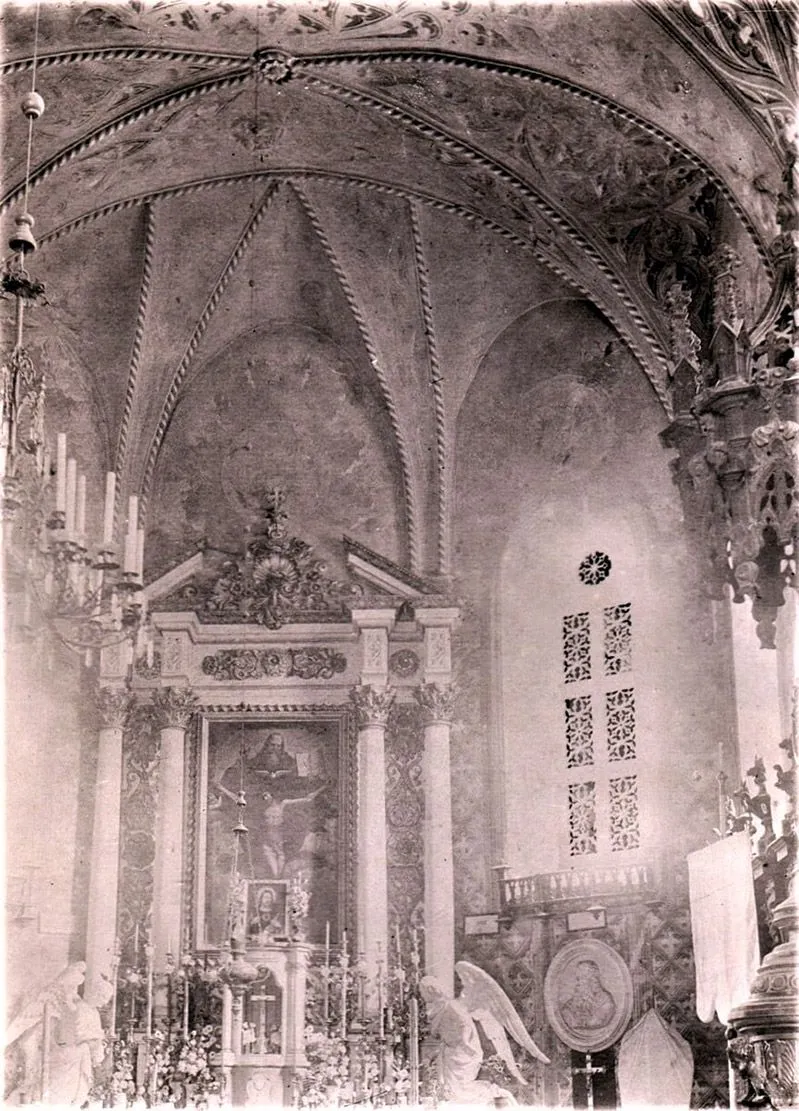
Interiors of the destroyed church. Photo by the expedition of Stefan Taranushenko and Pavlo Zholtovskyi. 1930
Albert Sobkov, head of the Sataniv territorial community, had for about ten years cherished the dream of restoring the ancient sacred figure of the Immaculate Virgin, long regarded as Sataniv’s patroness and a kind of talisman. At least, as early as March 2021 he told the author of these lines that he was negotiating with people who could recreate the ancient figure. Fortunately, a few photographs survive, albeit of poor quality.
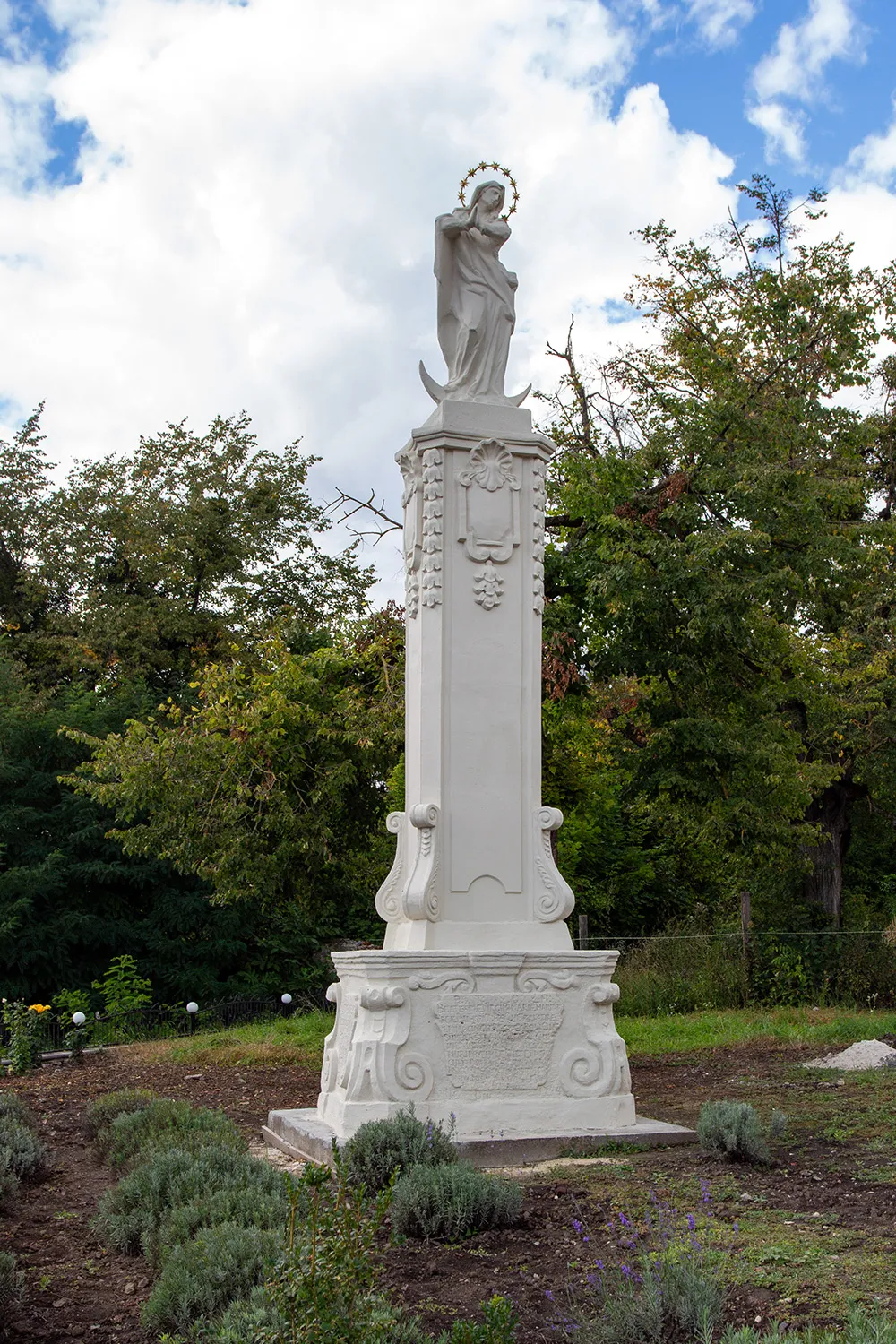
As Albert Sobkov told “UI” by phone, the project is not yet complete. In particular, four Baroque urns that once stood at the corners of the base stone still need to be installed, along with other details. And, of course, the approaches need to be tidied up.
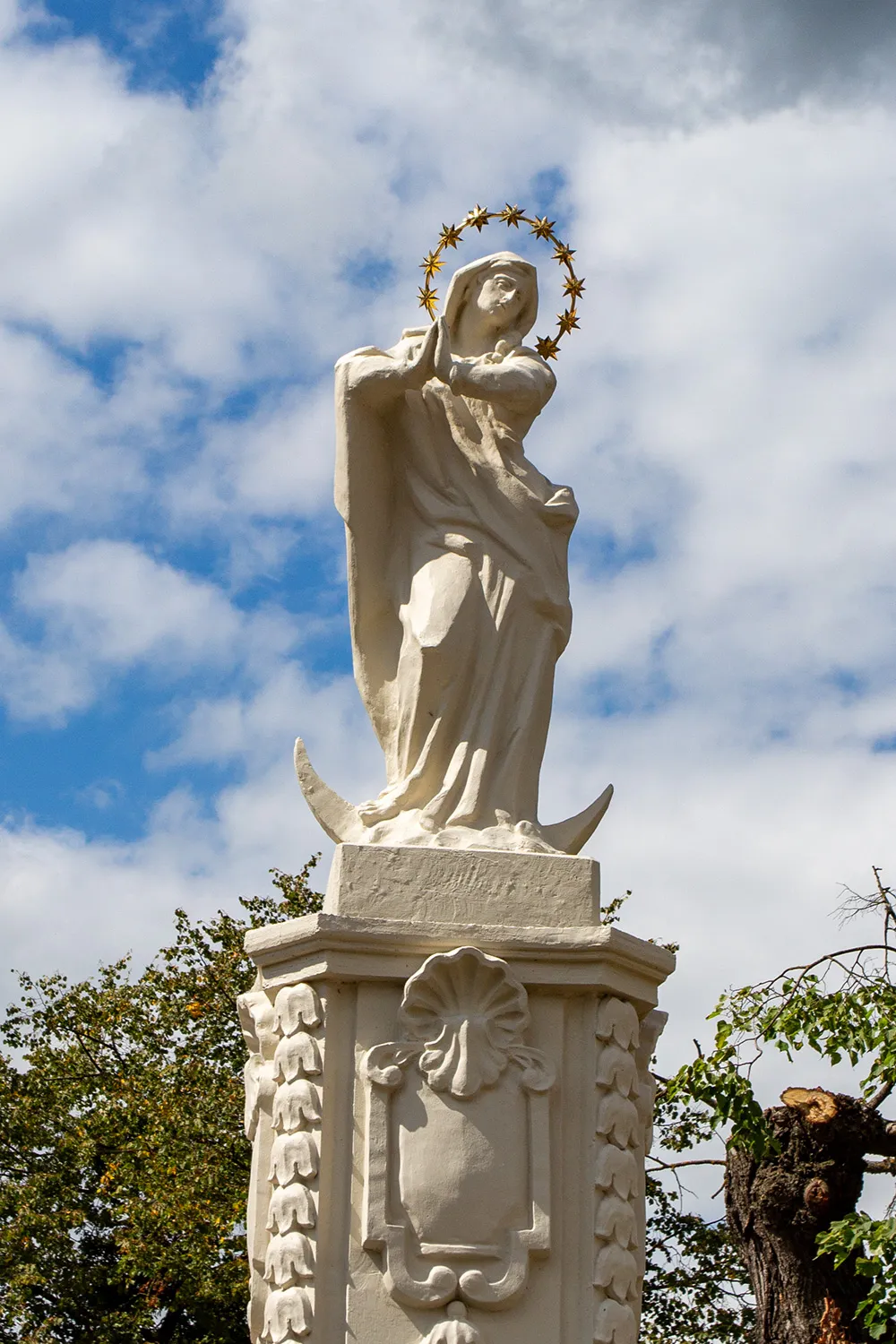
As Albert Ivanovych said, when everything is ready the figure will be solemnly unveiled and consecrated.
As for financing of the project, the head of the community noted that the funds come from an unnamed patron.
Text and photos: Dmytro Poliukhovych


