

What links Podillia with the Church of the Holy Sepulchre in Jerusalem?
A sensational discovery by Podillian local historians
The article has just been published in “Nowy Kurier Galicyjski”, the information partner of the “Graves of the Ancestors” project. We give it in translation from Polish. There are many more photos than in the Polish edition.
Cemetery in the village of Kumaniv
“Nowy Kurier Galicyjski” has already told readers about the research project “Graves of the Ancestors”, launched by the Department of Culture, Nationalities, Religions and Tourism of the Horodok City Council and the NGO “Ukraine Incognita”. Let us recall that during its implementation the necropolises of the Horodok area (Ukrainian, Polish and Jewish) are to be surveyed and studied in order to preserve the historical heritage and promote the diverse and multinational culture of Podillia. The discoveries made by the local historians (sometimes sensational!) have been reported repeatedly by both “NKG” and numerous regional, national and even foreign media. On the project’s results it is planned to prepare a separate book and to organise a series of photo exhibitions. The first photo exhibition, we note, is planned to be devoted precisely to Roman Catholic (Polish) cemeteries. After being shown in Horodok it will be donated to the museum in Sochaczew, Horodok’s sister city in Poland.
This time the project “Graves of the Ancestors” focused on the village, once a small town, of Kuzmyn in the Horodok community, and the village of Kumaniv in the former Horodok district, now the Sataniv community. The latter later split into Kumaniv proper and Andriivka.
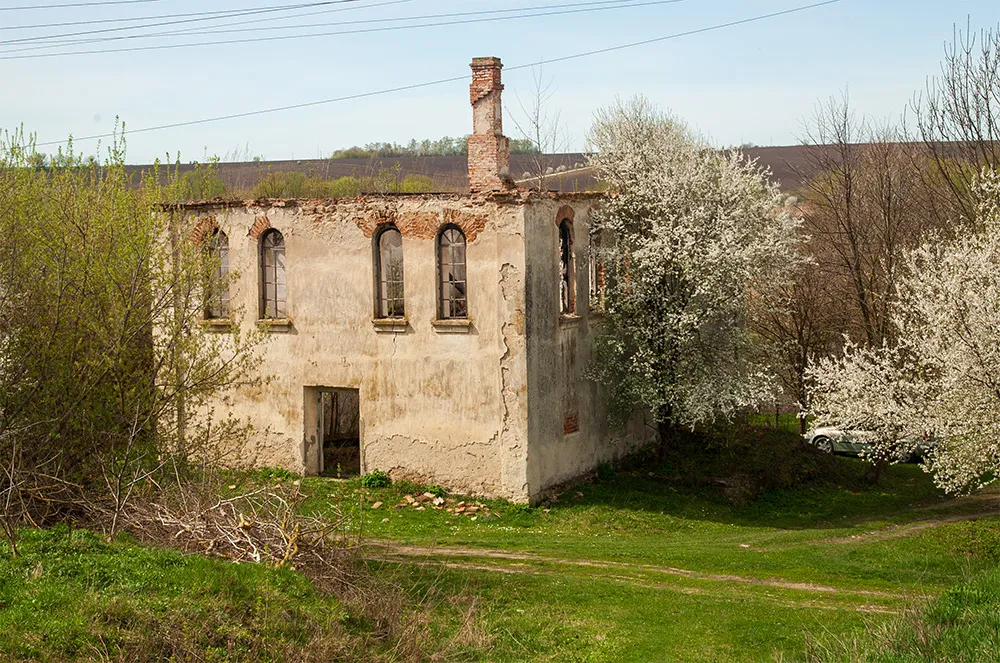
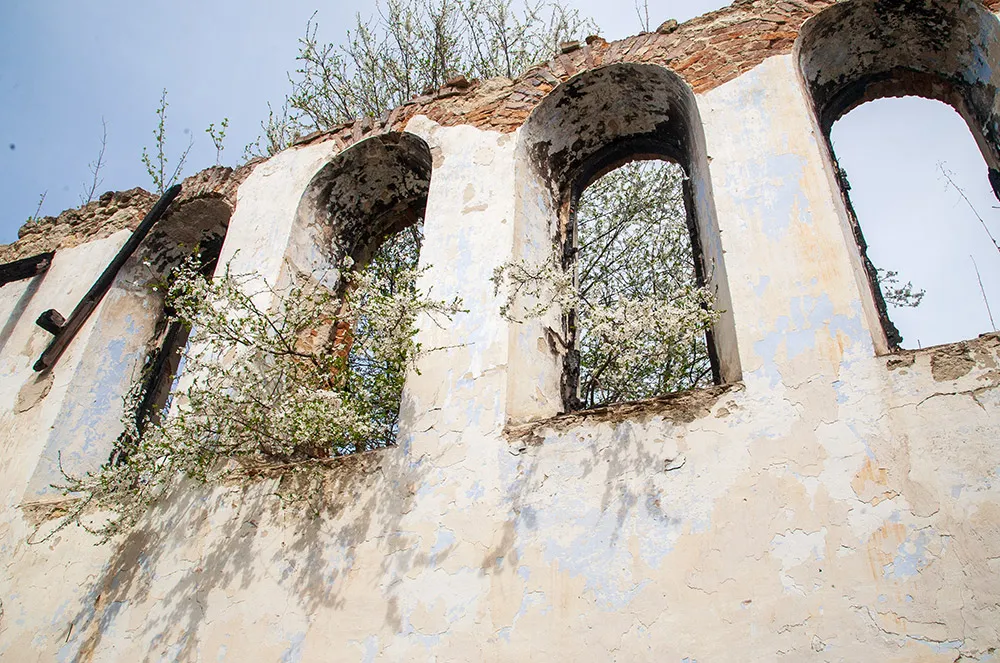
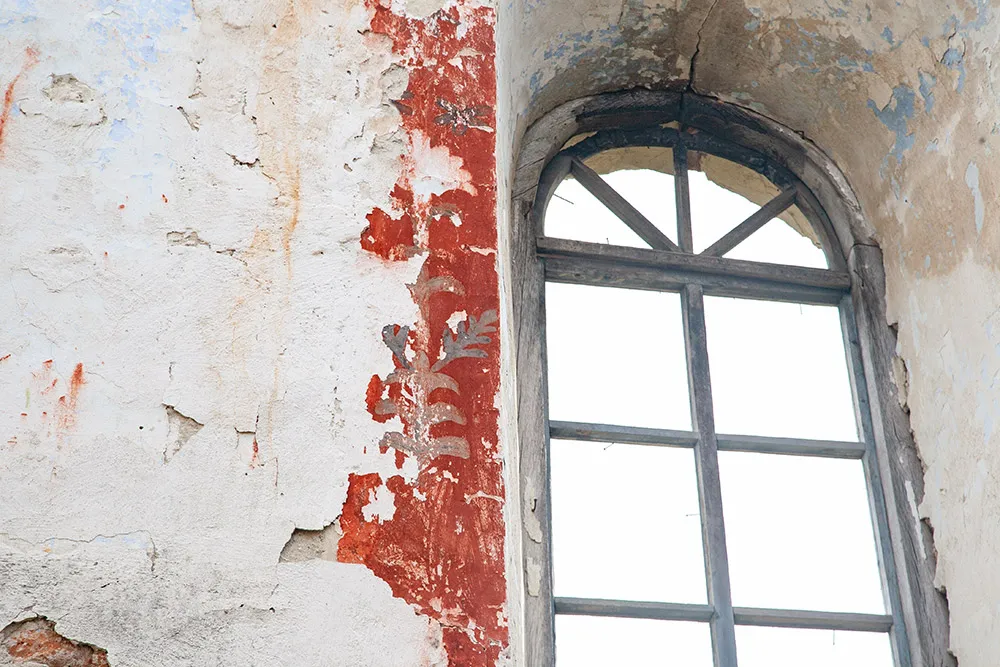
The synagogue in Kuzmyn and the murals revealed as a result of a fire
The finds made in Kuzmyn proved interesting, and the discovery of murals in the local synagogue of the early 19th century (previously hidden under “Soviet” plaster) was even sensational. But we will leave that aside here. The most sensational discoveries were made in the villages of Kumaniv and Andriivka.
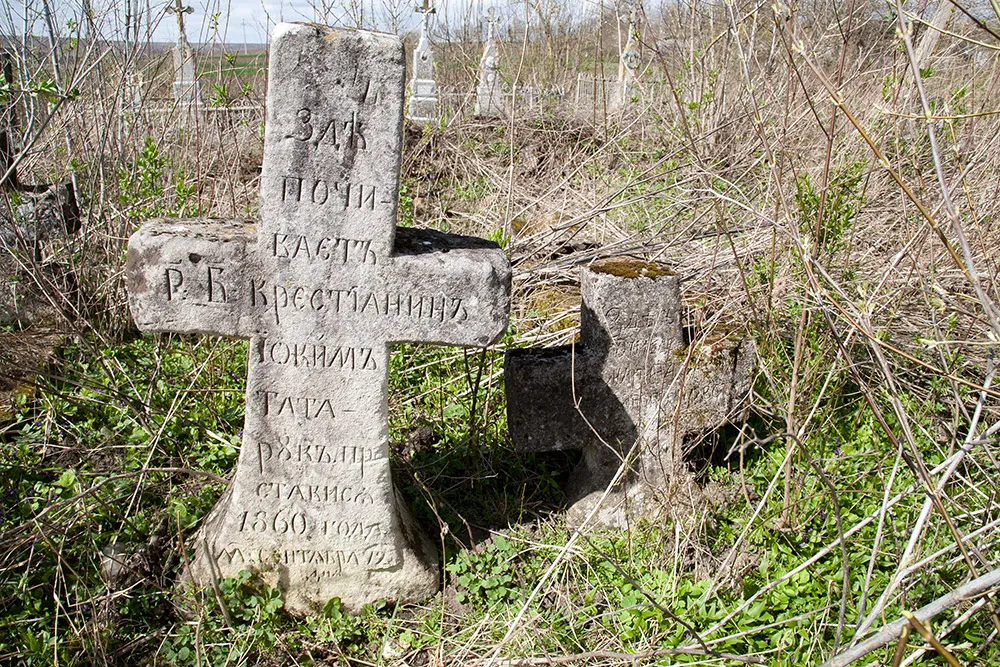
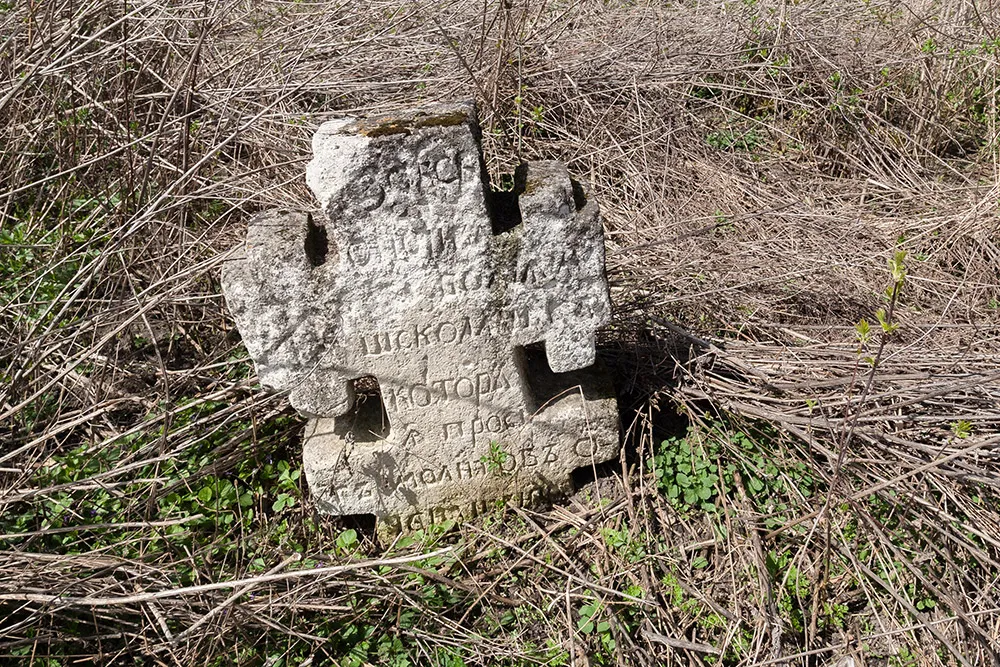
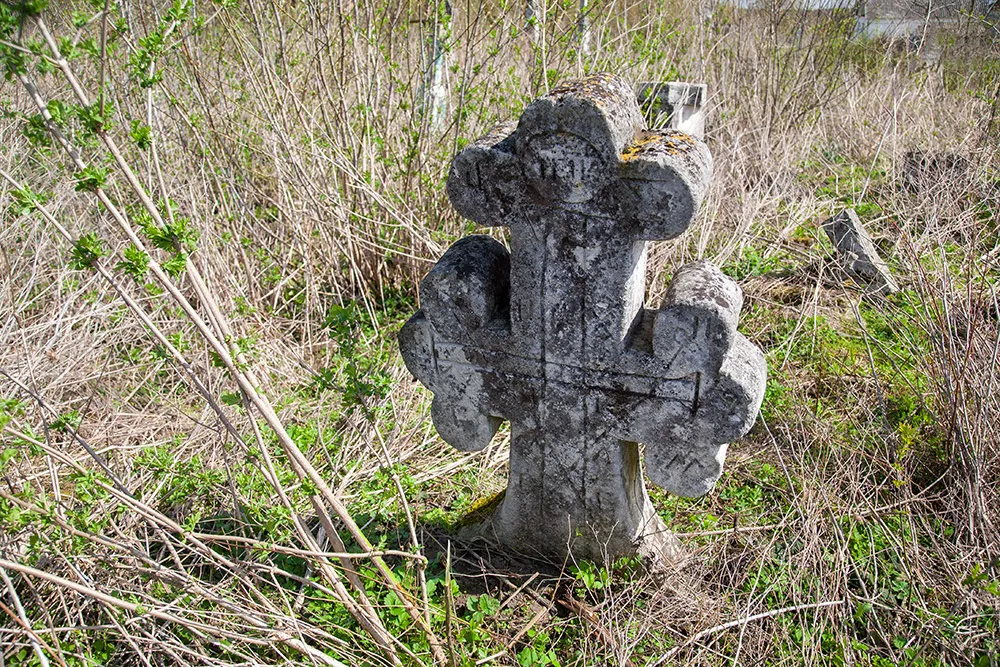
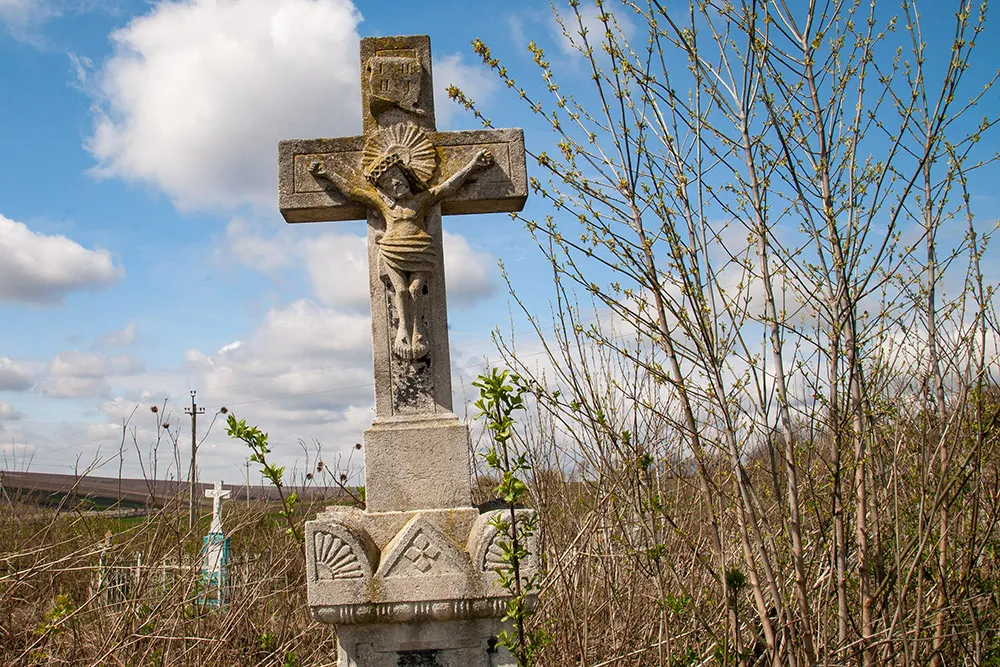
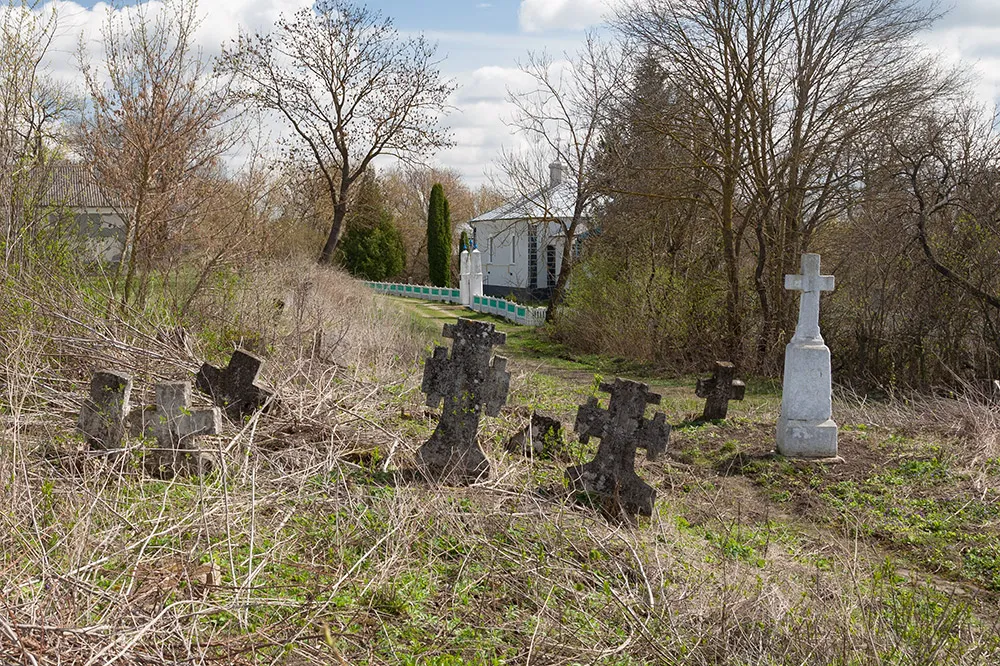
Cemetery in the village of Kumaniv
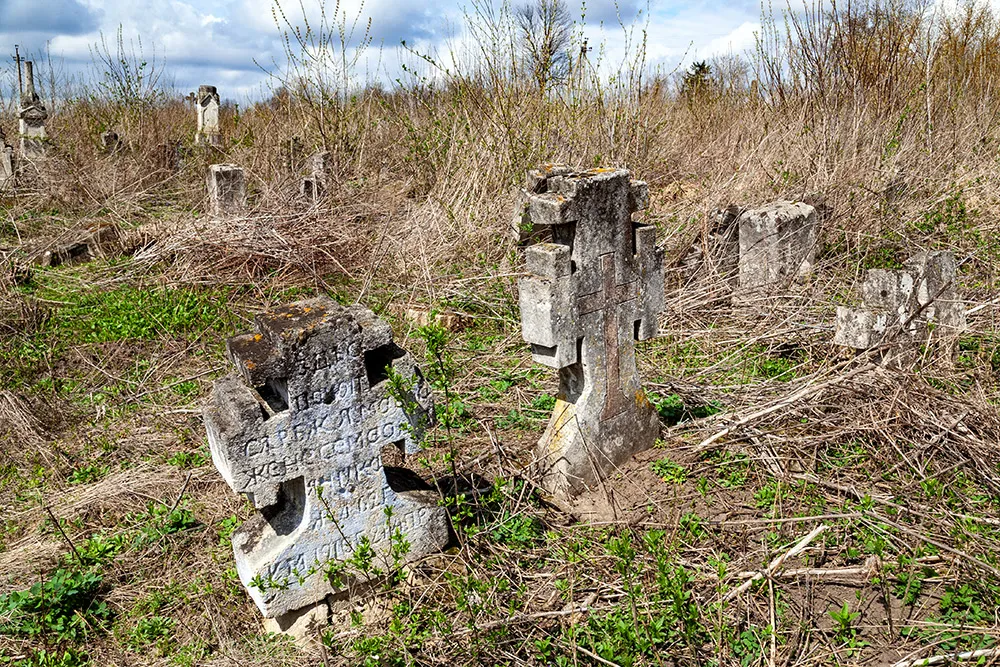
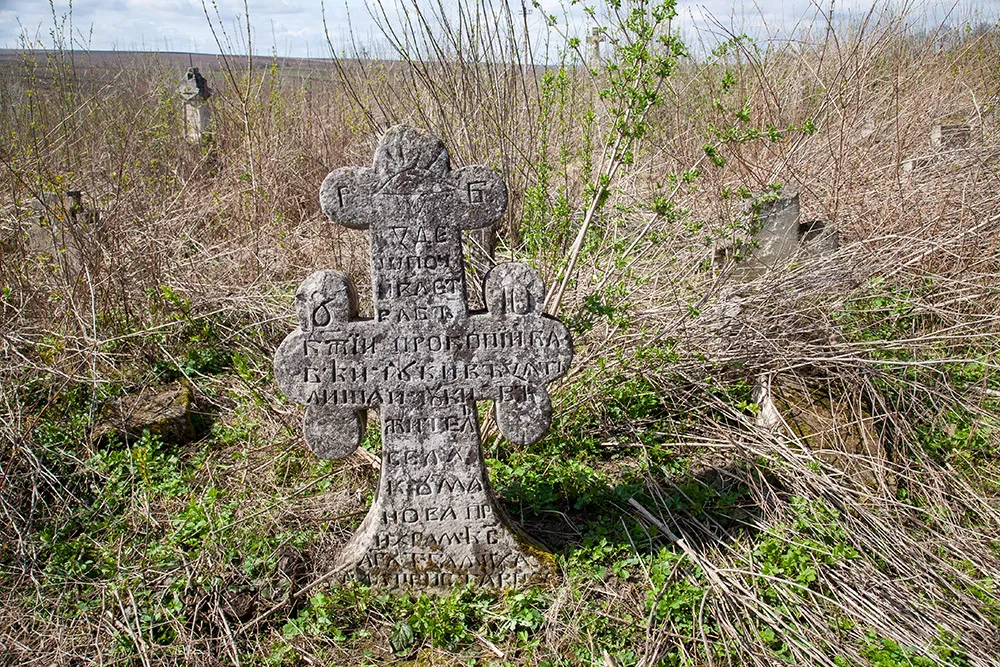
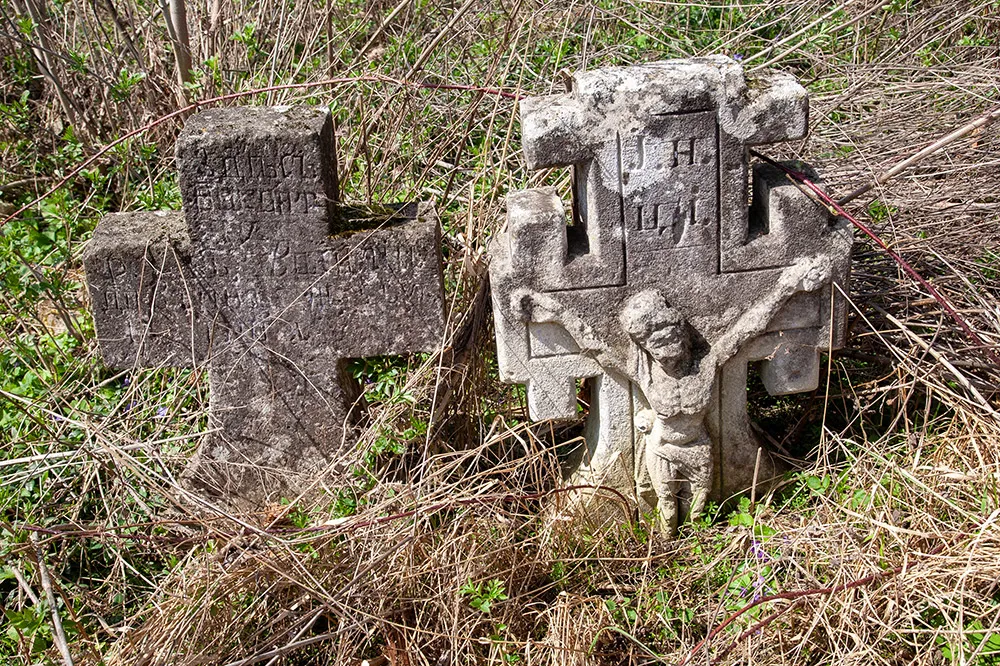
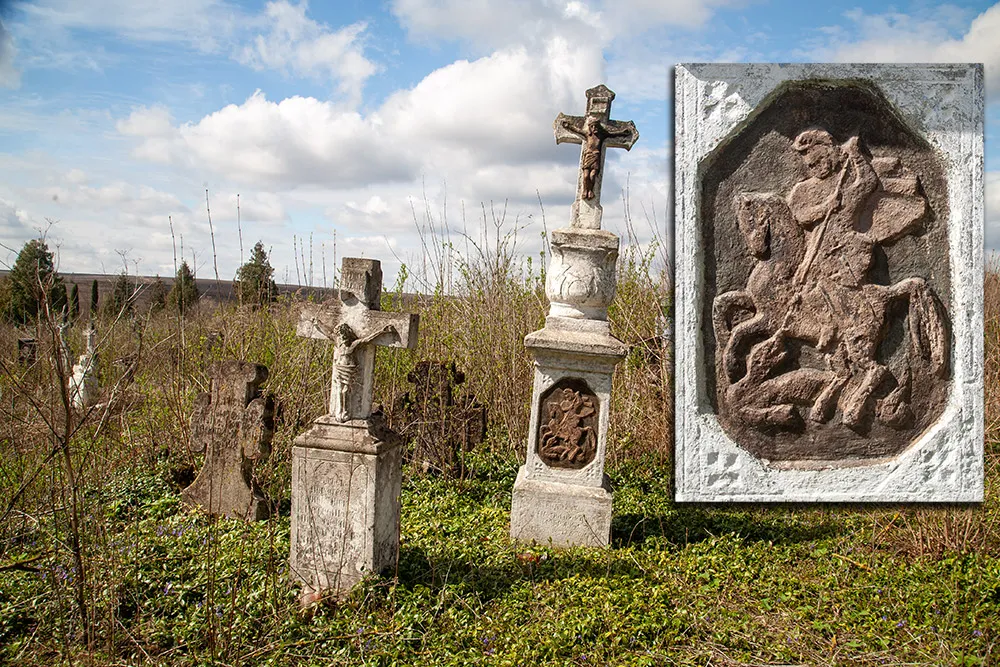
The first discovery was made at the Orthodox (Ukrainian) cemetery. Here we have many old cross-shaped gravestones, sometimes of forms quite atypical for this area. The oldest burials date from as early as the end of the 18th century. The most interesting and completely unexpected were two gravestones standing side by side on the graves of children aged 5 and 6. All of them are dated 1877. The children probably died at the same time as a result of an accident or an infectious disease. These gravestones were found by an active participant of the project, Valentyn Nyshchyi.
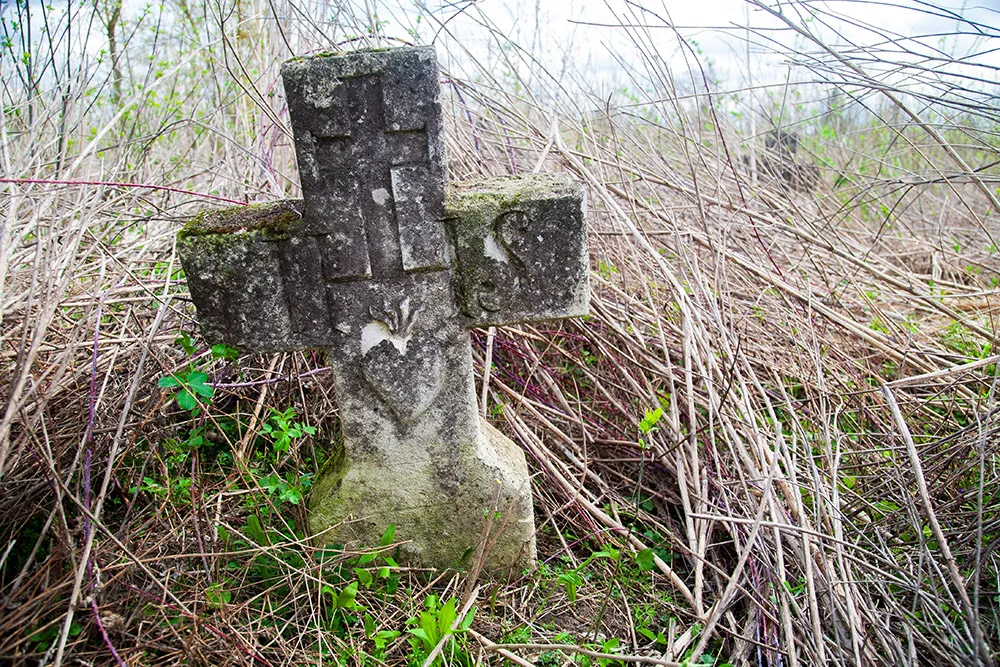
A classic “Polish” cross
The stone crosses on the children’s graves are interesting because their decoration is typical of Roman Catholic (Polish) monuments and by no means of Orthodox (Ukrainian) ones. In particular, their reverse side is decorated with a cross in the Latin tradition and the “IHS” christogram. Similar ones in decoration, and possibly the work of the same master, can be seen in the old Polish cemetery of Horodok.
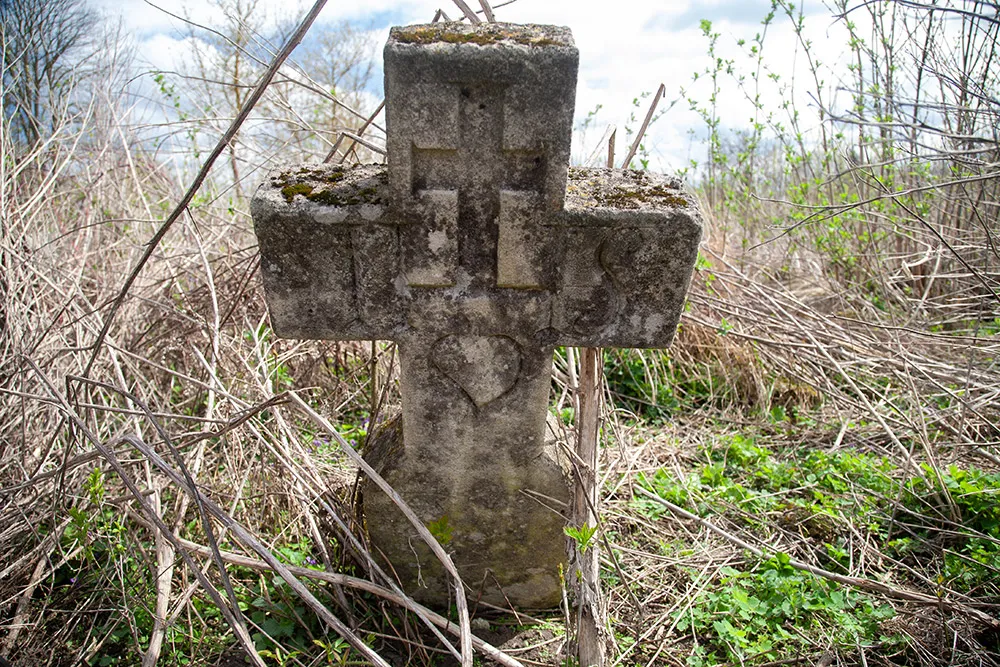
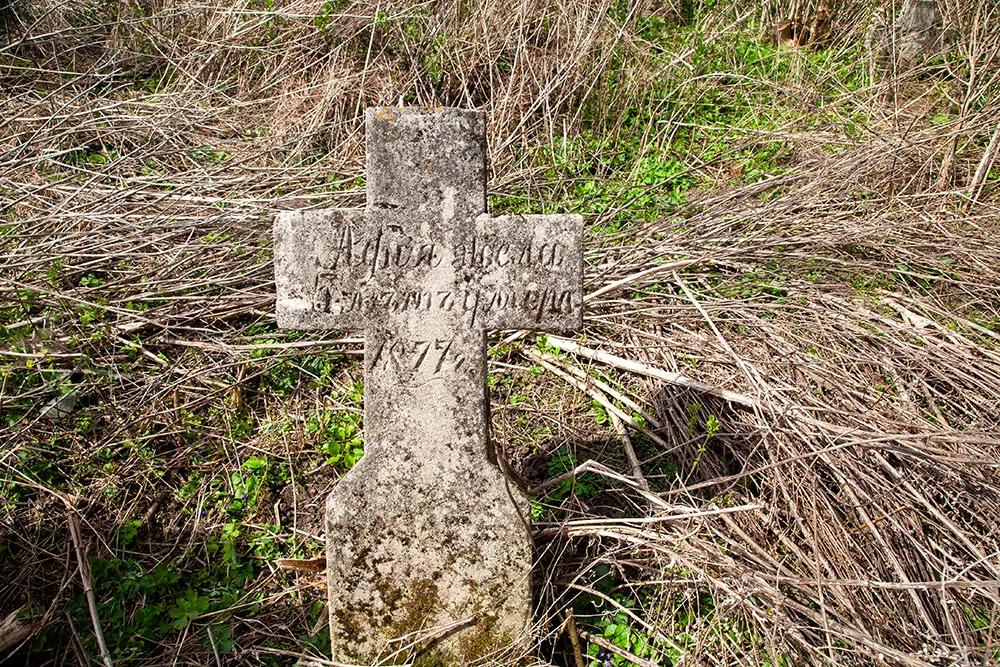
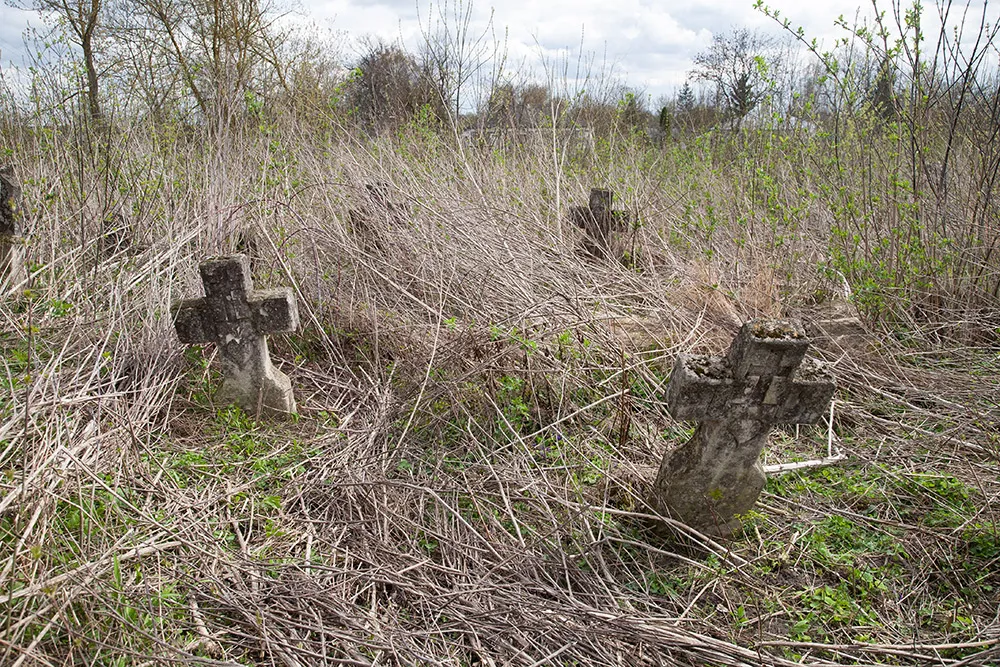
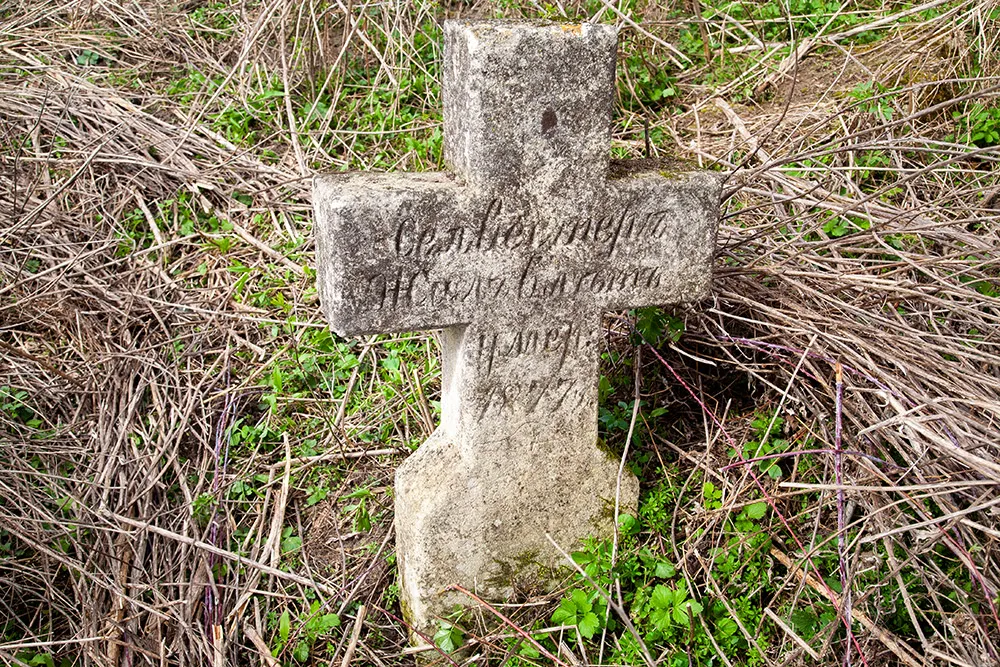
According to the project’s co-chair Oleh Fedorov, head of the Department of Culture, Nationalities, Religions and Tourism of the Horodok City Council, the reason for the use of “Polish” crosses here may be quite straightforward:
“In those days, blanks for gravestones were carried around the villages on carts by so-called ‘cross-carters’,” says Mr Fedorov. “The ‘cross-carters’ took the products of master stonecutters to sell, and then sold them either for money or in exchange for grain. The convoys of ‘cross-carters’ had gravestones for every occasion. Even Jewish matzevot. Probably by the time they reached Kumaniv, all the ‘Orthodox’ or ‘neutral’ crosses had been sold, and only the overtly Catholic ones remained. So the parents or relatives of these children bought those.”
Another version is not excluded either. Perhaps the buried children were from a mixed family: a Polish mother and a Ukrainian father, or the other way round. Accordingly, the Roman Catholic symbolism would be a kind of compromise.
Valentyn Nyshchyi has his own version. In the local historian’s opinion, a purely financial aspect may have played a role here:
“As we can see, the children died or perished at the same time. We do not know what means the parents had. Buying two large stone crosses at once could have been expensive for them. They settled for two small ones. And the small ones from the aforementioned ‘cross-carters’ came only with Roman Catholic symbols… Proceeding from the thesis ‘God is one for all’, they bought them.”
At the time of this find it seemed that the “Polish-Ukrainian” crosses were the main discovery of the expedition to the banks of the Skvyla. But, as it turned out, the most interesting was still to come!
It is worth noting here that Kumaniv and Andriivka are very remote villages. It seems that no tourist or local-history researcher has ever set foot here. At least there is not a single mention of it on the internet. Nor of the villages themselves, for that matter. Which is understandable: it is impossible to get here by accident. And not by accident, either: you have to try very, very hard. And before that, want to very much. Although this neglect is strange. The nature here is wonderful. The landscapes are amazing, even at the very beginning of April. And in May it will be a true paradise here. As for historical monuments, everything is fine too. It is only that getting there along broken roads is hard.
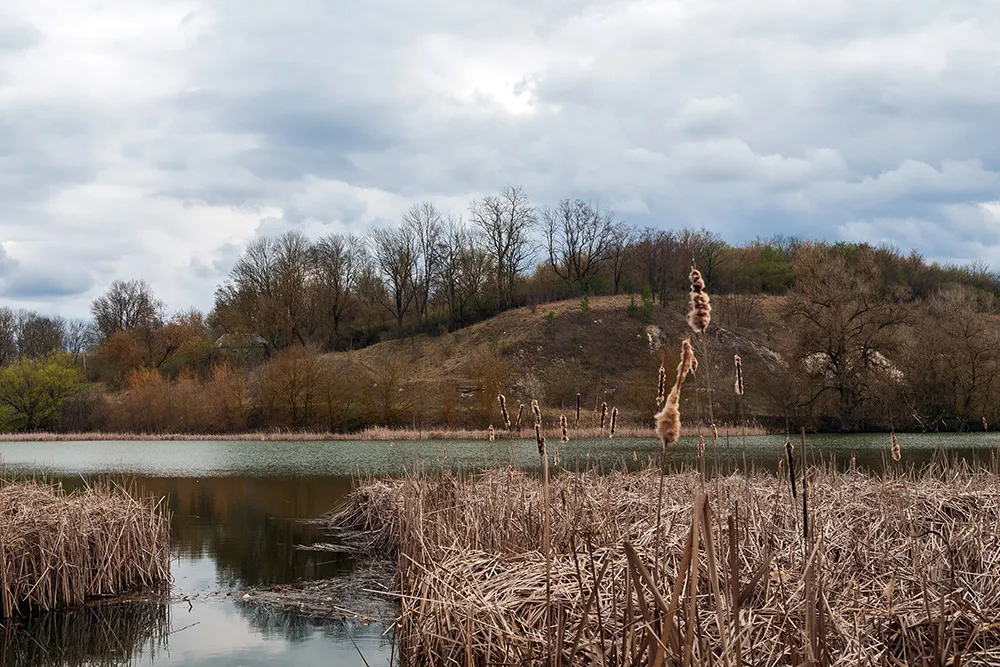
The Kumaniv-Andriivka landscape. An old Catholic cemetery on the hill
The village’s ornament is the Church of the Transfiguration of the Lord, which stands on the top of a high hill. There is little information about its construction, and what there is is contradictory. Only one thing can be said for certain: it took its almost present-day form around 1750, on the site of earlier predecessors, at the expense of someone from the Stadnicki family of the Szreniawa coat of arms, very respected in these parts.
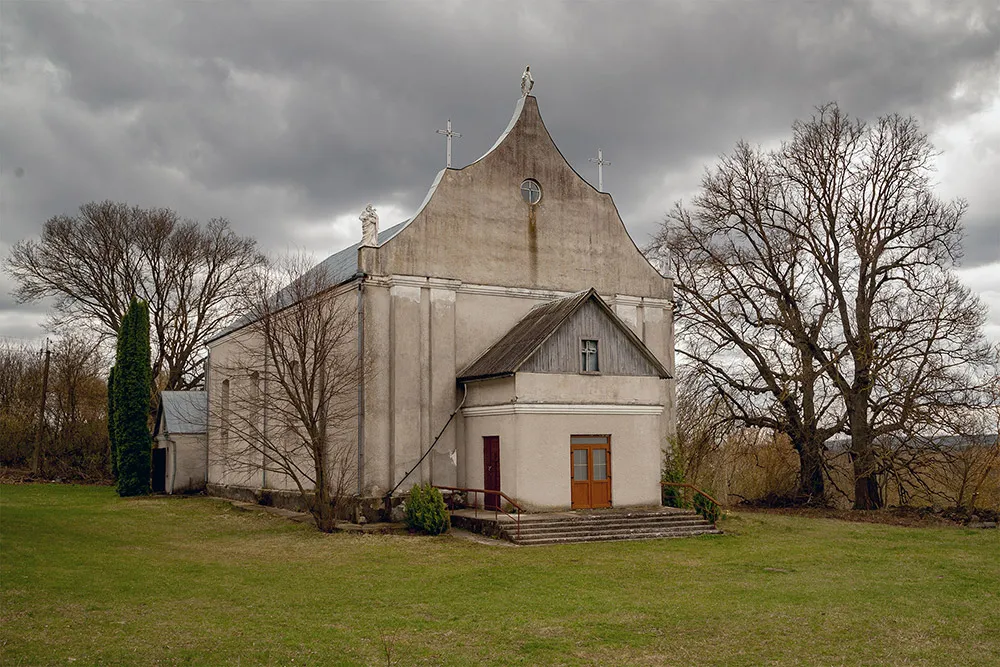
For a long time the church was the centre of a huge parish that extended over a good fifteen surrounding villages. After the Russian Bolsheviks seized the lands of the Ukrainian People’s Republic, hard times came for the parish and the church. In the eyes of the occupying Moscow authorities and local collaborators it proved doubly hostile. First, the Russian Bolsheviks fought the church as such. Second, it was a Polish church. Recall that in the interwar period the main enemy of the USSR was precisely “gentry” Poland, not Germany or Britain with the USA. Moreover, it was a border territory and all local Poles (even proletarians and peasants) were considered potential spies of Piłsudski. What can one say, then, of the priests. According to the recollections of old-timers, a local Ukrainian managed to smuggle the last priest of the Kumaniv parish (probably Fr Linievych) across the Zbruch. When the authorities found out about it, the rescuer was shot.
After the church was closed it was turned into a grain store, and after the Second World War into an agrochemical warehouse. Only under Independence was the shrine returned to believers, and it was subsequently raised from ruin through the efforts of the famous builder-priest Fr Władysław Wanags. Unfortunately, it proved impossible to restore the rich architectural decoration and the incredible interior murals. It is expensive, and there are no such masters any more.
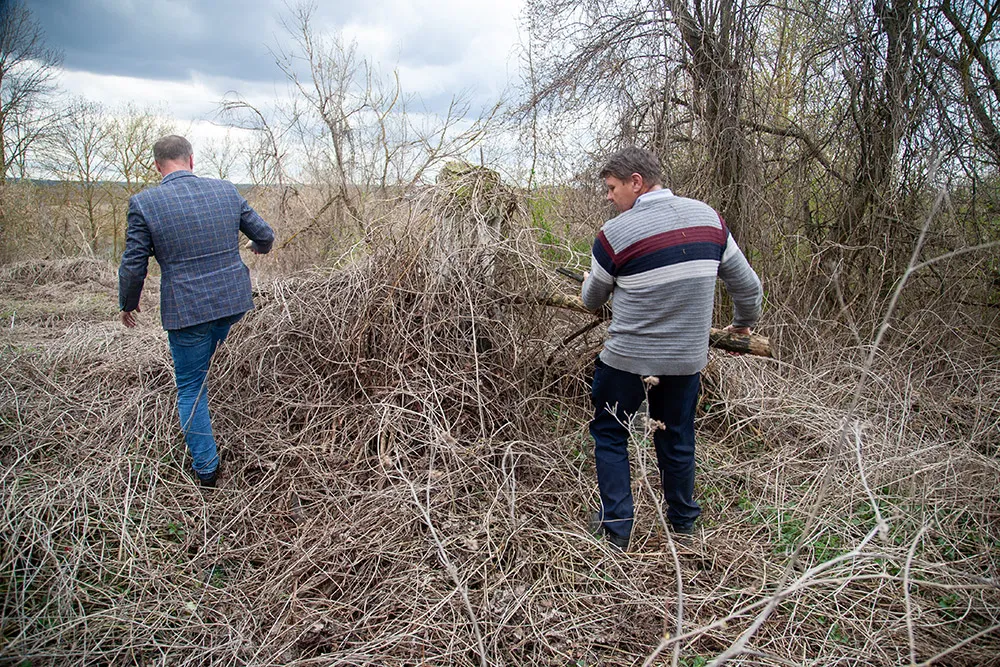
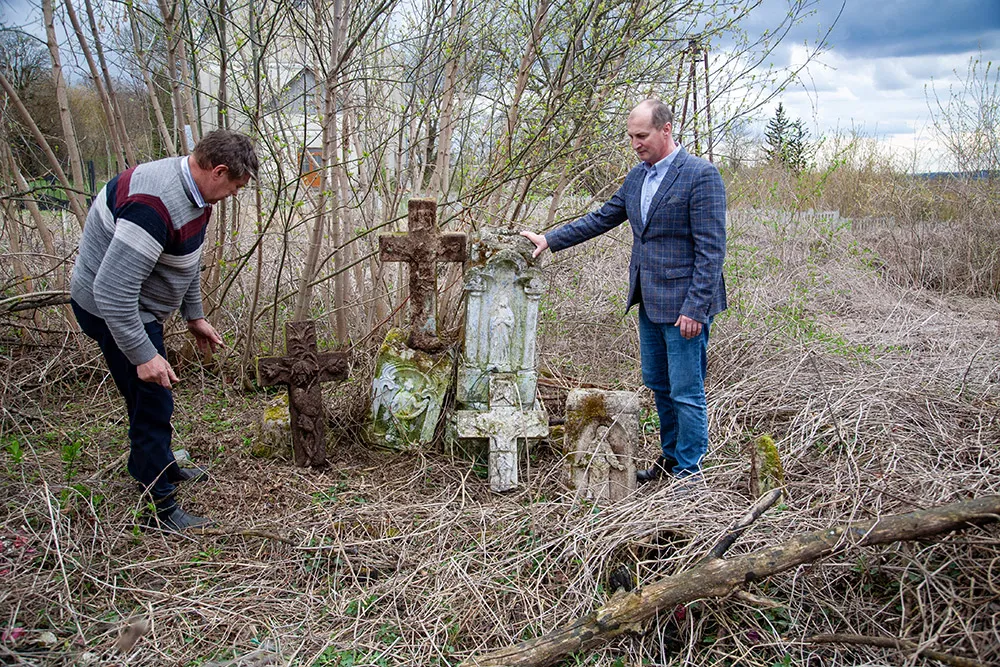
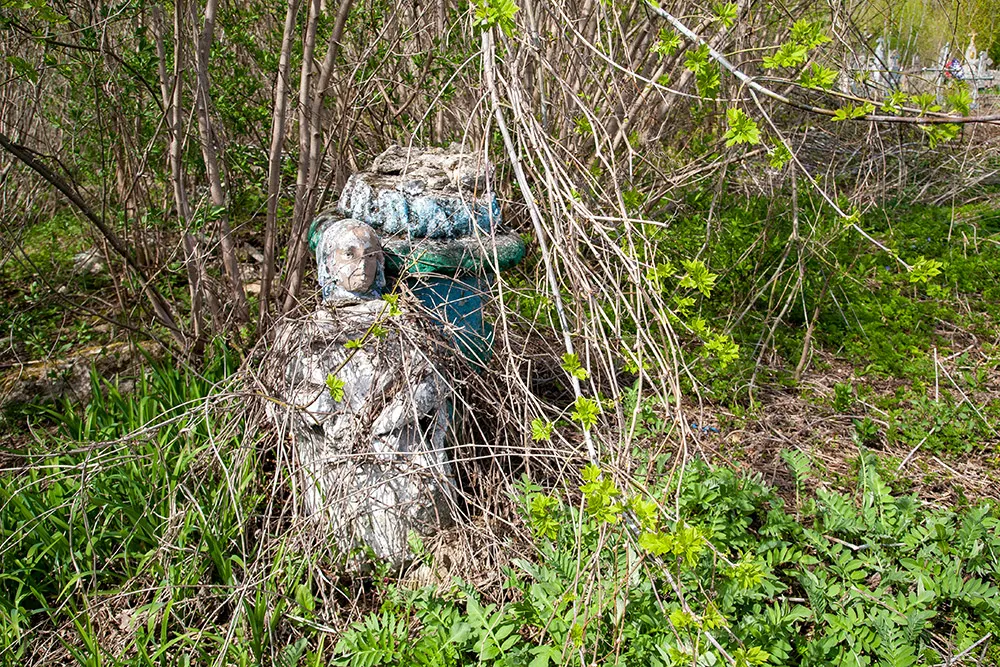
Given the venerable age of the church and the necropolis, the researchers reasonably hoped to find even 18th-century monuments. And considering that the gentry of more than a dozen surrounding villages were buried here, these gravestones should have been quite remarkable. But the grandiose cemetery, surrounded by a powerful stone wall, did not live up to expectations. Its main areas proved to be completely empty and looked like ordinary forest. Not even fragments remain. Only a few desecrated underground tombs.
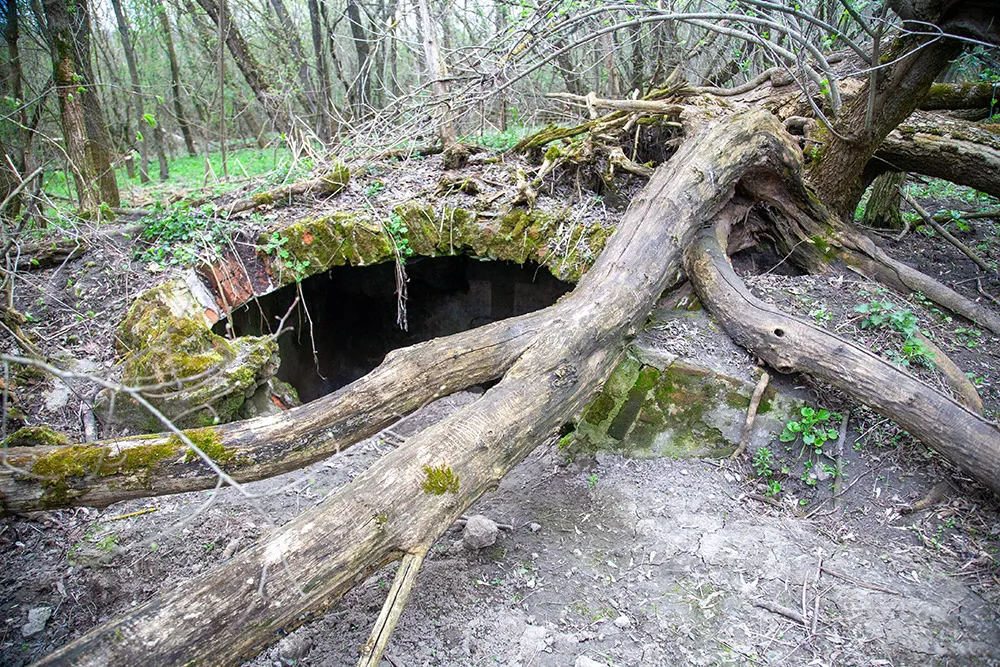
This has a simple and sad explanation. Almost immediately after the church was closed, the communists removed all the iron and cast-iron gravestones from the cemetery. The process of industrialisation badly needed metal. And there was plenty of it in the necropolis. In particular, according to legend, on the tomb of the Żukowski family alone (this family once owned part of the village) stood a cast-iron cross as much as 8 metres high! In addition, the cemetery had many gravestones with bronze details and decoration.
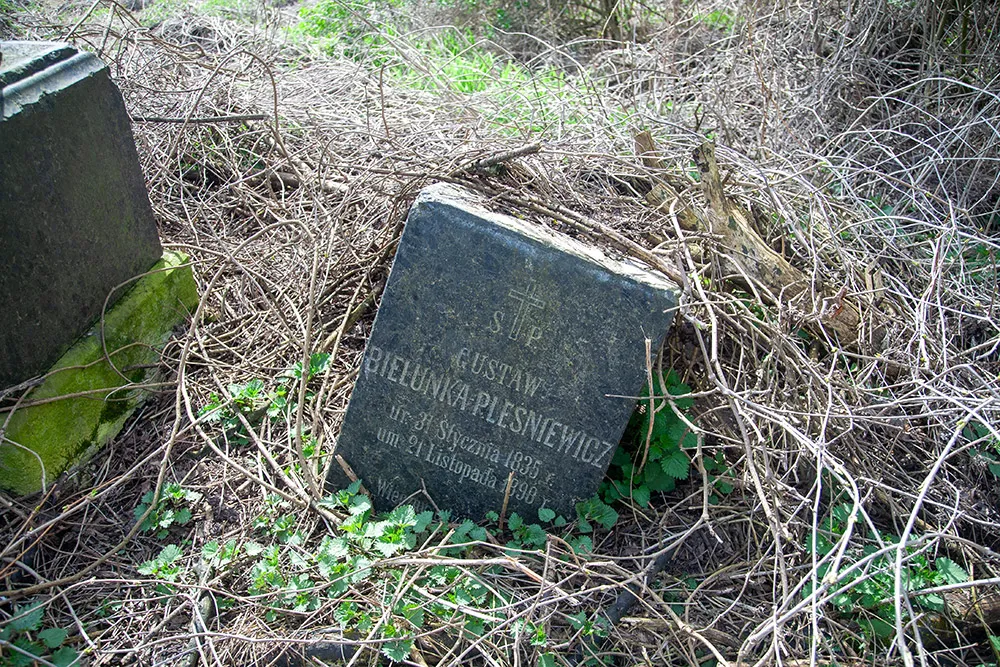
We managed to find only about a dozen and a half old monuments. Interesting ones, though. Among them, for example, is the desecrated gravestone of one of the landowners of the village, Gustaw Pleśniewicz (the other part belonged to the aforementioned Żukowski family).
It is worth noting that the Kumaniv church has one more interesting and unique feature. It is surrounded by a huge area of so-called “church land”: land that belonged to the parish and was used for its needs. Various buildings once stood on it: the vicar’s house, a hospital, a parish house and so on.
To get an idea of how vast the parish land is, it is enough to note that the two-storey parish house, built back in 1781, stands more than 200 metres east of the church. Once, back in the 1980s, the local primary school was here. And now it is a picturesque ruin in the middle of thickets. It is a great pity that such a beautiful building, of the 18th century at that, is falling into ruin.
And now to the expedition’s main discovery and one of the most significant finds made during the “Graves of the Ancestors” project. Indeed! Were it not for the war, this would have been a sensation of nationwide scale.
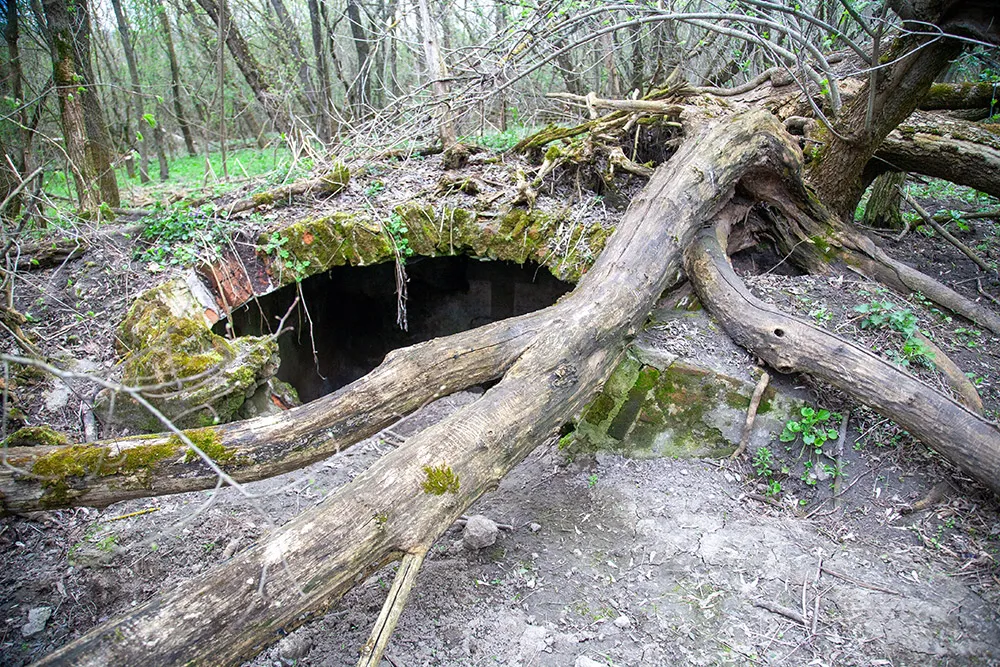
By the road leading to the church the researchers first saw the entrance to an old cellar. Considering a number of circumstances, first of all the features of the masonry, it was clearly not a simple peasant cellar. However, it was not possible to look inside without preparation. The entrance is filled with rubbish (probably the inside is the same). Lots of broken glass. Moreover, the dump was periodically set on fire and everything is covered with a layer of soot. It needs clearing, and overalls.
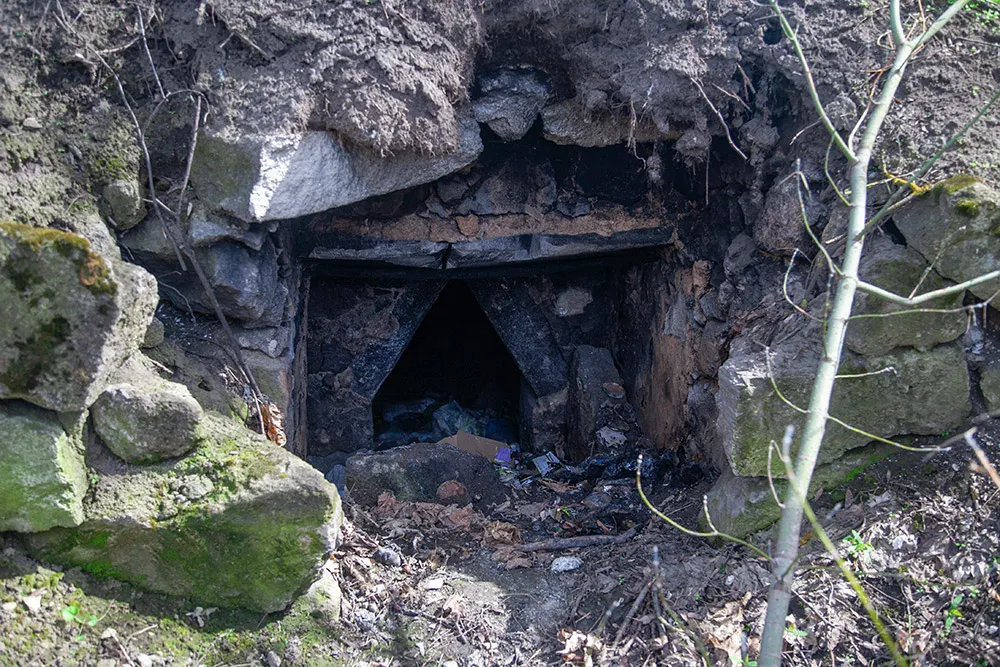
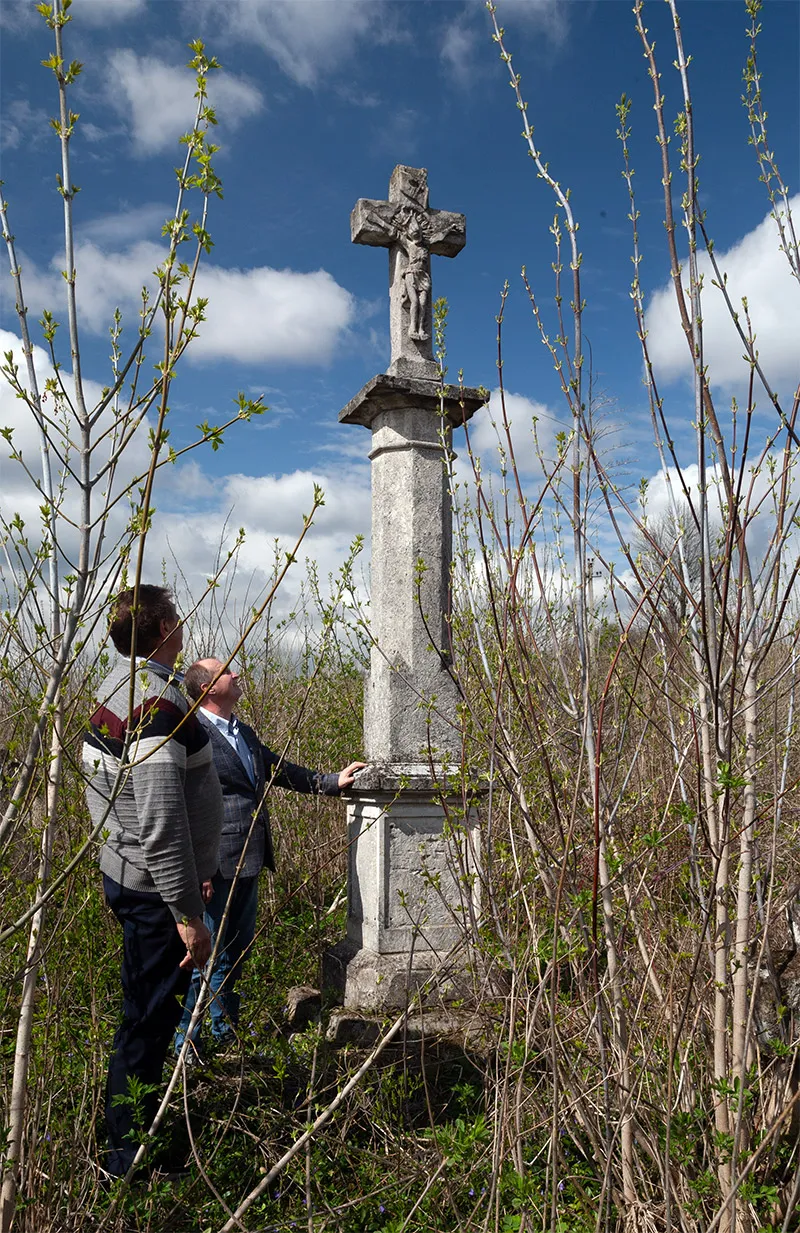
On the mound of the cellar, or more likely of some chapel-tomb, a large sacred figure once stood. It was destroyed by the communists. No traces of the figure remain, but the sizeable pedestal made of several blocks has survived. True, it now lies on its side.
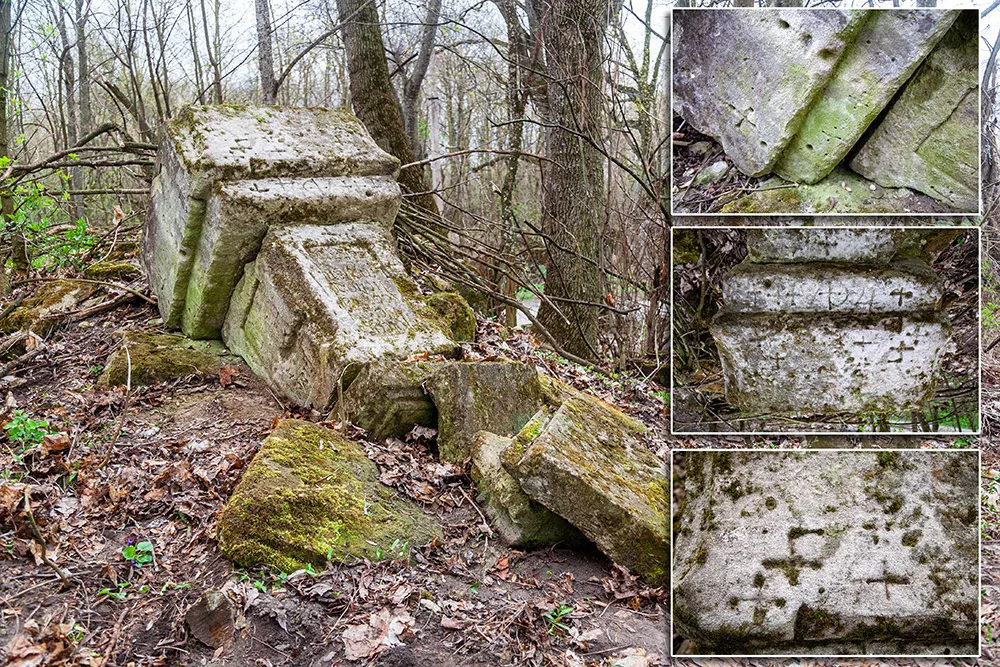
How great was the researchers’ surprise when, after scraping off the moss, they saw that the whole pedestal was densely covered with little crosses scratched into its surface, graffiti. Such marks are called “pilgrim crosses” in the historical literature. They were scratched by pilgrims after, or even during, prayer when visiting especially revered shrines. A scratched cross was meant not only to attest the visit to the shrine but also to reinforce the prayers said there. The best-known “pilgrim crosses” cover the walls of the Church of the Holy Sepulchre in Jerusalem. There are tens, if not hundreds, of thousands of them there. Interestingly, while inside the church crosses were carved to order for pilgrims by special craftsmen (so that they would also look good), in remote corners pilgrims scratched them themselves and as best they could.
NOTE! For more information about “pilgrim crosses” (and more photos), see “Pilgrim crosses” found in Podillia
In such numbers (the local historians counted almost three dozen marks), “pilgrim crosses” have never yet been encountered on Roman Catholic monuments in Ukraine!
“Such crosses in Central and Eastern Europe date across a wide range, from the 10th century (Murfatlar, Romania) to the 18th century (the Cave Monastery in the village of Subich, Khmelnytskyi Oblast),” comments on the find the well-known Podillian historian and archaeologist, Candidate of Historical Sciences Pavlo Nechytailo. “Given the date ‘1704’ carved on the pedestal, in this case too we have the 18th century. It is possible that some of the scratched crosses date from the 19th century as well. Thanks to last year’s find by the Ukraine Incognita expedition, the cross on the grave of Pantelemon Kopytko (died 1860), which is also covered with ‘pilgrim crosses’, the chronology of the practice of scratching crosses can be extended to the second half of the 19th century.”
The scholar also added:
“Similar crosses in our region are more typical of Orthodox cave monasteries, but they also occur in Catholic churches. On Roman Catholic monuments, however, they have not been known in such numbers until now. At the moment this is a mystery to which there is as yet no direct, unambiguous answer.”
Why this particular sacred figure was so revered cannot be said for now. And why it was considered so significant that pilgrims scratched crosses on it while praying remains a mystery that we very much want to solve.
Unfortunately, the plaque with an inscription explains nothing. The soft limestone has weathered and the inscription is very hard to make out. Only the following words could be deciphered: “Novels… A Jacobes …dictions …Lingram(?)”. Probably on the side on which the pedestal lies there is another inscription. And perhaps it can explain something.
Unfortunately, the local residents questioned know nothing about this monument. Even Fr Christopher, the priest who comes from Sataniv to hold services, did not help. At the researchers’ request he also asked parishioners, but the result was zero.
If we assume that the cellar on which the figure once stood is not a cellar but a tomb, then perhaps some very respected person, venerated by local residents as a saint, was buried there. For now we have yet another riddle of History to solve. Perhaps researchers from Poland will join in solving it. Suddenly some records have survived in the archives…
Dmytro Poliukhovych. Co-chair of the “Graves of the Ancestors” project from the NGO “Ukraine Incognita”


