Mysterious Trakhtemyriv. The cemetery, Monastyrok and Zarubyntsi

· 8 min read
Trakhtemyriv is a legendary place, the former capital of the Lower Cossacks, destroyed by Poles, Turks and Russians. And it was almost physically destroyed when the floodplain in the area of the Trakhtemyriv peninsula was flooded by the waters of the Kaniv Reservoir.
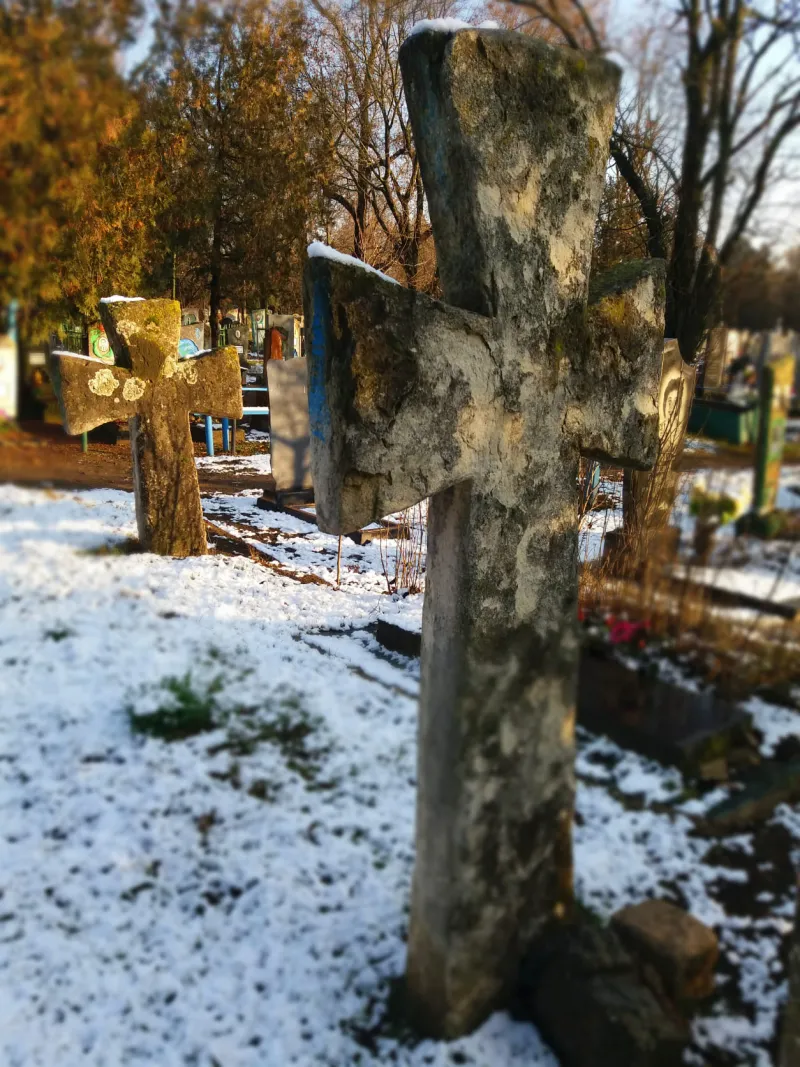
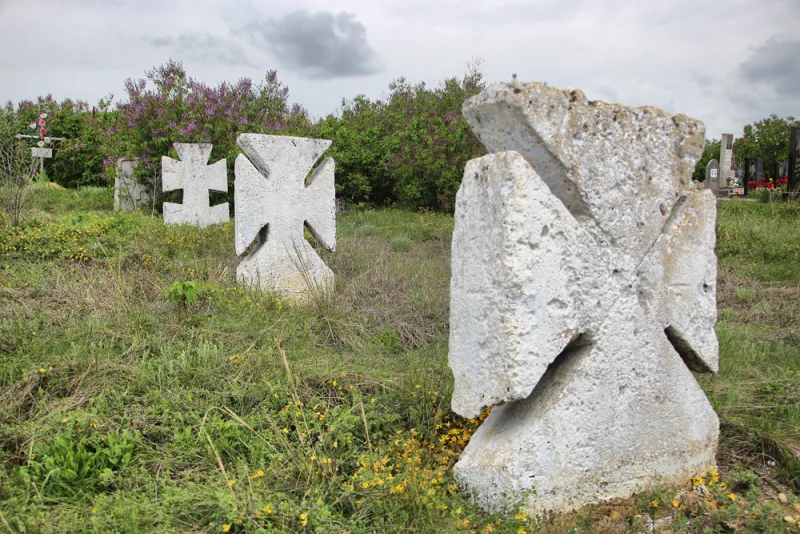
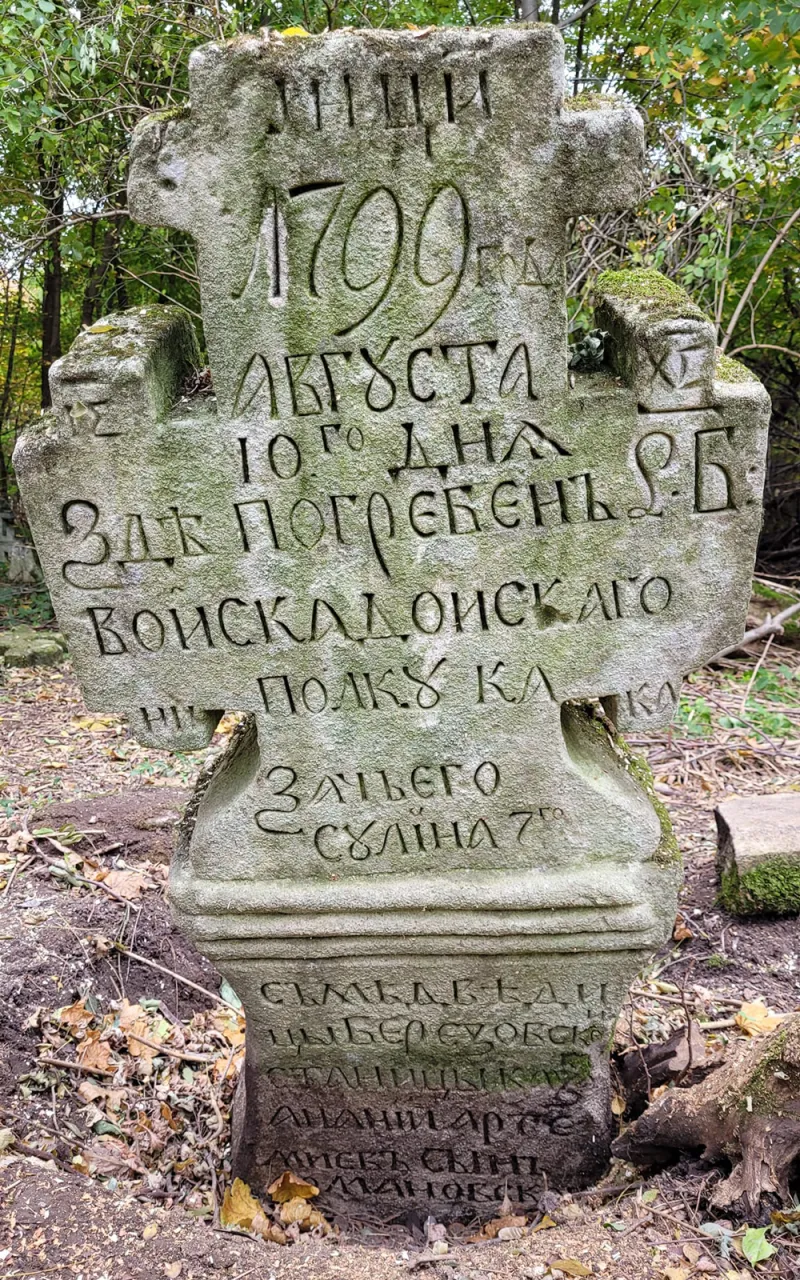
The peninsula is actively visited by tourists. Some come here for half a day to savour the beauty of the views, while others wander for several days with backpacks, calling Trakhtemyriv a place of power. On the Trakhtemyriv-Buchak peninsula (that is its correct name) there are quite a few settlements: Buchak, Hryhorivka, Velykyi and Malyi Bukryn, Hlyncha, Romashky, Troshchyn, Khodoriv. And of course Trakhtemyriv itself — in 2017 this village officially had 2 inhabitants, and whether anyone lives there now we have no official information. But there are almost always tourists here. The main local attraction, besides the views of the reservoir that swallowed the village of Trakhtemyriv, is the old cemetery with its sandstone, moss-covered, greenish gravestones.
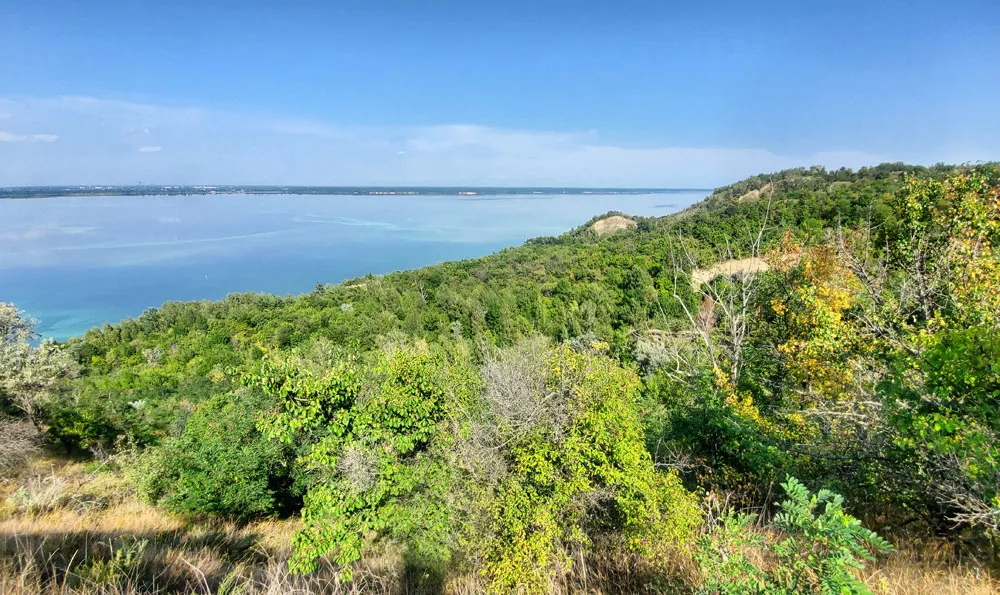
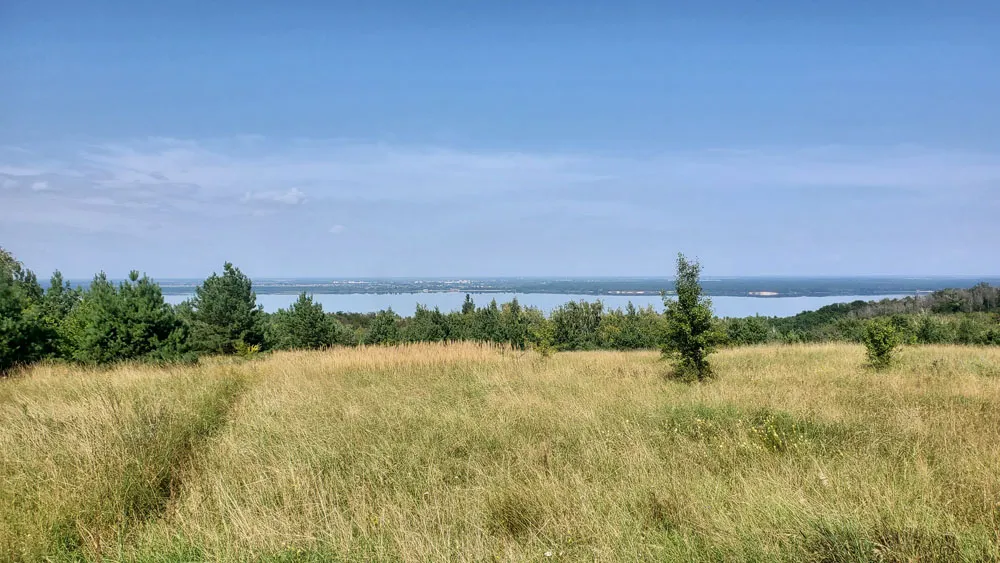
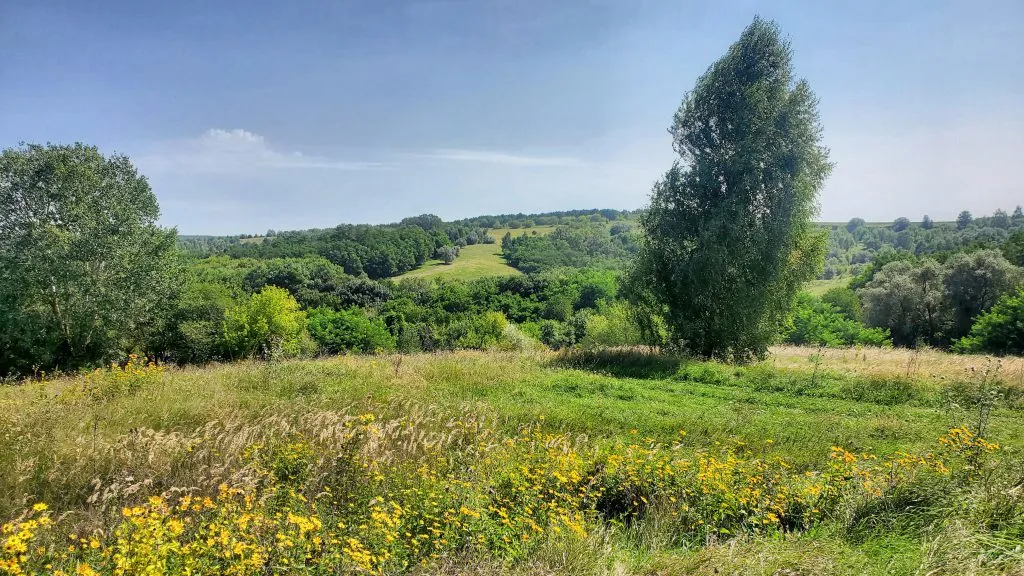
Views of the Trakhtemyriv-Buchak peninsula
In 2000 the regional landscape park “Trakhtemyriv” was created here; it was supposedly in private ownership, and access to the park’s landscapes was forbidden to tourists. The owner was the notorious Bakai, who built himself a palace and residence on protected and sacred sites. It was often said that this residence stood on the site of the Trakhtemyriv Monastery, but this is hardly true: judging by old maps, one can understand that the monastery stood in another place. Although the maps do not clearly mark the monastery’s location, old legends say that the monastery stood on the site of the village of Zarubyntsi. But on the same maps, between Zarubyntsi and Trakhtemyriv, there is a village called Monastyrok… Let us try to figure it out.
Back in the days of Rus’ there was a ford across the Dnipro here. And next to the ford stood the town of Zarub, first mentioned in the sources under the year 1096. In the Hypatian Chronicle under 1168 Zarub is already mentioned with a monastery and the Zarubyntsi ford. During the Mongol invasion Zarub and the monastery were destroyed. When they were rebuilt is not known for certain. According to Lavrentii Pokhylevych, during Tatar rule the khan’s representatives lived on the peninsula and collected tribute from Kyiv. The murzas, who were called temirs, were probably three in number, which is why the place itself came to be called Trekhtemirov.
At the beginning of the 16th century Trakhtemyriv was owned by Ostafii Dashkevych, a famous Cossack leader, Ruthenian-Lithuanian nobleman and the first koshovyi otaman of the Sich. In 1535 he bequeathed the territory to the Kyiv Pechersk Lavra. It is known that by that time the monastery existed again and was called the Trakhtemyriv Monastery, as evidenced by several Lithuanian lithographs. In old depictions the monastery looks like a mighty fortress with stone walls and towers, rising on a high cliff above the Dnipro.
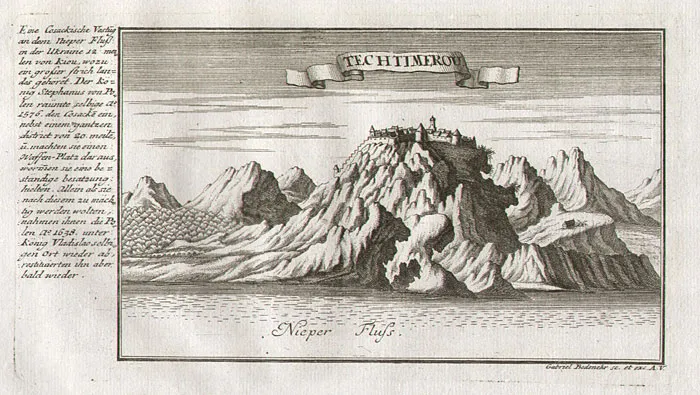
The Trakhtemyriv Monastery. A 17th-century depiction
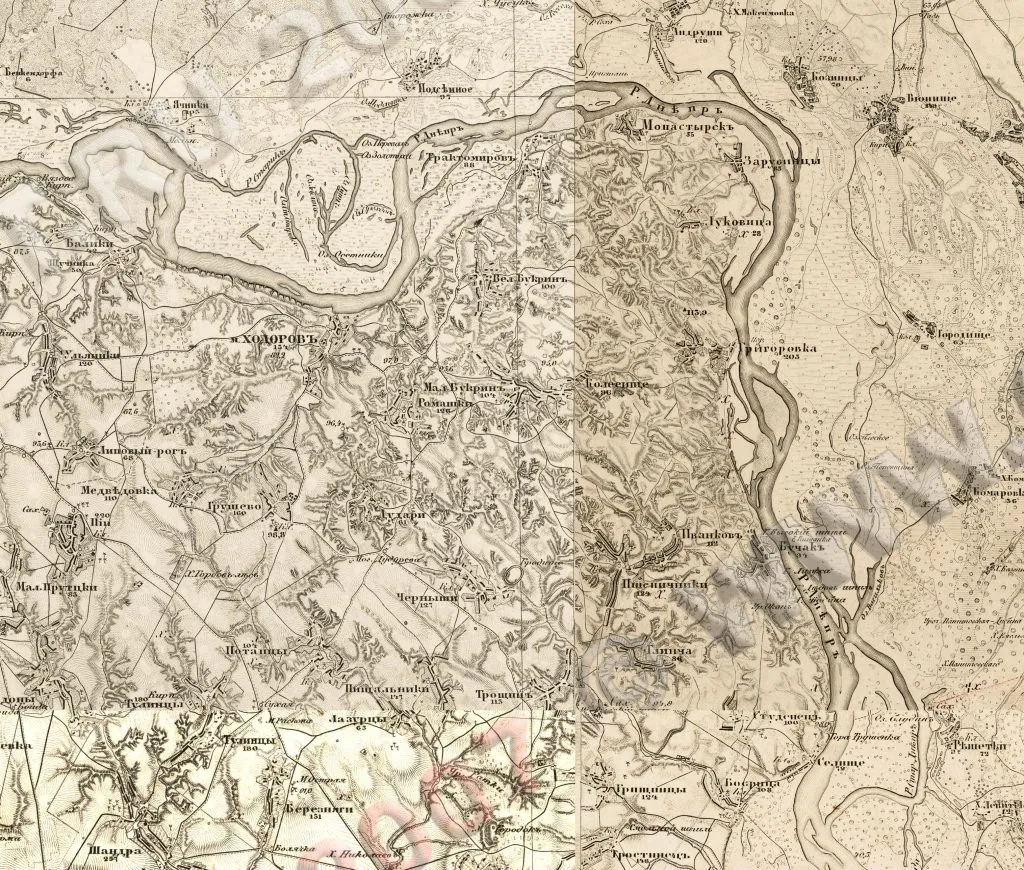
The Trakhtemyriv-Buchak peninsula on a three-verst map of the 19th century. Here we see everything before the flooding. Clickable
In 1545 the monastery passed into the ownership of the Kyiv Castle, and in 1578 the Polish king Stephen Báthory gave the Trakhtemyriv Monastery to the Cossacks, with permission to set up a hospital here. The monastery became the patronage monastery of the Zaporozhian Host. The Cossack officers generously endowed the monastery, and old Cossacks went to live out their days under the care of the monks. Its heyday came under the hegumen Yosyp (Yezekiil) Kurtsevych, who was a close friend of Petro Konashevych-Sahaidachnyi. The great hetman chose Trakhtemyriv as his out-of-town residence, often stayed here with his army, and received envoys and distinguished guests, such as the Patriarch of Jerusalem Theophanes. In Sahaidachnyi’s time Trakhtemyriv was called the Cossack capital.
Even in the times of resounding defeats of the Cossack uprisings, the Trakhtemyriv Monastery performed the functions of the main Cossack institution. It had a treasury, an archive, a hospital and a school that trained cantors, who in turn brought education to the Cossacks.
But the golden age of the Trakhtemyriv Monastery ended in 1678, when it was completely destroyed by the Turks, and Petro Doroshenko made the Mezhyhirskyi Monastery the Cossack patronage monastery. Although the Zaporozhians rebuilt their monastery, and Yurii Khmelnytskyi even took monastic vows here, it never again acquired its former significance, since Peter I, during his rule on the Right Bank, deprived the Zaporozhians of the right to use the lands of Trakhtemyriv.
In 1741 the monastery passed to the Greek Catholic Order of St. Basil the Great (the Basilians), and in 1768 it was burned by the haidamaks. However, according to Pokhylevych, the monastery still existed in 1789 — it was then occupied again by the Uniates. When it disappeared is not known for certain.
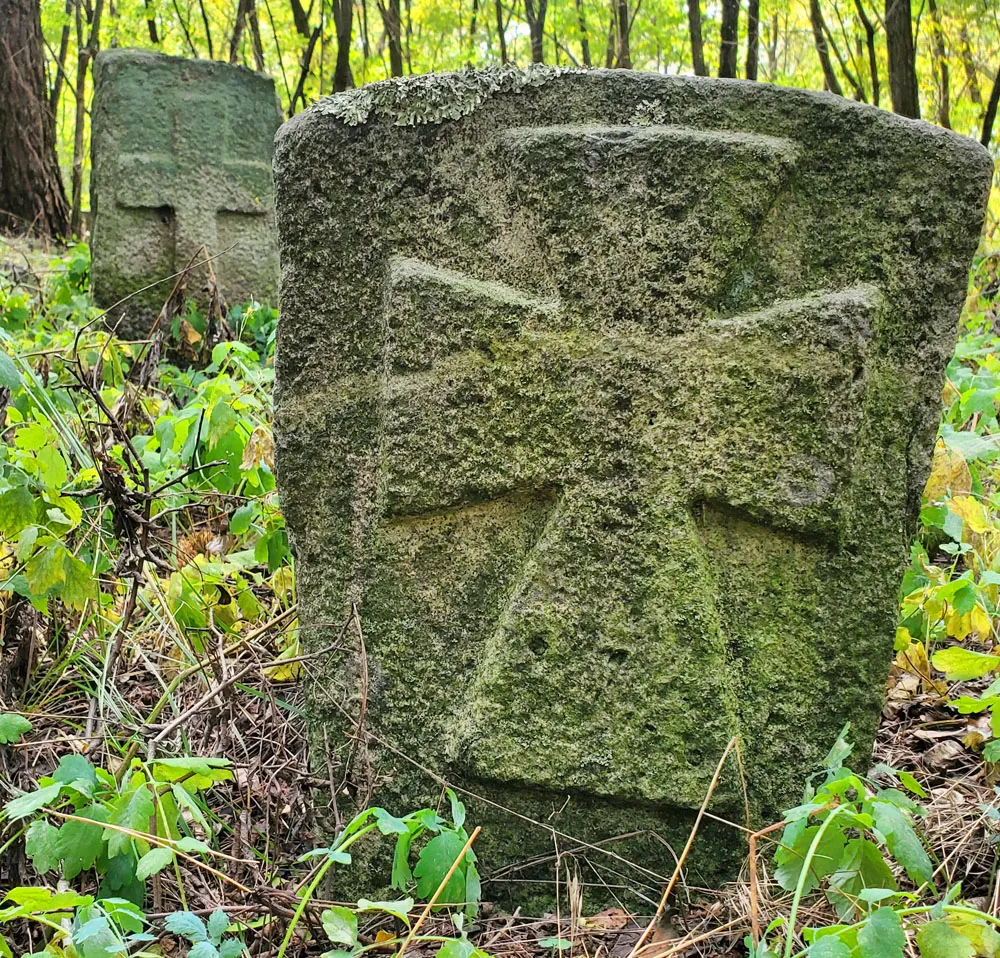
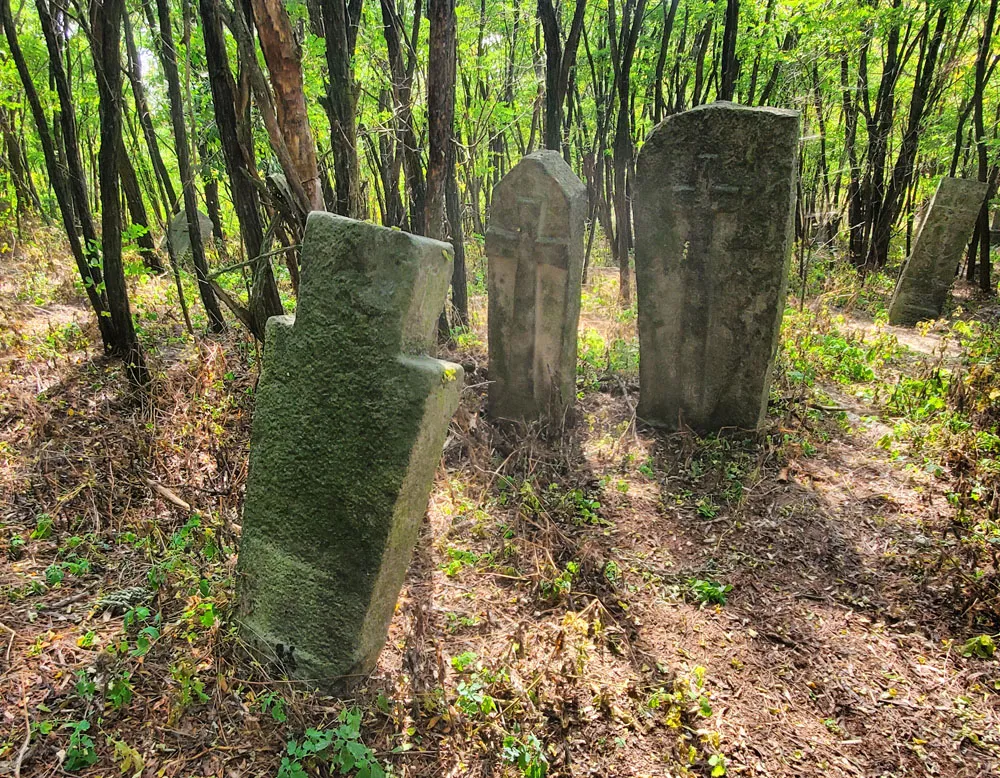
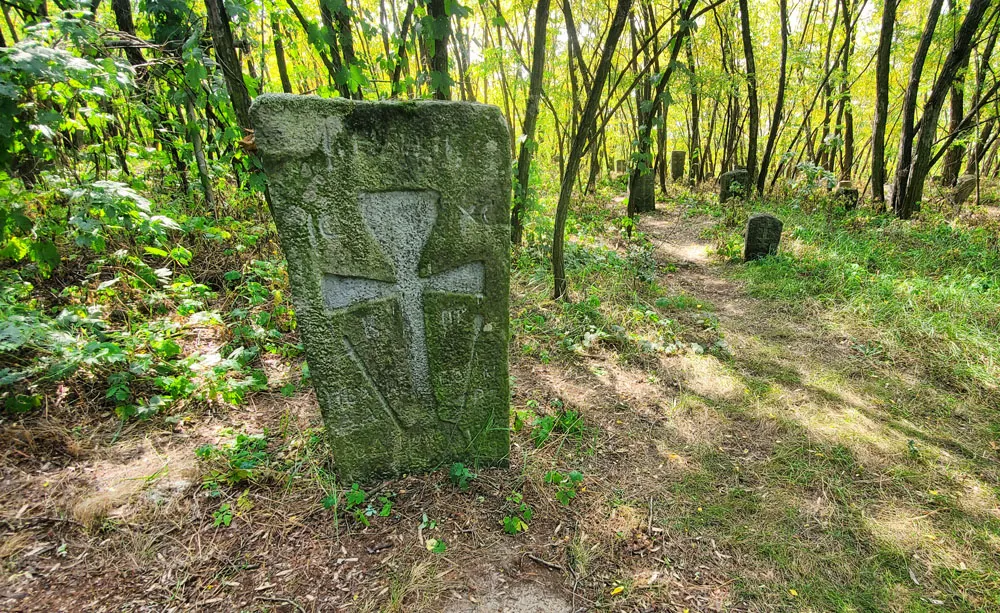
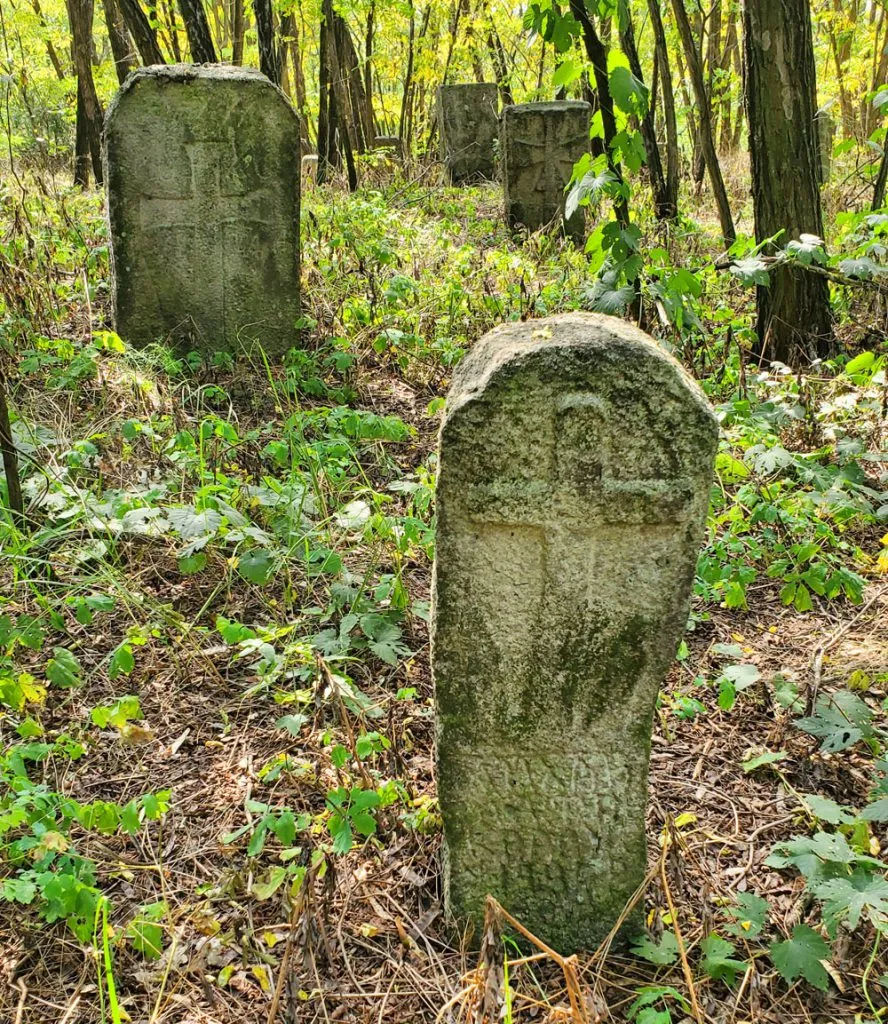
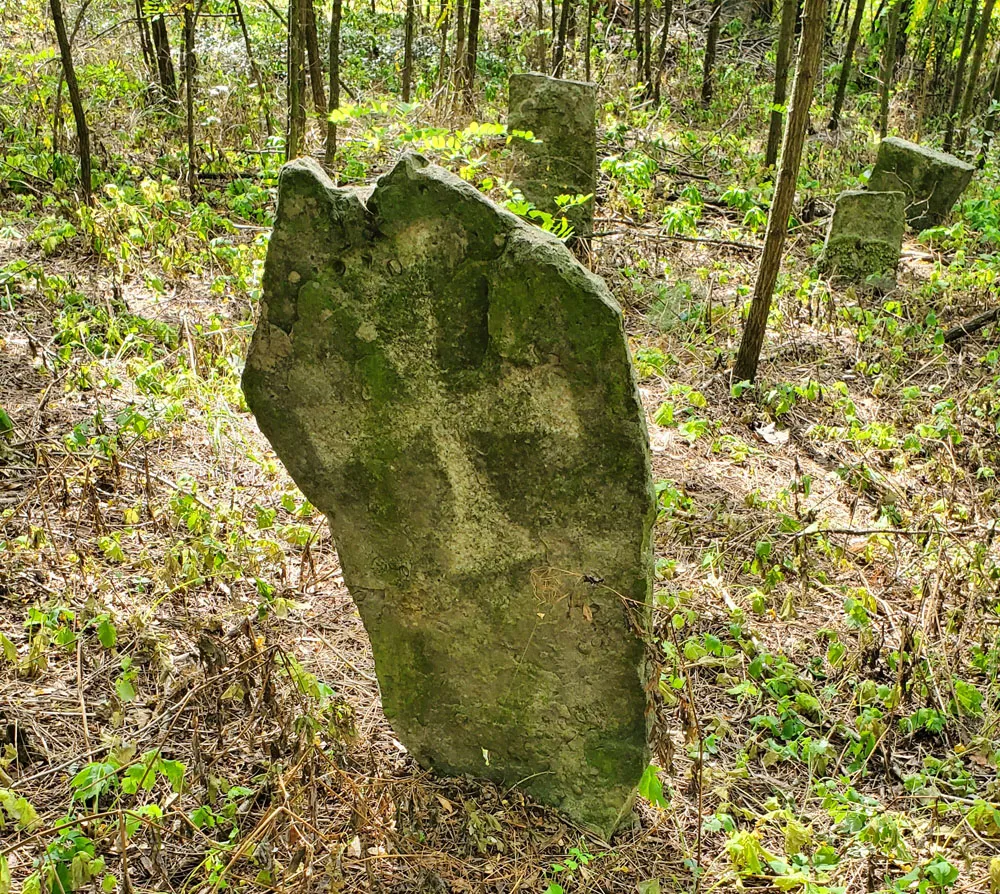
The village of Trakhtemyriv, which existed next to the monastery, lay mostly below, in the floodplain. The villagers engaged in fishing and gardening, had several windmills, but one of their main occupations was quarrying stone — sandstone. “In industrial terms Trakhtemyriv has long been known for the quarrying and working of millstones, which are carried almost all over Little Russia,” wrote Lavrentii Pokhylevych. He also points to the numerous earthen fortifications, which in the 19th century were still very noticeable, and to the ancient stone crosses.
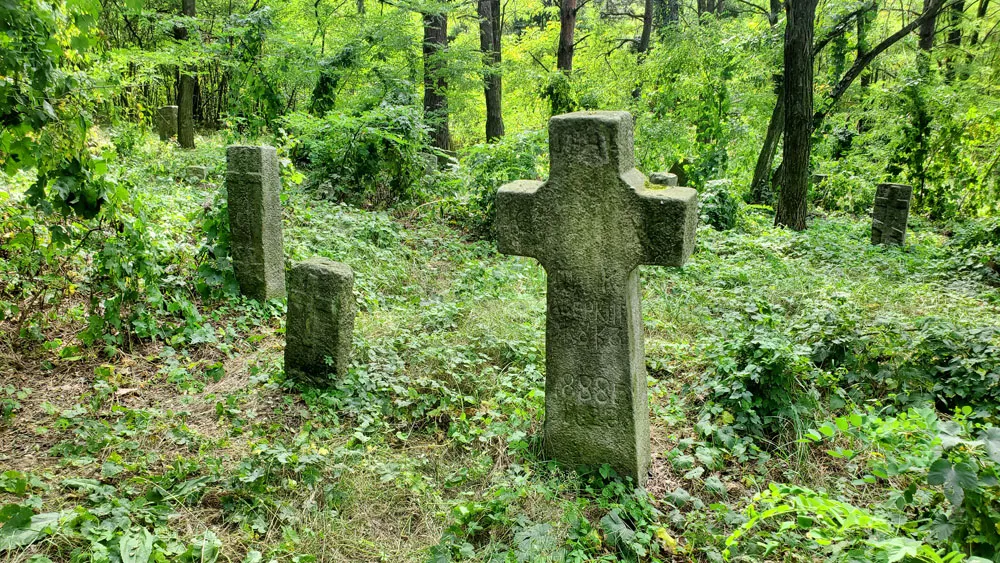
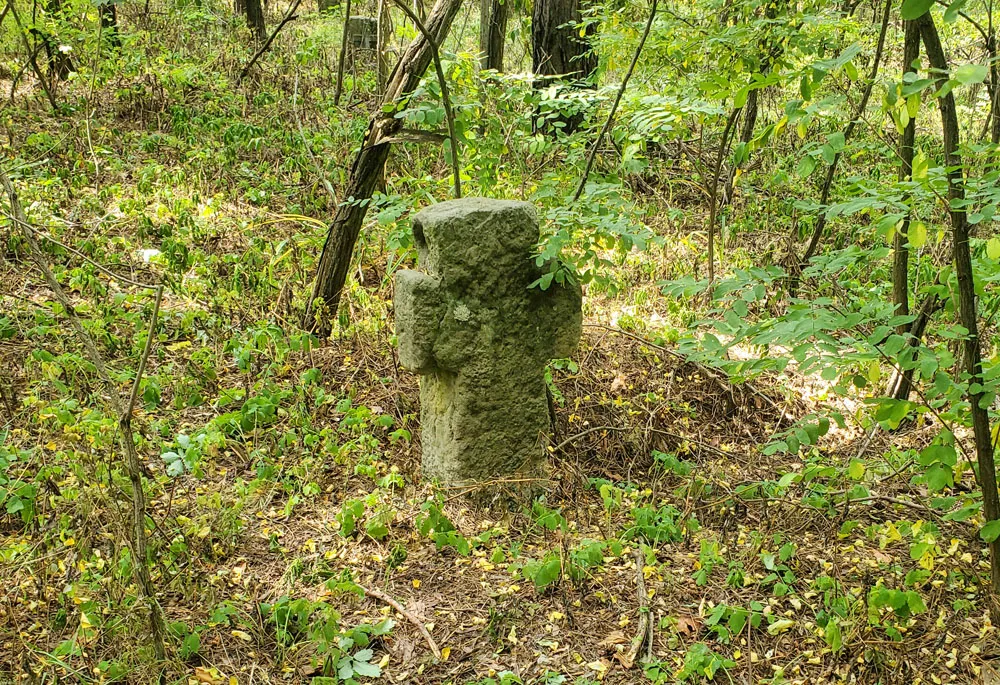
“On the high hill, as well as on the hill-like elevation next to it and on other Trakhtemyriv hills, there stand roughly hewn stone crosses, erected at an unknown time. Their height is from 2.5 to 3 arshins (177–213 cm). Near them, at various distances, there are small elongated stones set upright. On some of them crosses are carved. Since the local soil has a lot of sandstone, even now some people put up similar crosses and stones in the common cemetery; but the crosses and stones scattered on the hills the people ascribe to immemorial antiquity.”
The large cemetery in Trakhtemyriv was formed after Pokhylevych had published his outstanding work on the Kyiv Governorate, so there are no detailed descriptions of this mysterious place either from Lavrentii Ivanovych or from anyone else. Or perhaps I simply did not find them.
I would like to draw additional attention to the crosses that Pokhylevych describes, which stood on the Trakhtemyriv hills from unknown times. Local residents of various villages of the peninsula told us that in the thickets, somewhere deep in the forest, they still come across those crosses, for example near the village of Romashky, on an abandoned overgrown road, or on the old road from Khodoriv to Velykyi Bukryn, where the tavern used to be. We did not find any of these crosses. Perhaps you have seen them?
Pokhylevych describes a high earthen defensive rampart that stretches from Trakhtemyriv to the village of Lukovytsia and beyond, about 12 km long and about 6 metres high. He notes that the construction of the rampart may date from the pre-Rus’ period.
Not far from Trakhtemyriv, before the flooding, there was a small village, Monastyrok. Lavrentii Pokhylevych writes that it was on its territory that the Trakhtemyriv Monastery was located, maintained by the Zaporozhian Cossacks, like the Mezhyhirskyi one. The local historian notes that the monastery’s rights were backed by charters of Polish kings, and that it served the Cossacks as a repository for their military treasures and privileges. Lavrentii Ivanovych also quotes Samiilo Kishka on how the Zaporozhians divided the spoils after capturing a Turkish military vessel:
“They divided the silver and gold into three parts:
The first part they took and gave to the churches:
To holy Mezhyhirskyi Saviour,
To the Trakhtemyriv Monastery,
To the holy Sich Intercession they gave,
Which were built with the ancient Cossack treasure.”
It is also worth mentioning once more the village of Zarubyntsi, which likewise no longer exists — almost all the villages of the Trakhtemyriv-Buchak peninsula greatly declined in the period after the Second World War. Quite a few factors played a role: significant destruction and loss of local residents during the Bukryn bridgehead battles, Soviet anti-Ukrainian policy in the villages, where residents were not given passports and not paid wages, and, of course, the creation of the senseless Kaniv Reservoir, which “ate” a significant part of the shore and created emergency conditions for the villages it did not flood. For example, in Khodoriv over the last several decades 150 metres of the coastal strip have been washed away and have disappeared.
Pokhylevych also writes about the ancient Rus’ town of Zarub, which had a monastery, and to which Grand Prince Iziaslav in 1145 appointed Metropolitan Klym Smoliatych. According to Pokhylevych, Zarub was a large town with 70 churches and two monasteries.
One cannot fail to mention that in 1899 the eminent archaeologist Vikentii Khvoika discovered at Zarubyntsi an archaeological culture that is now considered one of the main archaeological cultures of Ukraine of the Iron Age. It is now called the Zarubyntsi culture.
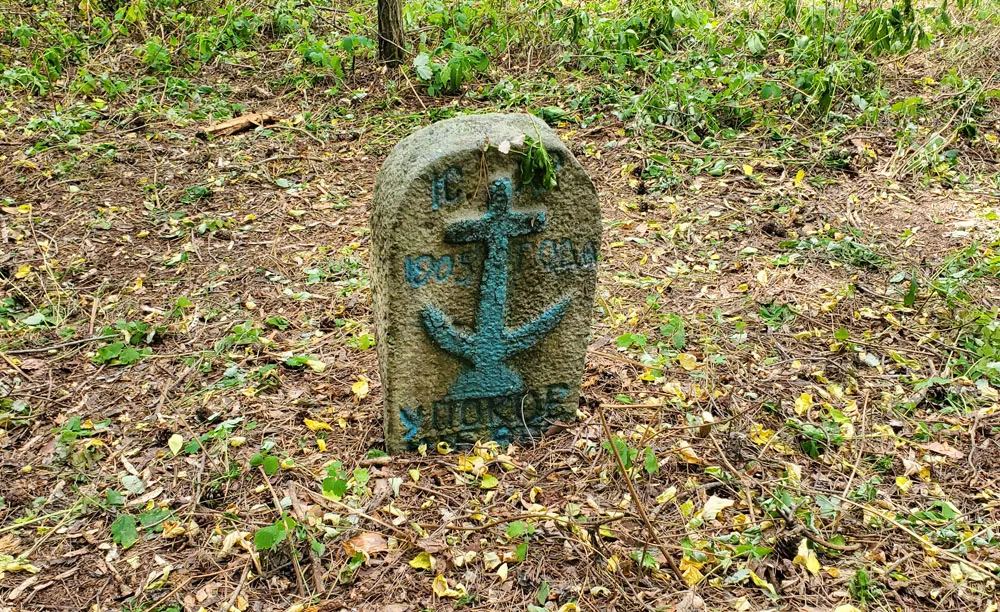
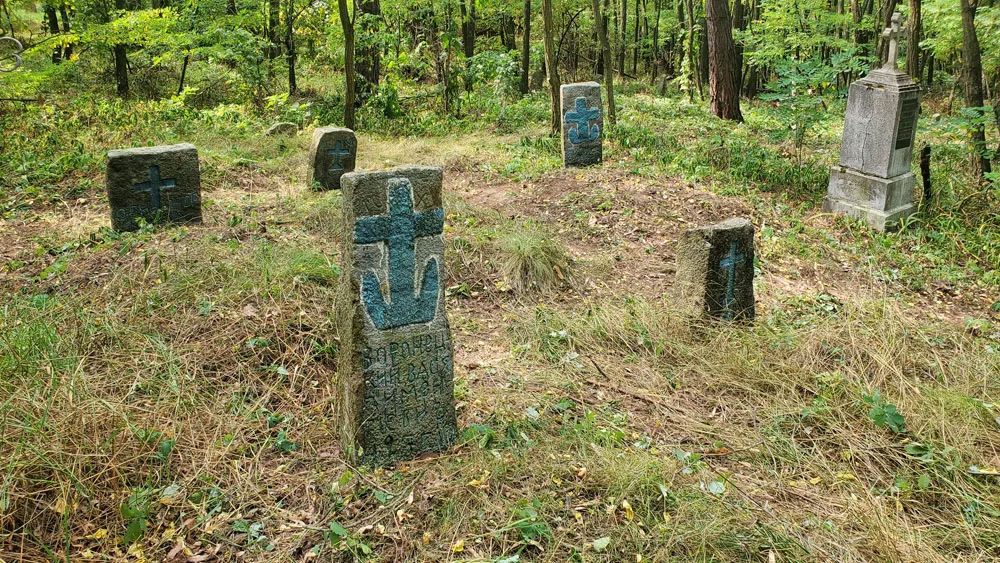
On the site of the former village of Zarubyntsi there now remains only a tract of land and an overgrown old cemetery, similar to the Trakhtemyriv one but much smaller.
Text and photos by Roman Malenkov.