

The Zhvanets church, the Armenians and noble coats of arms
The first Armenians probably appeared in Zhvanets sometime in the late 1660s, but they did not manage to form any noticeable community, because a few years later (1672) the Ottoman army entered Podillia, and Zhvanets as well. There is, however, rather uncertain evidence that by then the Armenians had managed to put up a wooden church. The term “kostel” is used for Armenian churches not by chance. At that time they were in union with the Roman Catholics.
The Ottomans ruled Podillia until 1699, when the region was liberated under the Treaty of Karlowitz. A series of wars in the second half of the 17th century left Podillia almost completely depopulated, so landowners invited settlers wherever they could. It was then, incidentally, that many Masurians were brought to Podillia. Surnames such as Mazur, Maurenko and Mazurkevych are still among the most common in these parts.
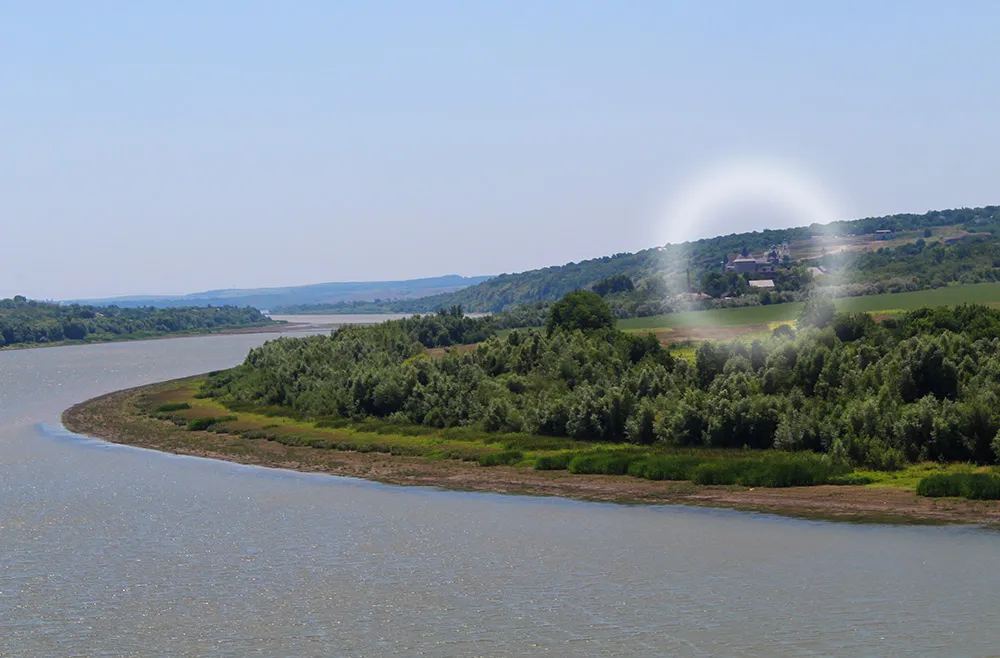
Khotyn Castle is clearly visible from Zhvanets
The hereditary owners of Zhvanets, the Lanckoroński family, invited Armenians from Kamianets and Greeks from Khotyn. At that time these were trading and craftsmen peoples, and they gladly agreed; thanks to its geography the little town was a lively trading centre. It was even a port settlement: goods from Black Sea and even Mediterranean cities came up the Dniester to here. Moreover, there was a place here to cross that sizeable river, and that meant trade with Turkey and its vassals (Moldavia and Wallachia) and onwards as far as the Balkans. The Ottomans, we should note, were quite pragmatic, and set about trading immediately after the war with the Polish–Lithuanian Commonwealth ended.
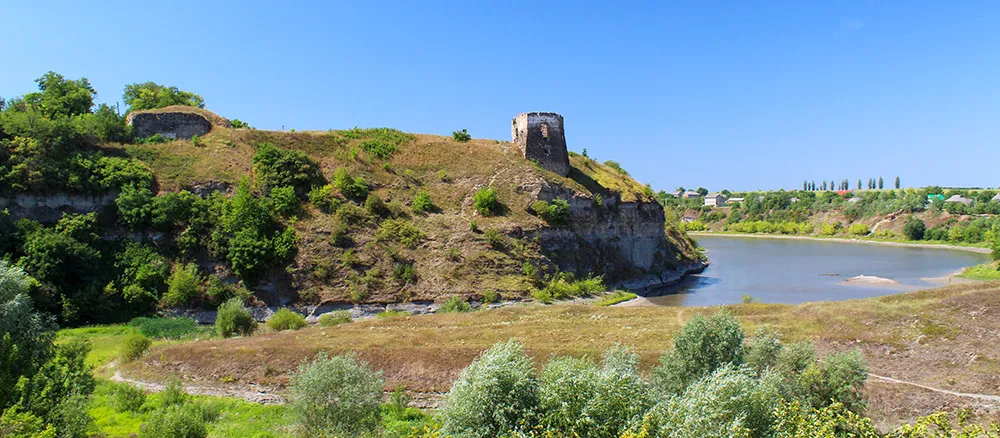
The ruins of Zhvanets Castle and the Zhvanchyk River
Within a few years, thanks to Armenian merchants, who through the diaspora had strong, well-established ties with fellow countrymen in the Ottoman Empire, Zhvanets rose from the ruins and turned into a flourishing little town. The Armenians then concentrated in their hands the trade in grain, timber, salt, the then-popular Hungarian wine and luxury goods. Attempts by Jewish competitors to establish themselves in Zhvanets came to nothing. At that time it was one of the few towns in Podillia where the Jewish community was practically absent.
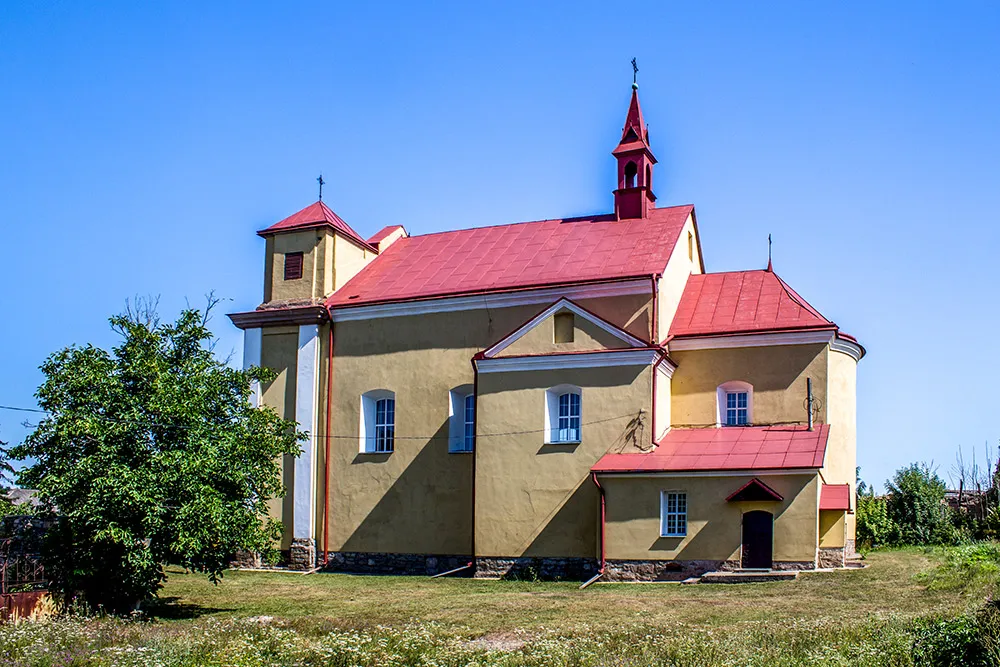
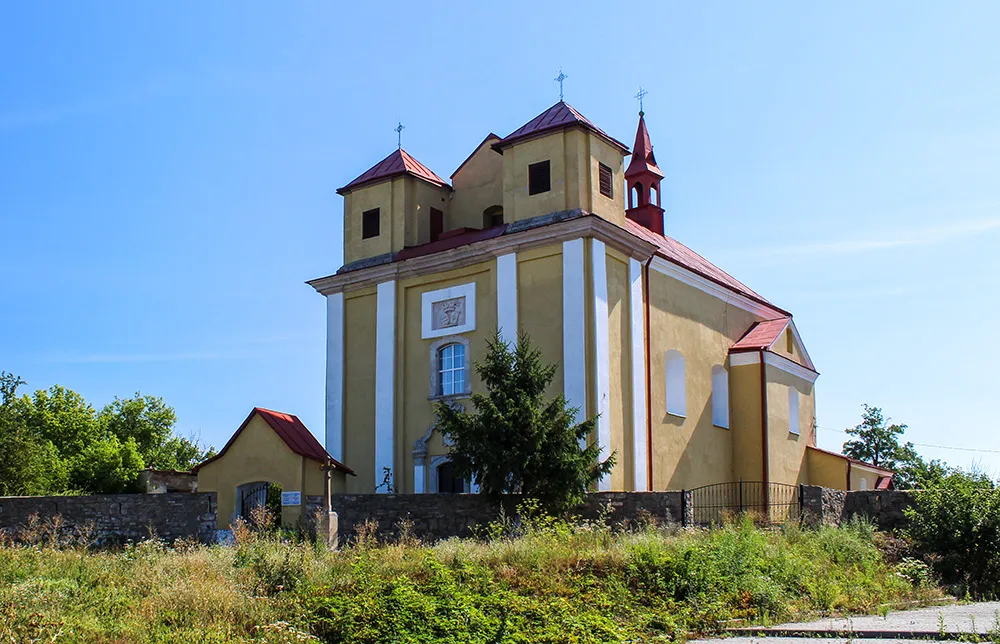
The first masonry church in Zhvanets was built at the expense of the Lanckoroński family and an authoritative Roman Catholic priest, Fr. Grigor Hankevych. The latter was no ordinary priest. He even managed to serve as representative of Bishop Adam Stanisław Krasiński in Turkey. He bequeathed his considerable property to the church.
The church turned out rather well: with six altars (the main one in honour of St. Gregory), built in the Ionic style, and consecrated in honour of the Immaculate Conception of the Virgin Mary, whose gilded figure was placed on the façade between the corner bell towers.
The church, like most masonry buildings of the time, especially in the borderlands with such aggressive neighbours as the Ottomans, was built as a defensive structure. In addition, it was surrounded by substantial walls and other fortifications.
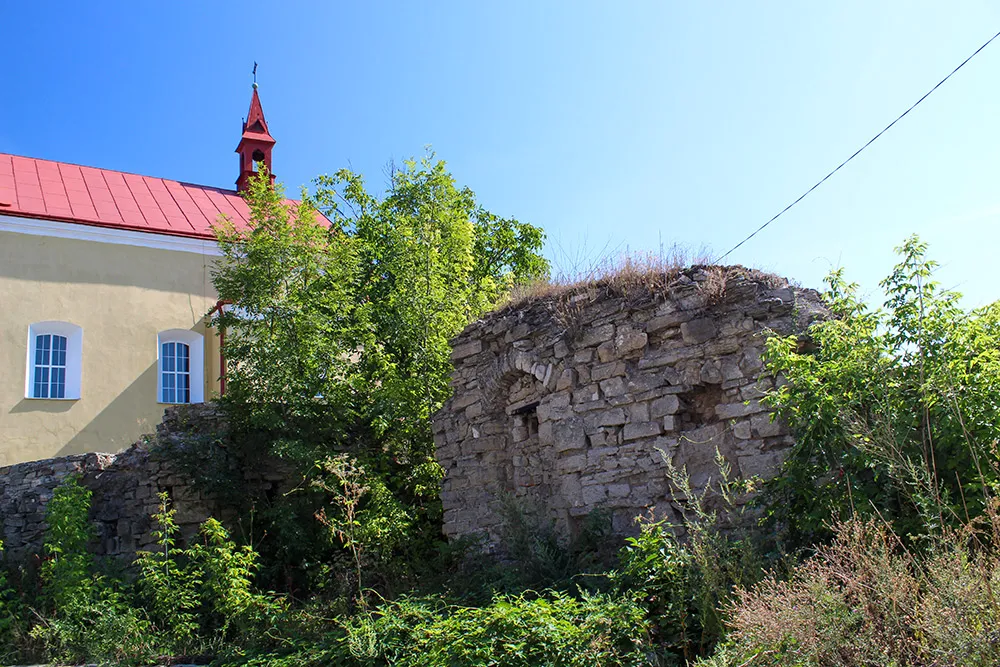
The ruins of some fortification
But all this beauty did not stand for long.
In August 1768, taking advantage of King Stanisław August’s turmoil with the Bar Confederation, the Ottomans crossed the Dniester and rather thoroughly plundered and destroyed Zhvanets. The following year the town was plundered and finished off by the Bar confederates themselves. Misfortune never comes alone: a little later, in 1770, an epidemic of plague also broke out.
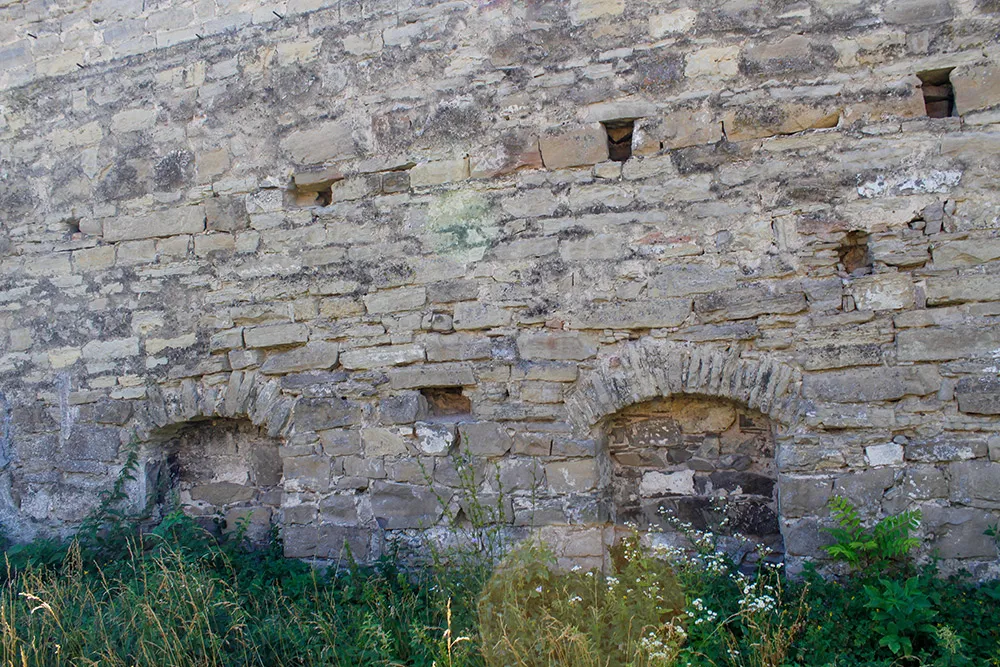
The church is surrounded by a genuine fortress wall
After the “hospitality” of the Turks and then of the confederates, the church had to be rebuilt. In 1791 the restored church was consecrated again. For the ceremony the Armenian-rite Archbishop of Lviv, Valerian Tumanovych, came to Zhvanets. Unfortunately, by that time only 25 Armenians remained in Zhvanets; the main part of the once sizeable community had left the town during the plague epidemic of 1770 and never returned. The Armenian community finally disappeared in 1800. In the last years of its existence the Armenian priest served mostly local Polish and Ukrainian Roman Catholics.
Armenian relics were kept in the church at least as late as 1895, when the Armenian historian Kuchuk-Ioannisian visited Zhvanets. He later recalled that its rector had expressed a wish to learn the Armenian alphabet. He said he very much wanted to be able to read a little Armenian, in order to pronounce the names of the objects left by the previous owners.
According to the priest, Armenians sometimes pass through Zhvanets, visit their old church and very much regret that they hear not a single word of their native language here. According to Kuchuk-Ioannisian, the priest very much wished to console them with at least a few Armenian words.
In Soviet times the church was closed and a workshop of the local “Silhosptekhnika” was set up there. Only in 1992 was the building returned to Roman Catholic parishioners.
The decoration of the church is interesting above all for the numerous noble coats of arms that adorn its façade.
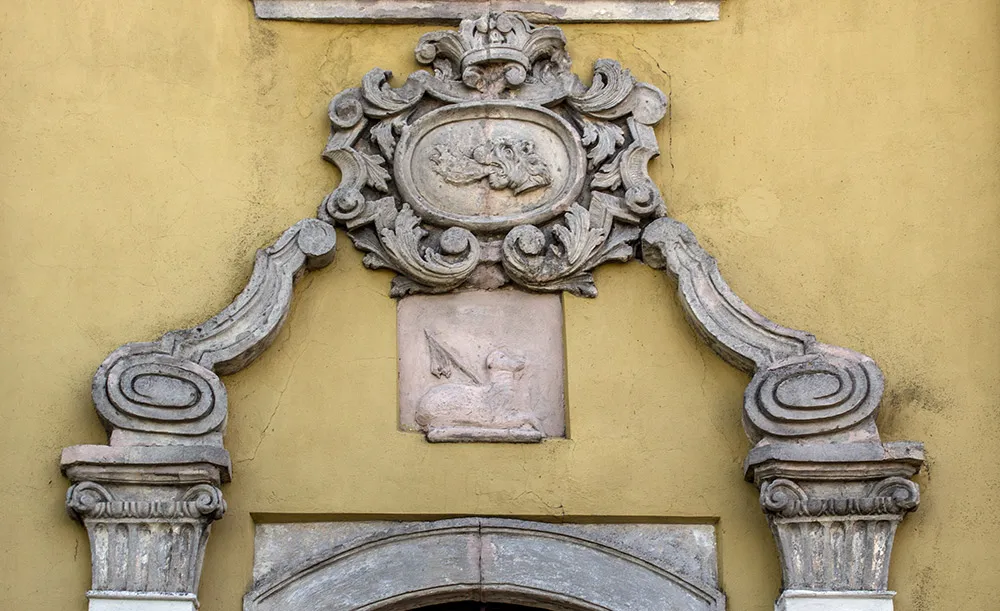
Right above the door we see a lamb with a banner, a symbol familiar to every Christian. In our case the Lamb of God is the symbol of Zhvanets’s Armenian community, to which the church belonged from the beginning.
Above the Lamb, in an oval medallion, is carved the coat of arms “Zadora”: a lion with flames bursting from its mouth, which belonged to the Lanckoroński family (Wawrzyniec [Laurentius] Lanckoroński was the church’s founder).
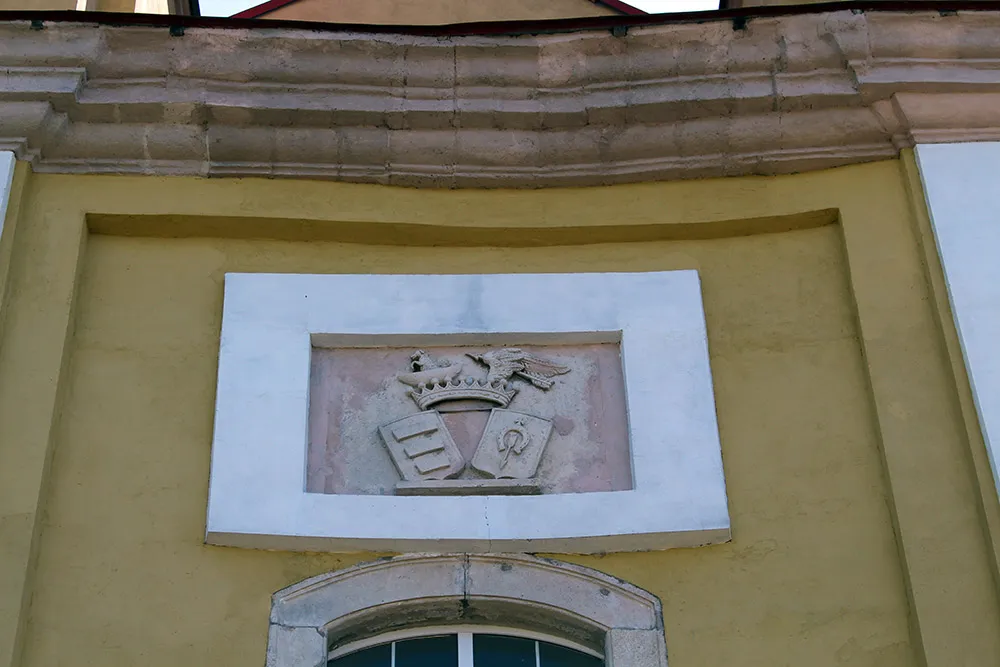
Higher still we see two coats of arms at once under a common count’s crown: “Korczak”, which belonged to the last hereditary owner of Zhvanets, Aleksander Komar, and “Dołęga” (the arms of his wife Pelagia Komarowa, née Mostowska), who in their time contributed generously to the church’s repair.
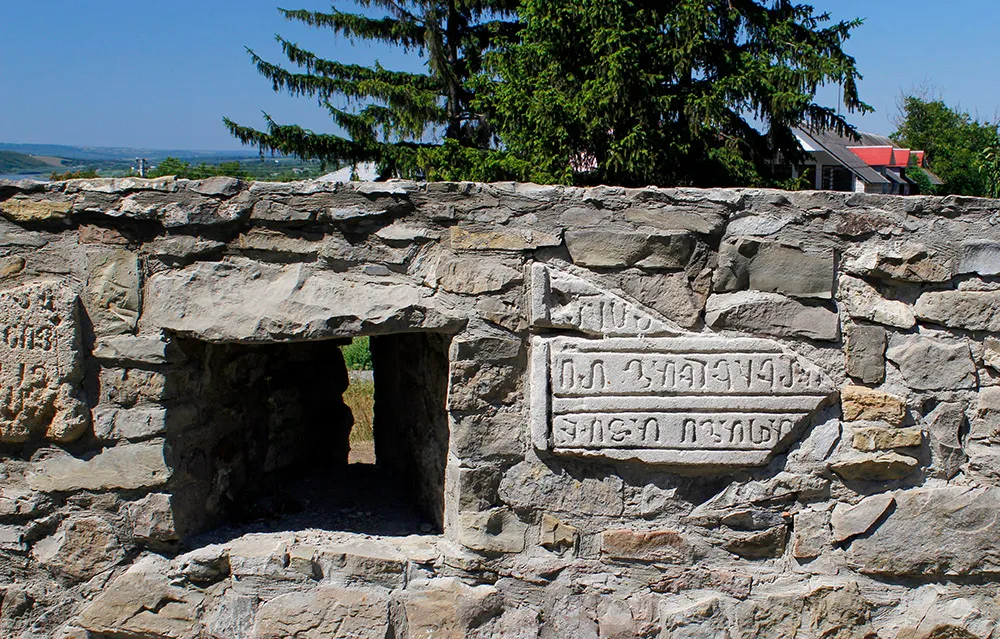
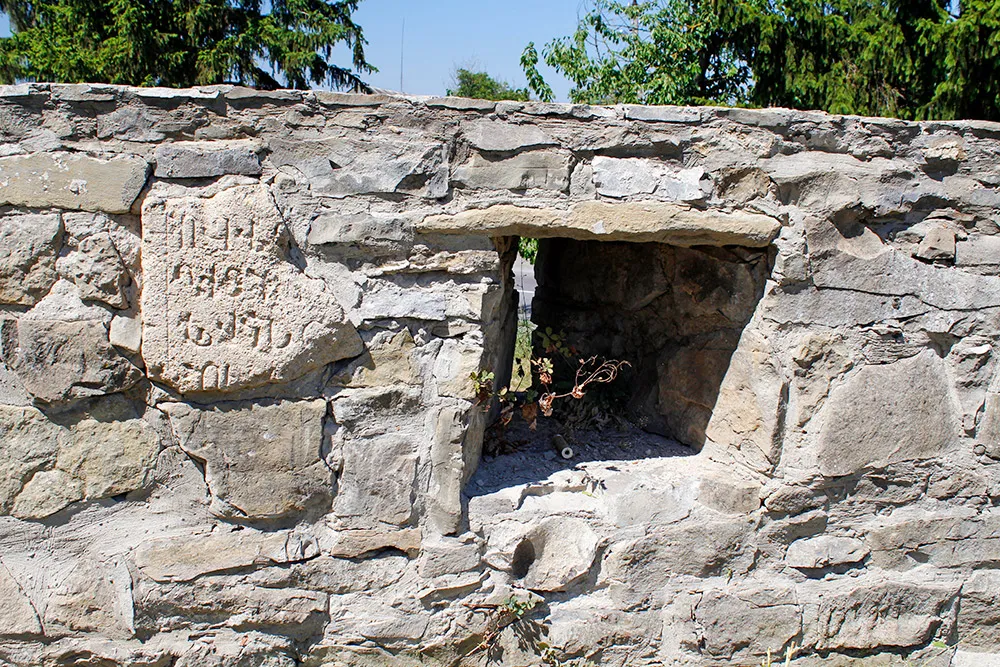
During the latest reconstruction, in memory of the church’s Armenian past, fragments of Armenian gravestones found in the churchyard, where there was once a cemetery, were set into the inner side of the fence. True, among them, miraculously, a fragment of a Jewish matzevah has also crept in.
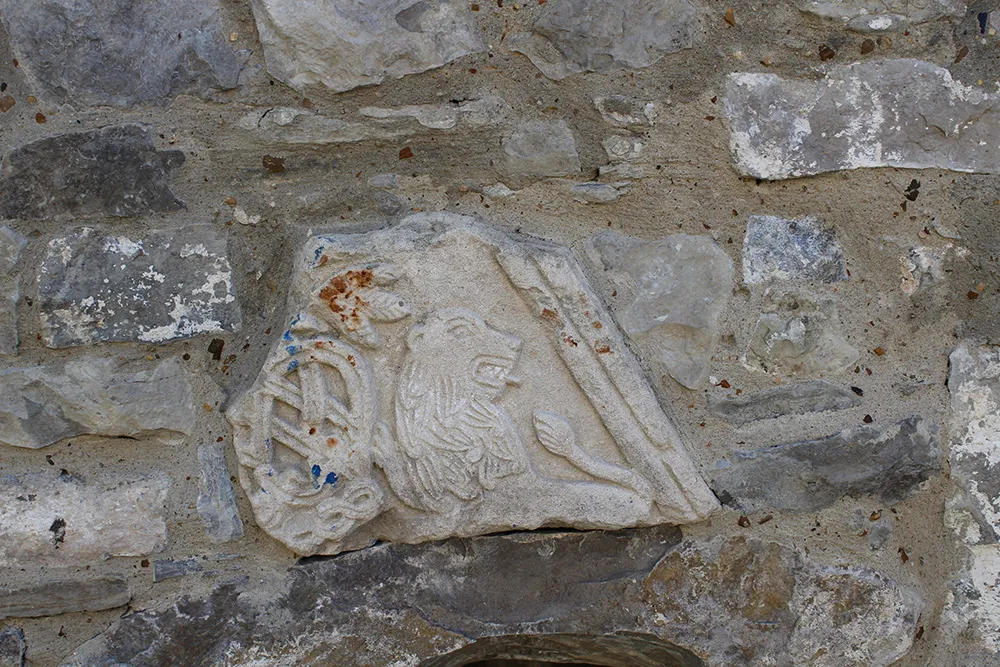
A fragment of a matzevah
Text and photos: Dmytro Poliukhovych


