Tulyholove

· 3 min read
The village of Tulyholove in the Krolevets district was founded in the 16th century; the first written mentions date from its end, and it is marked on Beauplan’s maps of the early 17th century.
However, as early as the 9th–10th centuries, in the days of the Siverian principality, people already lived here, as evidenced by the hillfort on the south-eastern outskirts of the village.
From 1782 Tulyholove was a volost centre of the Hlukhiv county, from 1796 of the Little Russia Governorate, and from 1802 of the Chernihiv Governorate. Free Cossacks and state peasants lived in the village. At the beginning of the 20th century the village had a steam mill owned by the nobleman Lytvynchuk, which operated even in Soviet times until 1968, and two mills belonging to Yosyp and Fedir Holovnia.
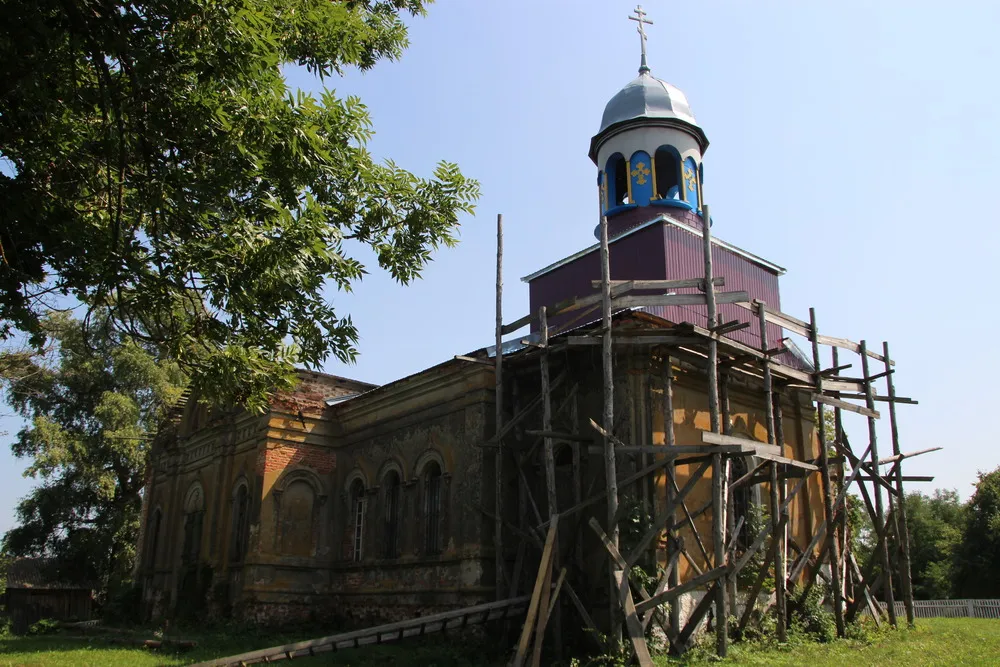
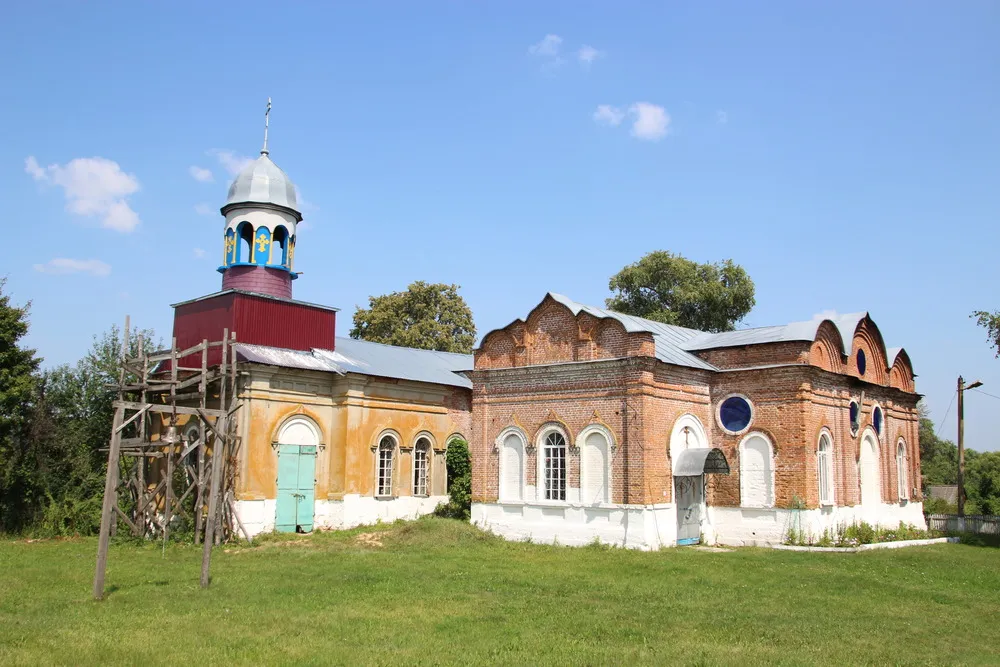
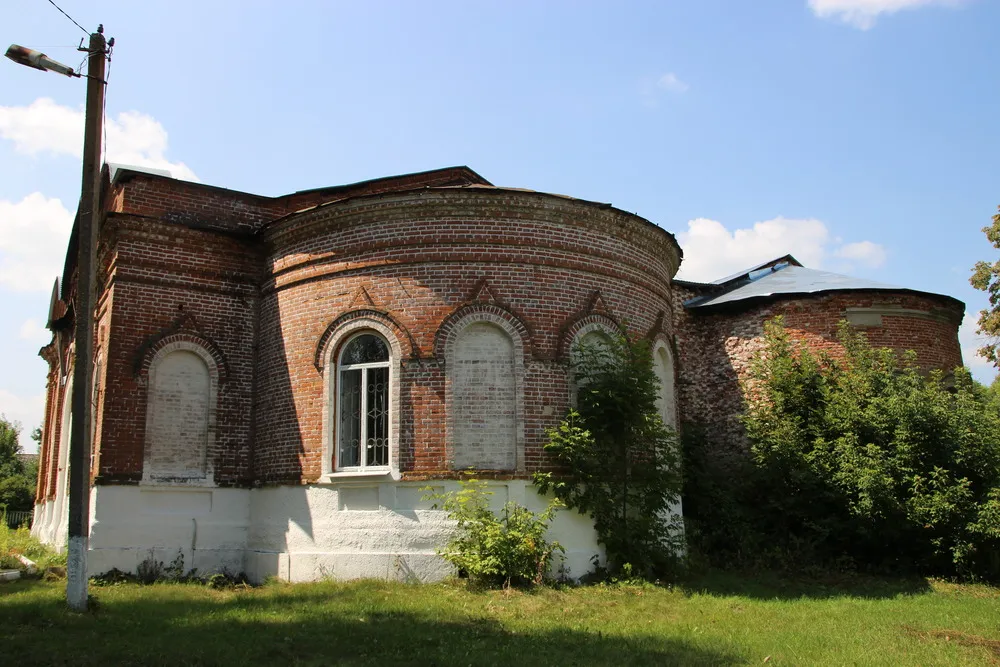
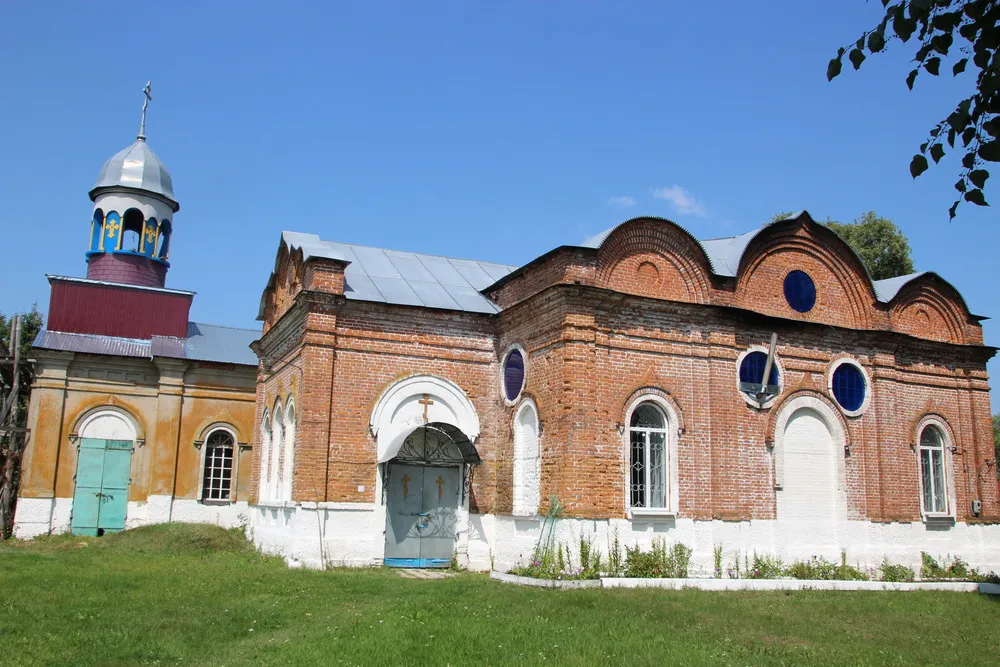
In the 19th century the village had two churches – the wooden Transfiguration Church and the brick Church of the Dormition of the Most Holy Mother of God. The Transfiguration Church was dismantled by the Bolsheviks, and the village council now stands on its site. We will dwell in more detail on the Dormition Church, which has survived and is an architectural monument of local significance.
Originally the church was wooden, from 1656; it is written that it was built by a comrade-in-arms of Ivan Mazepa, Colonel Mykhailo Matviiovych Alfiorov (1675–?) (more about him a little further on). Two centuries later a stone church with one dome was built on its site. The initiators and patrons of the construction were the landowner couple Alfiorov, descendants of the colonel.
The building was designed in the Russian-Byzantine style, to a design by the famous St. Petersburg architect Konstantin Andriiovych Thon, who is credited with inventing precisely this style. Whether that is really so, we did not find out, but Thon was rector of the Imperial Academy of Arts and designed a multitude of churches (and not only) in Moscow, St. Petersburg and governorate towns, including the Cathedral of Christ the Saviour. He is also the author of the Grand Kremlin Palace in Moscow. Did he have time for such a backwater?
Over time, in 1881, the church warden Ulazovskyi added a stone side altar on the south side of the church (probably to a design by the Hlukhiv architect A. Gross). In Soviet times the church was closed, the dome and the bell tower were destroyed, and for a long time it was used for farm needs. In the 1990s the church was returned to the church community.
As promised, a few words about Colonel Mykhailo Alfiorov.
He was born in 1675 into a priest’s family. He was commander of the Dubovychi regiment. After refusing, on Peter I’s order, to march with his troops against Ivan Mazepa, with whom he had a long-standing friendship, Alfiorov was imprisoned and in 1708 sent into exile north of Vologda. But even there he founded a settlement that still exists – in Russian, “derevnia Alferovskaia”. There is information that Mykhailo Alfiorov nevertheless returned to his native places, to Tulyholove, where he died and was buried, but where exactly is unknown, as the grave has not survived. And in the village, they say, descendants of the Alfiorovs still live to this day.
Text and photos by Ihor Dorozhko, Oleh Hodyna and Maksym Nazarenko.