

Obrazhiivka. Ivan Kozhedub

· 3 min read
In the village of Obrazhiivka in Shostka district there are two monuments that are completely different in theme, form and content, and in general exist in different dimensions.
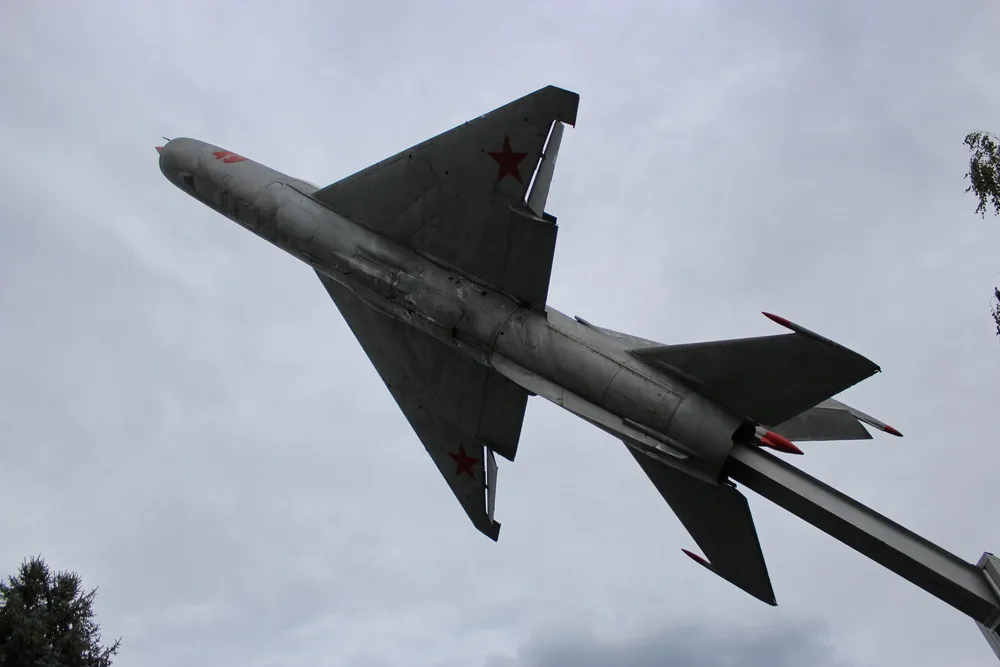
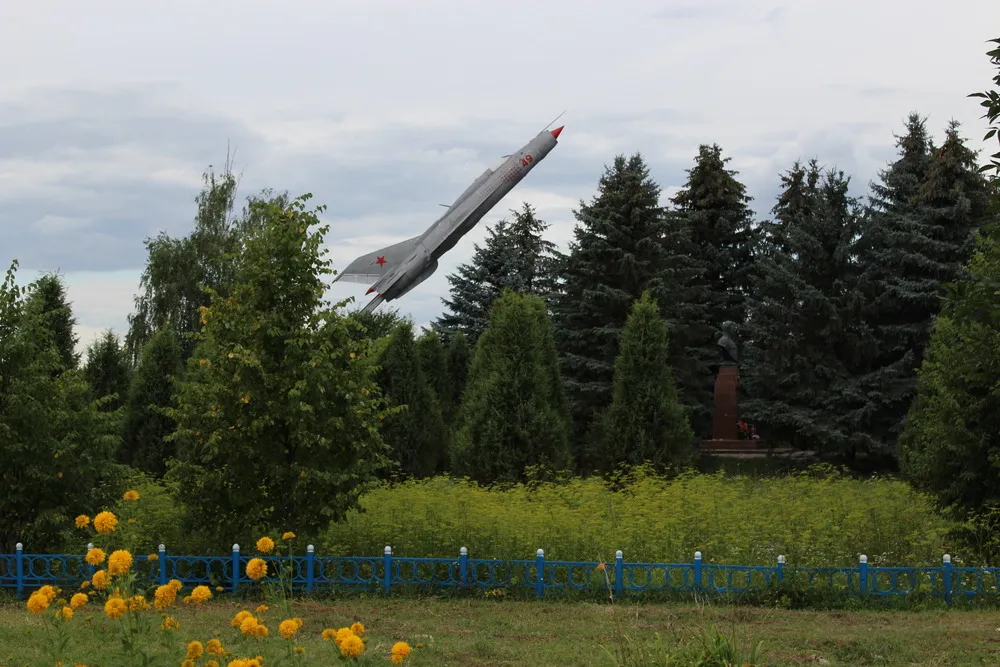
And while the old St. Michael’s Church is self-explanatory, the MiG-21 aircraft soaring skyward from its pedestal is a rather unusual sight for a small village, but understandable if you know in whose honour the plane was installed.
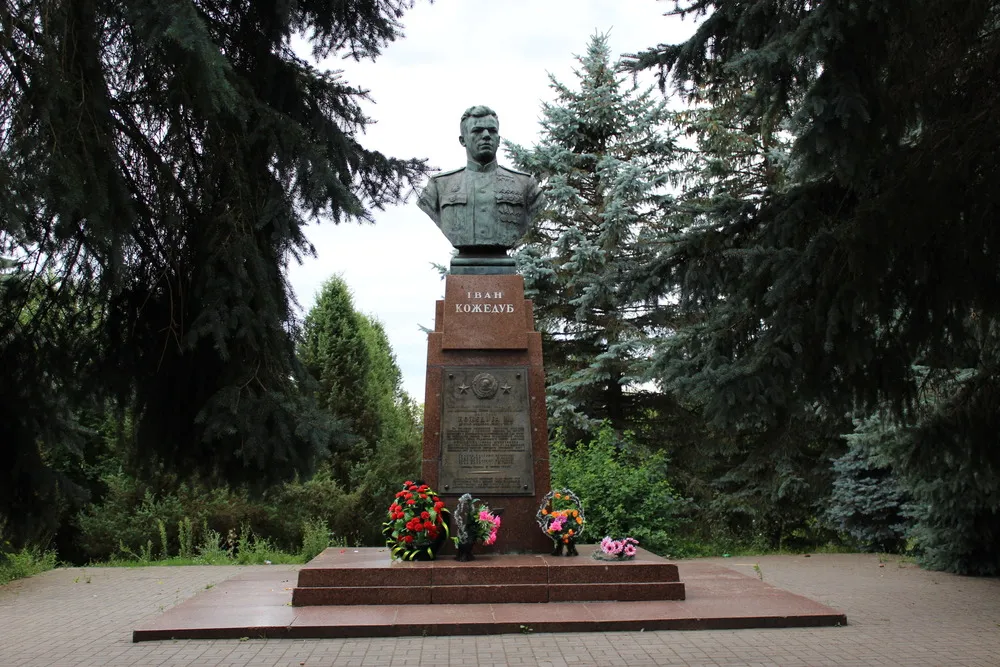
The thing is that in Obrazhiivka was born and grew up, until entering the Shostka Chemical-Technological College, the air ace, Marshal of Aviation, thrice Hero of the Soviet Union, Ivan Mykytovych Kozhedub (1920-1981).
Yes, in Soviet times there were such people too, but not many. Besides Kozhedub, two more were “thrice” – Pokryshkin and Budyonny – and two more became so four times – Zhukov and the “dearly beloved comrade” Brezhnev.
Ivan Kozhedub is considered the record holder for the number of air battles won and enemy aircraft shot down, not only in the Red/Soviet army but in the Allied forces generally – 64 times. His aircraft were never shot down by the enemy. Although, to tell the truth, he is still far behind the Luftwaffe ace Erich Alfred Hartmann, who had 352 aircraft shot down during the Second World War.
It should also be mentioned that in 1945, in the sky over Berlin, Kozhedub also shot down two American aircraft, but it is written that the Allies themselves provoked the pilot into a response by mistaking him for a “Fritz” and opening fire. Naturally, these aircraft were not counted in the overall tally.
The only unclear thing is why they installed a MiG-21, which first flew in 1955 and was in serial production from 1959 to 1985, while Kozhedub flew and fought throughout the war in La aircraft: the La-5, La-5FN and La-7.
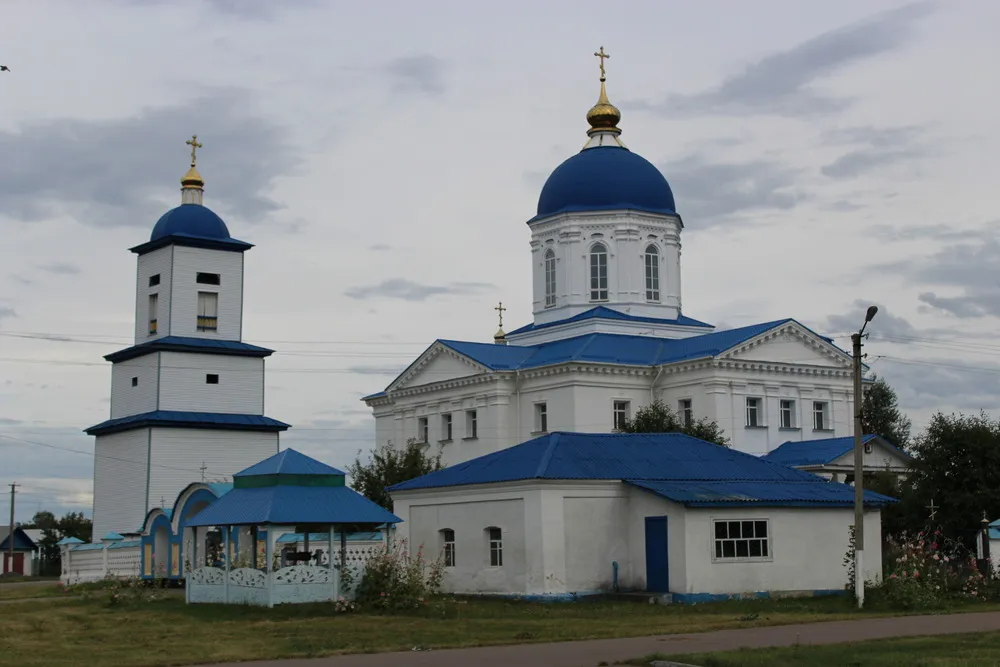
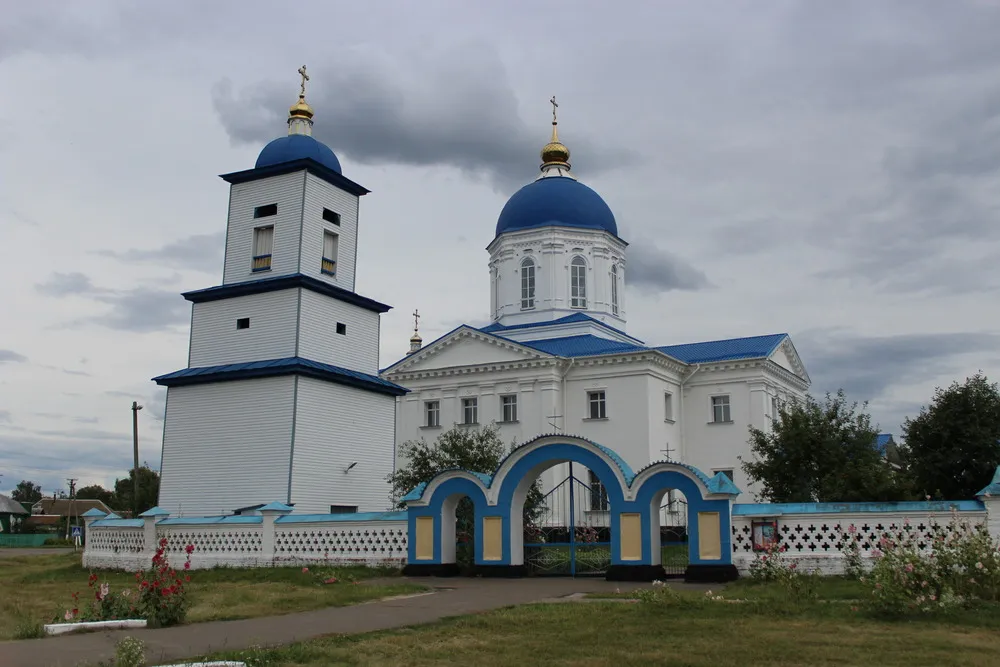
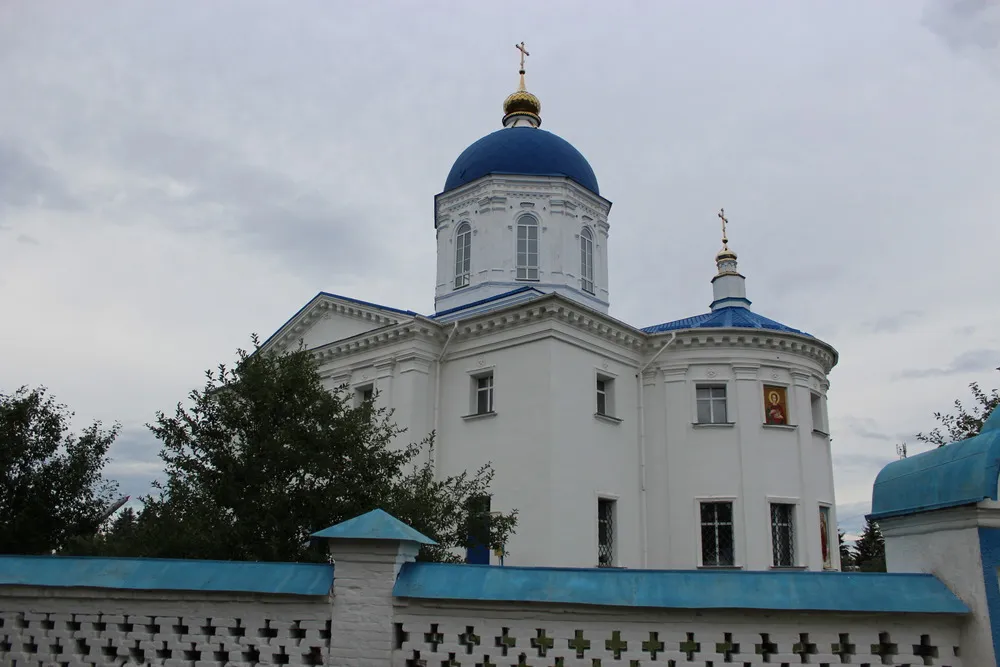
St. Michael’s Church in the village of Obrazhiivka is a unique architectural monument. The thing is that the architectural design of this church skilfully combines folk architecture and world-class professionalism.
As for St. Michael’s Church, it was built in 1835 (according to other data, in 1839), on the site of a wooden predecessor that had existed since 1781.
Moreover, construction began somewhat earlier, in 1830, but was suspended because a cholera epidemic began in the village. Soon the brick dome for some reason collapsed (incidentally, the church was built of local brick), so in the mid-19th century the church was crowned with a wooden octagon, and only in 1896-1897, on the initiative of the priest Bazylevych and to a design by the governorate architect Mykola Markelov, was a brick octagon built.
The bell tower appeared at almost the same time as the church. The eye is attracted by the ornamented church fence around the yard, with a three-arched gate, built in the early 20th century.
The church was lucky: in Soviet times it managed to survive and was not dismantled. The iconostasis, however, was lost.
Rather mixed feelings… It is all explained by the reconstruction of the bell tower, since it now looks more like “giant LEGO”. Until recently the description of the bell tower said that the second tier has ROUND windows on each side, and the third tier has large ARCHED openings for the bells. So where are they???
Text and photos by Ihor Dorozhok, Oleh Hodyna and Maksym Nazarenko.


